Operations Rescue Audit — Demonstration

Hagop Ipdjian


SELF-DIRECTED DEMONSTRATION
Context
This demonstration models the onboarding workflow of a fictional 12-person UK accountancy practice. The sample covers engagement acceptance, identity checks, systems access, opening information, deadline setup and handover. It contains no real client or firm data.
Operational problem
The fictional team starts work through several email threads. Information requests are duplicated, ownership is not always visible and key dates can remain provisional for too long. Managers need a concise view of what is slowing delivery and what should change first.
Approach
I mapped the current workflow from the accepted proposal to internal handover. I then recorded the evidence used at each stage, identified the operational bottleneck and scored impact and frequency on a 1–5 scale. The combined priority score determines the order of the recommended actions.
Deliverables demonstrated
• Current-state workflow map
• Bottleneck and ownership review
• Prioritised control recommendations
• Named action owners and target dates
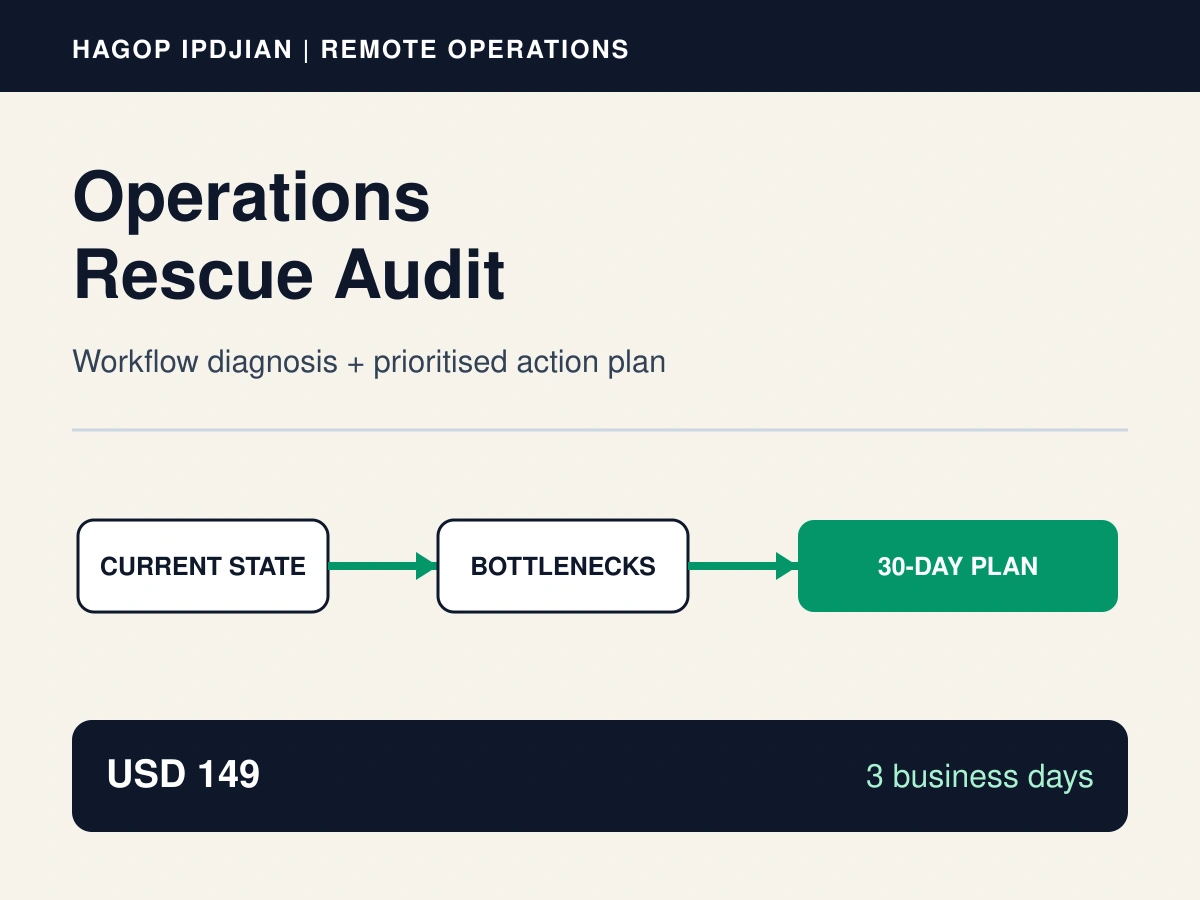
• Sequenced 30-day implementation plan
Key design decisions
The proposed system uses one accepted-client trigger, one client-facing request list and visible exception ownership. It records whether access has been arranged without storing passwords. Provisional deadlines remain separate from dates confirmed by authorised staff.
Result of the demonstration
The finished audit turns six loosely connected stages into a practical action sequence. A manager can see the highest-priority gaps, the control proposed for each gap and who should act next. This is a demonstration of method, not a claimed client outcome.
Boundaries
Operational support only. Accounting, tax, legal, AML and regulatory judgements remain with the client’s authorised professionals.
Related service
https://contra.com/s/qZ6Esv63-operations-rescue-audit
Like this project
Posted Sep 11, 2026
Demonstration using fictional data: a current-state workflow map, bottleneck review and prioritised 30-day action plan for a professional-services team.