Joswell Ledger: Replacing Spreadsheets with a Web App

Ekene Smart


Joswell Ledger: Replacing a Spreadsheet That Lost Sales
Product Design · AI Product Engineering · Retail
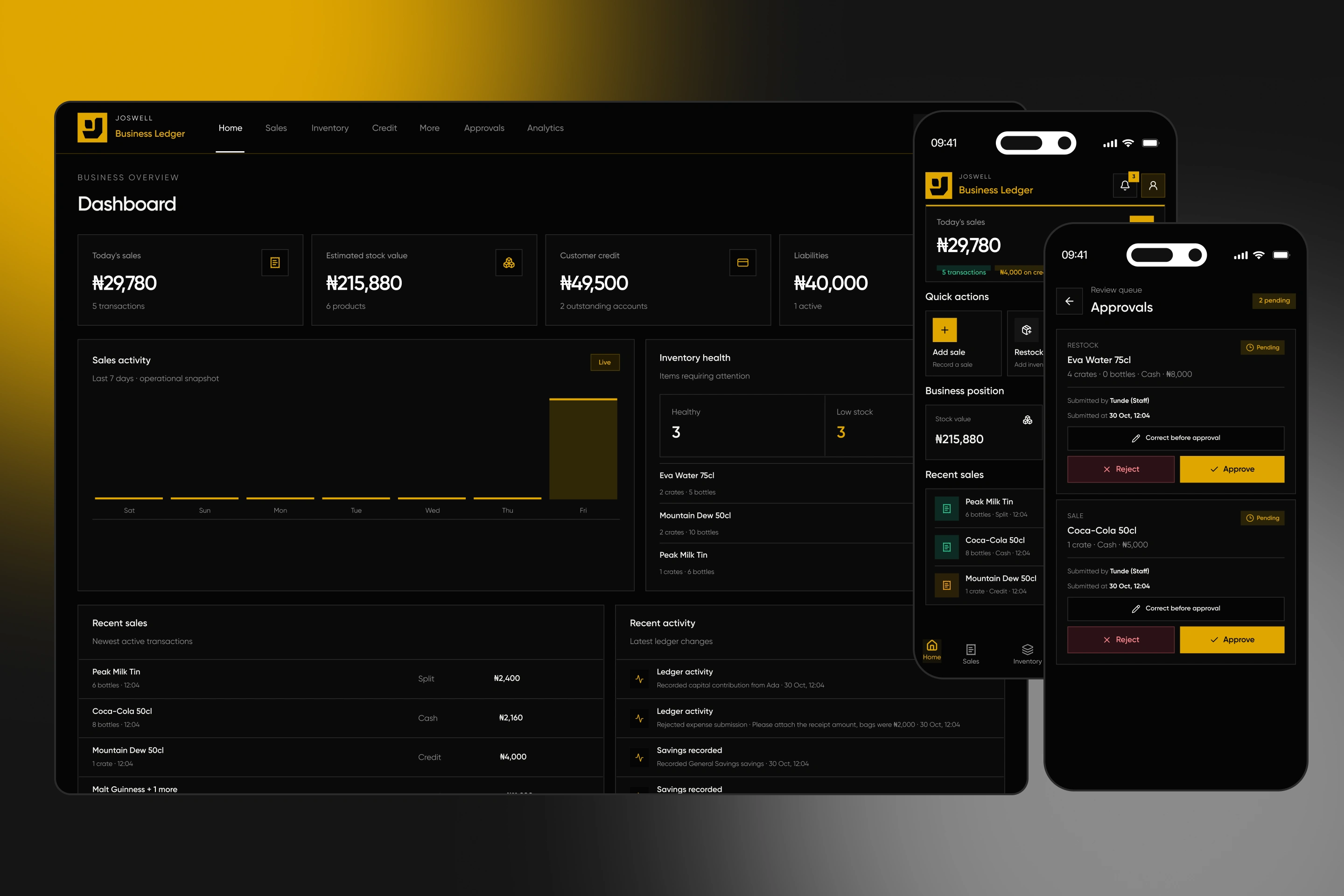
Cover page mockup
Overview
Joswell Ledger is a progressive web app built for a family-run retail and wholesale store in Nigeria. It replaces a fragile Google Sheets workflow with a connected system for recording sales, managing inventory, tracking customer credit and approving transactions.
I led the product design and engineering, using AI-assisted development to take the product from concept to a working system used by the store.
Role: Product Designer & AI Product Engineer
Timeline: September 2026 – Present
Platform: Mobile and Desktop Web App
Tools: Figma, Claude Code, ChatGPT, React, Fastify, Neon Postgres
The Problem
The store relied on Google Sheets to track daily sales, restocks, inventory and customer credit. But as the business grew, the spreadsheet became increasingly unreliable.
One formula stopped counting sales beyond row 101. The sheet reported ₦242,715 when the actual total was ₦352,315. There were also disconnected records, manual calculations and no approval process to prevent incorrect entries.
The store didn't need another spreadsheet. It needed a reliable system where every transaction could be traced and every number could be trusted.
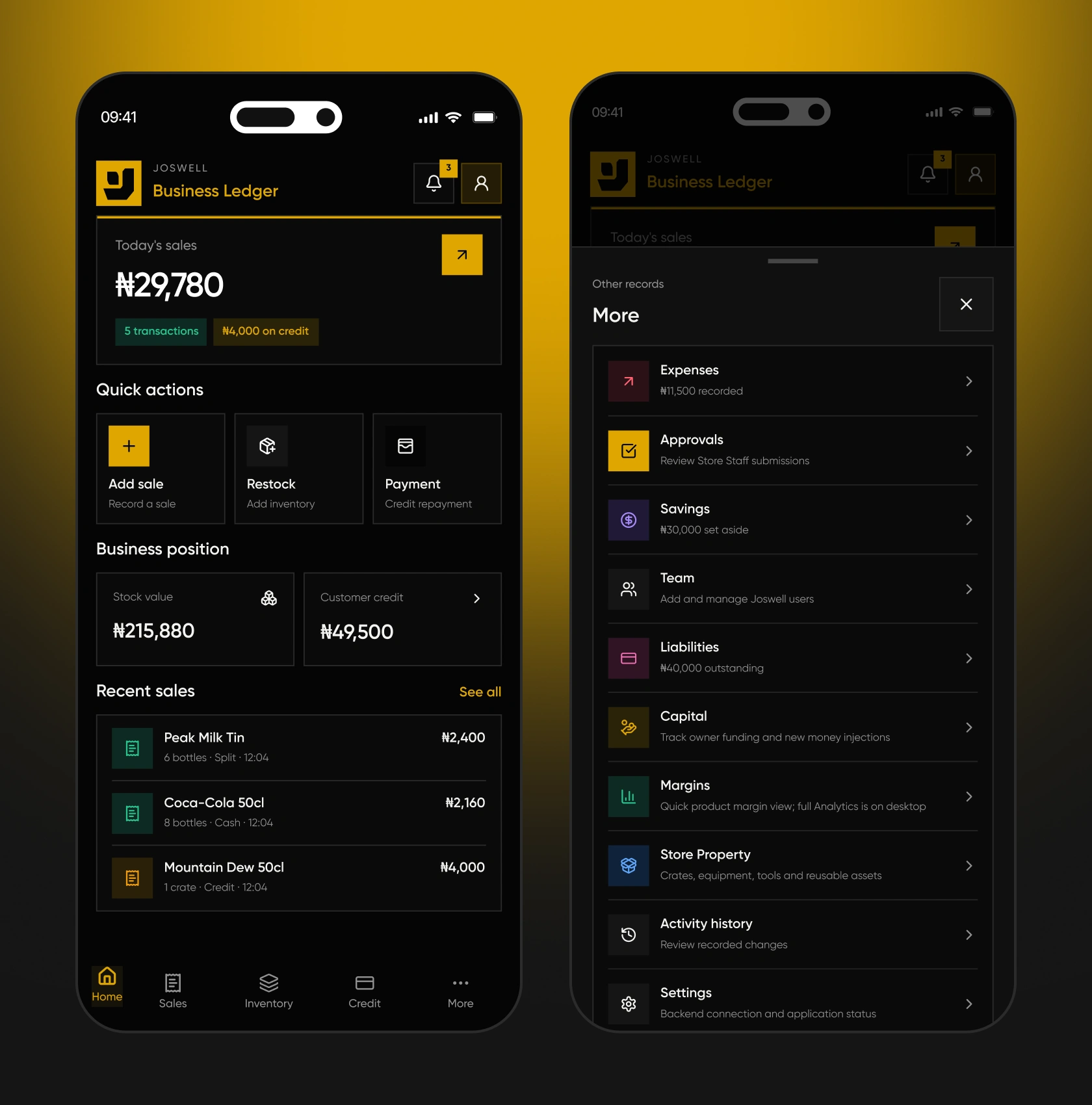
Home and more action screen
The Solution
I designed and built Joswell Ledger around four core principles:
Automated calculations: Sales, balances and stock levels are calculated from transaction records, not manually entered.
Flexible sales recording: Crates and bottles have independent prices and can be recorded in the same transaction.
Role-based workflows: Admins, managers and staff have distinct permissions. Staff submit drafts, while managers or admins approve or reject them.
Connected records: Sales, inventory, restocks and customer credit update together, eliminating duplicate data entry.
The interface was designed mobile-first for everyday store operations, with a desktop experience for management and administration.
The Outcome
Joswell Ledger went live in the store in late September 2026, replacing Google Sheets as the system of record for new entries.
The team now works from one shared system with role-based access.
The store recorded 26 sales entries in a single tracked day.
API response times improved from approximately 1,350ms to 26–80ms after moving the API closer to the database.
Reflection
Building Joswell Ledger reinforced something important: software for real businesses has to get the fundamentals right. Accurate records, clear permissions and reliable calculations matter more than adding features for the sake of it.
The goal was simple: make sure every sale the store makes actually gets counted.
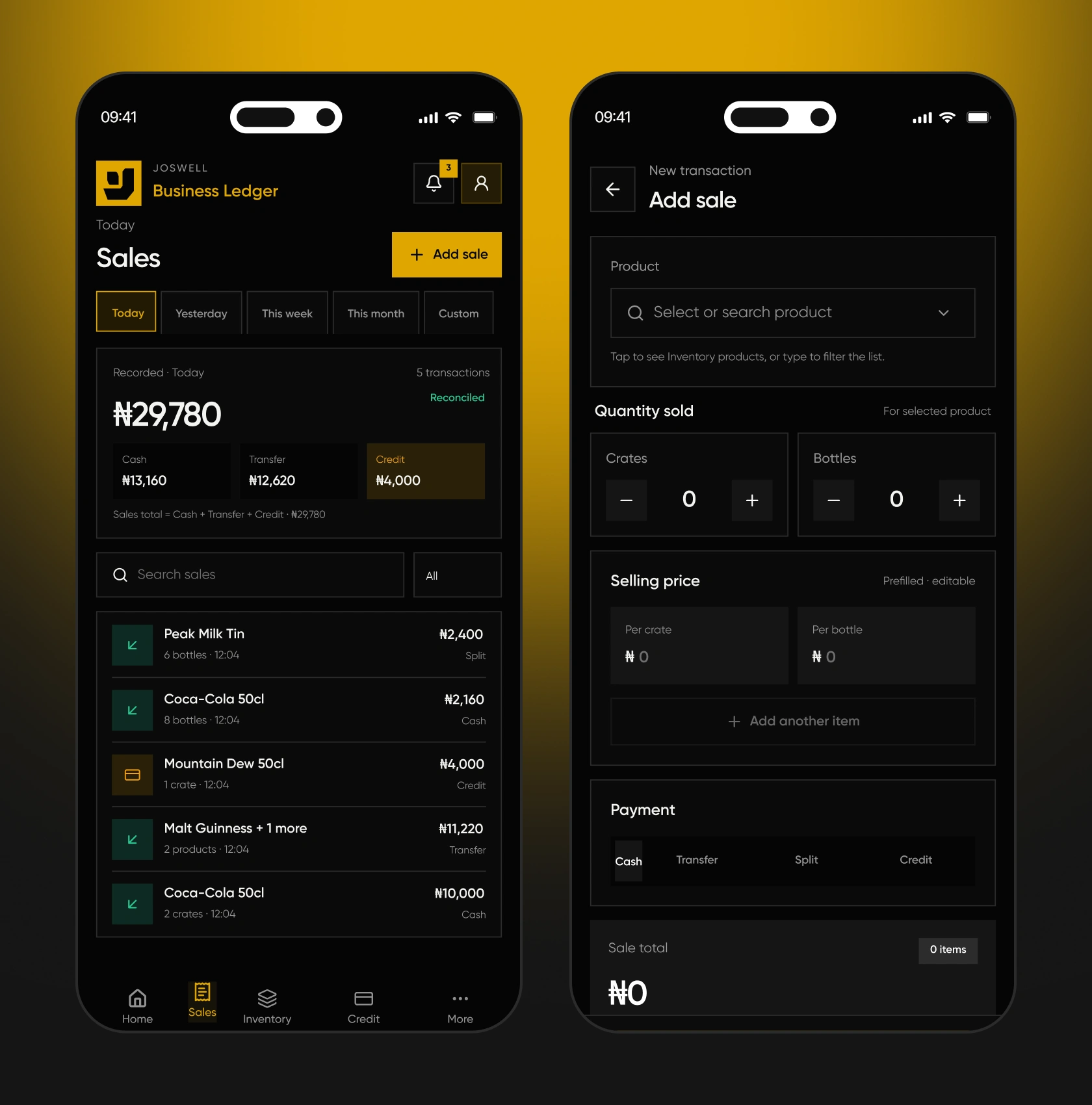
Sales screen
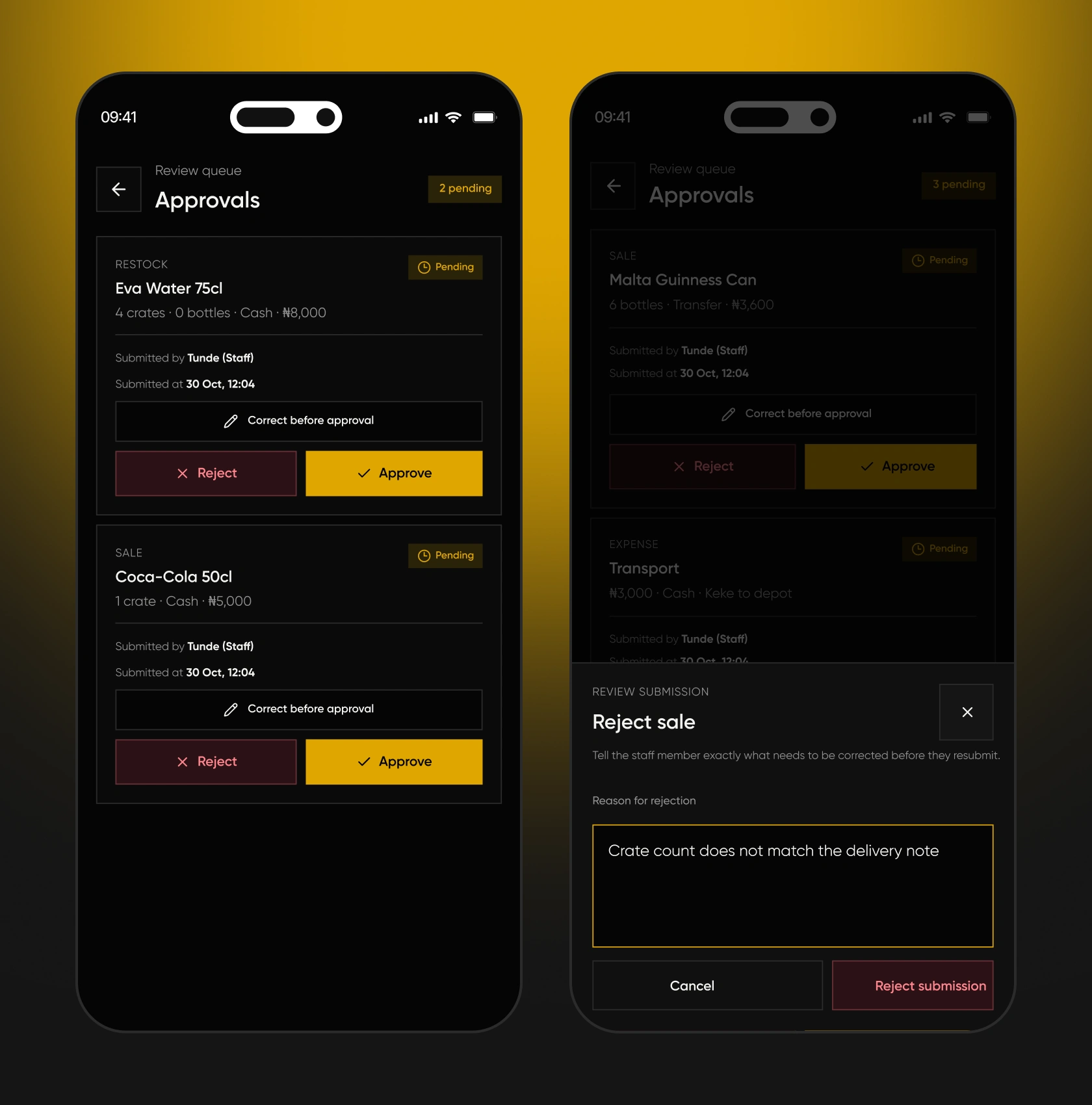
Approval screen
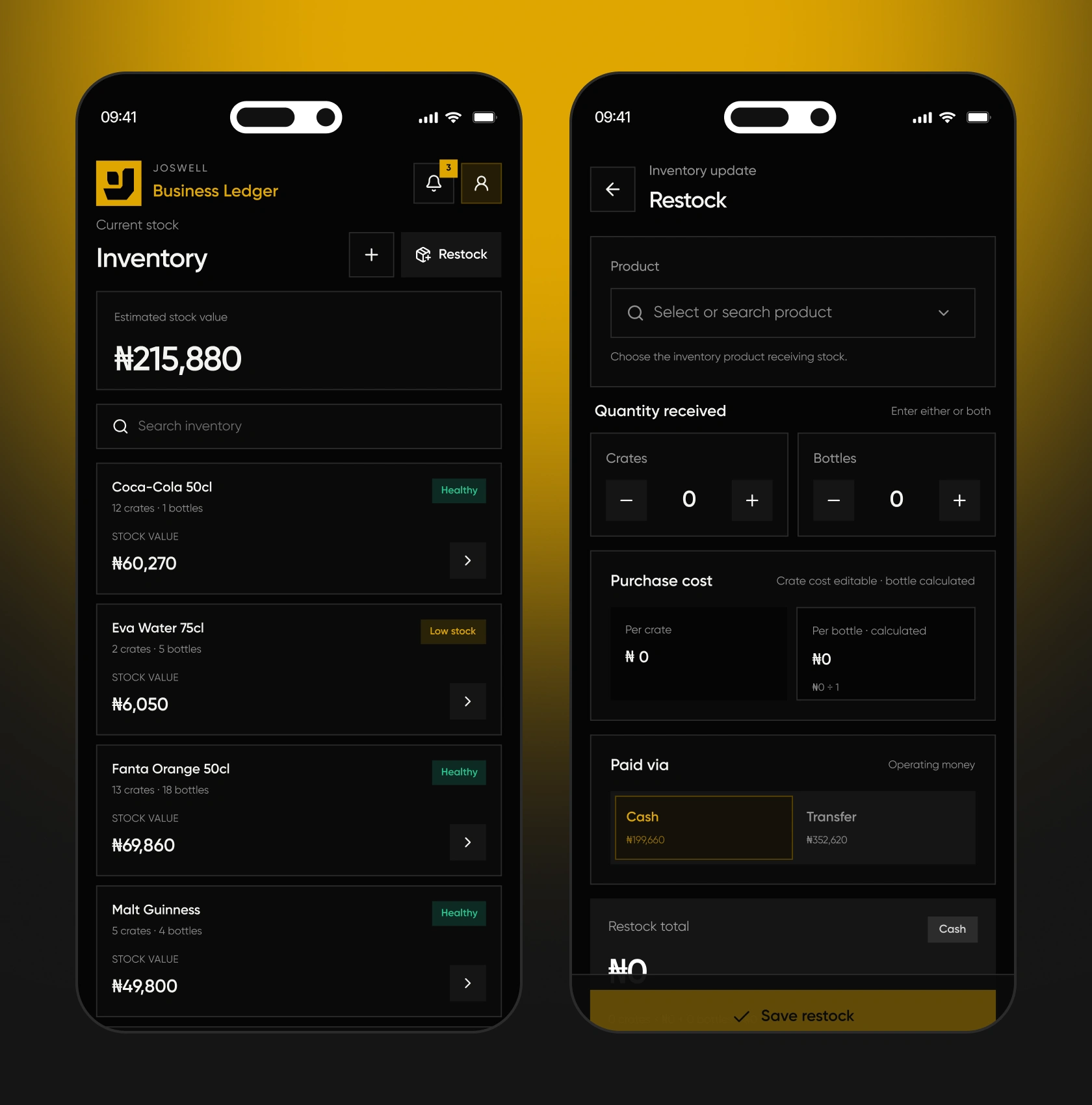
Inventory screen
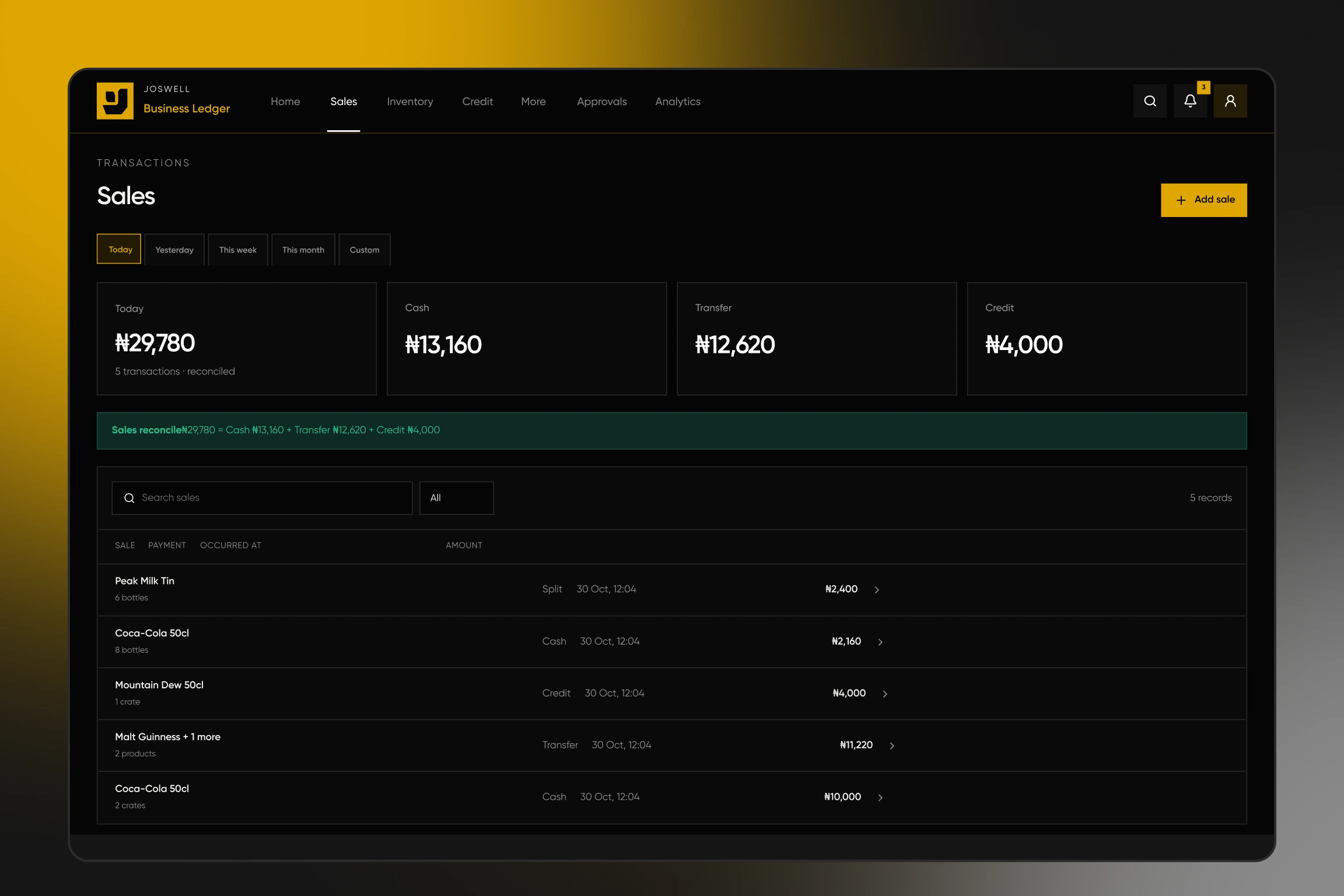
Sales desktop page
Like this project
Posted Nov 3, 2026
Led design of Joswell Ledger, a web app replacing unreliable spreadsheets in a retail store.
Likes
0
Views
0
Timeline
Sep 5, 2026 - Ongoing