FORGE: UI & Motion System for Modern Interfaces

Talia Przybyszewski


FORGE is a design engineering toolkit built to create modern, scalable interfaces with stronger consistency, motion, and ownership.
The project was created around a common problem in frontend development — UI libraries often introduce heavy dependencies, rigid styling systems, or components that feel disconnected from a product's identity. FORGE was designed as a more flexible alternative focused on reusable systems without sacrificing customization.
The ecosystem centered around two core areas: FORGE.ui and FORGE.motion.

FORGE.ui and FORGE.motion packages
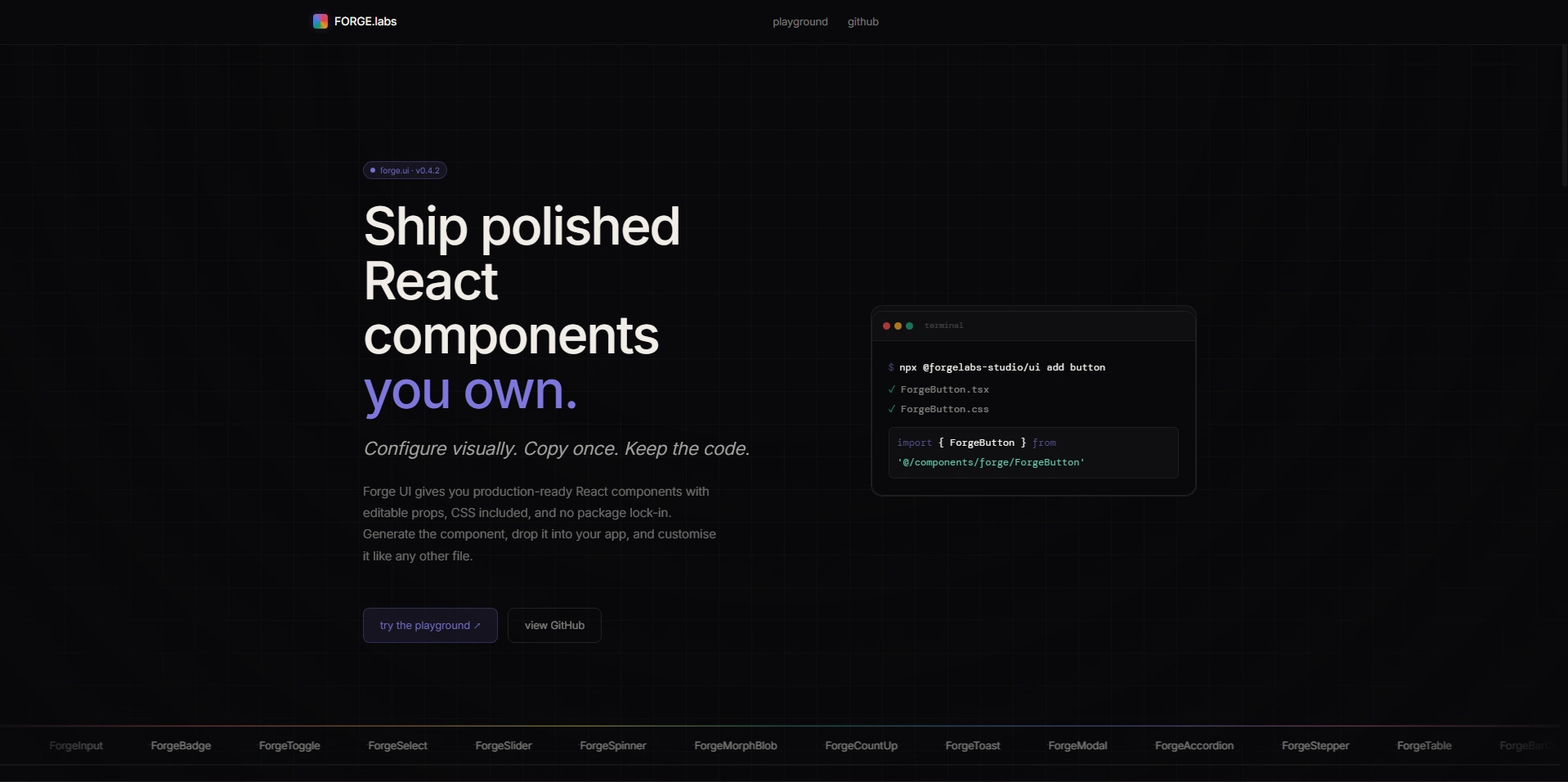
FORGE.ui was built as a spectrum-aware component system focused on scalable frontend consistency. The goal was to create reusable interface primitives that could adapt across different products while maintaining clean visual hierarchy, accessibility, and stronger design cohesion.
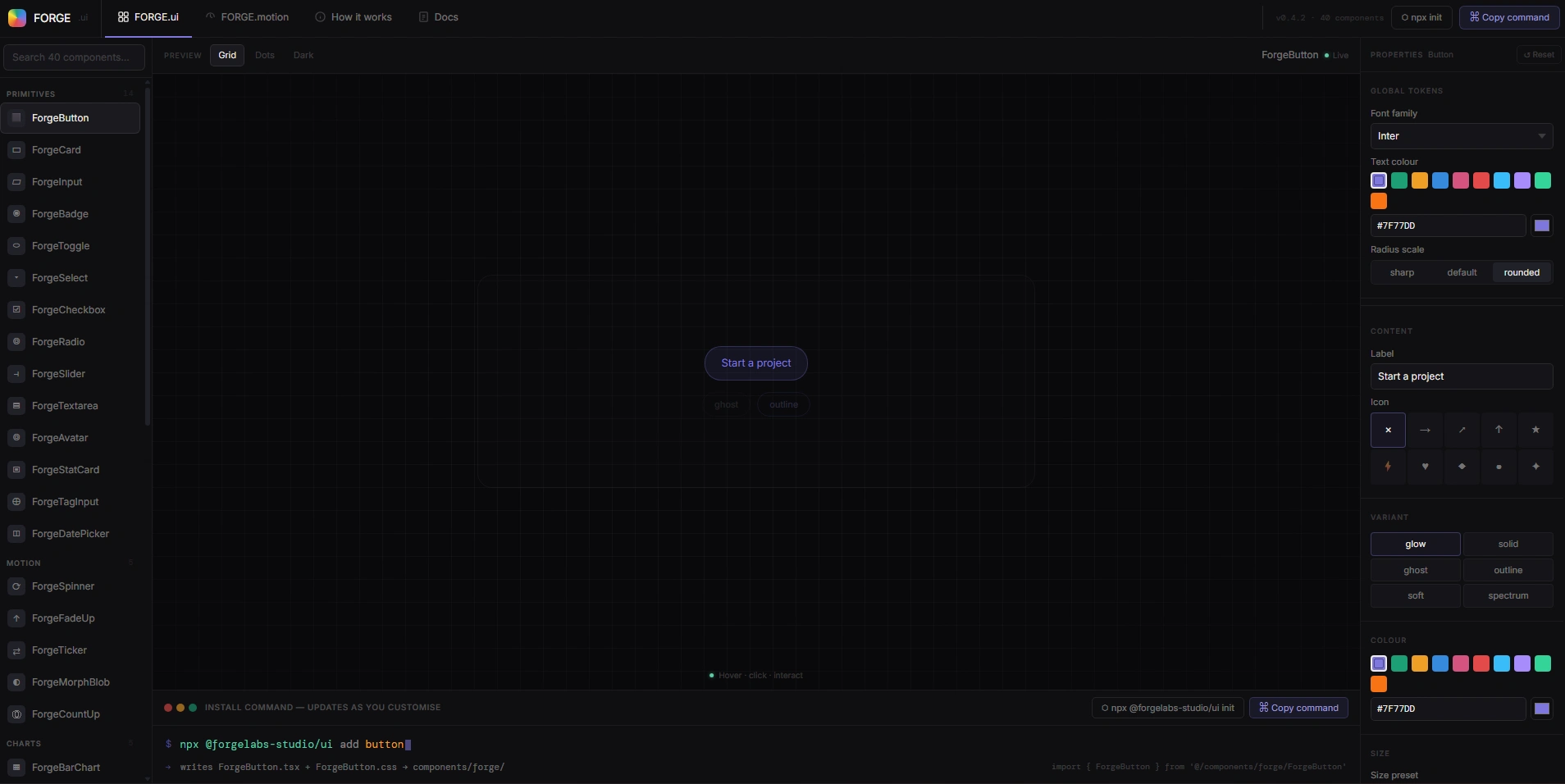
FORGE.ui playground
Alongside this, FORGE.motion explored reusable animation primitives designed to make motion feel intentional rather than decorative. Components such as reveals, transitions, counters, loaders, and staggered interactions were created to improve product polish and user experience while remaining lightweight and easy to implement.
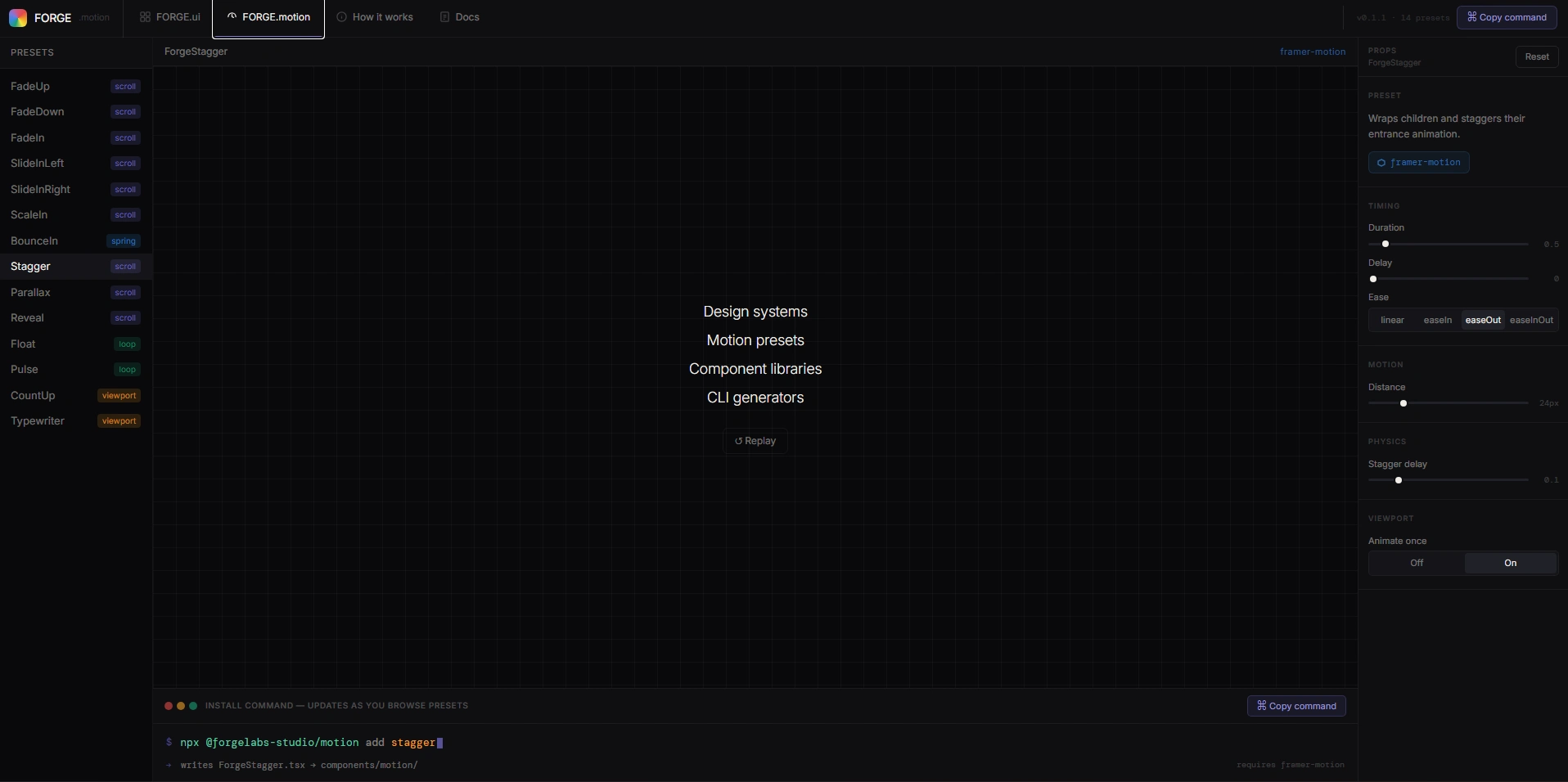
FORGE.motion playground
The broader system followed an owned-code philosophy — rather than locking developers into runtime-heavy libraries, components are designed to be flexible, scalable, and developer-friendly for real-world product builds.
Built using Next.js, React TypeScript, TailwindCSS, Framer Motion, and Zustand, FORGE became an exploration of where frontend engineering, product systems, and design consistency meet.
Like this project
Posted May 25, 2026
A design engineering toolkit focused on reusable UI systems, intentional motion, and owned-code frontend workflows for scalable modern products.