ClientDesk: White-Label Client Delivery Portal

Rongali Chaitanya


Designing for the next client decision
My role spanned product strategy, interface design, full-stack development, testing and deployment. I shaped the experience around three questions: what is happening, what needs my attention, and what happens next?
Visual hierarchy and interaction
The portal gives project status and progress the strongest emphasis, followed by approvals and updates. Warm neutral surfaces, dark green navigation and a restrained lime accent separate orientation from action. Labels and written status accompany the visual indicators so the meaning does not depend on colour alone.
The client portal and studio dashboard serve different audiences: clients see delivery context and decisions, while the studio manages the work behind them. This separation keeps operational detail out of the client experience. The screens below show these choices using fictional project data.
Product overview
One place for the next client decision
ClientDesk is an independently built Noerong product for agencies and consultants managing delivery across email, shared-drive links and spreadsheets. I designed and developed the client portal, studio dashboard, data model, deployment package and buyer documentation.
The problem
Clients need to know what is happening, what needs their approval and where to find the latest deliverable. The service team needs that same context without repeating status updates across several channels.
What I built
A branded private workspace for each client.
Project progress, milestones, dates and client-facing updates.
Deliverable links with approval and change-request actions.
Invoice visibility using buyer-owned payment links.
A studio dashboard and reusable business settings.
The workflow
Create a workspace → share its private link → publish updates and deliverables → collect a decision → keep the current status visible to both sides.
Decisions that matter
Files and payments remain external links. This keeps the core product focused on delivery communication and decisions without implying file hosting, payment processing or automatic provider synchronization. Private client links and protected admin access suit a focused single-business installation; shared team accounts and multi-tenant access need separate engineering.
Evidence and current scope
Nine automated product tests passed, and the buyer archive matches the tested source. The application uses Python, FastAPI, SQLite and Docker with persistent deployment storage. The public presentation uses fictional records. This is product and workflow evidence, not a claim of measured client time savings.
Explore the work
Inside the product
Narrated ClientDesk walkthrough: client workspace, studio operations, and white-label controls.
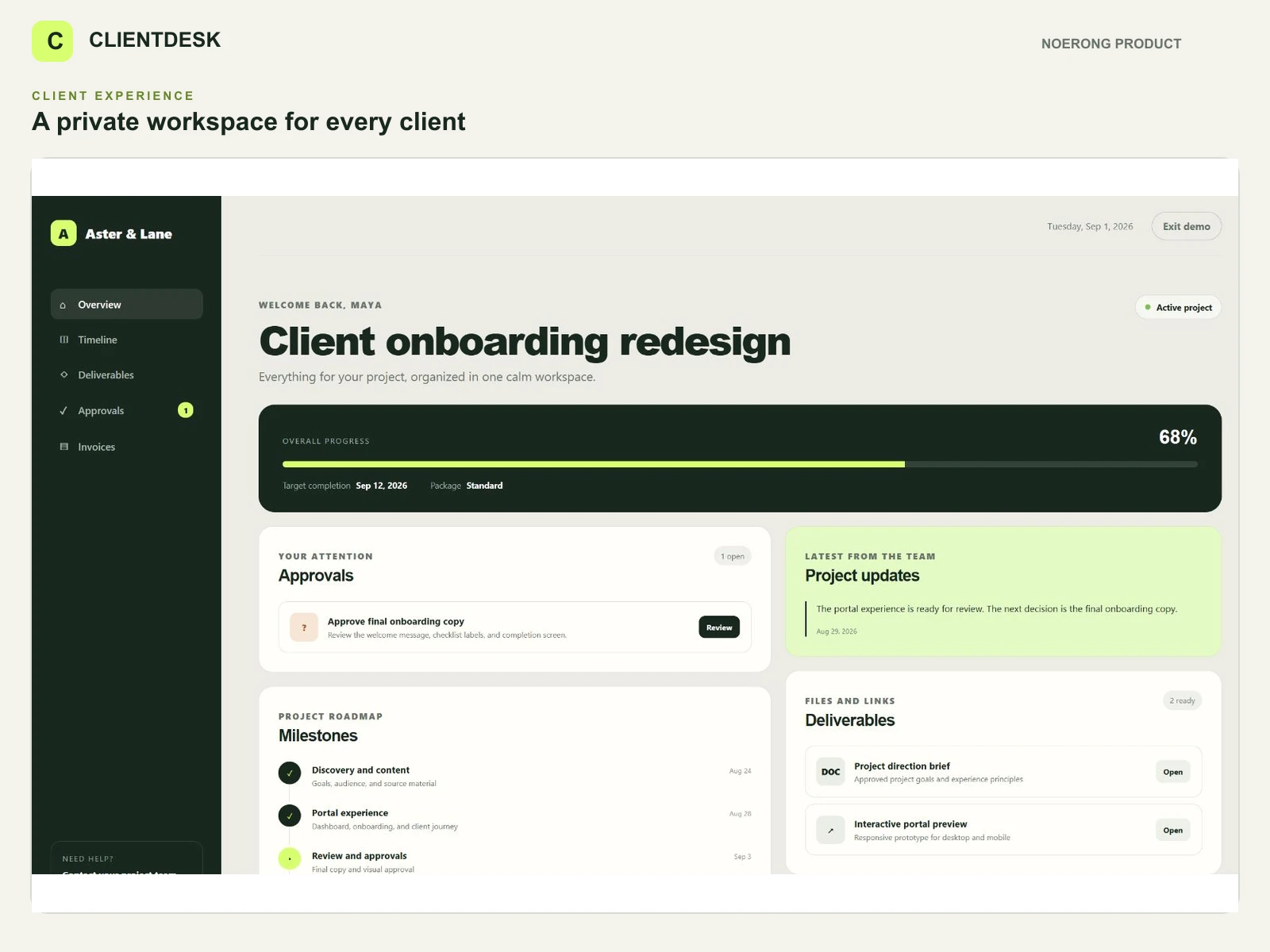
Private client portal with progress, decisions, updates, deliverables, and invoice visibility.
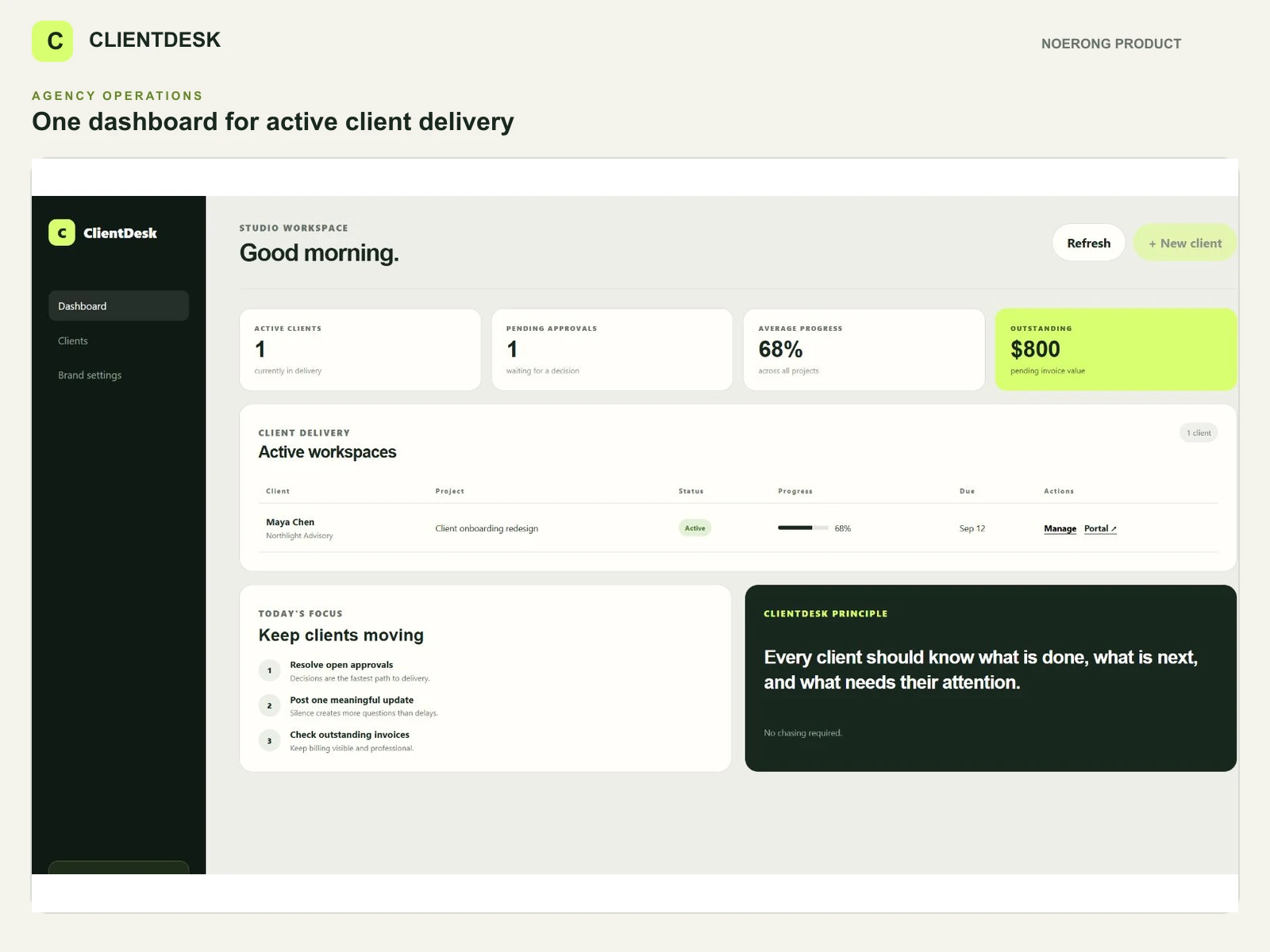
Studio dashboard for managing active client workspaces from one operational view.
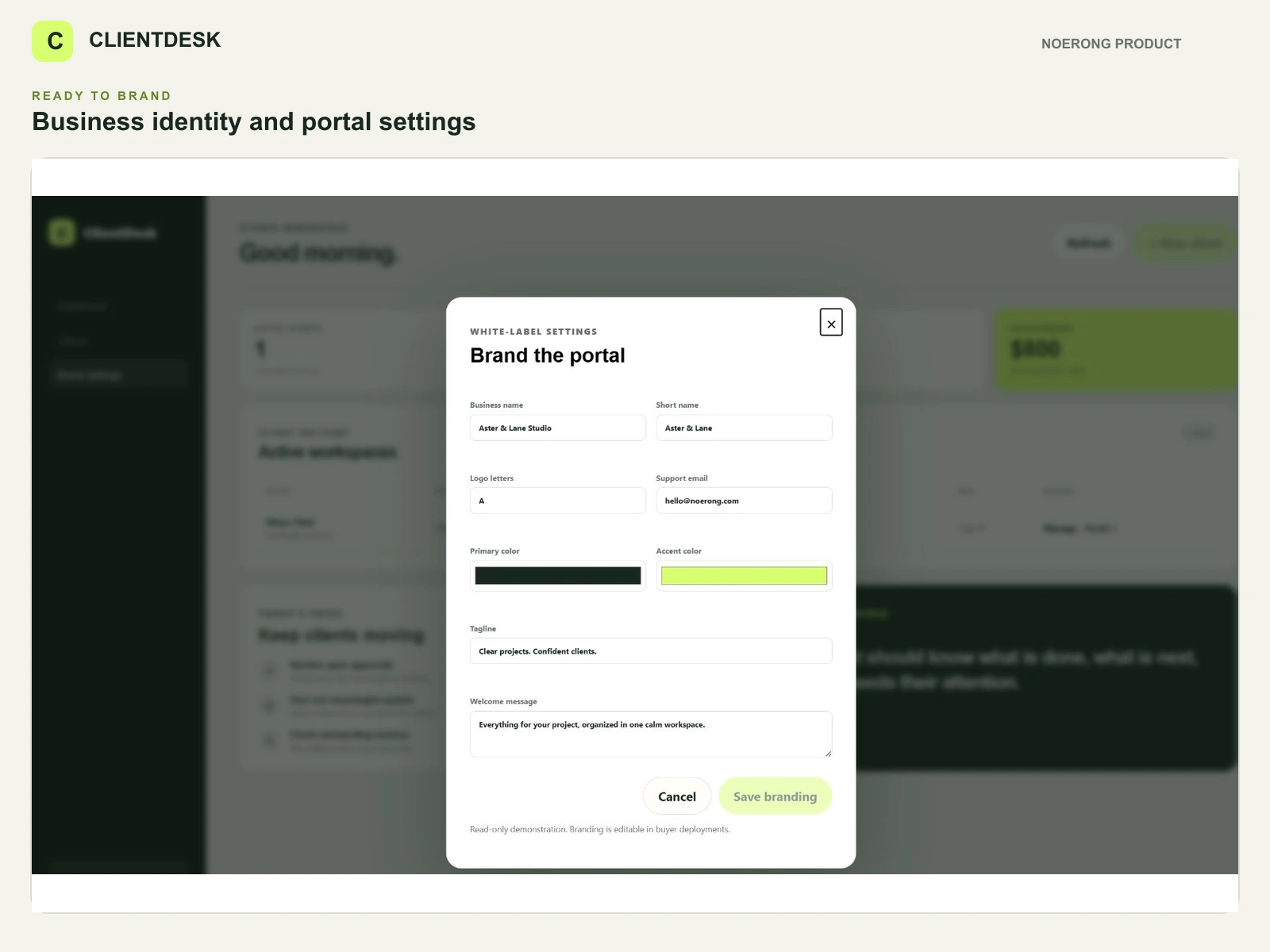
White-label configuration for business identity, client experience, and reusable onboarding.
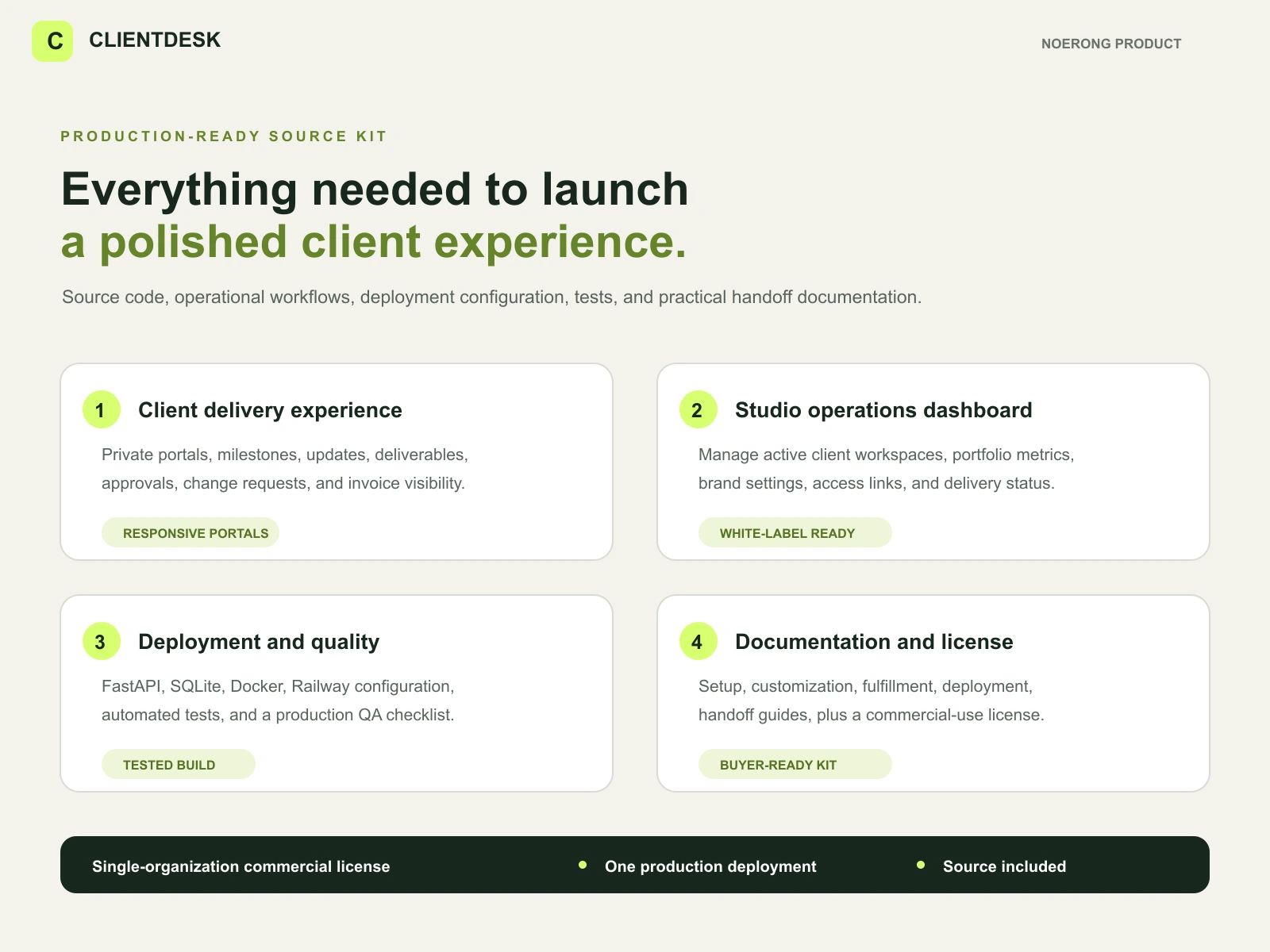
Source kit with deployment guidance, documentation and practical handoff assets.
Like this project
Posted Sep 1, 2026
Designed and built a client portal from 0 to 1, with clear progress, focused approvals and a separate studio dashboard. Product design through deployment.