Framer Homepage Design for EVC Guardian

Atiya Zehra
1 collaborator


Discovery
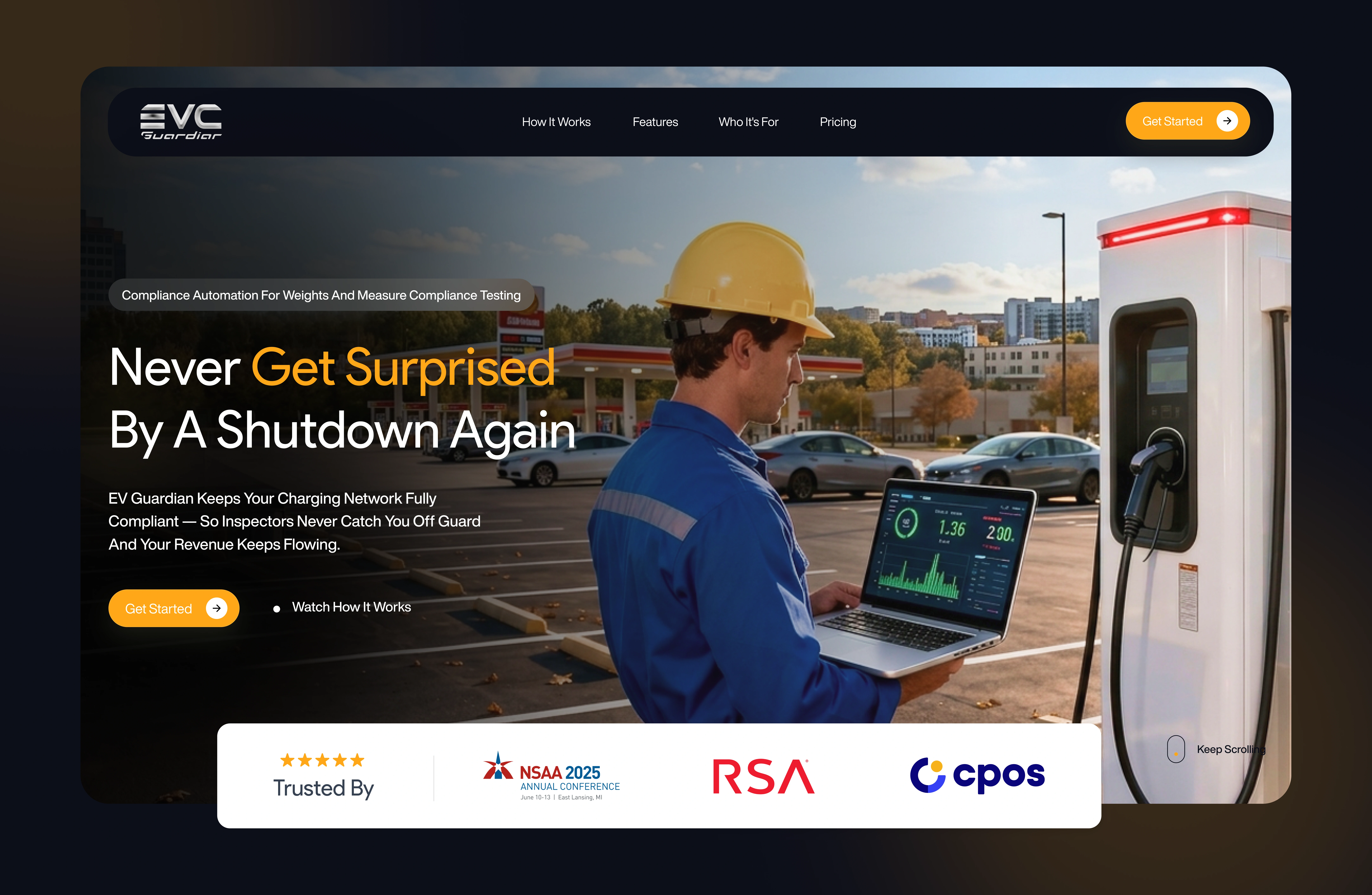
The first conversation with the client made the core problem obvious. EV charging operators were losing revenue not because their equipment failed, but because compliance gaps caught them off guard. Inspectors would show up, find a violation, and shut the station down sometimes for days. The client needed a homepage that made that fear tangible before offering any solution. The audience is technical and skeptical of software promises, so the design couldn't feel like a startup pitch. It needed to feel like it understood the job.
Implementation
The hero pulls from the physical environment of the work a compliance technician on-site, charger in frame, laptop open. That choice was intentional. Most compliance SaaS brands default to abstract data visuals or stock office photography. Grounding it in fieldwork builds immediate credibility with operators who spend time on-site. The headline splits across two tones: "Never Get Surprised" in white (the threat), "Get Surprised" echoed in amber (the emphasis). The trust bar at the bottom of the NSAA, RSA, and CPOS lands below the fold line just enough to feel earned rather than placed.
Client Expectation
The client wanted the hero to do two things at once: communicate urgency and project authority. They were entering a market where competitors had either very dry, regulatory-looking sites or overly polished SaaS aesthetics that felt disconnected from the actual work. The ask was to land somewhere between those two, serious but not boring.
Discovery
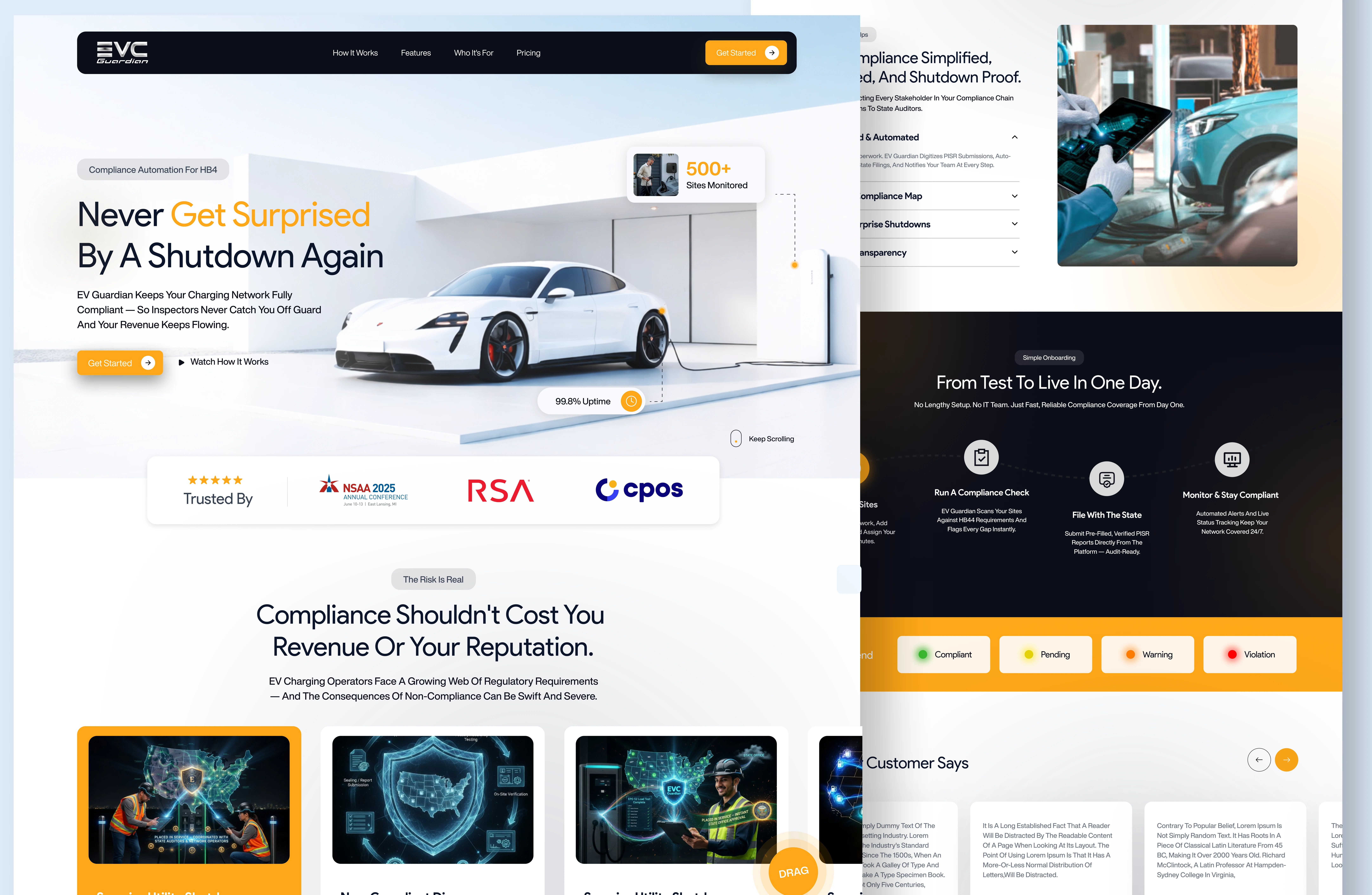
Once the hero earned attention, the next problem was sequencing. The client had a strong feature set, but listing features too early loses operators who haven't yet agreed that the problem is worth solving. The middle section needed to do two things in order: validate the pain, then present the platform as the obvious fix. The risk cards, surprise shutdowns, non-compliant labeling, and PISR filing gaps came directly from sales call transcripts the client shared. These weren't invented pain points. They were the exact phrases operators used when describing what had gone wrong.
Implementation
The risk section uses a horizontal scroll of scenario cards, each with a dark thumbnail and a short consequence statement underneath. Scrolling through them creates a mild but deliberate sense of accumulation. By the time a user reaches the fourth card, the problem feels bigger than it did at first. The features accordion on the right keeps the layout from getting heavy. Expanding one item at a time forces focus and avoids overwhelming operators who are used to skimming compliance documentation. The onboarding steps, Add Sites, Run a Compliance Check, File with State, and Monitor are kept to four. The client originally had six steps. Cutting it down was a deliberate push to reduce perceived implementation friction.
Client Expectation
The client's main concern here was that the platform would look complicated. Their sales team kept hearing "we don't have an IT team" as an objection. The design had to make "From Test to Live in One Day" believable, not just a headline, but something the layout itself reinforced through simplicity and visual calm.
Discovery
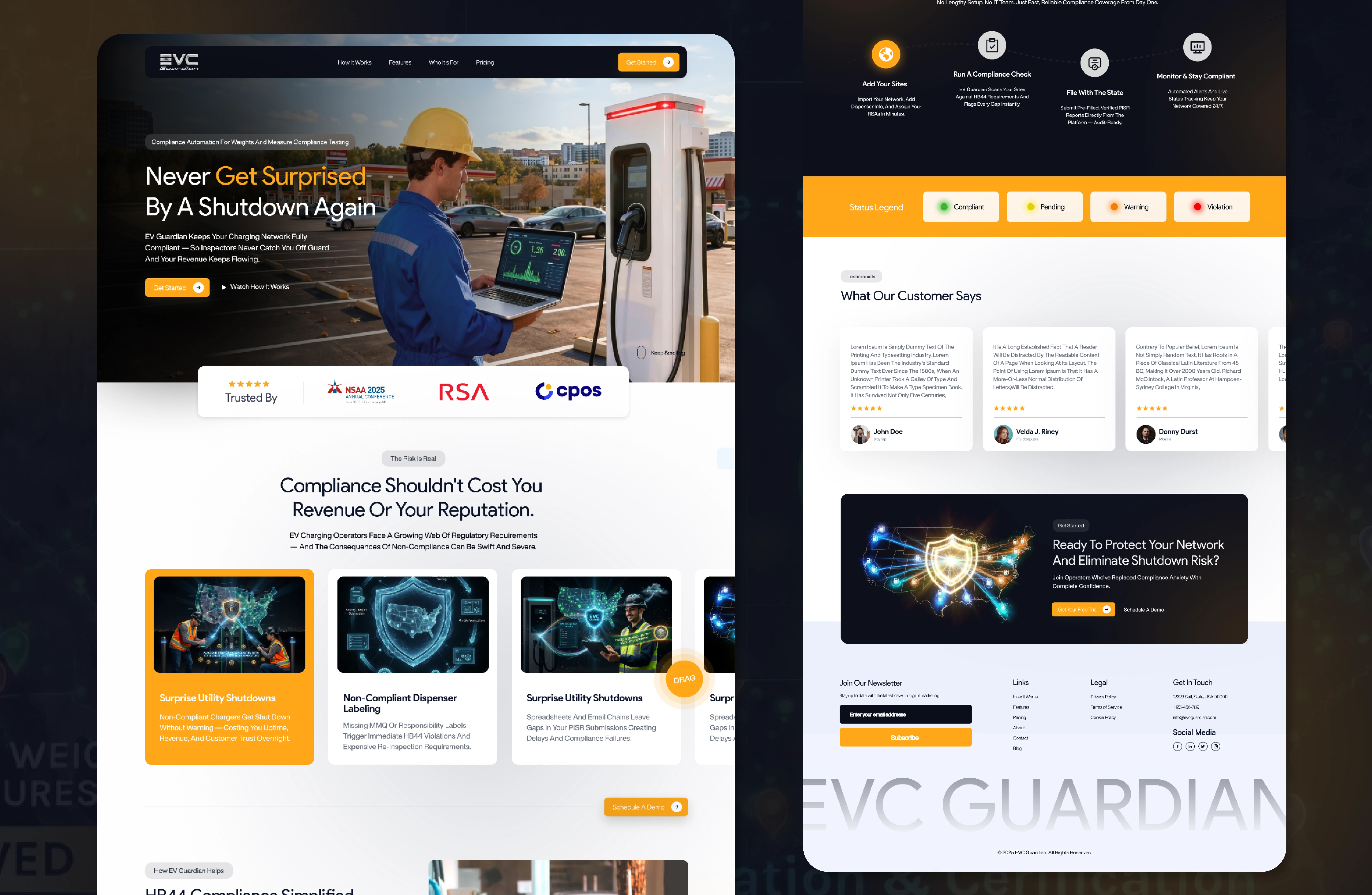
The lower half of the page had a different job. By this point, a visitor has understood the problem and seen the solution. What remains is trust and the final push to act. The client had early customers willing to provide testimonials but no unified visual system for displaying compliance status something operators would actually recognize from their own workflows. That gap became an opportunity. Building the Status Legend (Compliant, Pending, Warning, Violation) as a visible UI component gave the page a product preview without requiring a full demo embed.
Implementation
The status bar uses a traffic-light color logic that any compliance-adjacent operator reads instantly. It also subtly communicates that the platform has a real interface not just a backend filing tool, but a live monitoring dashboard. The testimonials section stays clean: three cards, five-star ratings, real names and titles. No carousels that hide social proof behind a click. The CTA section at the bottom goes darker navy with the shield visual to signal closure and gravity. "Ready to Protect Your Network and Eliminate Shutdown Risk?" is a restatement of the hero's promise, now backed by everything the page has shown. The footer includes a newsletter signup, full link structure, and social handles standard, but laid out to avoid the cluttered bottom-of-page problem most SaaS sites have.
Client Expectation
The client wanted the page to convert two types of visitors: operators ready to start a trial, and decision-makers who needed to schedule a demo first. The dual CTA "Get Your Free Trial" alongside "Schedule a Demo" was their direct request. The footer treatment and brand lockup at the base were also important to them. EVC Guardian is still building brand recognition in a niche space, so every touchpoint reinforces the name.
Like this project
Posted May 13, 2026
Process-led Full homepage design for an EV charging compliance platform. Hero to footer, every section is built around operator pain points and conversion.
Likes
3
Views
23
Timeline
Apr 1, 2026 - May 8, 2026
Collaborators