GardenHarvestAI: Selling a garden companion by teaching first

Will Derman


Eighteen useful things before the ask
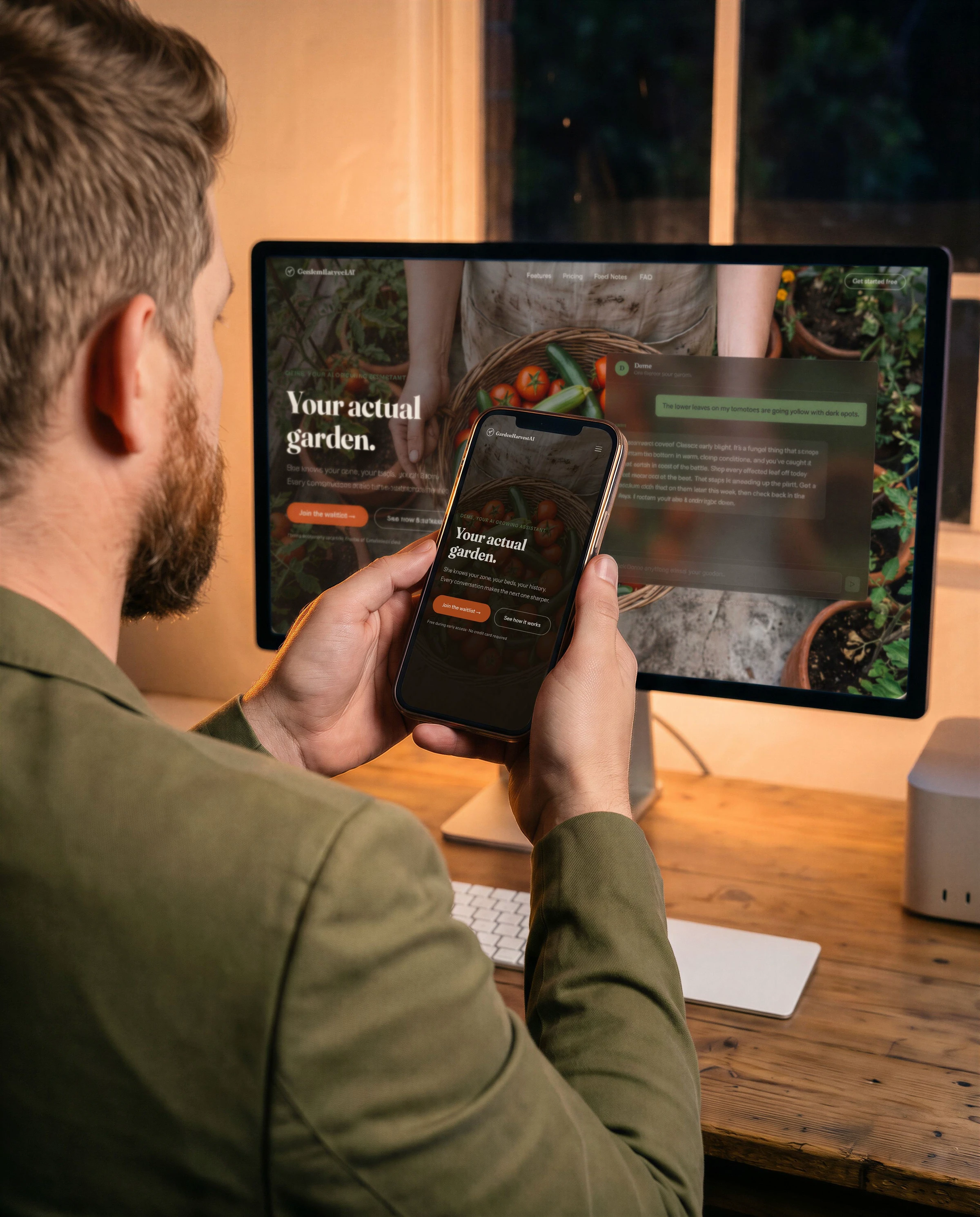
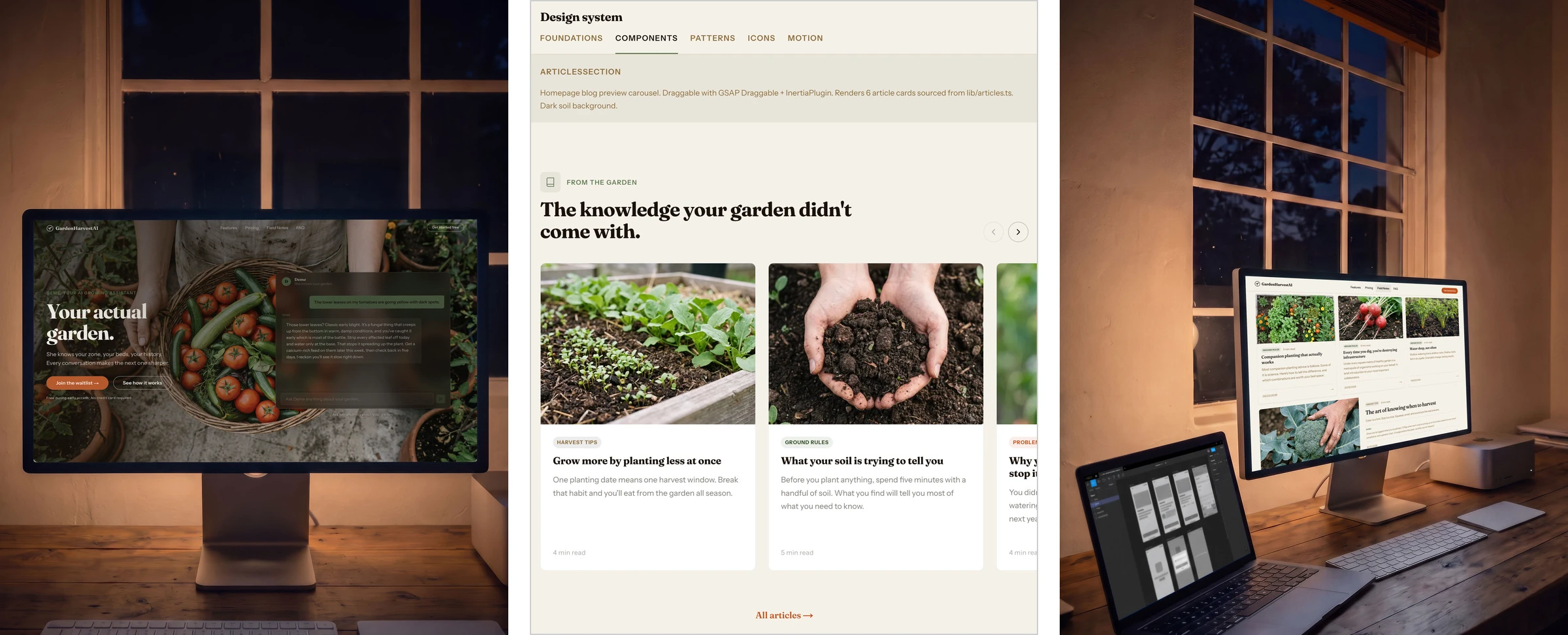
A pre-launch site that earns a gardener's trust before it asks for anything. Deme is an AI companion that knows your garden, and my co-founder is building her. I designed, built and wrote the site that finds her an audience, aimed at growers rather than software buyers, and art-directed every image on it.
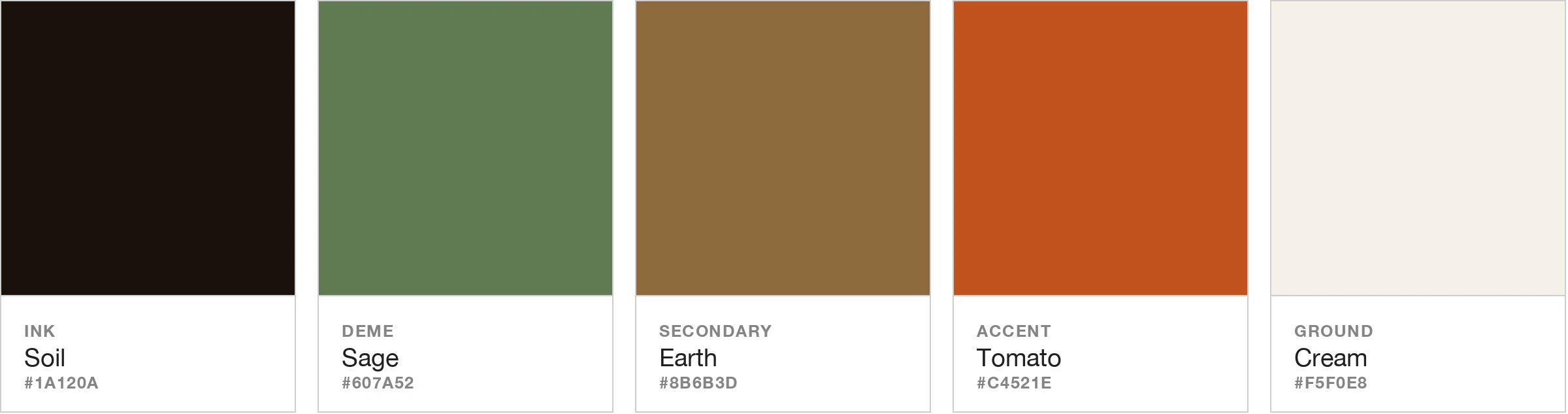
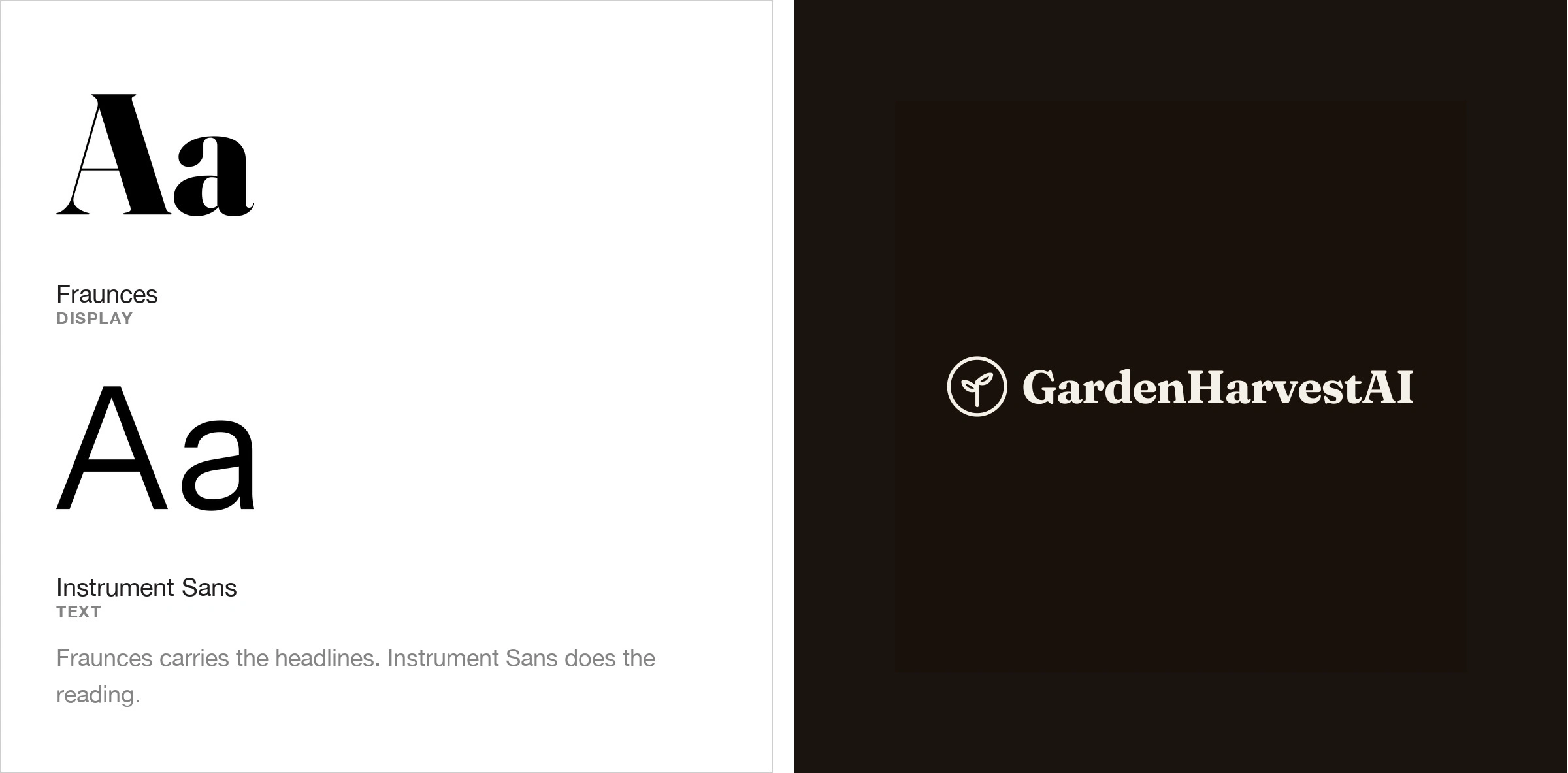
Colour and type
Gardeners are not shopping for software, and Deme is software
Picture the reader outdoors, puzzling over split tomatoes. Deme means nothing to them, they are not after an app, and software has no bearing on their question.
A feature list sells a tool. A companion only proves itself over weeks. That leaves the site asking a stranger for trust before offering anything that earns it, so opening with an explanation is out. Being useful to somebody who arrived for another reason is the only way in.
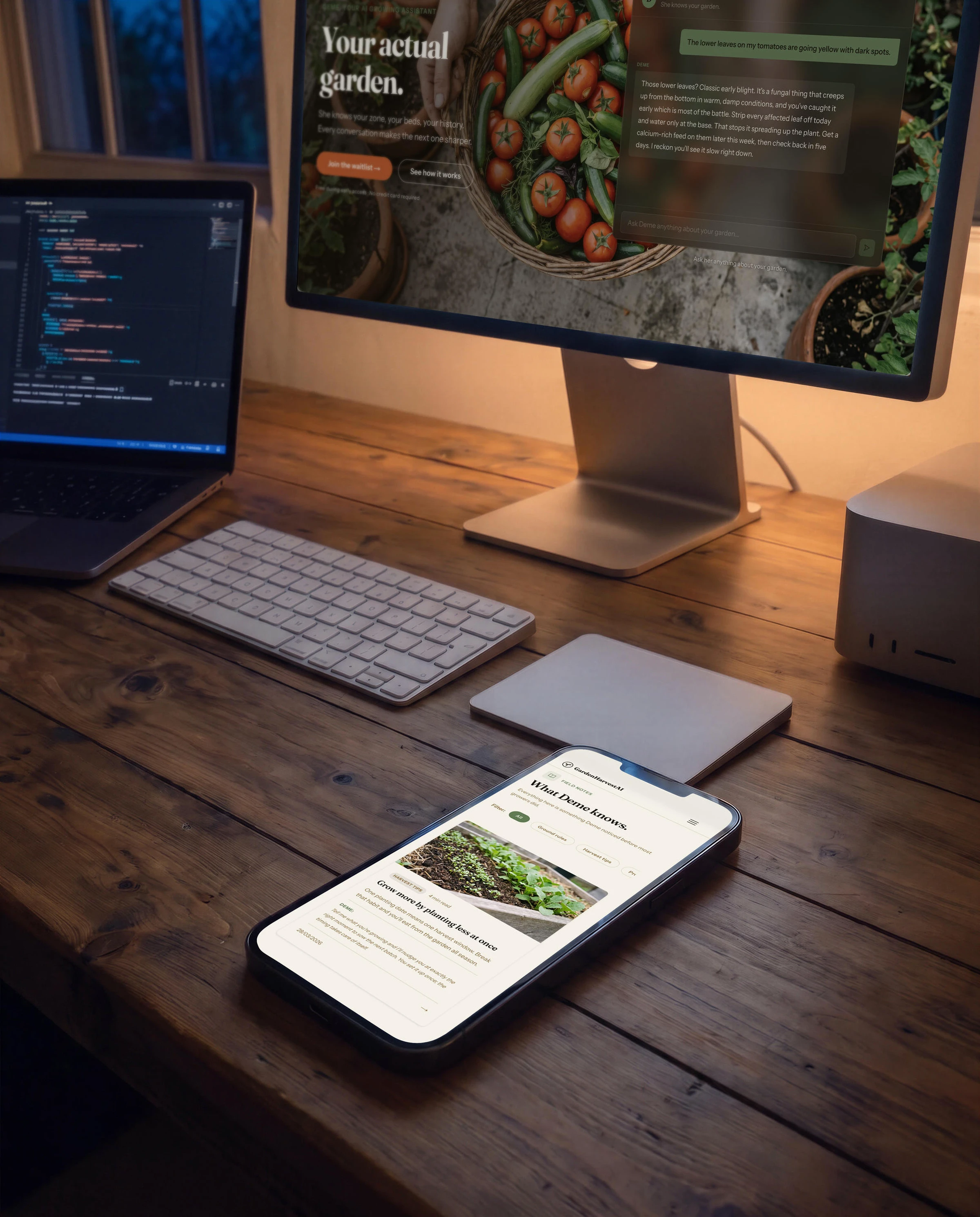
Two settings, about as different as they come: held in one hand in a garden, and wide on a desk. Most sites settle on three or four widths and leave the gaps to chance. This holds a single continuous scale between 320 and 2,600 pixels, so nothing in that span was merely tolerated.
An AI product cannot afford to look like one made it
Generated stock illustrated the first version, and it showed: waxy skin, airbrushed faces, a warm haze over every outdoor frame, and image sizes set by the generator, not the layout.
Some were wrong about their own subject. Advice on checking broccoli came with a cauliflower. A piece on growing plants side by side showed a flat-lay of picked fruit, oranges included. The diagnosis tool, whose whole job is spotting a sick plant, showed a healthy one.
Thirty-five were re-briefed and replaced. Each brief started from the text the picture sat beside, so meaning drove the image, not mood. Then plain daylight with the haze ruled out, hands rendered right, and southern-hemisphere detail down to the fencing and the mulch, because the generator assumes the northern one. These are generated as well, directed rather than shot. Claiming otherwise would only move the dishonesty somewhere else.
You cannot describe a companion. You can let somebody talk to her
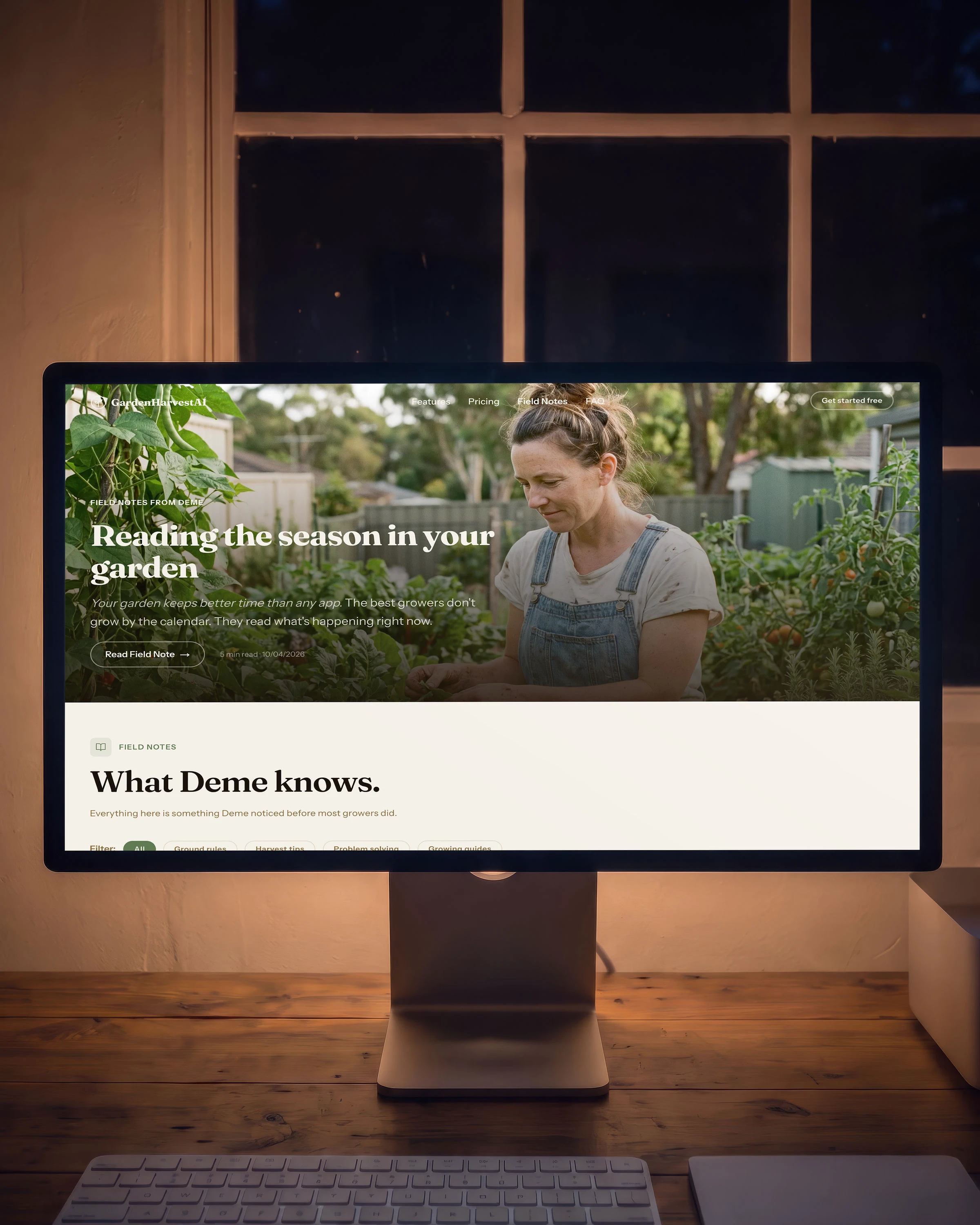
Being told she knows your garden is nothing like asking about yellowing lower leaves and hearing back from something that sounds like it has grown tomatoes.
So she occupies the page instead of being summarised on it. The hero is her, and typing a question is the first thing available. She reappears wherever the site makes a claim, so the proof sits next to it.
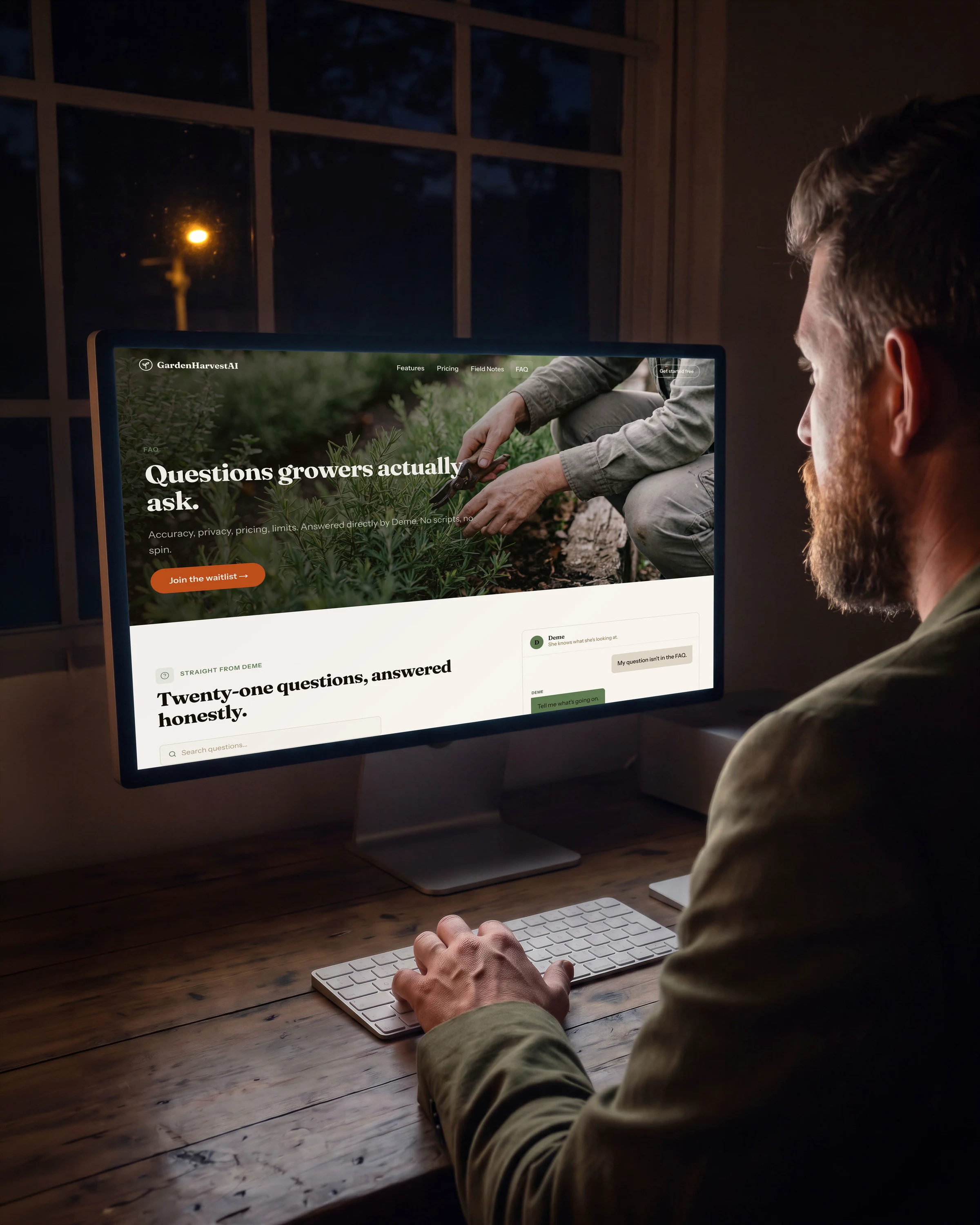
The questions page is where this pays off. Somebody else's list always omits yours, and the usual remedy is a form and a delay. Here the list stops and she takes over, answering where you got stuck. For now her answers are curated: the model is not connected yet, and the build lists that as a launch task. The placement, the fallback, a daily message cap and the seam the model drops into are already built.
One pair of hands only stays consistent if the consistency lives somewhere
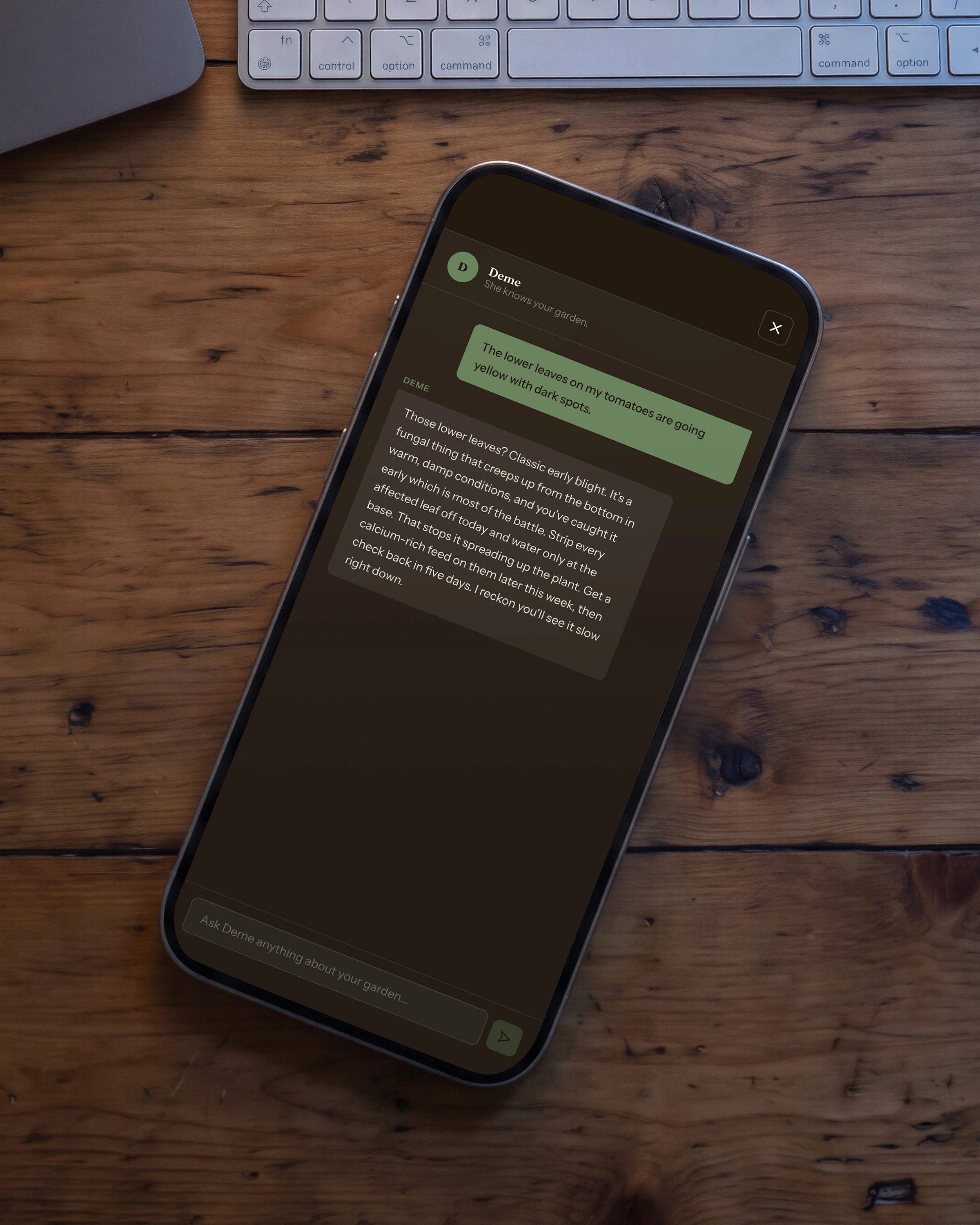
Forty-four components, nothing borrowed, on three layers of tokens, each able to see only the one above it, so the whole palette shifts from one spot. Drop a class onto a section and every semantic colour flips to the dark set, children untouched.
The write-up runs past two thousand lines, covering every token group and every component with its usage, and one page shows the lot live at full width. Not a document of intentions. The working thing.
That is what buys the rest. Eleven pages and eighteen guides agree with one another because disagreeing takes more effort, and a range that wide only survives as a formula. The write-up means none of it depends on me.
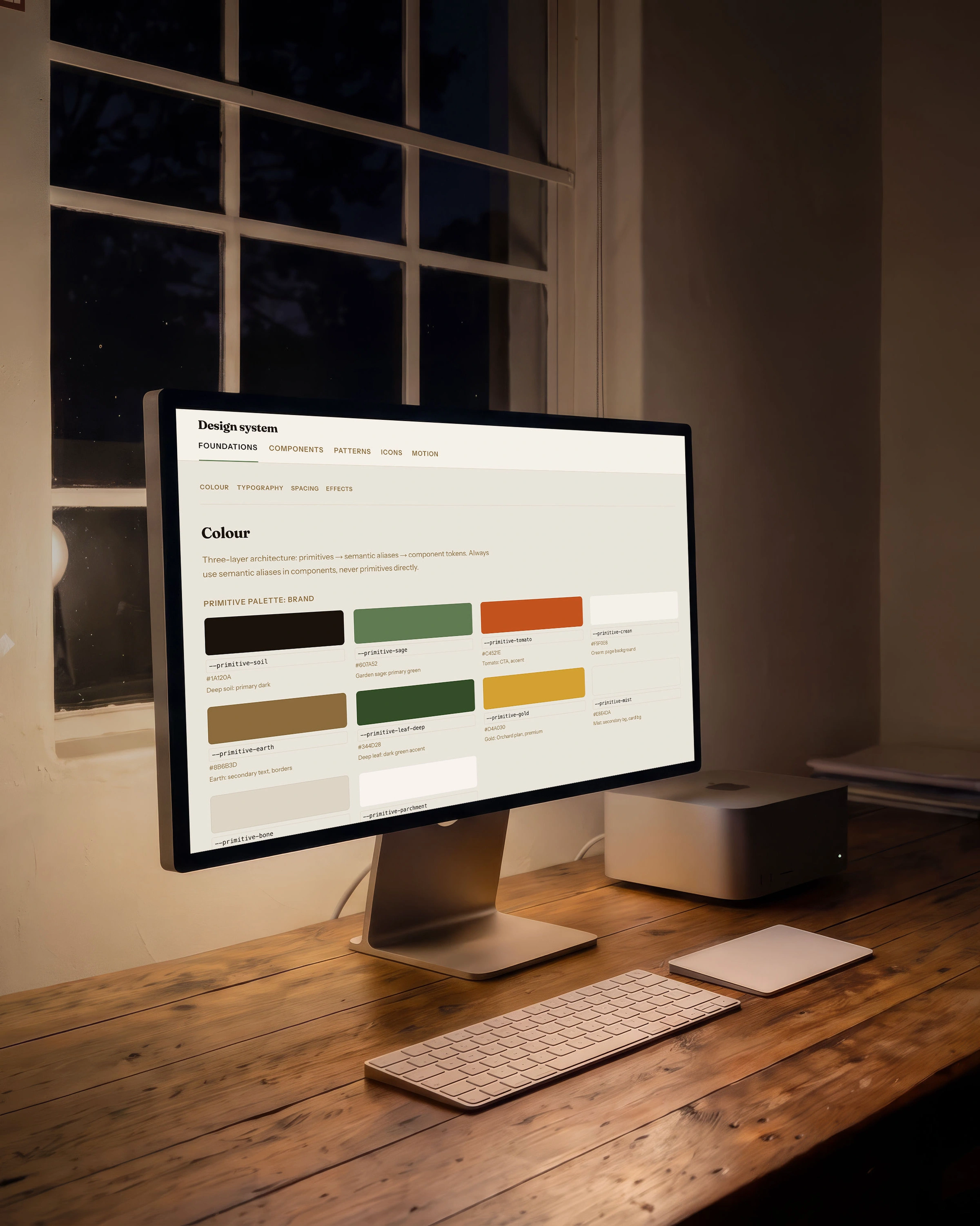
The useful part is at the front and the ask is at the foot
Eleven pages and forty-four components, with the strategy, the design, the build, the art direction and the writing done by one person. The count matters less than the trade that turns up three times.
Opening on the product itself would have been quicker. Eighteen useful guides first is the only version that holds once a reader works out what you are doing. Swapping thirty-five images no reader had objected to is the same bargain, and so is letting visitors talk to her. Each time, the costly choice showed its price and the cheap one buried it.
The route needs somebody who can do every part of it, and the writing is where it usually collapses. A plan clears the meeting, then meets an empty page.
Nothing here carries a measurement, because nothing has gone live.
The website

The work
The numbers
Days, start to finish: 9
Smallest to largest: 8 times
Guides before the ask: 18
Images re-directed: 35
Like this project
Posted Sep 13, 2026
A pre-launch site that teaches before it sells: eighteen growing guides ahead of the ask. Design, build, writing and art direction for an AI garden companion.
Likes
0
Views
3