
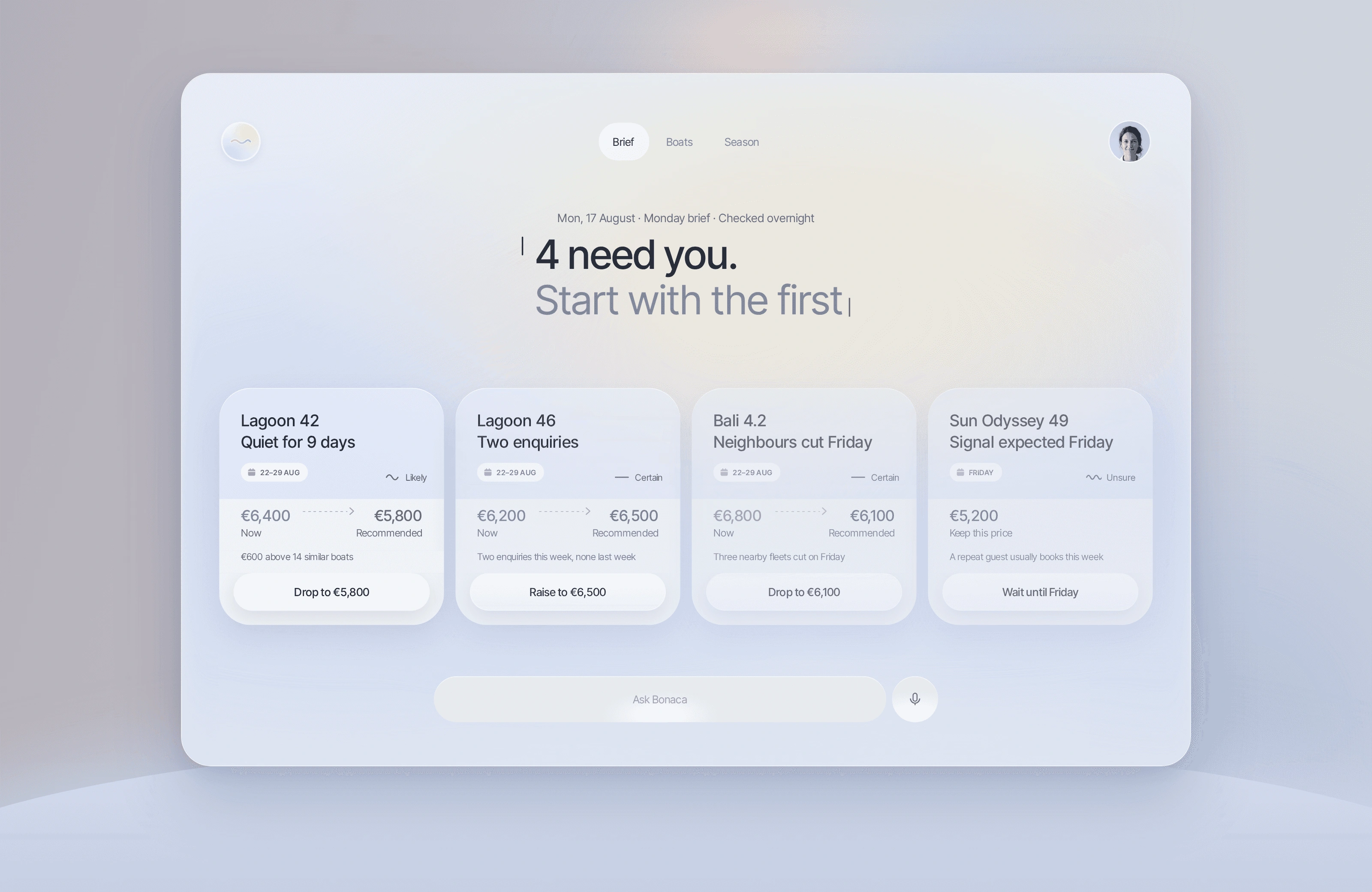
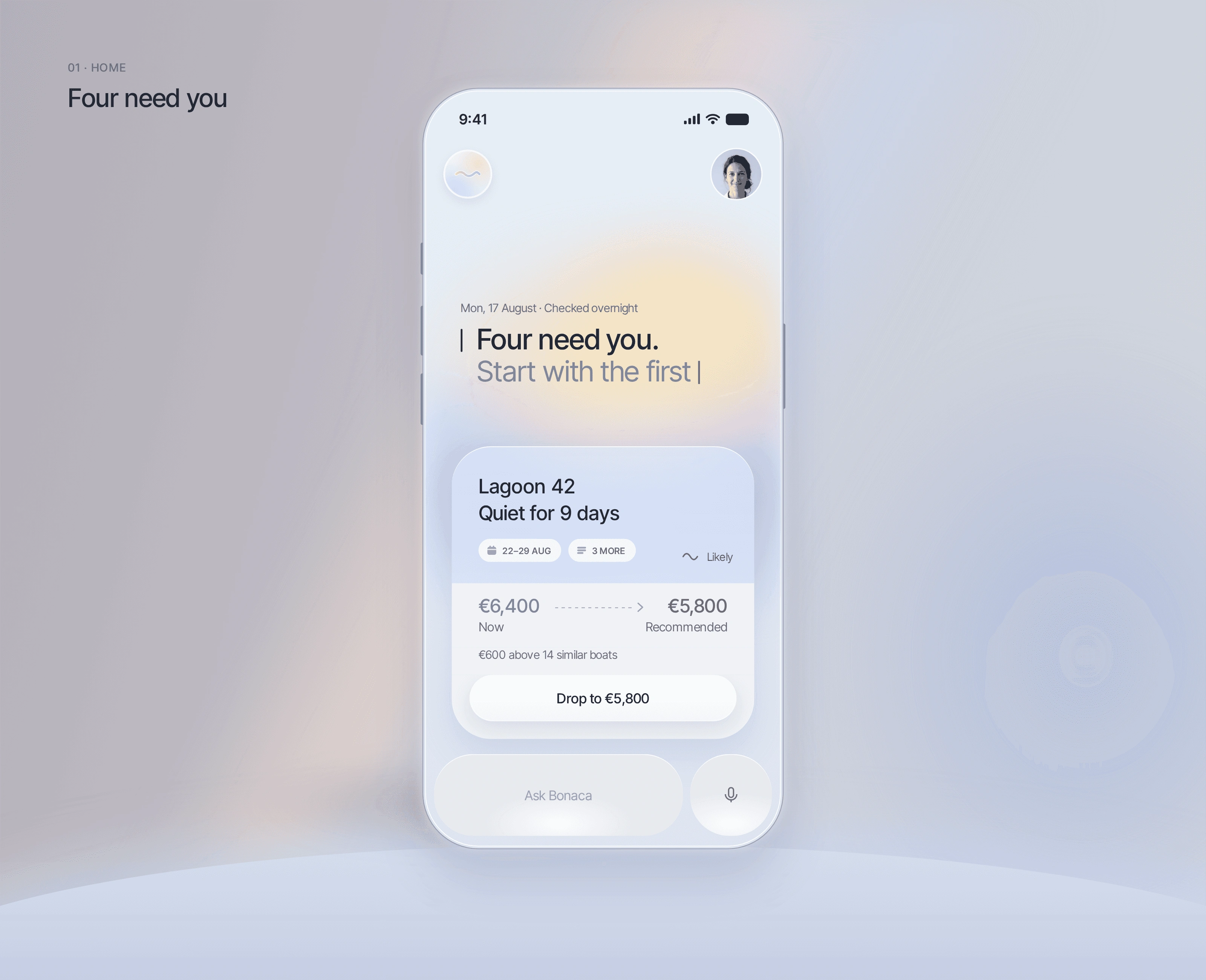
Bonaca home screen: Four need you
Bonaca — A Revenue Copilot for Charter Fleets
An AI copilot that tells yacht charter operators when to lower a price, and when to wait. On the phone for the daily call, on the desktop for the weekly plan.
Role: product designer, end to end. Research, product strategy, interaction design, visual identity, design system, motion. 2026. Design complete and in development.
Someone already worried about an empty boat shouldn't have to read a dashboard to know what to do.
In short
Problem: charter operators guess when to cut prices, and a wrong guess costs money either way.
Solution: one recommendation per boat, with the reason, and a decision in one tap.
Outcome: design complete and in development. There are no results yet; success will be measured by how many recommendations operators act on and how long the Monday decision takes.
Context
Croatian charter fleets rent boats by the week, and a boat is booked about sixteen weeks out of fifty-two. An empty week isn't a gap, it's the margin.
Challenge
When a week isn't booking, someone has to make a call: lower the price now, or wait. Lower too early and you give money away; wait too long and the boat stays empty. Croatian operators make that call earliest, with the least information.
Today's tools show numbers, not answers. They compare competitor prices and leave the decision to you.
The question I designed for: how do you help someone make an expensive decision when they're already worried?
Constraints
The people pricing aren't revenue managers. It's the owner or base manager, between other jobs. A Monday decision had to take about ten minutes.
Trust before features. An AI that recommends a price cut is asking for money. It has to show its reasons, admit mistakes and stay easy to overrule.
Two moments, two devices. The weekly plan happens at a desk; the urgent call happens on the dock. Both had to feel like the same product.
No confidence percentages. Research showed people trusted "78% likely" blindly or ignored it. Confidence had to be shown another way.
Approach
Research first. Summer 2026, 13 participants: interviews, a first-click test, a pilot and A/B tests. Three moments came out of it: the Monday brief, the stall (when bookings stop) and the season review.
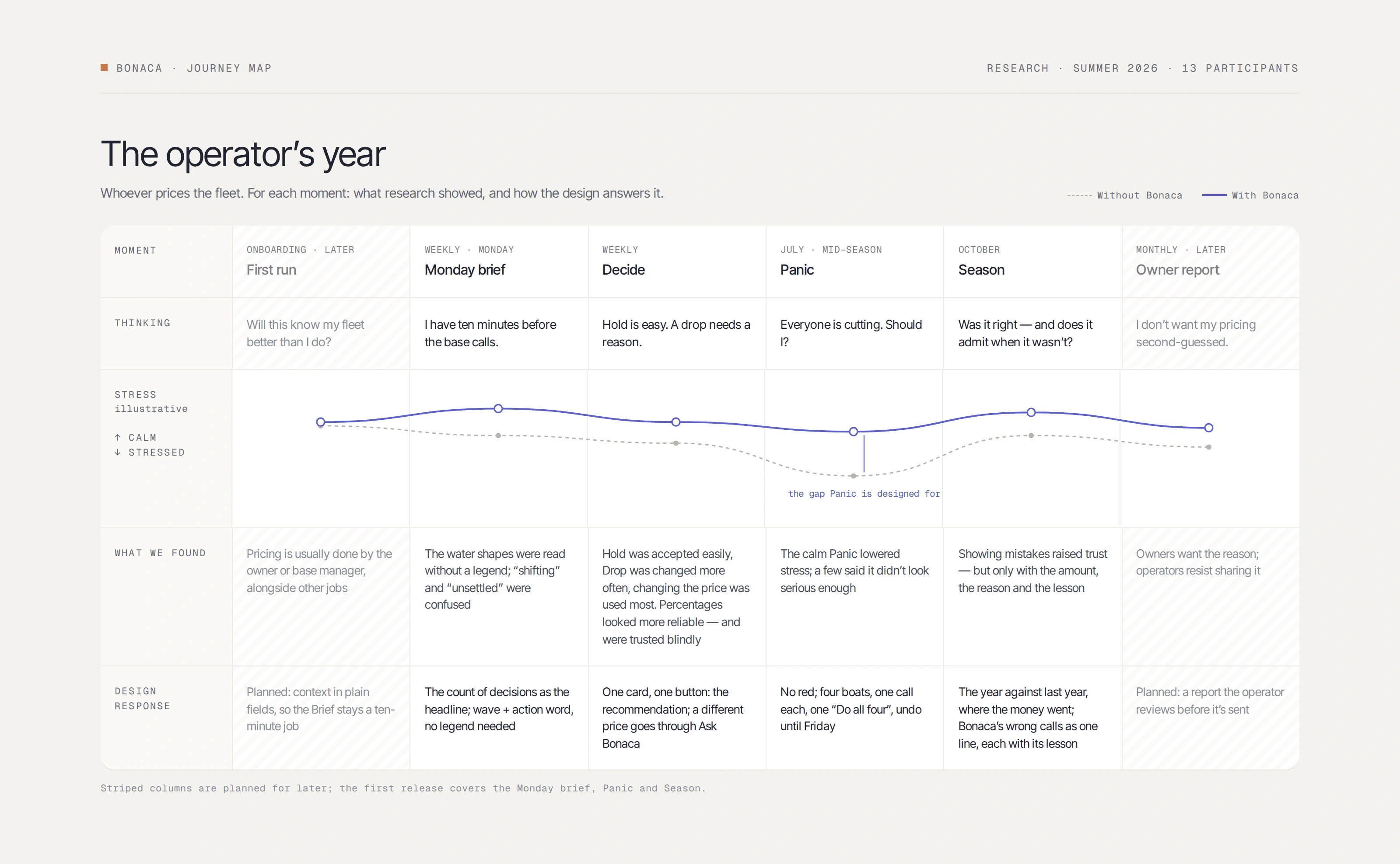
The operator's year: what research showed at each moment, and how the design answers it
First version: a desktop brief. One white page, one accent colour, a table of boats with a recommendation per row. It tested well for clarity, but it was a tool you sit down for, and the most stressful calls happen away from the desk.
Second version: one decision at a time. I moved the daily work to the phone and kept the desk for planning. Every screen answers one question and offers one action. Glass surfaces and a large two-tone headline set the tone; numbers stay sharp and colour is spent only on meaning.
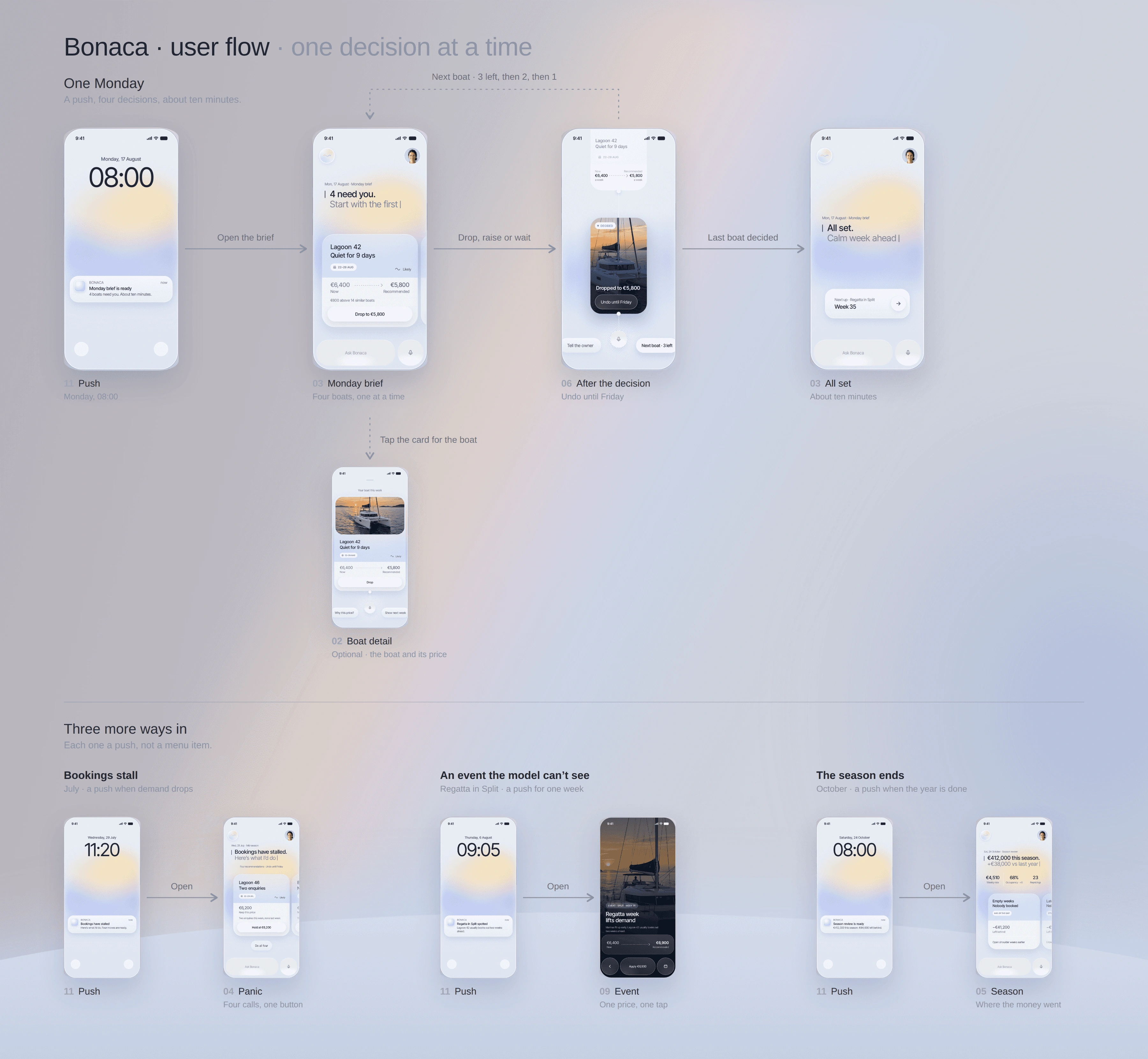
One Monday in about ten minutes, and three more ways in, each one a push, not a menu item
Iterating the decision card. I tried pill rows, photo cards, a big-price card and a table. I also tried a second button, "Change"; it led nowhere specific, so it went. The final card answers three questions in order: What? (the boat and the signal: "Quiet for 9 days"), How sure? (calm, ripple or choppy water), What to do? (one button that carries the number: "Drop to €5,800").
Key decisions
1. A phone for the call, a desk for the plan
I explored a desktop-only tool and a phone-only app, and chose both, with one job each. The Monday brief and the season review need overview; a stalled week needs a decision on the dock. Both surfaces use the same components.
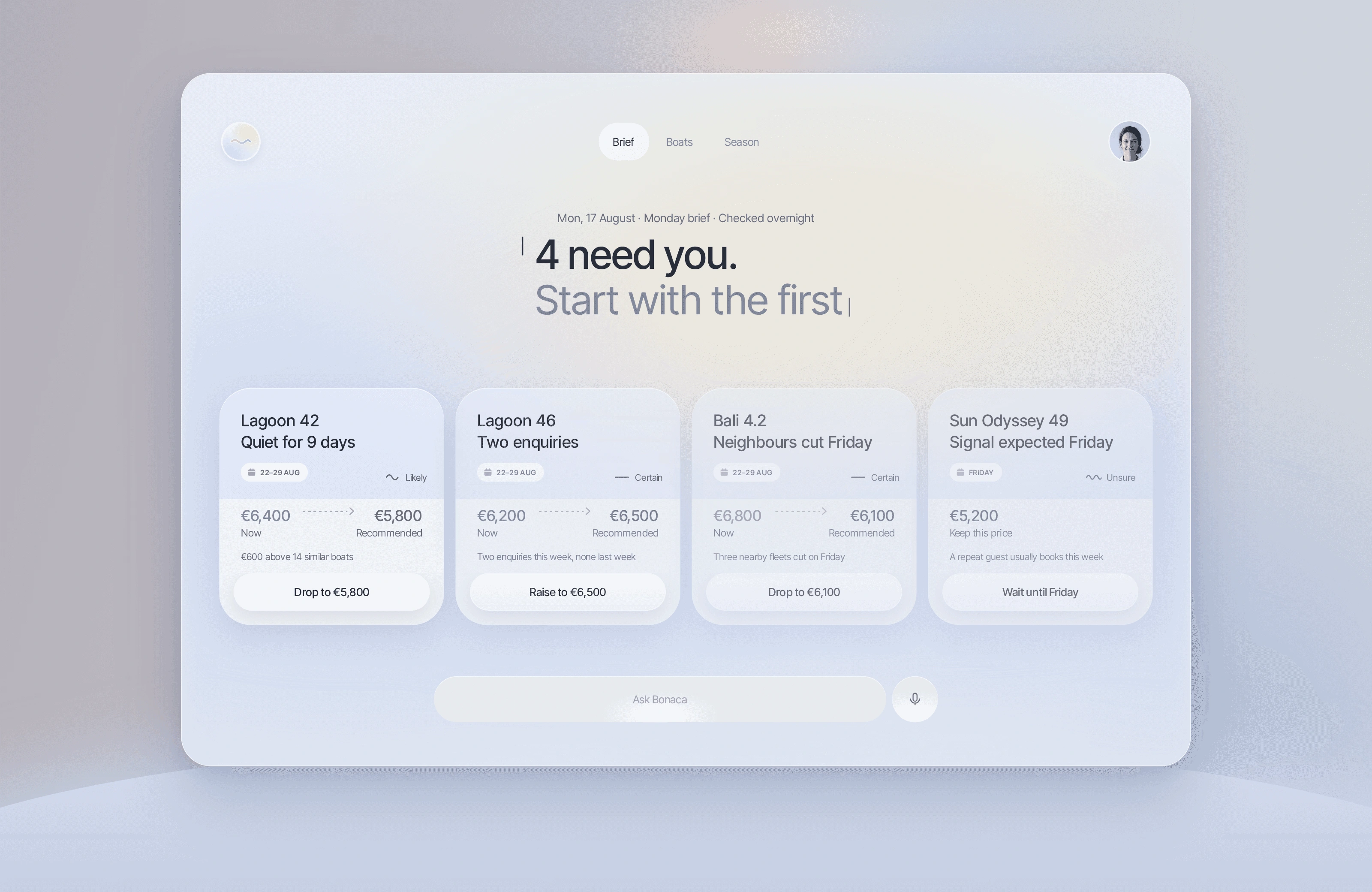
Desktop brief: four boats, one row, each with the move and the reason
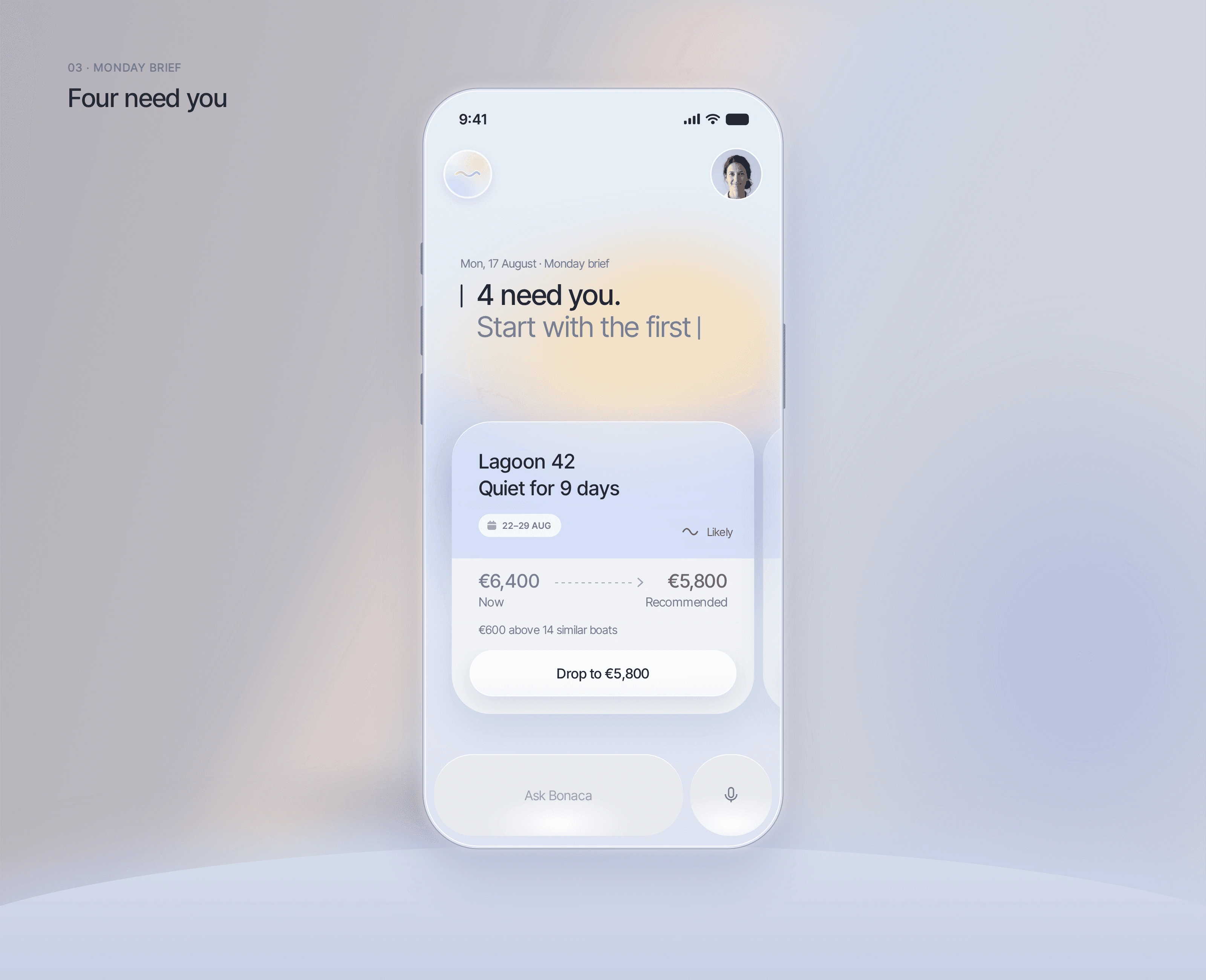
The same brief on the phone: one boat in focus, the next one waiting at the edge
2. The headline counts decisions, not greetings
I tried "Good morning, Ana" and "Four need you." I chose the count, because the first thing an operator wants to know is how much work is waiting.
3. Confidence as a sea state, not a percentage
Percentages were trusted blindly; the water shapes (calm, ripple, chop) were understood without a legend and work in greyscale.
4. The answer before the evidence
Tapping "Why this price?" opens a card whose headline is the answer: "It sits €600 above 14 similar boats". Ask Bonaca is also where a different price is set: type or speak, from any screen.
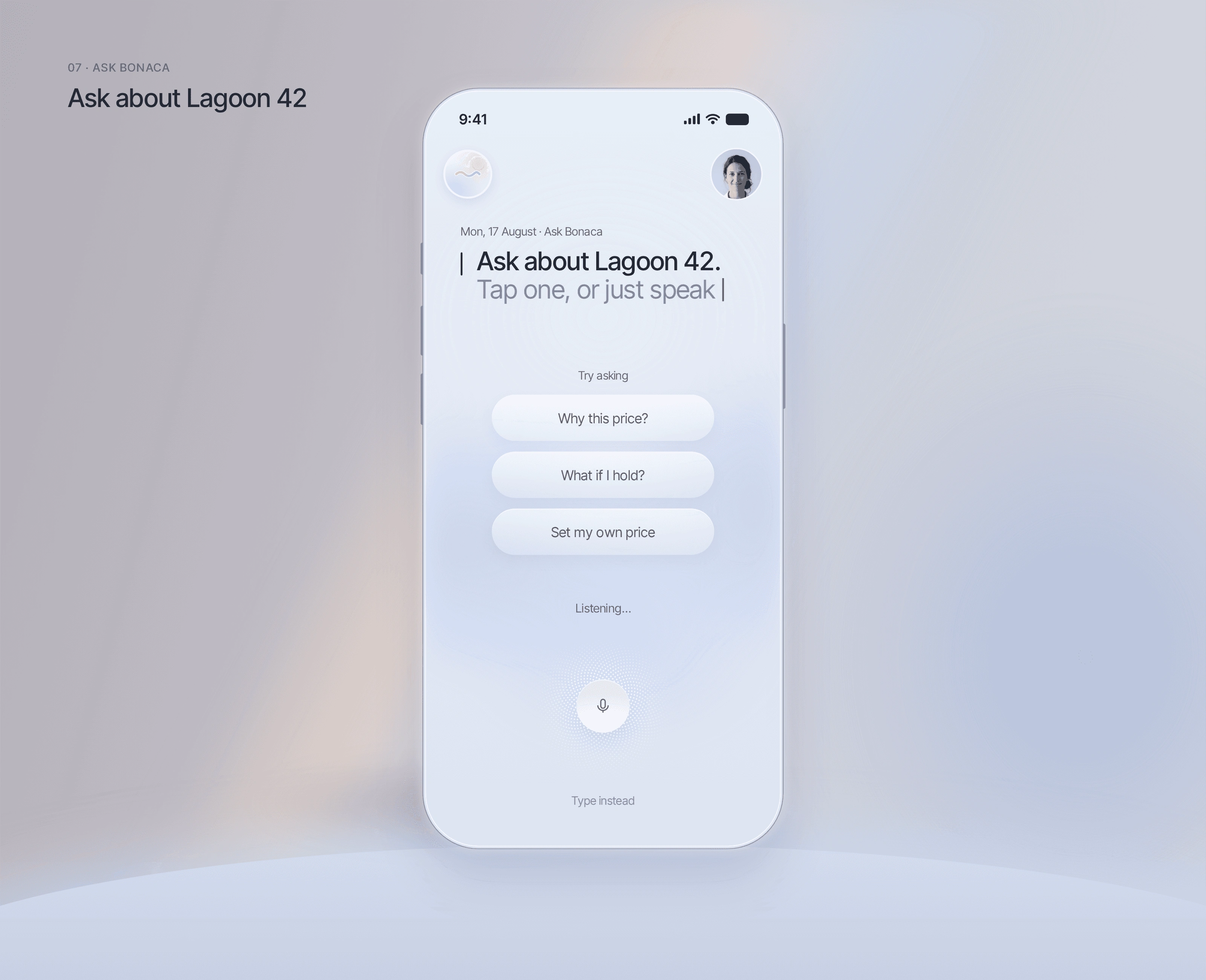
Ask Bonaca: tap a question, type or speak, from any screen
5. The crisis screen is the calmest one
When bookings stop, the first instinct is red alerts. A worried person plus alarms makes a worse decision. Panic has no red and no menu item. It arrives as a push, gives one recommendation per boat, and one "Do all four" as a shortcut. After a decision, undo stays until Friday.
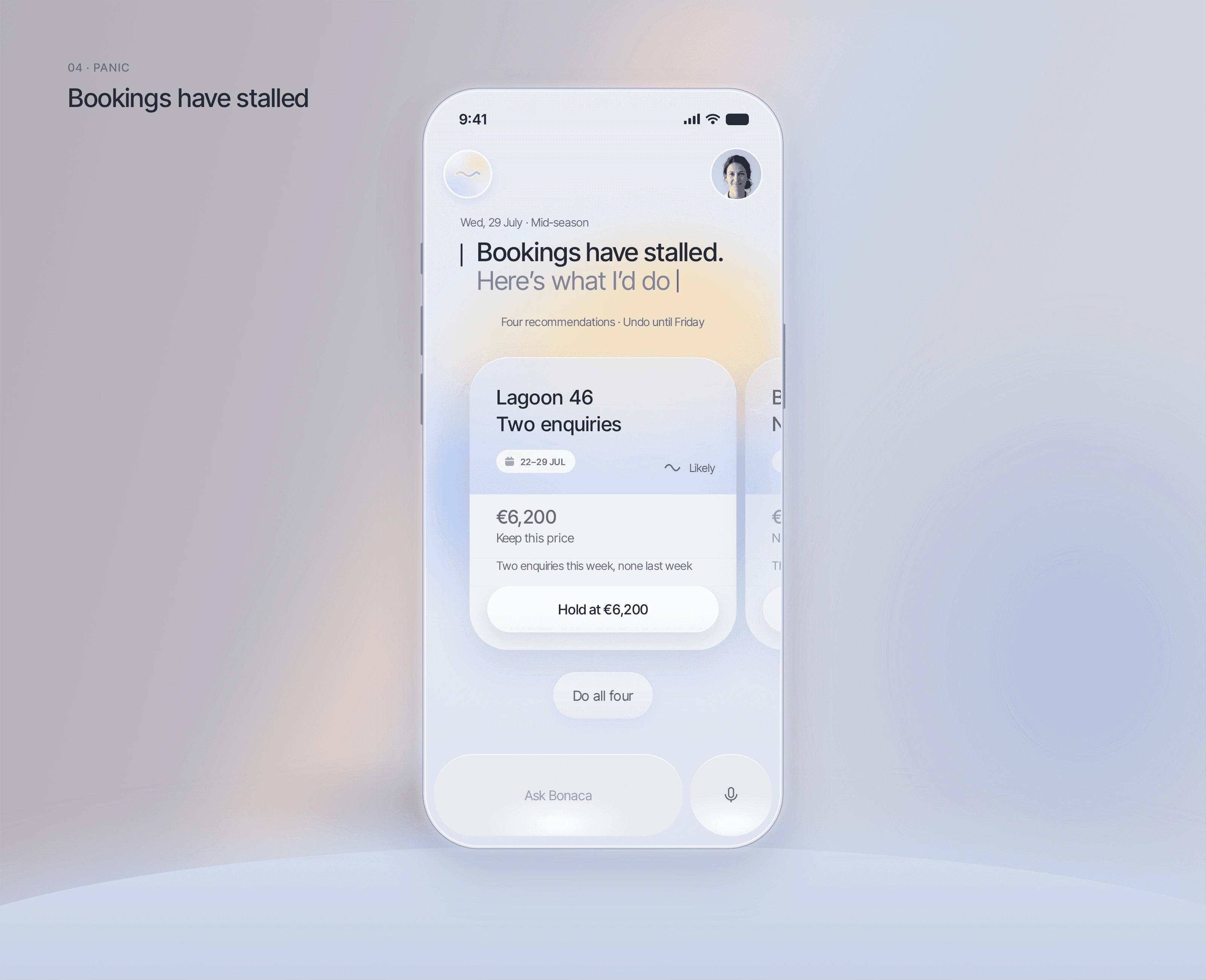
Panic on the phone: the same decision cards, with one shortcut for all four
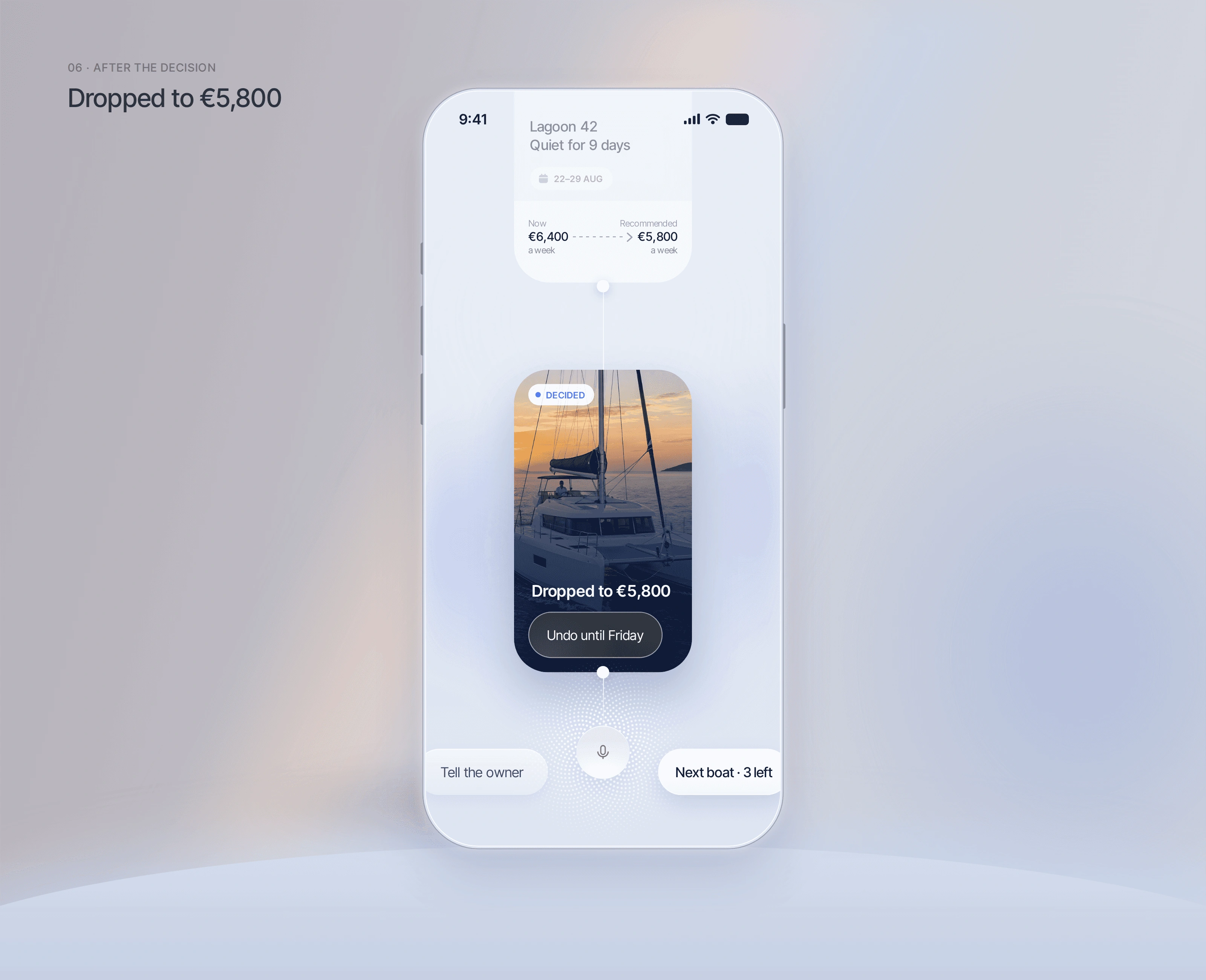
After the decision: what happened, undo until Friday, and the next boat
6. The season review answers the owner's questions first
Was this a good year, and where did the money go? The review answers in that order: revenue against last season, three numbers, then the money left behind, split by cause, including Bonaca's own wrong calls. A tool that never admits mistakes never gets trusted twice.
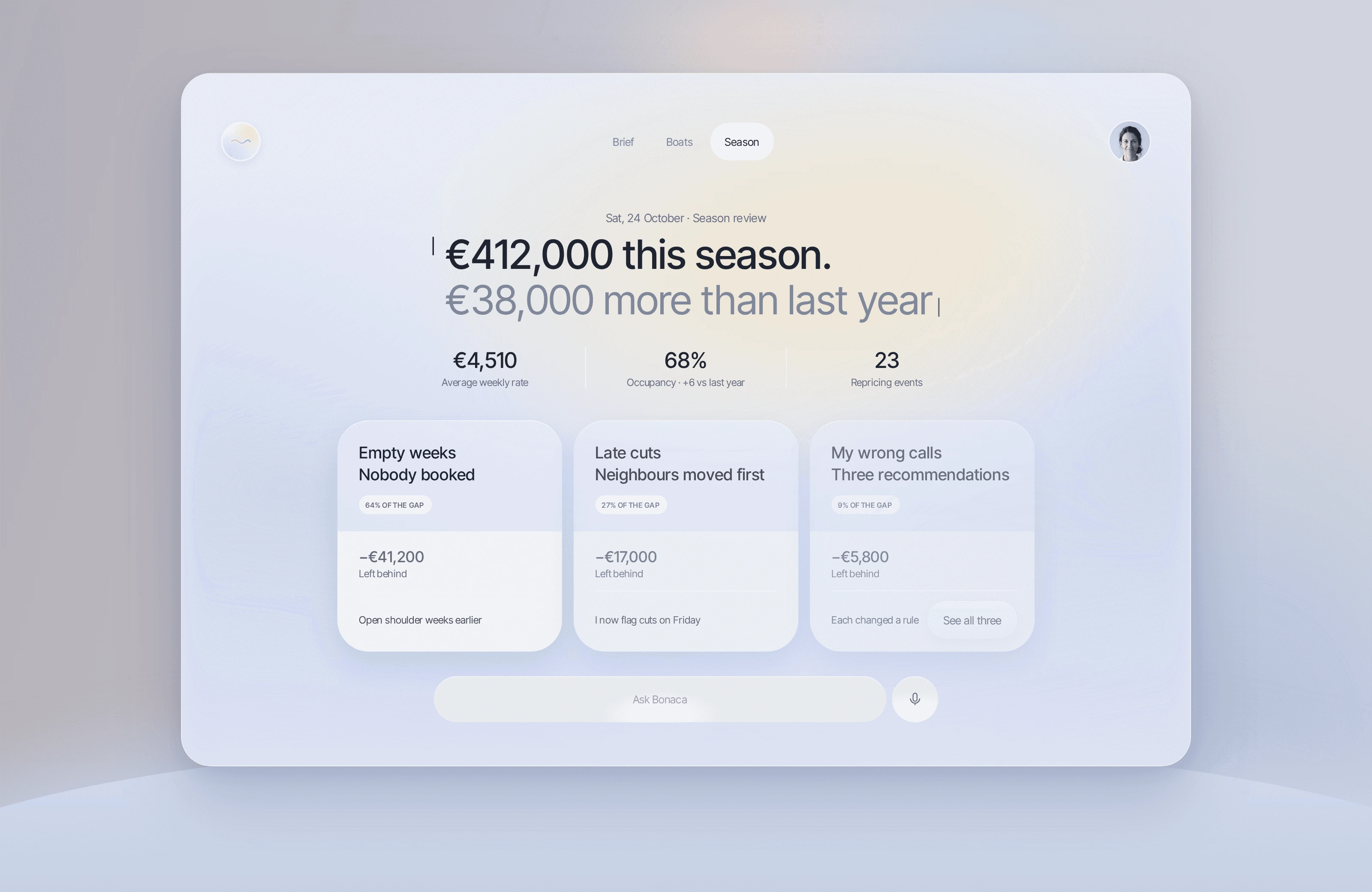
Season on the desk: the year against last year, and where the money went
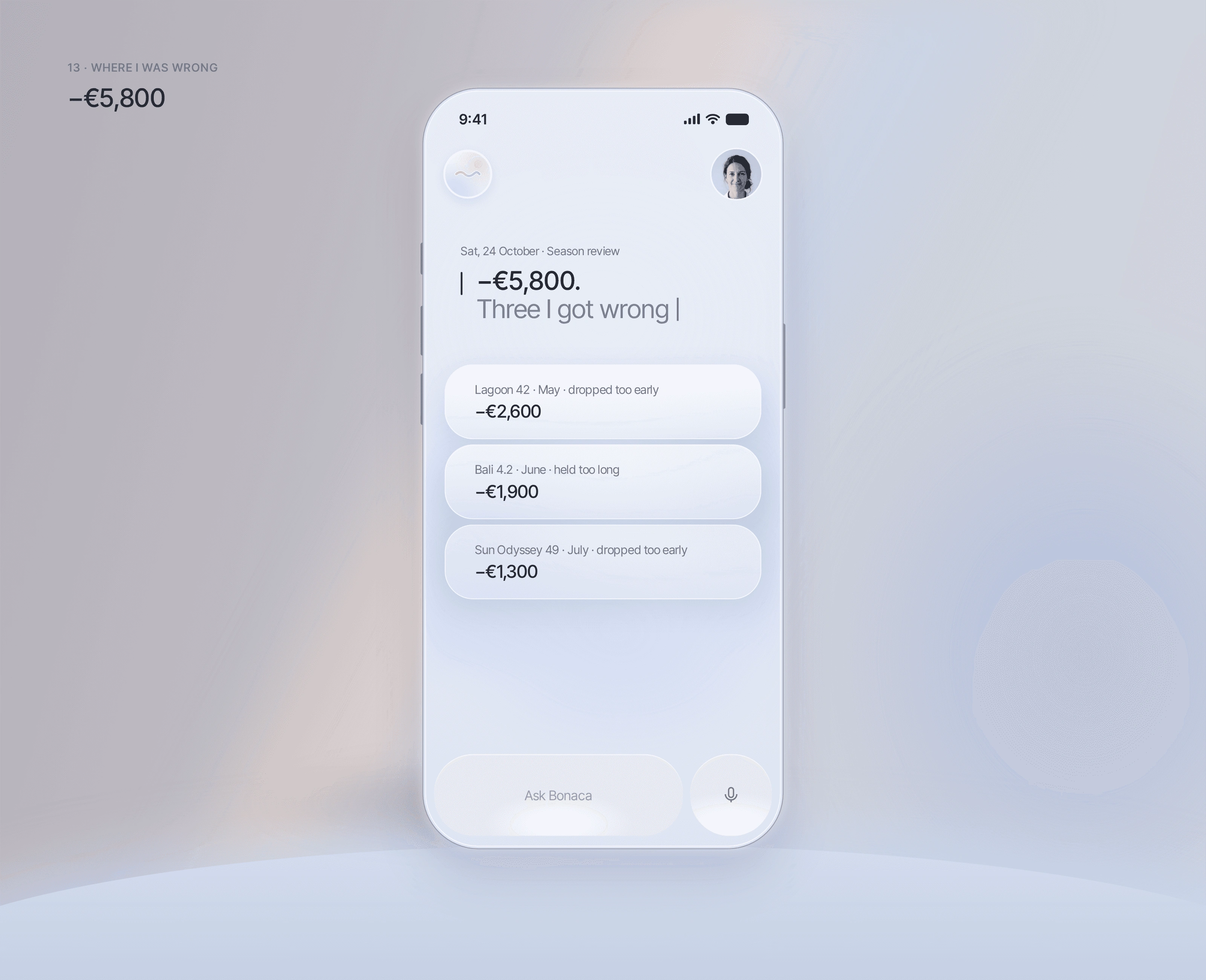
Where I was wrong: each call, what it cost, what changed
7. Events the model can't see
A regatta in Split moves demand for one week. Bonaca spots it, shows the week next to its neighbours and recommends a price for that week only.
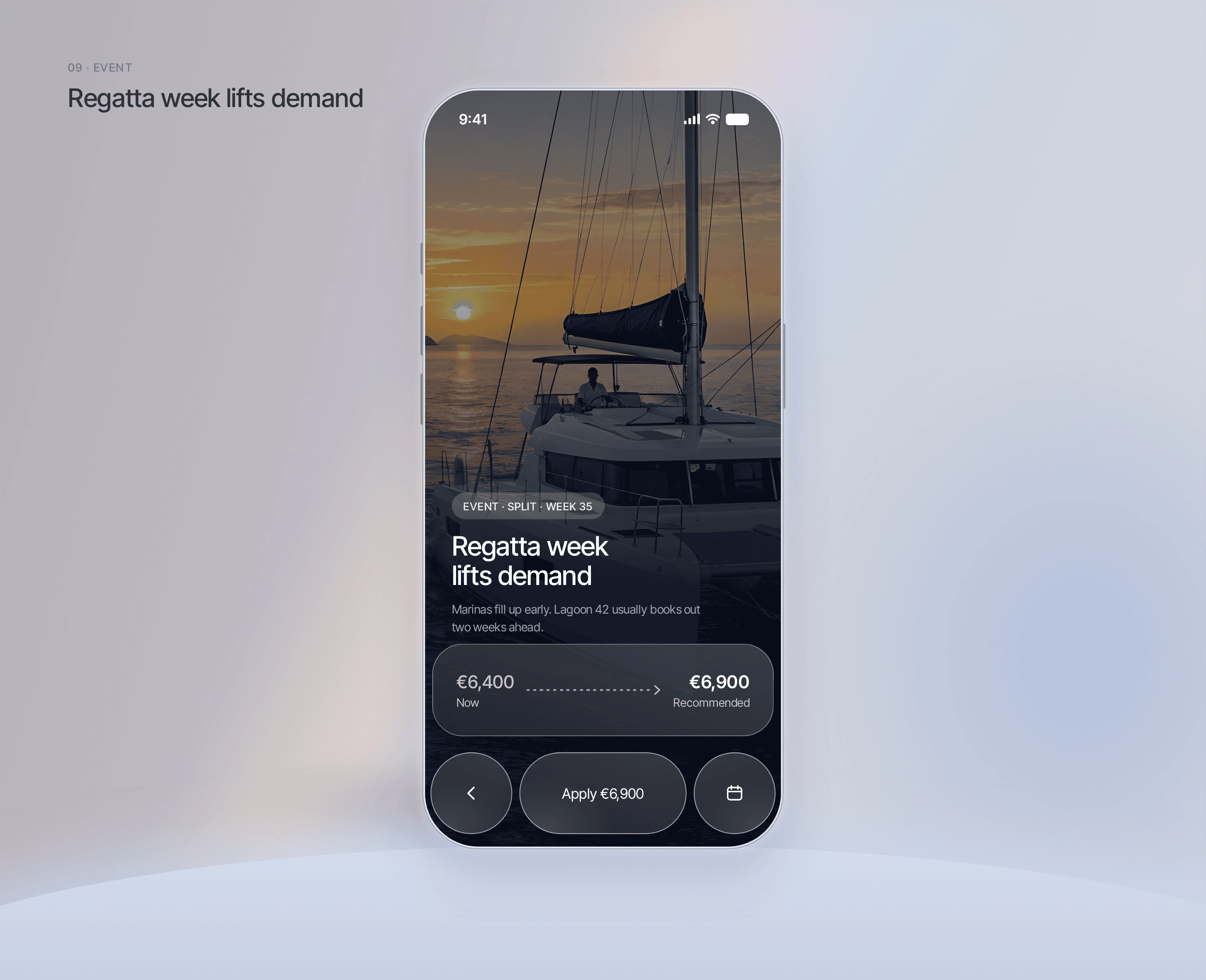
The event: the regatta week next to its neighbours, with the recommended price applied in one tap
The design system
One glass surface, one type family, one button per card. Colour is spent only on meaning.
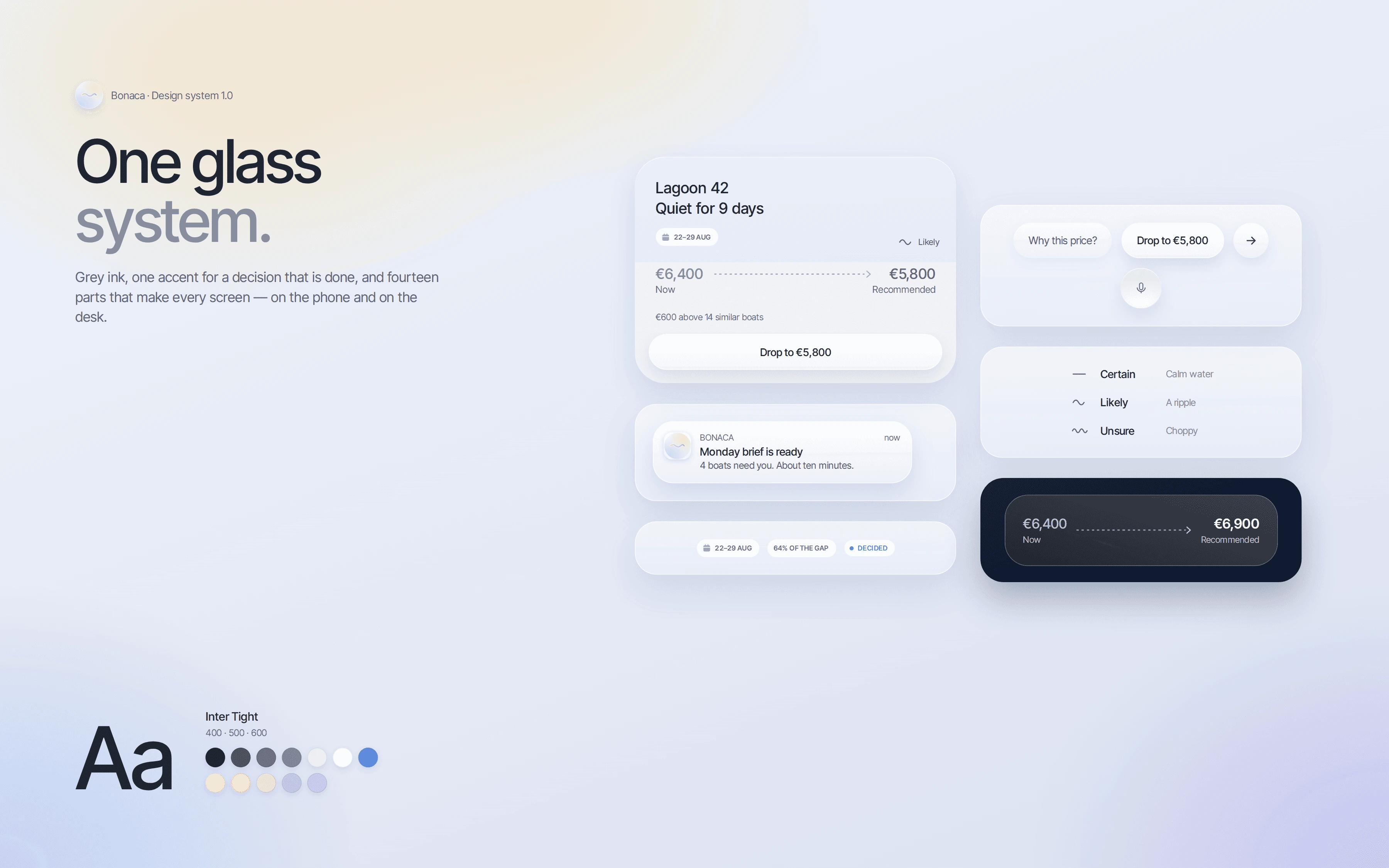
One glass system: colour, type and the parts every screen is built from
Outcome
The design is complete for both surfaces and Bonaca is now in development. There are no results yet, so this is how I'd measure it once it ships:
Do operators act on the brief? The share of recommendations accepted or adjusted each week.
Does the card explain enough? How often "Why this price?" is opened before a decision.
Is Monday really ten minutes? Time from the push to the last decision.
Does Panic calm the decisions? Price cuts made after a stall, against last season.
What ships first: the Monday brief for one fleet, then Panic once there's enough data, then Season after a full year.
Full case study with the prototype: https://bozenabulat.com/projects/bonaca-revenue-copilot-for-charter-fleets
0 likes · 0 views · Nov 3, 2026
An AI copilot that tells yacht charter operators when to lower a price and when to wait. One recommendation per boat, with the reason, and a decision in one tap
Timeline
Jun 1, 2026 - Ongoing

