
AI-native UX for Misi
Misi is a consumer app for personal colour analysis. It recommends the colours that suit you, then links them to outfits, make-up and shopping. I was the first product designer, working with the founder and developers on the first version: from sign-up to a personal palette, shipped to the App Store.
Role: end-to-end UX/UI, onboarding, AI result design, mobile design system. Late 2023 to 2024.
Every recommendation has to explain itself.
Challenge
The algorithm worked. People didn't trust its results. They had to answer expert questions about undertone and contrast without a colourist in the room, and the business needed a one-time result to turn into something people come back to.
Constraints
No colourist: expert judgements had to become questions a non-expert can answer.
Phone photos distort colour: lighting, make-up and hair all get in the way.
Shopping wasn't available in every country, and the app had to say so clearly.
A small team: a founder, developers and one designer.
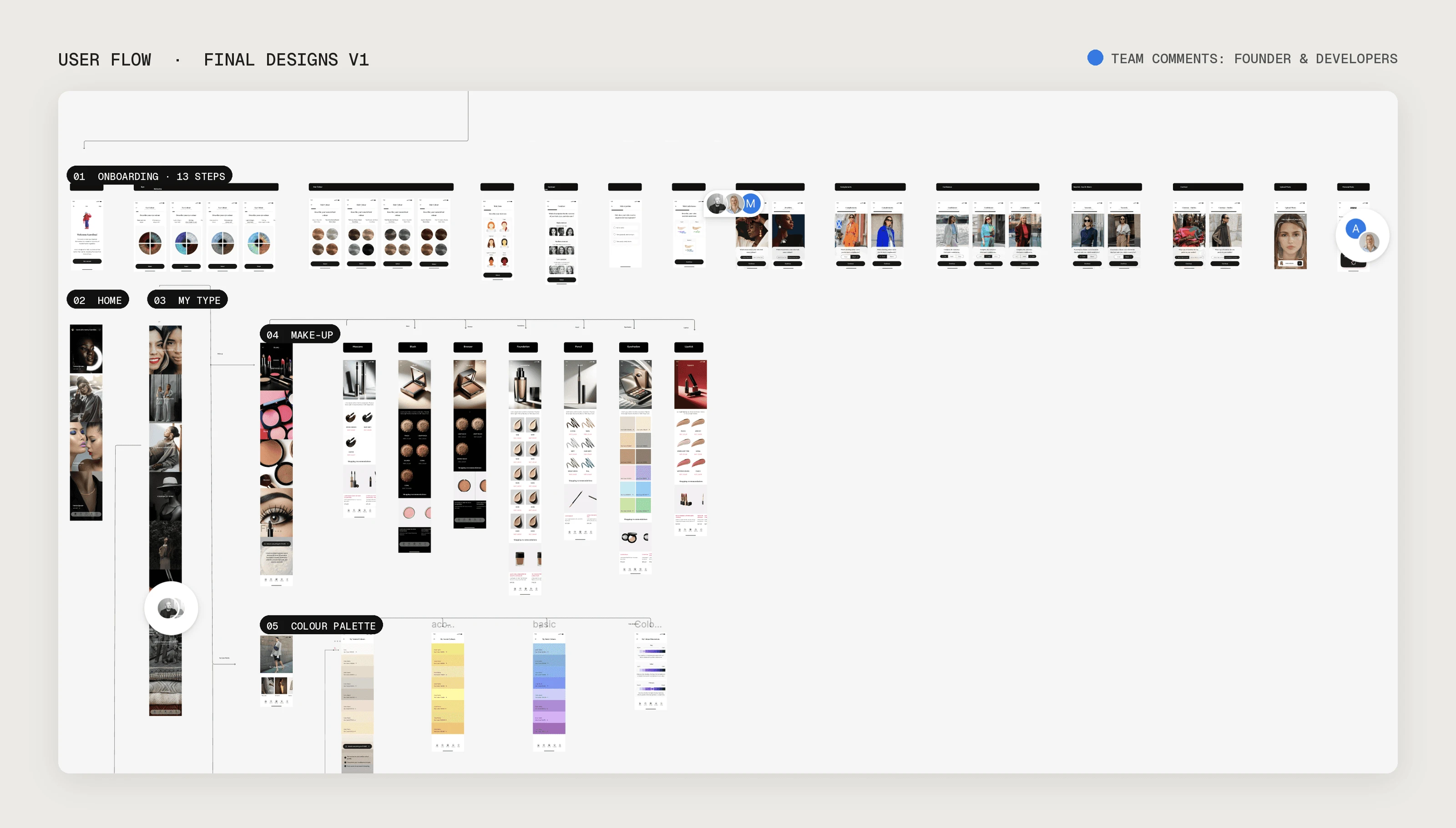
The whole app, mapped with the founder and developers: onboarding, home, My Type, make-up and palette.
Approach
The self-assessment follows a colourist's order: eyes, hair, skin tone, undertone, then style. One question per step, real examples, visible progress. Before asking for the camera, the app asks you to prepare the photo and explains why. The result is a palette you can explore, not a label.
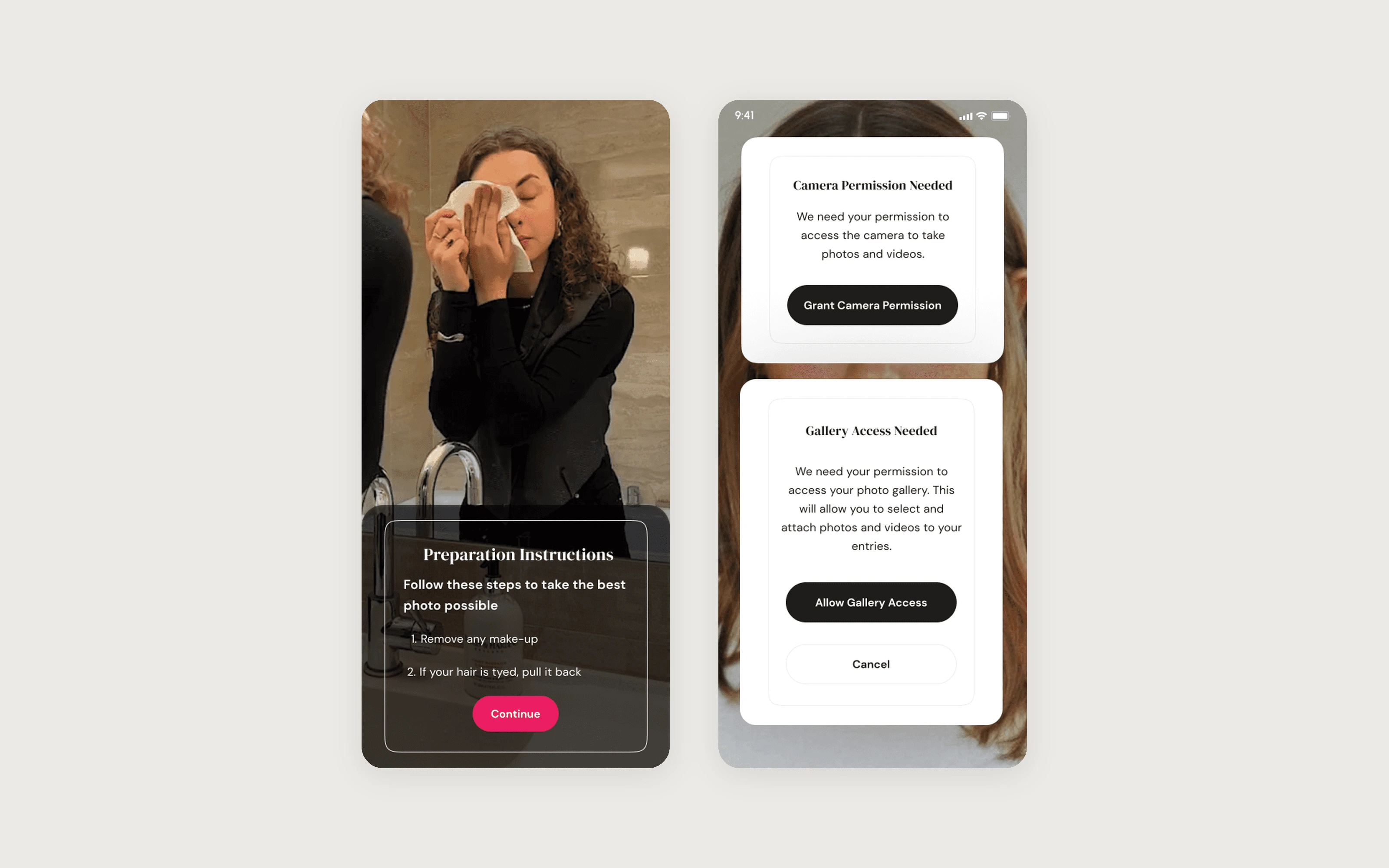
Preparation before permission, with one sentence on why the camera is needed.
Key decisions
Show, don't describe. Eye and hair colour are picked from visual examples, not terminology.
Ask about the person. Style questions use outfits, with no right answer.
Prepare the photo before asking for it. Guidance comes before the permission request, because a bad photo makes a bad palette.
A result you can explore. Neutrals, accents and basics, plus "My Colour Dimensions" explaining hue, value and chroma. Every colour links to combinations, make-up and shopping.
Let the colour be the interface. The second palette design gives each colour the full screen width, with its name and code on the colour itself.
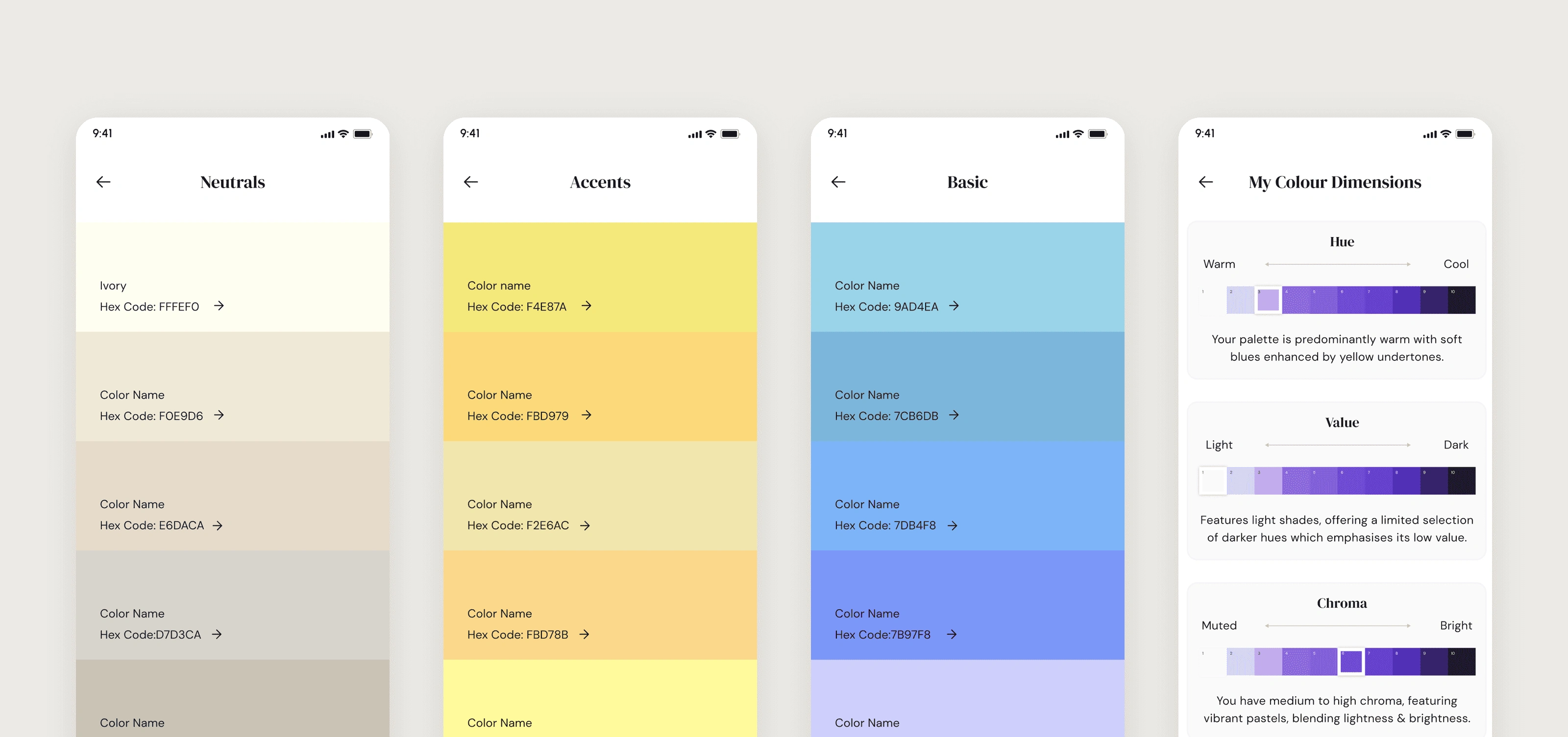
Neutrals, accents, basics and My Colour Dimensions.
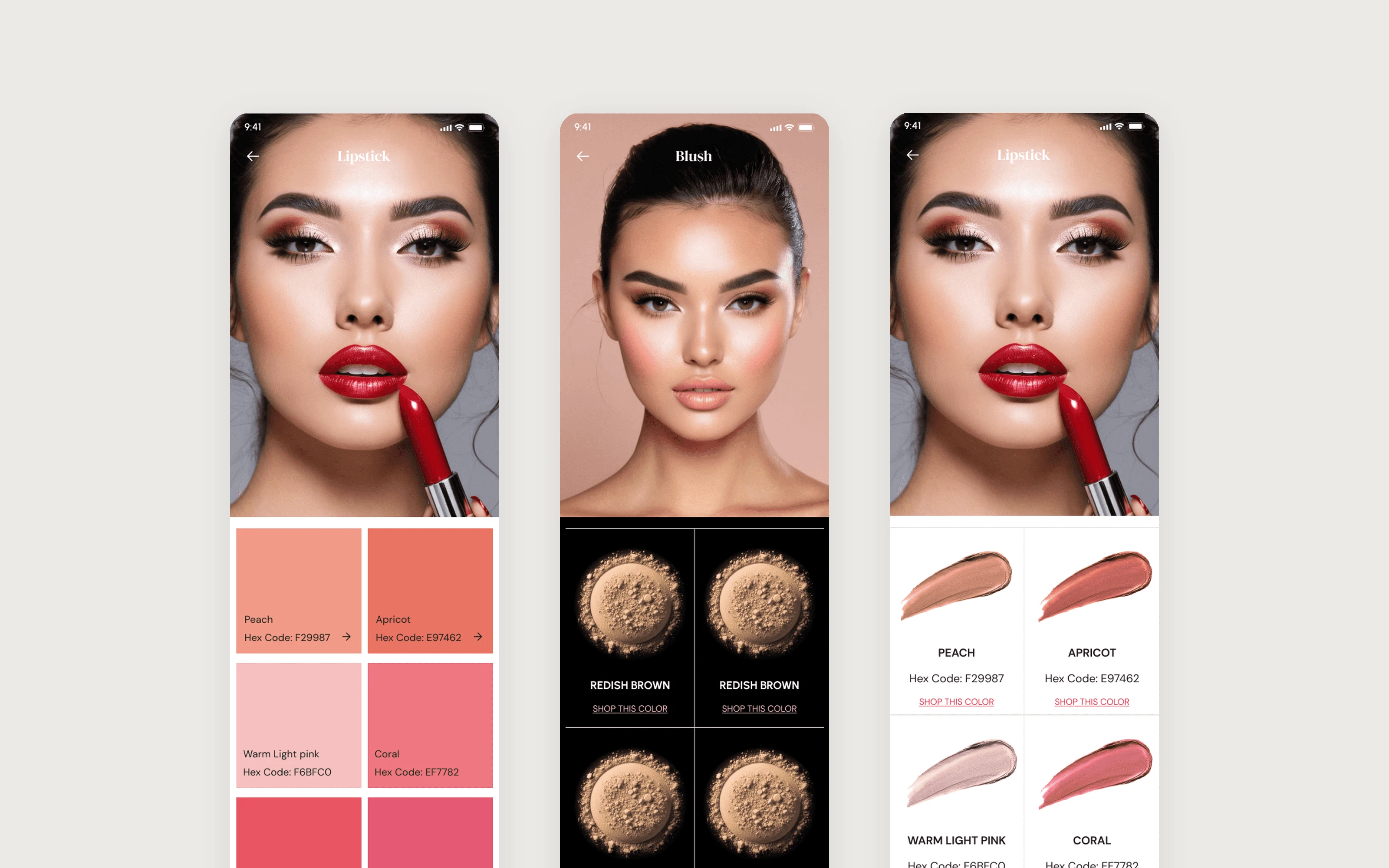
The palette applied to make-up, product by product.
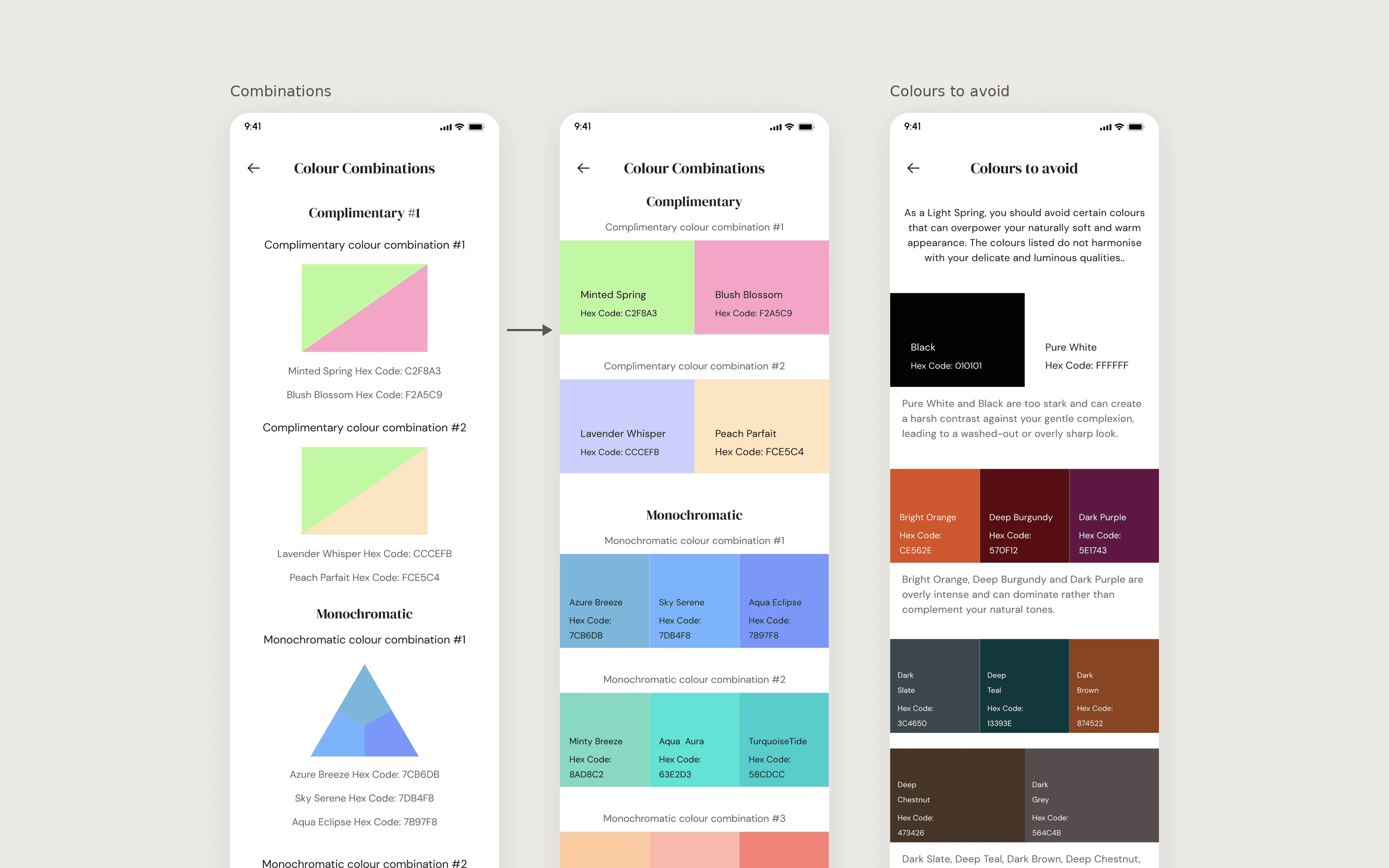
Combinations, before and after: from small swatches to full-width colour.
Design system
DM Serif Display for meaning, DM Sans for instructions. The interface is black and white, so the user's palette is the only colour on screen. One component set covers onboarding, results and shopping.
Outcome
The first version shipped to the App Store as "misi Color Analysis & Style AI". Misi has since evolved into a broader style platform.
"Bozena is a truly gifted designer. Her work is professional, quick, and full of ideas — she is up there with the best UX designers I have worked with." Matthew Johnson, Founder, Misi App
0 likes · 1 view · Oct 30, 2026
Onboarding, AI analysis and an explorable palette for Misi, a colour analysis app on the App Store. First product designer, from sign-up to a personal palette.
Timeline
Nov 1, 2023 - Dec 31, 2024
