Built with FlutterFlow
Easy Property Rentals

Imad Dhin


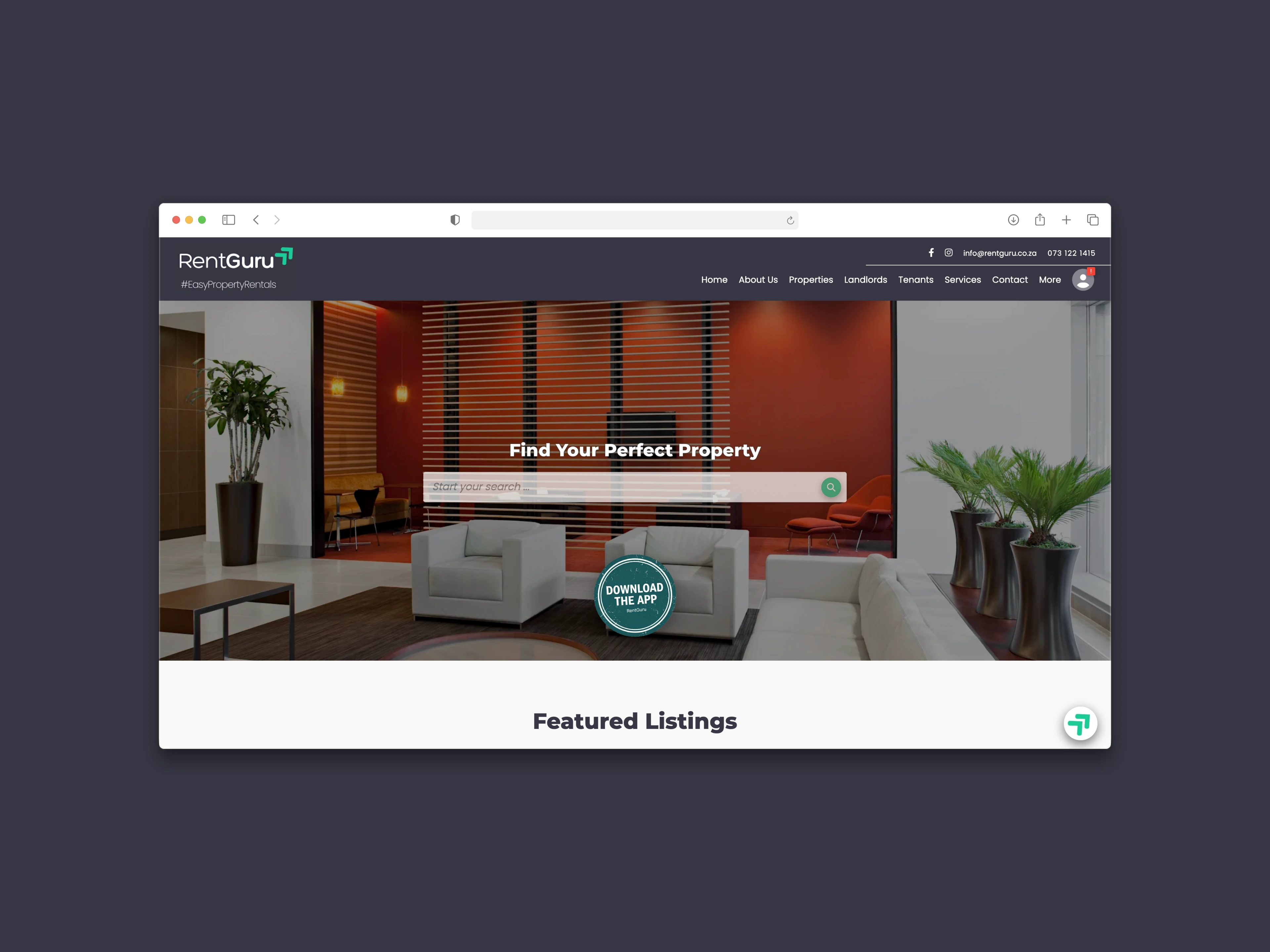
RentGuru Platform Overview
RentGuru is a specialized PropTech (Property Technology) platform designed specifically for the South African rental market. Its primary goal is to democratize and simplify property management by acting as a digital real estate agent for landlords, while offering tenants a streamlined, modern rental experience.
Core Value Proposition
Disintermediation: Removes the need for traditional estate agents, allowing landlords to manage their properties directly through the app while paying a low, fixed subscription fee rather than a percentage-based commission.
End-to-End Automation: Handles the entire rental lifecycle, including property listing, tenant screening, lease agreement generation, inspections, monthly invoicing, and communication.
Legal Compliance: Ensures that all processes and digital paperwork comply with South African legislation (like the Rental Housing Act), translating complex legalese into "plain English."
Target Audience
Landlords: Looking to maximize rental yield by cutting agent fees, while relying on software to automate the heavy lifting of compliance and payment collection.
Tenants: Looking for a transparent, app-based interface to find properties, sign leases, pay rent securely, and log maintenance requests.
Technical Architecture: The "How"
Based on the stack provided, the architecture leverages a modern serverless, cross-platform approach. Building this with Flutter, Firebase, and robust REST APIs ensures high scalability and rapid iteration.
Frontend: Client & Web Apps
Framework: FlutterFlow (Generating standard Flutter/Dart code).
Deployment: Currently accessible as a Web Beta, with the codebase inherently ready for compilation to native iOS and Android applications.
Role: Handles all UI/UX components. FlutterFlow provides the visual building interface to rapidly construct the dashboards (Tenant vs. Landlord views), property galleries, and chat interfaces, while generating the responsive Dart code necessary to serve both mobile and web clients from a single codebase.
Backend & Infrastructure
Platform: Firebase (Google Cloud ecosystem).
Authentication: Firebase Auth handles user identities, securely segregating Landlord and Tenant accounts.
Database: Cloud Firestore (NoSQL) is the likely data layer. It allows for real-time syncing across clients, which is essential for the in-app chat features and real-time status updates (e.g., when a payment clears or a lease is signed).
Data Structure: Collections would typically be structured around Users, Properties, Leases, Invoices, and Messages.
Storage: Firebase Cloud Storage houses static assets like property photos, user avatars, and the generated PDF lease agreements.
Serverless Logic: Firebase Cloud Functions act as the secure middle layer. They handle scheduled cron jobs (like monthly invoice generation) and secure server-to-server communication with third-party APIs (ensuring API keys for Netcash and QuicklySign are not exposed to the client application).
Third-Party API Integrations
The application utilizes specialized third-party services to handle complex, heavily regulated workflows via REST API endpoints:
QuicklySign API
Function: Handles the generation and electronic signing of lease agreements.
Workflow: When a landlord and tenant agree to terms, the app sends a payload to QuicklySign via a secure Cloud Function. QuicklySign generates the legally binding document, tracks the signature status (sent, viewed, signed), and returns webhooks to Firebase to update the lease document in Firestore.
Netcash API
Function: A prominent South African payment gateway used to manage the financial ecosystem.
Workflow: Handles the secure processing of monthly rent, deposit payments, and subscription fees. It enables automated debit orders or EFT verifications, reconciling payments automatically and updating the invoice status in Firestore, which then triggers notifications to the landlord and tenant.
System Workflow Example (Lease to Payment)
To see how these technologies interact, here is the lifecycle of a new rental agreement:
Initiation (Flutter/Firebase): A landlord approves a tenant in the Flutter app. Firestore creates a pending Lease document.
Contract Generation (REST API): A Cloud Function triggers a REST call to the QuicklySign API, passing tenant details and property terms.
Execution (Webhooks): Both parties sign the digital lease. QuicklySign sends a webhook back to Firebase. The Cloud Function downloads the final PDF, saves it to Firebase Cloud Storage, and updates the Firestore document status to Active.
Financial Setup (REST API): Upon activation, another Cloud Function communicates with the Netcash API to set up the recurring billing profile for the tenant.
Monthly Cycle (Cron/Functions): On the 1st of the month, Netcash processes the payment. A webhook updates the Firebase database, and the Flutter UI immediately reflects the invoice as Paid on both the landlord's and tenant's dashboards.
Main website: https://www.rentguru.co.za/
Like this project
Posted Jul 18, 2026
RentGuru is the all-in-one app designed to facilitate the entire property rental journey between landlords and tenants, starting by South Africa.
Likes
1
Views
25
Timeline
May 1, 2026 - May 30, 2026