Trippr - Discover & Booking app

Wuraola Olaibi

Project Overview
What Trippr Is
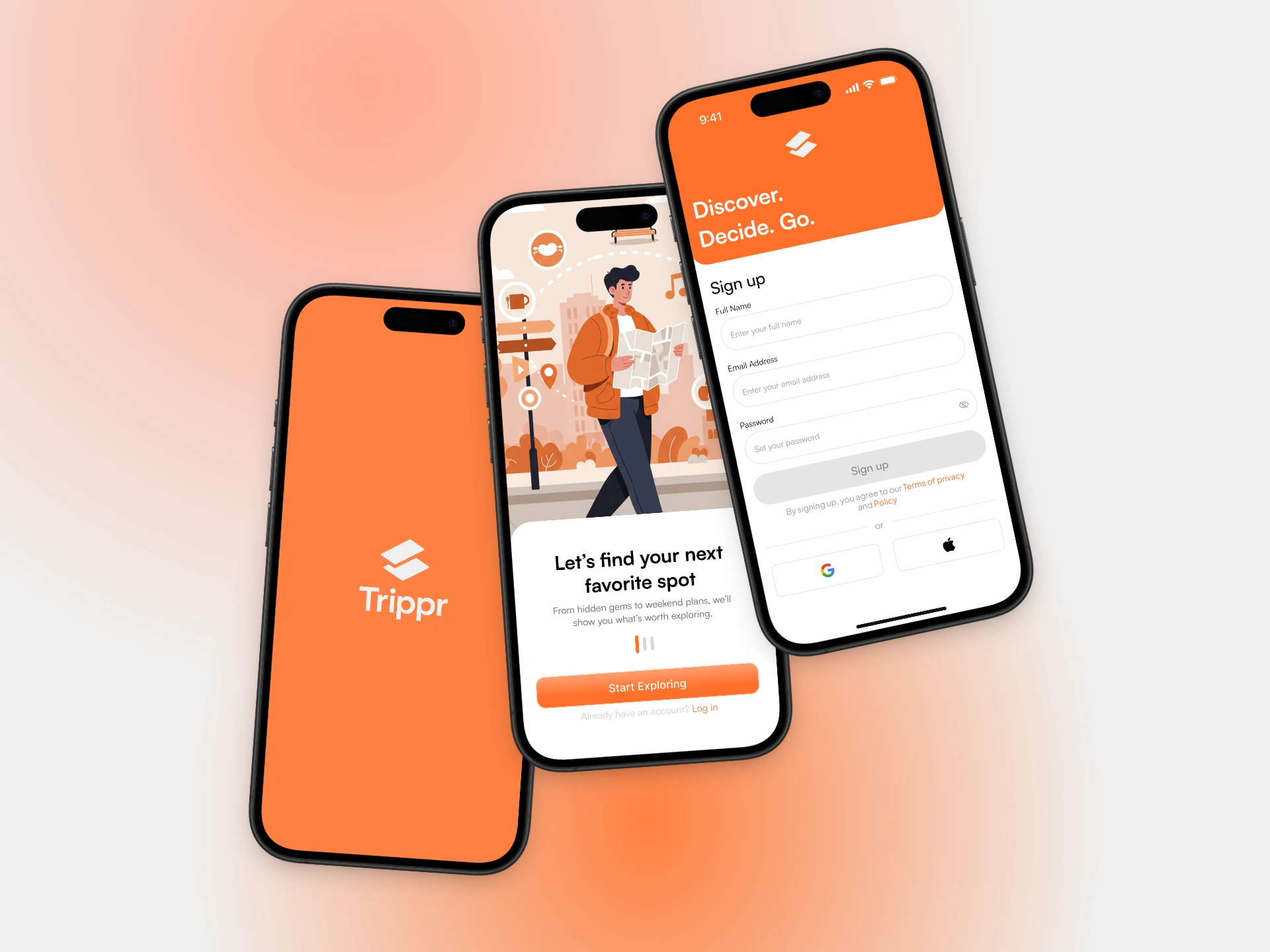
Trippr is a concept travel and city-discovery app designed to help people find and book places effortlessly, whether they’re locals or visiting a new city. The goal wasn’t to build another directory, but to create a product that feels like a companion: helpful when you’re unsure, quiet when you’re confident, and reliable when it matters.
The Problem I Set Out to Solve
Most discovery apps suffer from the same issues:
Endless lists that increase decision fatigue
Filters that feel more confusing than helpful
Booking flows that push users out of the app
Saved places that disappear once you change cities
Instead of making users work harder, I wanted Trippr to do more of the thinking, without taking control away.
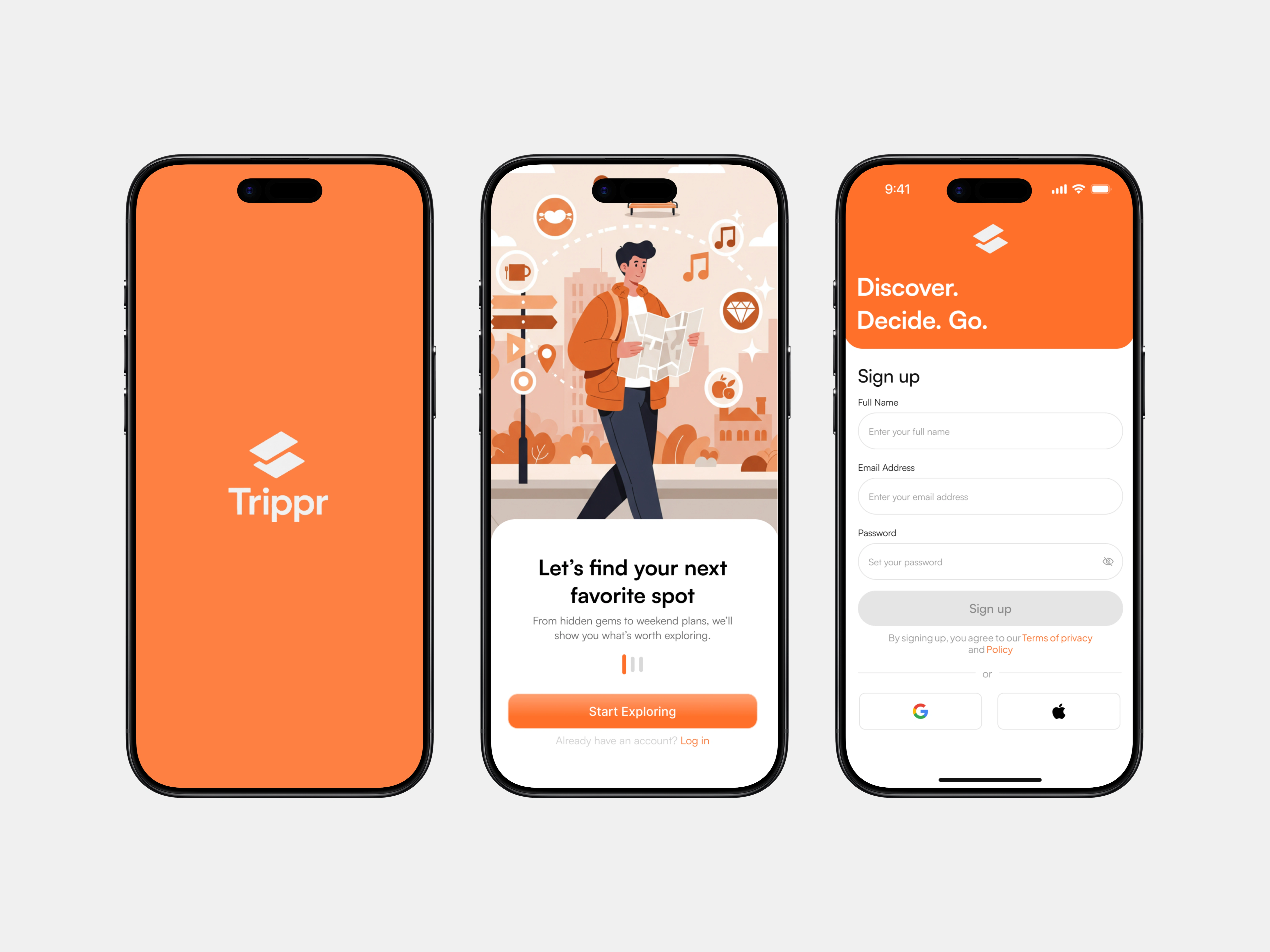
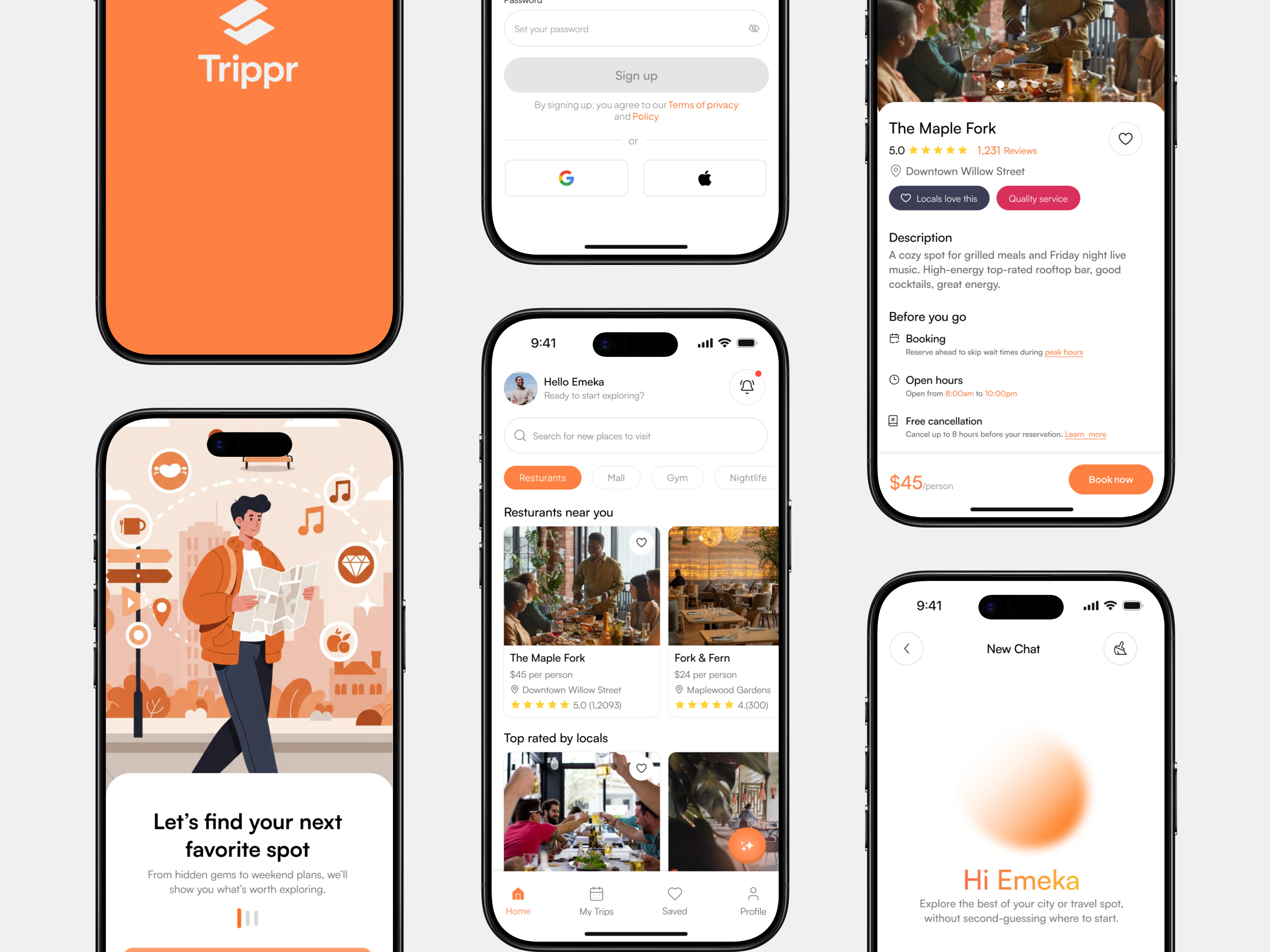
Onboarding screens/signup
The Design Goal
From the start, I focused on a few core principles:
Reduce decision fatigue
Make discovery feel curated, not overwhelming
Keep booking calm, clear, and predictable
Design something that works across cities, not just one
Success wasn’t measured by flashy features, but by how quickly a user could go from curiosity to confidence.
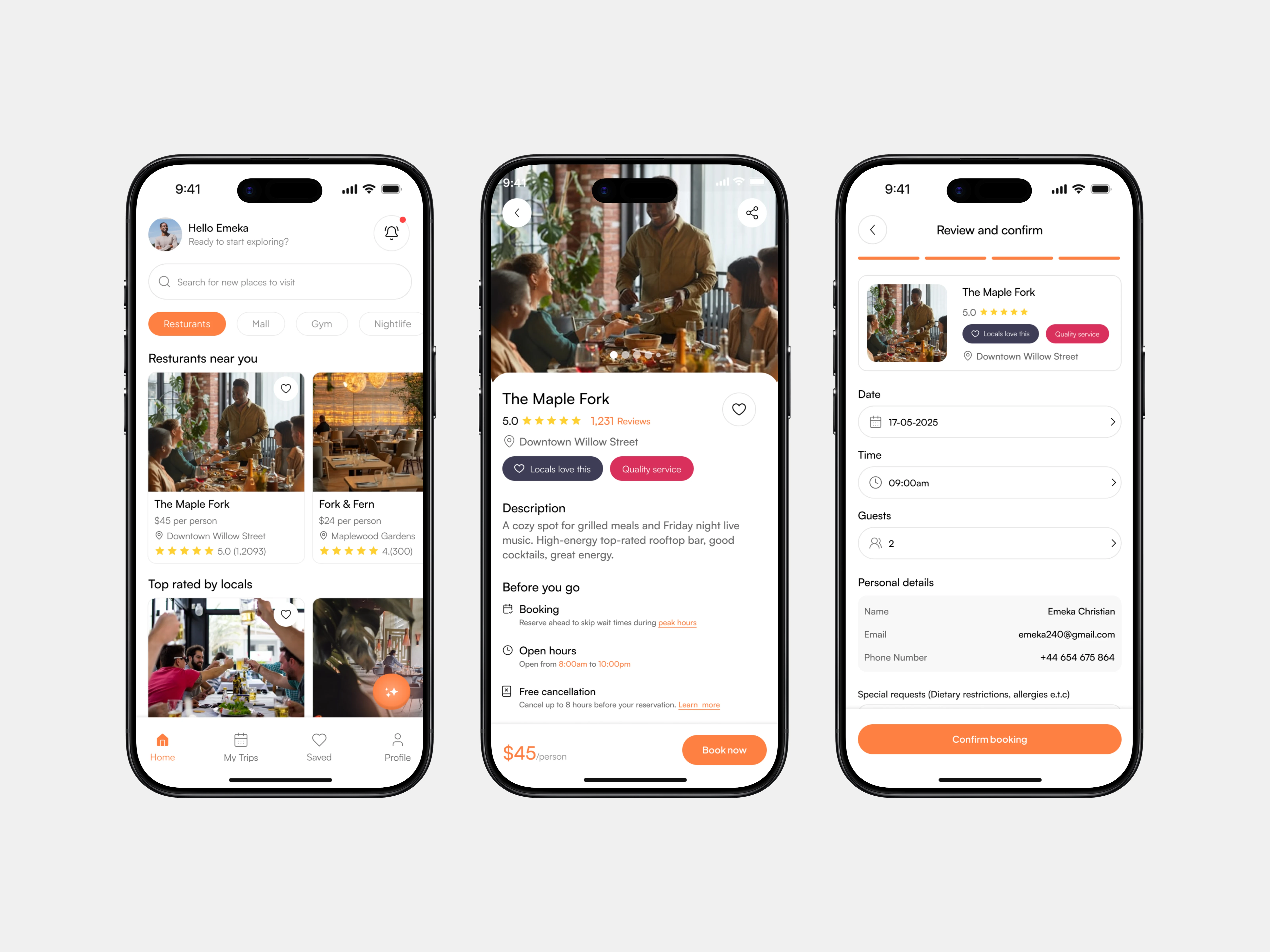
Home & book service
The Structure Behind the Experience
Trippr is built around a simple idea: everything should have a clear place.
The app uses four main tabs, Home, Saved, Trips, and Profile supported by a Floating Action Button for AI assistance. Together, they create a natural flow:
discover → save → book → manage.
Nothing competes for attention. Each space has one job.
Home: Where Discovery Starts
The Home screen is designed to feel like a starting point, not a feed. Users land on a clean layout with a search bar for direct intent, category chips to narrow focus quickly, and curated sections like Top Picks and Suggested for You.
One category is preselected by default to reduce friction, because sometimes people just need a place to begin. The goal here is simple: make exploration feel inviting, not exhausting.
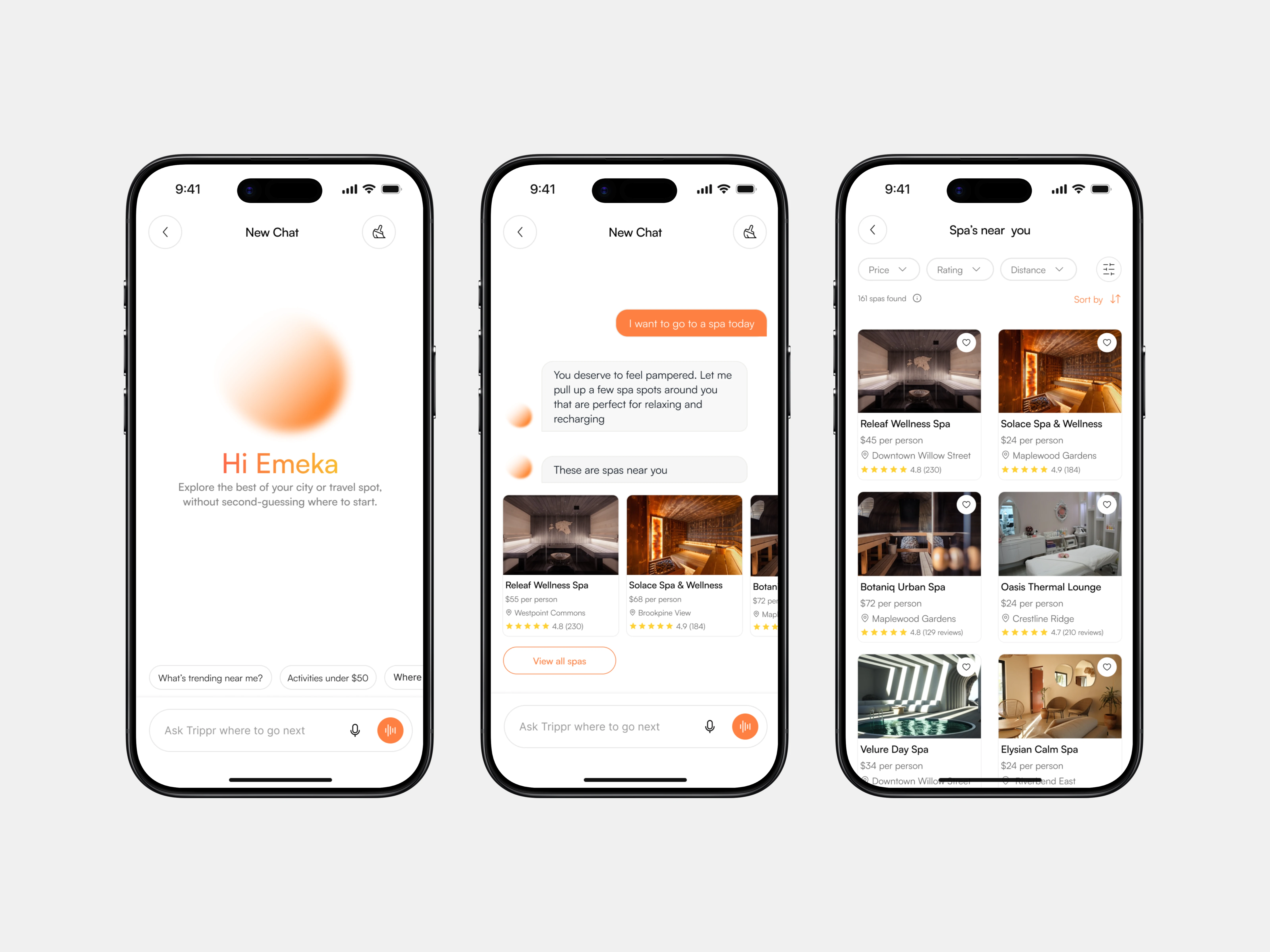
AI Chat
Trippr AI: Help When You Need It
Indecision happens. Instead of burying help in menus, I gave Trippr a Floating Action Button dedicated to AI.
The AI acts as a smart filter, not a replacement for browsing. Users can ask simple questions like “Where should I go for dinner tonight?” and get tailored suggestions without breaking their flow. It’s always available, but never forced.
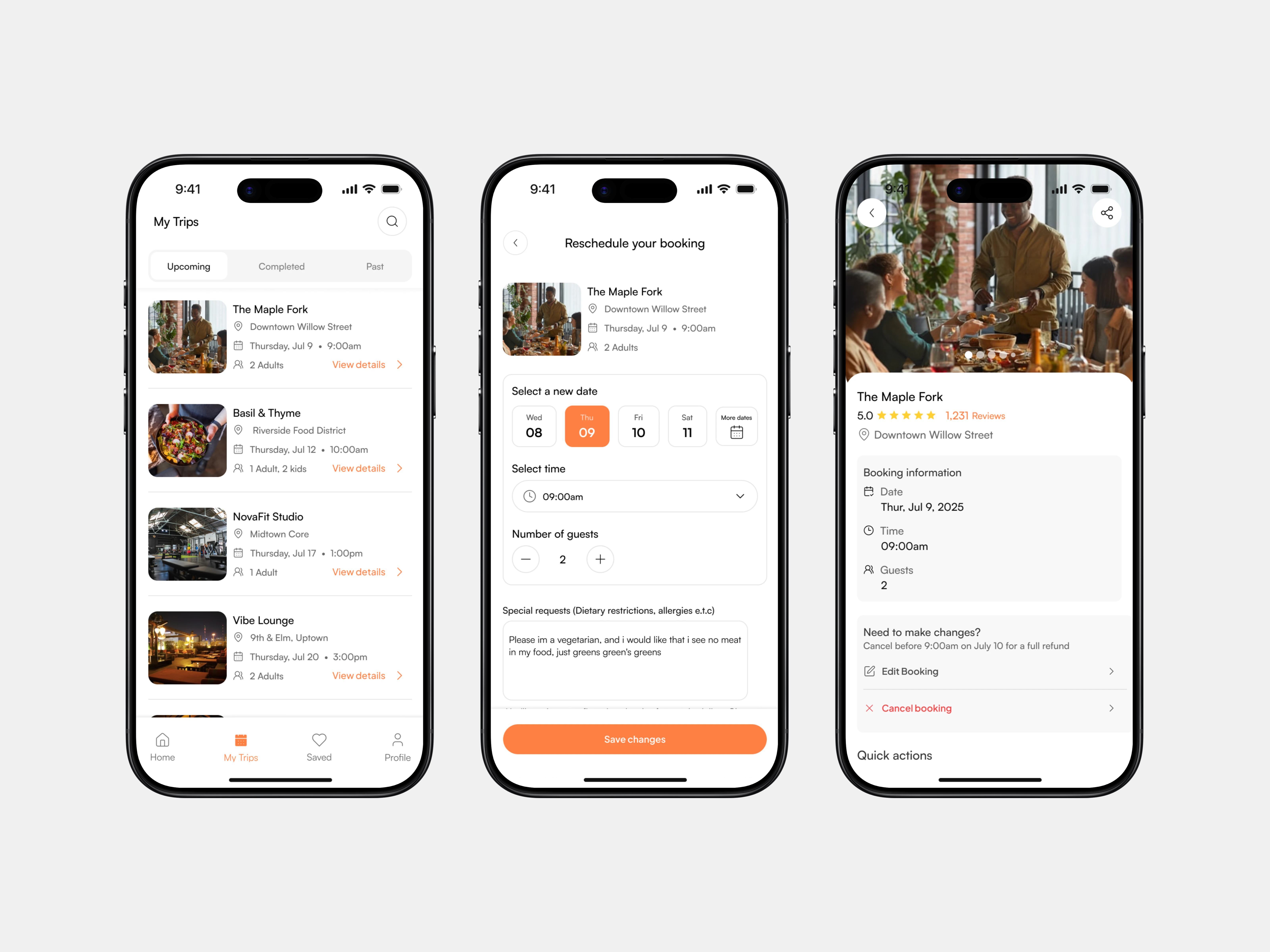
Booking tab, details & reshcedule
My Trips: Managing Plans With Confidence
After booking, the experience shifts from discovery to management. The My Trips tab was designed as a clear, reliable space where users can see all their plans at a glance. Bookings are organized into Upcoming and Past, helping users focus on what’s next while keeping previous trips accessible for reference or rebooking.
Each trip card surfaces only essential details, the place, date, time, and booking status, so users don’t have to dig through confirmations or emails. From this same space, users can also reschedule bookings when plans change. Rather than starting over, existing details remain visible, and only editable fields are presented, making changes feel quick and low-stress.
By combining upcoming bookings and rescheduling into one flow, the Trips tab reinforces trust and flexibility reminding users that their plans are easy to manage and always within reach.
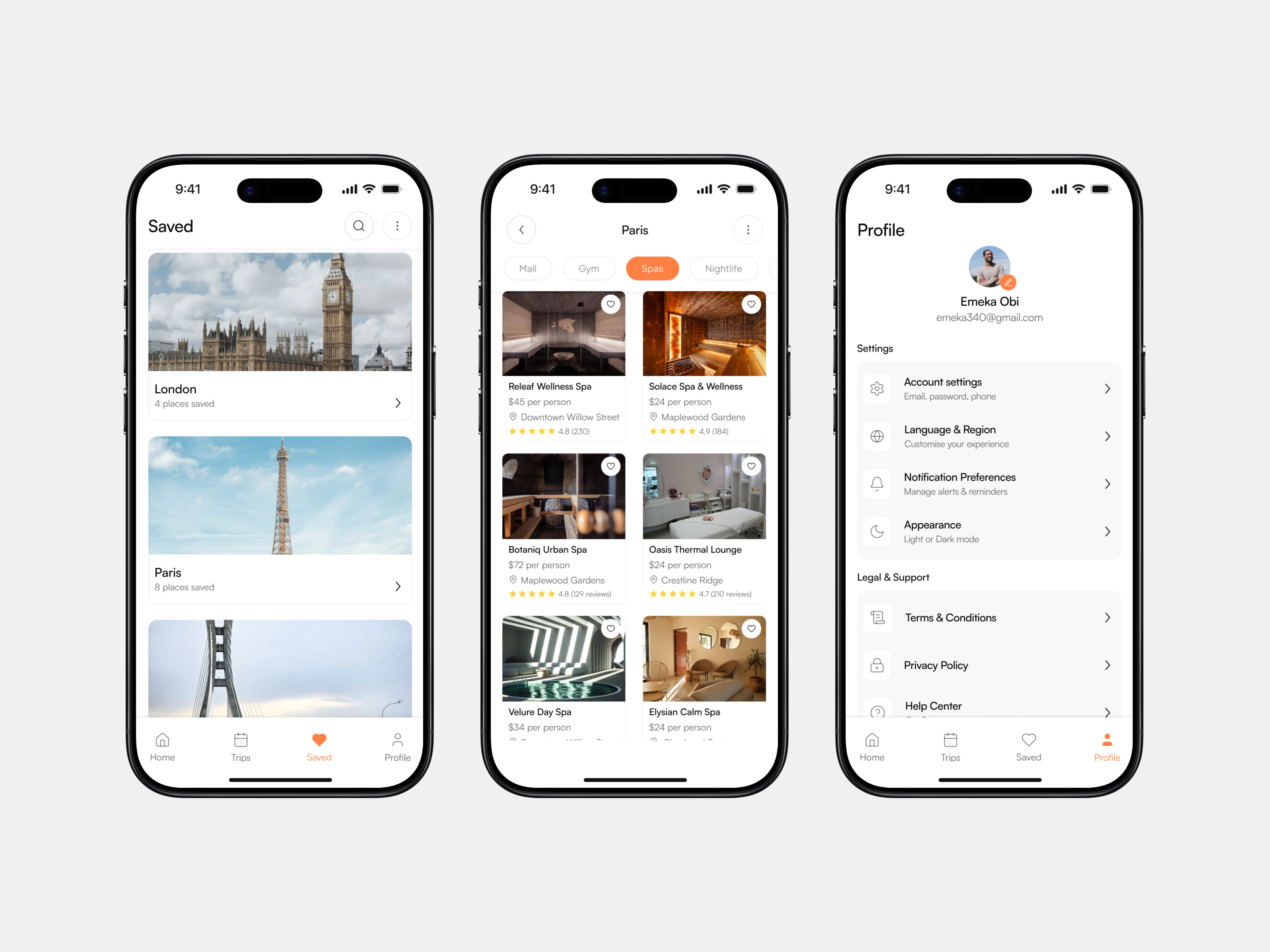
Saved tabs, details & profile
Saved & Profile: Personal Space
The Saved tab acts as a personal collection of places users want to remember. Unlike many discovery apps, saved places are not tied to a single city. Instead, they persist across locations and are grouped by city, allowing users to plan ahead or revisit ideas whenever they travel.
The Profile tab complements this by giving users control over their account — personal details, preferences, and settings — without overwhelming them. Together, Saved and Profile form the personal side of Trippr: one focused on intention, the other on control.
They’re not places users visit constantly, but when they do, everything feels exactly where it should be
Outcomes
Trippr was designed with projected outcomes in mind:
Faster decision-making
Reduced booking friction
Stronger save-and-return behavior
Increased user confidence
Final Thoughts
Trippr pushed me to think deeply about how design can reduce cognitive load and turn exploration into action. More than screens, this project was about designing confidence, helping users feel good about their choices, wherever they are.
Like this project
Posted Dec 17, 2025
Trippr is a travel app that helps users discover and book places effortlessly, using AI recommendations, quick filters, and a simple booking flow across cities.
Likes
3
Views
59