SaaS Platform Redesign for GTM Execution

Mauricio Cornejo


Redesigning PG:AI, an AI platform for GTM, to help teams go from account research to action
Project Type: B2B SaaS Platform
Client: PG:AI (getpg.ai)
Industry: Sales Tech
Role: Product Designer
Focus: Product Strategy, UX/UI & Product Design
PG:AI is an AI-native platform for enterprise GTM teams that helps sellers understand their accounts and turn intelligence into action. When I joined the team, the product was primarily focused on automating account research and helping sellers uncover the priorities, initiatives, risks, and challenges shaping their prospects.
After a while we realized that intelligence alone wasn’t enough. Teams needed help deciding where to focus, understanding why those accounts mattered, and turning that context into consistent action. This became the foundation for PG:AI V2, a complete rethink of the platform around how modern GTM teams actually work.
Launch video made with Remotion
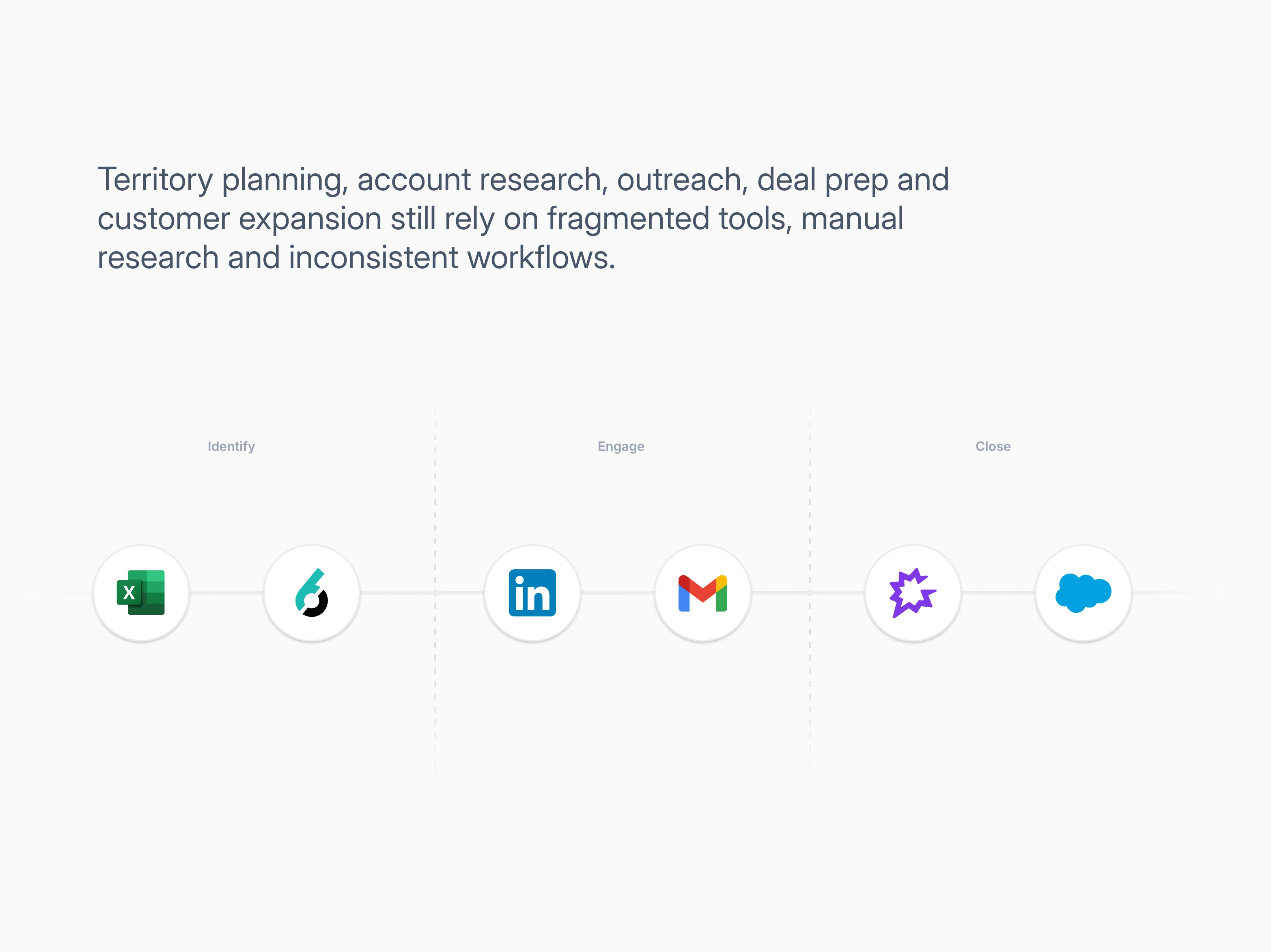
Enterprise GTM teams have access to more data and AI tools than ever, but execution remains fragmented. Account research lives in one place, CRM data somewhere else, sellers develop their own understanding of accounts, and valuable context gets lost between people, tools, and customer touchpoints.
PG:AI already helped teams automate account research. But intelligence was only the first step. The bigger opportunity was creating a shared system that could continuously understand accounts, connect that intelligence to each company’s GTM strategy, and help humans and AI agents act on it consistently.
Core design challenge
How do we evolve an account intelligence product into a system that helps an entire GTM team decide where to focus, understand why, and execute consistently?
Goals
• Redefine the product strategy around account execution, not just intelligence
• Create a connected experience across prioritization, intelligence, monitoring, and execution
• Standardize account context and best practices across GTM teams
• Build an extensible platform that could power humans, AI agents, and external workflows
Approach
We envisioned a system that understands every account, maintains live strategic context, surfaces what matters, and coordinates the right actions continuously across every account at once. Autonomous agents working side-by-side with humans.
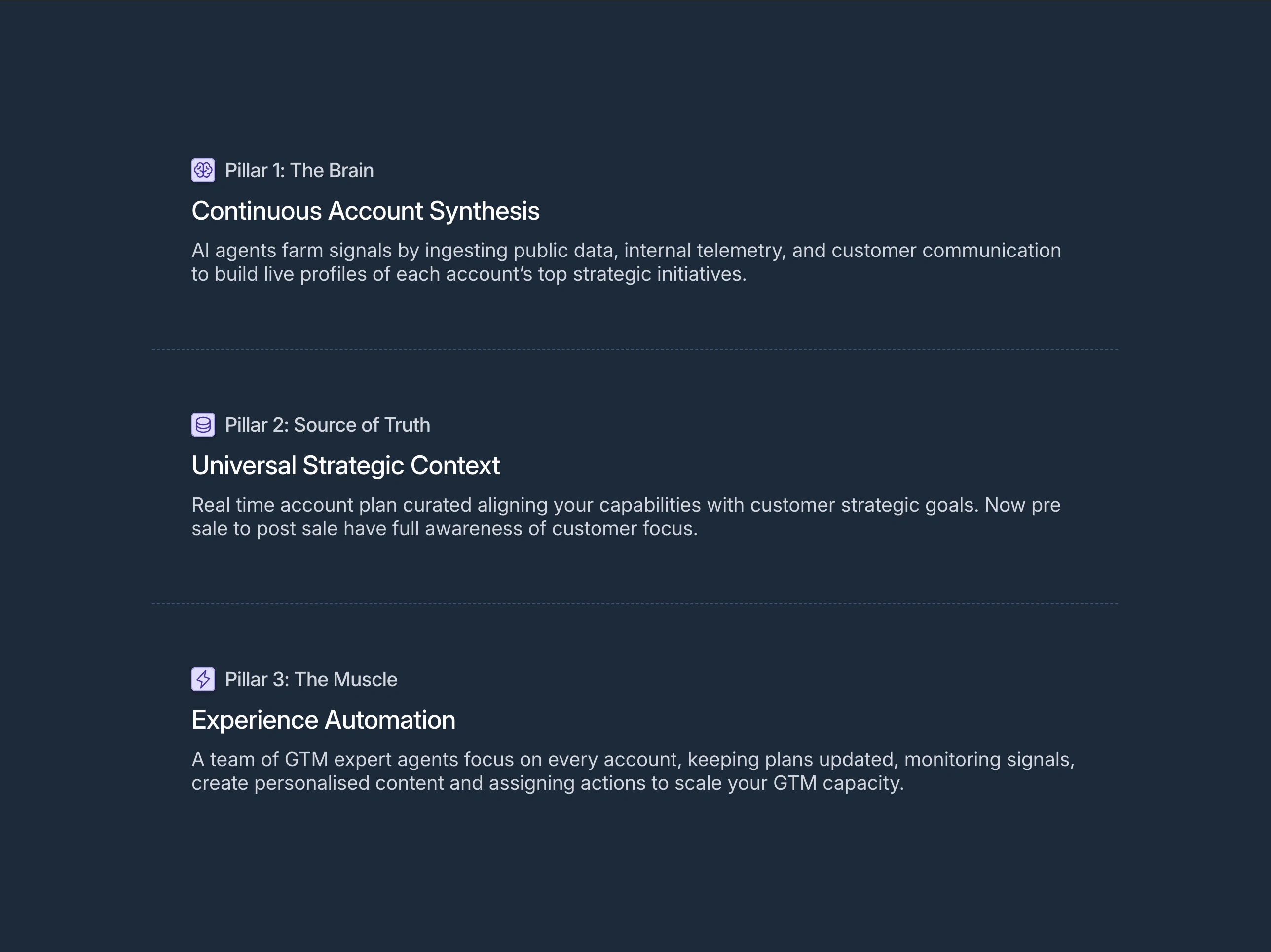
Based on this we defined 3 pillars:
Continuous Account Synthesis: AI agents farm signals by ingesting public data, internal telemetry, and customer communication to build live profiles of each account’s top strategic initiatives.
Universal Strategic Context: Real time account plan curated aligning your capabilities with customer strategic goals. Now pre sale to post sale have full awareness of customer focus.
Experience Automation: A team of GTM expert agents focus on every account, keeping plans updated, monitoring signals, create personalised content and assigning actions to scale your GTM capacity.
Intelligent territories
How do you know which accounts deserve your attention?
Enterprise companies usually have thousands of accounts across their territories. Nowadays, they have access to more data and information than ever, but this just makes the prioritization problem more complicated.
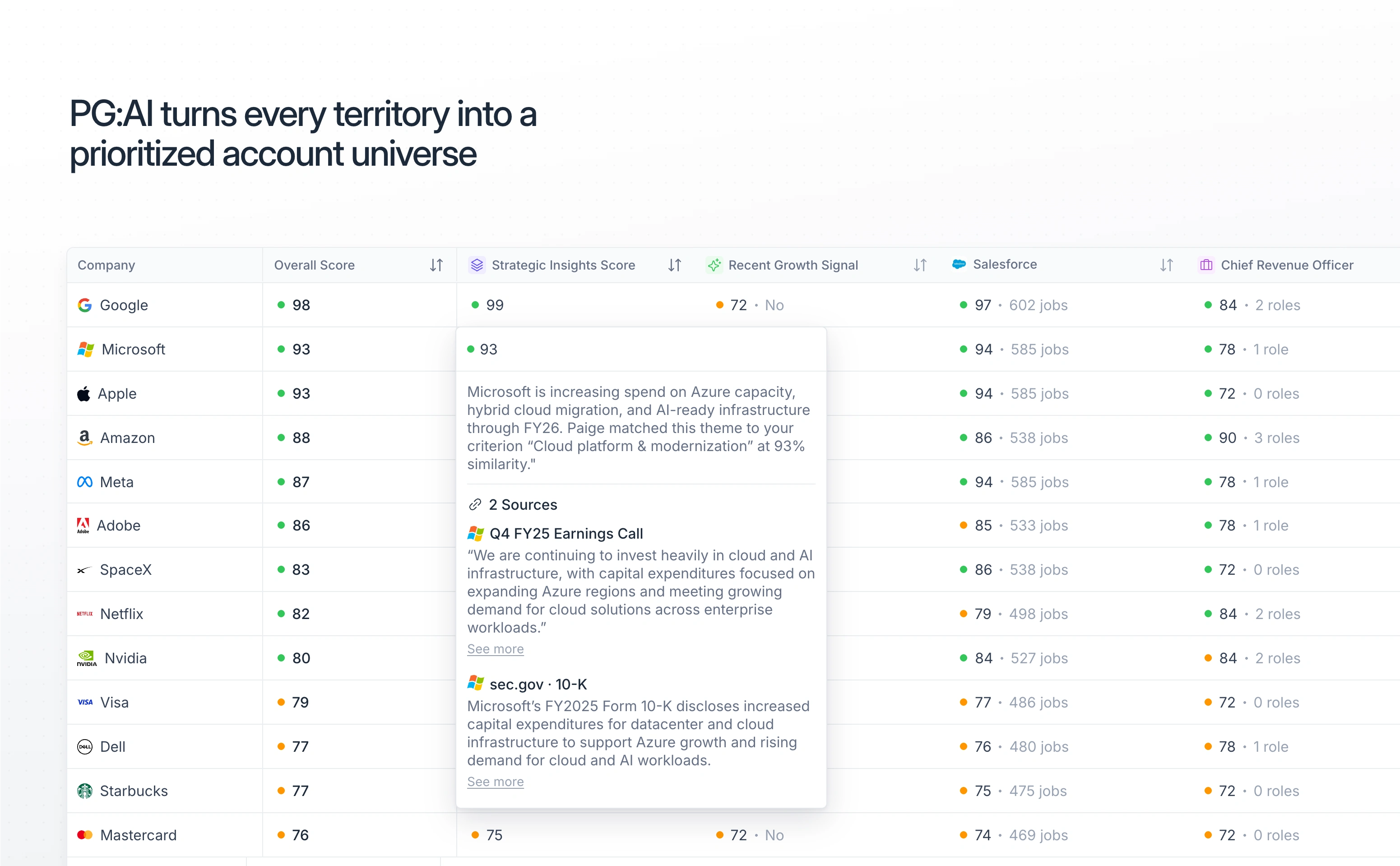
Instead of focusing on firmographics, PG:AI needed to understand what a good account meant for each specific organisation, score accounts based on that, be very clear about the logic behind each scoring decision, and keep the scores relevant over time.
We already had a relevance model through which PG:AI evaluates each account’s priorities and signals against the organisation’s GTM model.
Based on this, we came up with a scoring and ranking system that shows the reasoning behind each score and tells GTM and RevOps leaders which accounts are the most relevant to their organisation.
The design outcome was a dynamic table with multiple interconnected row types, scores with customisable criteria, and accessible, sourced information.
Always on monitoring
How do you stay ahead of what’s happening across your accounts?
One of the main things that troubles GTM teams is how they can stay on top of everything happening across their accounts in real time.
We knew that just sending notifications wasn’t the solution. PG:AI needed to state what changed, whether it was relevant to the specific organisation, and why.
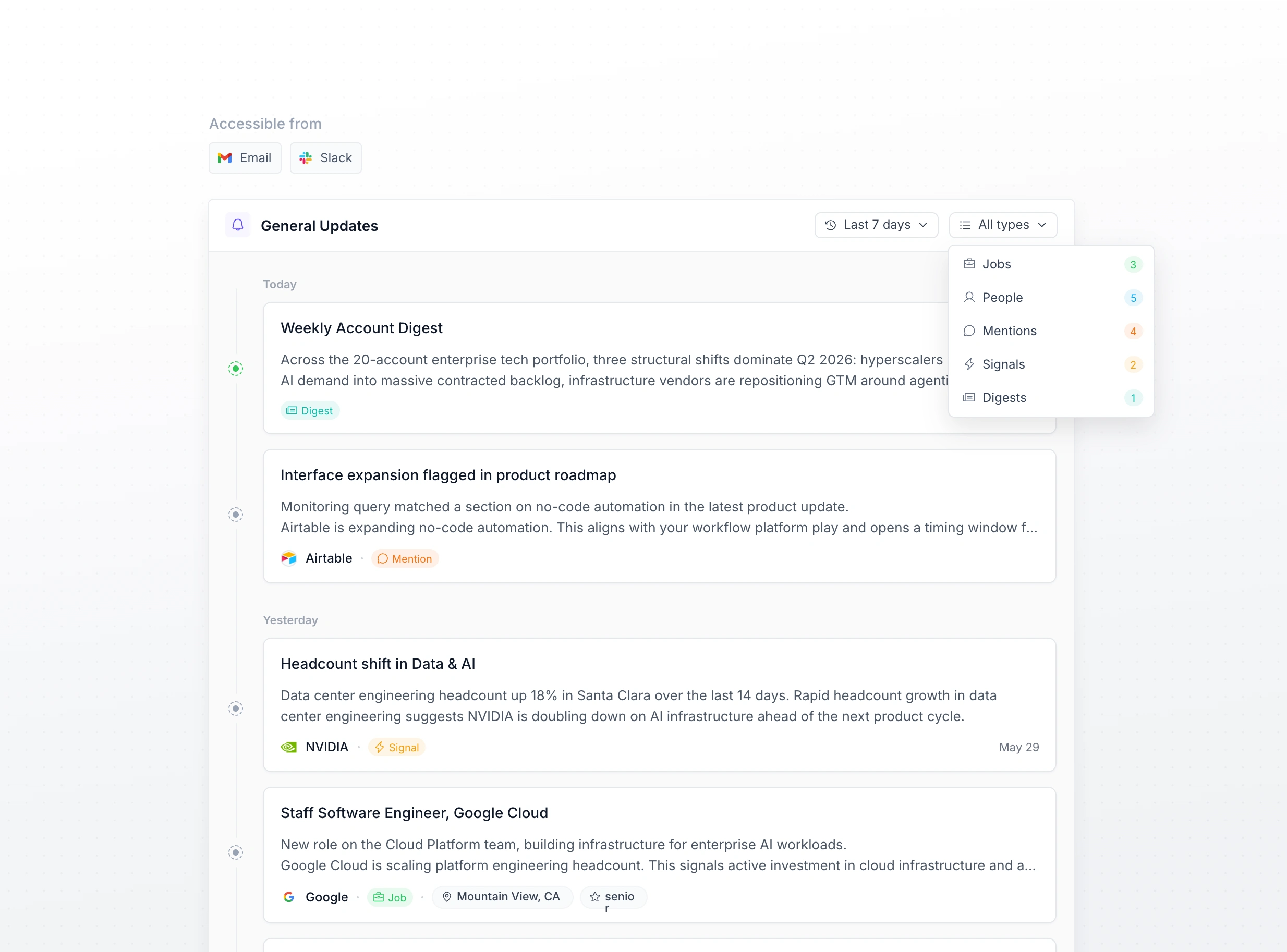
We built an always-on monitoring system with agents that watch for changes and provide real-time alerts for the things that matter.
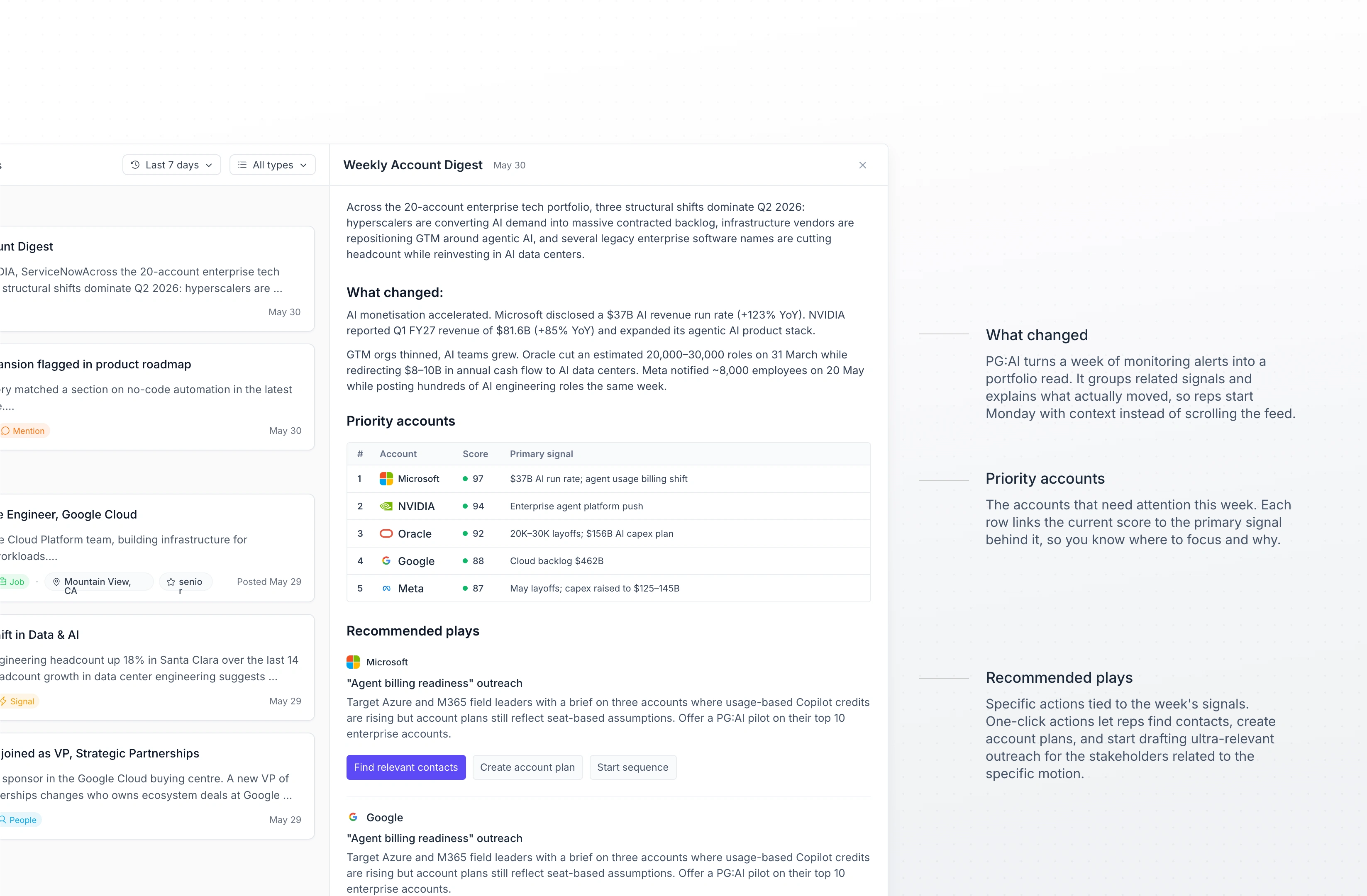
This was reflected in a timeline view and an intelligent inbox that used our canvas component to display account digests or detailed reports.
PG:AI does not just surface alerts. It explains why the change matters, connects it to the account context, and gives the team a recommended path forward.
Execution at scale: PG:AI Studio
How do you turn account intelligence into action at scale?
Even when AEs identify an opportunity and understand how they can create value for an account, they still need to manually translate all that understanding and context into outreach, meeting prep, discovery questions, value hypotheses, documents, pitches, and more.
Usually, this would happen using another tool, but we saw an opportunity to use PG:AI’s context and data architecture to generate highly relevant sales content at scale.
We had the context of every account, the value paths, the contact information, and the organisation’s GTM model. We just needed a way to turn all of that into documents, decks, value pyramids, and other sales assets.
That’s how we came up with PG:AI Studio: a collaborative workspace where AEs can turn everything PG:AI knows about an account into sales-ready assets, grounded in real account context and trusted sources.
PG:AI Studio
But how do you make AI-generated work trustworthy?
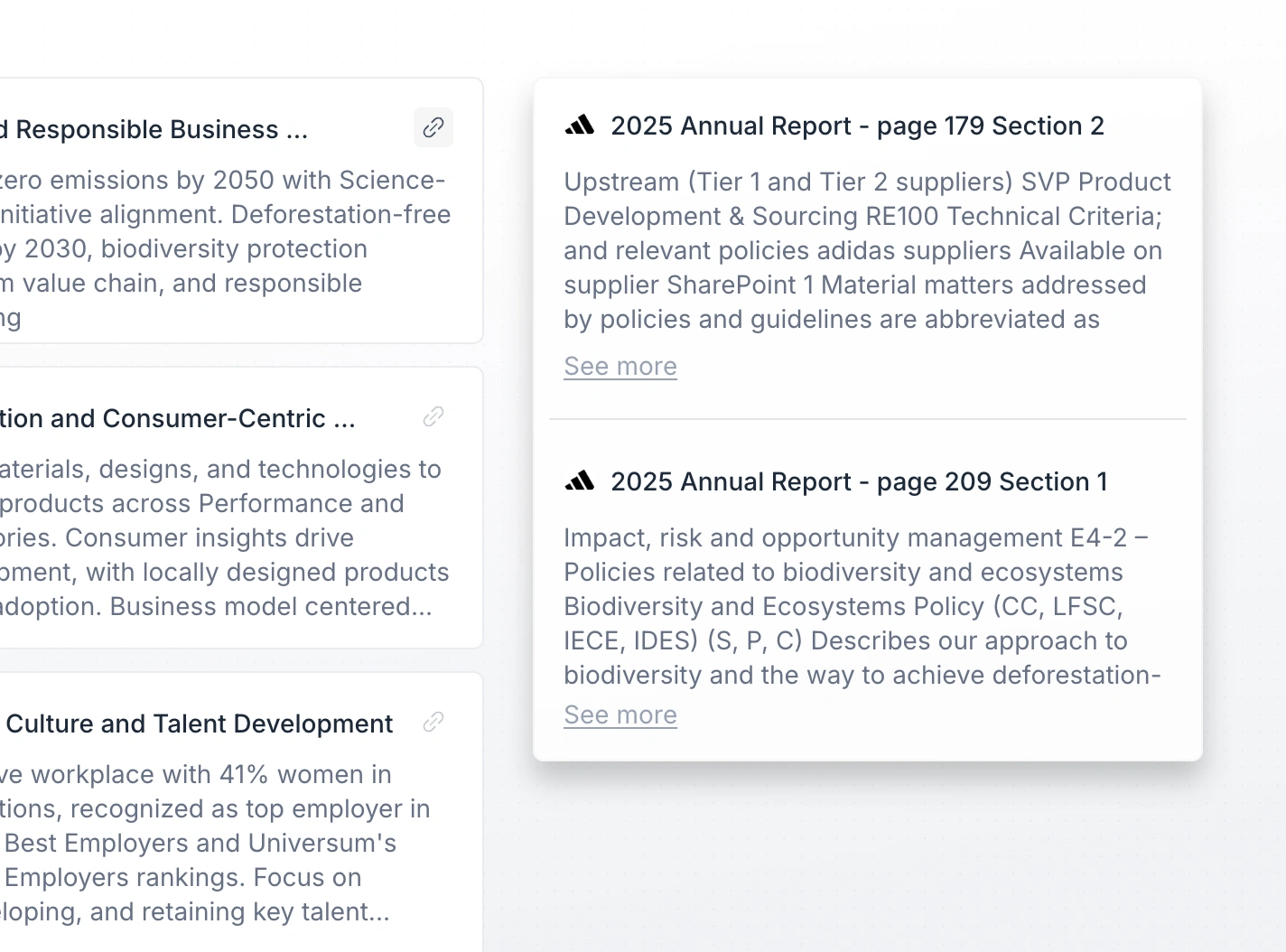
This was an important piece throughout the product. We needed to convey trust to users that all the information they were getting was recent and rooted in official, trusted sources. If this wasn’t the case, the whole product would fall apart.
The way I did this was by including a sources modal that users can access from anywhere in the app for every insight or document.
This way, users can get the reassurance that they are working with up-to-date, real information.
Standardizing Execution
How do you get every GTM rep to work like your best reps?
Different AEs and sales reps research, prepare, qualify, and engage accounts differently. The best processes often exist in individual people’s heads instead of across the organisation. PG:AI should allow companies to make these best practices standard across the whole GTM team.
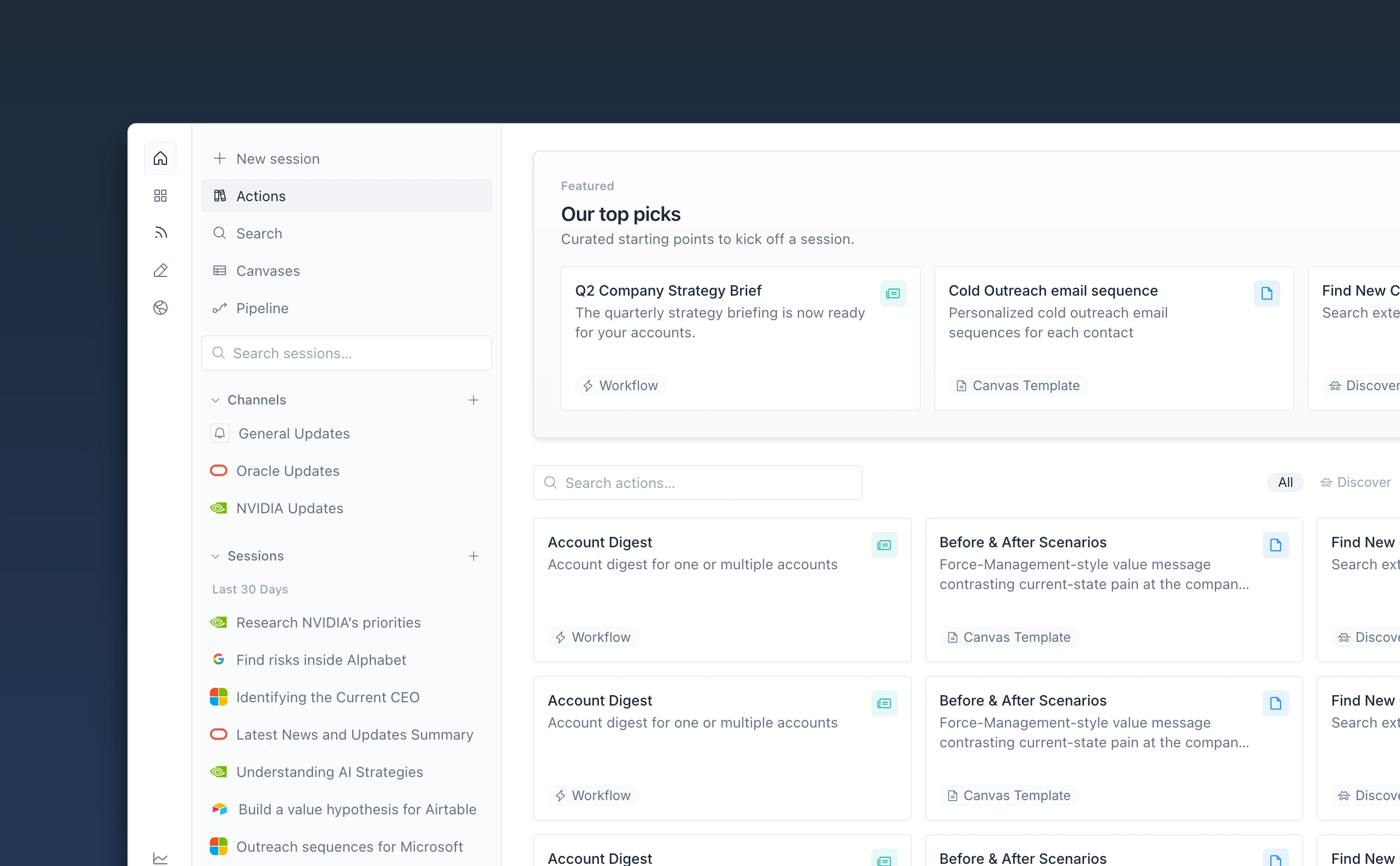
We mentioned that we had combined account context with a common GTM model. This was the groundwork we could use to create org-wide templates and workflows that users and agents could access to engage accounts like the best reps do.
Our vision is humans and AI agents working side by side, with the same context and following the same standards.
For this, I designed a library of templates for sales assets and workflows that would trigger ai agent sessions and use our canvas component and Studio capabilities to build sales assets and execute actions following a repeatable model.
Final result
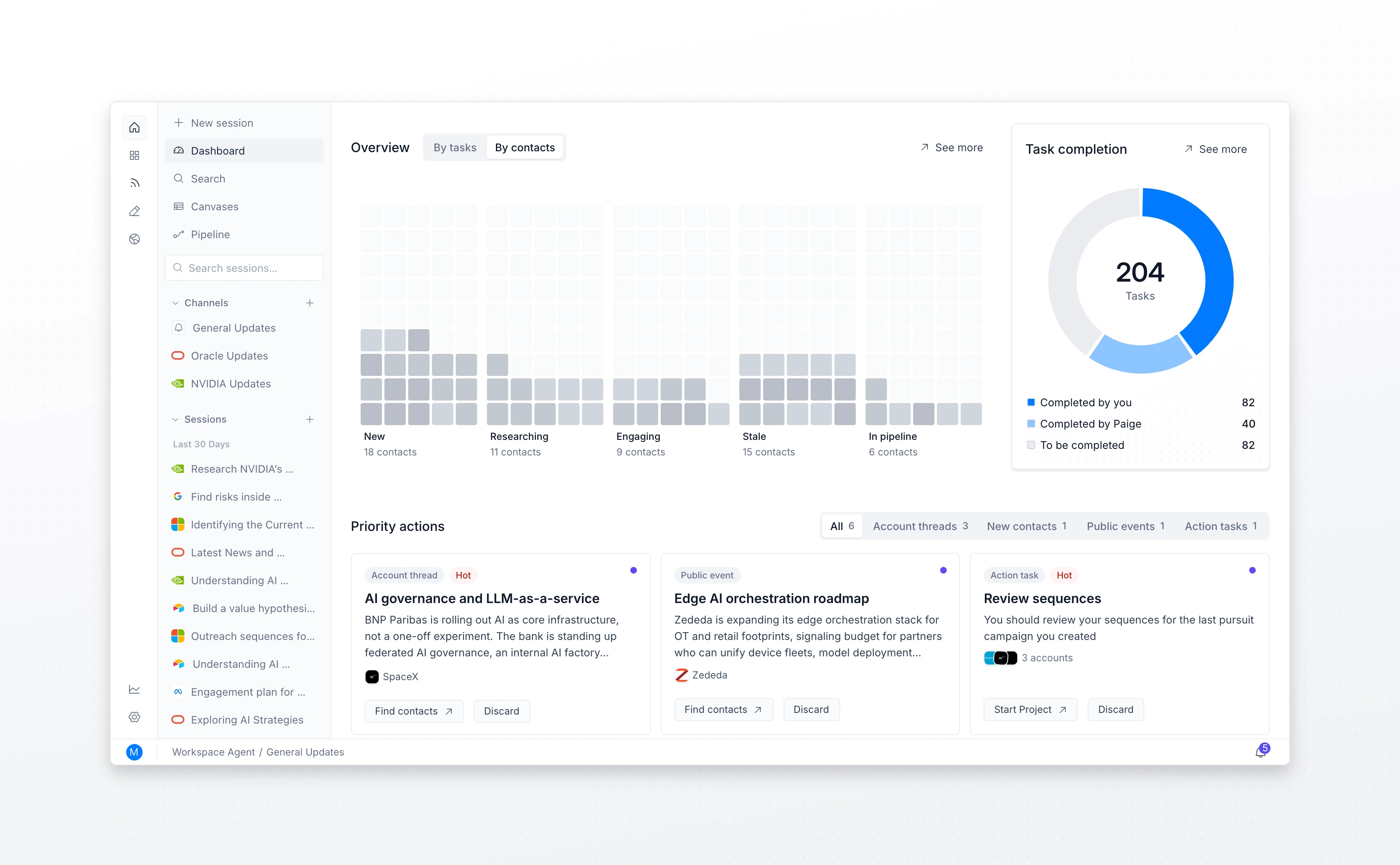
By the end of the project, PG:AI had evolved from a commercial intelligence platform into a connected system for GTM execution. V2 gave teams a new way to prioritize accounts, continuously monitor what matters, turn trusted account intelligence into action, and standardize execution across the organization, while extending that context into the tools and AI agents they already use.
Thanks for reading!
I partner with founders to design and build products and websites that solve real user needs and support their business goals. Whether you’re building an MVP, redesigning an existing product, or rethinking your website, I’d be happy to help.
Like this project
Posted Sep 2, 2026
From fragmented account research tool into an AI-native GTM execution platform. B2B SaaS Platform redesign for PG:AI.