FilmTailor AI MVP and Brand Development

Mauricio Cornejo

Helping an early-stage AI startup shape its product, launch its MVP, and attract its first investors
Project Type: Web Application, Mobile App & Marketing Website
Client: FilmTailor AI (filmtailor.ai)
Industry: Film & TV production
Duration: 6 months
Role: Founding Designer and Lead Product Designer
Focus: Product Strategy, UX/UI Design, Design System, Web Design
FilmTailor AI is an early-stage startup building an AI-powered platform for Film, TV, and Theatre production teams. With an initial business plan but no product, the founder needed to transform her vision into an MVP that could validate the idea, attract early adopters, and secure pre-seed investment.
Working closely with Anto, I helped define the product strategy, identify the core MVP features, design the web and mobile experience, and create a marketing website that clearly communicated the product vision to users, investors, and partners. This laid the foundation for the MVP launch, early user adoption, and the first investor conversations.
Film production teams rely on a combination of disconnected tools and manual workflows to manage planning, design, budgeting, and collaboration. As productions become more complex, teams spend unnecessary time switching between software, coordinating across departments, and keeping projects on schedule.
FilmTailor AI set out to reinvent this process through an AI-powered platform that could automate pre-production, from script analysis and project planning to creative design and collaboration.
The challenge wasn’t designing every idea in the business plan. It was defining the right MVP by identifying the core features, creating a cohesive product experience, and translating the vision into a product that users and investors could immediately understand.
Goals
• Identify the core features required to validate the idea and define a roadmap
• Create the brand identity and a scalable design system.
• Design a launch-ready MVP for web and mobile.
• Lay the foundation for fundraising and early customer adoption.
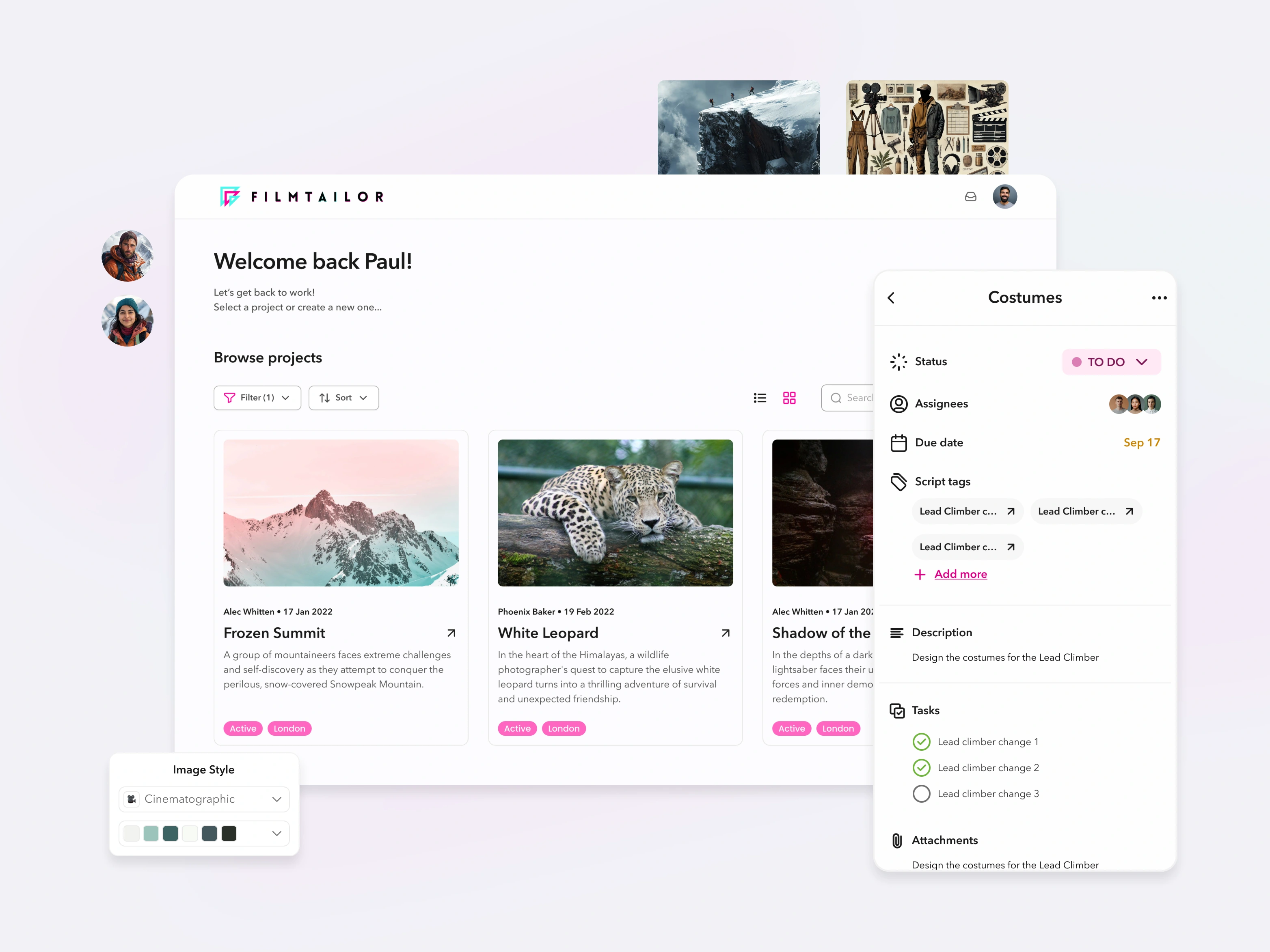
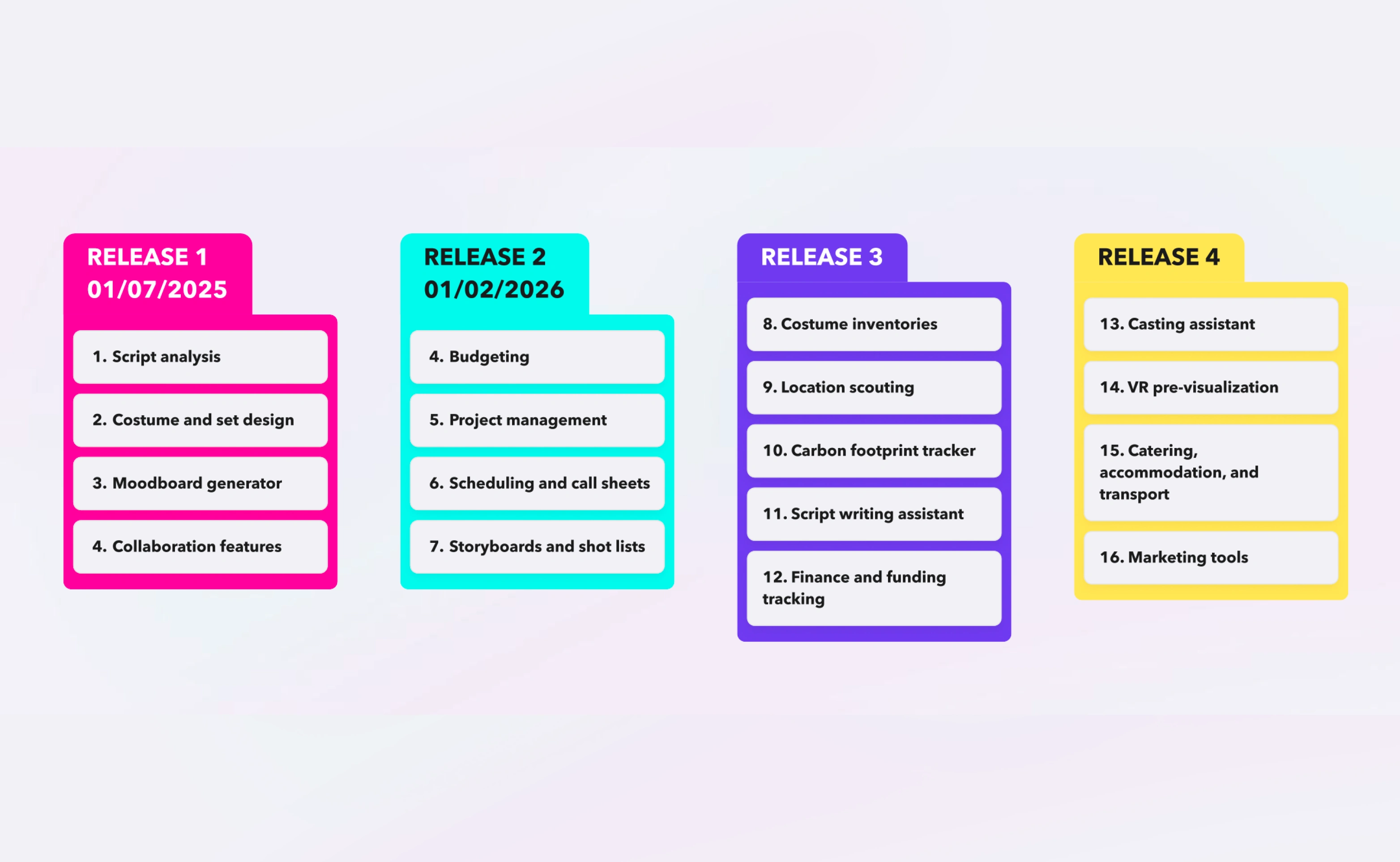
The business plan outlined an ambitious vision spanning AI-powered project management, creative design, collaboration, budgeting, and several future modules. Rather than designing every idea, I worked closely with the founder to identify the smallest set of features that delivered the product’s unique value proposition and could validate the concept. This resulted in a focused MVP centered around the following features:
Script Analysis: Upload a script and instantly generate a structured breakdown of scenes, characters, locations, props, costumes, and production requirements, giving teams a head start on planning.
Moodboard Generation: Generate AI-powered moodboards for scenes and characters in seconds, helping creative teams explore visual directions and align on the project’s artistic vision.
Costume Designer: Create, refine, and budget AI-generated costume concepts, enabling designers to move from creative exploration to production-ready designs much faster.
This provided a clear roadmap for the product team as well as clear milestones and a deadline for the MVP launch.
Defining the brand identity and bulding a scalable design system
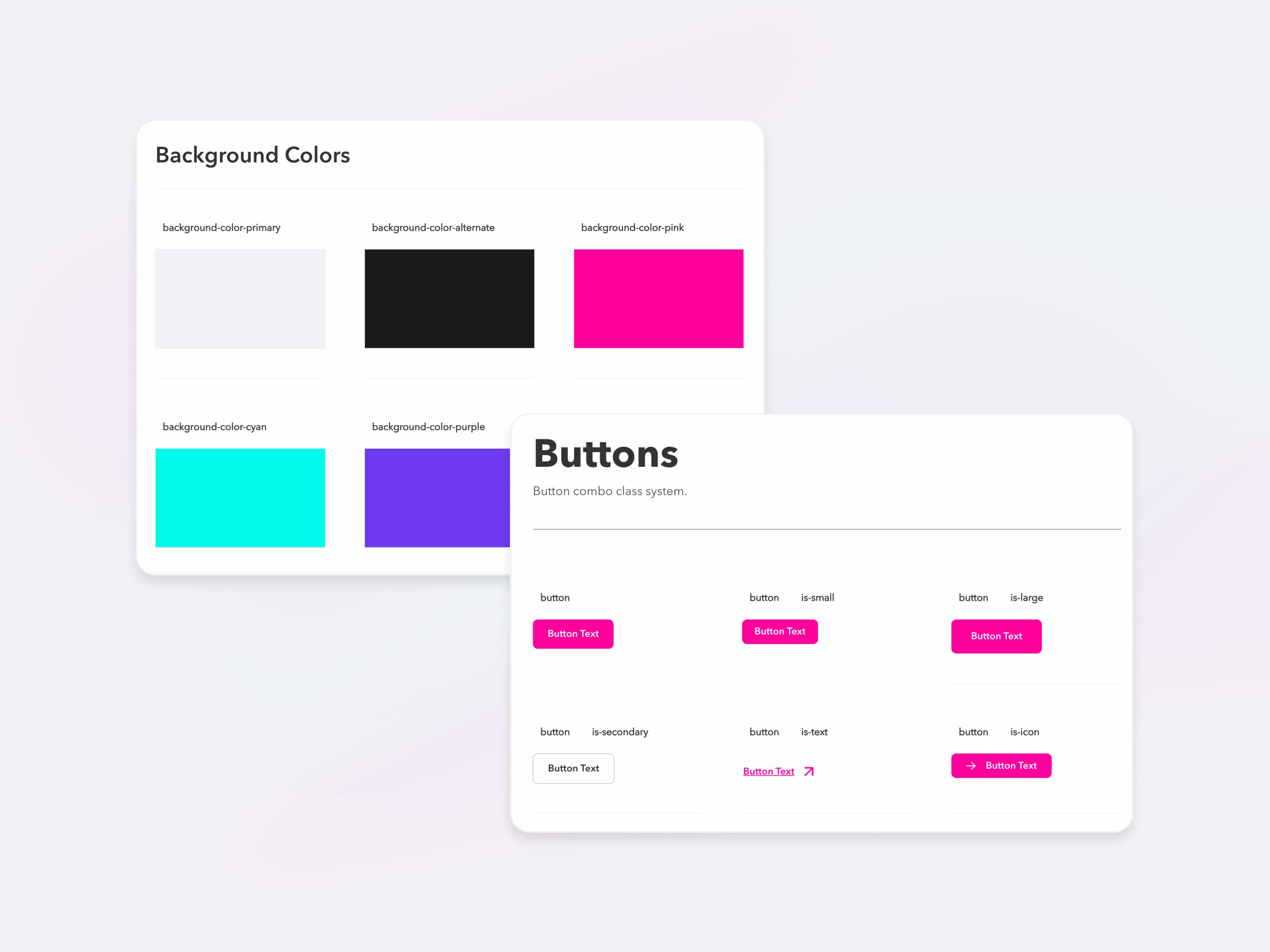
Before designing the product, I led a team of two designers to establish FilmTailor AI’s visual identity and build a scalable design system. We developed a bold brand that reflected the creative nature of the film industry while conveying innovation, confidence, and a modern AI-driven approach.
Rather than following the typical aesthetic of enterprise SaaS products, we embraced vibrant colors, expressive typography, and a flexible design language that helped FilmTailor AI stand out while providing a consistent foundation across the web application, mobile experience, and marketing website.
AI Script Analysis: What changes when AI becomes part of an existing production workflow?
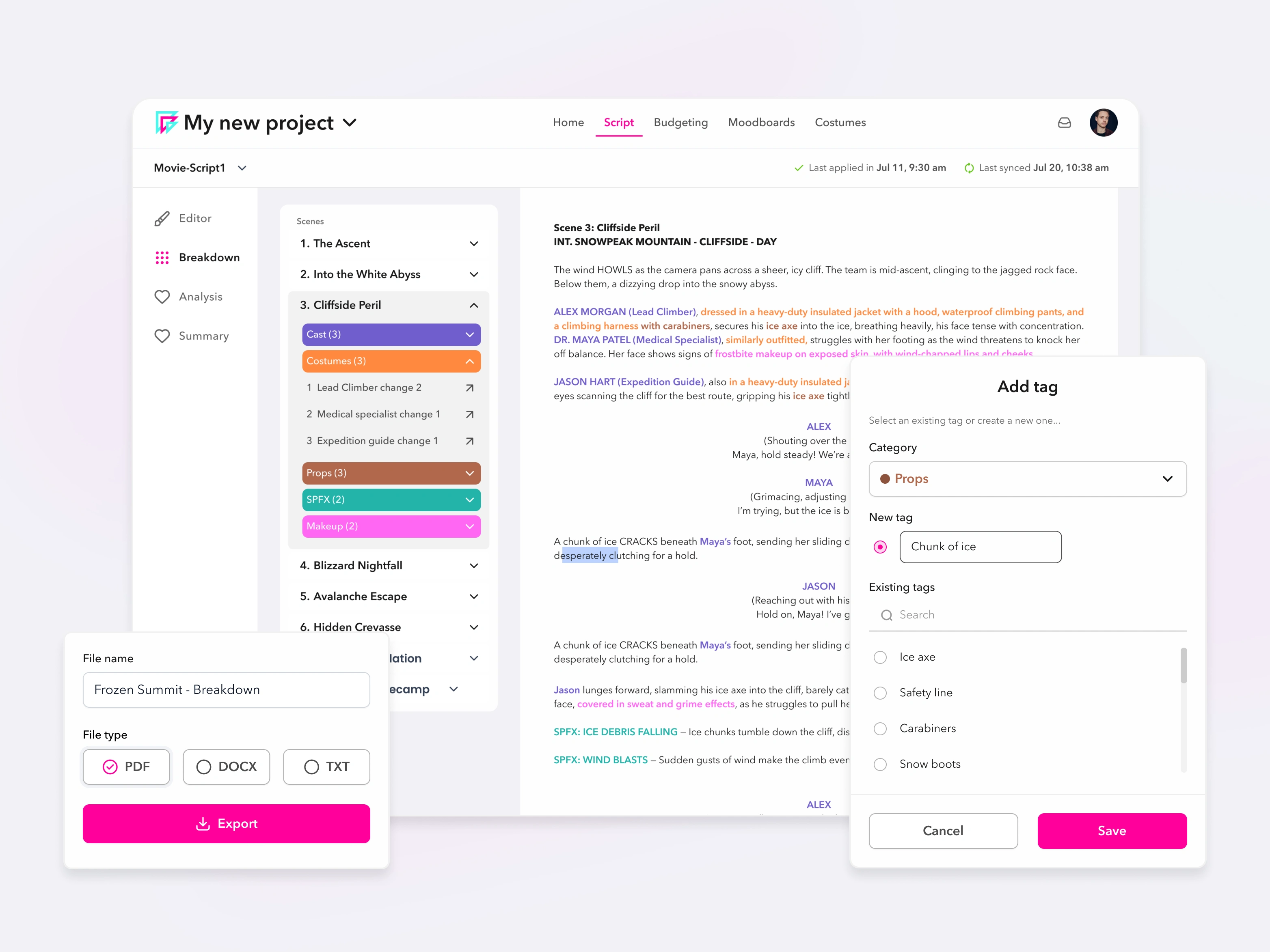
Script breakdowns have existed for decades, so the goal wasn’t to reinvent the process but to understand where AI could genuinely add value. I researched existing script breakdown software and industry workflows to understand how production teams identified characters, costumes, props, locations, and scene requirements.
From there, I worked on defining how AI could automate the initial analysis, what information should be extracted, how it should be structured, and how users could review, edit, and validate the output before using it throughout the rest of the platform. The result was an experience that respected familiar workflows while significantly reducing the manual effort required to get a production started.
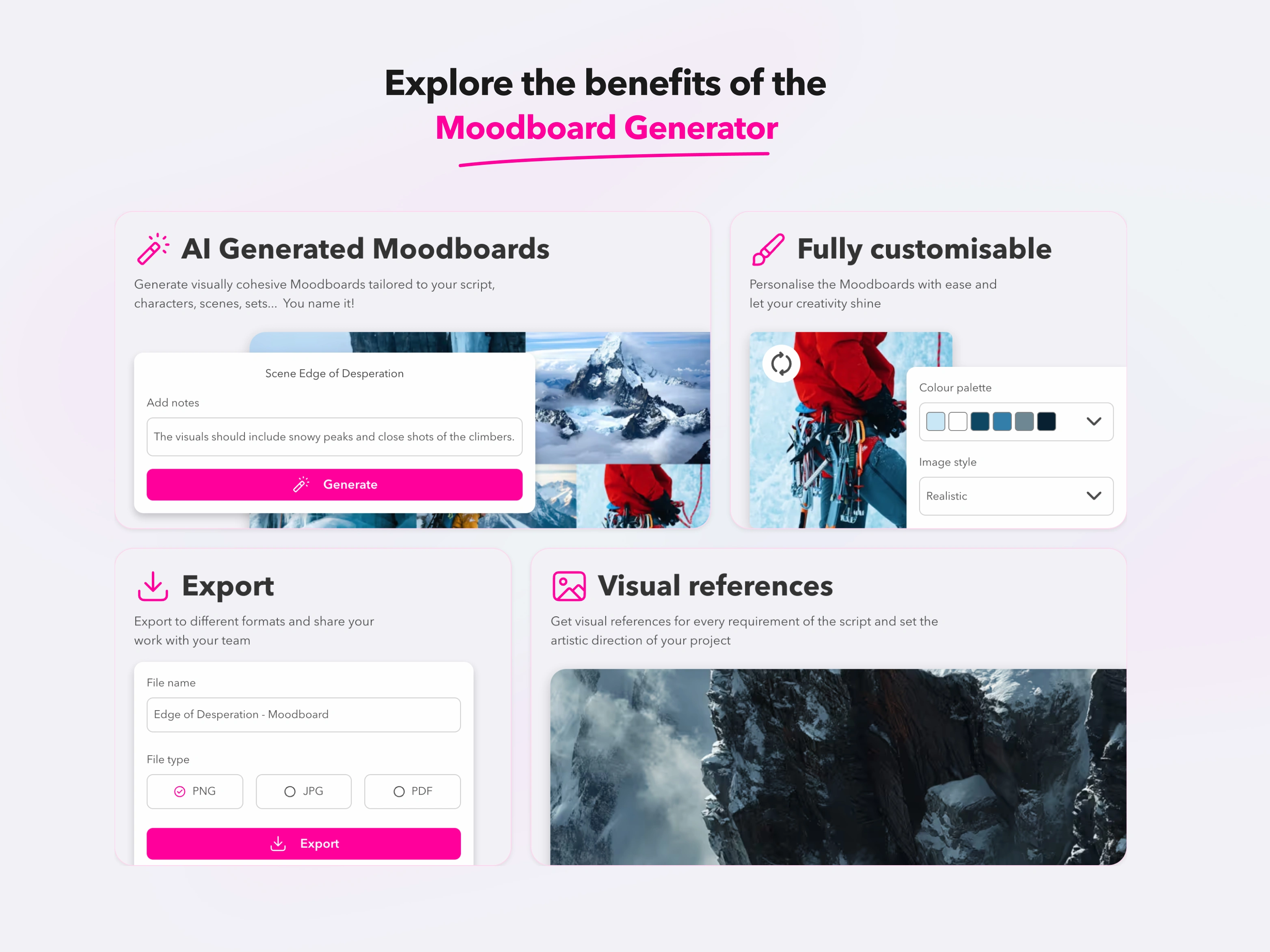
Moodboard Generator: How can AI accelerate creative direction without taking away creative control?
Moodboards are an essential part of pre-production, helping creative teams align on the visual direction of a project. The challenge wasn’t generating a single moodboard, but connecting the output of Script Analysis to automatically create visual inspiration for every scene in a screenplay.
Working with my team, we designed a workflow where uploading a script generated a project-level moodboard alongside a library of scene-specific moodboards, giving teams an instant visual starting point at scale.
The most important design decision, however, was ensuring users never felt locked into AI-generated results. Every moodboard could be freely edited by rearranging layouts, uploading custom references, or regenerating individual images through prompting, allowing AI to accelerate the creative process without replacing it.
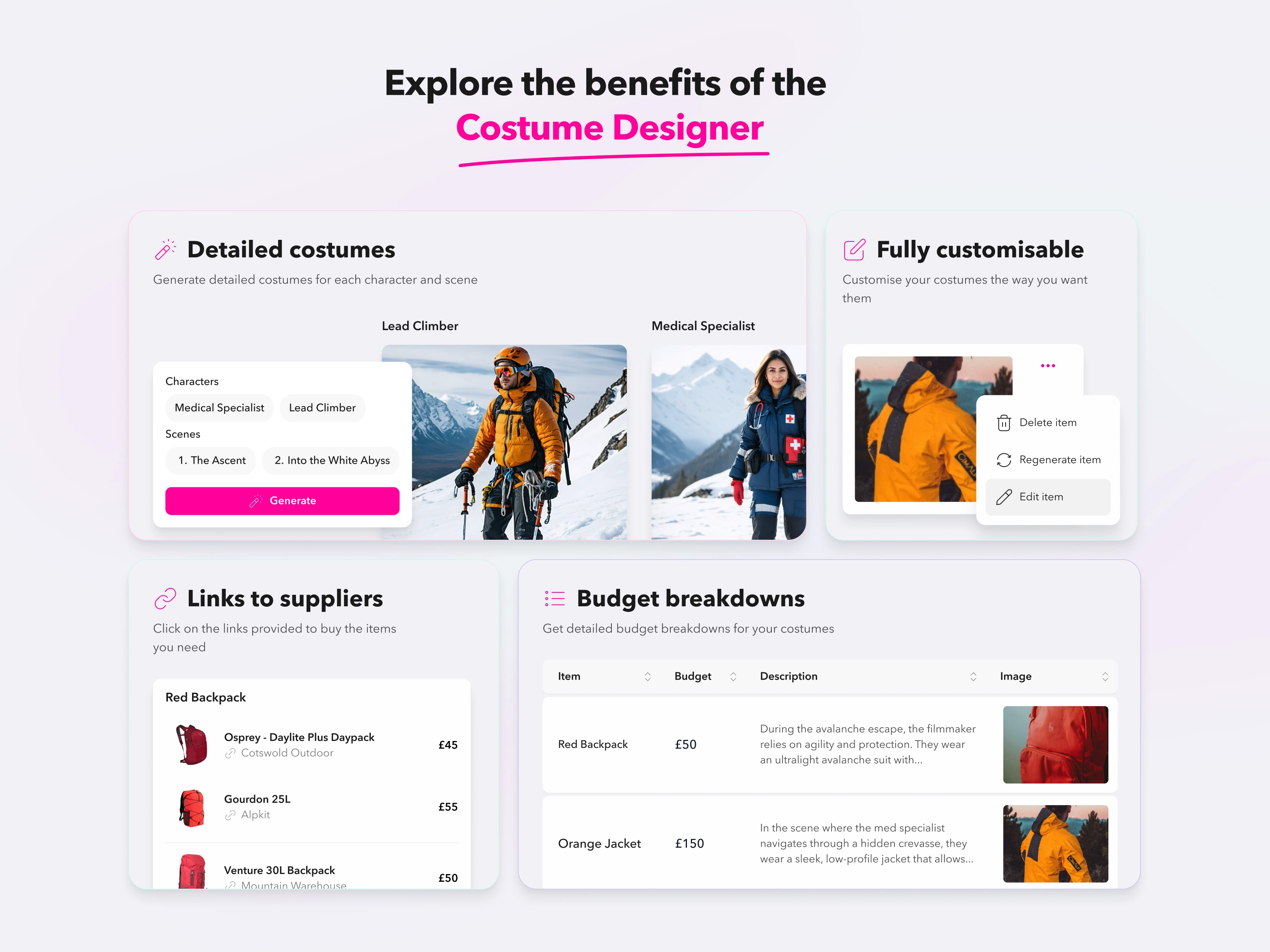
Costume designer: How do you turn AI-generated concepts into production-ready costume designs?
Unlike script breakdowns or moodboards, this wasn’t an existing workflow enhanced by AI. It was the product’s biggest differentiator and required designing an entirely new experience from the ground up. We explored the capabilities and limitations of generative AI through experimentation with image generation models, prompting workflows, and iterative refinement.
Beyond creating visuals, we investigated how AI could generate structured descriptions of every garment and connect those details with real suppliers, transforming concept art into practical, production-ready costume proposals. The challenge wasn’t simply generating beautiful images, it was designing a workflow that connected creative ideation with real-world production needs.
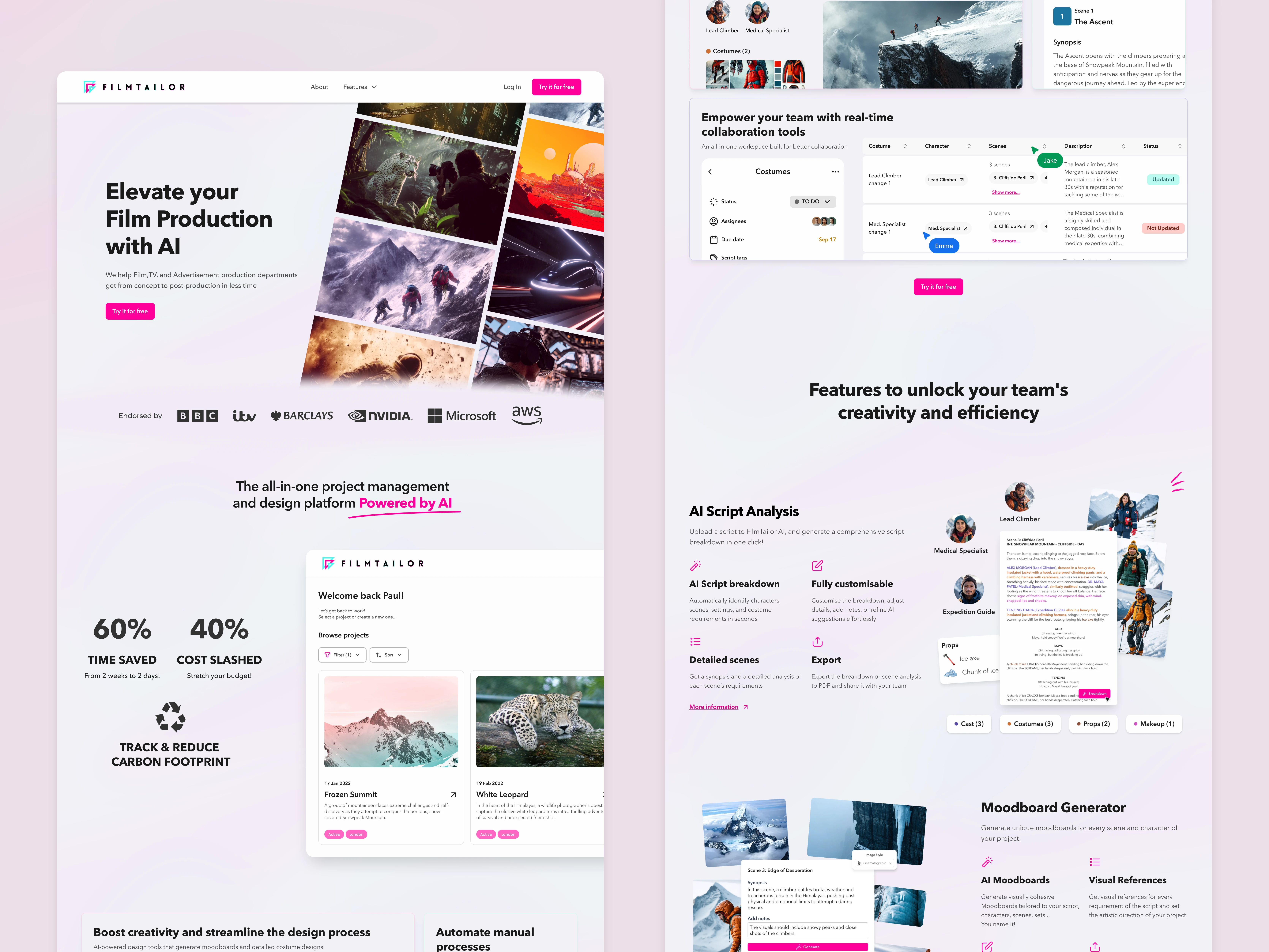
Communicating the value through a compelling website
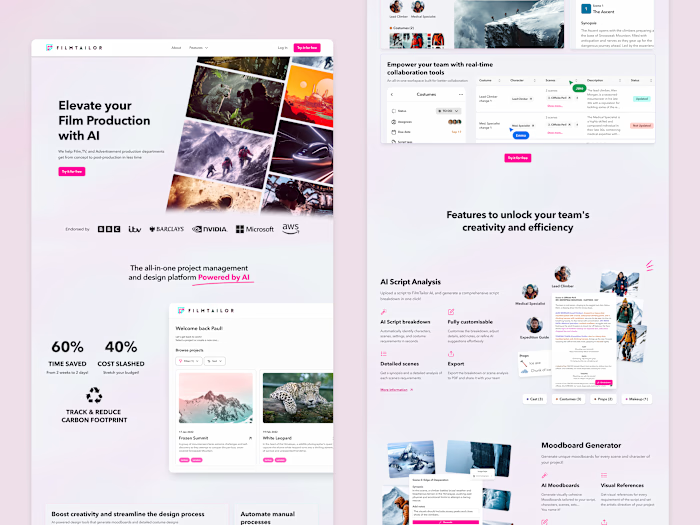
With the MVP designed, the final challenge was communicating its value beyond the product itself. I translated a technically complex platform into a clear narrative that resonated with early users, investors, and partners.
Rather than simply showcasing features, the website focused on the problems FilmTailor AI solved, the benefits of each core capability, and how AI enhanced existing production workflows. Combined with custom motion, interactive product previews, and the brand identity, the website became a key asset for launching the product, supporting fundraising conversations, and building credibility with the industry.
By the end of the project, the team had a clear product direction and the assets needed to move from concept to launch.
• Validated value proposition and MVP feature set
• Scalable brand identity and design system
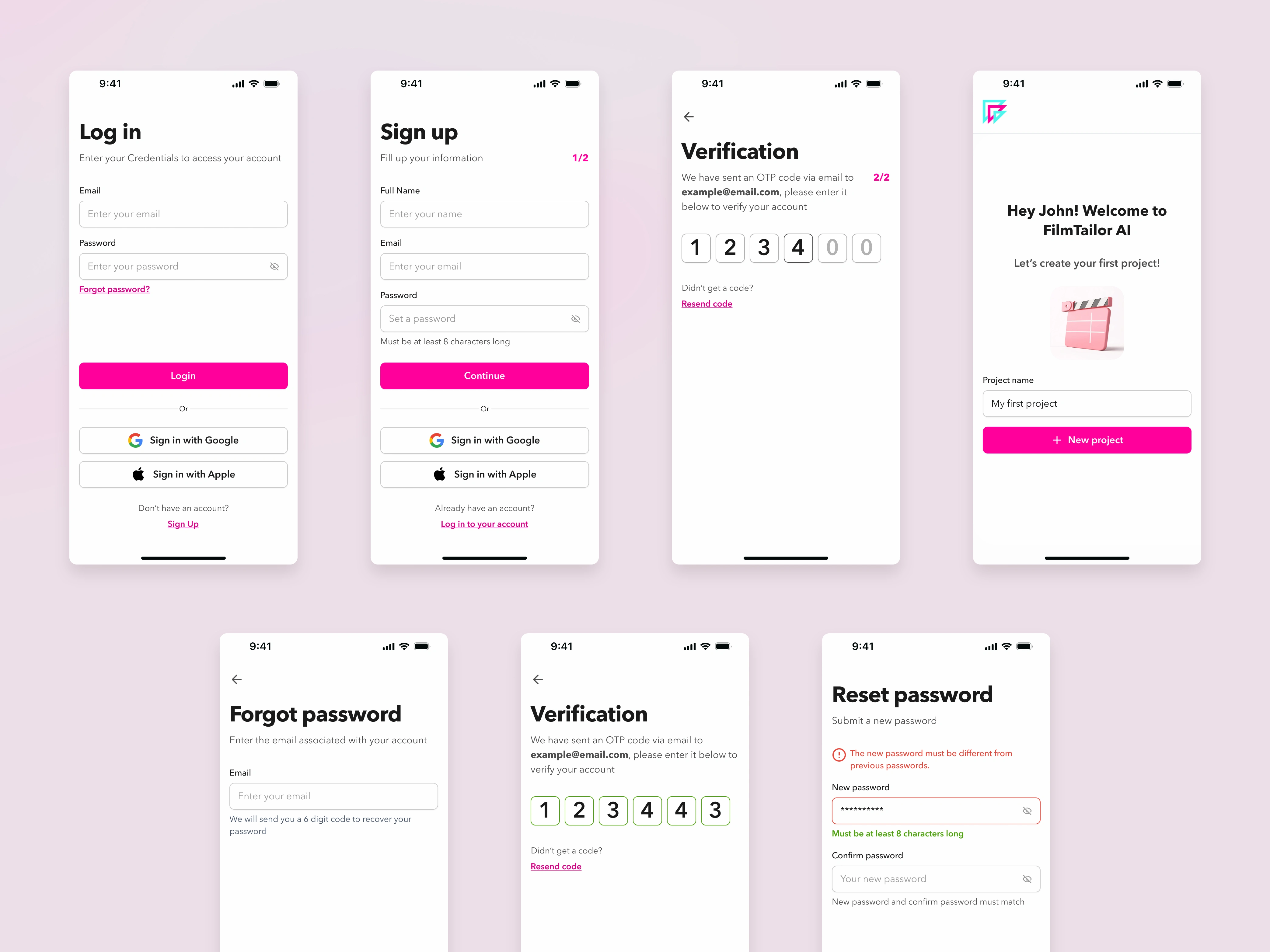
• Launch-ready web and mobile experience with complete user flows
Thanks for reading!
I partner with founders to design and build products and websites that solve real user needs and support their business goals. Whether you’re building an MVP, redesigning an existing product, or rethinking your website, I’d be happy to help.
Like this project
Posted Aug 3, 2026
Designed an AI-powered production platform from concept to MVP, supporting launch, early user adoption, and pre-seed investor conversations.
Likes
0
Views
22