Wajba: Mobile App Concept & UX Design

Omar Alfageeh

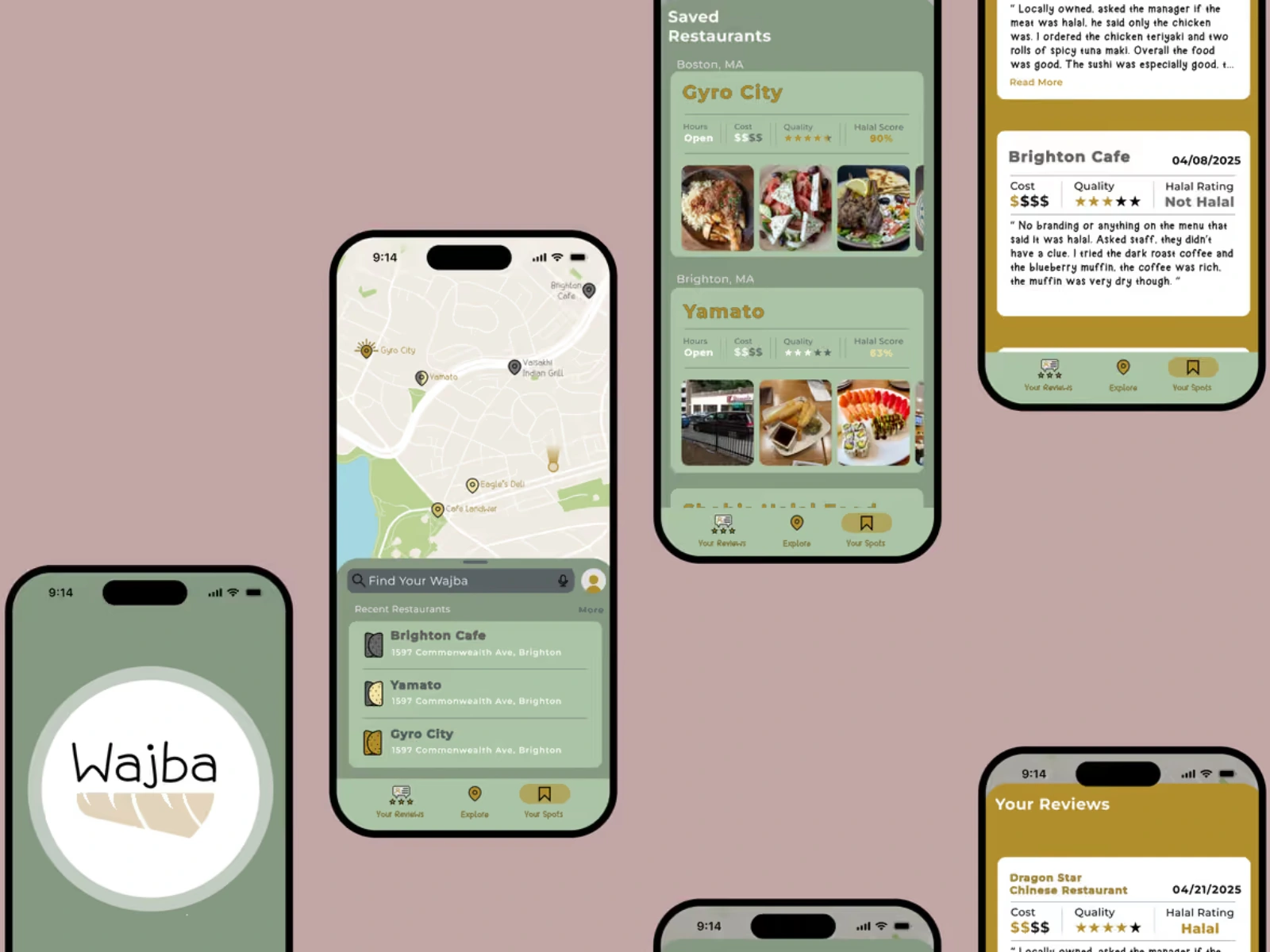
Self-initiated concept project. Product designer and user researcher · June–July 2025 · Figma. Deliverables: user research, brand identity and a full hi-fi mobile design.
Overview
Eating out as a halal eater means solving two problems at once: finding options nearby, and knowing whether they're actually halal. Wajba is a concept for a food discovery app where diners mark restaurants as halal or not, and the map turns those reviews into a clear signal for the next person.
The U.S. Muslim population is projected to reach 8.1 million by 2050 (Pew Research Center).
Technavio forecasts the U.S. halal food market will grow by $21.63 billion from 2024 to 2029.
Zabihah, a well-known halal finder, shows 2.8 stars from 971 reviews on Google Play.
Research
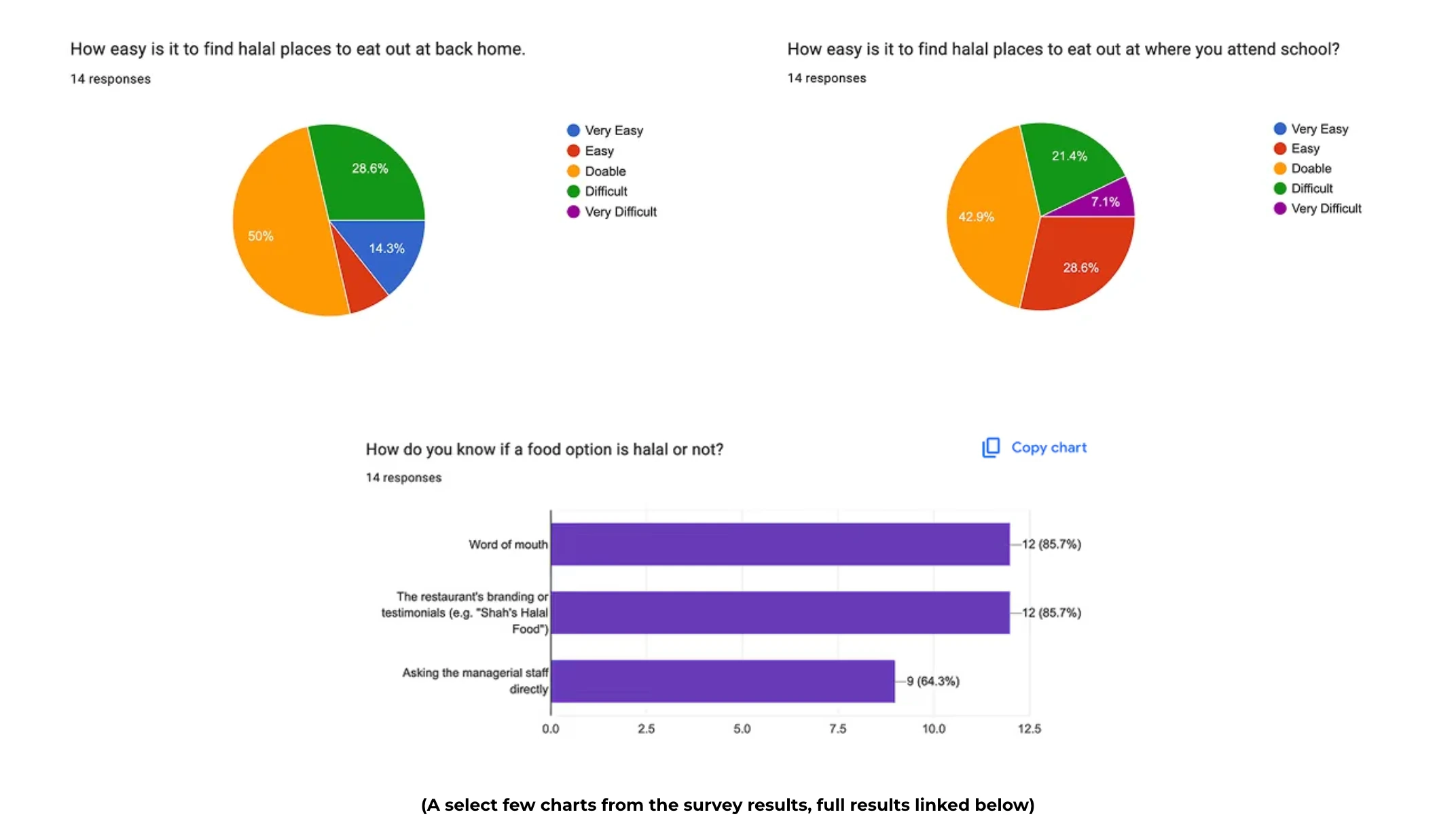
I paired a survey (10 questions, 14 Boston-area college students) with three 10–15 minute interviews structured with the funnel technique, then compared the two tools people mentioned most, Yelp and Google Maps.
What I learned
Eating out is routine, so halal discovery is a recurring need, not an occasional inconvenience.
Moving to college made halal eating harder: fewer options, less variety and less certainty.
People trusted other people more than platforms. Friends, social media and asking staff beat Google Maps and Yelp.
The real problem wasn't distance. It was not knowing whether a place, or a specific menu item, was actually halal.
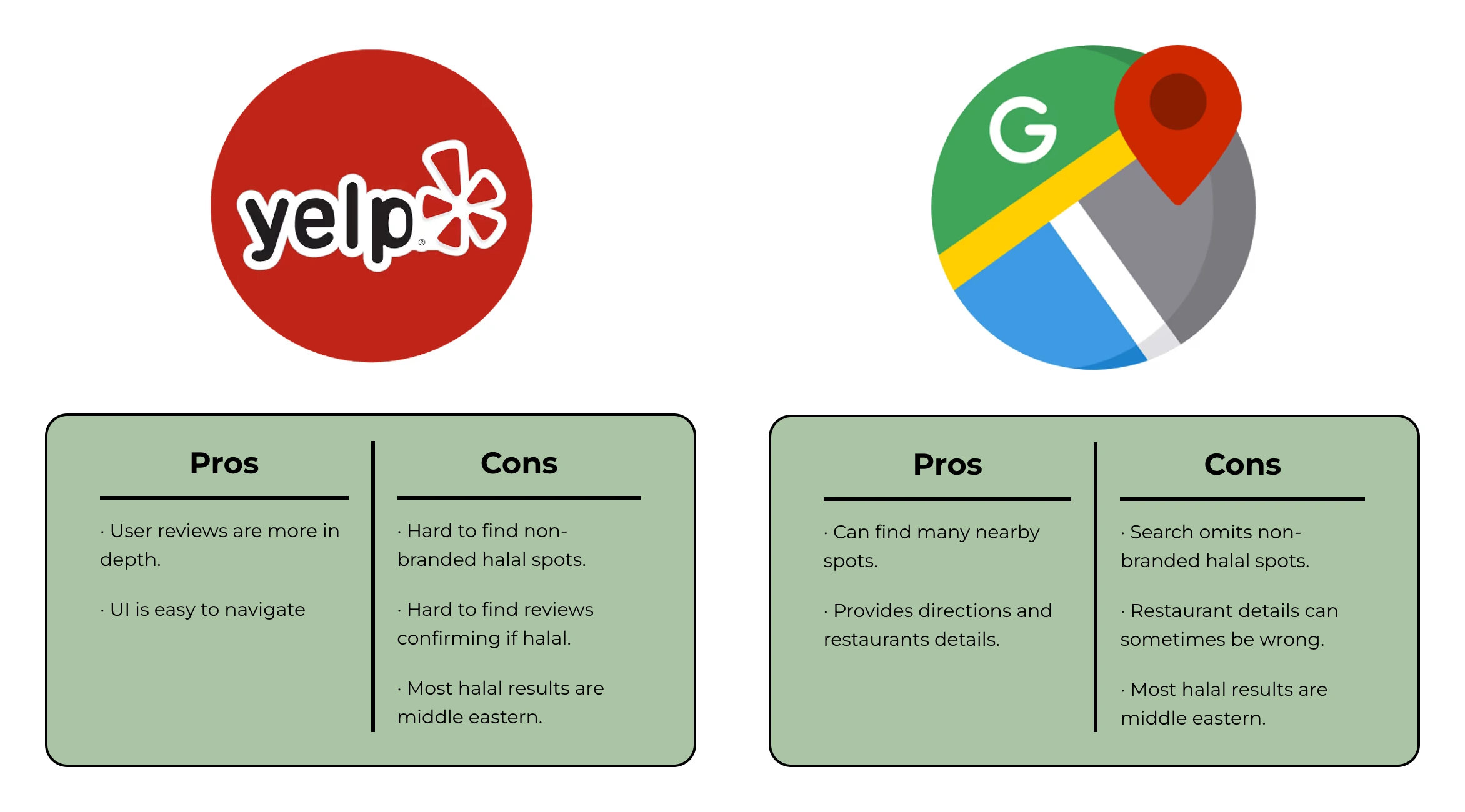
Yelp and Google Maps were easy to use and full of nearby places, but neither could confirm halal status, both buried unbranded halal spots, and most halal results were Middle Eastern, which narrowed the choice.
Challenge statement: Muslim halal eaters need a better way to find nearby halal food, confidently verify its credibility, and explore a wider range of reliable options.
Key design decisions
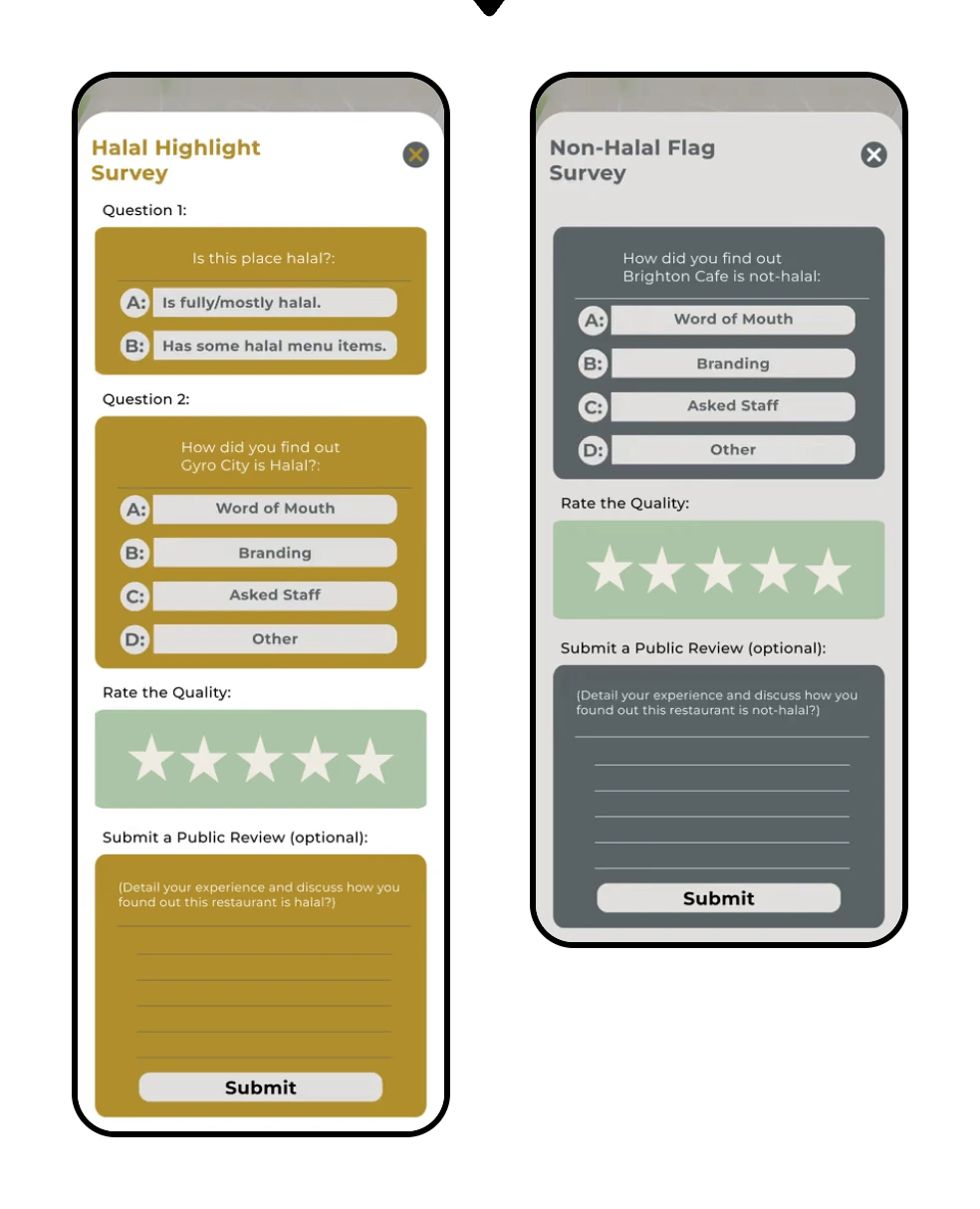
1. Let diners verify, not the restaurant
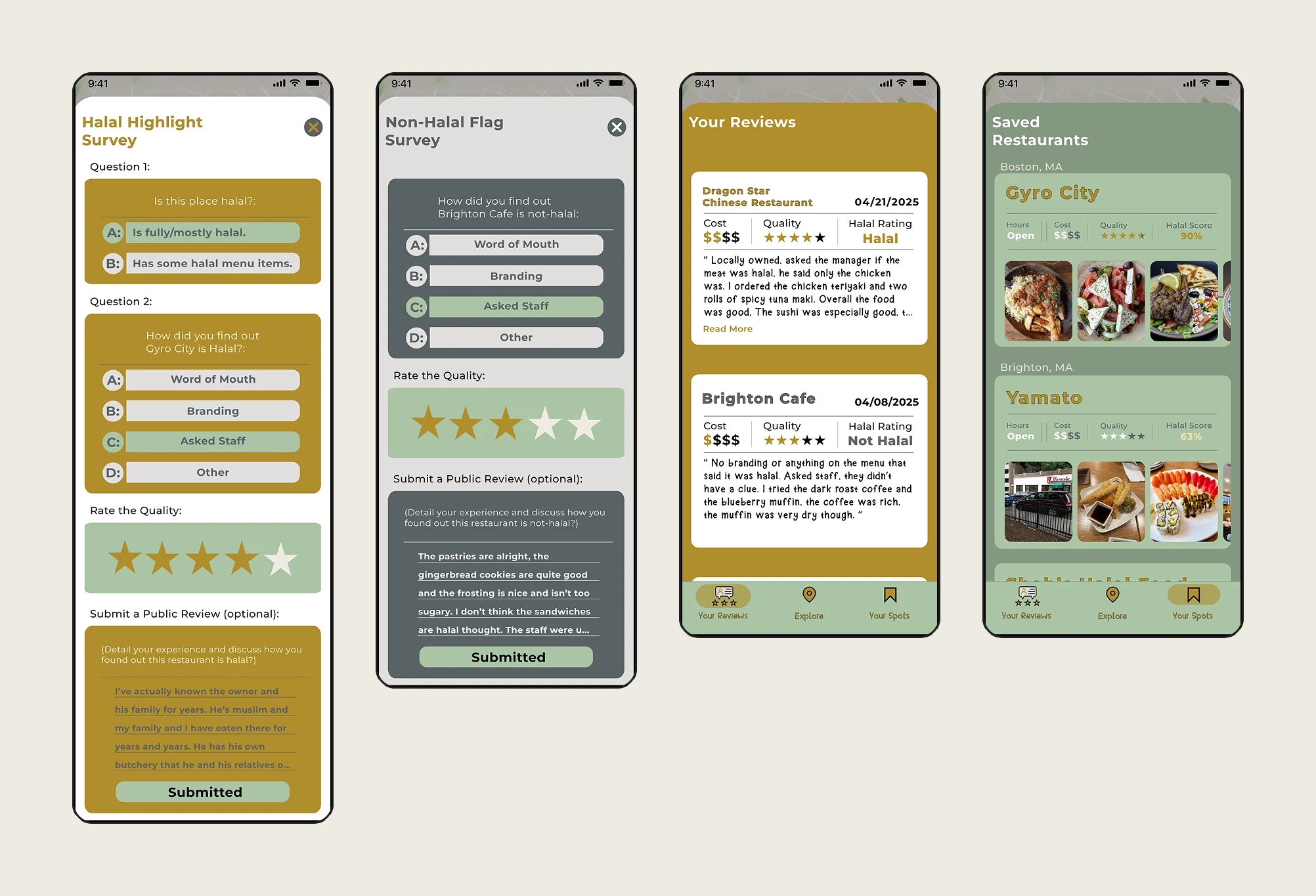
Restaurants rarely state their halal status clearly, and the people I interviewed already relied on each other's word. So every nearby restaurant (pulled in through the Google Maps API) starts as a grey, unreviewed pin. Diners give it a Halal Highlight or a Non-Halal Flag, and each comes with a short form: how they found out, a quality rating and a review.
2. A score, not a yes or no
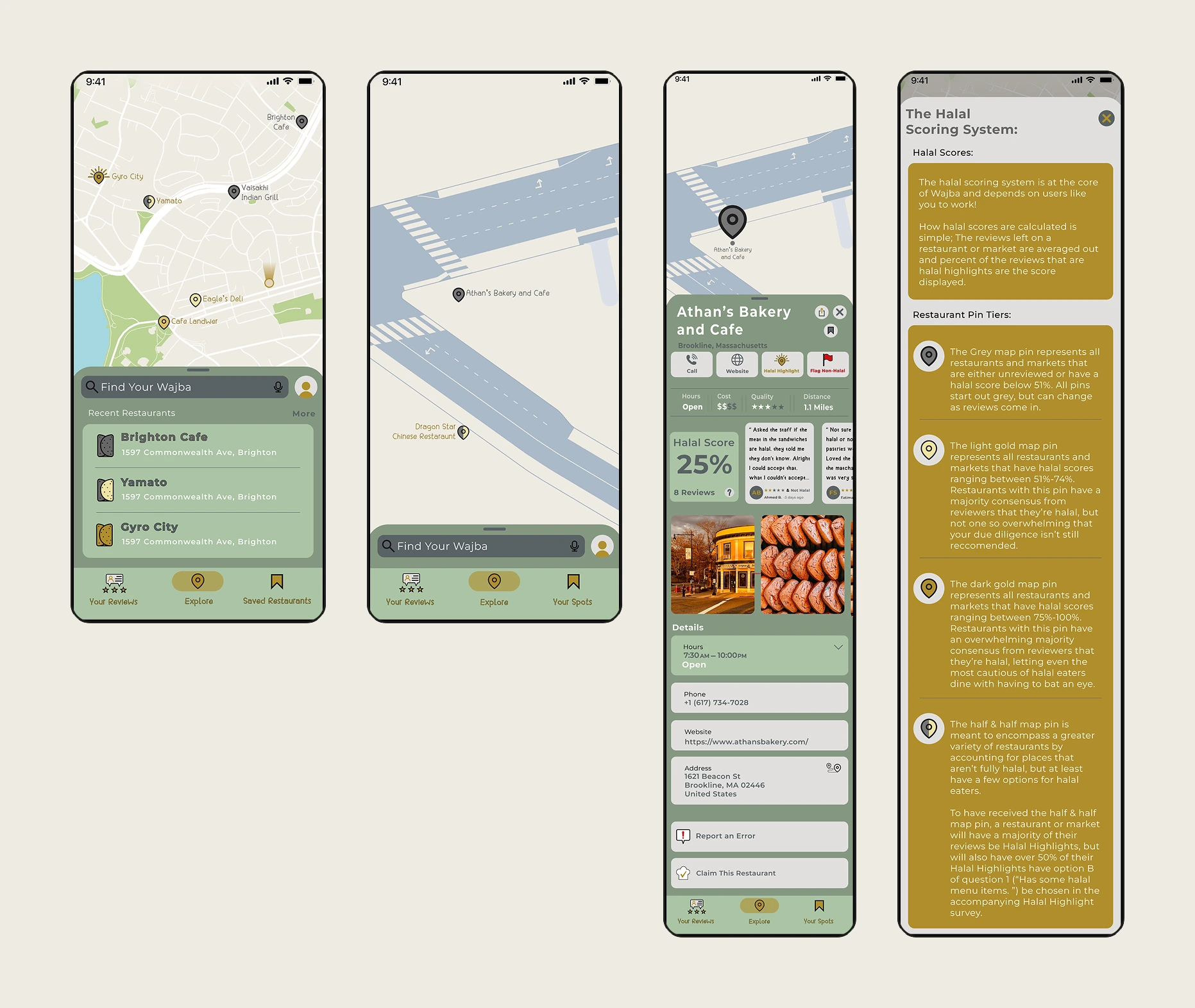
Halal eaters don't work in a binary. Some will eat somewhere on word of mouth; others need a certificate. Some places are fully halal; others have a few halal dishes. A place's halal score is the share of its reviews that are Halal Highlights, and the pin shows it:
Grey: unreviewed, or below 51%.
Light gold: 51–74%. Most reviewers say it's halal, but it's still worth checking.
Dark gold: 75–100%. An overwhelming majority says it's halal.
Half & half: mostly Halal Highlights, but most reviewers say only some menu items are halal.
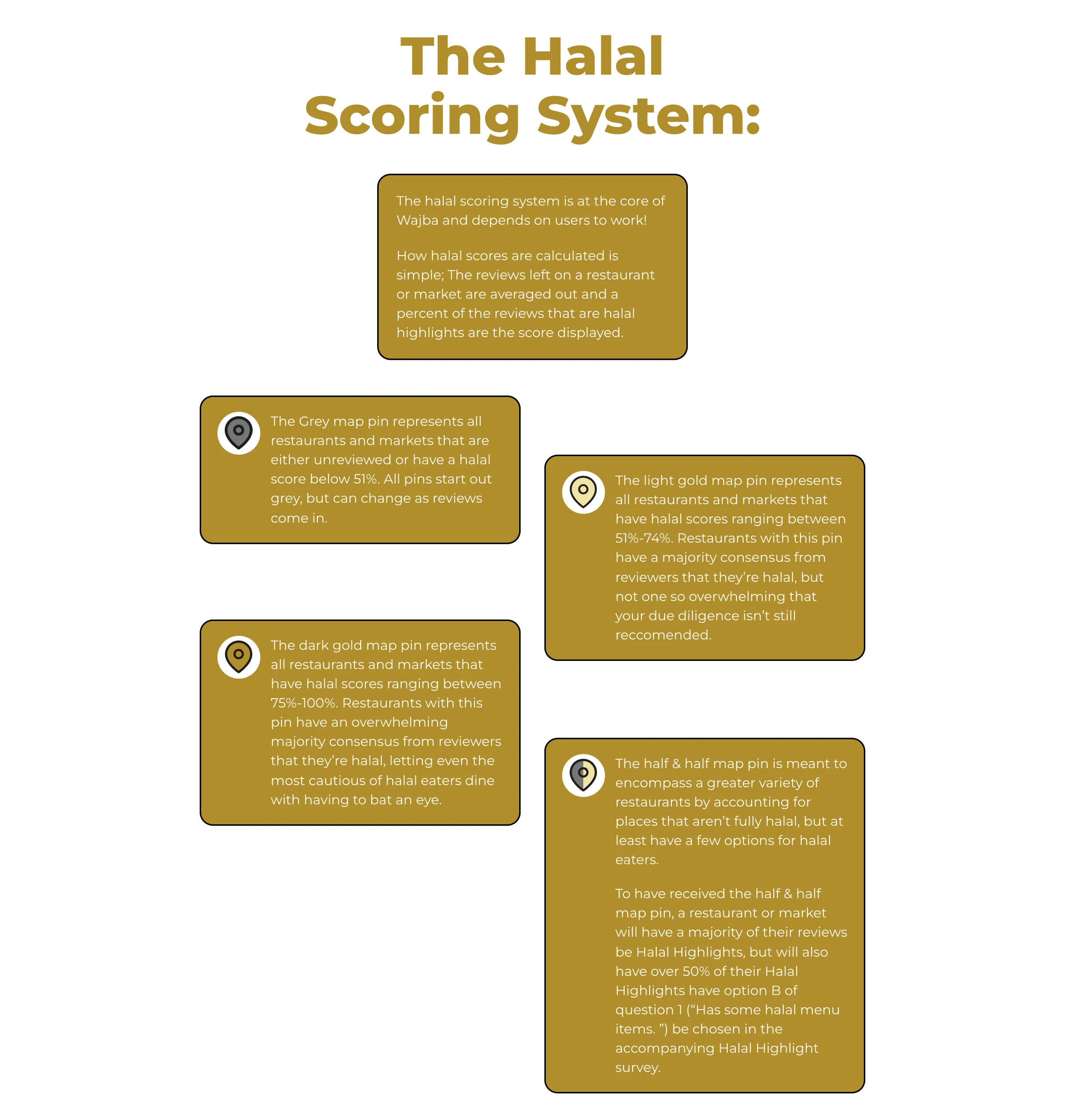
The half & half pin keeps places with a few halal options from being hidden as "not halal" or overstated as "halal". Uncertainty about specific menu items was one of the biggest frustrations in the survey.
3. Keep the map familiar
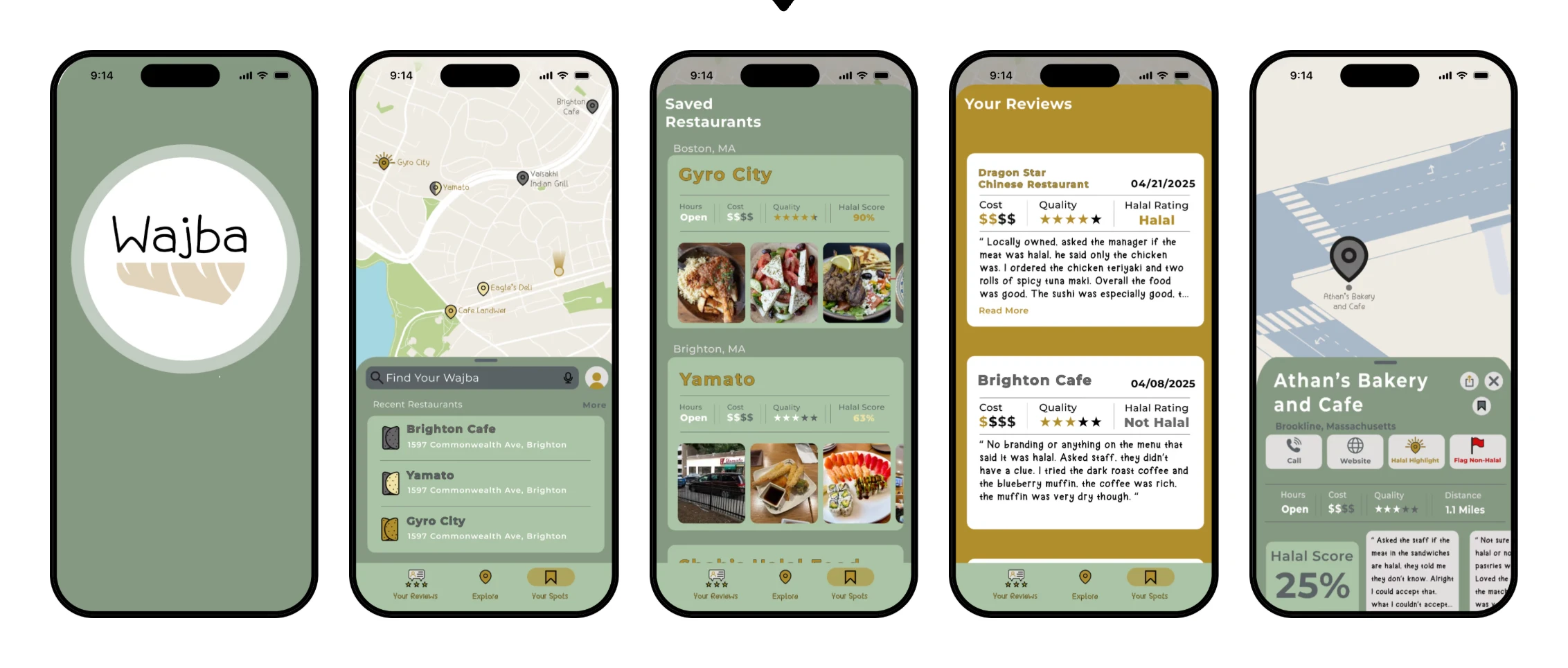
Wajba borrows what already works in Google Maps and Yelp (pins, a sheet of recent restaurants, detail pages with ratings and reviews), so the only new thing to learn is the halal score. Restaurant ratings stay part of the filters, so a confident halal match doesn't have to mean a worse meal.
Brand
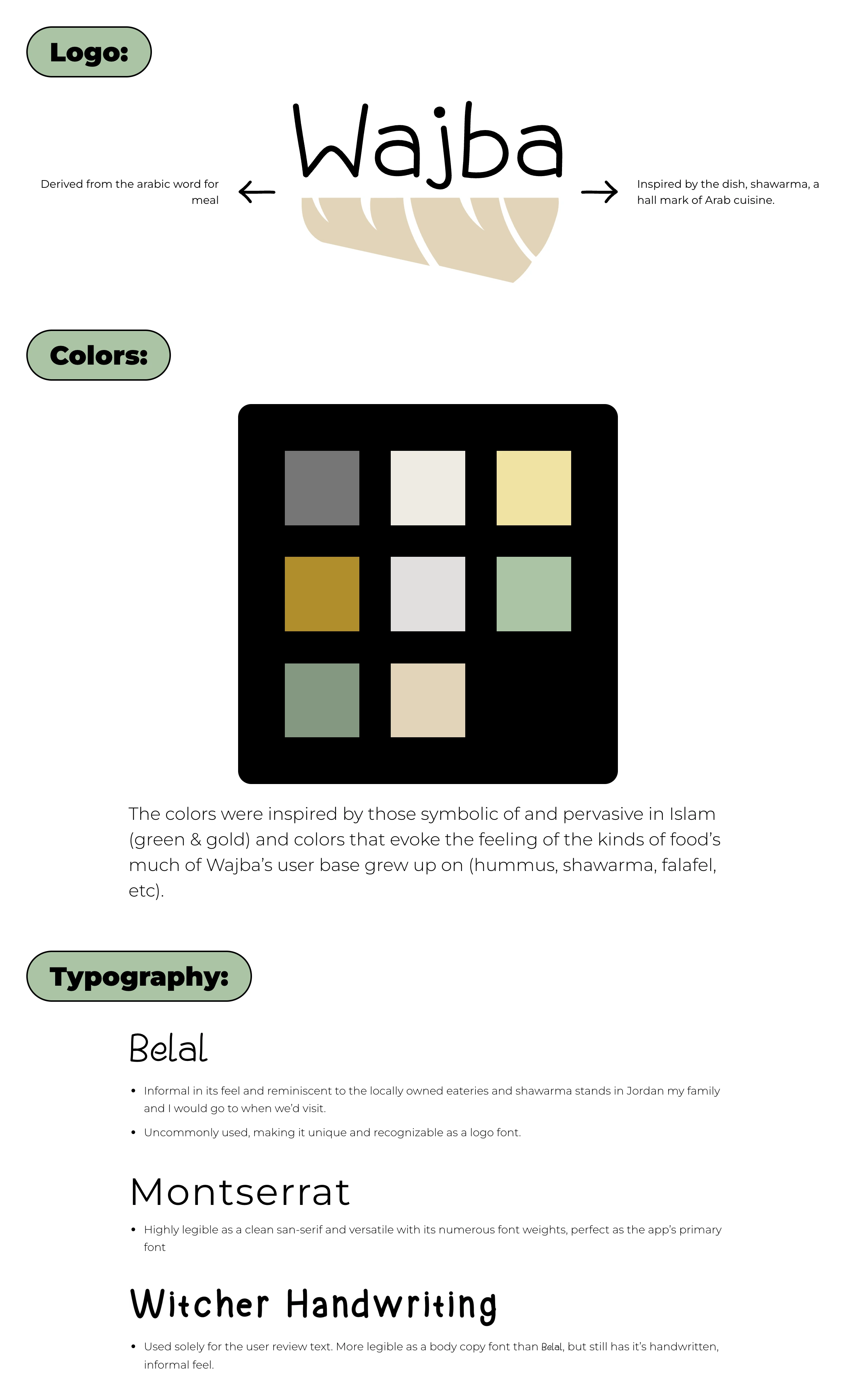
Wajba means "meal" in Arabic, and the logo is inspired by shawarma. The palette pairs the green and gold common in Islamic visual culture with warm neutrals taken from the food many users grew up on: hummus, falafel and shawarma. Belal, an informal display face, recalls the locally owned eateries and shawarma stands my family and I would go to in Jordan. Montserrat carries the interface, and a handwritten face is used only for user reviews.
Final design
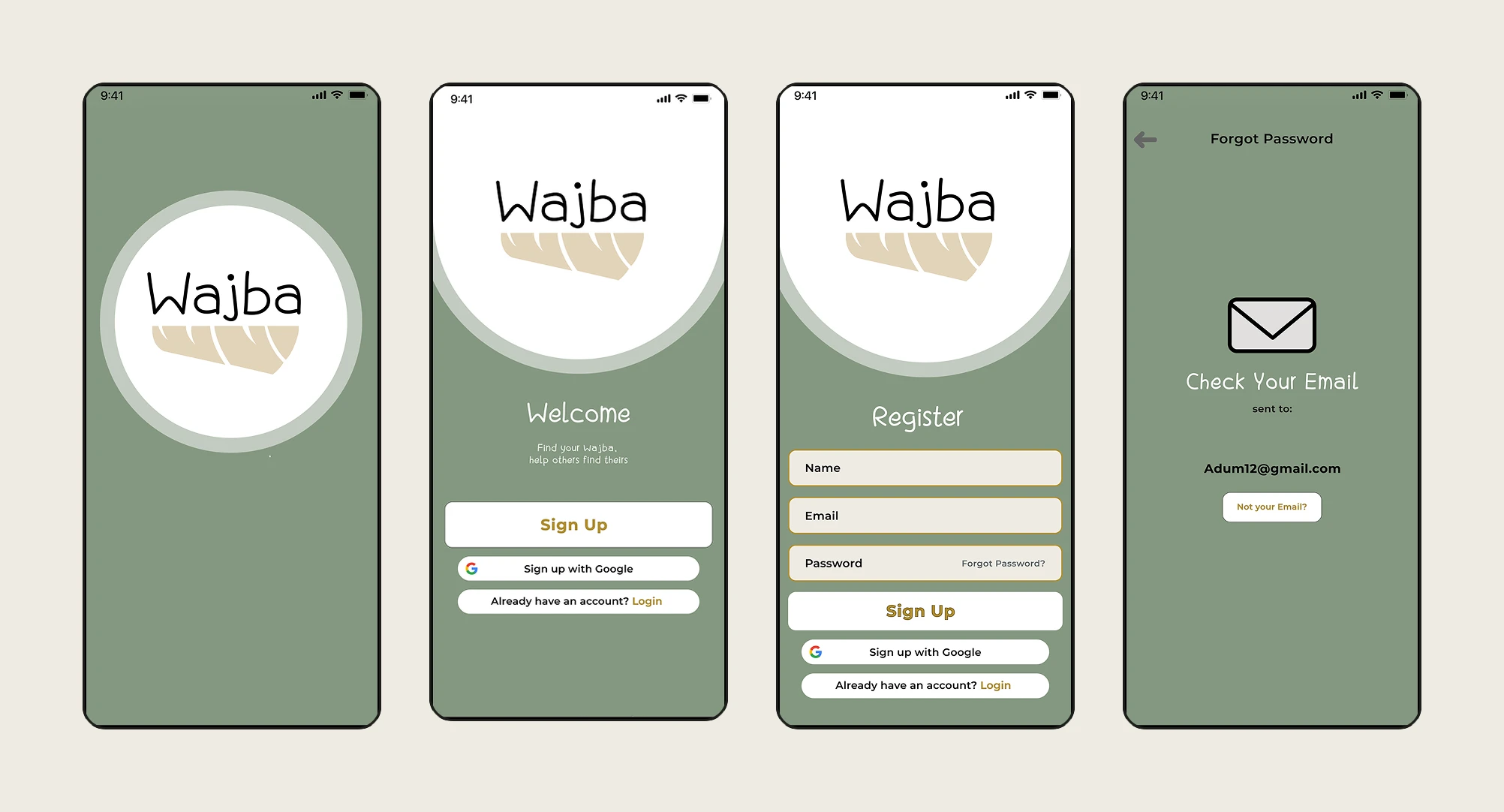
Onboarding and account recovery.
Finding food: the map, a single pin up close, restaurant details and the halal score explainer.
Reviewing and saving: the Halal Highlight and Non-Halal Flag forms, your reviews and saved places.
What I'd test next
Whether the four pin colors read at a glance on a busy map.
How many reviews a place needs before its pin changes color, so one early review can't mislead.
What happens to a score when a restaurant's halal status changes, for example under new ownership.
Like this project
Posted Oct 5, 2026
Concept app for finding halal food you can trust: user research, a community halal-score pin system and a full hi-fi mobile design.
Likes
1
Views
0
Timeline
Jun 1, 2025 - Jul 31, 2025