AI Virtual Try-On Fashion App Case Study

Abdul Qadeer


The Challenge
Online fashion shopping has a return rate problem. Nearly 30% of clothing bought online gets returned, and the number one reason is "it didn't look like I expected." Shoppers can't try clothes on through a screen, so they guess at fit, order multiple sizes, and return what doesn't work. It's expensive for retailers, frustrating for shoppers, and terrible for the environment.
This project focused on designing an AI-powered virtual try-on app that lets users see how clothes look on their body before buying. The goal: reduce purchase uncertainty and return rates by giving shoppers a realistic preview of how garments fit and look on them personally.
Design Approach
The design process started in Figma, where every screen was designed to make virtual try-on feel magical yet trustworthy.
Key design decisions:
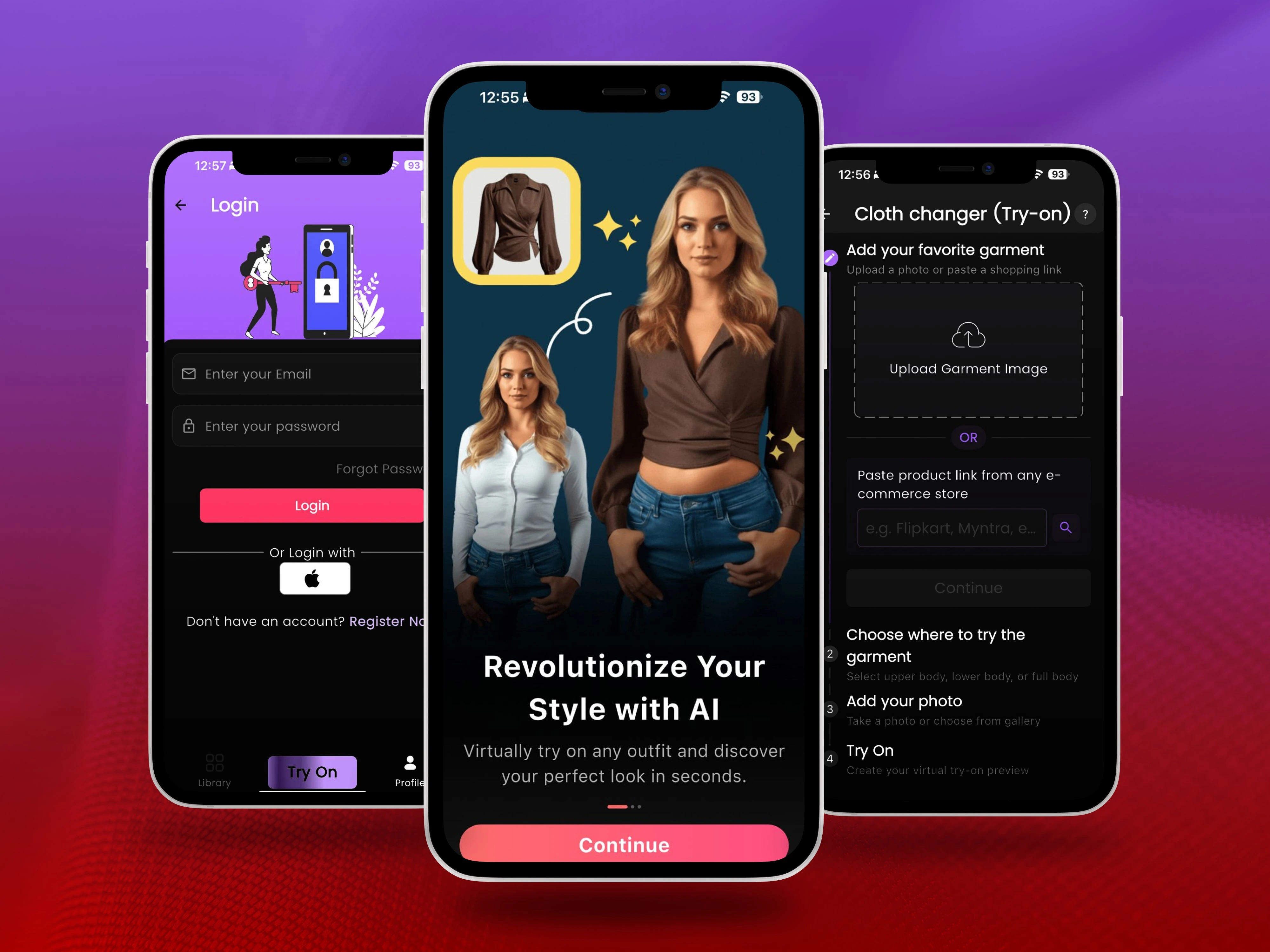
Simple photo upload flow. Users upload a full-body photo or take one in-app with guided pose instructions. The AI needs one clear photo to generate accurate try-on previews. No body scanning hardware, no 3D avatars, no complicated setup. One photo, instant results.
Product link integration. Users paste a product URL from any supported retailer, and the app extracts the garment image automatically. Alternatively, users can photograph clothing in stores or browse the in-app catalog. Multiple input methods mean the feature works everywhere shoppers discover clothes.
Realistic AI styling previews. The AI generates a photorealistic preview of the user wearing the selected garment, accounting for body shape, skin tone, and lighting. The preview shows how fabric drapes, how patterns scale, and how colors complement the user's complexion. It's not a flat overlay; it's a convincing visualization.
Side-by-side comparison. Users can compare multiple outfits side by side, swipe between color options, and save favorites to a lookbook. The comparison view helps with decision-making: "Does the blue or black version look better on me?"
Style recommendations. Based on the user's body type, color preferences, and try-on history, the AI suggests complementary pieces, complete outfits, and trending styles. The recommendations feel personal, not algorithmic.
Save and share lookbooks. Users create collections of tried-on outfits, share them with friends for opinions, and link directly to purchase pages. The social element turns solo shopping into a collaborative experience.
Sleek, fashion-forward design. Black and white base with accent colors that don't compete with clothing visuals. The UI stays minimal so garments and try-on previews are the visual focus. Typography and spacing borrow from fashion editorial layouts.
Try-On Flow
The virtual fitting experience is designed for speed and delight:
Upload a full-body photo (one-time setup)
Select a garment via link, photo, or catalog browse
Preview the AI-generated try-on in seconds
Compare colors, sizes, and alternative styles
Save favorites and share with friends
Buy directly through retailer links
First try-on takes under 30 seconds. Subsequent ones are near-instant.
The Result
A fully designed AI virtual try-on fashion app built in Figma, focused on solving online fashion's biggest pain point: not knowing how clothes will look before buying. The design serves fashion tech startups, e-commerce platforms, and retail brands looking for a mobile app that reduces return rates and increases purchase confidence through AI-powered virtual fitting, realistic previews, and social shopping features.
Like this project
Posted Jul 14, 2026
UI/UX design of an AI-powered virtual try-on fashion app that lets users preview outfits digitally using photo uploads and product links for confident online shopping.