AI Calorie Tracking App Full Case Study

Abdul Qadeer


The Challenge
Calorie tracking apps have a retention problem. Users download them with good intentions, manually log three meals, realize it takes 5 minutes per entry to search databases and weigh portions, and quit by day four. The friction of manual food logging kills the habit before it forms. Even the popular apps feel like data entry tools, not health companions.
This project focused on designing a calorie tracking app where AI does the heavy lifting. The goal: reduce food logging from 5 minutes to 5 seconds using AI-powered food recognition, automatic portion estimation, and smart macro calculations.
Design Approach
The design process started in Figma, where every screen was designed to make calorie tracking feel effortless rather than tedious.
Key design decisions:
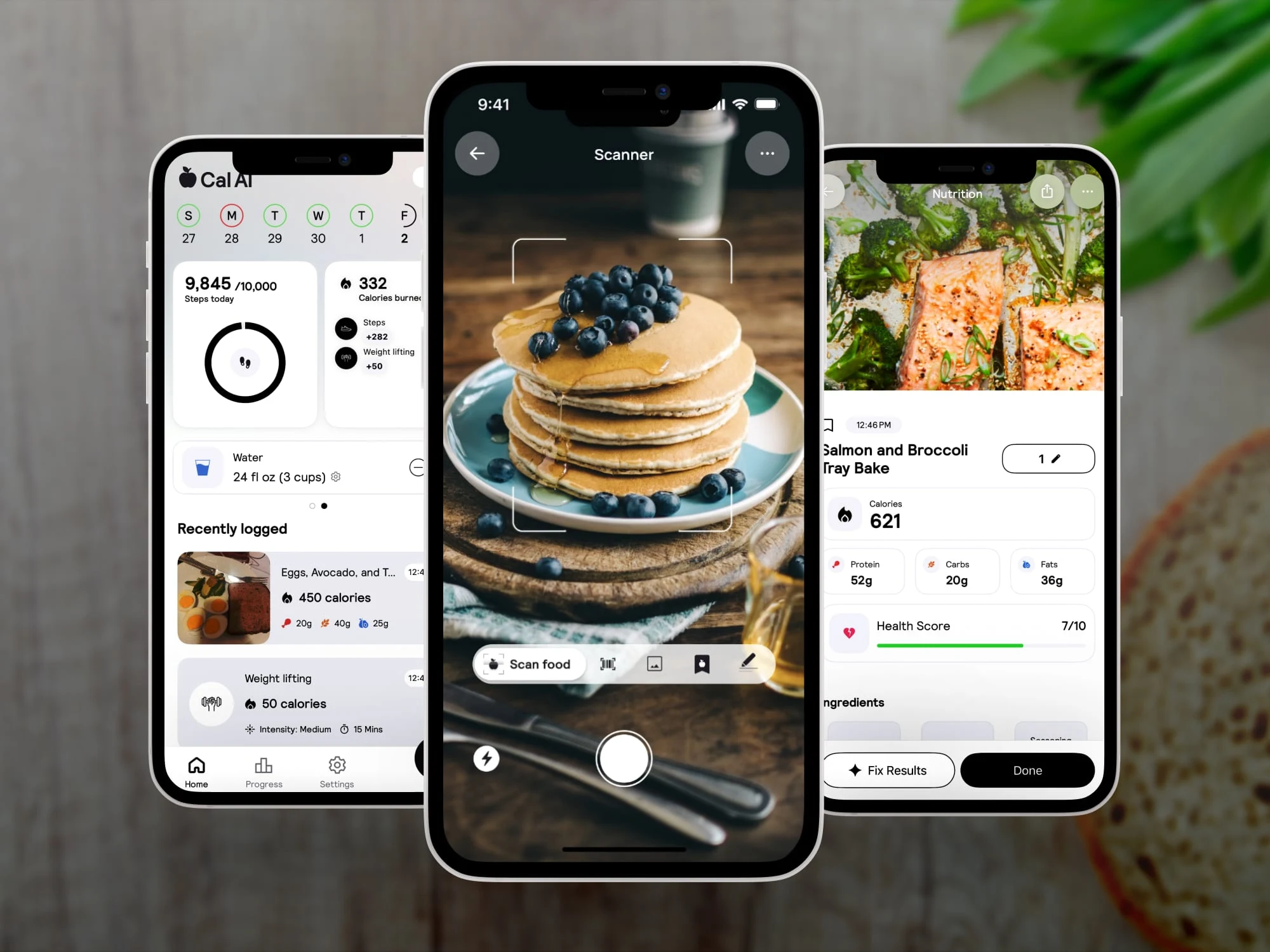
AI food scanning as the primary input. Point the camera at a meal, and the AI identifies individual food items, estimates portions, and calculates calories and macros automatically. Users confirm or adjust the AI's estimate rather than building meals from scratch. The scan takes 3 seconds. Manual logging is available but positioned as the backup, not the default.
Daily nutrition dashboard. A clean circular progress indicator shows calories consumed vs. target, with macro breakdowns (protein, carbs, fat) as secondary rings. Users see their daily status at a glance without interpreting charts or tables. Green means on track, yellow means approaching limits, red means over.
Meal timeline. A chronological feed of logged meals with photos, calorie counts, and timestamps. Users scroll through their day and see exactly what they ate and when. The visual timeline makes patterns obvious: "I always overeat at 3pm" becomes visible without data analysis.
Personalized targets. During onboarding, users set their goal (lose weight, maintain, gain muscle), enter body metrics, and receive AI-calculated daily targets for calories and macros. Targets adjust weekly based on progress and adherence patterns.
Progress insights. Weekly and monthly trend charts showing calorie adherence, weight changes, and macro balance over time. The AI generates plain-language insights: "You averaged 200 calories under target this week. Your protein intake was 15% below goal on weekdays."
Food database with smart search. When manual logging is needed, a searchable database with barcode scanning, recent foods, and frequently logged meals makes it fast. The app learns eating patterns and suggests likely meals based on time of day and history.
Vibrant, health-focused design. Fresh greens, warm oranges, and clean whites create an energetic, health-positive visual identity. Food photography is prominent and appetizing. The app celebrates eating well rather than punishing eating poorly.
Tracking Flow
The daily logging experience is designed for speed:
Scan meal with AI camera (3 seconds)
Confirm or adjust AI estimates (5 seconds)
Log with one tap
Review daily progress on the dashboard
Learn from weekly AI insights
Total logging time per meal: under 10 seconds.
The Result
A fully designed AI calorie tracking app built in Figma, focused on making nutrition tracking effortless through AI-powered food recognition. The design serves health tech startups, fitness app companies, and wellness platforms looking for a mobile app that solves the calorie tracking retention problem by replacing manual data entry with intelligent automation, personalized targets, and actionable nutrition insights.
Like this project
Posted Jul 14, 2026
UI/UX design of an AI-powered calorie tracking mobile app with food scanning, automatic macro estimation, personalized nutrition targets, and progress insights.