SeemaS - Enterprise FinTech AI Platform for Financial Valuation

Dmitriy H.


SaaS • FinTech • Enterprice • Startup • AI Workflows • Design System
SeemaS is an Al-powered enterprise platform that helps financial advisory firms streamline complex valuation, transfer pricing, global reporting, tax compliance, and regulatory workflows.
Leading product design from the first workflows through launch and platform 2.0, helping tax and valuation professionals navigate complex analyses, collaborate, and work with AI.
Role: Product Design Lead · Initially the sole product designer
Scope: Product UX/UI, information architecture, AI interactions, design system, and implementation support
Team: Founders, domain experts, product managers, engineers, and fellow designers
How it started
I joined SeemaS as its first product designer when the platform was still an idea. Over two years, I led its design through the MVP launch and platform 2.0, working with founders, tax and valuation experts, and engineers to turn complex financial methods into usable workflows.
SeemaS helps corporate tax and valuation teams prepare data, run analyses, review results, and produce reports with AI support.
The challenge
Different financial analyses require different inputs, methodologies, and outputs. The platform needed to preserve that specialist depth while giving users a consistent way to find their work, move through an analysis, interpret results, and collaborate.
We first had to make the core journey work: from providing data to reviewing an analysis and preparing an output. As the product grew, the challenge shifted toward organizing more analyses, supporting teamwork, and keeping the experience coherent across modules. AI introduced another consideration: its contribution needed to be clear enough for professionals to review and use with confidence.
I worked closely with domain experts to understand how they expected information to be structured and presented. Usability testing, analytics, support feedback, and client input relayed by the product team informed later decisions. I also worked with founders and engineers to weigh user needs against backend capabilities and release priorities.
Understanding the people behind the work
The platform needed to support several responsibilities:
Preparing analyses: providing data, working through the methodology, and reviewing outputs.
Reviewing work: understanding the analysis and checking its conclusions.
Managing collaboration: organizing workspaces, participants, and access.
These responsibilities shaped the product’s structure. Specialists needed depth and control, while shared work required clear organization and context.
From idea to MVP
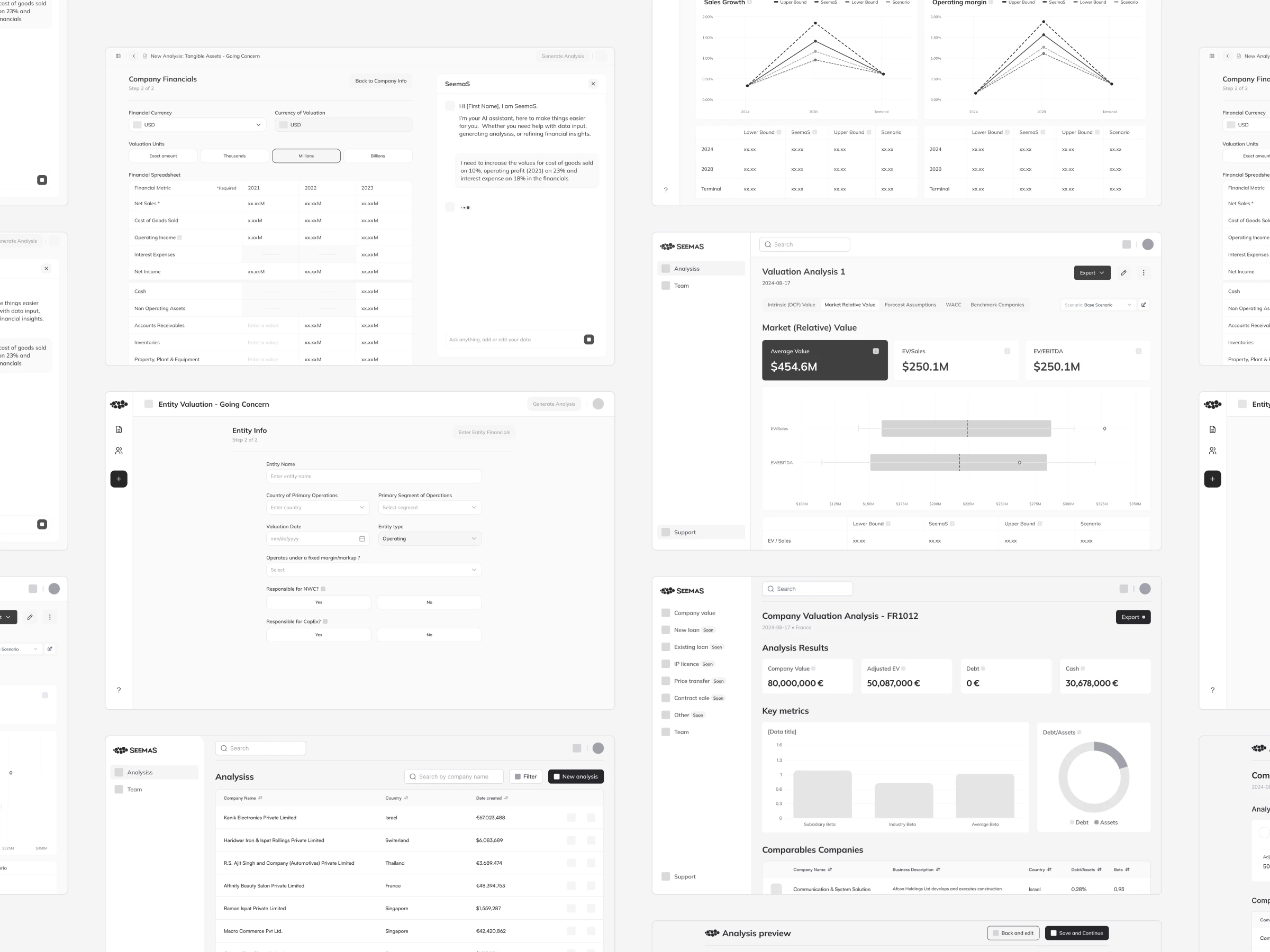
Lightweight wireframes aligned flow and scope. Rapid high-fidelity concepts then moved directly into founder, domain, and engineering review. I mapped the journey from data intake and preparation through analysis, result review, and reporting. Early wireframes helped us work through the sequence, identify dependencies between steps, and align with founders, experts, and engineers before refining the interface.
That foundation let us launch an MVP and gave the team a clearer structure to build on.
Workspaces and navigation
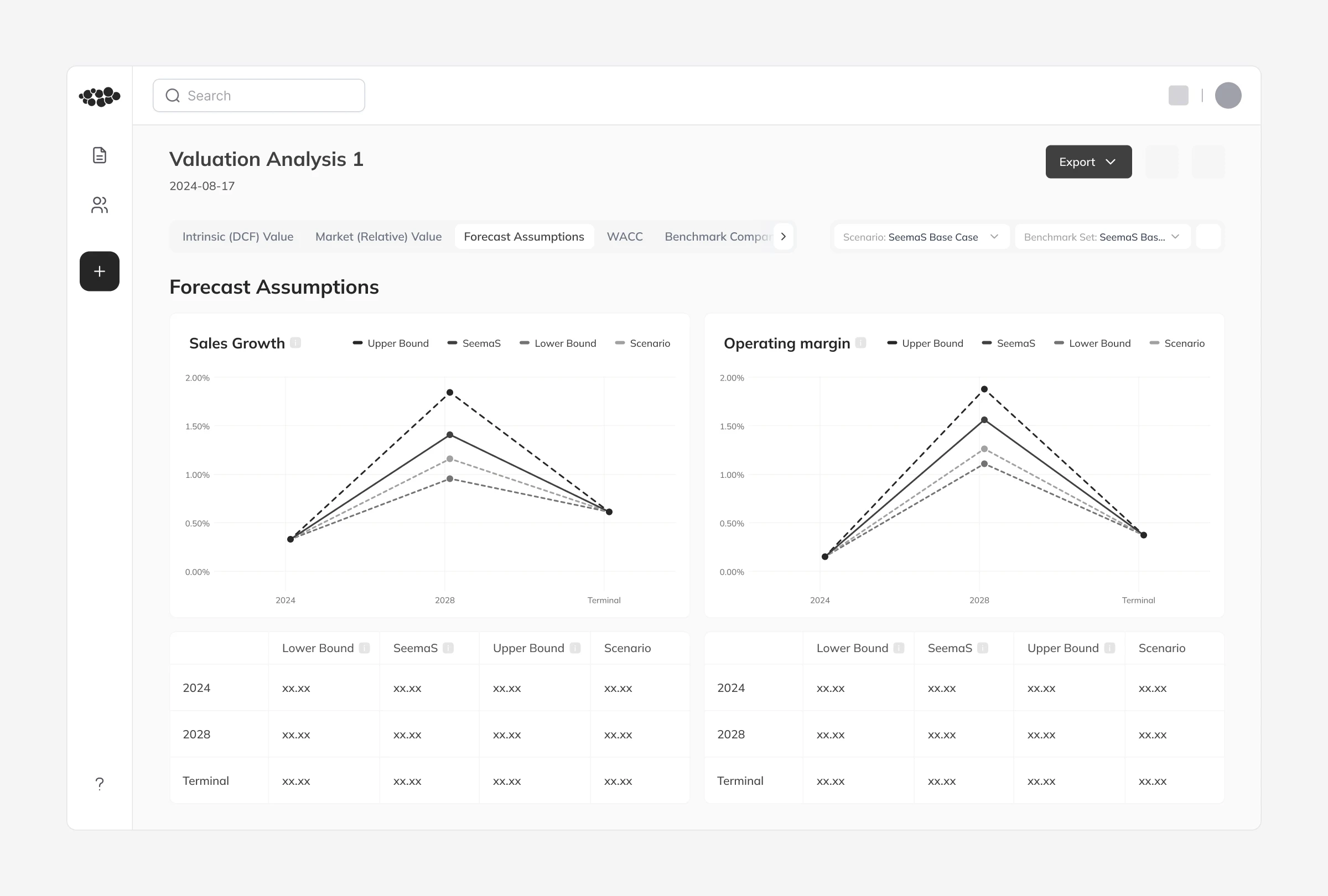
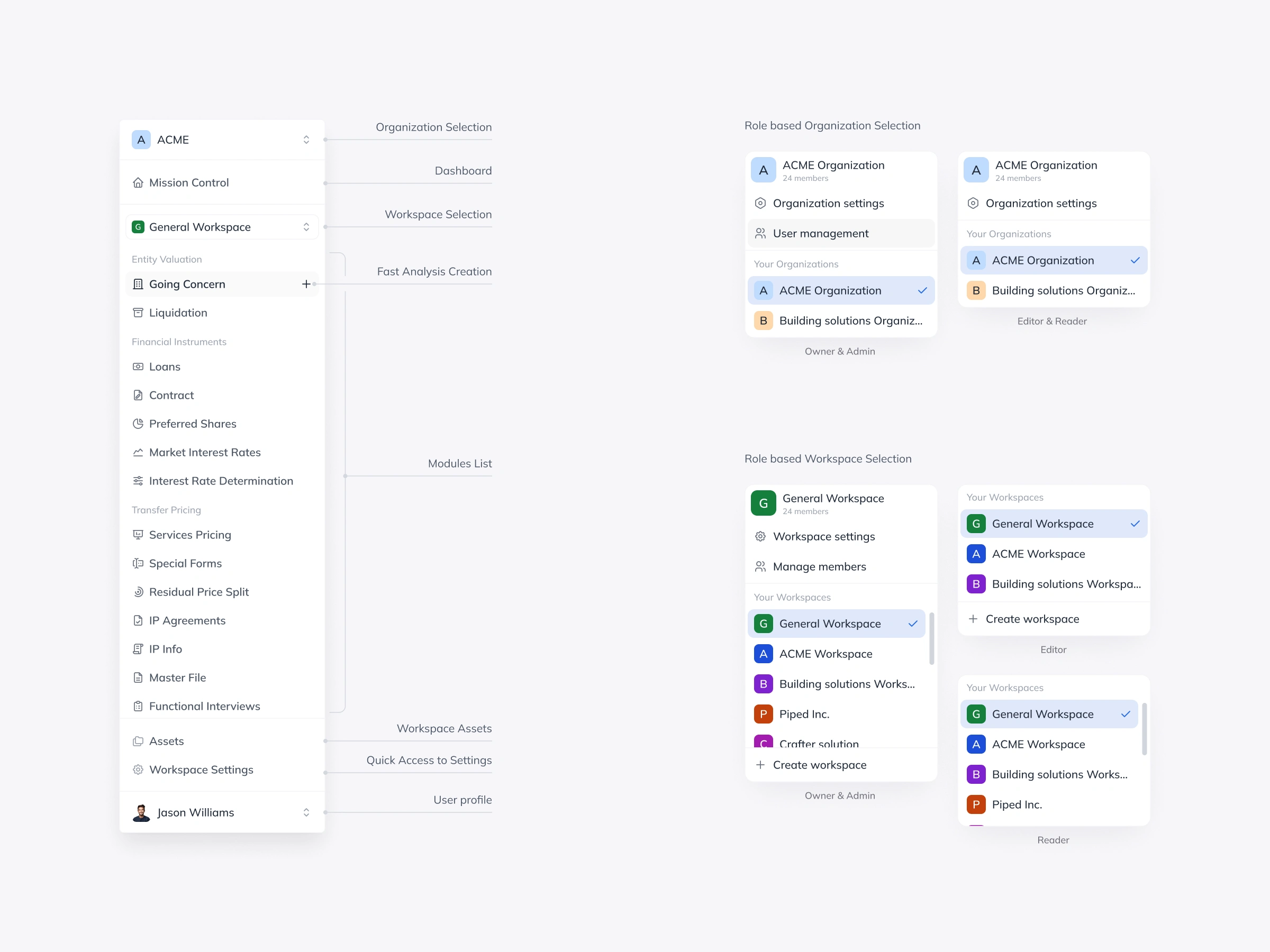
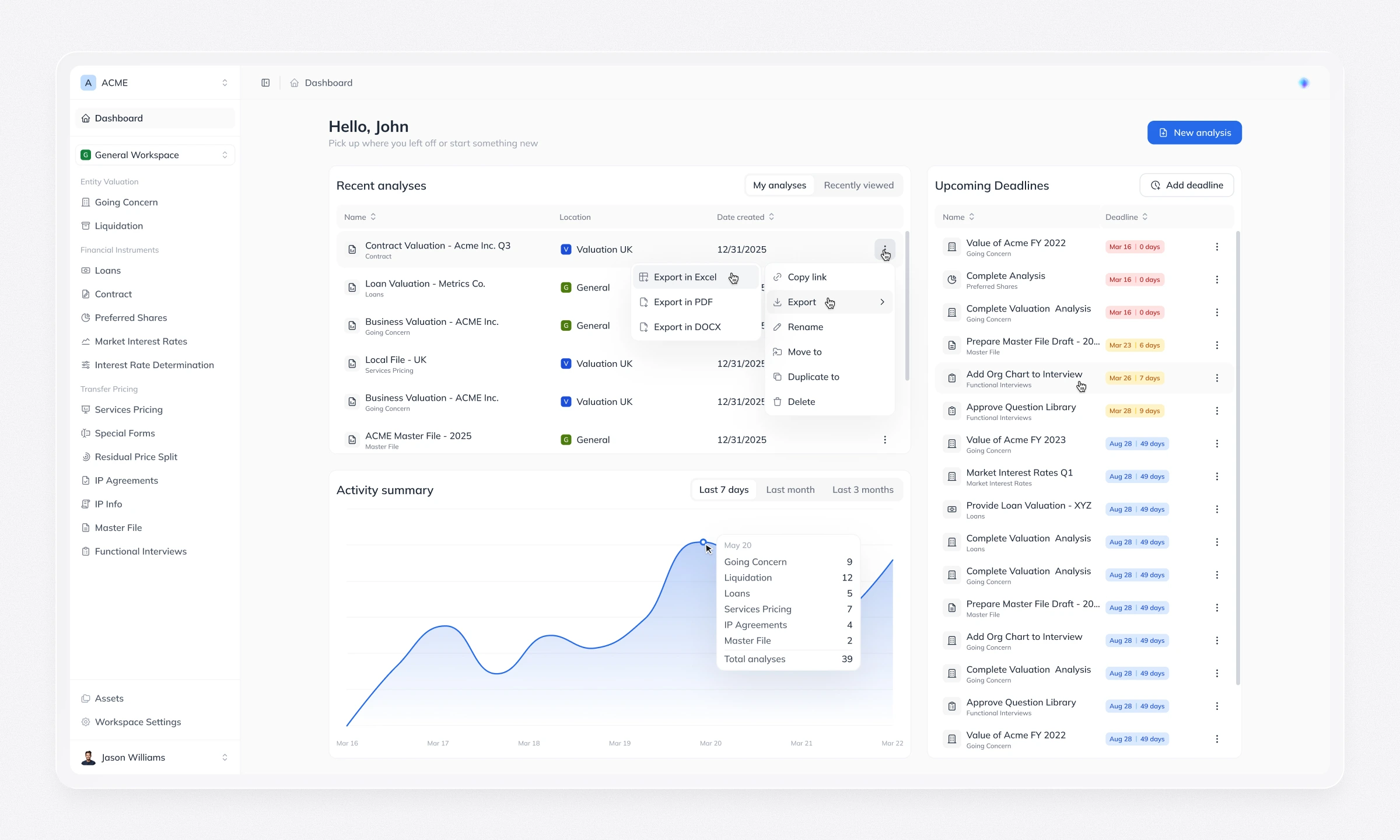
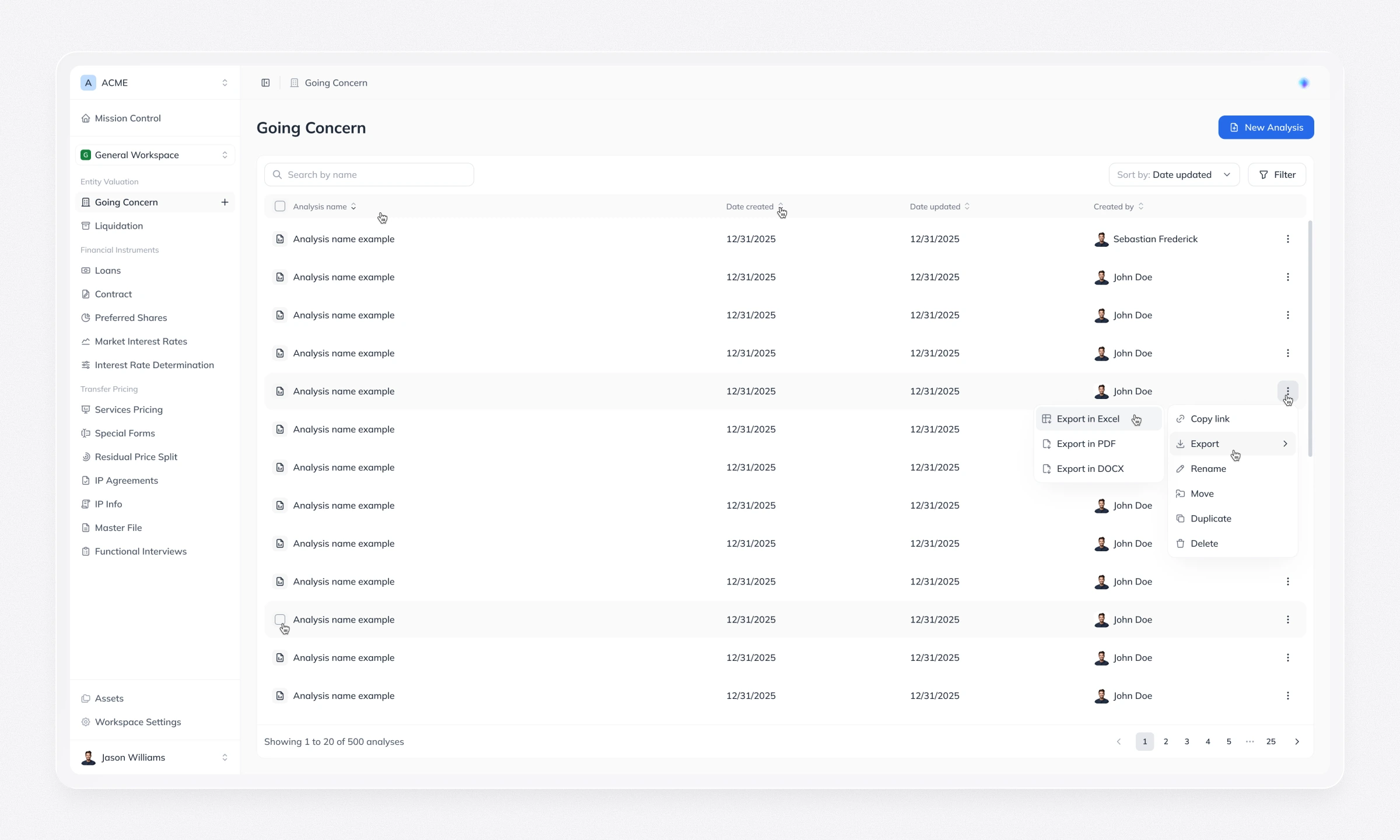
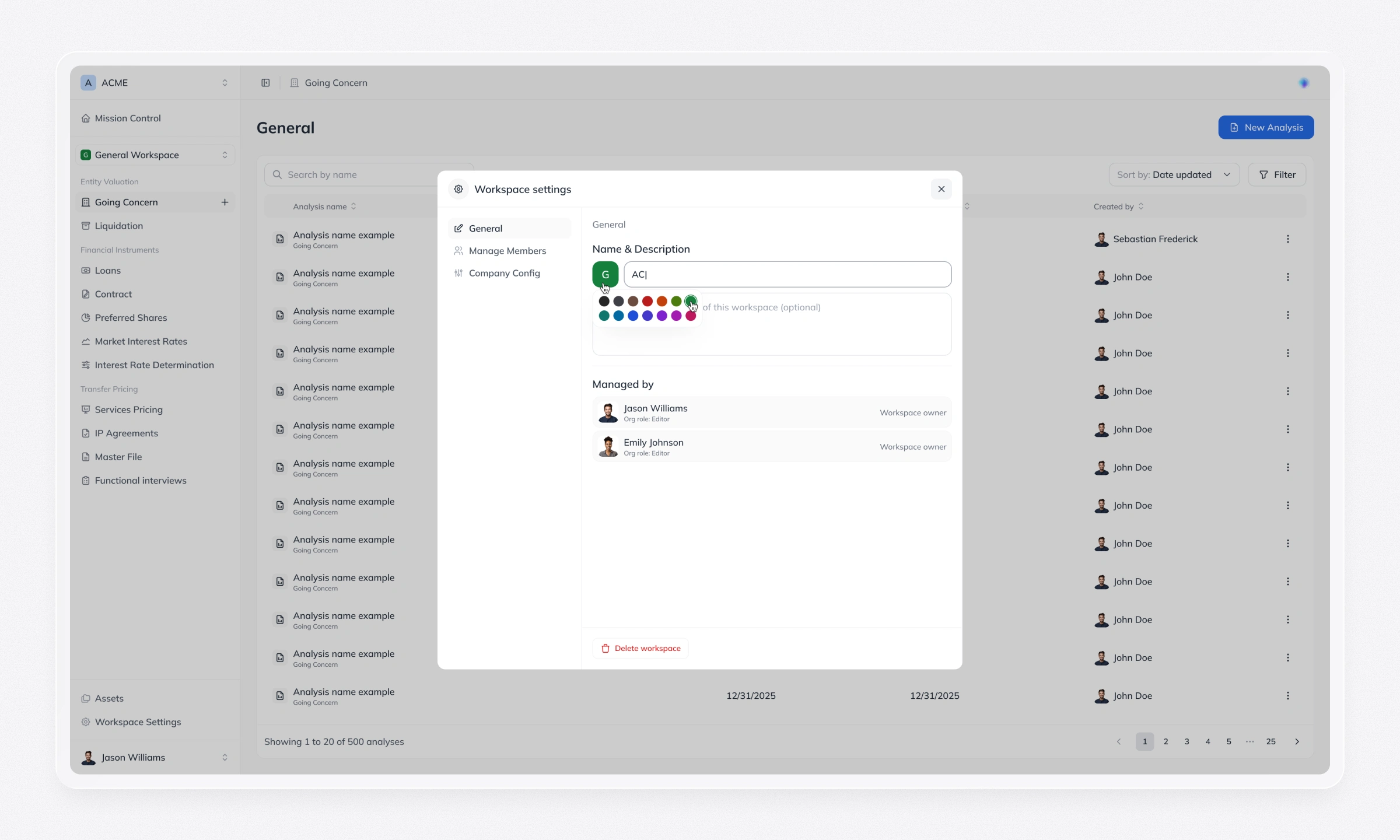
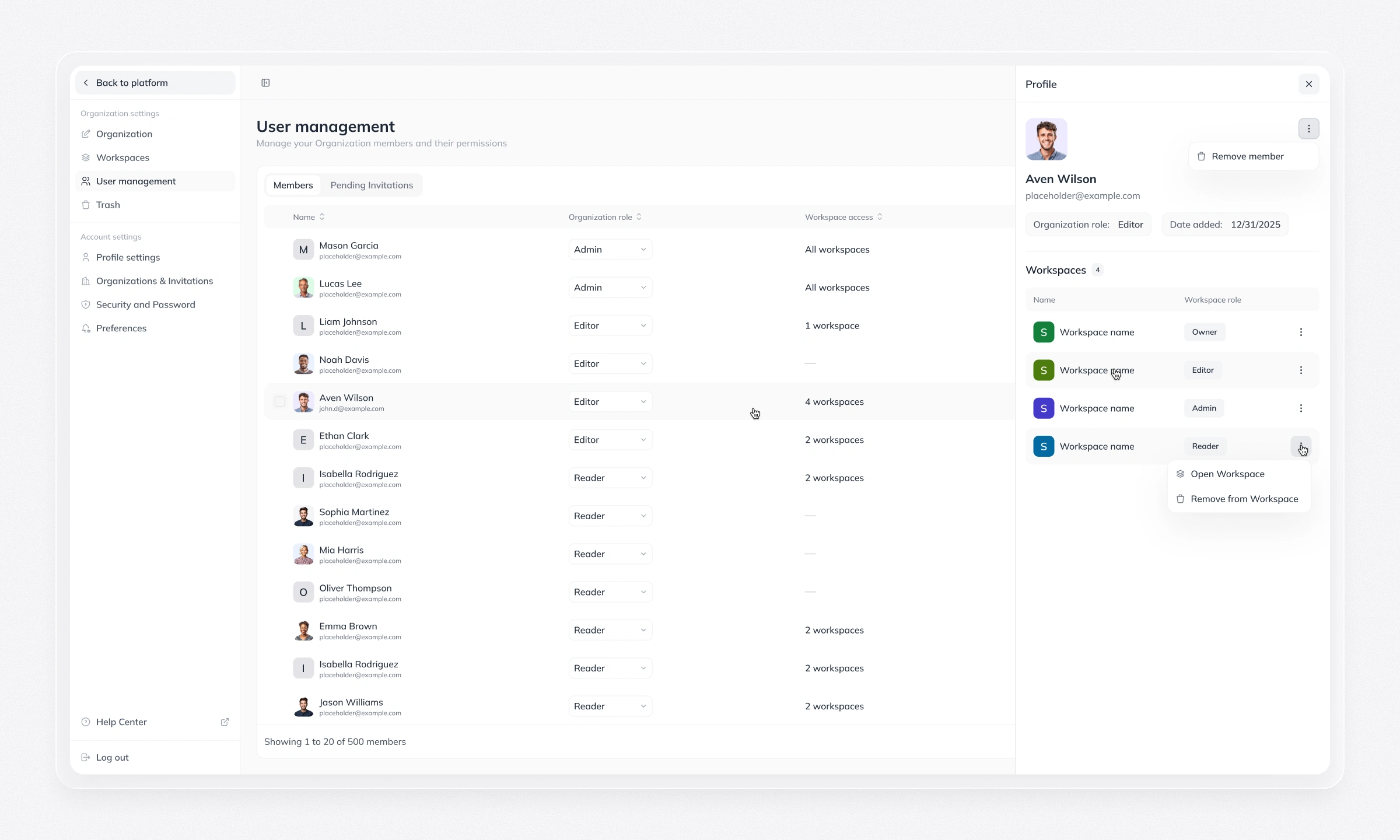
The original, relatively flat structure became difficult to navigate as the platform added products, analyses, and teams. I reorganized the experience around organizations, workspaces, a personal dashboard, and module-specific views. I designed each view and its available actions for Admin, Editor, and Viewer roles at both the organization and workspace levels. This gave people a clearer sense of where they were, what they could access, and what to do next. Contextual creation shortcuts let them start a new analysis from the relevant module.
Intake & Mapping
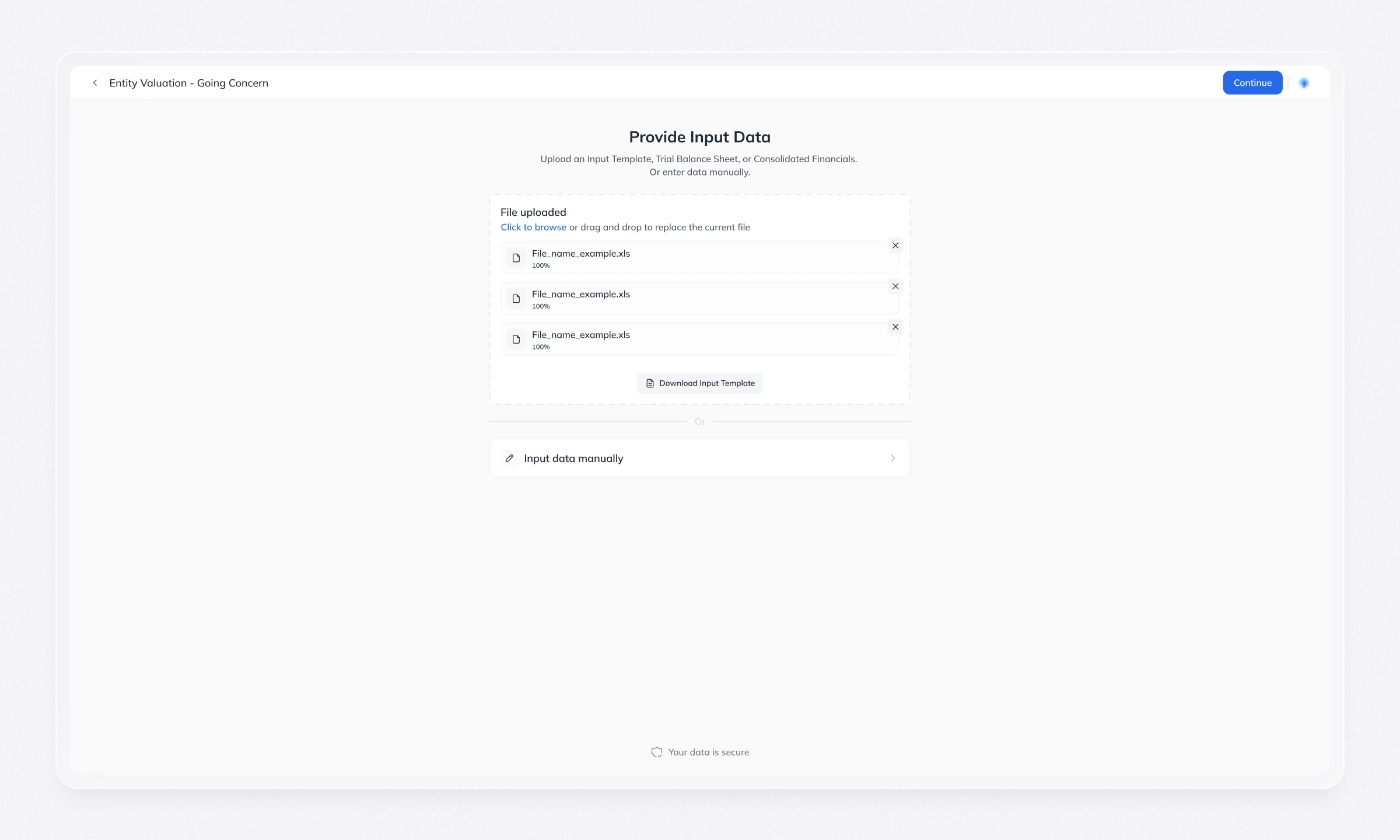
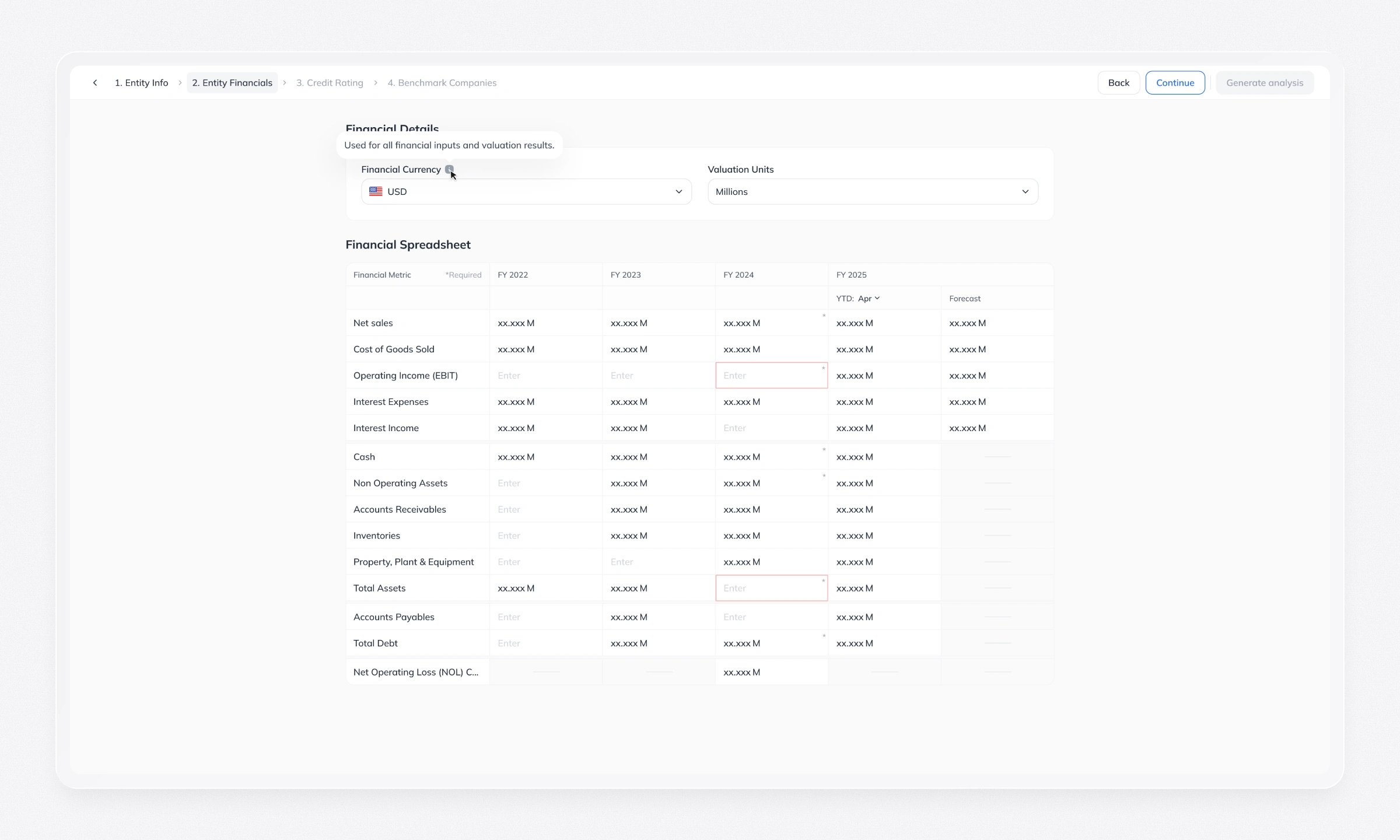
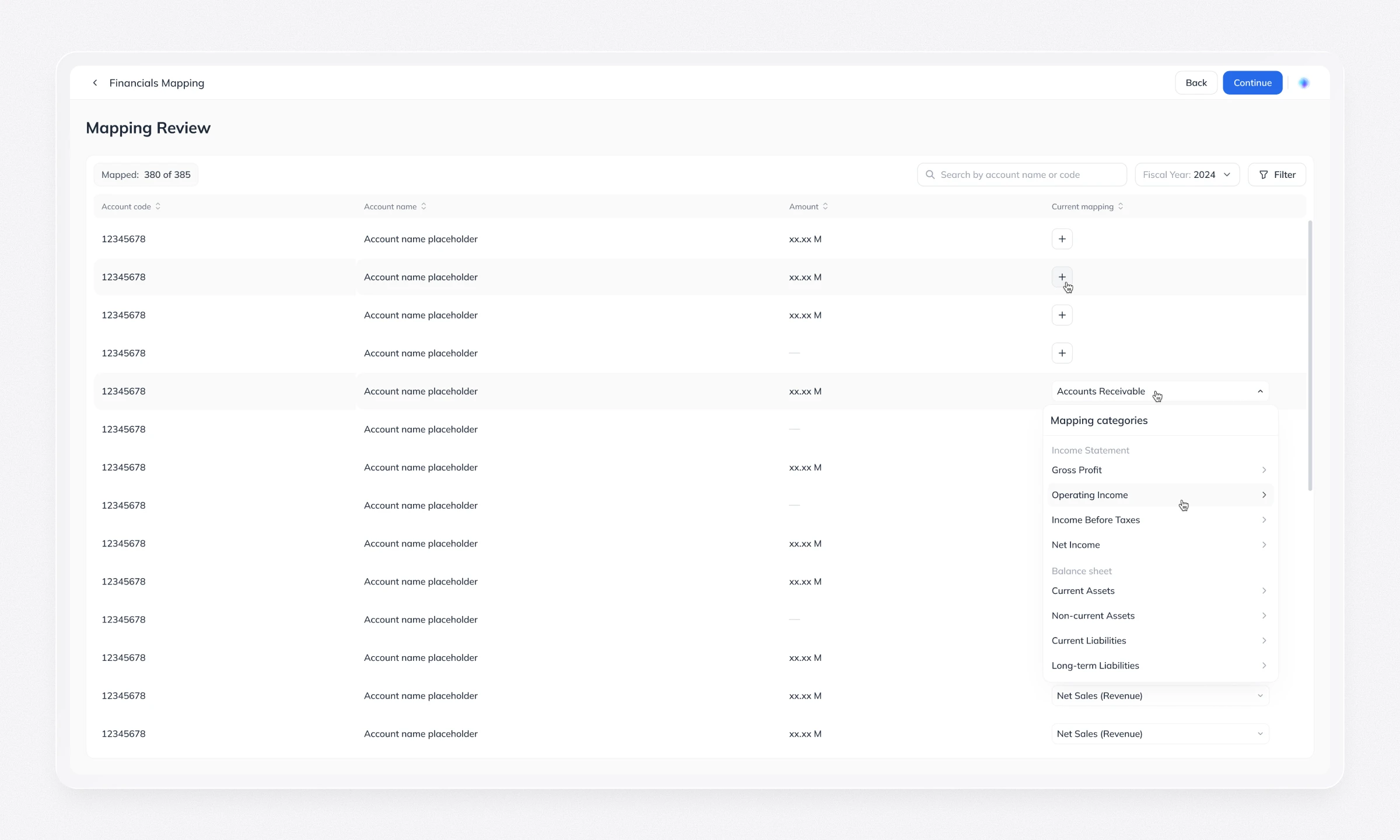
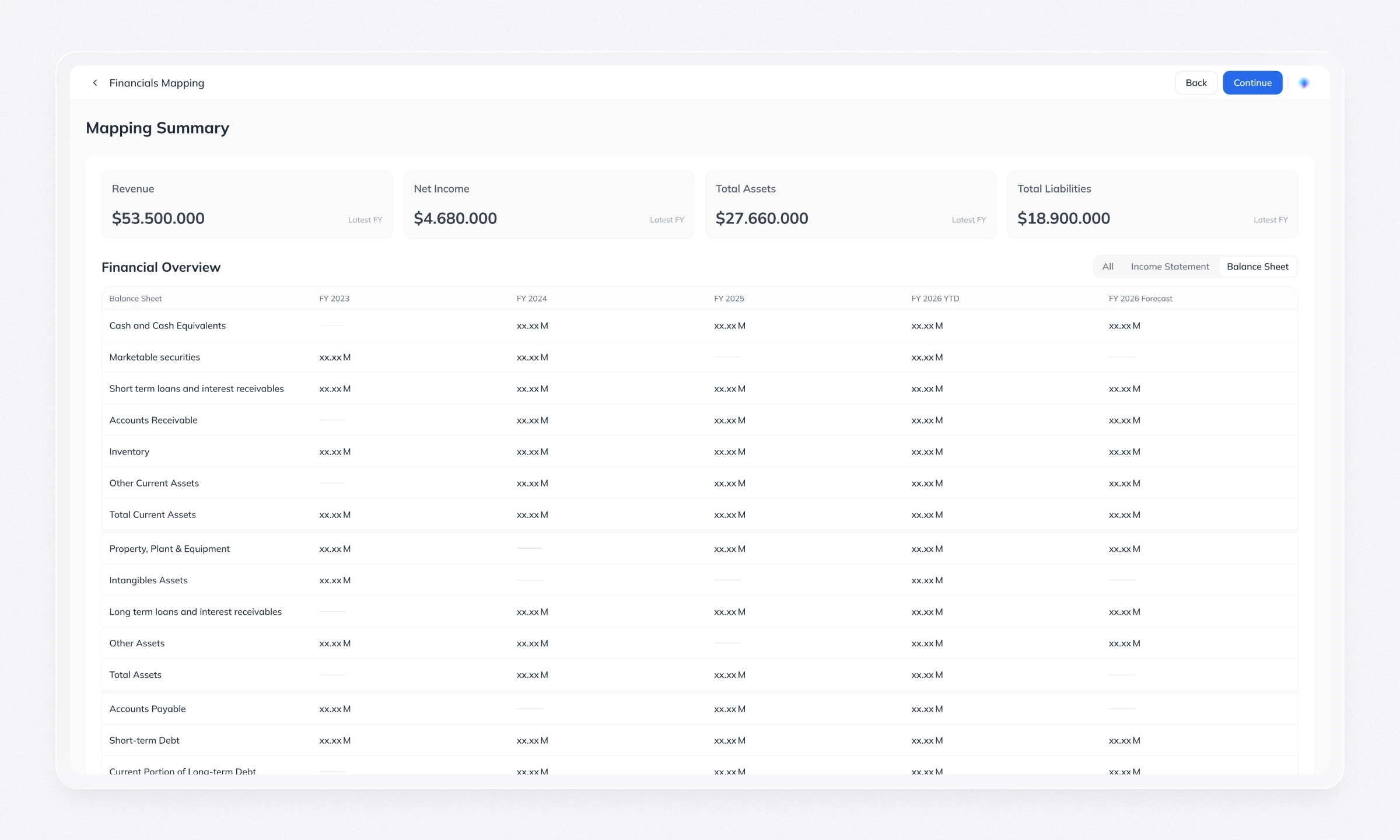
Each type of analysis required different inputs, so I worked closely with domain experts to understand what data mattered, which fields were mandatory, and where users were likely to get stuck. Together, we reviewed the flows regularly as I designed analysis-specific intake screens for manual entry, file uploads, and AI-assisted data extraction.
I defined validation, completion statuses, error and empty states, and warnings before leaving a screen with unsaved work. After AI suggests how extracted data maps to the analysis, the user can review and correct that mapping before confirming it and generating the analysis. The goal was to make a complex input process faster without hiding decisions that require expert verification.
Analysis Output
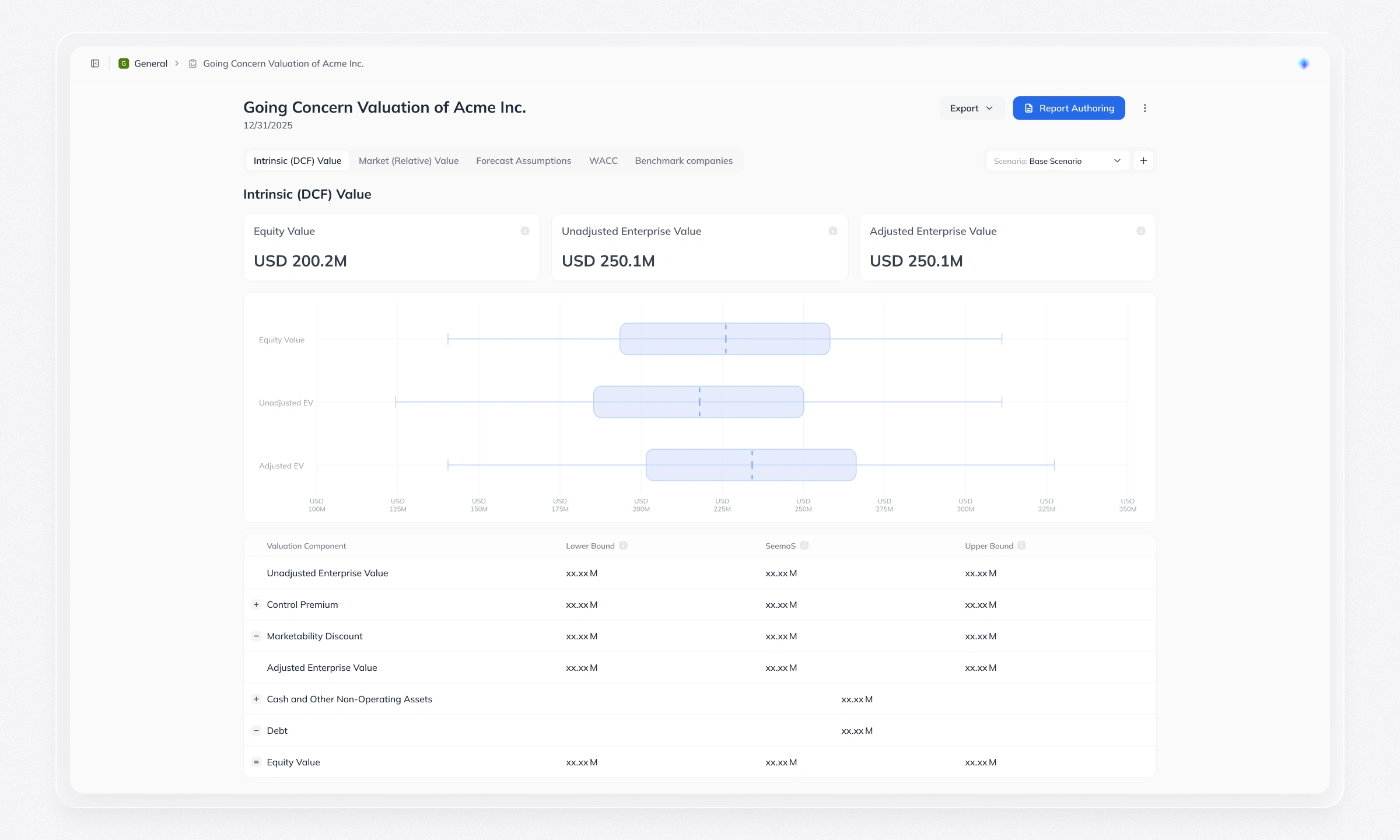
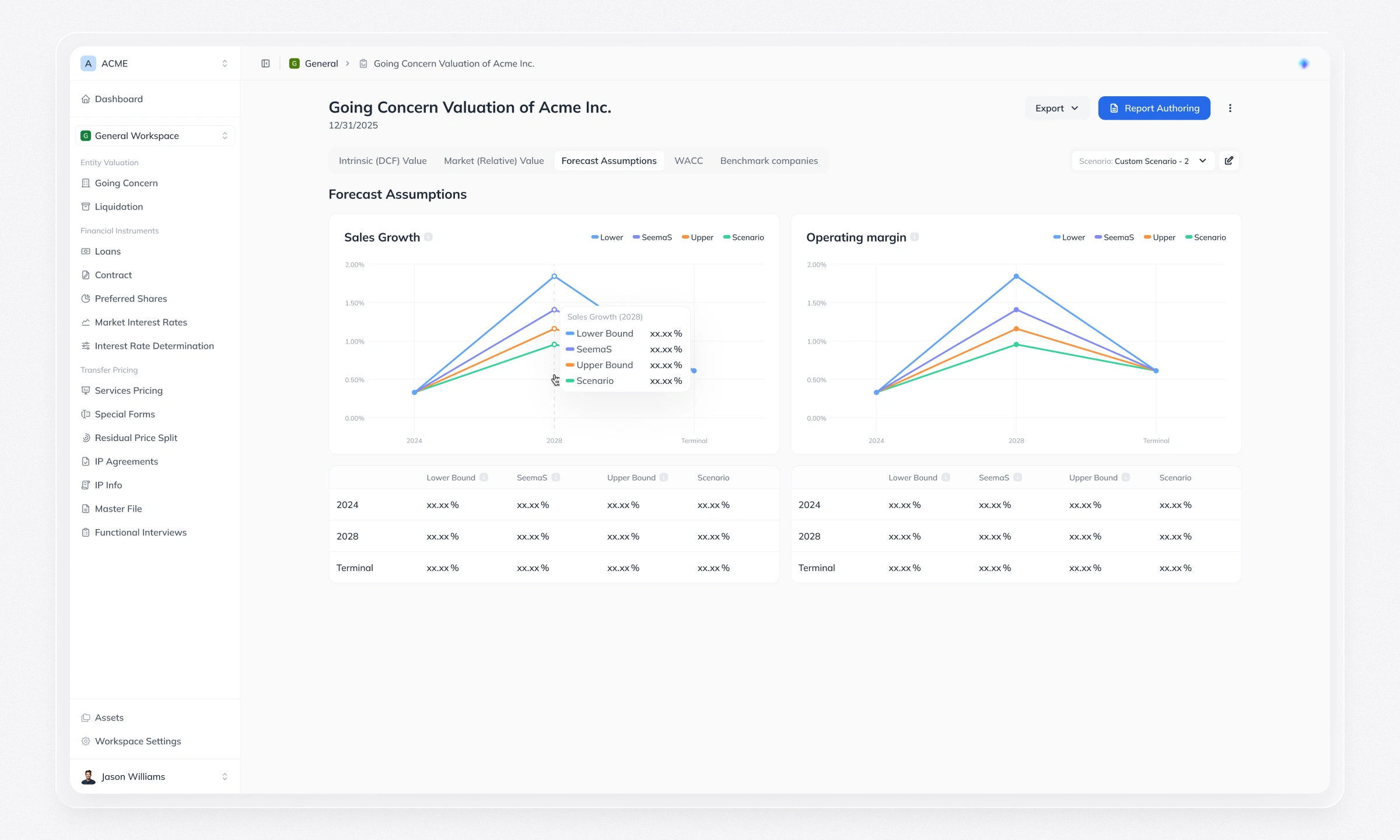
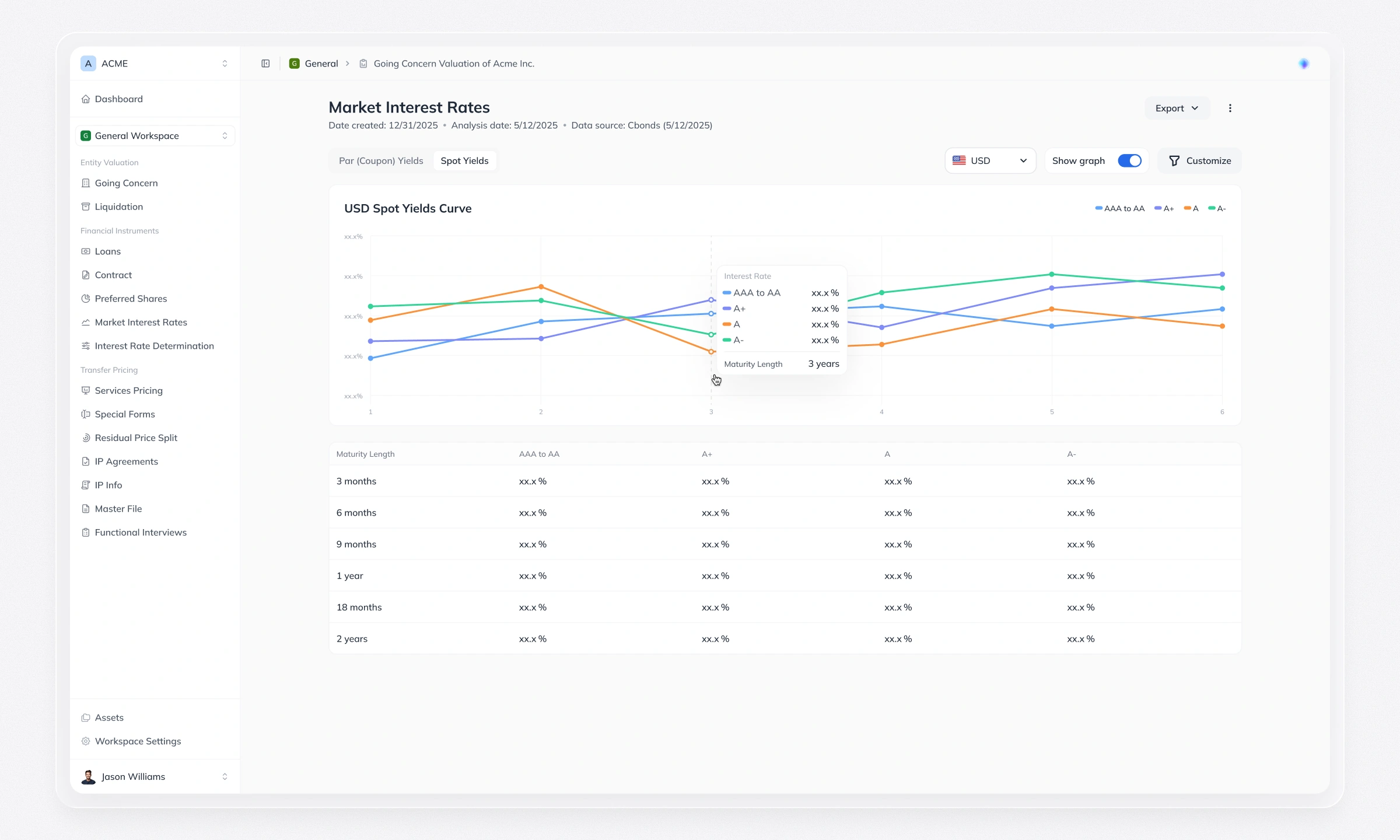
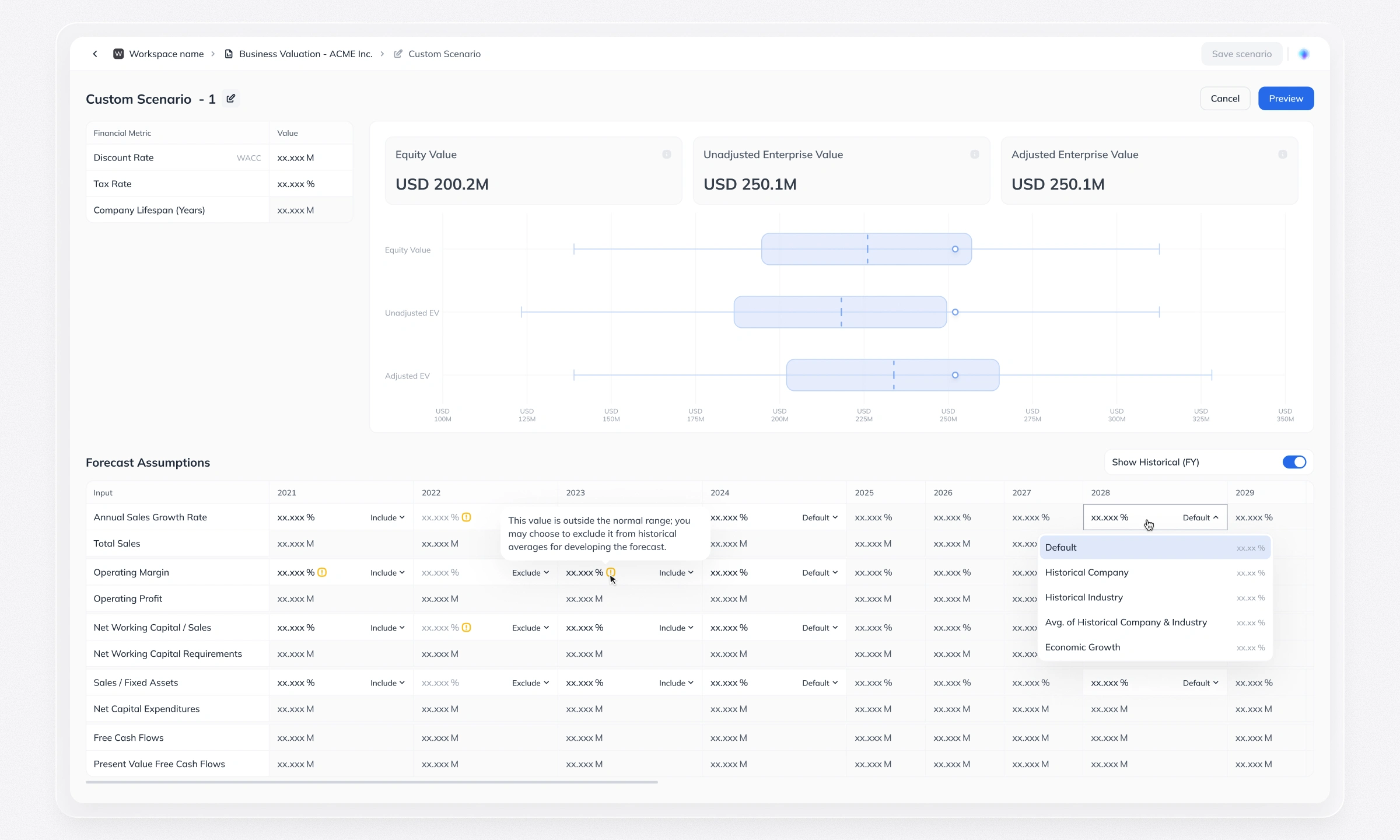
The results needed to help experts interpret an analysis, not just display its numbers. I designed the interaction patterns for charts, analysis tabs, and detailed views so users could move from a high-level result to the underlying information. The patterns adapt to different output types while keeping navigation and controls consistent.
Domain feedback also shaped the visualizations themselves. For example, a conventional bar chart did not communicate a financial range clearly enough, so I redesigned it as a candlestick-style view showing the lower bound, scenario value, and upper bound. The screens in this section show how those principles work across several analyses.
Collaboration and sharing
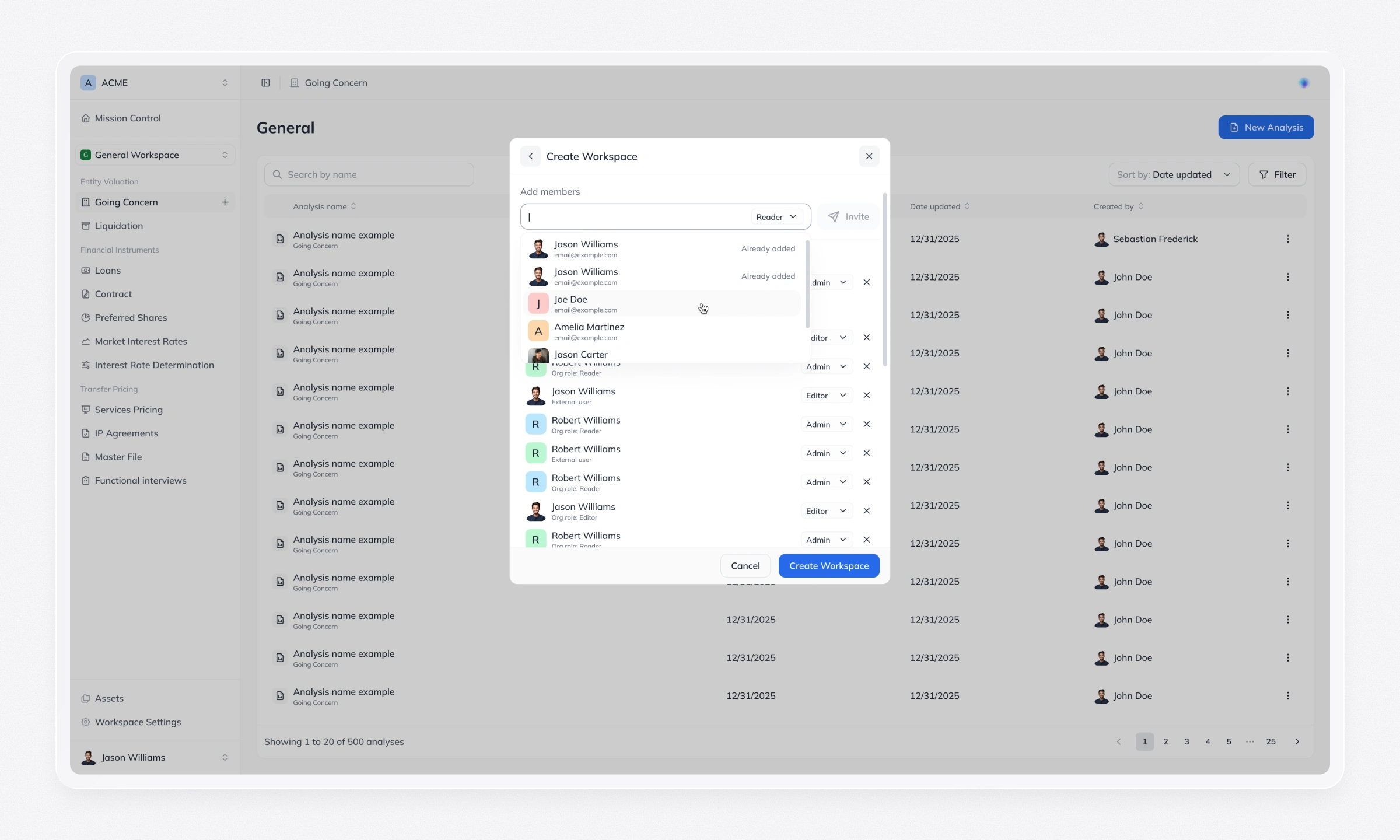
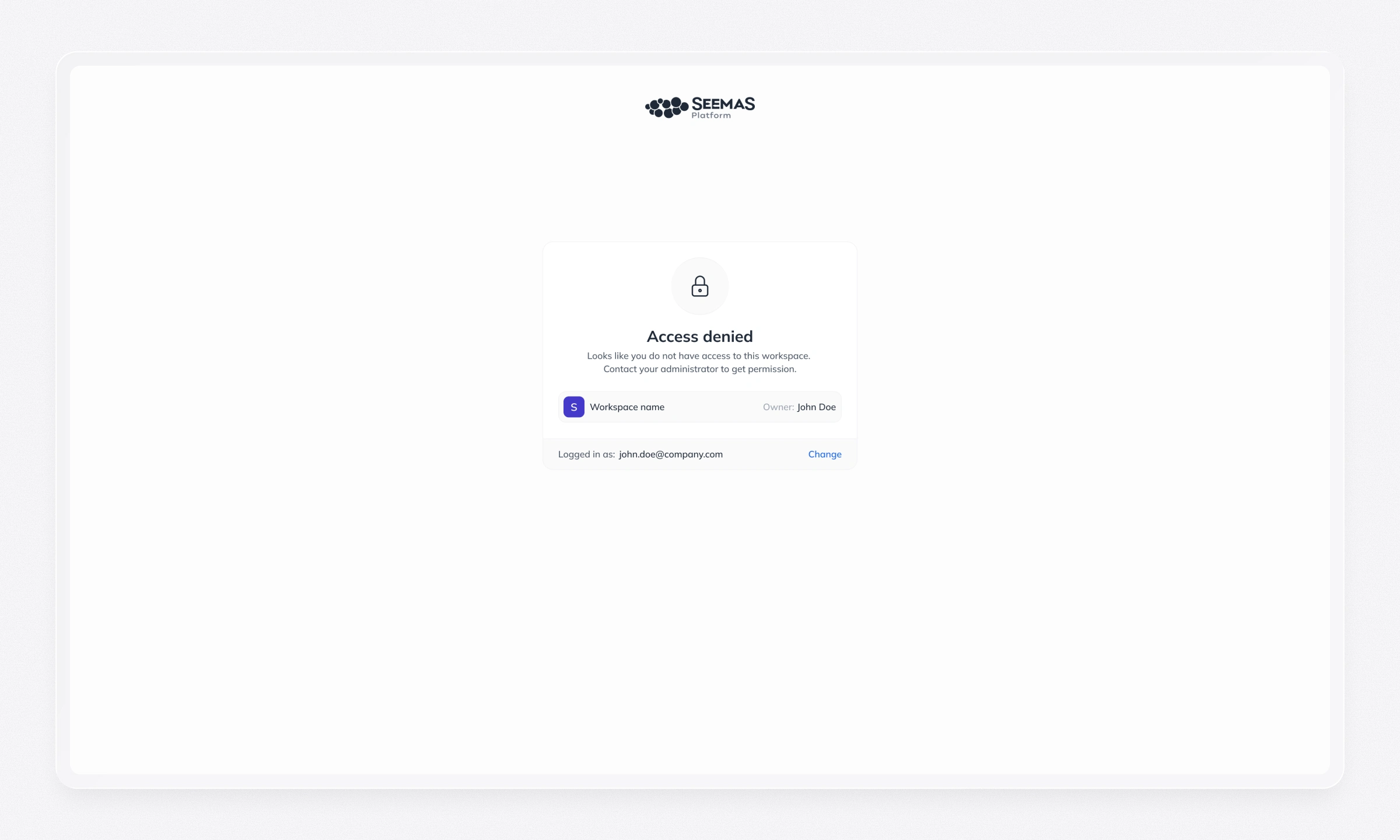
Designed the workspace invitation flow from adding a teammate and assigning a role through review, confirmation, and the recipient’s first view. Permissions had to be understandable at each step, particularly when organization-level and workspace-level access differed.
Also explored how to share a specific analysis with someone outside the workspace. A guest role and a broader Shared with me area were possible directions; protected sharing links offered a more focused solution within the available engineering scope. That decision kept sharing useful while making access explicit to both the sender and recipient.
Functional Interview
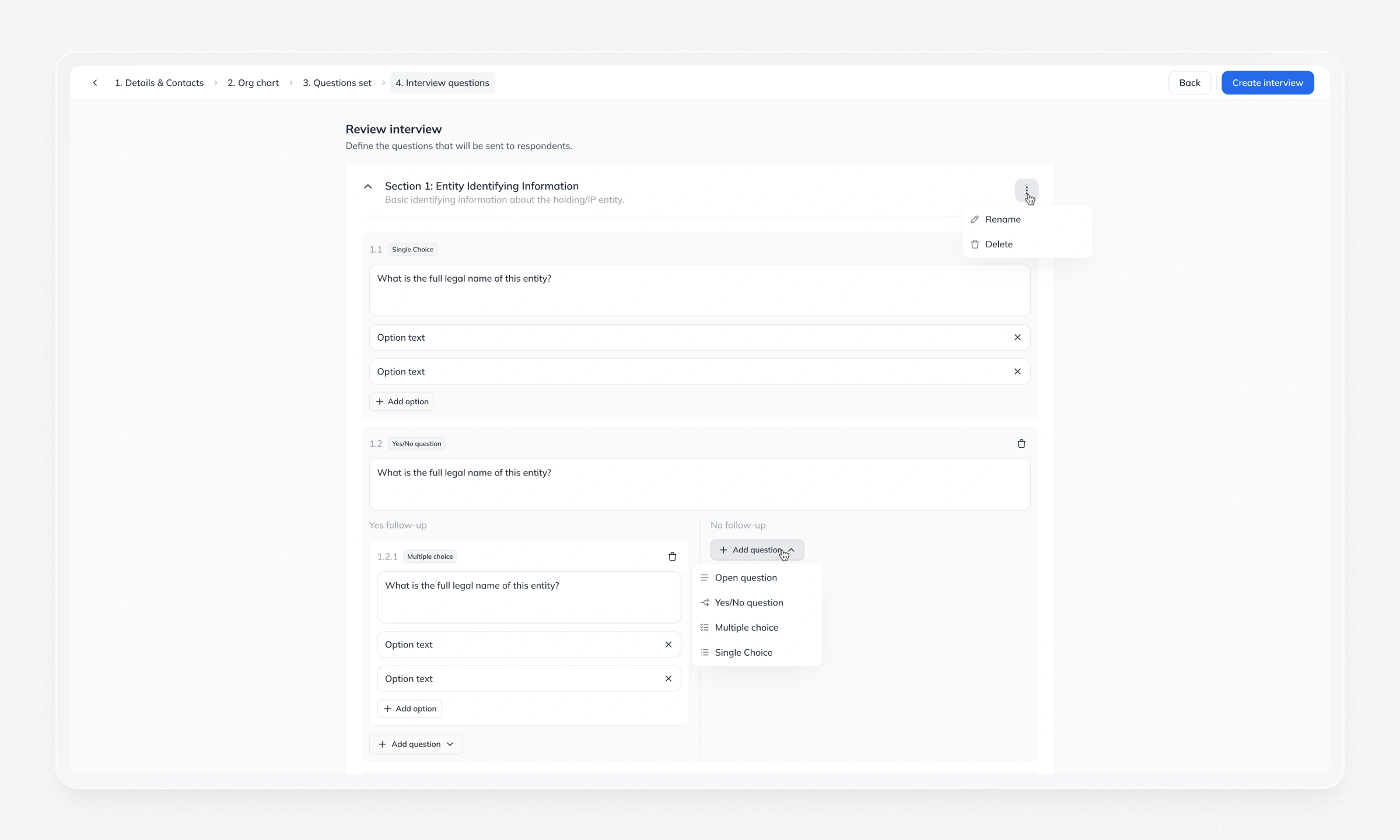
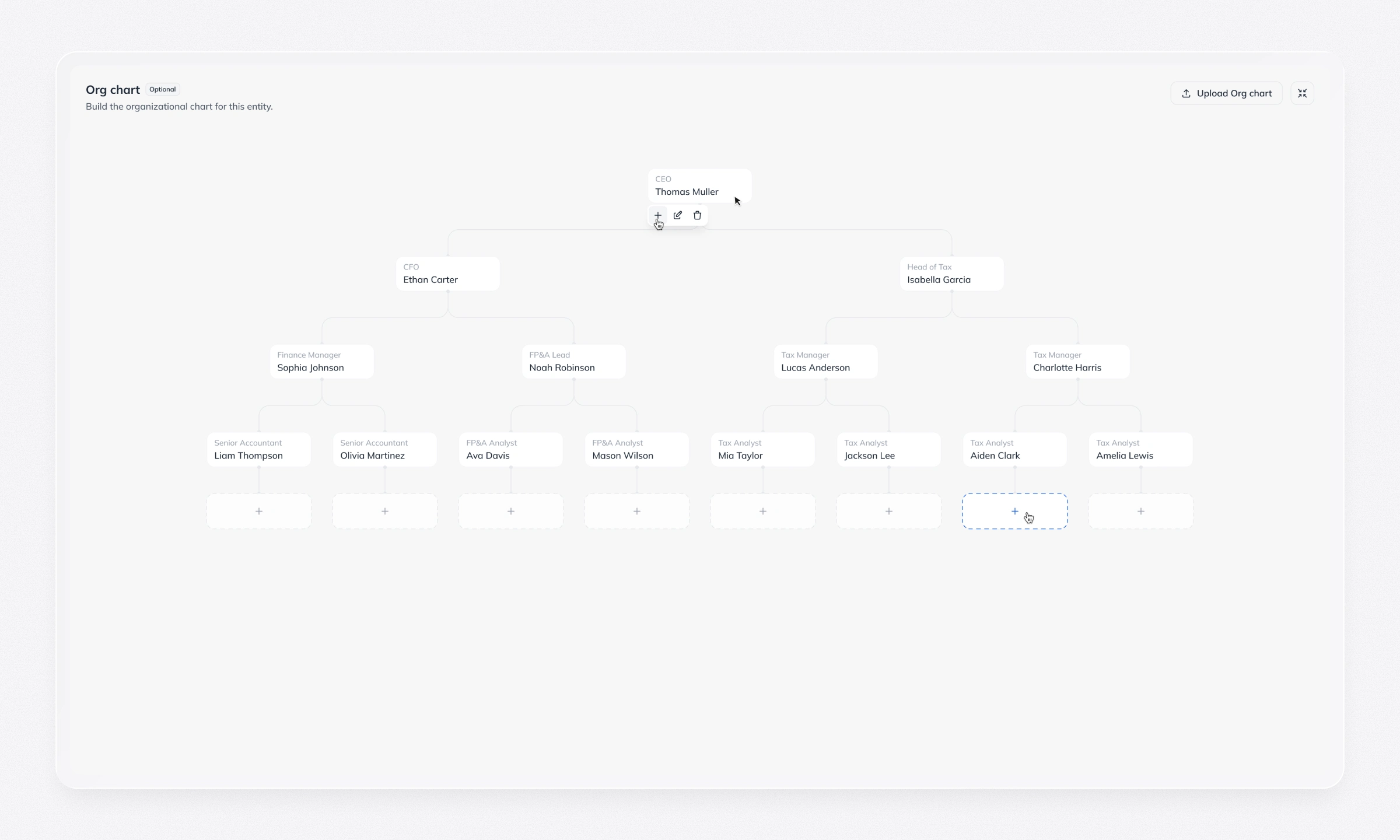
The Functional Interview needed to connect a complex authoring process with a simple experience for respondents. I designed the flow from entering entity details and adding an entity contact to building an org chart and creating the interview. Authors can add questions and choose open-text, single-choice, or multiple-choice answers.
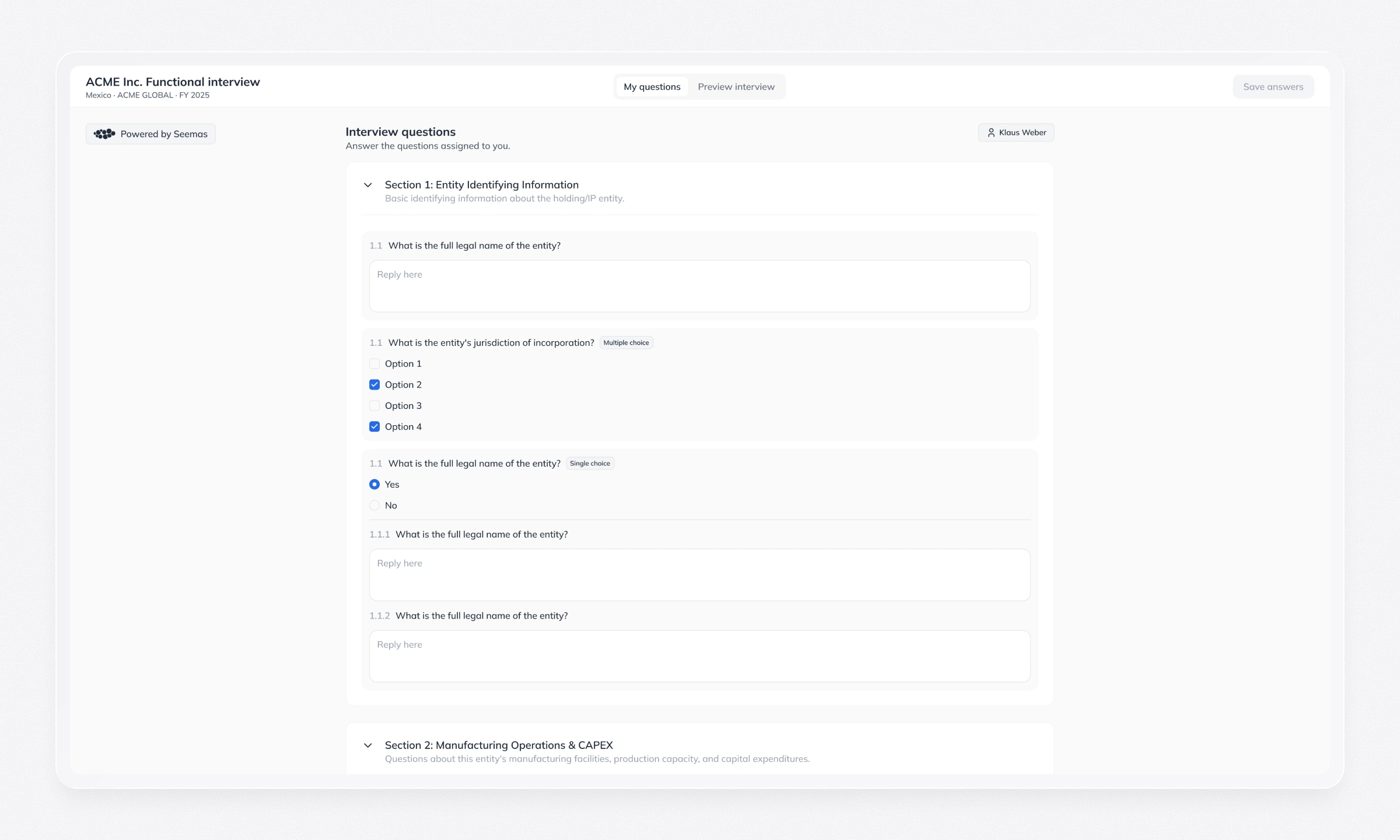
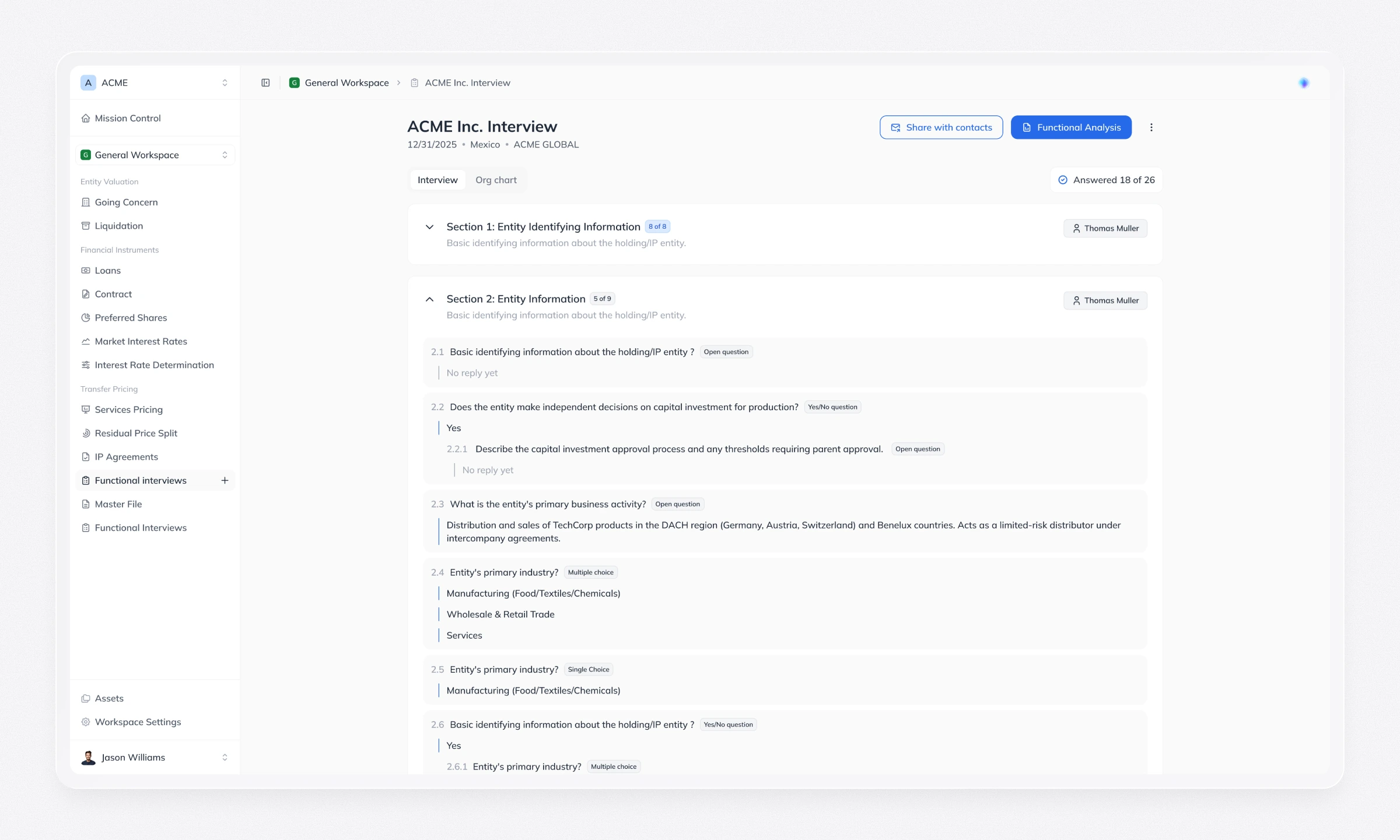
The interview is then shared privately with an entity contact for review. That contact assigns respondents from the org chart and sends the interview to their specified email addresses. Respondents can complete their part without creating an account. I designed the author, contact, and respondent views as one connected flow, including the handoffs and states between them.
AI Report Authoring
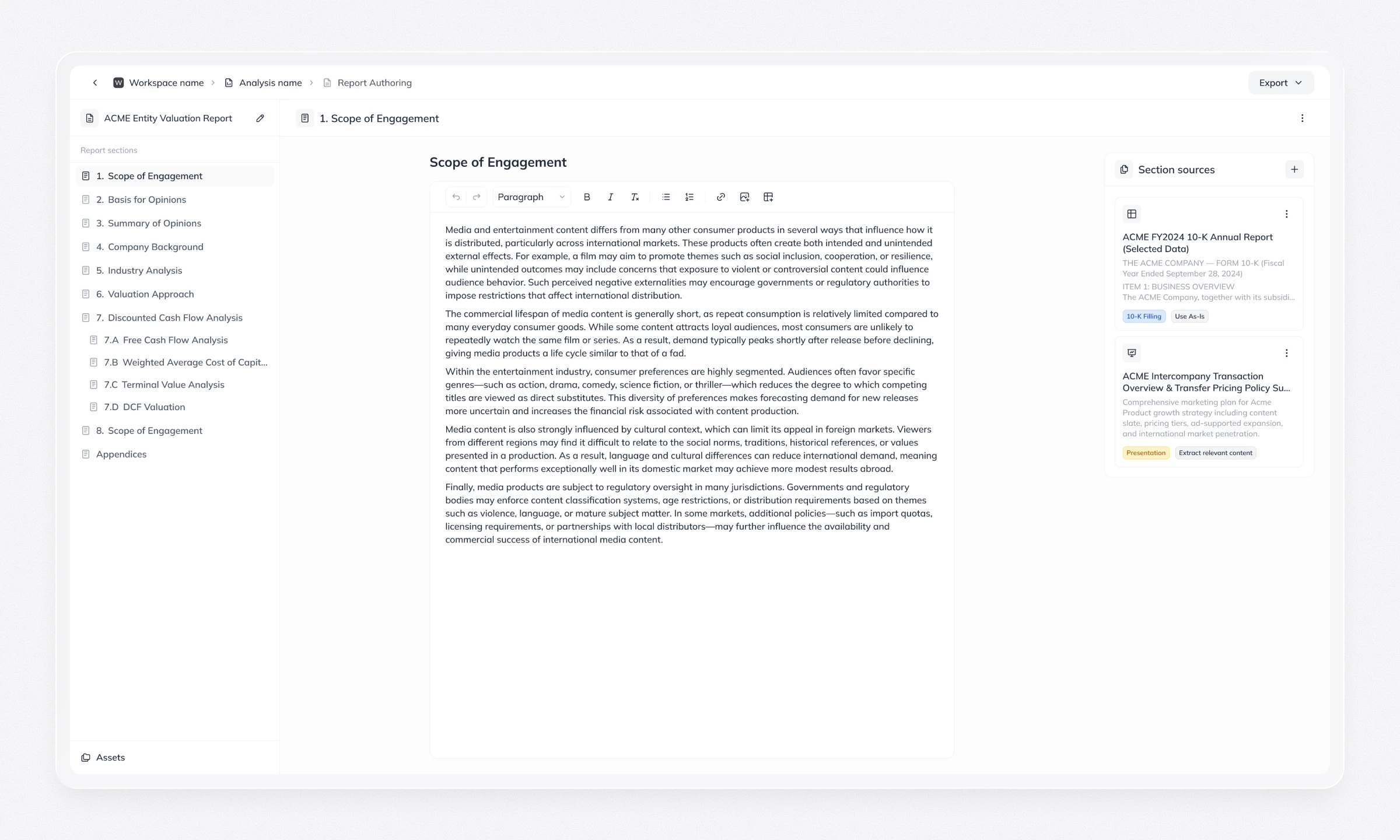
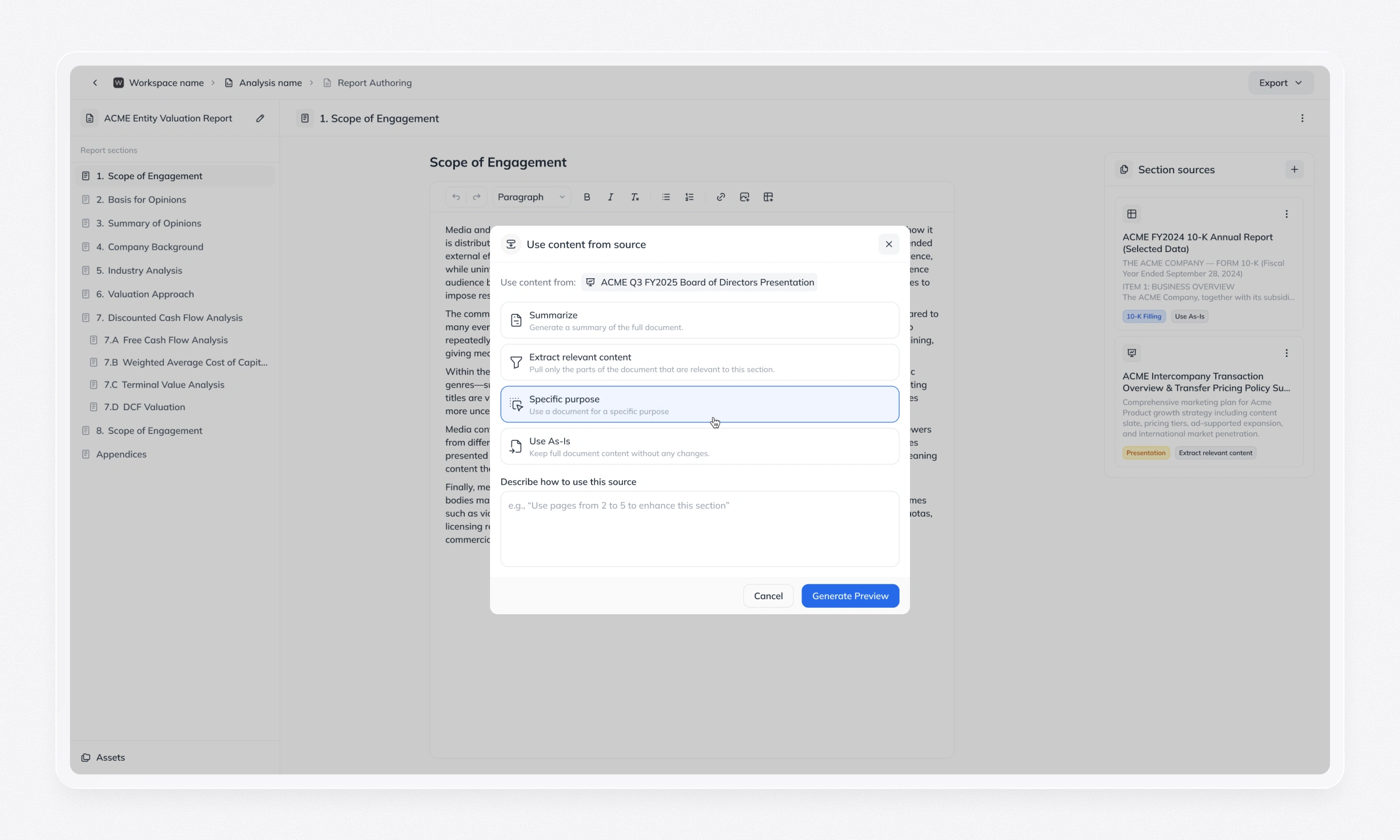
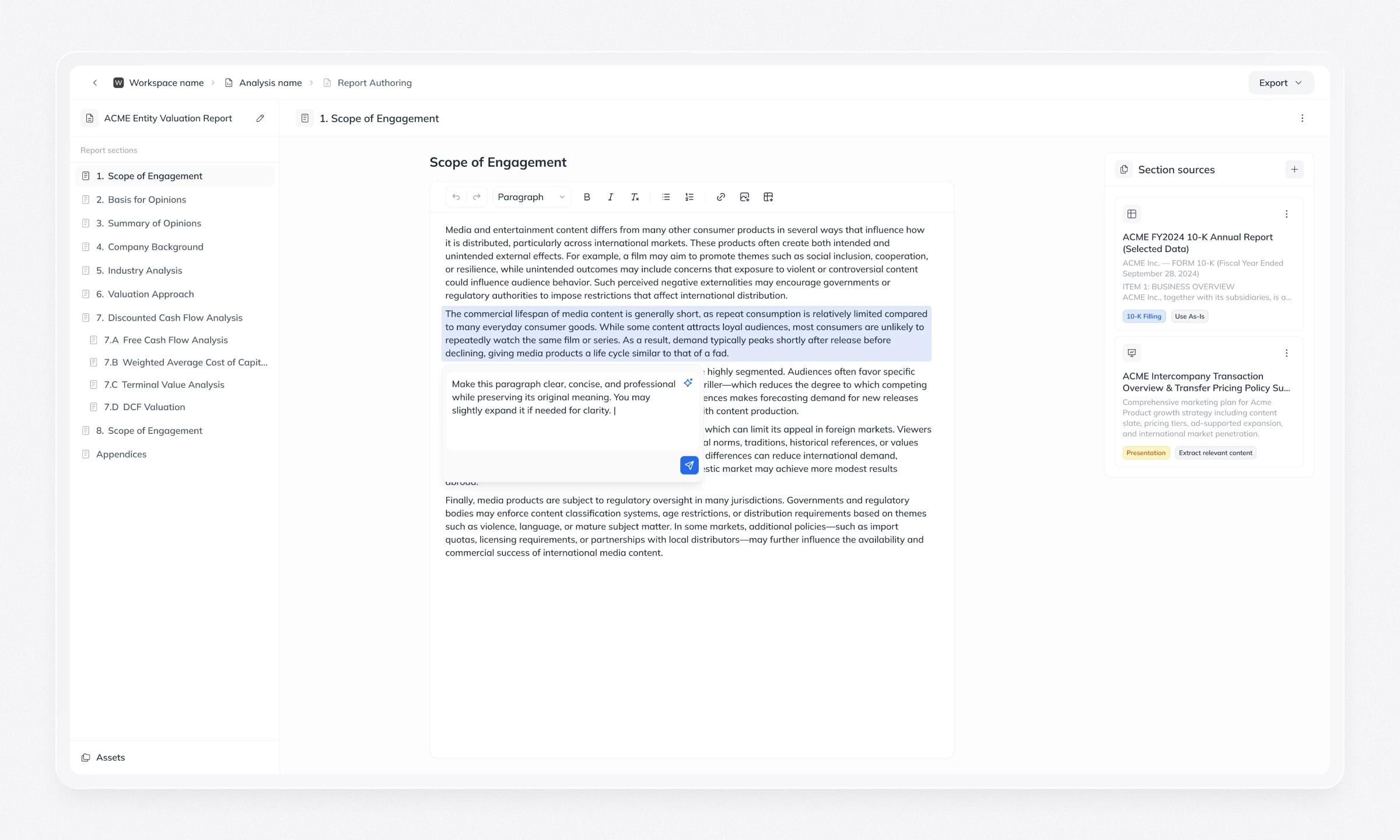
Report authoring brings analysis, source material, AI assistance, and expert judgment together. Working with domain experts and engineers, I mapped that process into a built-in text editor with navigation between report sections and a way to create a report from a template.
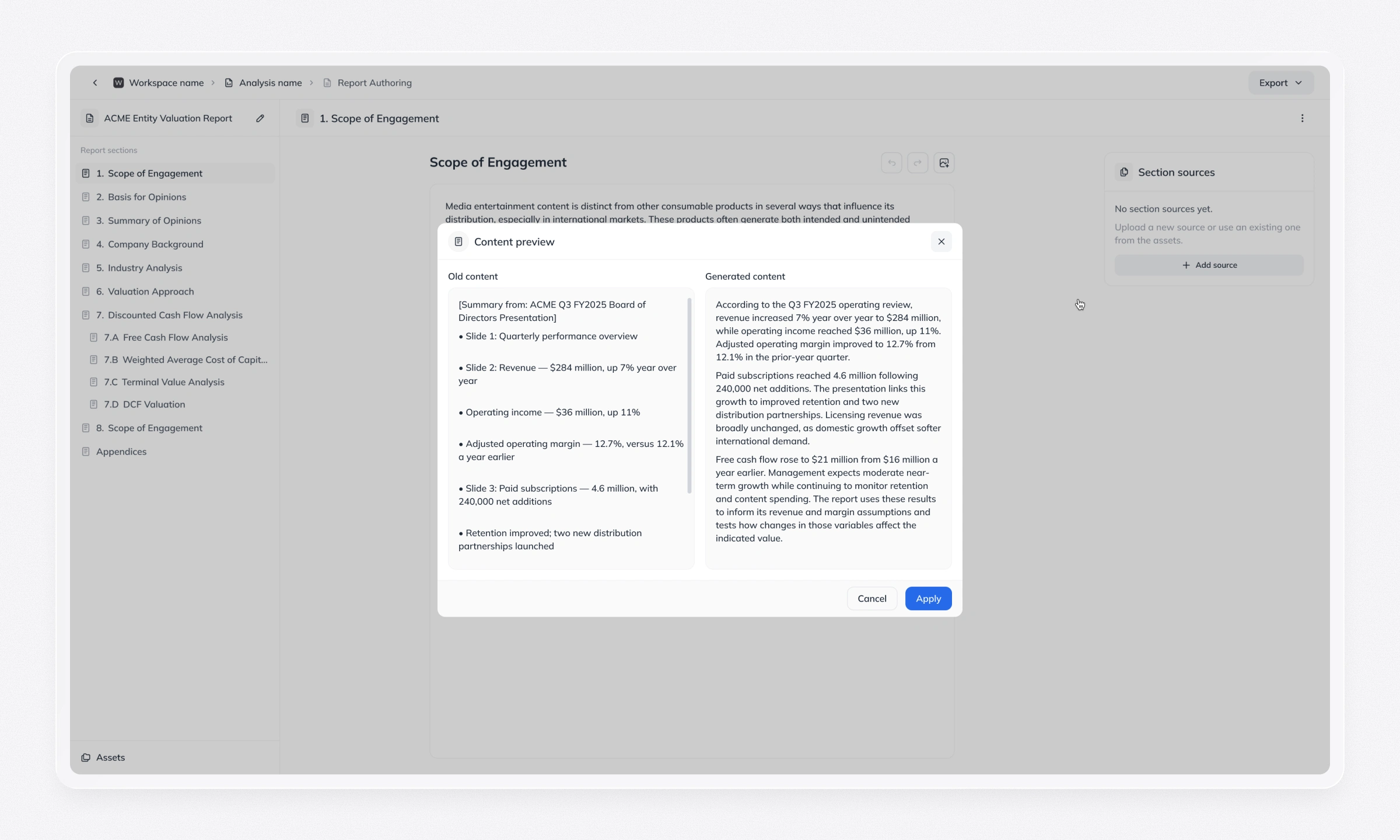
Users can upload source files, choose how AI should extract their data, and use AI to draft or revise content. Proposed edits appear in a Before / After view for verification before they are accepted. Comments support review within the report, and the final document can be exported. I designed the generation, review, confirmation, and error states around one principle: AI can speed up authoring, while the expert remains in control of the final report.
Design system
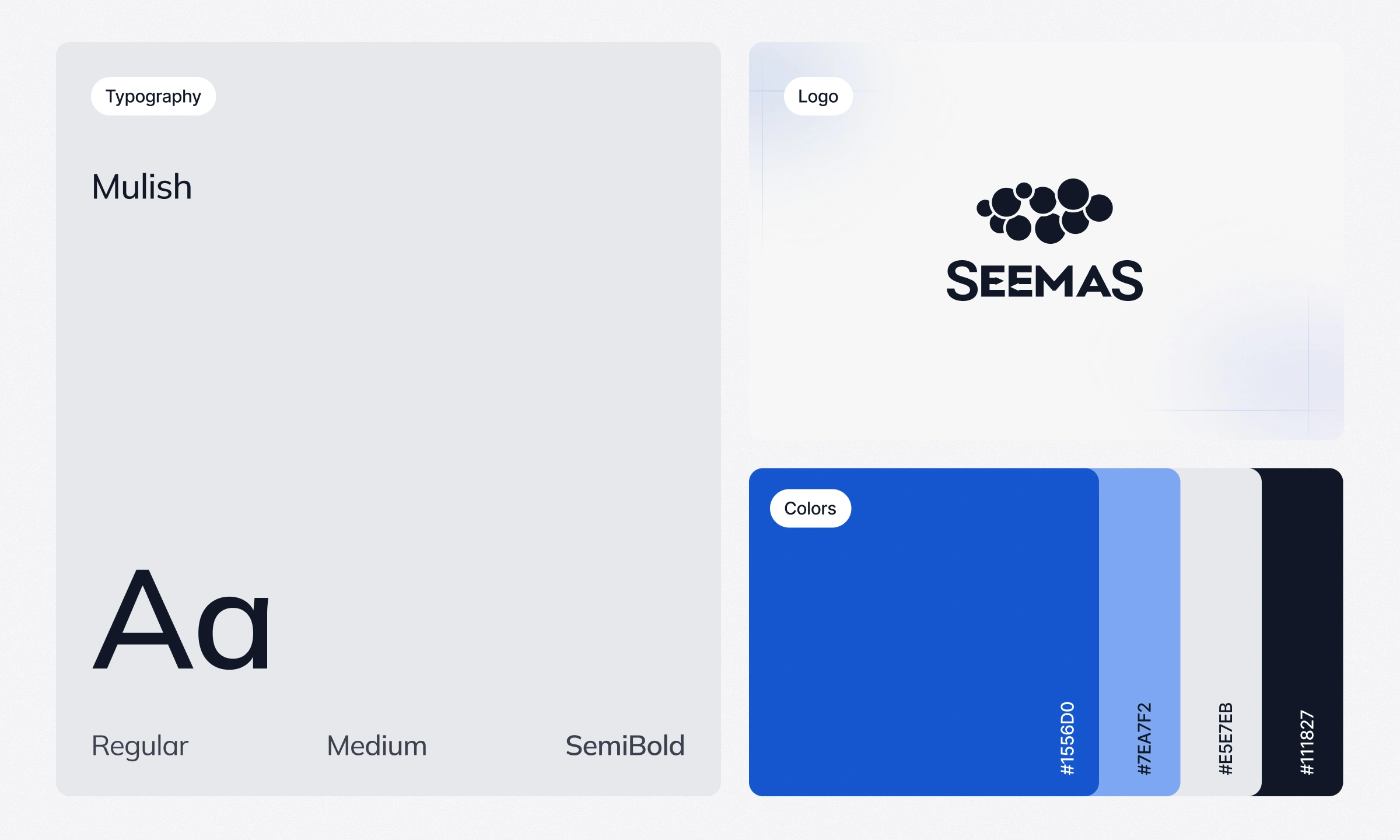
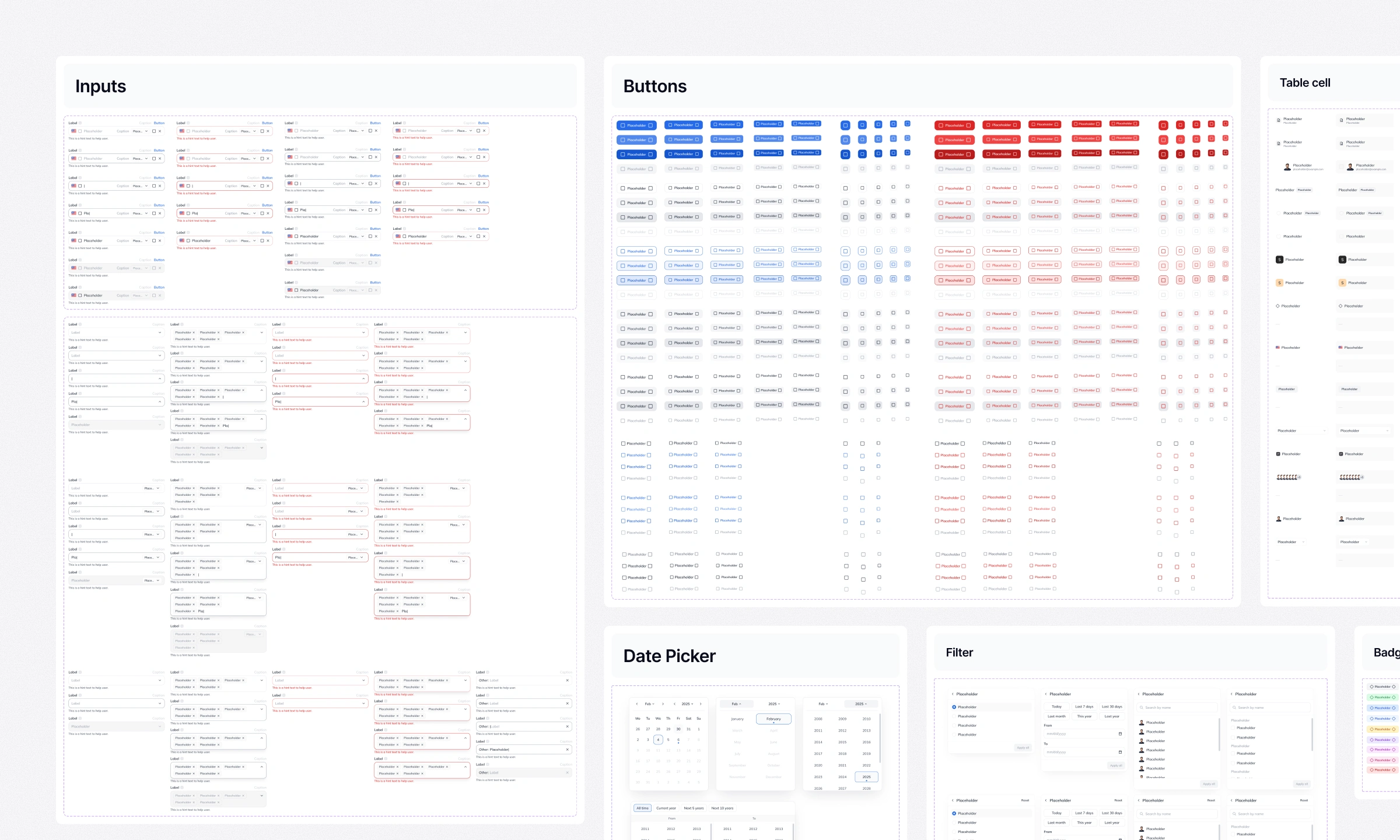
To support an expanding platform, I developed a comprehensive design system covering the full product experience- from global navigation and core user flows to internal analysis screens, intake workflows, settings, AI chat, reporting, collaboration, and feedback states.
It defined the structure, interaction patterns, visual language, and responsive behavior across the platform, ensuring consistency across modules, roles, and screen sizes. Components included the variants and behavior needed across modules and roles, with responsive rules for smaller and larger desktop screens.
We built the system in close collaboration with engineers, documenting interactions, edge cases, and layout changes in annotated Figma files. The shared patterns made new workflows faster to design and implement, while design QA helped keep the released experience consistent with the intended behavior.
Outcomes
Product delivery
The team launched the MVP and later Platform 2.0. My work established the navigation, analysis, collaboration, and reporting experiences across a growing product, with a design system and documentation to support continued development. Feedback from domain experts and users informed further iterations after the initial designs.
Outcomes during my time with SeemaS:
Raised $4M and gained enterprise traction.
Enterprise demos that led to new contracts, including Paramount.
Unified design system supporting modules and shared workflows.
Improved organization and collaboration through workspaces and focused sharing capabilities.
My contribution was leading the design of the product behind these milestones, working alongside the broader team.
Like this project
Posted Aug 19, 2026
Led the UX/UI design of an AI-powered enterprise platform that streamlines valuation, transfer pricing, and financial analysis.
Likes
0
Views
12
Timeline
Aug 20, 2024 - Jul 30, 2026
Clients
SeemaS, Inc.