
1. Executive Summary & Challenge
The smart home market is saturated with "always-connected" devices. While convenient, they introduce severe privacy risks, routing sensitive data—like video feeds and voice recordings—through third-party cloud servers.
The goal for Aegis Hub was to build an authoritative, highly secure visual brand and user experience design for an offline-first local smart home system. Over several months, I created an identity that communicates bulletproof digital defence (The Shield) and seamless local networking (The Node Mesh) without compromising on the aesthetics of a cutting-edge technical product.
Role & Tools
My Role: Principal Brand Designer, UI/UX Designer
The Objective: Identity Design, Brand Blueprint, UI/UX Prototyping
The Assets Produced: Custom vector logo systems, typography matrices, physical packaging, and dark-mode digital application dashboards.
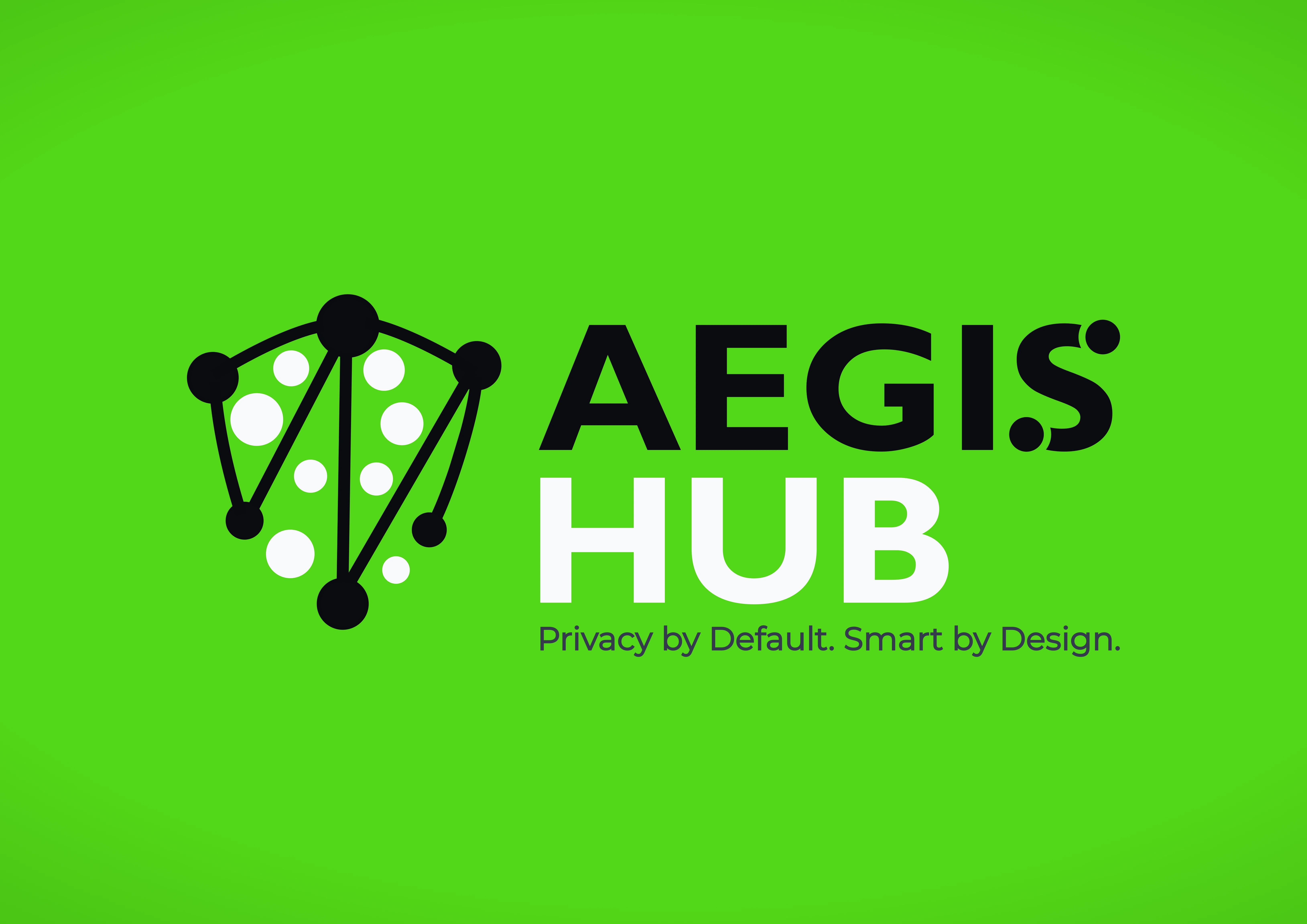
Logo Inversion
2. Brand Strategy & Core Story
The word "Aegis" signifies protection and sponsorship—traditionally representing a protective shield. The identity strategy centers entirely around the idea of safe, self-contained autonomy. It communicates:
Sovereignty: Complete local ownership of your household’s intelligence.
Fortification: Safeguarded against cloud data exploitation.
Simplicity: Complex networking packaged in an intuitive, consumer-ready interface.
Core Tagline: "Privacy by Default. Smart by Design."
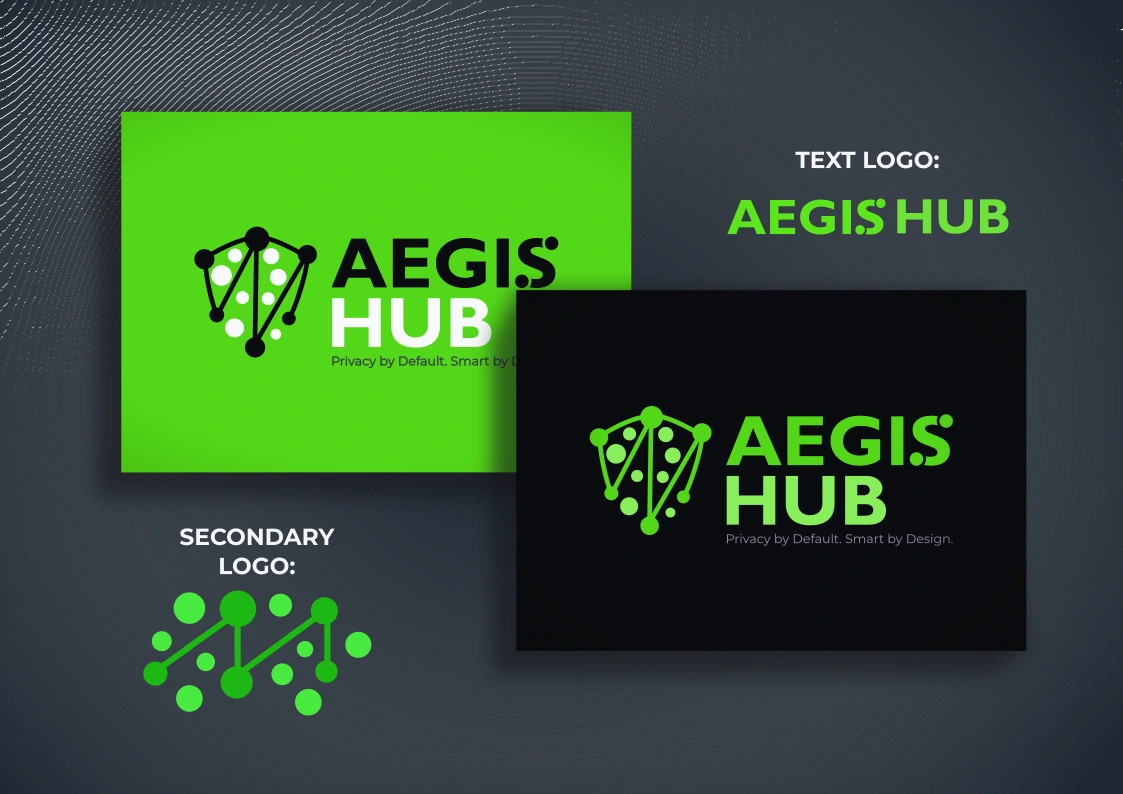
Brand Identity
3. Logo Construction & Vector Blueprint
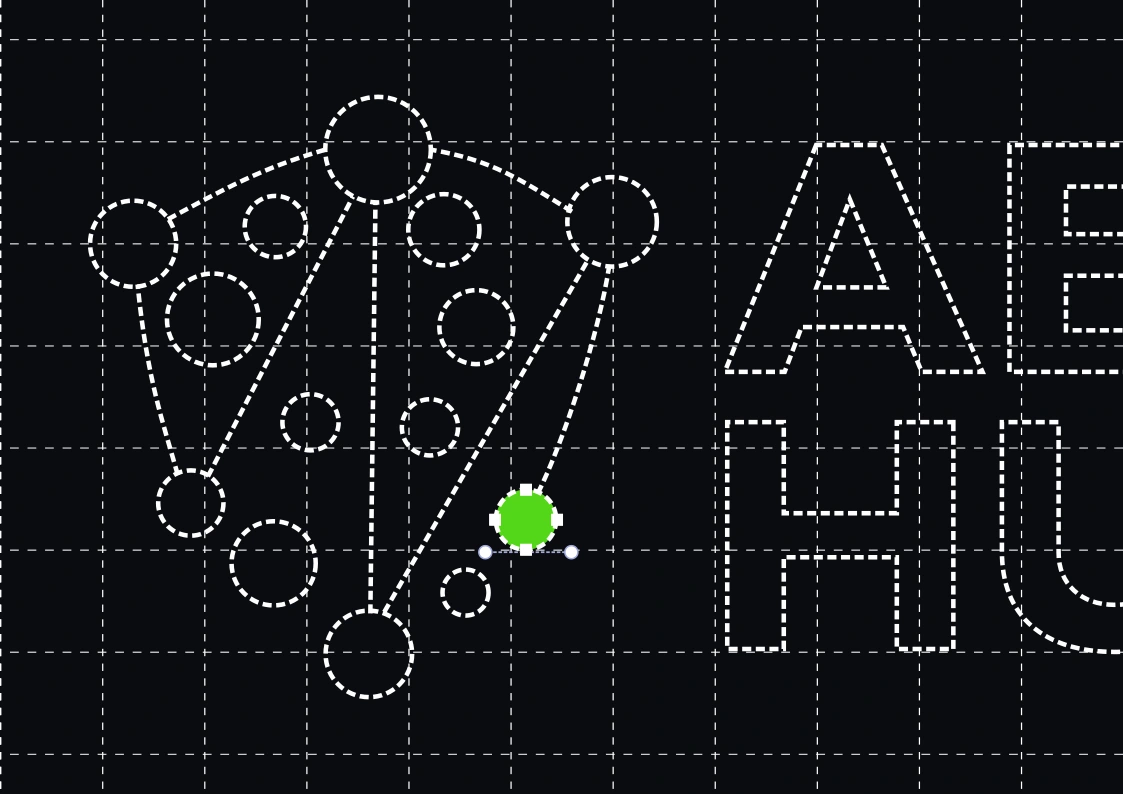
A professional brand identity must be anchored in rigorous, geometric harmony. For Aegis Hub, the main emblem is a customized hybrid of a defensive shield (security) and intersecting vector lines (local connection nodes).
To prove the scalable and mathematically sound nature of this design, the emblem was plotted across an exact modular grid to guarantee absolute visual balance when rendered at any resolution—from a tiny mobile favicon to a massive physical billboard.
The secondary logos expand this system into highly functional alternates, ensuring appropriate brand expression on different canvases—whether on a deep digital interface or physical print.
Illustration
4. Typography Architecture
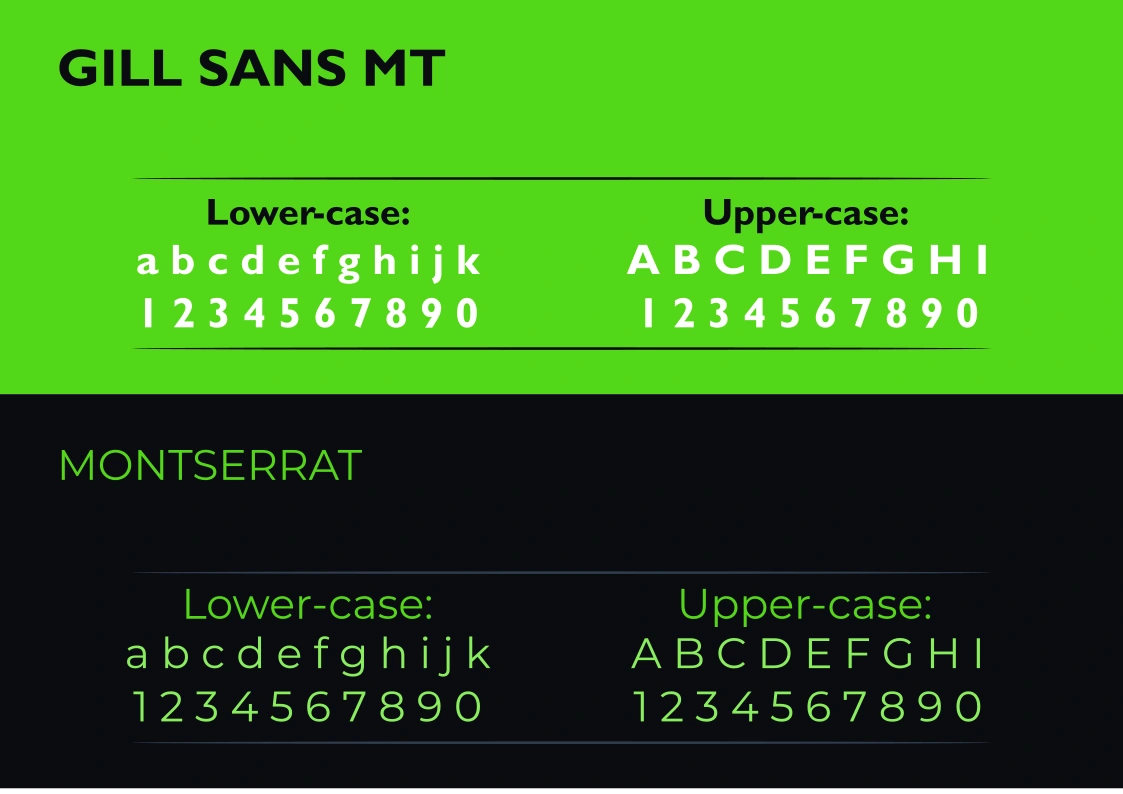
Modern hardware and cybersecurity demand typography that is both highly technical and exceptionally readable. The font pairing reflects this mechanical, high-agency ethos:
Primary Typeface: Gill Sans MT
Used exclusively for major headers, logos, and high-impact identity applications. It features precise, geometric proportions that carry a solid, authoritative, and expensive physical presence.
Secondary Typeface: Montserrat
The interface workhorse. A highly legible, modern geometric sans-serif that retains clean visual performance on digital screens, dashboard telemetry, and extensive technical specs in the brand handbook.
Typography
5. The Colour Palette
The digital identity leverages a heavy, high-contrast palette built for dark-room utility and screen comfort. High-vibrancy accents are strictly used to call attention to vital secure network signals.
Cyber Green (
#53d718 & #88ed5c): Signals active operation, local connection, and "Go" states. It serves as the visual heartbeat of the ecosystem.Slate Blue (
#9091a5 & #1f2833): Structural containment, borders, and dormant, inactive UI elements.Obsidian Black (
#0b0c10): The immersive, high-privacy screen canvas that feels digital, defensive, and premium.Security White (
#f8f9fa): Clean, functional data reading and essential typography.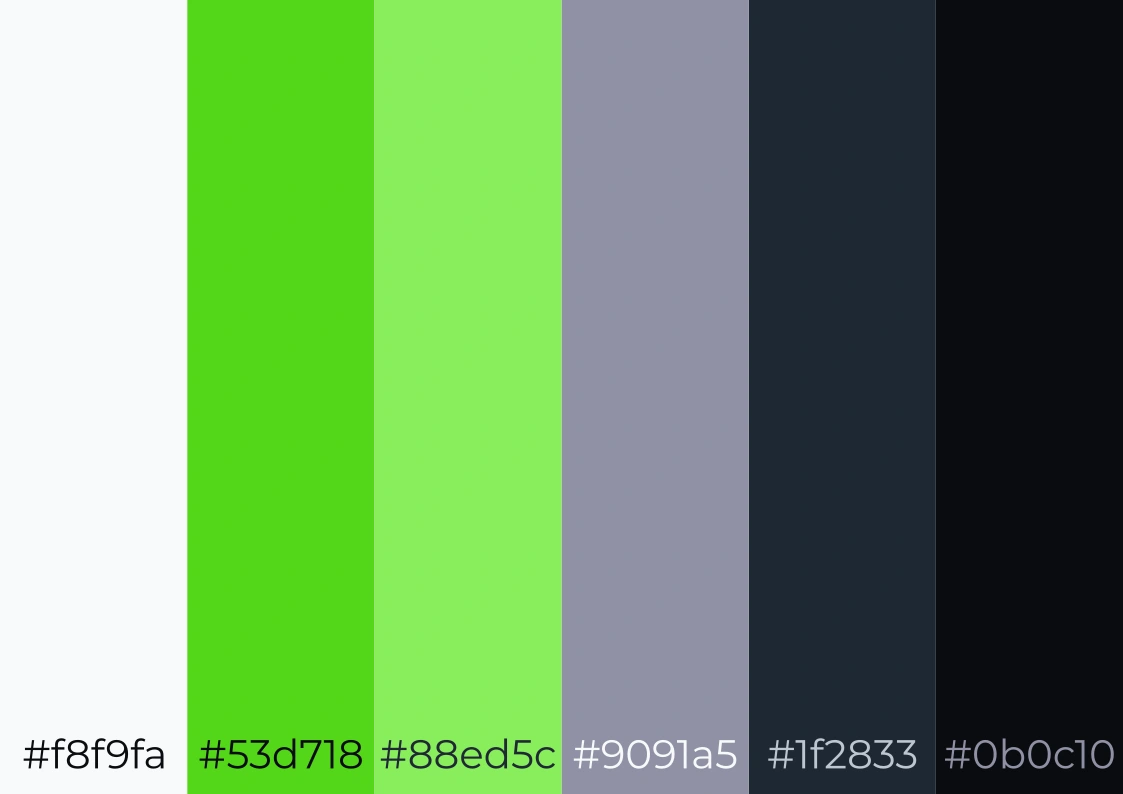
Brand Colour Pallet
6. Digital App Dashboard Experience (UI/UX)
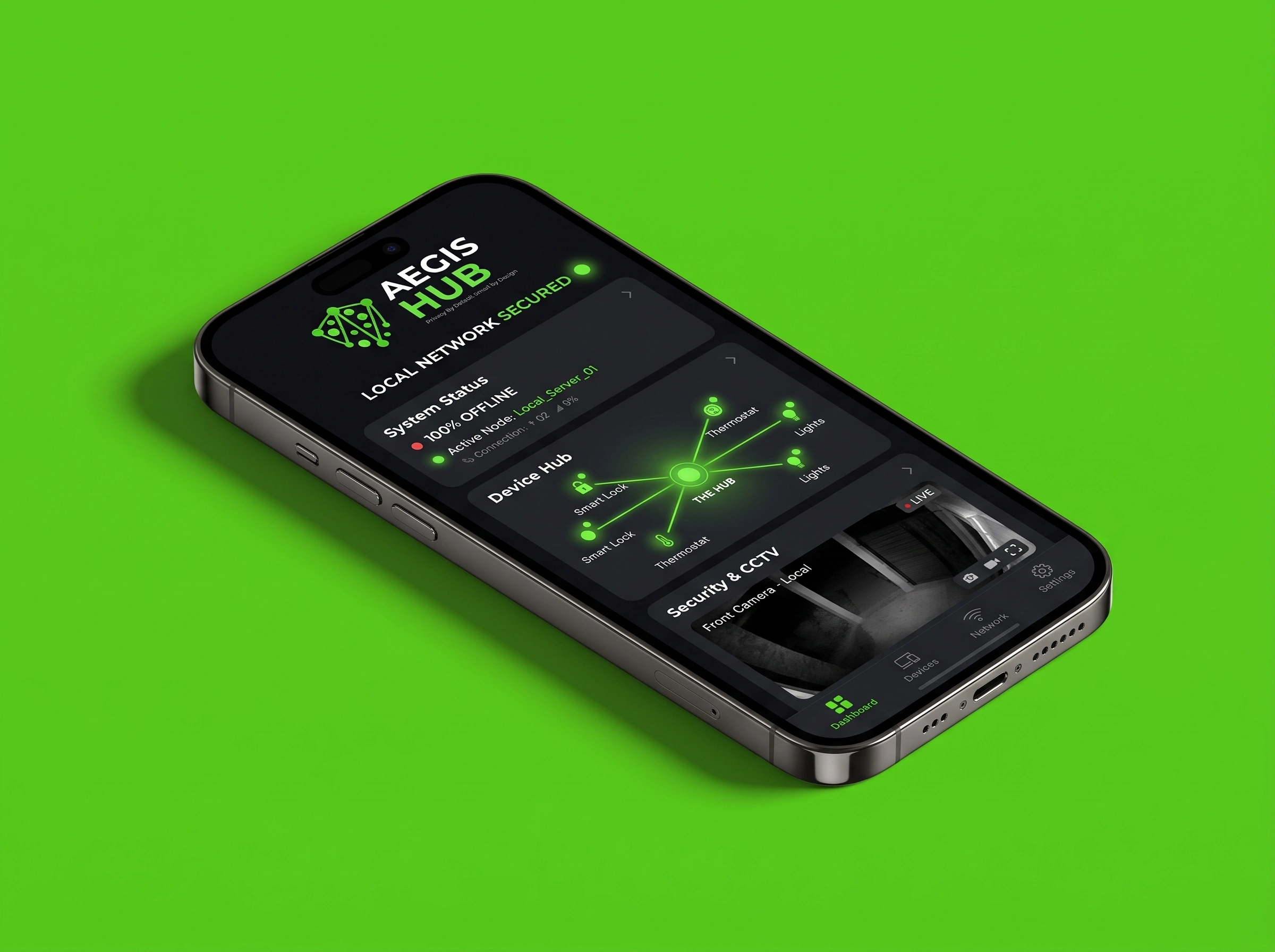
Building the visual system is only half of the solution; testing it across a real application brings it to life. I designed a dark-mode mobile dashboard highlighting the true purpose of Aegis Hub—offline containment.
Local Security Header: High-level, immediate visual peace of mind with a prominent "LOCAL NETWORK SECURED" status badge.
Dynamic Network Node Web: A local, real-time map displaying smart devices (Lights, Locks, Thermostat) centred on the self-contained central server ("THE HUB") with no cloud dependencies.
Self-Reliant Feed Display: On-device camera footage directly piped from local capture to local screen.
Mobile App UI Design
7. Deliverables & Real-World Results
Through this end-to-end design project, I proved how a complex technical value proposition (offline server architecture) can be translated into a gorgeous, highly premium, and secure consumer product.
Key Visual Assets Delivered:
A mathematical logo system with deep-mode and light-mode alternatives.
The exact typographic and colour systems ready for deployment.
The mobile App UX interface, verifying utility in real-world application contexts.
1 like · 1 view · Nov 11, 2026
This case study showcases a complete brand identity and interface design for Aegis Hub, a fictional, privacy-first, offline smart home ecosystem.

