Making Internet of Things Privacy Visible at Carnegie Mellon

Justin Donnell


Internet of Things Privacy Infrastructure
Carnegie Mellon University’s Internet of Things (IoT) Privacy Infrastructure was developed to help people discover nearby connected devices, understand the data those devices collect, and access available privacy controls.
I served as the primary architect and developer, helping turn privacy and transparency research into a functioning platform that could be used in the real world.
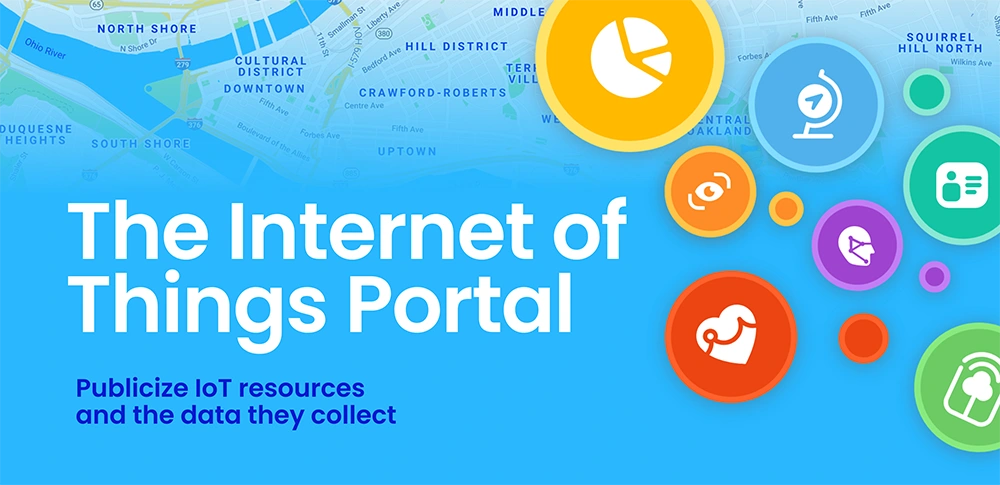
Internet of Things Portal
The challenge
Connected devices are increasingly embedded in public and private spaces, but the data they collect is often invisible to the people around them.
The project explored a deceptively difficult question:
How do you make invisible data collection visible and understandable?
The system needed to support ongoing academic research while also functioning as a usable product for people outside the research community.
My role
I led the core technical implementation of the platform while contributing directly to product and user-experience decisions.
My work included:
software and system architecture
full-stack web development
cloud infrastructure
database architecture
scalable backend services
administrative and management tools
responsive user-facing web applications
product strategy and UX decisions I worked alongside Carnegie Mellon faculty and research teams, external stakeholders, and mobile developers to translate research around privacy, data ethics, and transparency into something people could actually use.
I worked alongside Carnegie Mellon faculty and research teams, external stakeholders, and mobile developers to translate research around privacy, data ethics, and transparency into something people could actually use.
Internet of Things Assistant
From research to a working product
A major part of the work was bridging two very different needs.
The system had to support research requirements, including the collection and organization of information needed by the project team, while also creating a clear experience for people simply trying to understand the connected devices around them.
That meant continually balancing technical architecture, research requirements, product decisions, usability, privacy, and long-term maintainability rather than treating them as separate problems.
The outcome
The result was a functioning privacy infrastructure that translated years of academic research into a usable digital platform spanning web, mobile, cloud infrastructure, backend services, databases, and administrative systems.
After transitioning from my full-time Project Scientist role, I continued working with Carnegie Mellon as an advisor, helping shape product direction and providing technical expertise as the project evolved.
Like this project
Posted Sep 17, 2026
Built Carnegie Mellon’s Internet of Things (IoT) Privacy Infrastructure, turning privacy research into a working platform for device transparency and control.
Likes
0
Views
0
Timeline
Jul 16, 2018 - Mar 10, 2026
Clients
Carnegie Mellon School of Computer Science