Designing a Digital Home for a Multidisciplinary Career

Justin Donnell


Designing a Digital Home for a Multidisciplinary Career
My work has never fit neatly into one category.
My background spans technology, product, design, music, visual work, and independent creative projects. The challenge was building a personal site that could represent that range without feeling fragmented—or turning into a conventional portfolio full of disconnected galleries and categories.
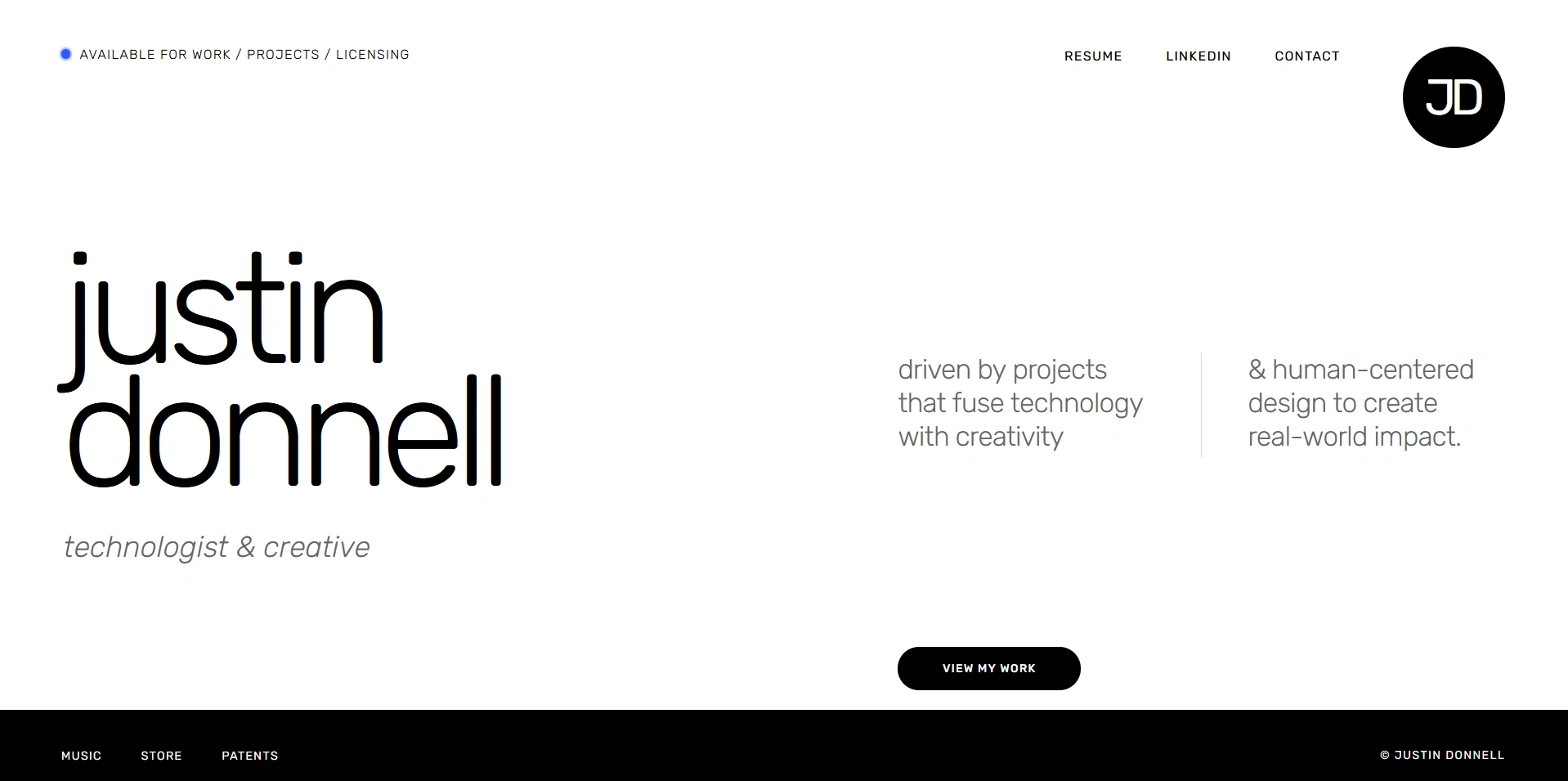
Home Page
A single visual system
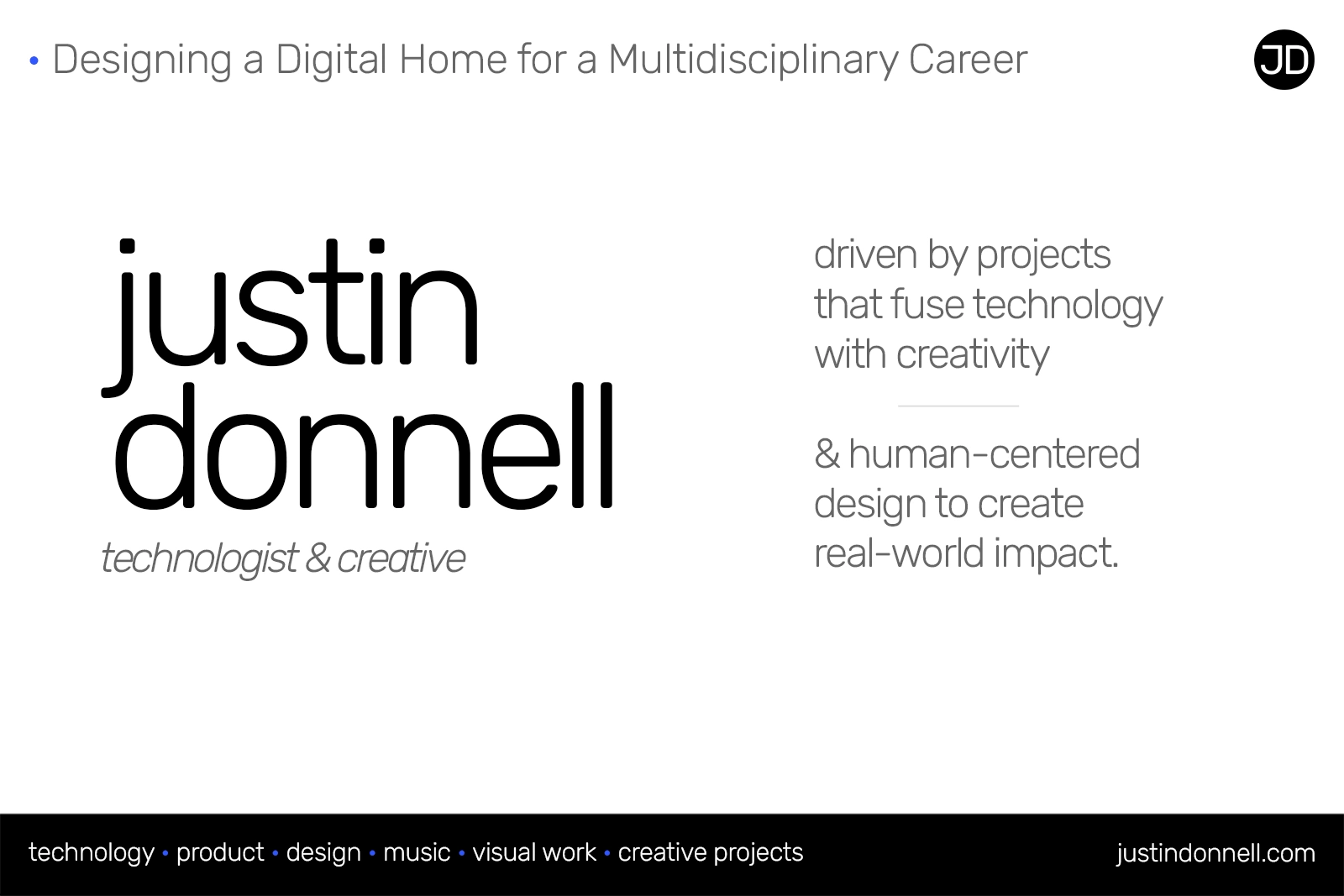
I built the identity around a restrained Swiss-inspired system: large typography, generous whitespace, black and white, a small electric-blue accent, and a simple JD monogram.
The goal was to make the site feel distinctive without competing with the work itself.
Designing around different audiences
The site still needed to serve very different visitors.
Someone might arrive because of a job opportunity, a freelance project, a creative piece, music, or simply curiosity about something I made.
Rather than trying to force all of that into a conventional portfolio structure, I kept the homepage intentionally minimal and used clear hierarchy, concise positioning, and carefully chosen links to help different visitors find the context most relevant to them.
Responsive by design
The desktop layout relies heavily on scale, whitespace, and horizontal relationships, so simply shrinking it would not work.
For smaller screens, the composition restructures into a vertical flow while preserving the same typography, hierarchy, visual identity, and clear paths into the work.
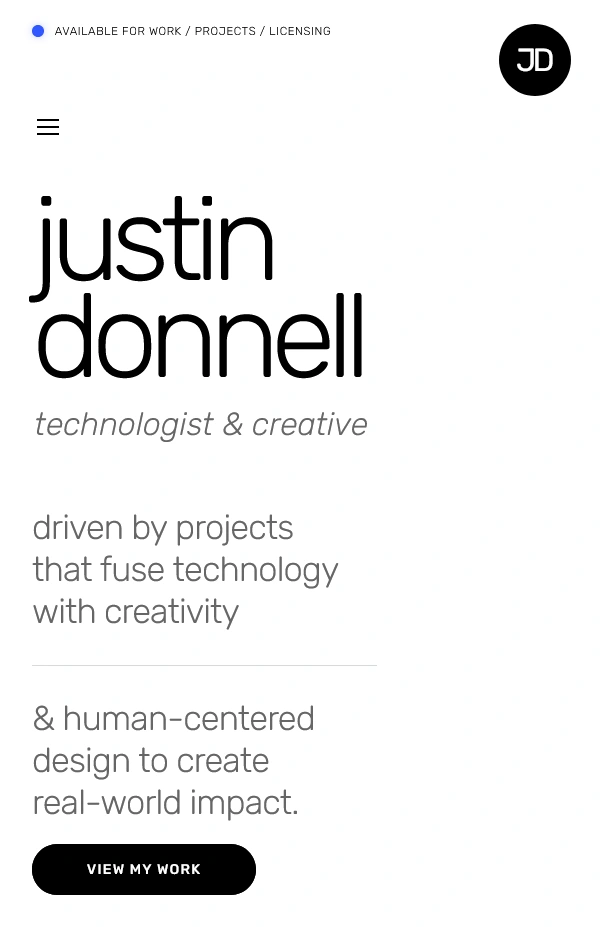
Responsive Design
Small interactions, personality, and play
On desktop, the cursor becomes a circular lens that inverts the colors beneath it as it moves across the page, adding a subtle interactive layer to the otherwise minimal layout.
A hidden Easter egg pushes that idea further, triggering a site-wide inversion sequence that temporarily transforms the visual system—including the monogram and accent colors—before revealing a dark-mode version of the site.
Easter Egg
Music as part of the site itself
Rather than sending visitors to another platform, I also built a lightweight music player directly into the site for a catalog of original tracks.
The player keeps the music inside the same visual and interaction system as the rest of the site instead of treating it as something separate.
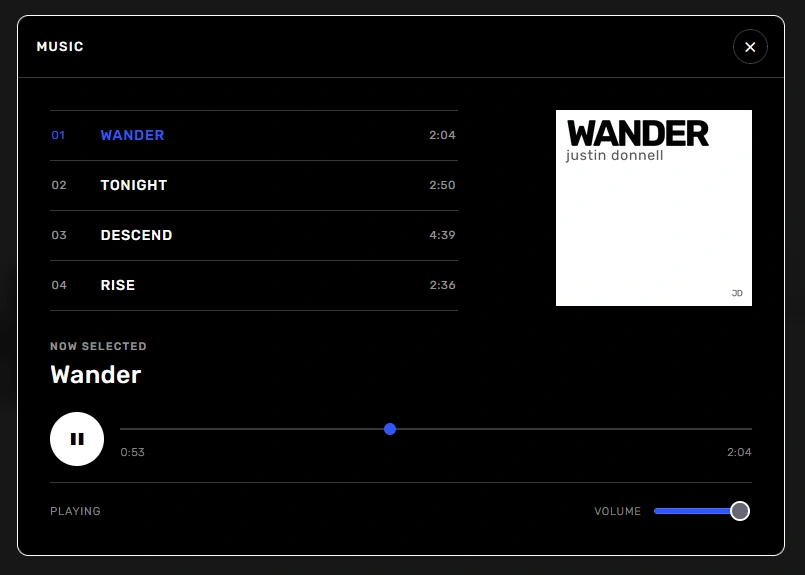
Music player
AI-assisted process
AI was used throughout the project as a working tool for content development, design exploration, layout, code, styling, and iteration.
The overall concept, direction, decisions, review, refinement, and final implementation remained human-led.
My role
Strategy • information architecture • branding • visual identity • UX/UI • responsive design • interaction design • front-end development • content structure
The result is a personal site designed less as a conventional portfolio and more as a flexible system—one that can evolve as the work and the career around it continue to change.
The visual system established for the website later expanded into social graphics, service marketing, print, and additional portfolio materials.
View the follow-up case study: Extending a Personal Identity Into a Visual System
Like this project
Posted Sep 18, 2026
Designed & built a personal site that brings technical work, creative projects, music, professional positioning, & client services into one coherent experience.