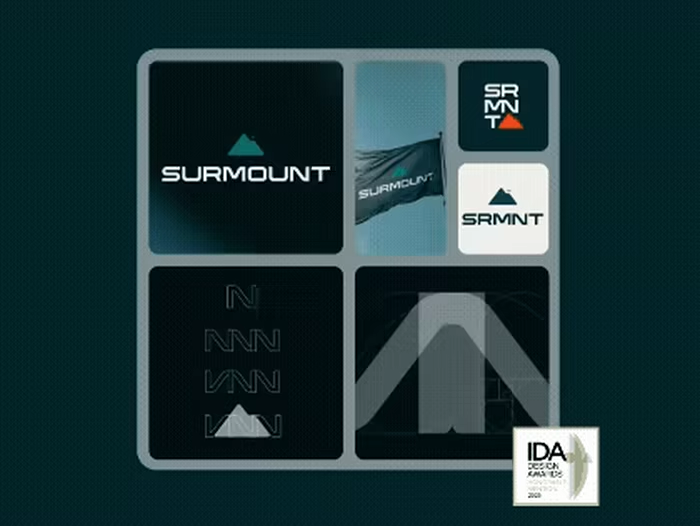
Nothing But Net: Reframing Net Lease for SURMOUNT

Ken Shew


Nothing But Net: Reframing Net Lease for SURMOUNT
Inside Nothing But Net: How SURMOUNT Reframed an Asset Class Most People Couldn't Define
A creative direction project that turned ICSC 2026 into a category-positioning play for one of the largest, least-explained corners of commercial real estate.
The Setup
The floor of an ICSC convention typically looks the same year to year, with hundreds of booths trading in similar photography of glass towers, shopping centers, and skylines, and a reliable vocabulary of capability lists and partnership language. Inside this visual and verbal sameness, the work of distinguishing one CRE firm from another tends to fall to a stronger logo, a cleaner trade-show booth, or a higher sponsorship tier.
This project was built around a different observation. Net lease is one of the largest and most quietly active categories inside commercial real estate. SURMOUNT, with 25 years of net lease experience across its team, has closed more than $45 billion in triple-net properties, runs 6,000+ active listings, and has executed more than 16,000 lifetime transactions in the space. The asset class is enormous, the firm is one of the most prolific operators inside it, and almost nobody outside the industry can reliably tell you what "net lease" actually means.
That gap is what the campaign was built to close. As the brand marketing lead executing this campaign at SURMOUNT, the most common reaction I hear when telling someone what we do is "wait, what is that?" The same reaction shows up across investors, financial advisors, smart operators, and even people who have been adjacent to commercial real estate for years. The category has the audience problem of an unexplained giant. Too important to ignore, too unfamiliar to discuss.
Nothing But Net was the answer.
The Strategic Move
The brief, condensed: build a campaign that makes the category understandable to anyone who comes near it, and let Surmount become the firm associated with that explanation. Not by claiming category authority, but by performing it. The same move shows up in tech every few years. Apple's "what's a computer?" framing. Stripe launching a publishing arm before adding more SKUs. The pattern in any specialist category is consistent. The firm that does the work of making something legible to the audience tends to be the firm the audience credits for it.
Three things made this bet workable for a CRE firm rather than a tech brand. First, the asset class is genuinely big enough that a category-defining play has a real audience. Triple net moves substantial institutional capital each year, and the buyer pool extends from individual investors to the largest funds in the world. Second, the conventions of how it gets explained are weak enough that any clearer treatment has a real chance to displace them. Third, Surmount had the credibility to take the swing without it reading as a stunt. The 25 years of category experience and the $45 billion in closed transactions made the educational posture believable rather than aspirational.
The thesis the campaign was built around: if the language exists, the category gets bigger. And if Surmount writes the language, the firm grows with it.
The System
Before any asset existed, the campaign needed a set of rules tight enough to make every output feel like it belonged to the same brand and loose enough to scale across formats, from a four-second Instagram story to a twelve-page PDF playbook to a twenty-four-foot meterboard on a conference floor.
Voice. The voice system was written before any campaign copy. The reference point was Apple product-page writing. Short, familiar phrases with one-word twists. Words doing double duty. Meaning that clicks a beat after you read it. The test for every line was a single question: would this sound natural said out loud. If not, it was killed. A list of banned phrases enforced the discipline. No "trusted partner." No "industry leader." No "solutions." No "leverage." No "robust." No "cutting-edge." These are the words CRE marketing reaches for by reflex. Cutting them off forced every line to find a more specific way to land.
Visual. The brand palette was four colors. Night (#002929), Grit (#004748), Jade (#077668), and Cream (#FAF9F3). Typography paired Magnetik for headlines with Satoshi for body, both with a deliberate -0.03em letter spacing to give every layout a slightly tighter, more confident feel than the industry default. Border radius was set to 3px across the system, not because rounded forms aren't friendly, but because sharper corners read as serious without feeling cold. No italics anywhere. No all-caps anywhere. No glass-tower stock photography. No skyline panoramas. The image and type vocabulary of the rest of the industry was simply absent from the work.
Closer. Every asset, regardless of channel, ended with the same line. Triple net. Zero drama. It earned its place by being functionally invisible at scale and instantly identifiable up close. It became the campaign's signature without anyone ever calling it a tagline.
The Work in Market
The campaign ran across four parallel surfaces.
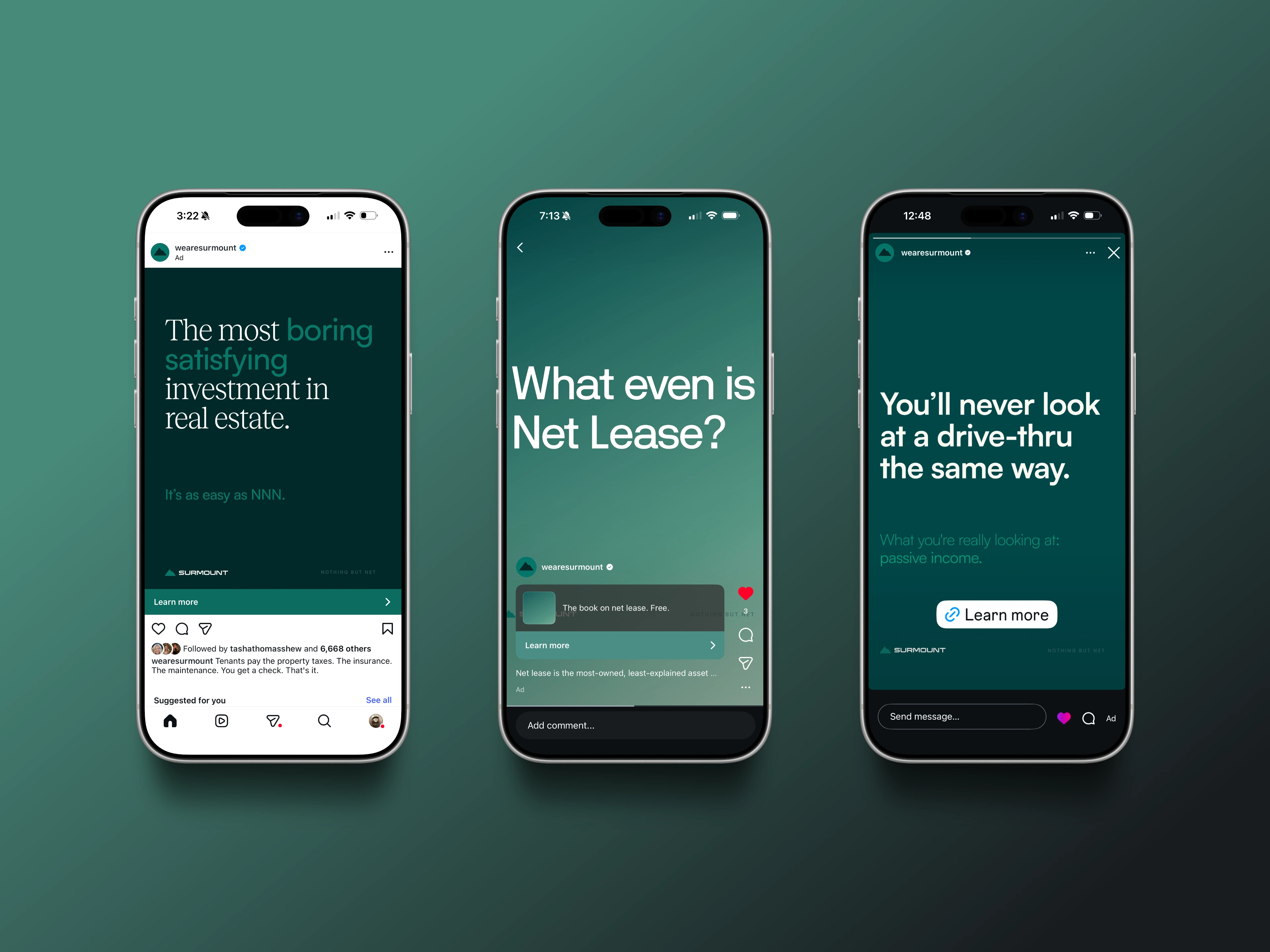
Education in series. A weekly Instagram and LinkedIn carousel series ran in the weeks leading into ICSC. Each post answered one question that practitioners take for granted and outsiders cannot reliably define. "What even is net lease?" "What do the three Ns actually mean?" "Why the name on the building matters less than the lease behind it." "Meet the cap rate." Each carousel was a short, plain-English explanation of a single concept, written so a sophisticated investor could share it without feeling that they were endorsing remedial content. The series did the structural work of building the vocabulary the campaign would later trade on.
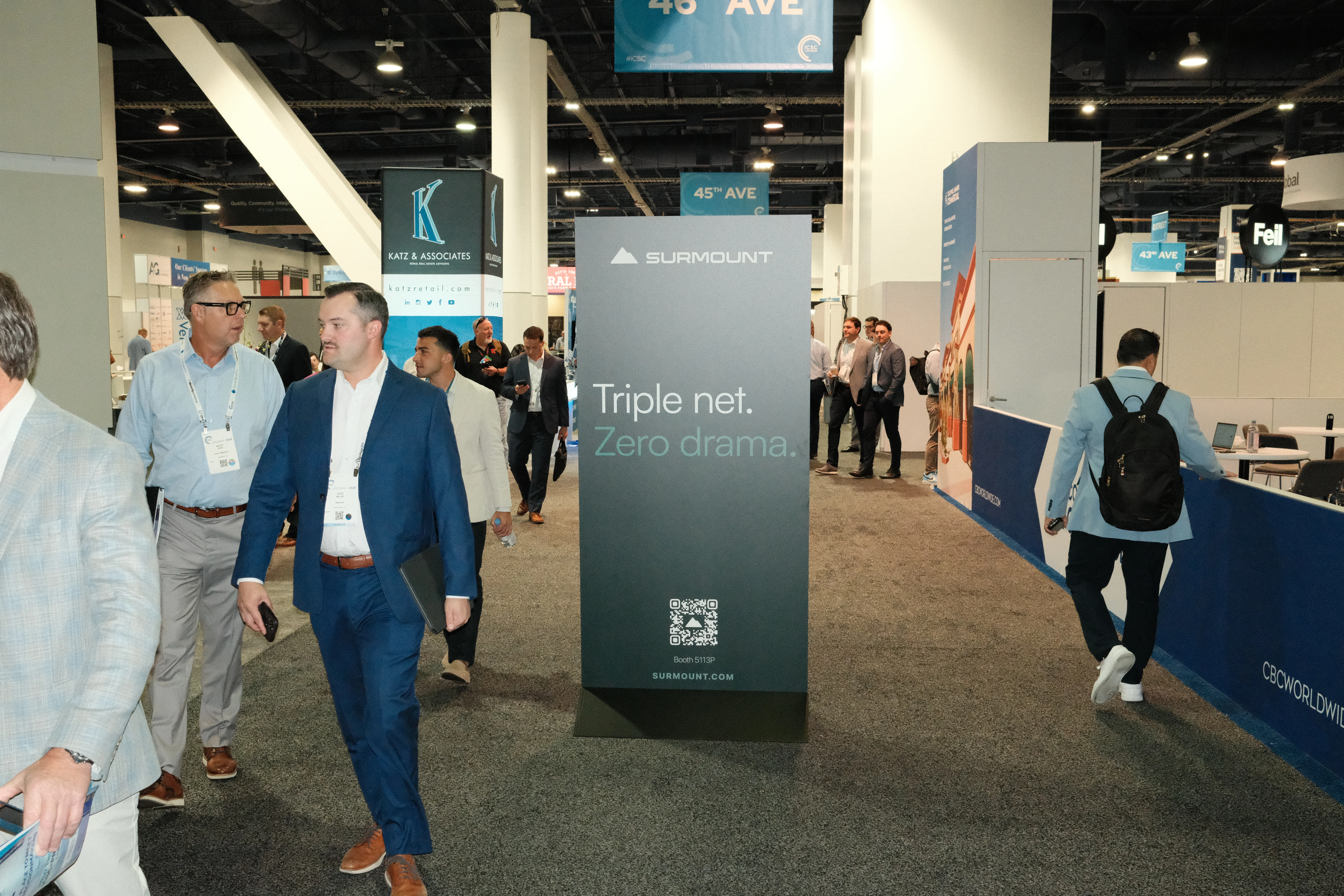
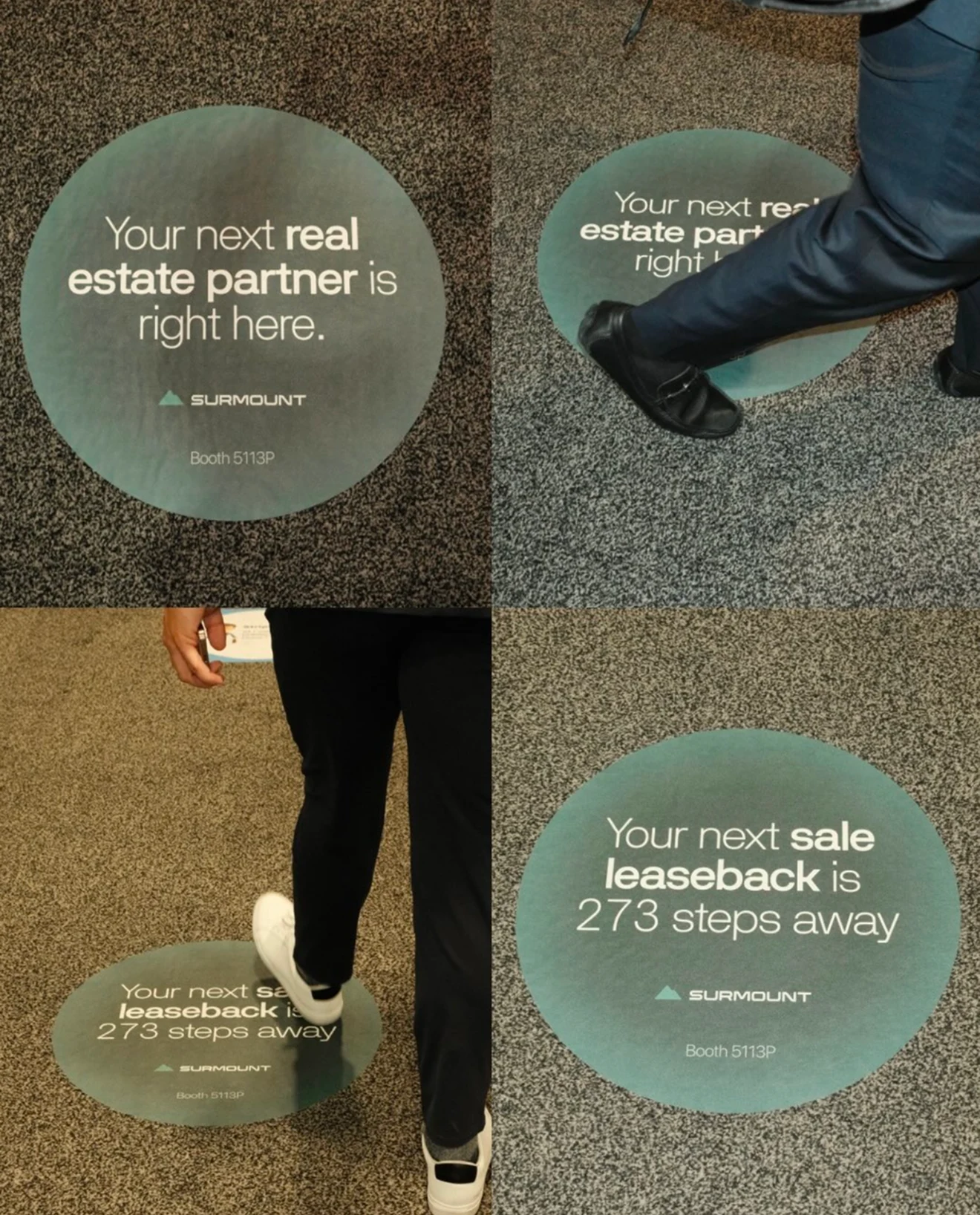
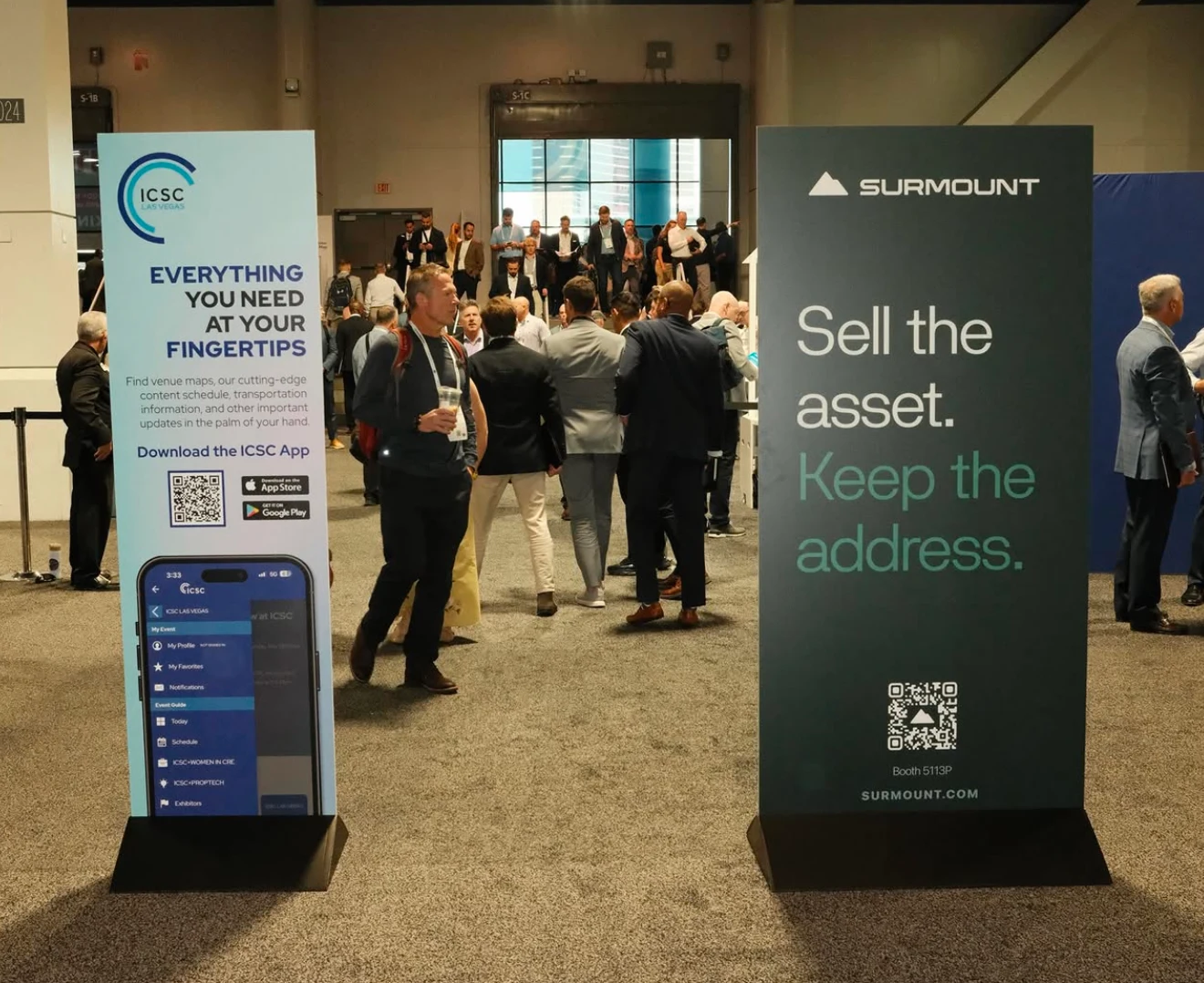
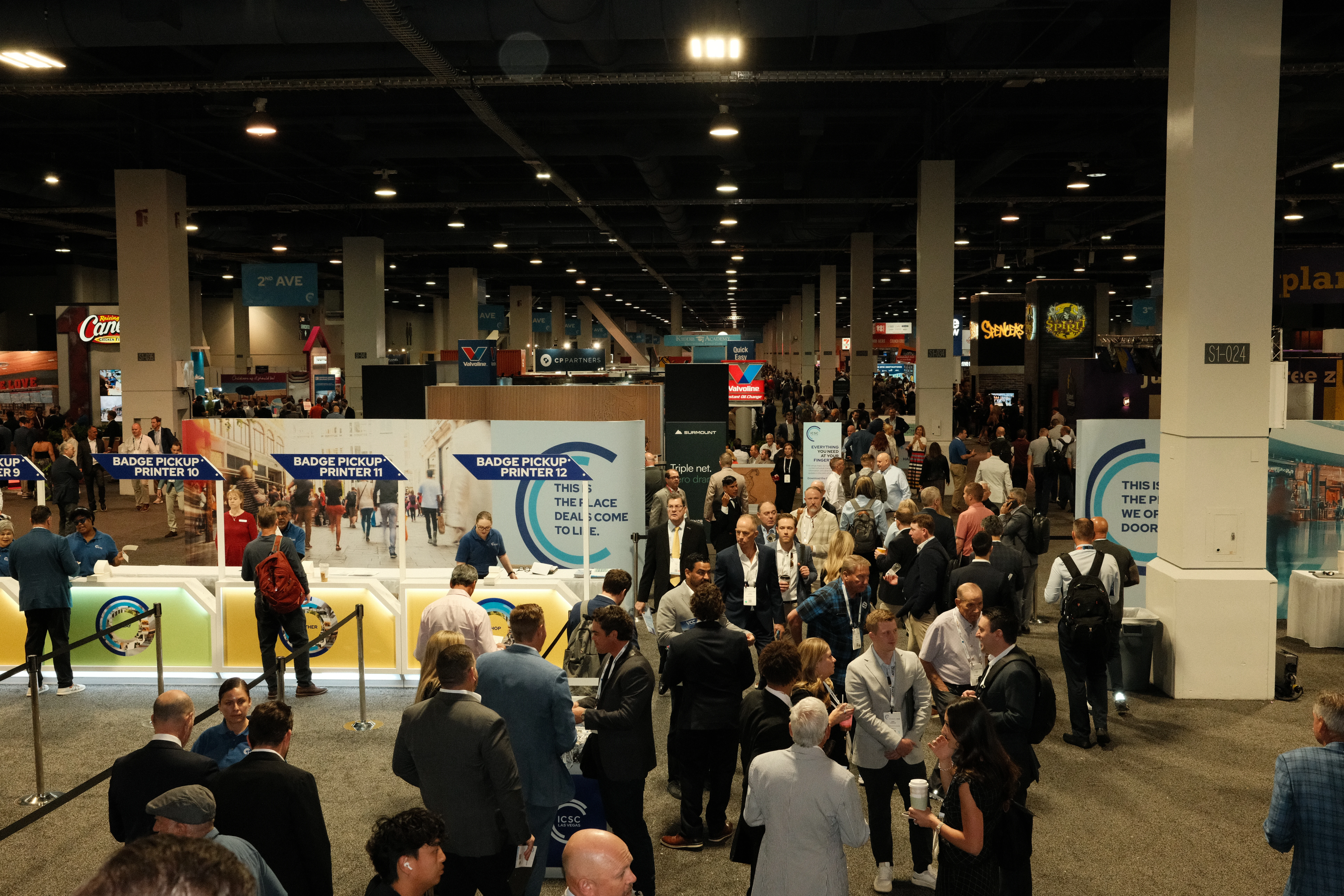
ICSC physical activation. This was the largest single deliverable and the place the brand system was tested at full conference scale. Three meterboard designs anchored the booth context, each with a declarative line about a specific transaction Surmount runs: "You grow the business. We handle the real estate." "The building sells. The business stays." "Sell the asset. Keep the address." Seven floor decals built a navigation grammar that turned every step on the show floor into a wayfinding moment: "Your next sale-leaseback is 273 steps away." "Your next development partner is 149 steps away." "Your next lease restructure is 67 steps away." Two coaster designs, both NFC-enabled, sat in the booth and the suite. Badge stickers and printed handouts carried the same NFC layer. The physical-to-digital integration meant every physical asset doubled as a tracked entry point into the digital funnel, with each surface assigned its own UTM string for clean attribution.
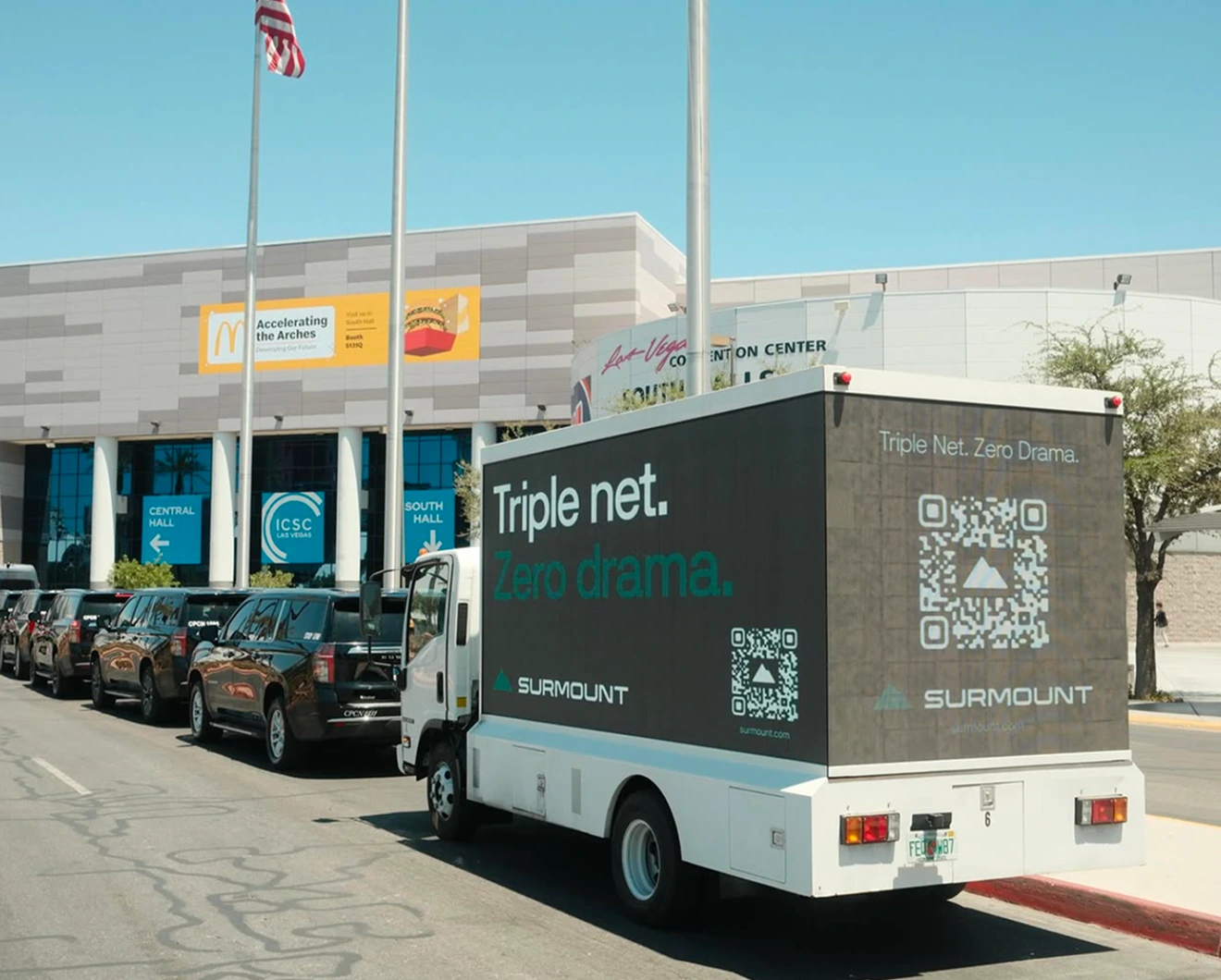
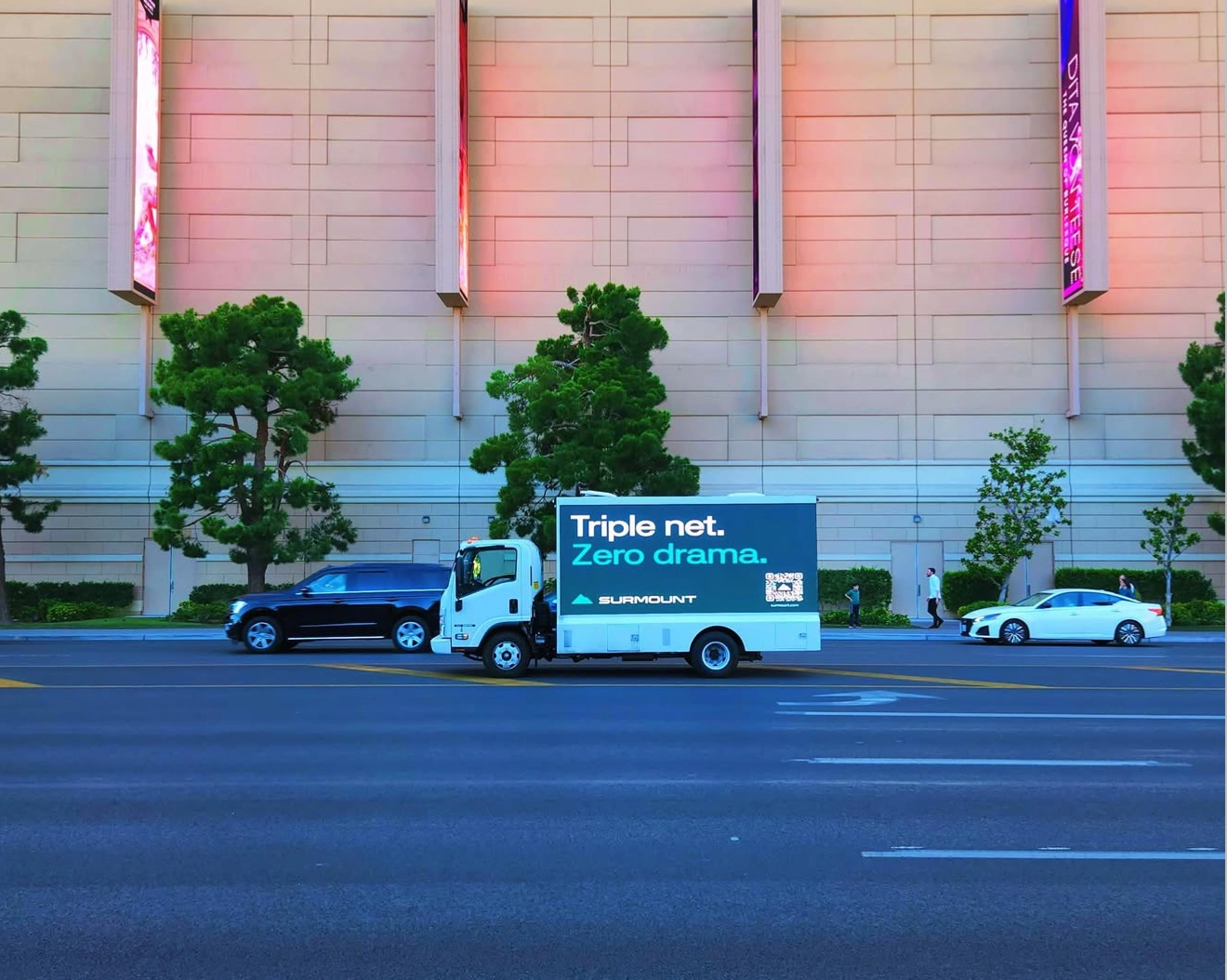
The mobile billboard. A truck wrap circulated the conference perimeter and the Las Vegas Strip during the conference window. One side carried the campaign's anchor question, "What even is net lease?" The other carried the closer, "Triple net. Zero drama." A QR code on the back panel pointed at the landing page funnel. The asset was the loudest brand-volume play of the week and the clearest single statement of the campaign's positioning.
Digital, gated. Three audience-segmented landing pages sat behind the campaign's various inbound paths. /icsc for ICSC attendees, with a whale-signal form capturing company and role. /netlease for cold education traffic. /social for hybrid audiences. Each gated the same downloadable asset, The Net Lease Playbook, but used a distinct form configuration to segment the lead. Behind the pages, a HubSpot funnel routed every submission into the Nothing But Net campaign object, populated UTM properties, set a custom nbn_audience field per landing page, and triggered downstream attribution. The book became the campaign's visual centerpiece. A hardcover mockup with "The Net Lease Playbook" on the spine, photographed against the brand's Night background, became the recurring image across every digital touchpoint.
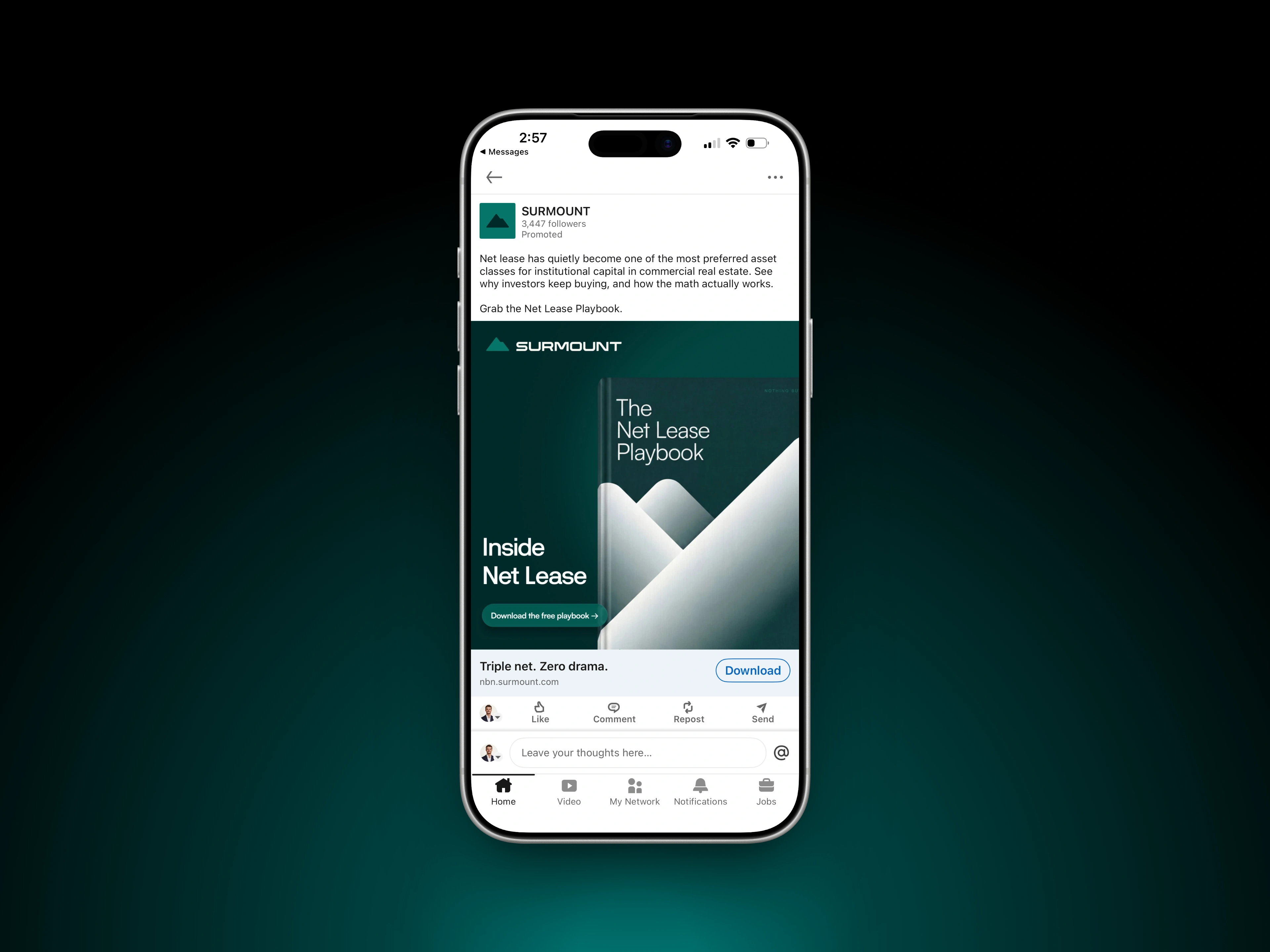
Thought leader paid. A LinkedIn ad campaign ran alongside the conference window with three cuts: a cold prospecting ad on the Net Lease Playbook book mockup, a warm retargeting variant for engaged audiences, and a Thought Leader format from a senior leader at the firm. The Thought Leader format outperformed the brand-page ads on engagement, which is the documented pattern in 2026 LinkedIn paid behavior. CTR on the campaign came in at roughly 4x the B2B industry benchmark.
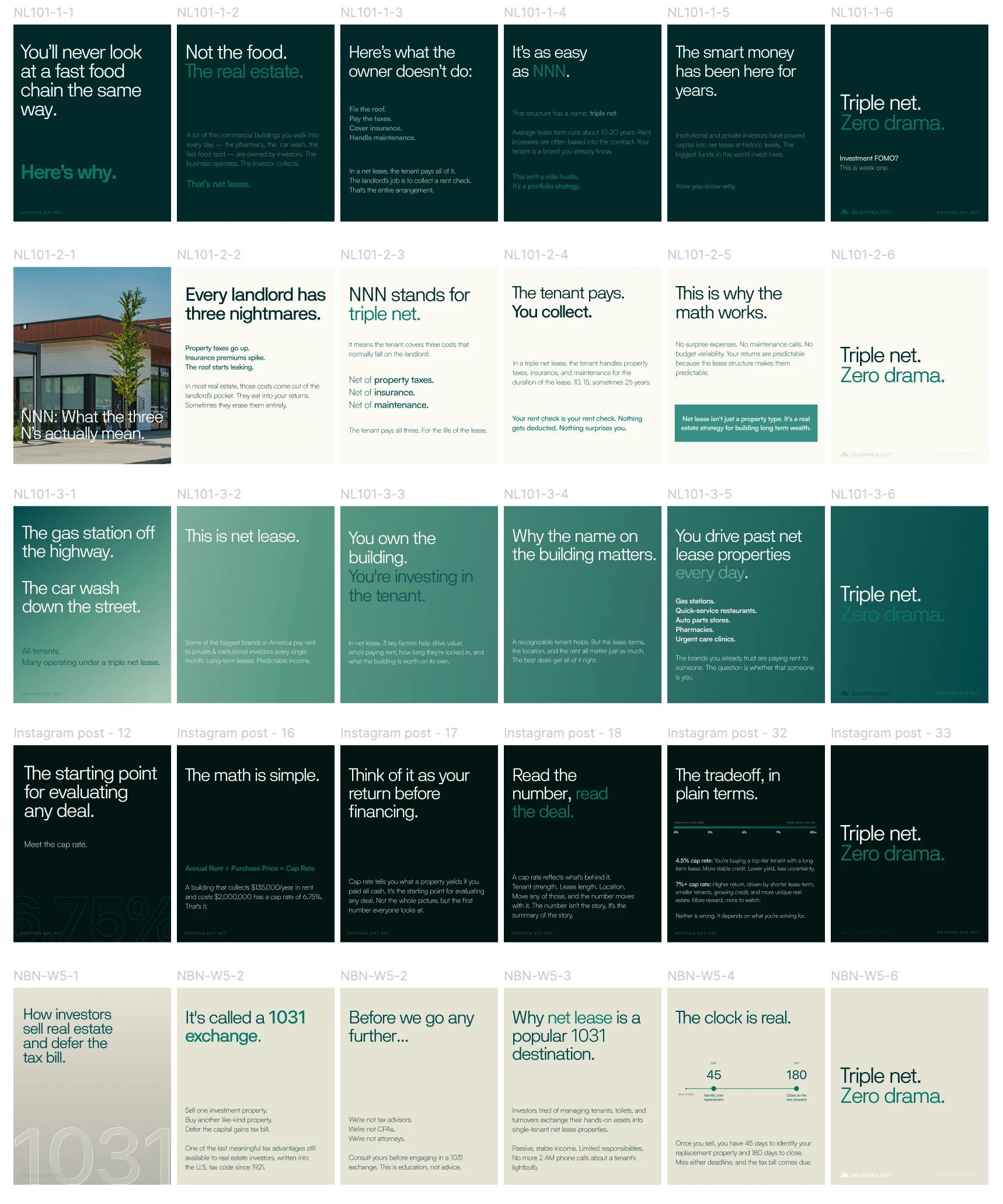
We also did a series of weekly posts leading up to ICSC, explaining the basics of net lease in language everyone could understand. Check it out at @wearesurmount on socials.
The Proof
Across the ICSC window, the campaign produced a clean inbound list that, on first read, validated the strategic posture. The lead list included senior staff from a mix of CRE firms, capital partners, and tenant brands. The book mockup, treated as the recurring central image, was the most clicked single creative across both LinkedIn and the organic Instagram feed. The HubSpot campaign object captured every inbound contact across the funnel under a single rollup, allowing real-time attribution by channel, by creative, and by audience. The paid layer drove 94,000+ verified-professional LinkedIn impressions and produced new contacts at acquisition costs well below industry standard for B2B CRE.
The closer landed on every surface it touched. Triple net. Zero drama. By the end of the conference week, internal stakeholders were quoting it back without being prompted. That is the working test for a closer line. Does the audience start saying it before you ask them to.
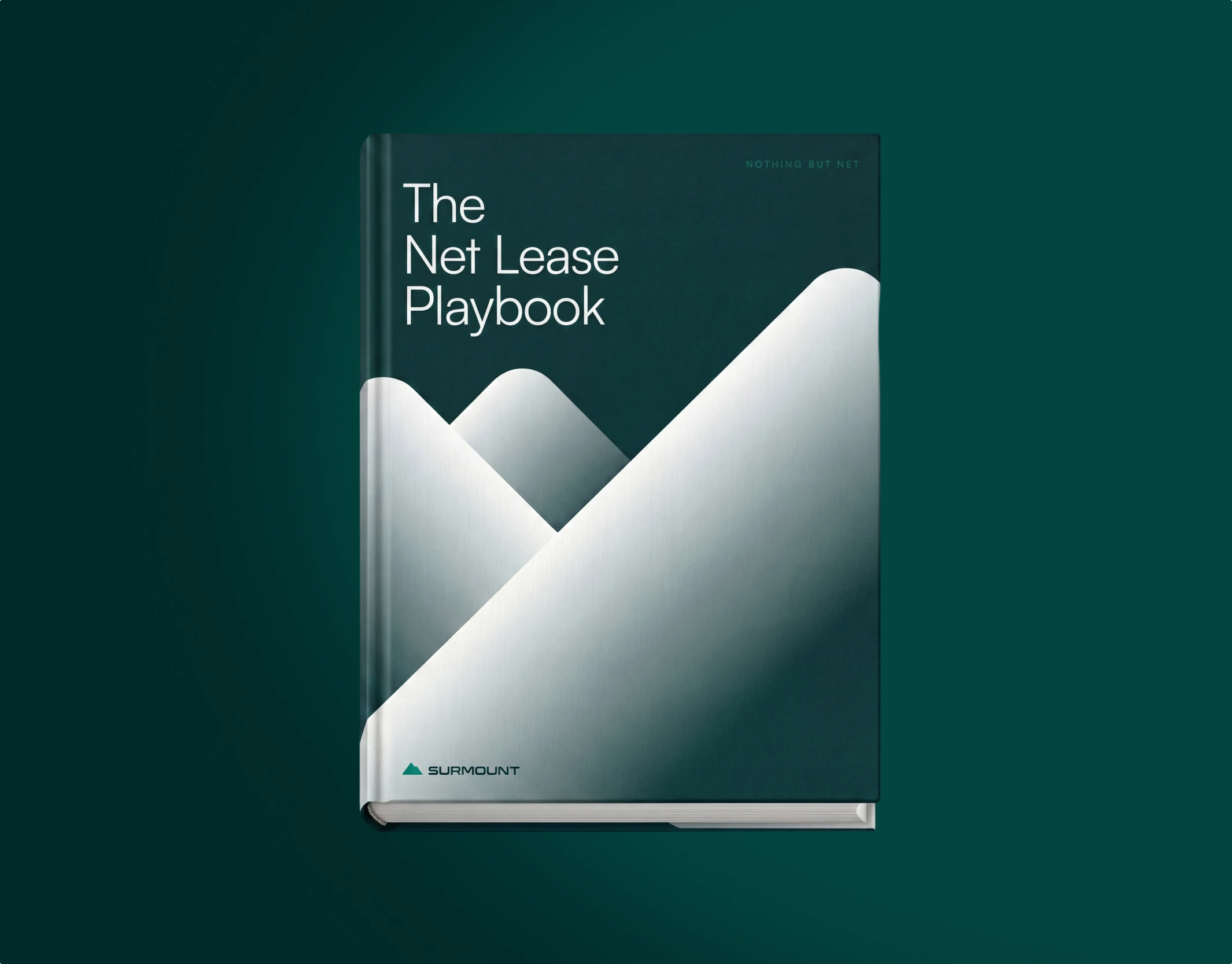
Download now at nbn.surmount.com/netlease
Why this Mattered
The reason to do this kind of work in a category like commercial real estate is that the industry's defaults are overdue for a rethink. The visual vocabulary of glass towers and the verbal vocabulary of capability lists do not distinguish one firm from another. They distinguish the entire industry from anyone who has not yet been taught its language. Nothing But Net was a deliberate departure from both vocabularies, scaled across every surface a $45 billion specialist firm could put a brand on.
Strategic backing came from Brett Lichtenberg and Matt Anuszkiewicz, who supported the unconventional creative direction throughout. Creative direction, concept, research, copywriting, design system, vendor management, ad operations, and live campaign monitoring were led from the brand seat across roughly three months of build and the full ICSC conference window, with execution support from internal partners and external vendors.
For a firm trying to become the voice of an asset class, the move was simple to articulate and difficult to execute. Explain net lease better than any firm has tried to. The work didn't claim that result. It performed it. The audience drew the conclusion.
Like this project
Posted Jun 3, 2026
Creative direction and ad campaign execution project defining the net lease category for SURMOUNT .
Likes
3
Views
58
Timeline
Mar 2, 2026 - Jun 15, 2026
Clients
Ken Shew