Inanna Investor Presentation Design

Stas Udotov


Inanna: Turning Complex Cancer-Screening Science Into a Clear Investor Story
Client and company context
Inanna is a women’s health diagnostics company developing an affordable, non-invasive screening test for the early detection of ovarian and endometrial cancers.
The company’s approach uses cervical mucus collected during a standard Pap test to identify genetic indicators associated with ovarian and endometrial tumors. The proposed method could enable screening without additional procedures or medical appointments.
Inanna needed a presentation that could communicate the unmet clinical need, scientific innovation, commercial opportunity, intellectual property, validation plan, and fundraising milestones to investors and strategic partners.
The challenge
Inanna’s story was compelling, but technically complex. The presentation needed to explain several interconnected ideas:
Ovarian cancer is frequently diagnosed at a late stage, when survival rates are substantially lower.
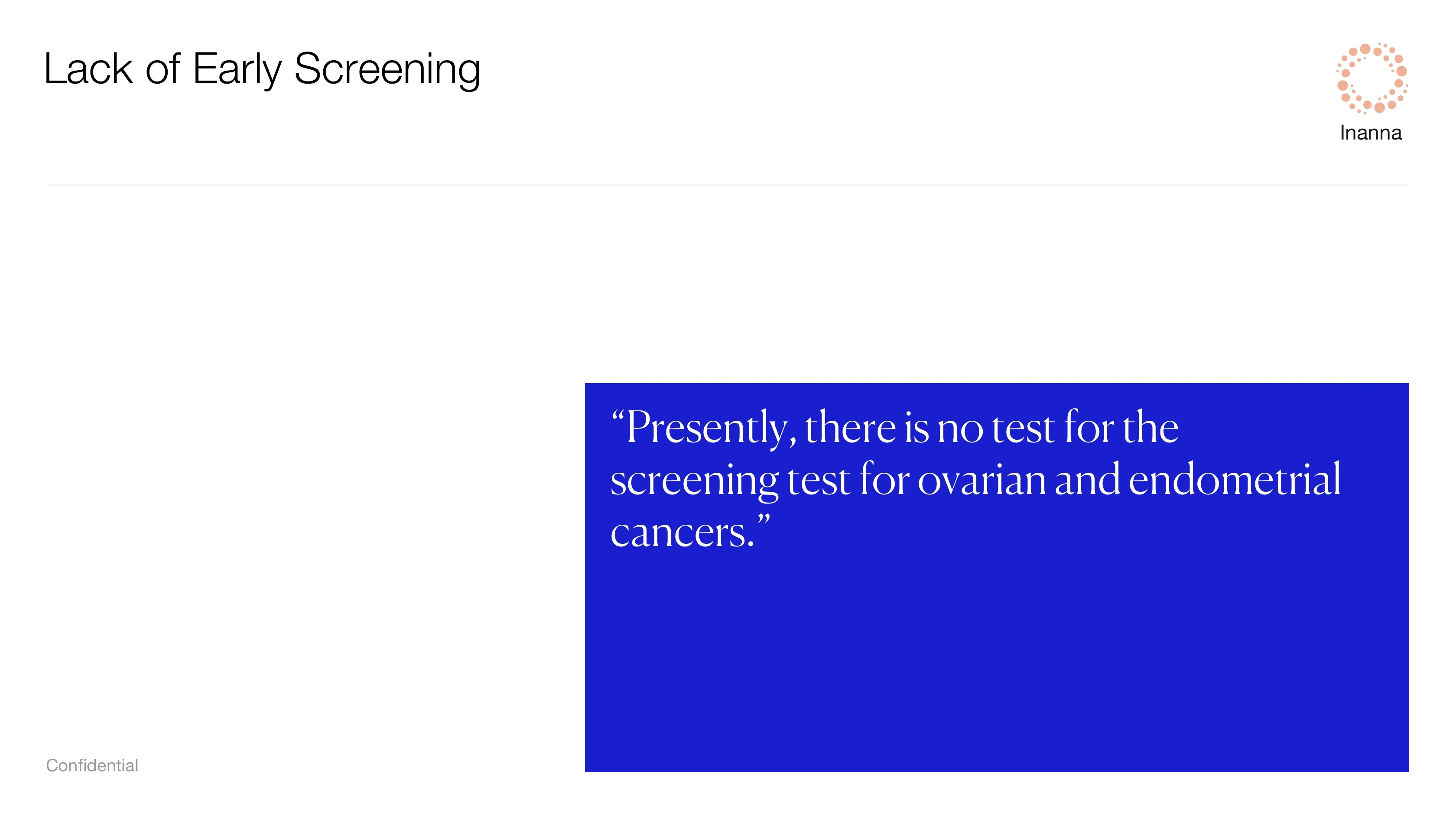
No effective screening test currently exists for ovarian and endometrial cancers.
Existing approaches have limited sensitivity for detecting early-stage disease.
Inanna’s technology introduces a novel method for collecting and analyzing biological material.
The business addresses a potentially significant diagnostics market.
The company had a defined validation pathway, intellectual property, and near-term funding requirements.
Presenting all of this information risked overwhelming audiences with statistics, scientific terminology, technical processes, and dense supporting evidence. Dworkz needed to preserve the scientific credibility of the material while creating a narrative that could be understood quickly by people with different levels of clinical and technical knowledge.
Dworkz’s role
Dworkz transformed Inanna’s scientific and business content into a concise, visually cohesive presentation designed to support investor and partnership discussions. Our work included:
Presentation strategy
Narrative and content architecture
Information hierarchy
Slide design and layout
Data visualization
Scientific process diagrams
Market-opportunity graphics
Visual-system development
Typography and color application
Presentation consistency and production
Narrative strategy
We organized the 15-slide deck around a clear progression from problem to opportunity:
Introduce Inanna’s purpose.
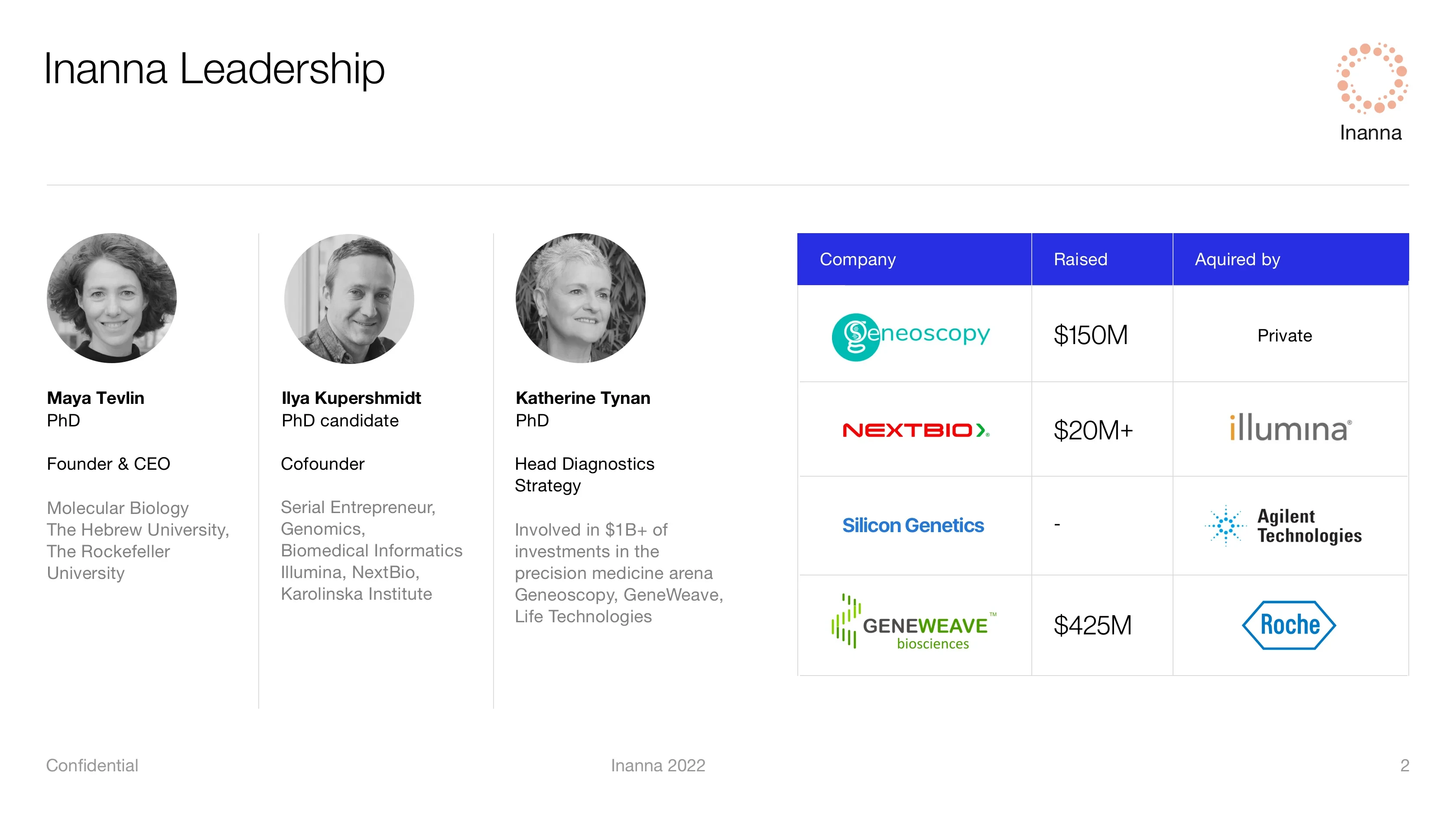
Establish the leadership team’s credibility.
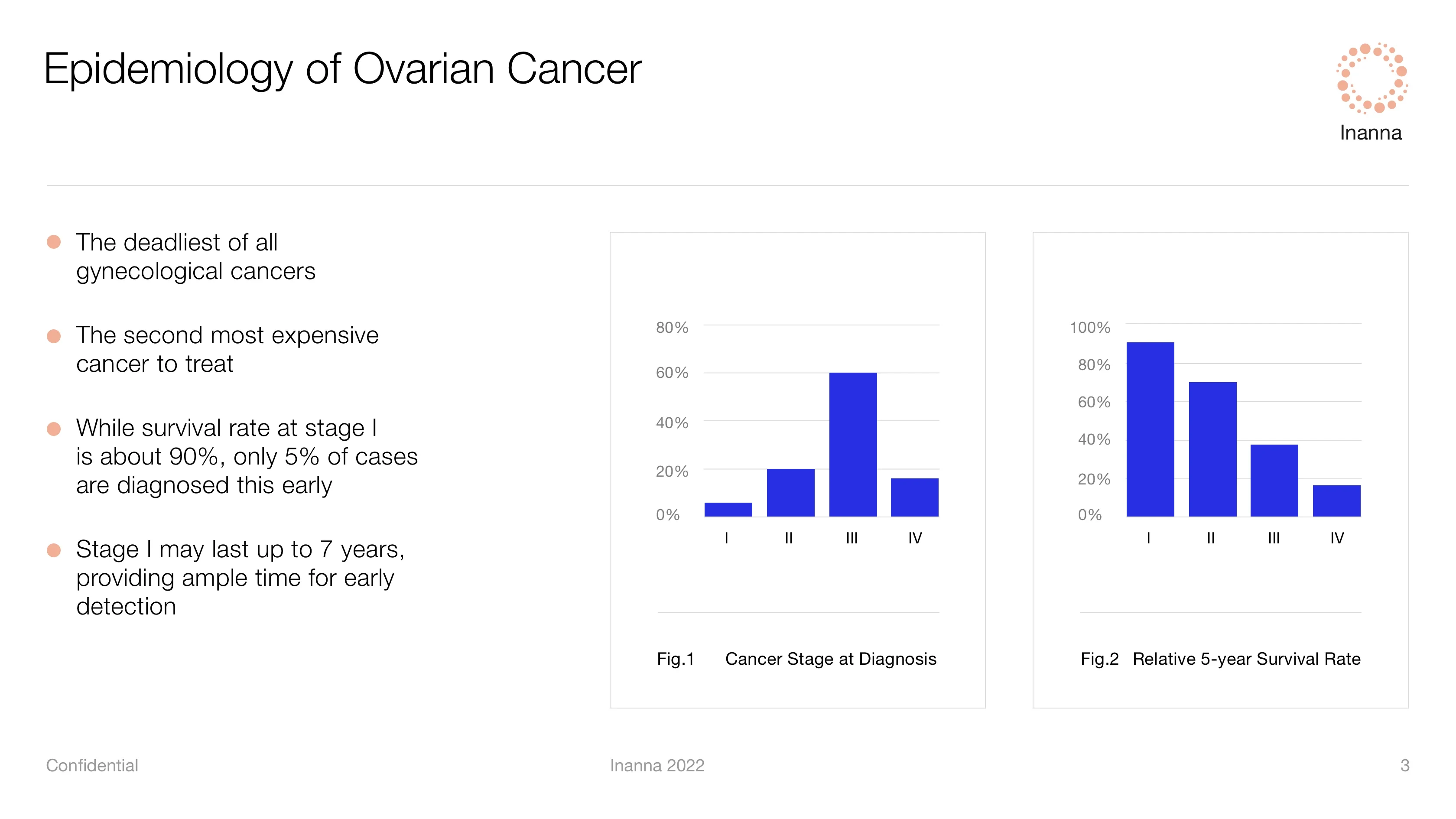
Explain the severity of ovarian cancer.
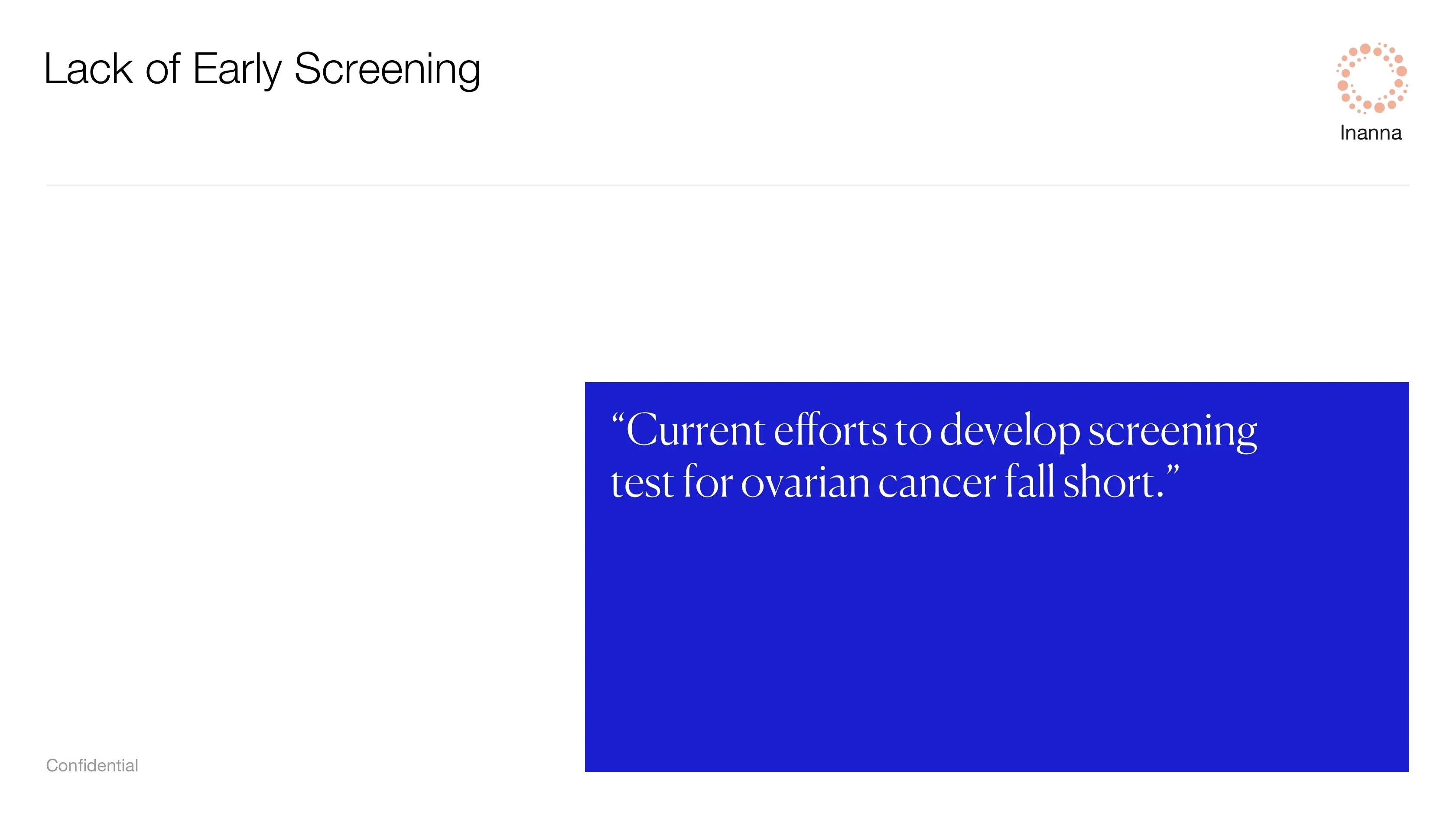
Define the absence of effective early screening.
Quantify the diagnostics market.
Present the addressable opportunity.
Demonstrate the limitations of existing tests.
Explain Inanna’s technology.
Outline the validation and commercialization pathway.
Present milestones and intellectual property. This structure allowed the audience to understand why the problem matters before encountering the scientific solution. It also connected the technology to a commercial opportunity and a credible development plan.
Visual direction
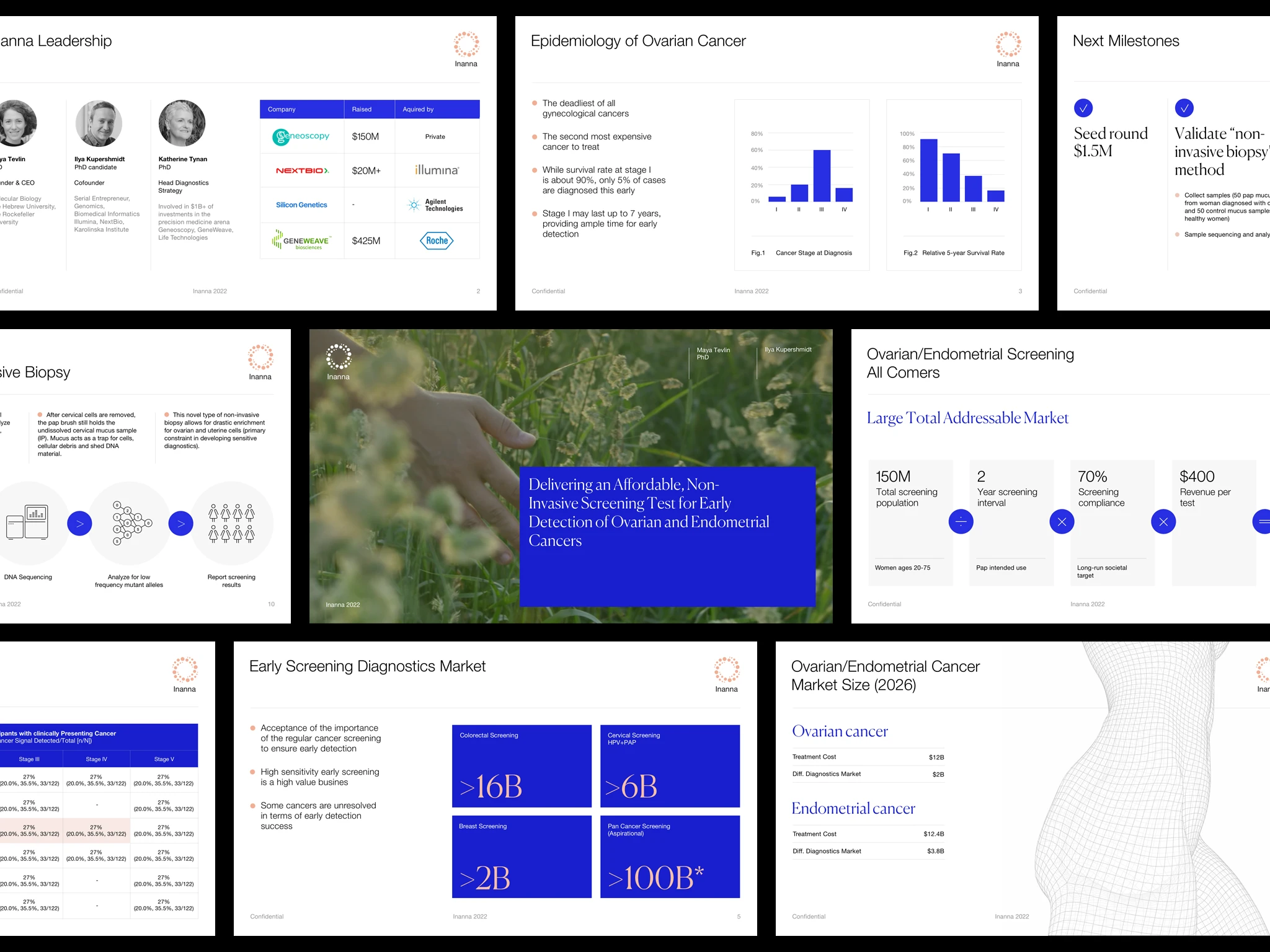
The presentation uses a restrained visual language that balances scientific authority with a more human and approachable expression of women’s health.
A bright white foundation creates a clinical, precise environment. Saturated blue communicates confidence and innovation, while softer peach and orange accents add warmth and distinguish key information. The resulting palette feels credible and contemporary without becoming cold or overly institutional.
Large areas of whitespace help separate ideas and make dense information easier to process. A combination of expressive display typography and highly legible supporting type creates contrast between major narrative statements and detailed scientific content.
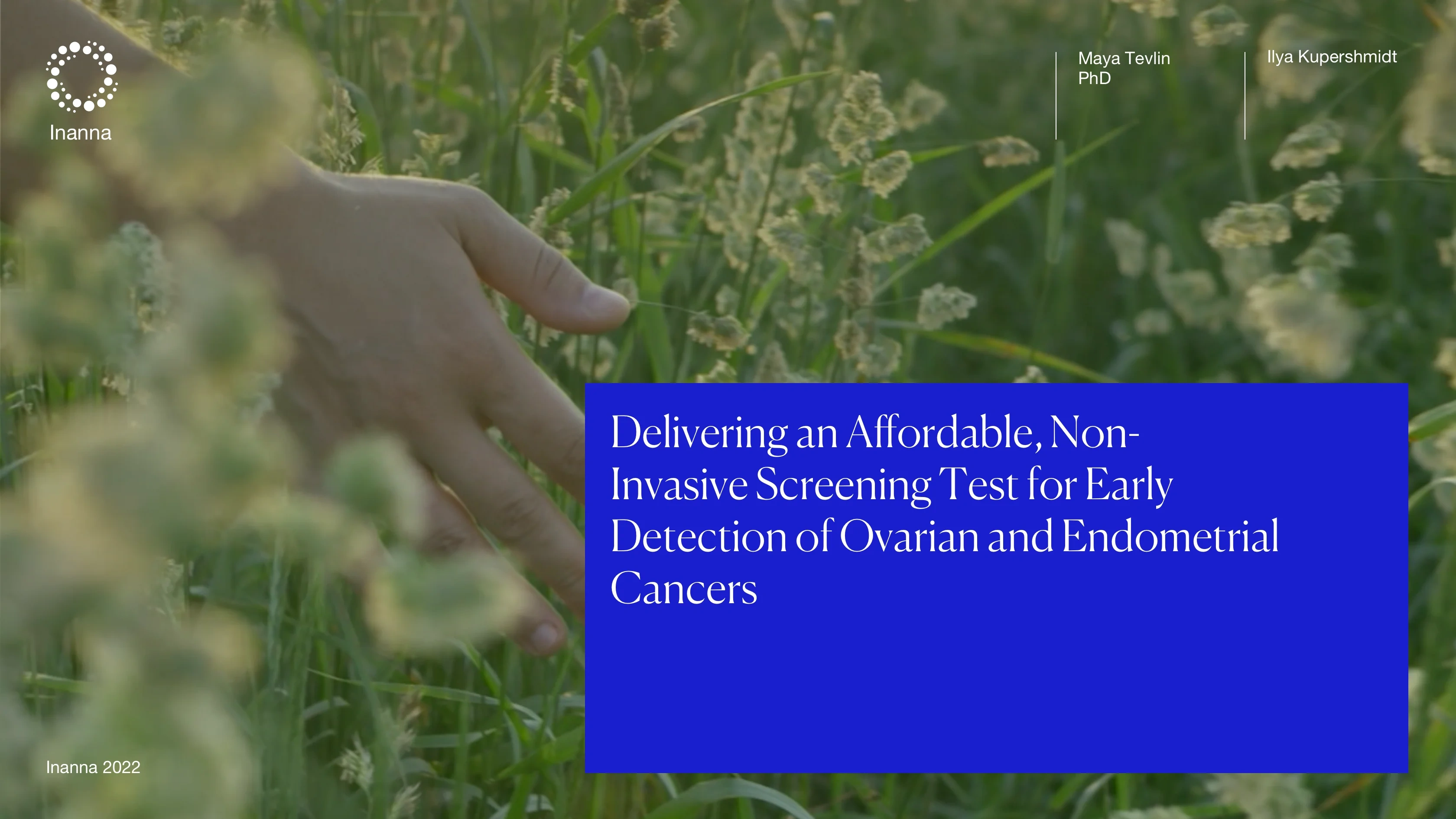
The opening slide pairs natural imagery with a bold blue message panel, introducing the company’s mission in an immediate and memorable way. Throughout the presentation, the Inanna identity remains visible but understated, allowing the content to remain the focus.
Simplifying epidemiology and market data
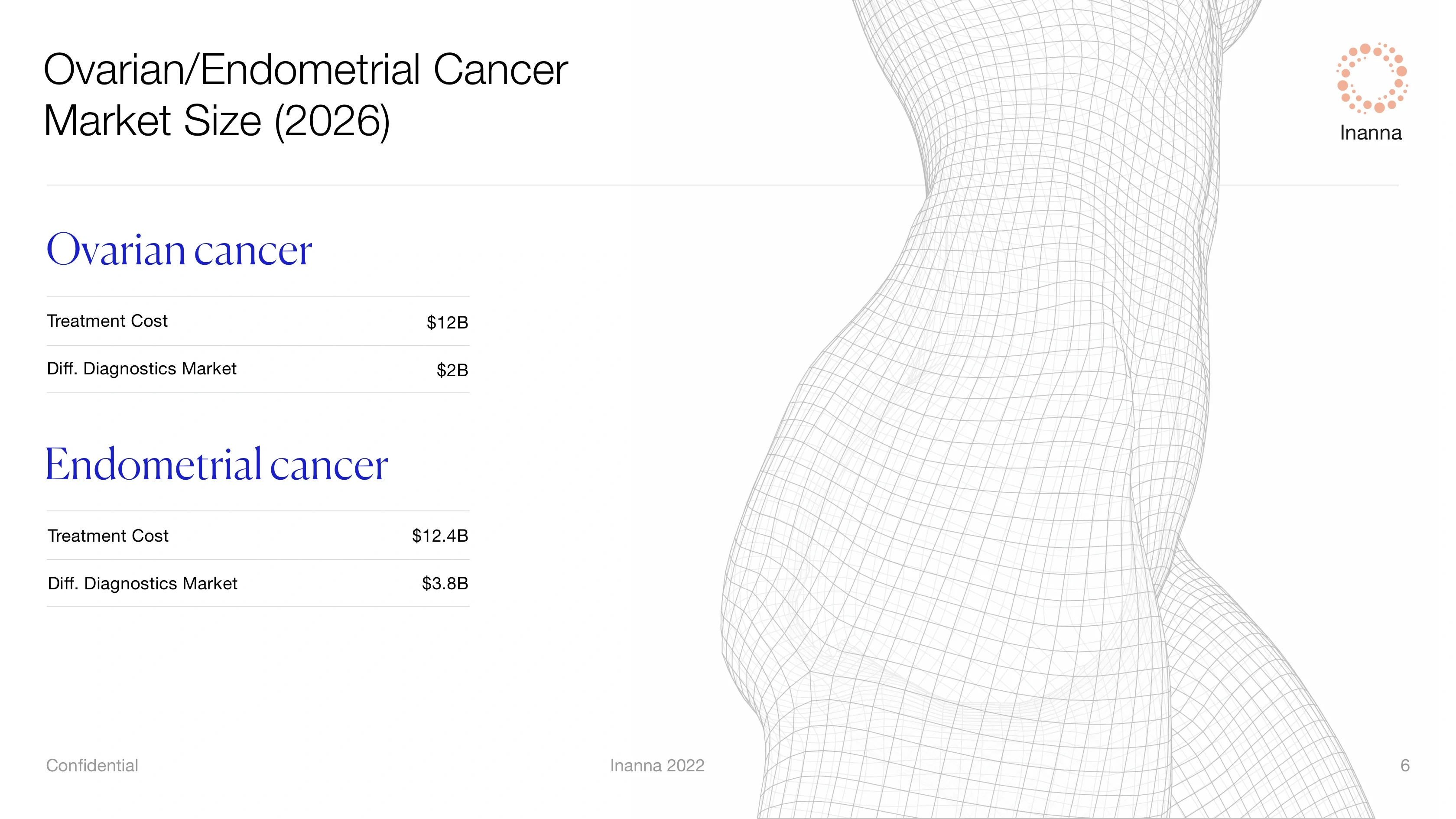
The original story relied on numerous statistics concerning diagnosis stages, survival rates, treatment costs, screening populations, market size, and test performance. Dworkz translated this data into focused visual formats:
Simplified bar charts compare cancer stage at diagnosis with five-year survival rates.
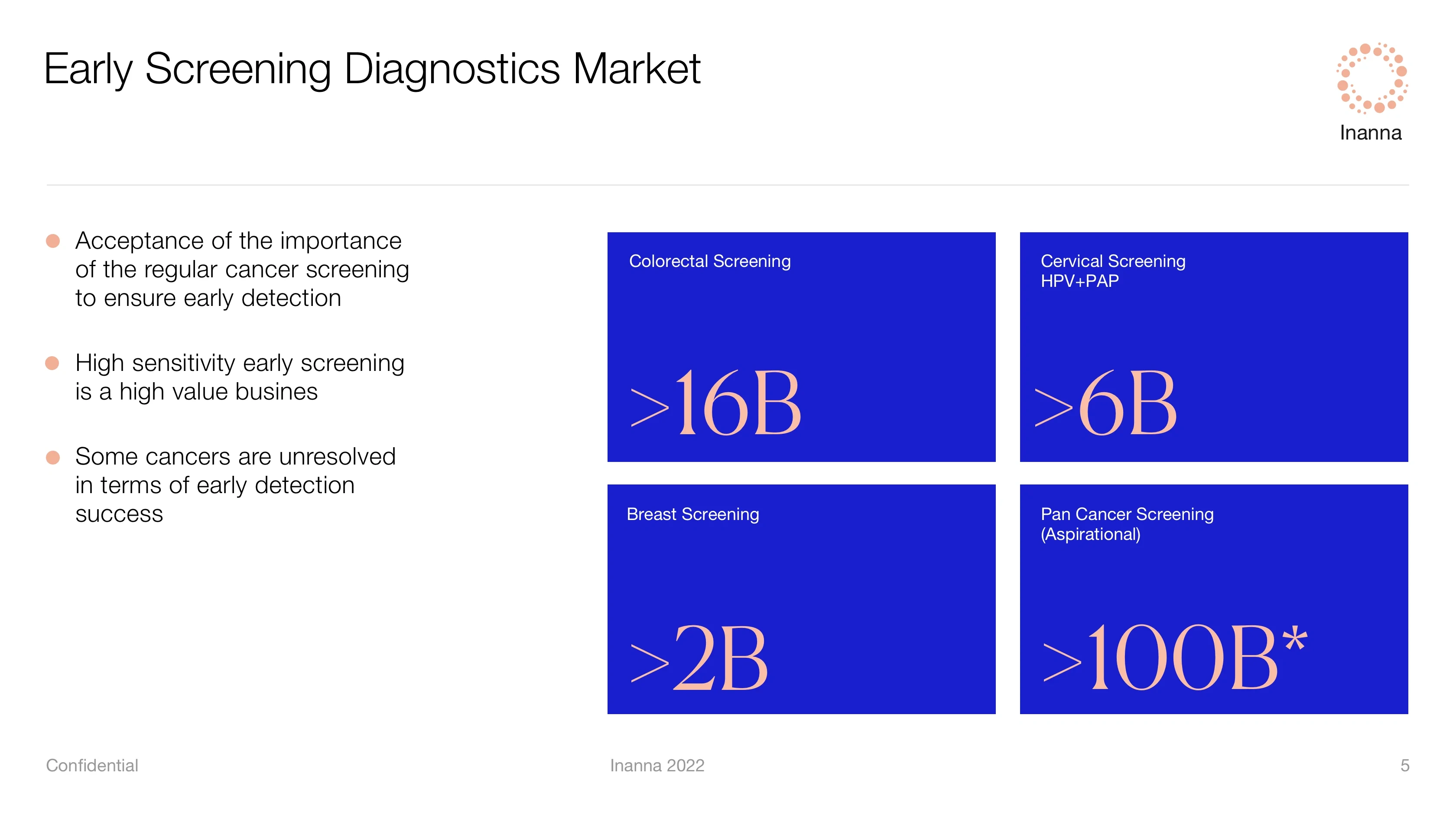
Large numerical panels communicate screening-market opportunities.
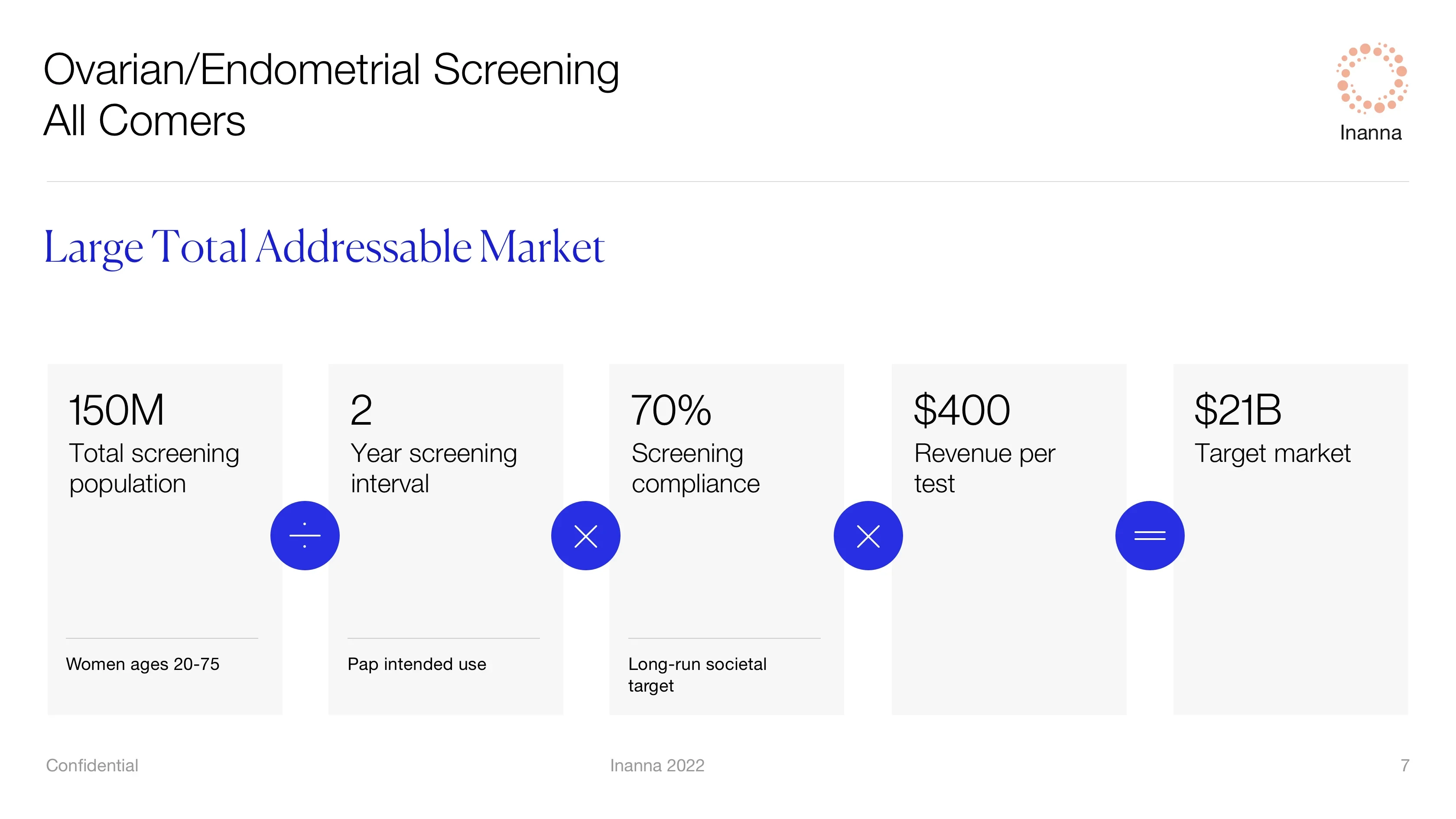
A sequential market model connects population size, screening frequency, compliance, test revenue, and total market potential.
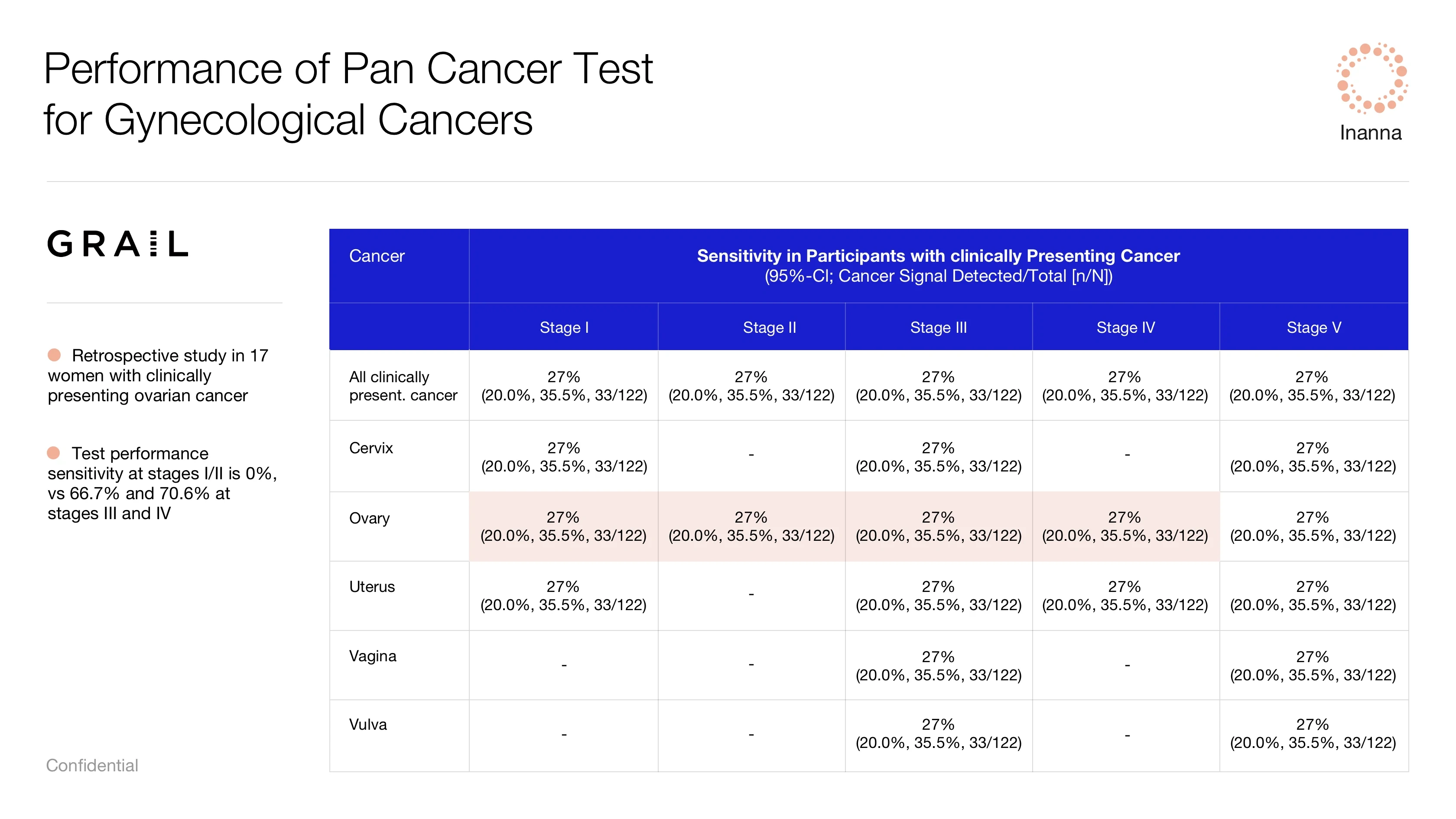
Structured comparison tables organize clinical-performance data.
Strong typographic contrast allows audiences to identify primary figures before reading supporting details.
Each visualization was designed to communicate one principal message rather than display every available data point with equal emphasis.
Explaining the technology
One of the most important challenges was explaining Inanna’s non-invasive biopsy concept without oversimplifying its scientific foundation.
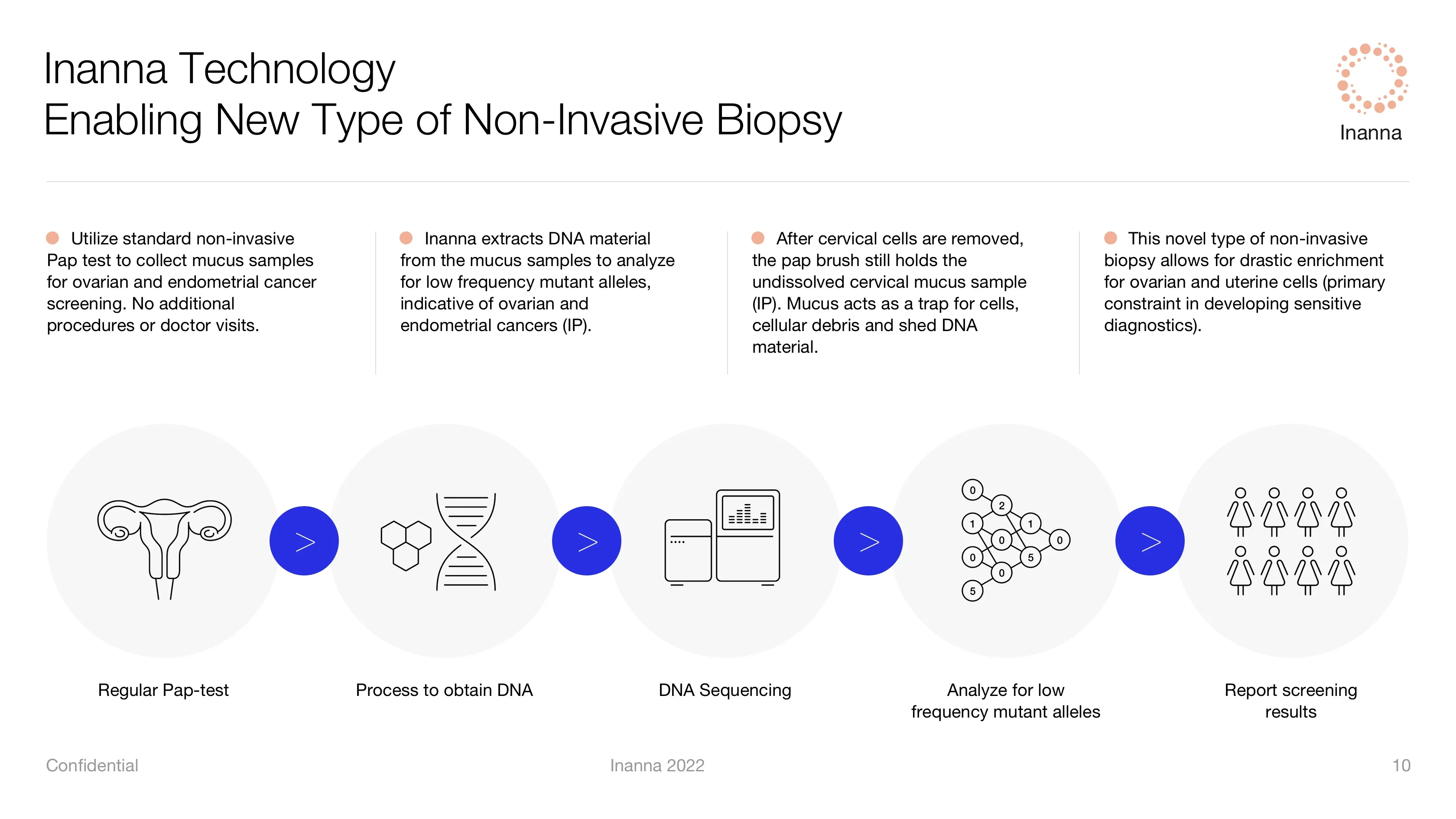
Dworkz developed visual sequences that show how the process moves from a routine Pap test to DNA extraction, sequencing, mutation analysis, and reporting. Supporting illustrations and microscopy imagery help connect the clinical procedure with the underlying biological material.
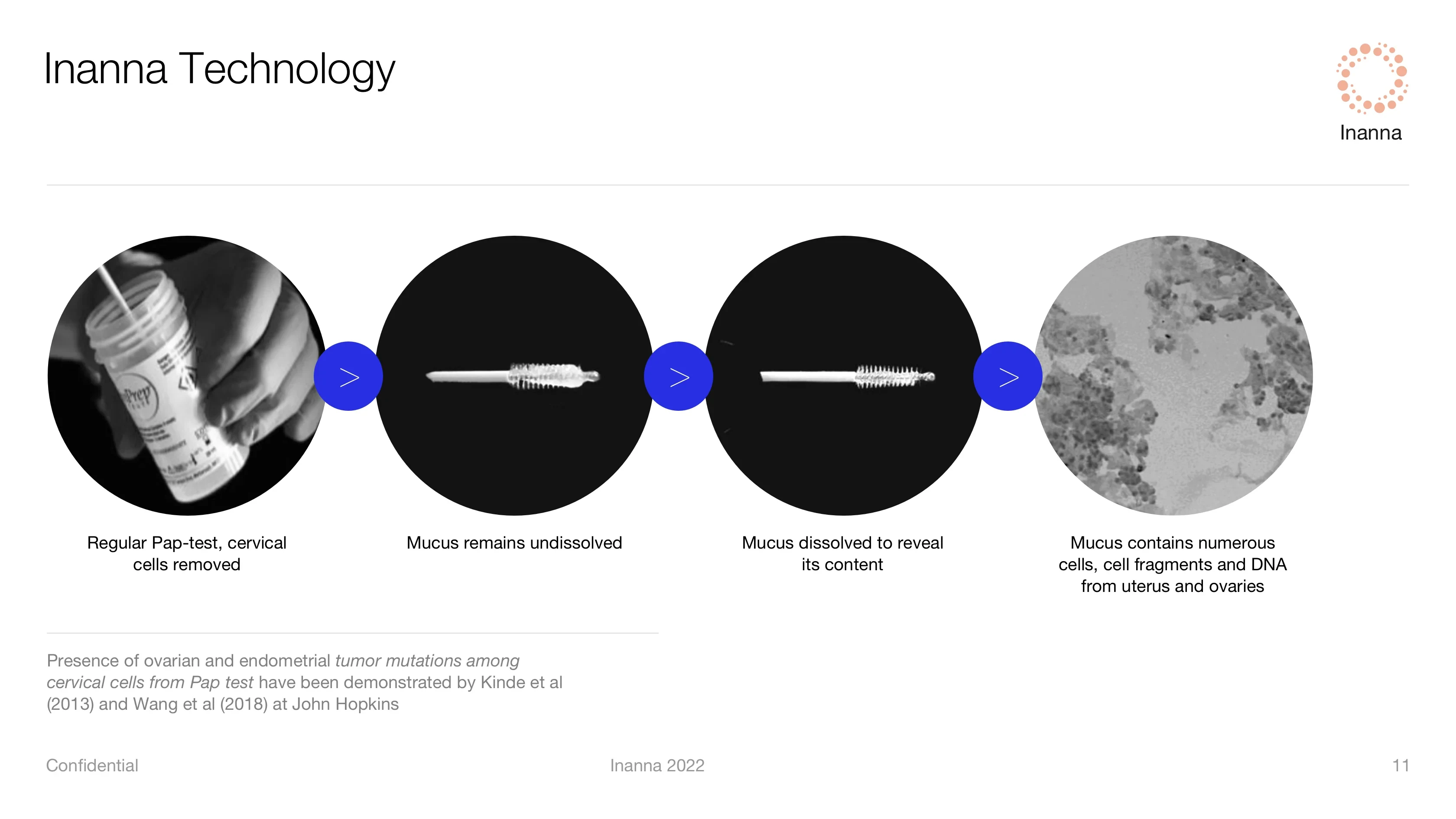
A second diagram focuses more closely on the mucus sample itself, explaining how it can retain cells, cell fragments, and DNA originating from the uterus and ovaries.
These diagrams turn a highly technical methodology into a step-by-step story that audiences can follow while preserving the essential scientific logic.
Communicating the development pathway
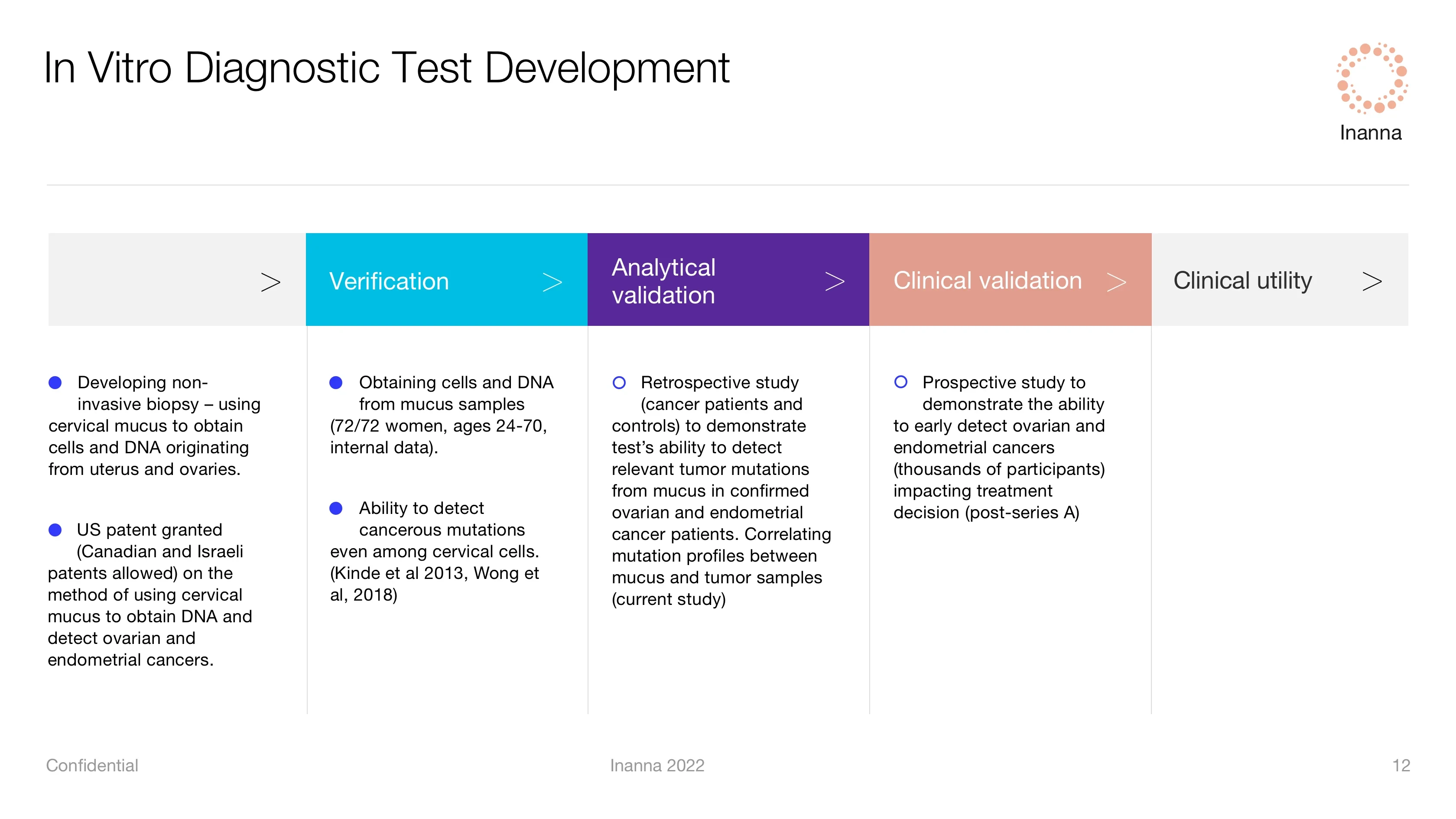
The in-vitro diagnostic development slide organizes the company’s progress into a clearly staged roadmap:
Verification
Analytical validation
Clinical validation
Clinical utility
Color-coded phases and directional markers make the development sequence immediately visible. Supporting text provides the necessary detail without competing with the overall progression.
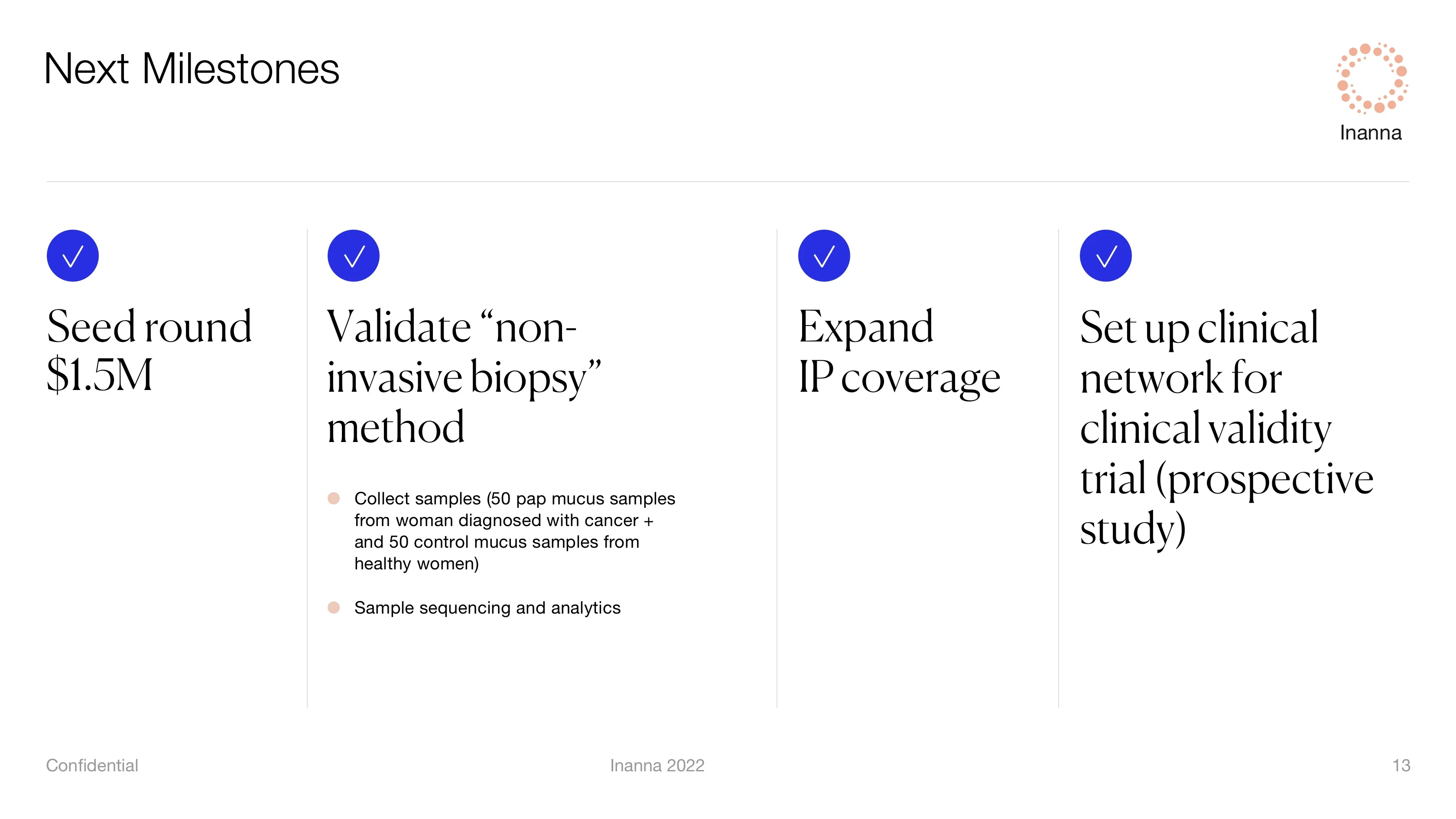
The milestones slide applies the same principle to the company’s near-term plan, connecting the seed round with sample collection, sequencing, expanded intellectual-property coverage, and development of a clinical network.
Presenting intellectual property
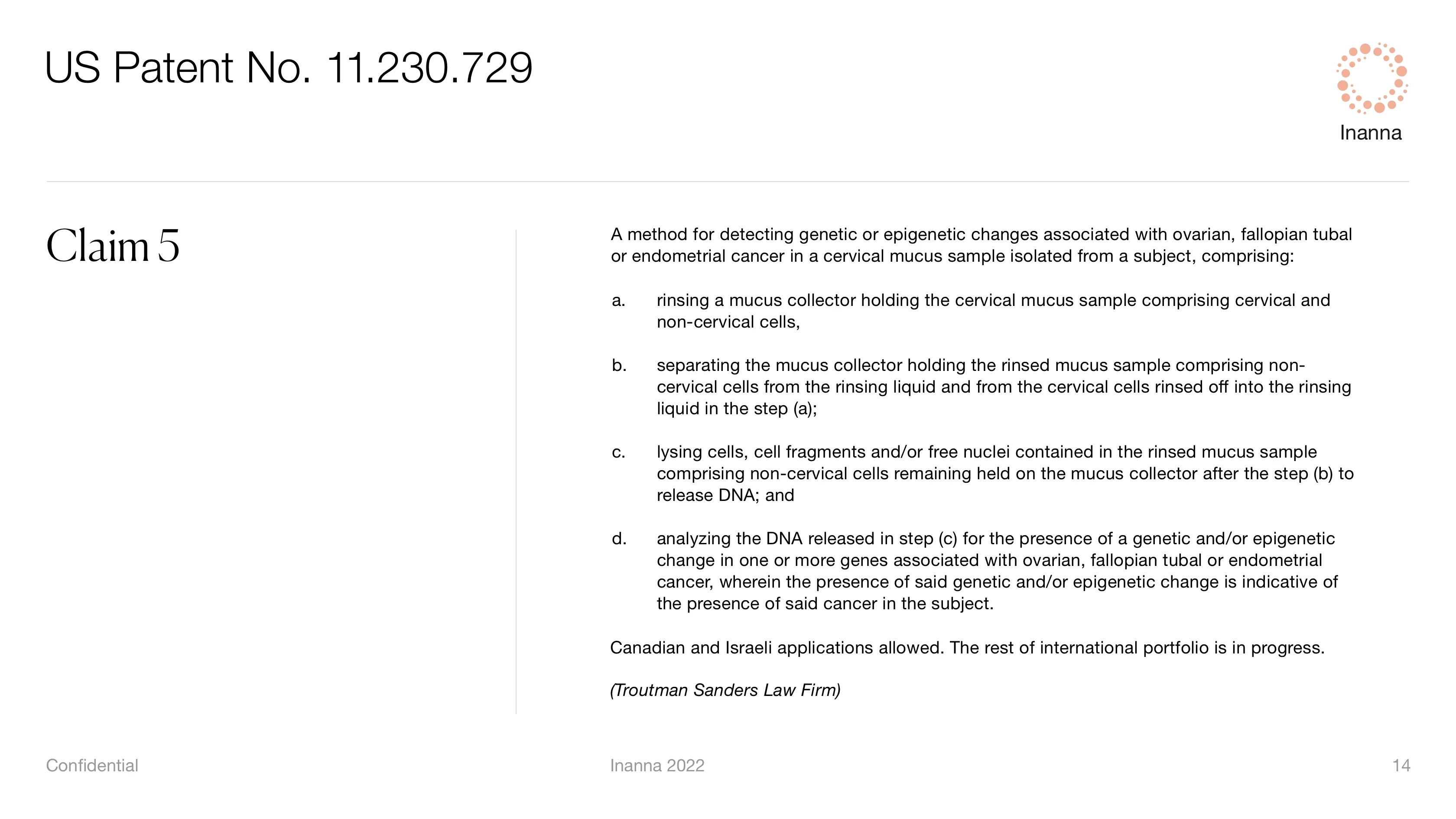
Patent language is inherently dense and difficult to simplify without changing its meaning. For the patent slide, Dworkz used a restrained editorial layout with a prominent claim heading, generous spacing, and a clear text hierarchy.
This treatment preserved the legal language while making the slide feel consistent with the rest of the presentation. It also positioned the patent as a meaningful business asset rather than an isolated block of technical documentation.

The outcome
Dworkz delivered a polished, investor-ready presentation that transformed a complex combination of scientific research, market analysis, clinical development, and intellectual property into one coherent story.
The completed deck gave Inanna:
A clearer explanation of the unmet clinical need
A stronger connection between the technology and its market opportunity
More accessible scientific and diagnostic-process diagrams
Consistent presentation of data across charts, tables, and statistics
A credible visual foundation for investor and partner conversations
A reusable presentation system that could support future updates
Rather than relying on dense technical content alone, the presentation helps audiences understand why Inanna’s work matters, how its approach is different, and what the company needs to accomplish next.
Related services
Presentation design
Healthcare and biotechnology design
Data visualization
Information architecture
Brand communication
Investor and fundraising materials
Need to make a complex scientific or technical story easier to understand?
Dworkz helps healthcare, biotechnology, and technology companies transform specialized information into clear, credible, and compelling visual communication.
Like this project
Posted Sep 29, 2026
Created an investor-ready presentation for Inanna, a health diagnostics firm.
Likes
1
Views
0
Timeline
Apr 7, 2022 - Apr 14, 2022
Clients
Inanna