Personalized Fitness App Full Case Study

Abdul Qadeer


The Challenge
Fitness apps fall into two camps: generic workout libraries with thousands of exercises and no guidance, or rigid 12-week programs that don't adapt to the user's body, goals, or schedule. The first type overwhelms beginners who don't know where to start. The second type frustrates experienced users who need flexibility. Neither type accounts for the fact that every body is different and every fitness journey is personal.
This project focused on designing a fitness app that creates truly personalized workout plans based on individual goals, body metrics, available equipment, and target muscle groups. The goal: make every user feel like they have a personal trainer in their pocket.
Design Approach
The design process started in Figma, where every screen was built to guide users from goal-setting to consistent training with minimal friction.
Key design decisions:
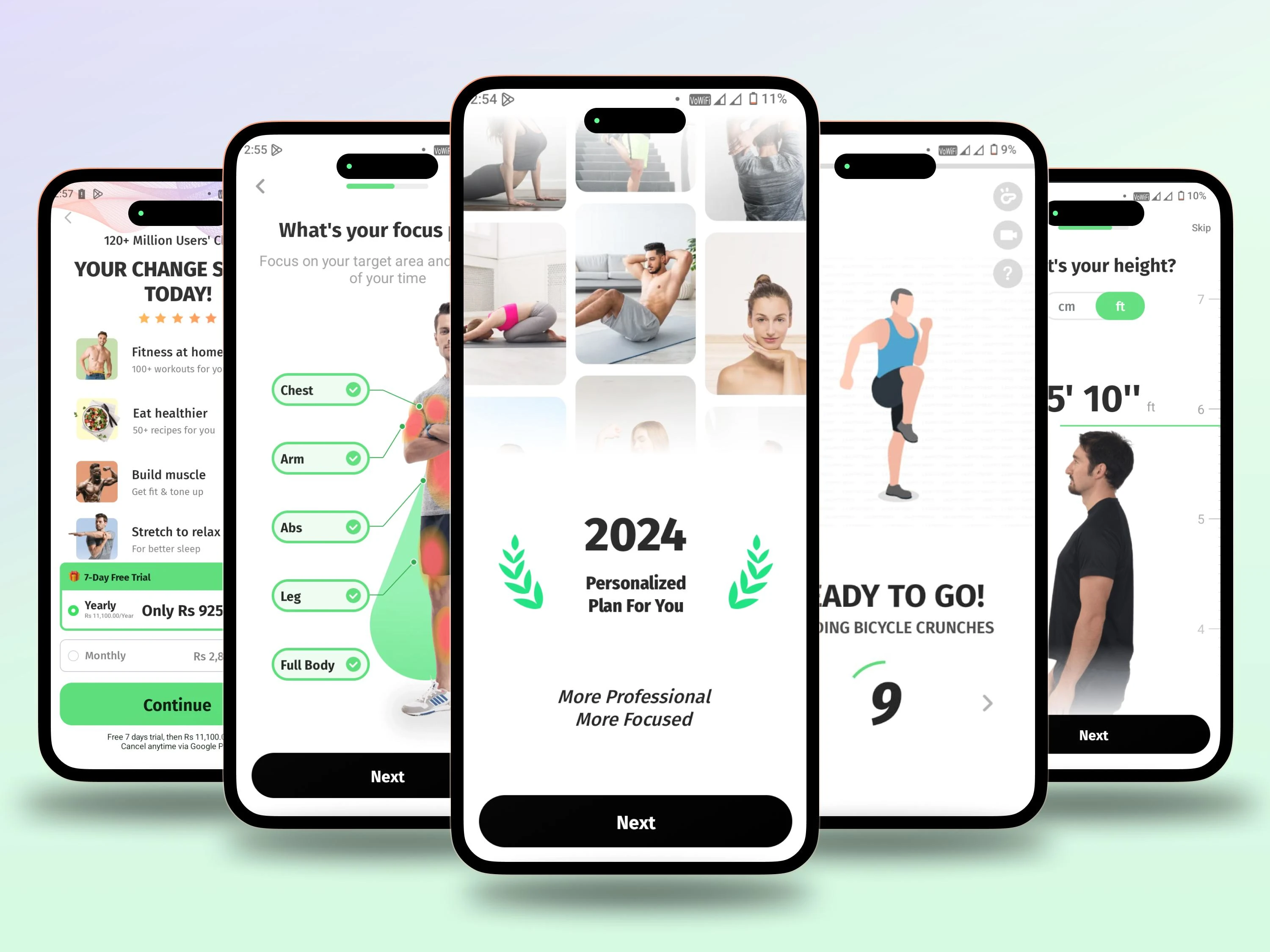
Goal-driven onboarding. Users start by selecting their primary goal (lose weight, build muscle, improve endurance, increase flexibility) and secondary preferences. The onboarding feels like a conversation, not a form. Each question narrows the personalization, and users see their plan taking shape in real-time.
Interactive body map for muscle targeting. A visual body diagram lets users tap specific muscle groups they want to focus on. Front and back views show all major muscle groups. Selected muscles highlight in color, and the app generates exercises targeting those specific areas. It's intuitive and visual, no anatomy knowledge required.
Body metrics dashboard. Weight, body measurements, BMI, and progress photos tracked over time. Clean charts show trends without overwhelming with data points. Users see their transformation visually, which is more motivating than numbers alone.
Personalized workout plans. AI-generated weekly plans based on goals, target muscles, fitness level, available equipment, and time constraints. Each workout shows estimated duration, difficulty level, calories burned, and muscles targeted. Plans adapt weekly based on completed workouts and progress.
Exercise library with video guides. Every exercise includes a demonstration video, step-by-step text instructions, common mistakes to avoid, and muscle activation diagrams. Users never wonder "am I doing this right?" The library is searchable and filterable by equipment, muscle group, and difficulty.
Progress tracking with milestones. Workout streaks, personal records, weight milestones, and achievement badges keep users motivated. The app celebrates consistency, not just results. Weekly summaries show total volume, workout frequency, and progress toward goals.
Clean, energetic visual design. Bold colors with dark backgrounds, high-contrast exercise imagery, and dynamic typography. The design feels active and motivating without being aggressive. Smooth animations between screens create a premium, app-store-featured quality.
Workout Flow
The daily training experience is streamlined:
Open to today's recommended workout
Review exercises, sets, and target muscles
Start with guided timer and rest periods
Log completed sets with weight and reps
Finish with cooldown and session summary
Users can swap exercises, adjust difficulty, or skip to the next workout at any point.
The Result
A fully designed personalized fitness app built in Figma, focused on making workout planning as individual as the user. The design serves fitness tech startups, health platforms, and gym chains looking for a mobile app that drives long-term engagement through personalized programming, visual muscle targeting, progress tracking, and guided exercise execution.
Like this project
Posted Jul 14, 2026
UI/UX design of a fitness mobile app with personalized workout plans, target muscle selection, body metrics tracking, and guided exercise routines.
Likes
0
Views
16