Search Intent Strategy

Mustafa Jama


Summary
In this project, I developed a page type and content alignment strategy based on search intent signals. I analyzed the user’s goals behind target keywords and structured the site to match intent with the right page format such as informational articles, service pages, or category hubs. To strengthen credibility, I incorporated E-E-A-T principles into each content type, ensuring the site gained trust with both users and search engines.
Process
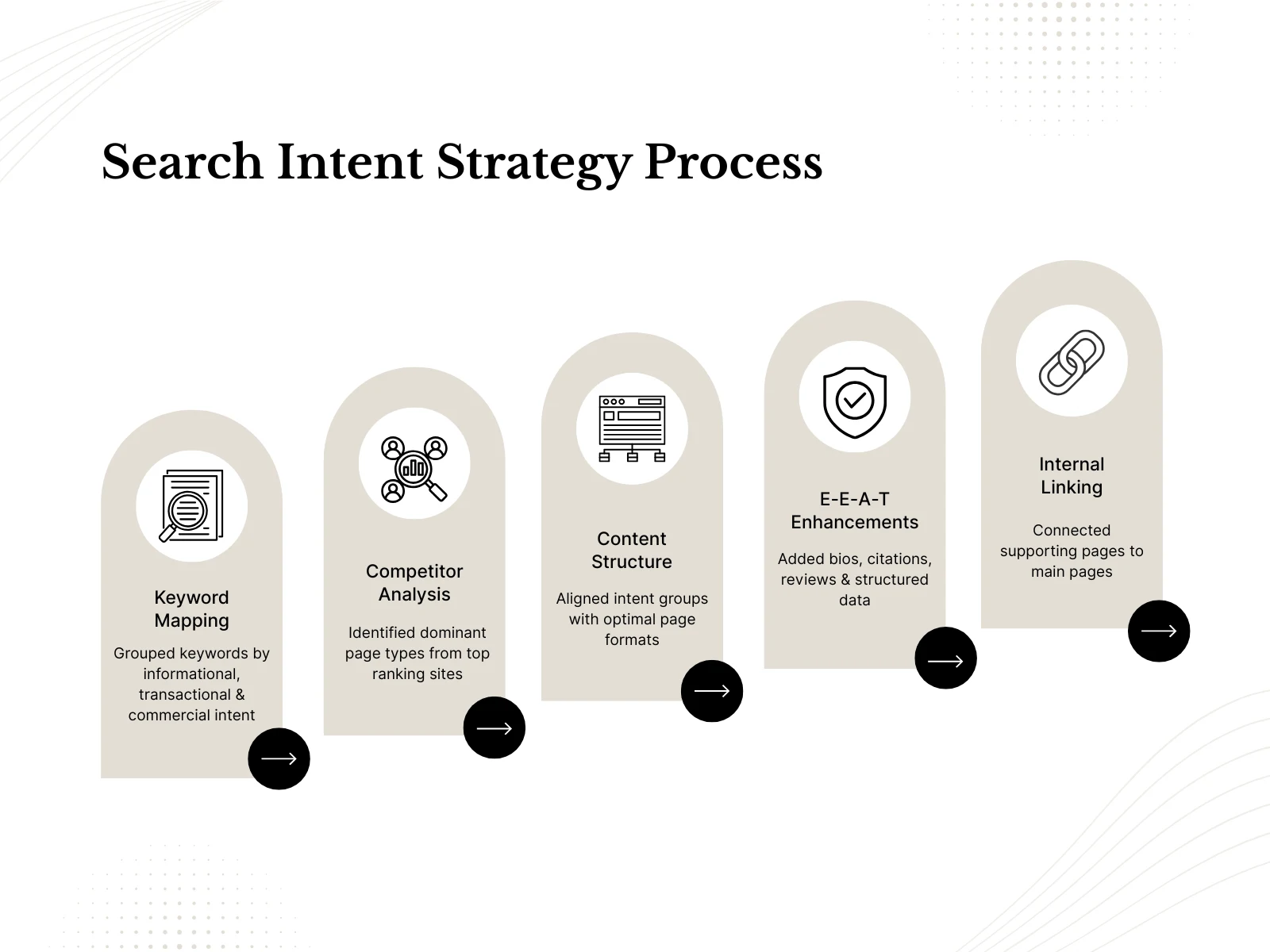
I started by mapping core keywords and grouping them by intent: informational, transactional, and commercial investigation. Using tools like Semrush and Google Search, I analyzed top ranking competitors to identify the dominant page type for each keyword cluster.
From there, I redesigned the content structure so that each intent group pointed to a suitable page format. For example, long tail informational queries led to in depth articles with FAQs and author bylines, while transactional terms were routed to optimized service pages with clear CTAs.
To reinforce E-E-A-T, I added expert bios, cited sources, client reviews, and structured data markup. Each page was reviewed for tone, helpfulness, and clarity, focusing on delivering exactly what the searcher needed.
Improvements
Removed mismatched content such as blog posts ranking for transactional keywords
Created new content for underrepresented intent categories
Improved internal linking between supporting and main pages
Strengthened on page trust signals across key areas
Results
After implementation:
CTR improved across priority keywords by over 15 percent
Several key terms moved from page 2 to top 5 positions
Bounce rate decreased on transactional pages
Search Console showed increased coverage of long tail queries matching new content formats
Like this project
Posted Aug 8, 2025
Improved keyword targeting and content alignment with E-E-A-T, increasing organic relevance and boosting user engagement.