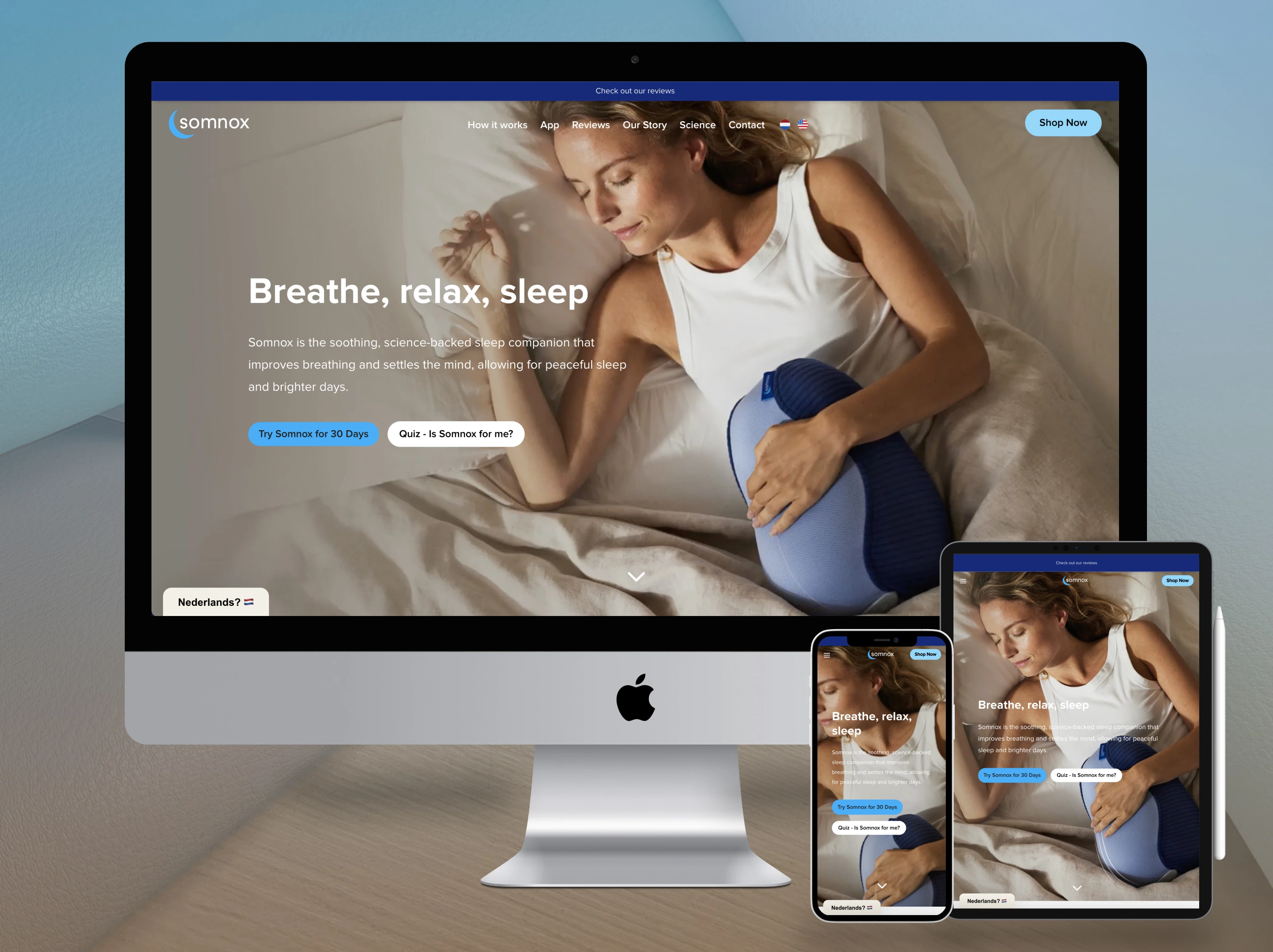
Somnox IoT Sleep Robot Companion Case Study

Abdul Qadeer


The Challenge
Sleep technology is booming, but most sleep apps feel disconnected from the hardware they're supposed to control. Users buy a smart sleep device, download the companion app, and find a generic interface that barely communicates with their device. The experience feels like two separate products duct-taped together. For a product as intimate as a sleep robot, the app needs to feel like a natural extension of the physical device.
Somnox needed a companion app that makes their IoT sleep robot feel intelligent, personal, and effortless to use. The app had to bridge the gap between hardware and software, turning a physical device into a complete sleep improvement system.
Design Approach
The design process started in Figma, where every screen was designed to feel calming, personal, and connected to the physical sleep robot.
Key design decisions:
Sleep dashboard with nightly insights. The home screen shows last night's sleep score, sleep duration, time in each sleep stage, and trends over time. Users wake up and immediately understand how they slept. The data comes from the robot's sensors, making the physical device feel smarter through the app.
Device control hub. Breathing rhythm settings, sound selection, vibration intensity, and warmth controls are all adjustable from the app. Users customize their sleep robot's behavior without touching the physical device. Changes sync instantly via Bluetooth/WiFi.
Guided breathing exercises. Interactive breathing sessions that sync with the robot's physical breathing rhythm. The app displays an animated breathing guide while the robot physically expands and contracts at the same pace. Digital and physical working in harmony.
Sleep program scheduling. Users set weekly sleep schedules with different settings for weekdays and weekends. The robot automatically adjusts its behavior based on the schedule. Wind-down routines can be programmed to start 30 minutes before target bedtime.
Sleep history and trends. Weekly and monthly sleep data visualized as clean charts showing sleep quality progression. Users can correlate sleep improvements with specific robot settings to find their optimal configuration.
Smart alarm integration. The robot wakes users during light sleep phases within a configurable window. The app shows the optimal wake time and lets users adjust the window. Waking up during light sleep feels dramatically different from a jarring alarm during deep sleep.
Calming, sleep-focused visual design. Deep navy and soft purple gradients with gentle animations. The entire app feels like a bedtime experience. Brightness automatically reduces in the evening. No harsh whites, no stimulating colors, no visual noise.
Connection Experience
The device pairing and daily flow:
Pair the robot via Bluetooth with one-tap setup
Configure breathing, sounds, and warmth preferences
Schedule sleep and wake routines for the week
Sleep while the robot and app work together
Review sleep insights each morning
The app stays passive during sleep, only collecting data, never interrupting.
The Result
A fully designed IoT sleep robot companion app built in Figma, focused on creating a seamless bridge between physical sleep hardware and digital sleep intelligence. The design serves sleep tech companies, IoT device manufacturers, and health tech startups looking for a companion app that makes their hardware feel smarter, more personal, and more effective through intuitive controls, sleep tracking, and calming design.
Like this project
Posted Jul 14, 2026
UI/UX design and development of a companion mobile app for the Somnox IoT sleep robot, featuring sleep tracking, breathing exercises, and device control.
Likes
0
Views
14