UI/UX Design for Turnip Cake

Bernice Ebenezer
Verified

Designing a Local Marketplace for Buying, Selling, and Trading Board Games
Project Overview
Turnip Cake is a web platform designed to help board game enthusiasts buy, sell, and trade games locally. Unlike traditional marketplaces that rely heavily on shipping, the platform focuses on local deals and in-person exchanges, allowing players to negotiate and complete transactions within their community.
The goal of this project was to design a clear, intuitive user experience that supports browsing games, making offers, negotiating deals, and eventually trading games between users.
The product was in an early-stage MVP phase, so the focus was on creating a strong UX foundation that could scale with future features.
The Problem
Buying and trading board games locally is often fragmented across multiple platforms like Facebook groups, Craigslist, and forums. These tools were never designed specifically for board game trading, which creates several problems:
Users must sift through large volumes of irrelevant listings
Negotiations are often unstructured and confusing
It’s difficult to bundle multiple games into a single deal
There is no clear workflow for discovering, offering, negotiating, and completing a trade
Turnip Cake aimed to solve this by creating a purpose-built marketplace for local board game transactions.
My Role
I worked as the UX/UI designer on the project and was responsible for:
Designing the core marketplace experience
Creating buyer and seller user flows
Designing product listing cards and interaction patterns
Structuring offer negotiation flows
Developing mobile-first responsive layouts
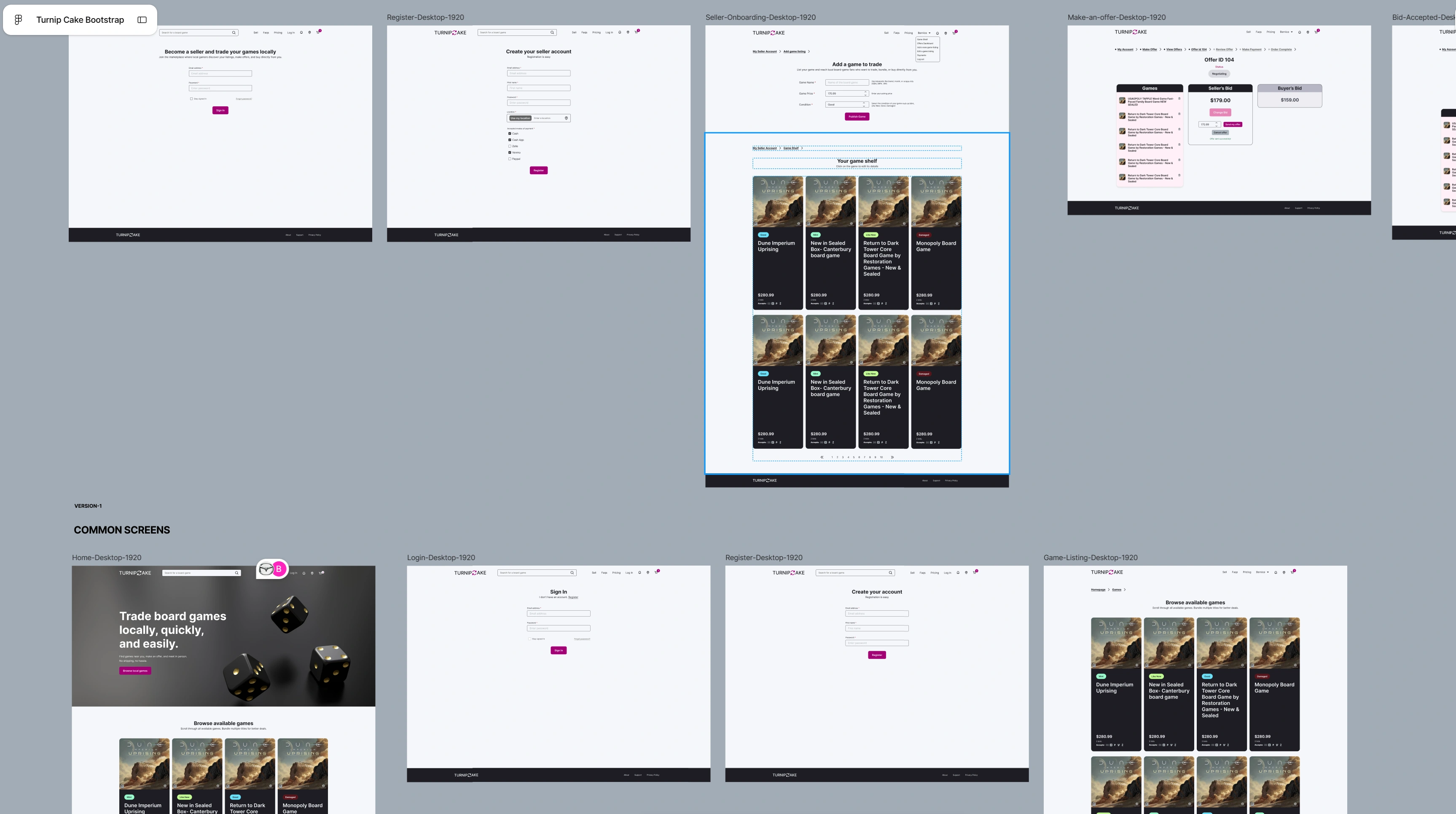
Preparing Figma designs for development
The platform was being built in Rails using Bootstrap, so designs needed to remain mindful of Bootstrap’s layout system and responsive behavior.
Approach
Since the product was still evolving, the design process focused on clarity, simplicity, and flexibility.
The approach included:
Understanding the transaction model
Turnip Cake deals are different from traditional e-commerce:
Buyers and sellers negotiate prices
Multiple games can be included in one deal
Transactions happen locally between users
The platform only facilitates introductions and collects a small fee
This required designing a negotiation-centered UX, rather than a simple “add to cart and checkout” flow.
Key UX Decisions
1. Treating Game Cards as Decision Units
Each game listing was designed to allow users to take immediate action:
Add to Wishlist
Hide / Not Interested
Buy Now (Make Offer)
This allowed users to quickly move through listings and interact with games without opening every detail page.
2. Supporting Fast Discovery
One challenge was helping users browse games quickly without feeling overwhelmed.
To address this, the listing cards were designed to support quick decisions so users could:
save games they like
hide games they aren’t interested in
continue scanning new listings
This approach helps reduce friction when browsing large inventories.
3. Designing for Future Trade Interactions
A future feature of the platform is game trading between users, similar to swipe-based matching systems.
To prepare for this, the listing card design intentionally supports:
interest actions (wishlist)
disinterest actions (hide)
fast decision-making
This design structure makes it easier to introduce swipe-style interactions in future iterations.
4. Mobile-First Interaction Design
Since many users will browse listings on their phones, the design focused heavily on mobile usability.
Mobile layouts prioritize:
large tap targets
simplified card layouts
clear action buttons
fast scanning of listings
The goal was to allow users to move through games quickly with minimal effort.
Key Features Designed
Game Listings Page
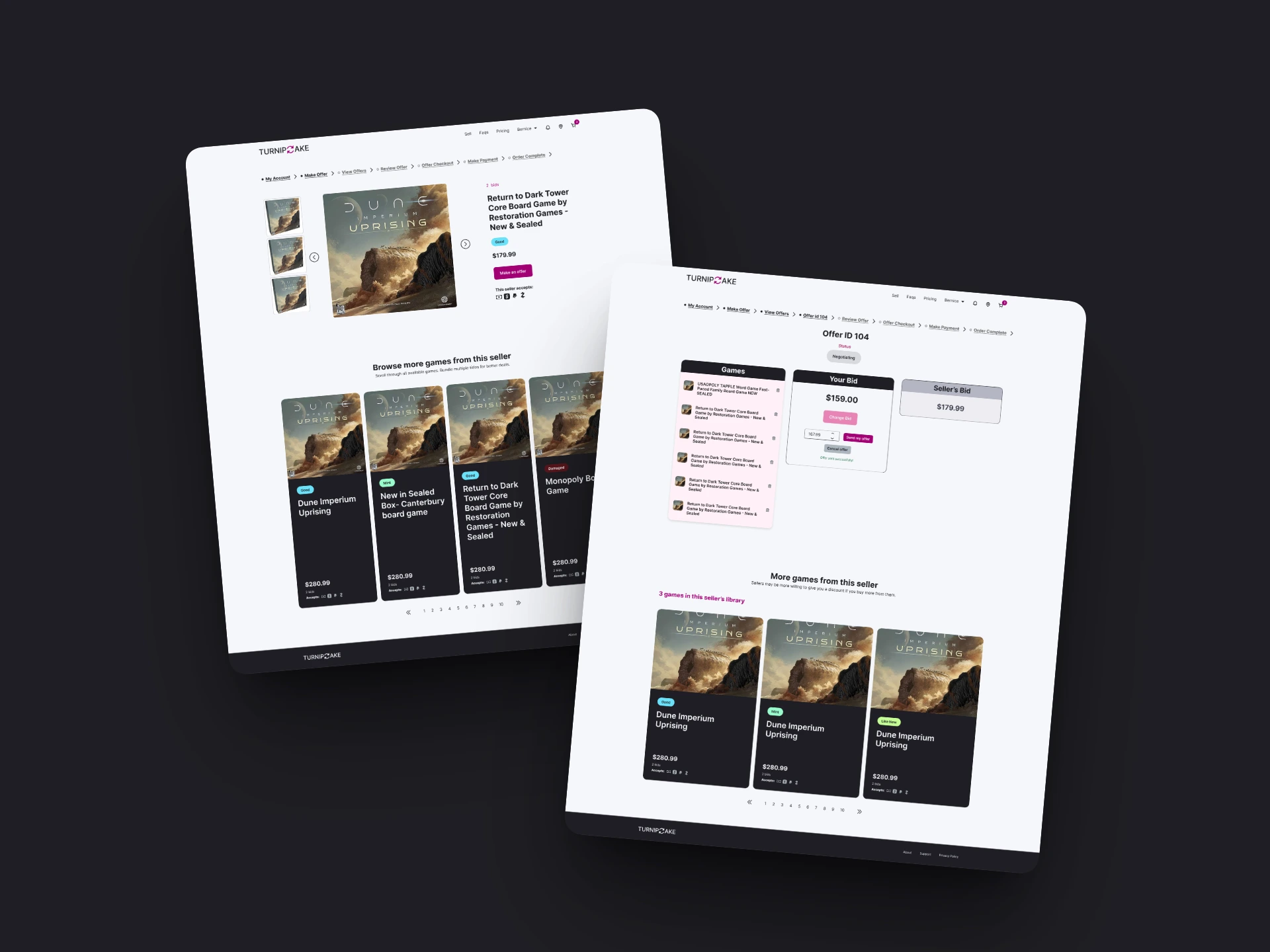
A clean grid layout for browsing games with clear information hierarchy and quick action buttons.
Game Detail Page
Detailed view of each game with condition, seller information, and the ability to make an offer.
Offer Flow
A structured workflow allowing buyers to propose offers and negotiate deals with sellers.
Offer Dashboard
A dashboard where users can track:
active offers
completed deals
cancelled negotiations
Seller Dashboard
Tools for sellers to manage their listings, update game details, and review incoming offers.
Outcome
The project delivered a clear UX framework for a niche marketplace product, helping the founder move forward with development and testing of the MVP.
Key outcomes included:
A structured buyer and seller transaction flow
Scalable listing card interaction design
Mobile-friendly layouts designed for fast browsing
UX patterns that support future trade-based interactions
Organized Figma files ready for development
These designs provided Turnip Cake with a strong foundation for building and iterating on the product.
What I Learned
This project highlighted the unique challenges of designing marketplaces that rely on negotiation and local transactions rather than standard e-commerce workflows.
It also reinforced the importance of designing systems that can adapt to evolving product features, especially in early-stage startups.
The work focused on creating a flexible UX structure that could grow as Turnip Cake introduces new capabilities such as trading, filtering, and user discovery.
Like this project
Posted Feb 7, 2026
Scalable UX foundation for Turnip Cake - buyer/seller flows, listing cards, and design considerations to support future trades and offers.
Likes
0
Views
18
Timeline
Nov 17, 2025 - Dec 16, 2025