VALENCE

Alexandra Goldschmidt


Self-initiated project
Concept
AI Campaign
Branding
VALENCE
Chemistry, made visible.
A speculative fragrance brand concept that treats perfumery, chemistry and generative AI as a single design discipline.
The Idea
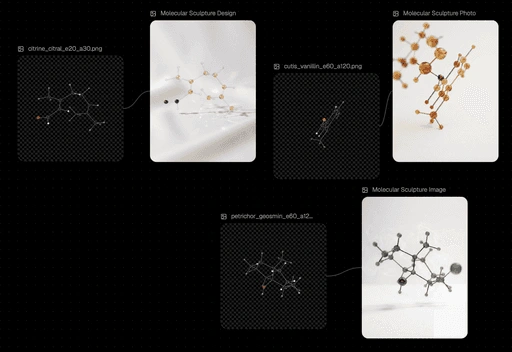
Beneath all the marketing, every fragrance is a formula: a handful of real molecules with real shapes, real bonds and real geometry. Valence starts from exactly this fact instead of hiding it. Rather than inventing a visual identity and hoping it looks "scientific", the entire brand world (campaign imagery, packaging, motion) is generated directly from the actual molecular structure of each key ingredient.
The name already carries the concept. In chemistry, valence describes an atom's capacity to form bonds. In psychology, valence describes the emotional charge of a feeling. The brand sits exactly at this intersection, built on the idea that attraction, memory and desire are, in the end, just molecules finding each other.
The Three Fragrances
Each fragrance in the line is based on verifiable molecules. No interchangeable marketing language, but actual chemistry, cross-checked with PubChem and rendered from the real SMILES structures.
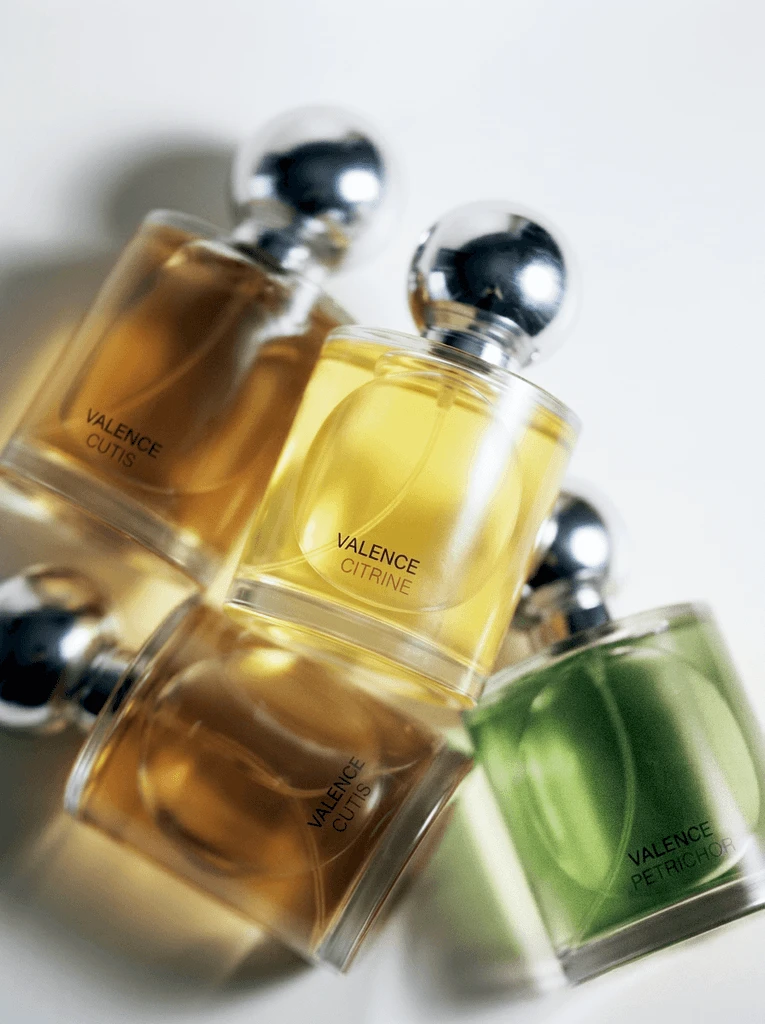
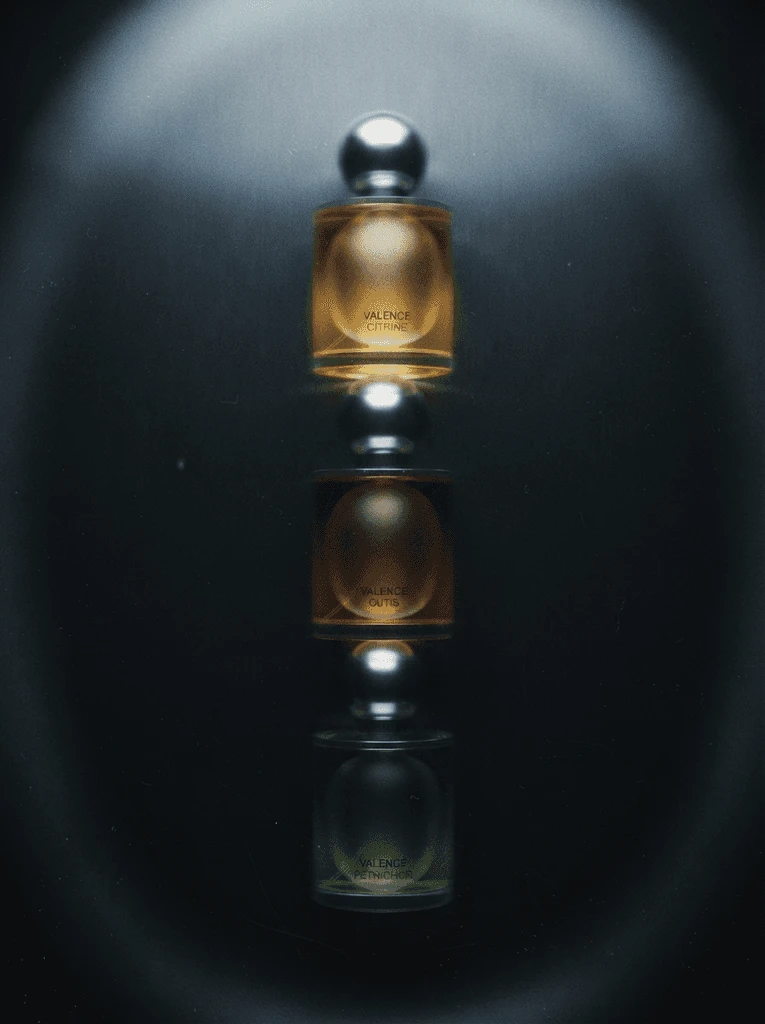
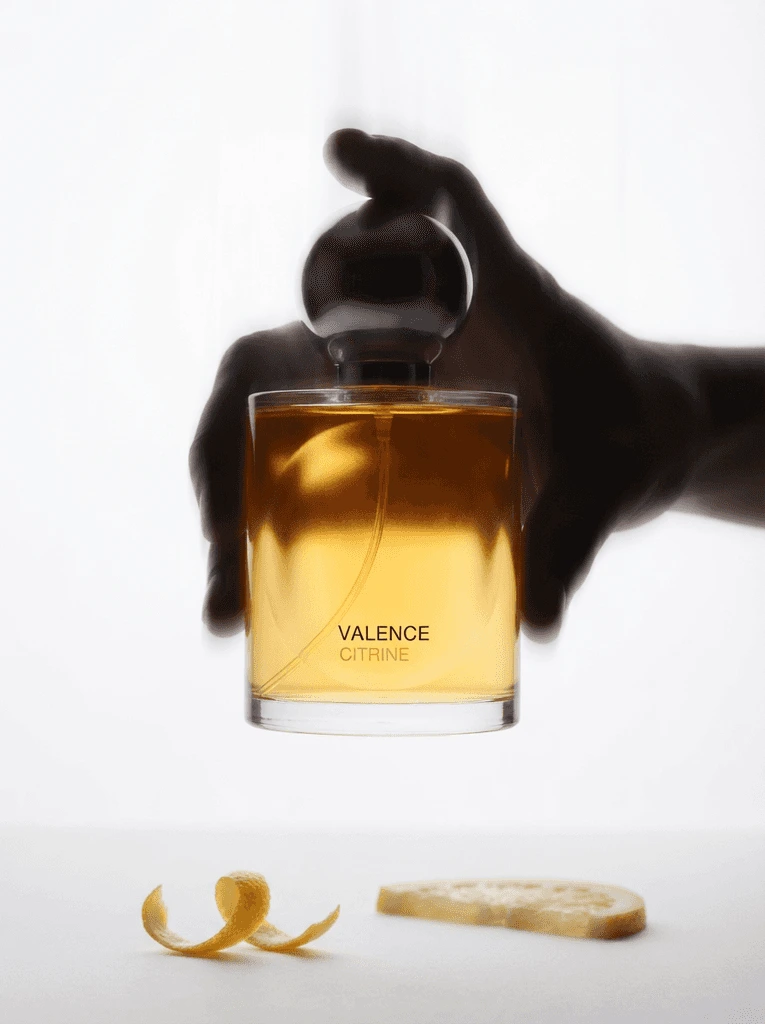
Citrine — Limonene, Citral, Geraniol. Bright, citrusy, energising.
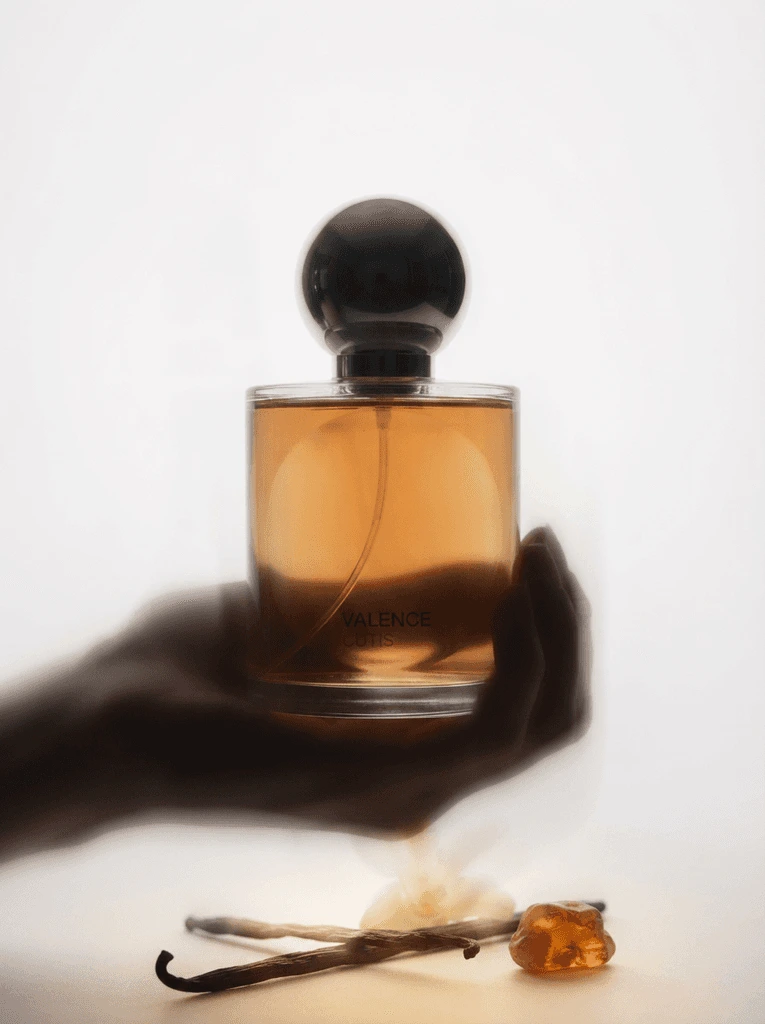
Cutis — Ambroxide, Vanillin, Coumarin. Warm, resinous, close to the skin.
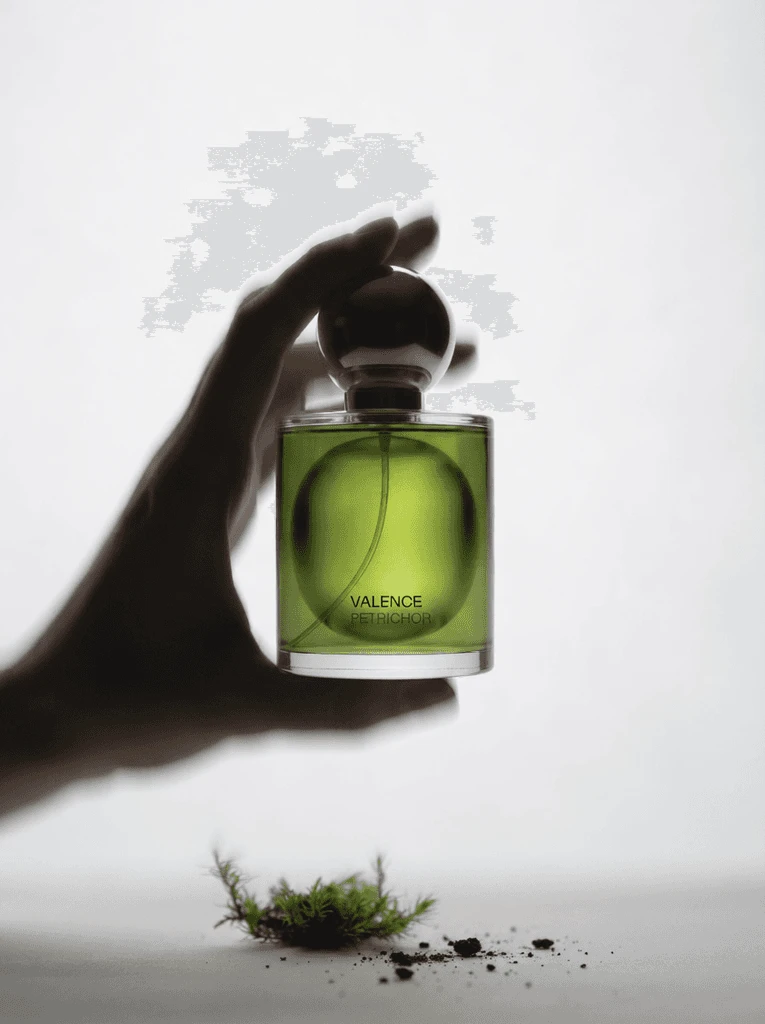
Petrichor — Geosmin, cis-3-Hexenol, Linalool. Geosmin is literally the molecule responsible for the smell of rain on dry earth, and the fragrance is named after exactly that smell.
Process
The project moved consistently in one direction: from real data to image, never the other way round.
Molecular geometry was calculated and validated in RDKit, producing precise 2D bond diagrams and 3D conformers for all nine key molecules. These coordinates became the starting point for everything else: generative campaign patterns built algorithmically from the actual bond graphs, and a custom, physically accurate path tracer written entirely in Python (with Fresnel reflection, refraction through glass and Beer-Lambert absorption) that renders the molecules as glass sculptures, built because no 3D software was available.
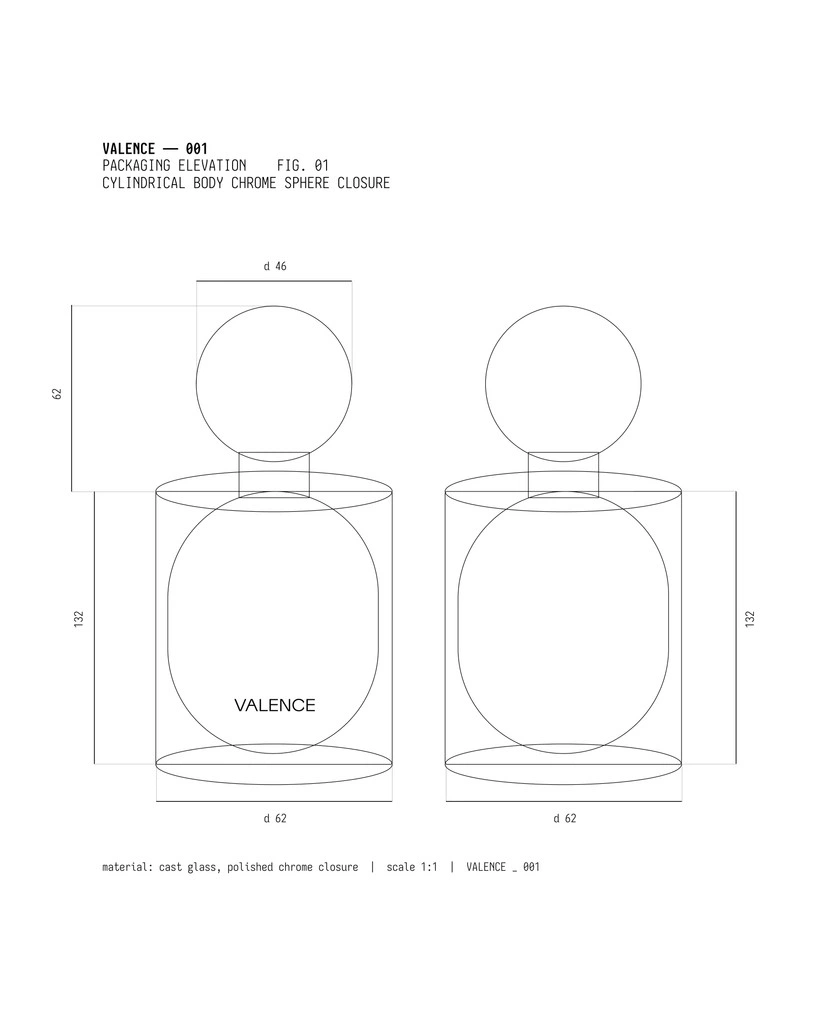
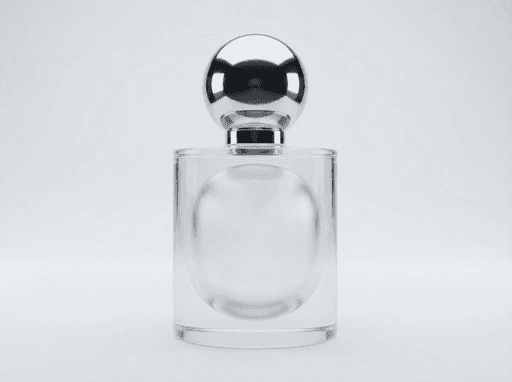
From there, the molecular renders became image references for AI image generation, first as abstract campaign visuals, then integrated into product photography, motion prompts and packaging concepts. The bottle design itself went through a long, honest iteration process: from colour-coded glass sculptures through several structural studies (faceted crystal forms, fused glass clusters, enclosed colour cores) to the final direction. A single, calm silhouette in clear glass with a polished chrome sphere, distinguished only by the colour of the liquid inside. Reduction over decoration became the common thread.
What the Project Shows
Valence is not a finished market product. It's a proof of concept for a particular way of working: treating AI not as a shortcut to a pretty image, but as a tool that stays anchored in real data, material logic and design thinking at every step. Molecular chemistry, generative image systems, packaging design and AI-assisted campaign production, held together by one continuous idea from first sketch to final bottle.
AI tools used: Flora, Kive, Midjourney, Claude
Like this project
Posted Oct 2, 2026
Speculative perfume brand concept using real molecular data and AI-driven visuals for identity, packaging and campaign.
Likes
1
Views
6