Real-Time 3D in the Browser: Starfield Flight and Liquid Metal

Supreme Dream


Real-time 3D on a website usually means a heavy model file, a loading bar and a spinning product. These two pieces load no models at all. The geometry is the code, so there is nothing to download but the page, and every frame is drawn live while you look at it.
Deep Field and Raymarch Forge are chapters 11 and 19 of the GiveMePrompts Lab, live on the studio site. They are studio R&D, not client work.
The brief
Prove that a browser can carry a cinematic 3D moment without a plugin or a download: a sky that looks photographed but reacts to your hand, and a sculpted object that changes form on its own. Both had to hold up on a phone and be honest about their numbers.
The idea
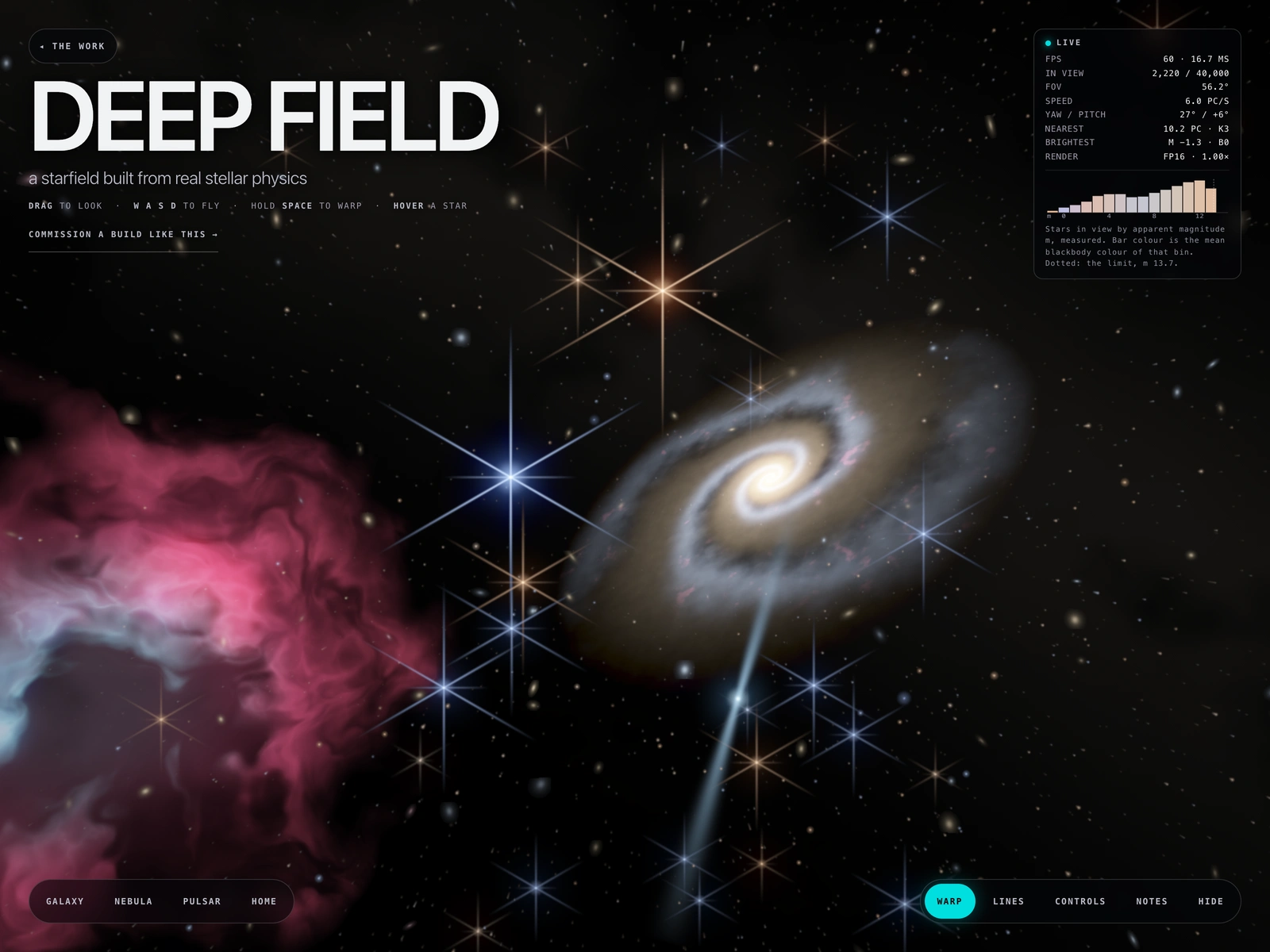
Deep Field is a starfield built from stellar physics. 40,000 stars sit in a 270 parsec cube that follows the camera. Each star has a temperature and a magnitude, so its colour comes from a blackbody fit and its brightness changes as you fly closer. Drag to look, use W A S D to fly, hold Space to warp.
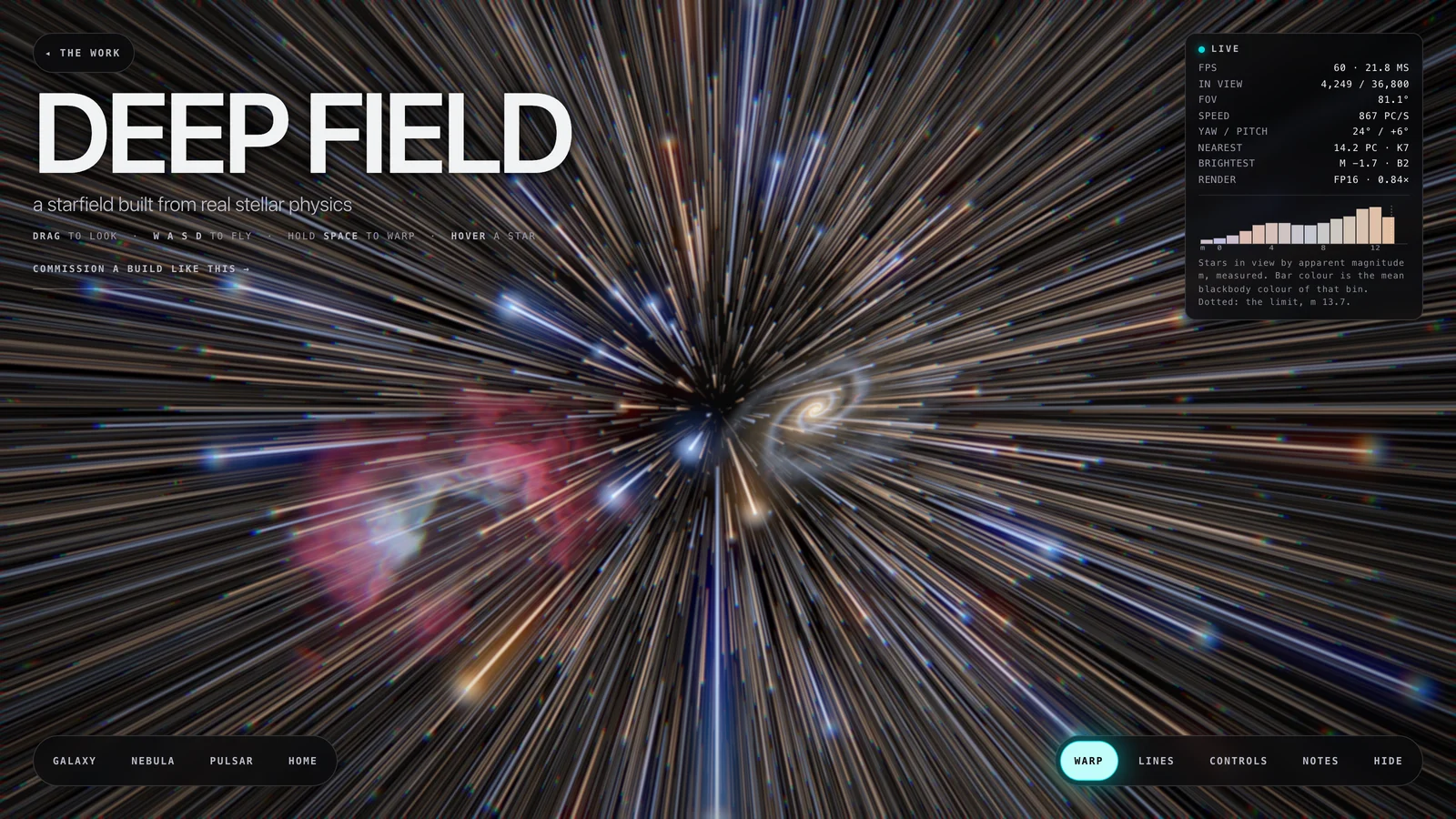
Holding Space: the camera jumps to warp and every star stretches into a streak between where it is and where it was 50 milliseconds ago
Hover any star and the page tells you what it is: designation, spectral type, temperature, apparent and absolute magnitude and distance, all read from the same model the GPU draws.
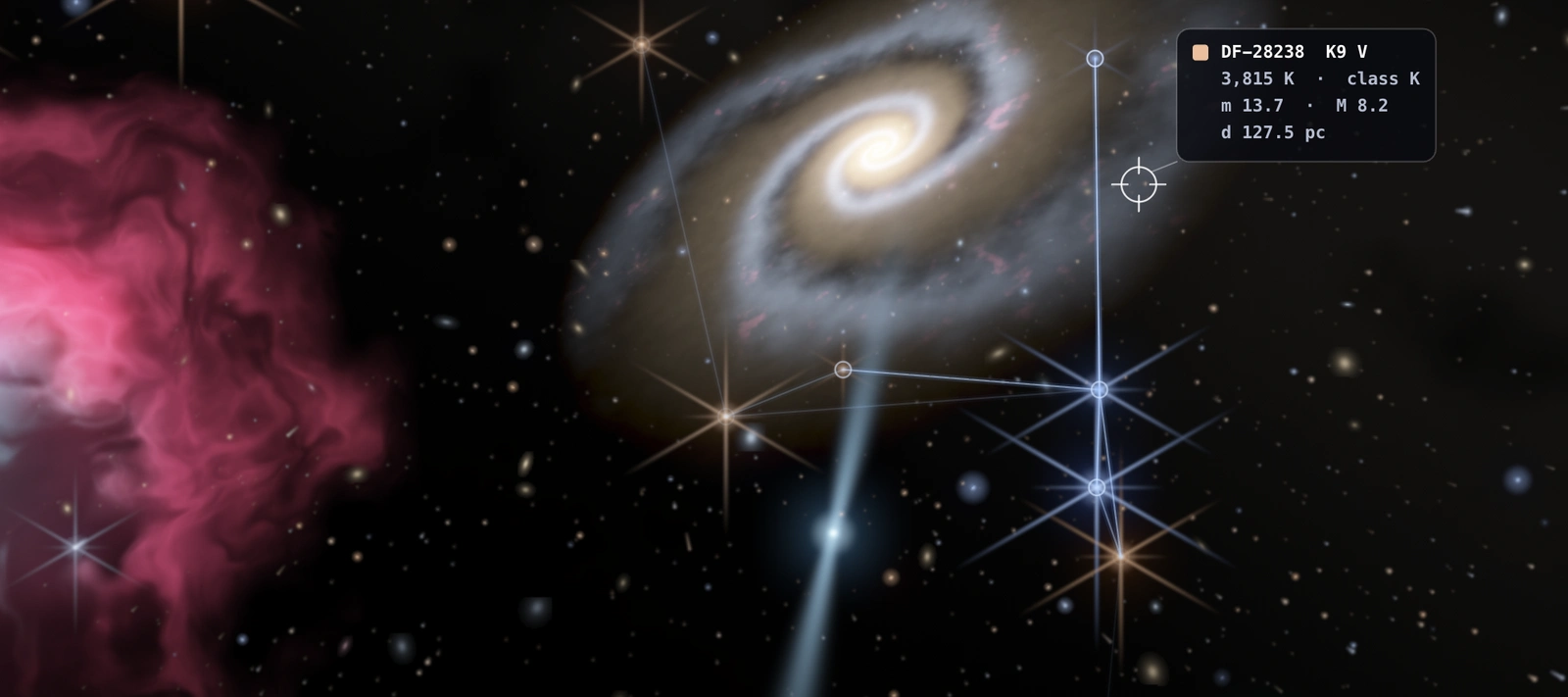
Hovering a star: a reticle locks on and the card reads its spectral type, temperature, magnitude and distance
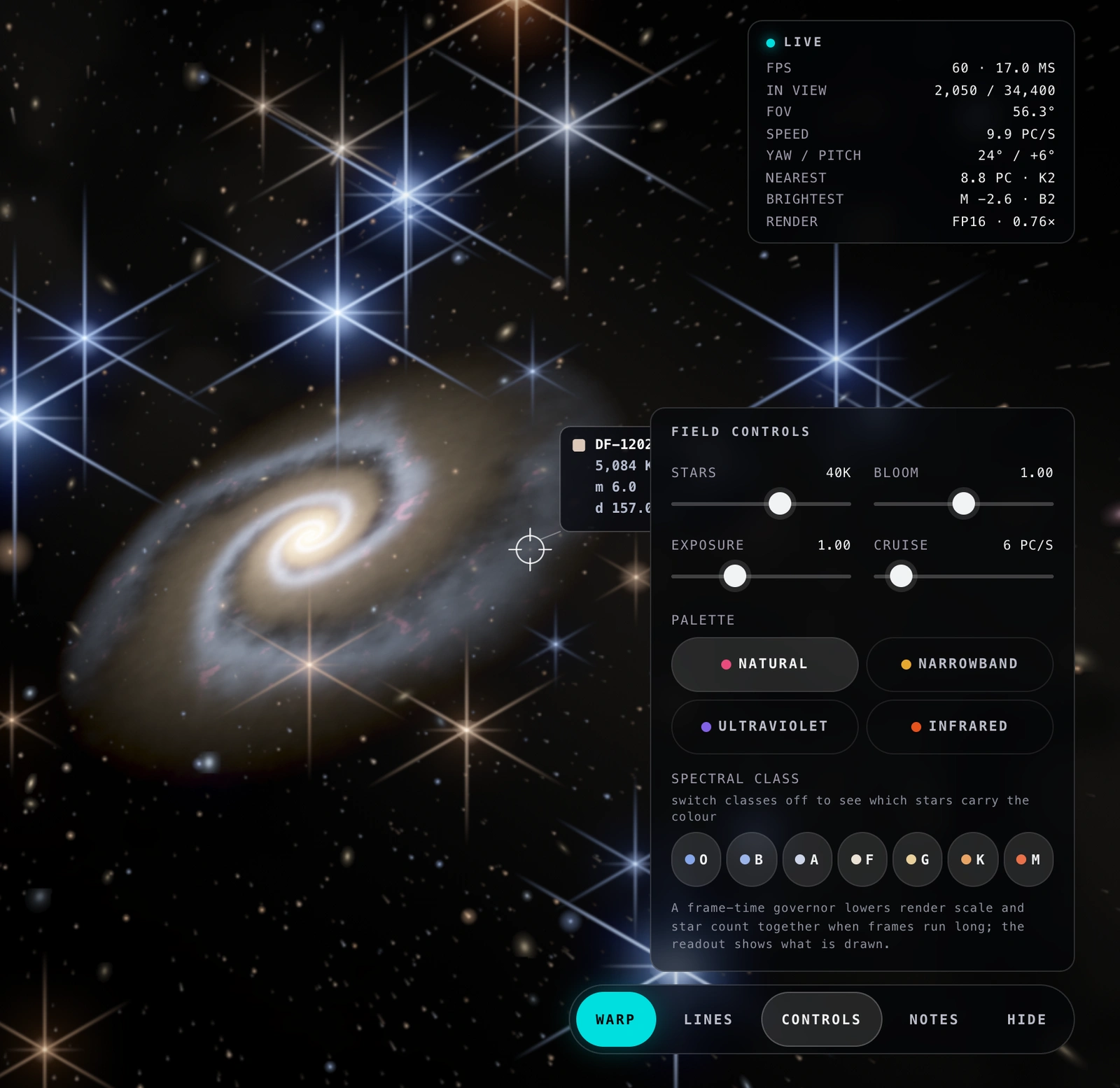
The controls drawer: star count, bloom, exposure and cruise speed, four palettes, spectral classes you can switch off, and the live HUD above
How it is built
Deep Field is one HTML file with zero network requests. The spiral galaxy, the emission nebula and the dust band are generated from procedural noise and baked once at load. Warp widens the field of view from 56 to 82 degrees and pushes speed to 900 parsecs per second. A frame-time governor trades render scale and star count when frames run long, and the HUD shows what is really being drawn.
Raymarch Forge has no mesh, no model file and no texture. Every surface is a signed distance function evaluated per pixel, per frame. Five forms are written as five functions, and the morph blends two fields inside the march, so the metal flows from one shape into the next instead of cross-fading between pictures. The reflection in the metal is the same sky function the background is drawn from.
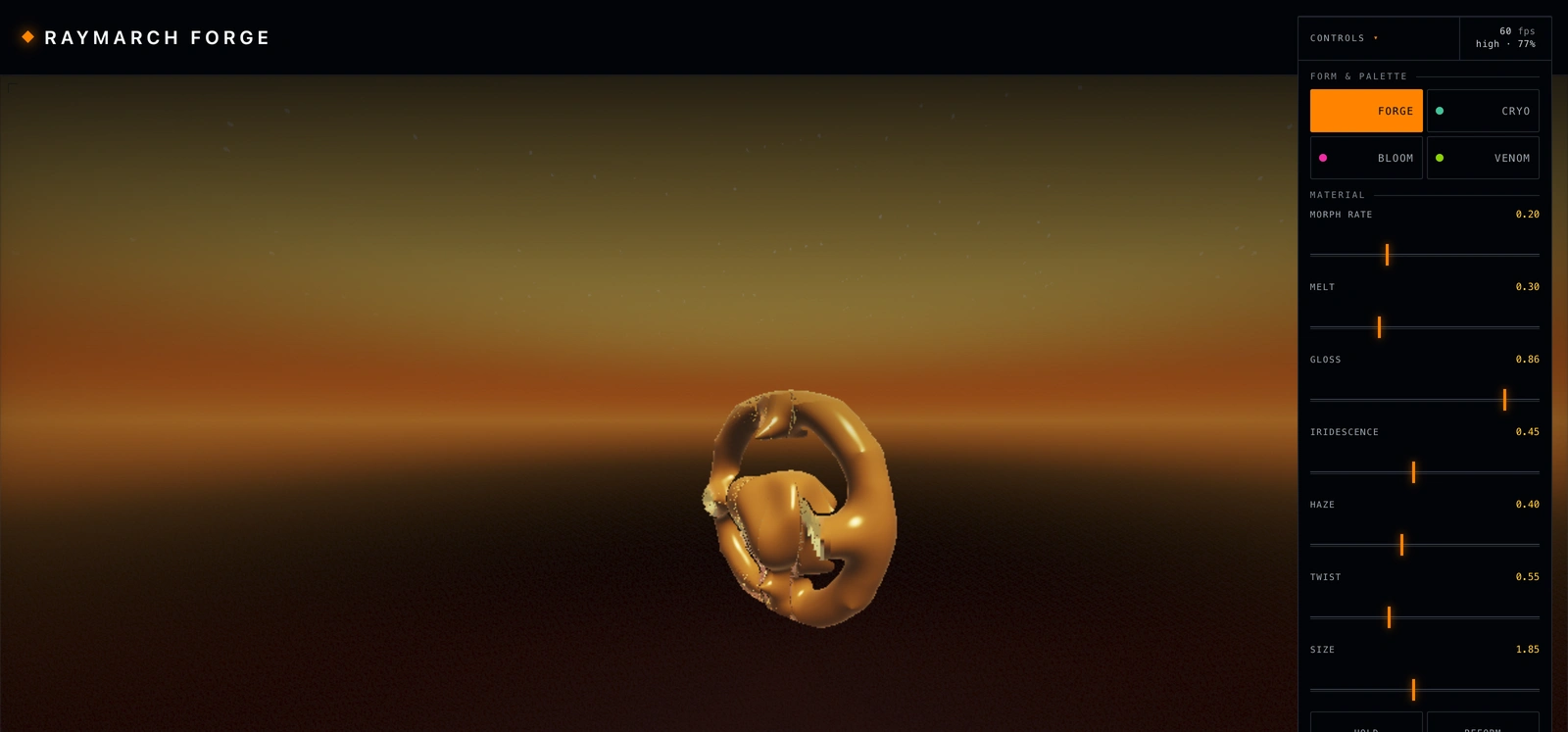
Raymarch Forge with its control dock: form and palette presets, material sliders, and the fps readout inside the dock
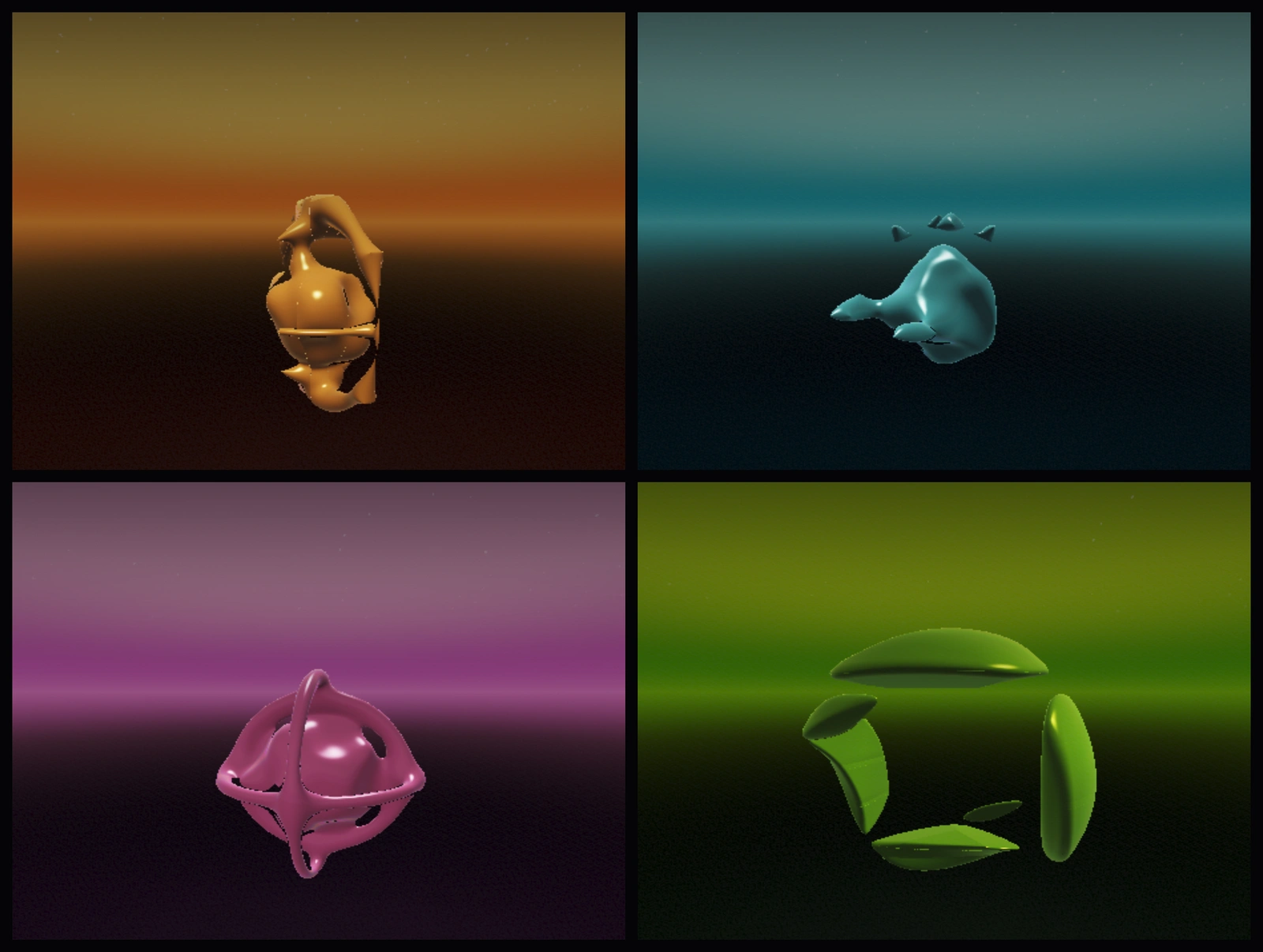
The four presets of Raymarch Forge, each a different pair of forms and a different sky: Forge, Cryo, Bloom and Venom
What a client gets
A 3D hero with no model files to download: a product or a mark rendered as a living object, an immersive launch page, or a world your visitors can explore. Plain web code, no model pipeline, and quality that adjusts to the device.
Work with us
If your launch needs a moment people remember, tell us what it should be made of.
Try it live: Deep field and Raymarch forge on givemeprompts.com.
More work: givemeprompts.com/work
Like this project
Posted Oct 4, 2026
Two WebGL builds: a 40,000-star field you can fly through with real stellar colour, and a raymarched solid with no mesh. Studio R&D.