AI Skincare Analysis App Full Case Study

Abdul Qadeer


The Challenge
Skincare is deeply personal, but the way people choose products is surprisingly generic. Most people buy based on marketing claims, influencer recommendations, or whatever's on sale. They don't actually know their skin type, their specific concerns, or which ingredients would help. Dermatologist visits are expensive and hard to schedule. The result: bathroom shelves full of products that don't work, and skin that isn't improving.
This project focused on designing an AI skincare app that gives users dermatologist-level skin analysis from their phone camera. The goal: replace guesswork with data-driven skincare decisions through AI-powered facial scanning, personalized recommendations, and progress tracking.
Design Approach
The design process started in Figma, where every screen was designed to make skin analysis feel professional, trustworthy, and actionable.
Key design decisions:
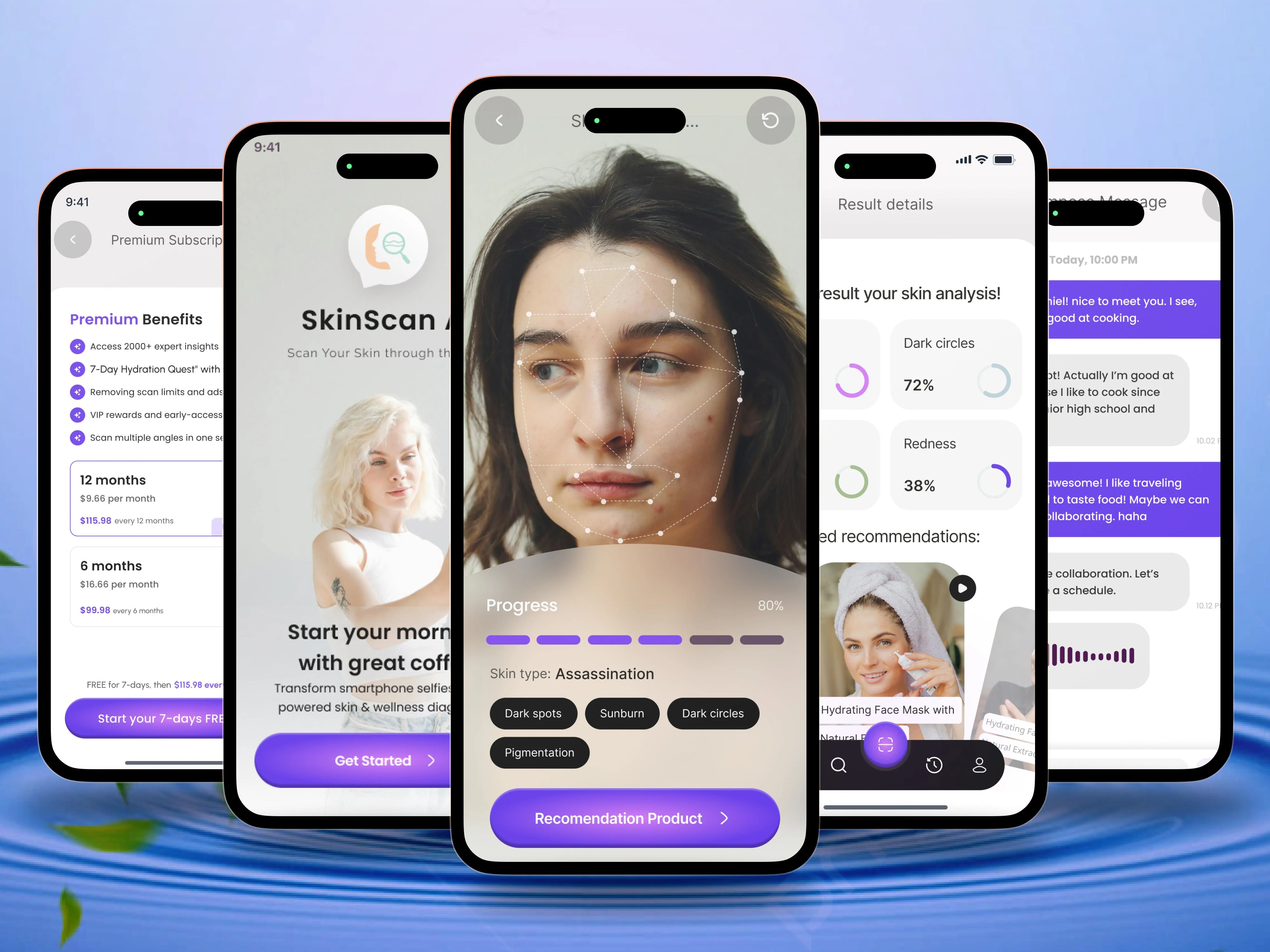
AI facial scan as the entry point. Users take a selfie with guided lighting and positioning instructions. The AI analyzes the image and identifies specific skin concerns: dark circles, redness, pigmentation, acne, fine lines, dryness, and uneven texture. Results appear in under 10 seconds with a visual heat map overlay showing problem areas on the user's actual face.
Detailed skin report. Each detected concern gets a severity score, plain-language explanation, and recommended treatment approach. The report reads like a dermatologist's assessment, not a product pitch. Users understand what's happening with their skin and why, before seeing any product recommendations.
Progress tracking with visual comparison. Users scan regularly and the app tracks changes over time. Side-by-side photo comparisons show improvement (or regression) in specific areas. Progress charts track individual concern scores week over week. Seeing real improvement is the strongest motivator for skincare consistency.
Personalized product recommendations. Based on the skin analysis, the app recommends specific products with ingredients matched to the user's concerns. Each recommendation explains why that product was chosen and which ingredient addresses which concern. Recommendations update as skin conditions change.
Routine builder. The app creates a morning and evening skincare routine based on the user's products, concerns, and skin type. Step-by-step instructions with timing (wait 2 minutes between serum and moisturizer) ensure products are used correctly and in the right order.
Ingredient education. A searchable ingredient dictionary explains what common skincare ingredients do, which skin types they suit, and potential interactions. Users become informed consumers rather than marketing targets.
Soft, clinical-meets-beauty design. Light backgrounds with soft gradients, clean medical-style data visualization, and warm photography. The design feels trustworthy and scientific while remaining approachable and beautiful. The visual language says "smart skincare," not "medical diagnosis."
Analysis Flow
The skin assessment experience is designed for trust and clarity:
Scan face with guided camera positioning
Review AI-detected concerns with visual heat map
Read detailed report for each concern
Get personalized product recommendations
Build daily skincare routine
Track progress with regular re-scans
Each scan builds on historical data, making recommendations smarter over time.
The Result
A fully designed AI skincare analysis app built in Figma, focused on replacing skincare guesswork with data-driven decisions. The design serves beauty tech startups, skincare brands, and health platforms looking for a mobile app that builds customer loyalty through personalized skin analysis, intelligent product matching, progress tracking, and ingredient education.
Like this project
Posted Jul 14, 2026
UI/UX design of an AI-powered skincare app that analyzes facial skin through smart scanning to detect issues, track progress, and recommend personalized products.