TMS Design for US LTL Operations

View completed workwww.behance.net
TMS: Control Every Handoff in US LTL Operations
Commercial project. Public interface screens use demonstration data.
I was the sole product designer for a transportation management system serving a US less-than-truckload (LTL) carrier. I designed the handoffs between dispatch, terminal operations and accounting around shared shipment and trip records.
The challenge was to make the next action depend on verified information: valid assignments before dispatch, confirmed delivery documents before invoicing, and traceable expenses before reviewing profitability or driver settlements.
My role: Product architecture, workflow design, information architecture, interface states and UI design.
Scope: 12 modules and four web roles: owner or administrator, dispatcher, accountant and terminal staff.
Financial and operational control
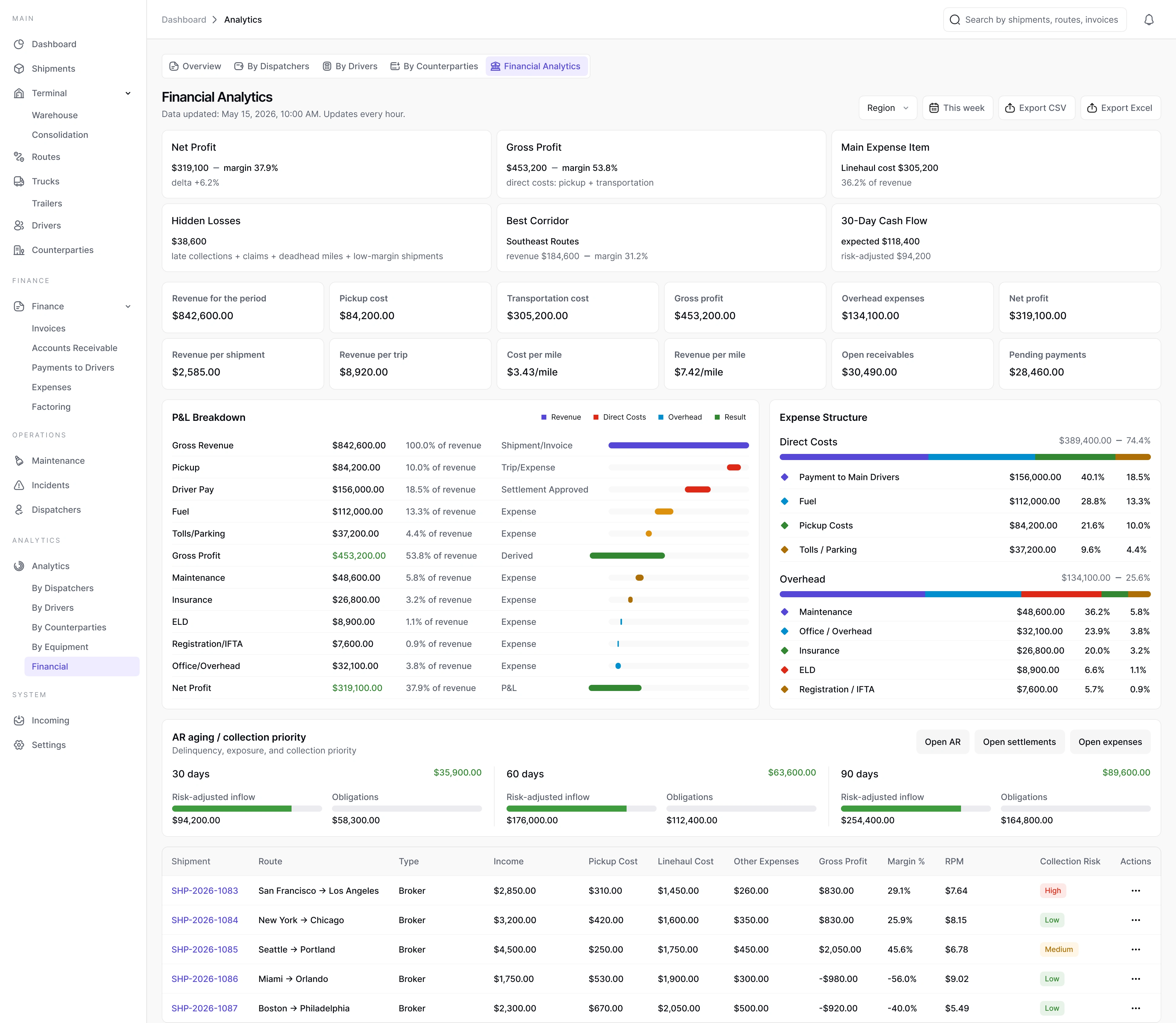
Company financial analytics
I organized company finances around revenue, direct costs, overhead and net profit, with receivables and projected cash inflows in the same workspace. The owner can move from the overall picture to shipment-level profitability and collection risk.
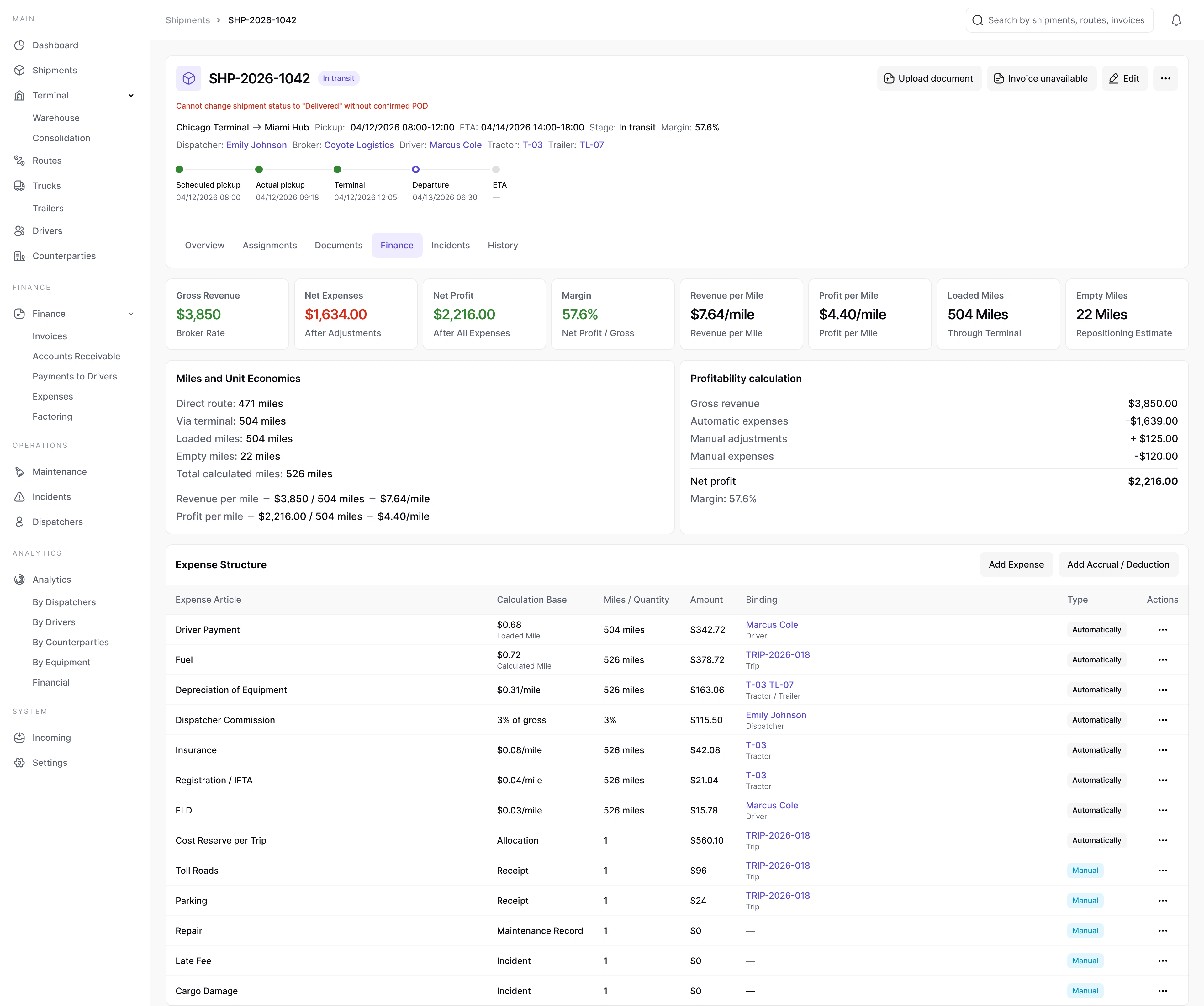
Shipment economics
I linked each expense to its source: driver, trip, tractor or trailer. Revenue, margin and profit per mile sit beside the cost breakdown, so accounting can inspect how a charge or adjustment contributes to the shipment's result.
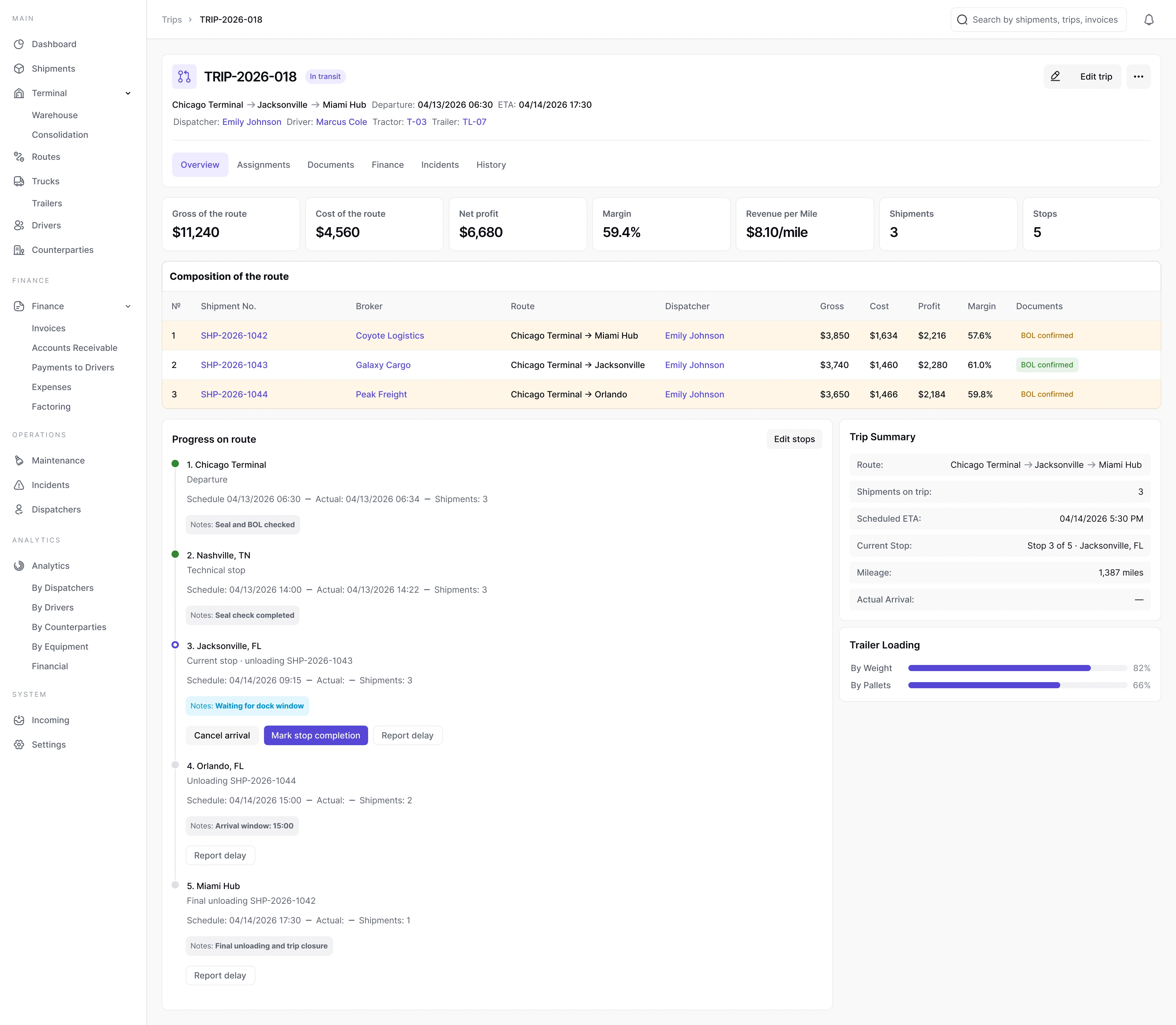
Trip overview
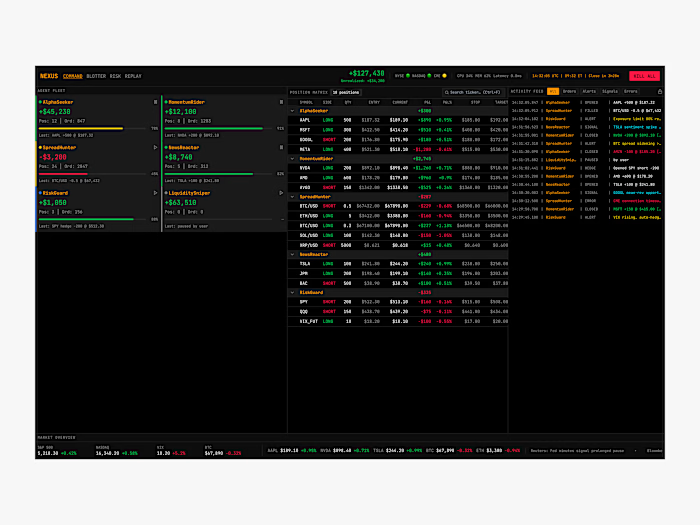
I combined stop progress, shipment composition, trailer loading and trip economics. The dispatcher can review the current stop, complete it or report a delay while retaining the context of the remaining route and its cargo.
Performance and utilization
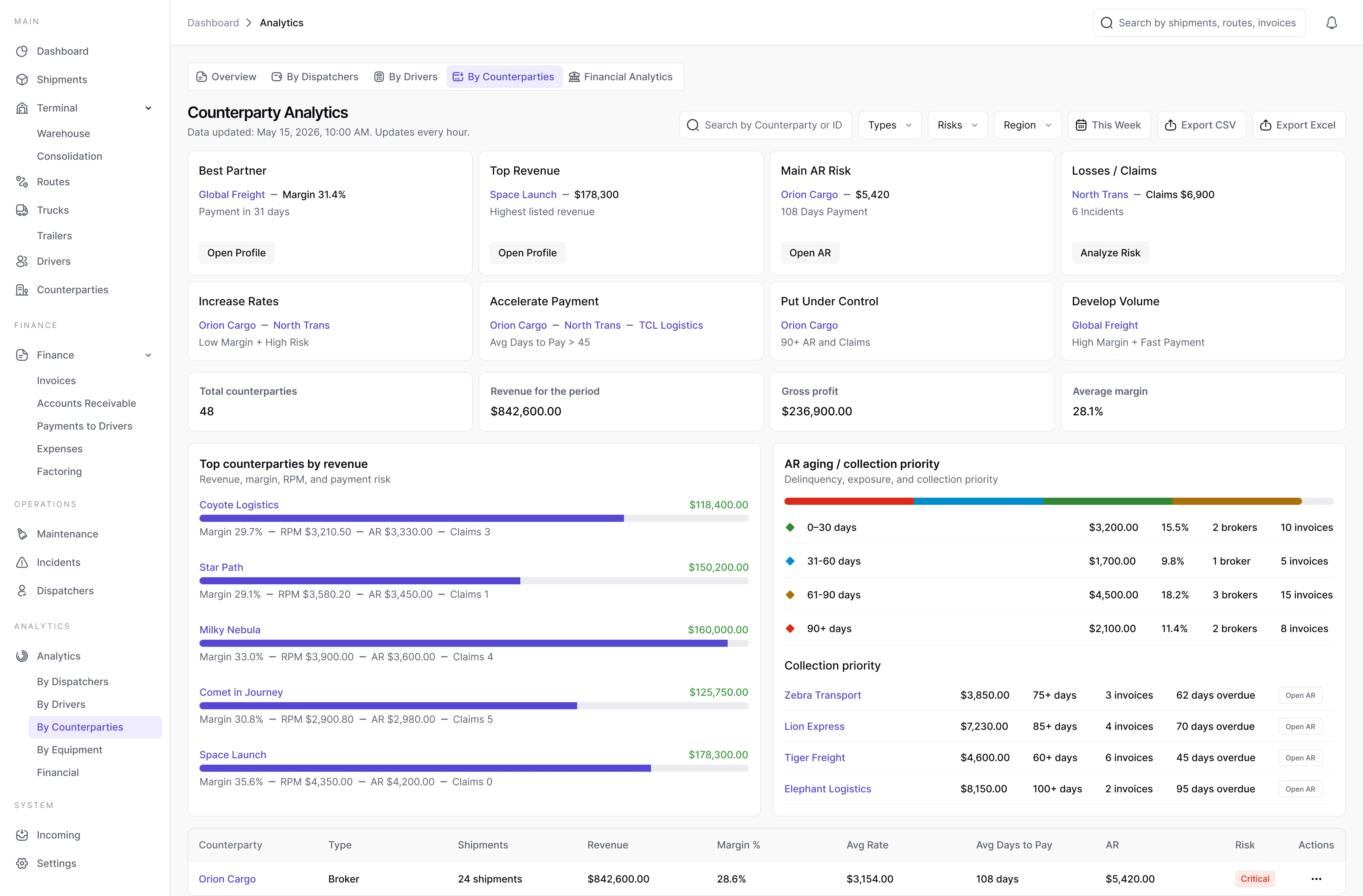
Counterparty analytics
I brought revenue, margin, payment speed and claims into one partner review. Collection priorities sit beside overdue balances, making the reason for a follow-up visible alongside the commercial value and risk of the account.
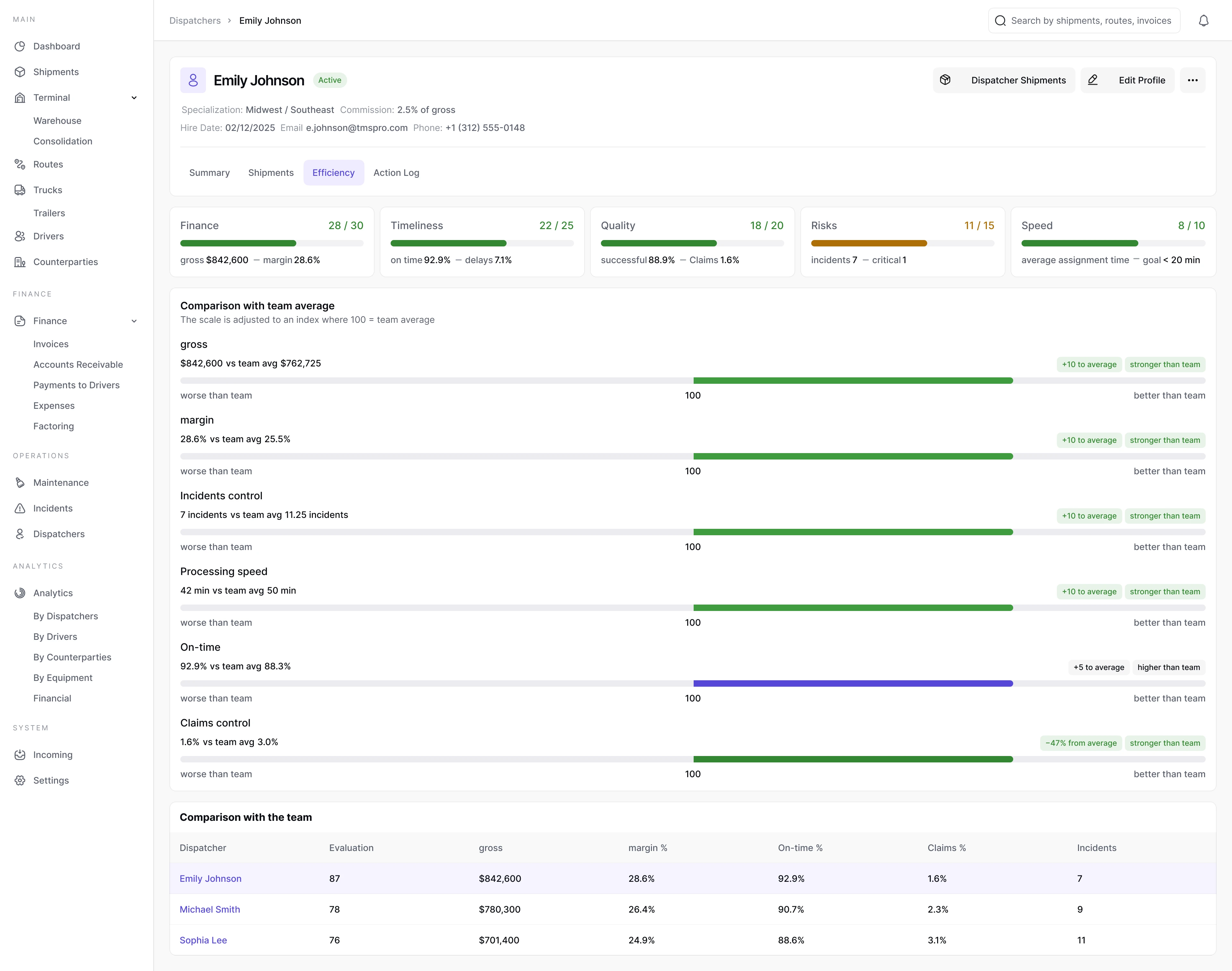
Dispatcher performance
I made the rating's contributing factors visible: financial results, timeliness, claims, incidents and processing speed. Team comparisons give the manager context for reviewing the score and identifying which part of the dispatcher workflow needs attention.
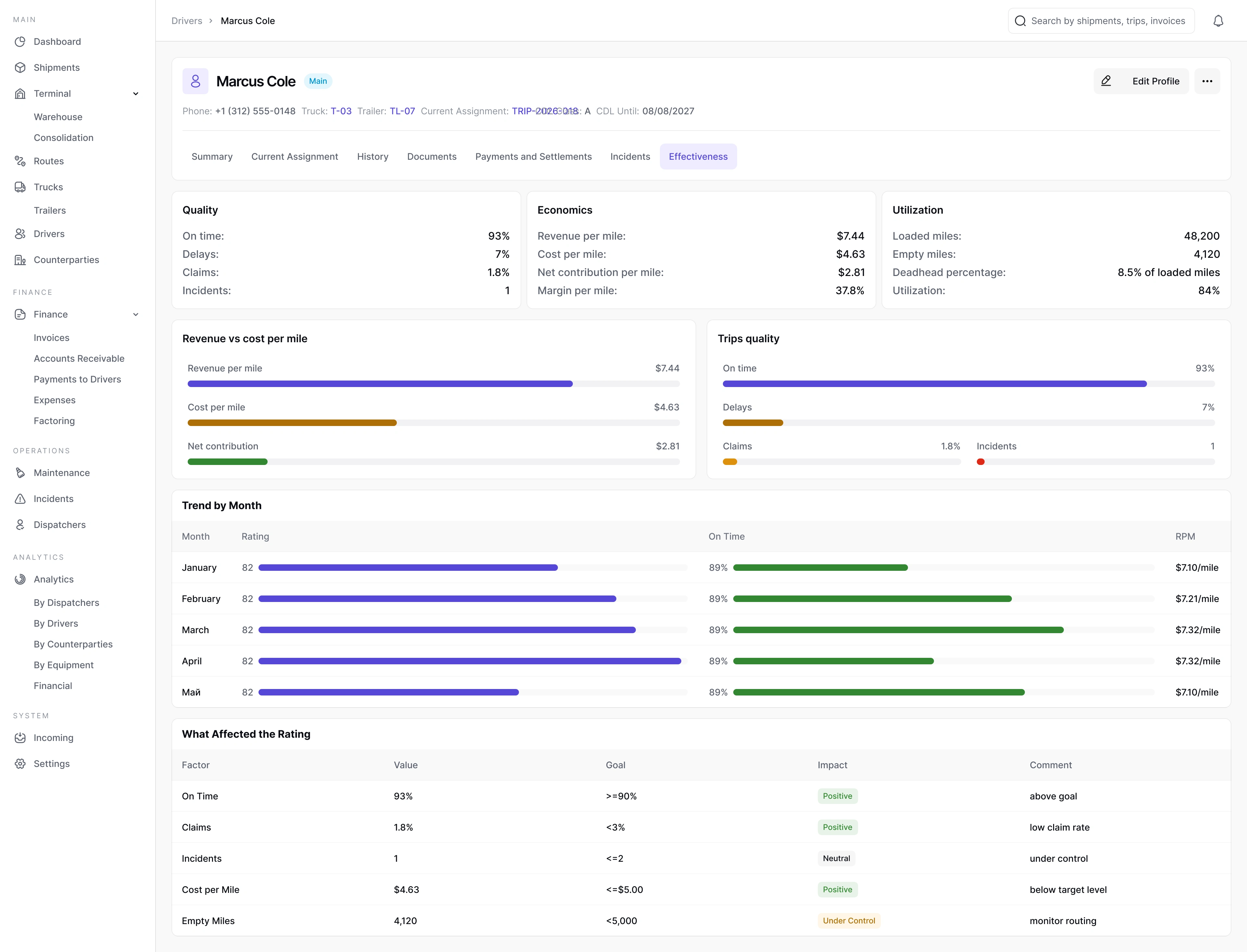
Driver performance
I connected service quality with unit economics. On-time performance, claims and incidents share the screen with empty miles, revenue and cost per mile, monthly trends and rating factors. This gives the manager several dimensions for reviewing a driver's work.
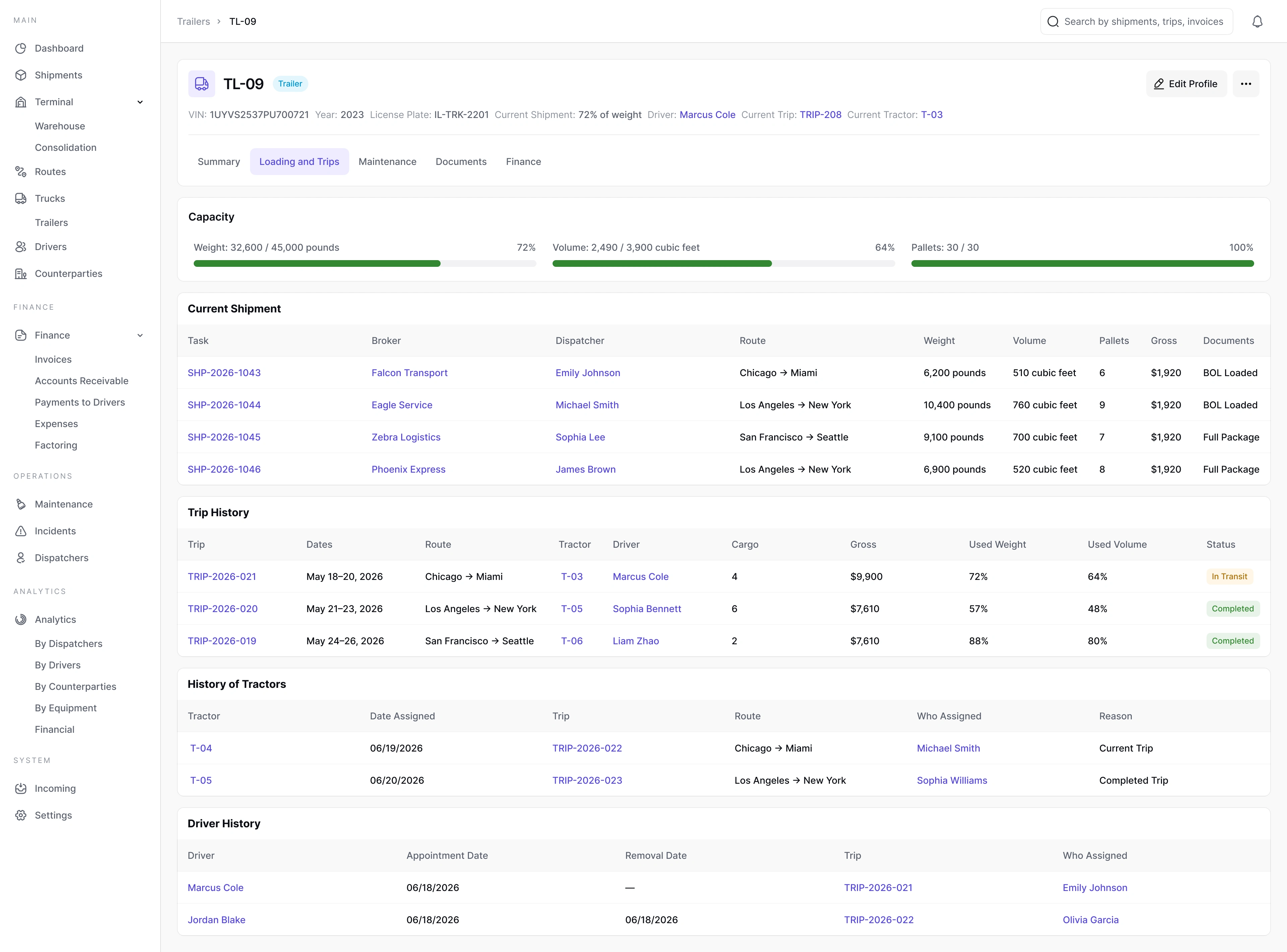
Trailer loading and trip history
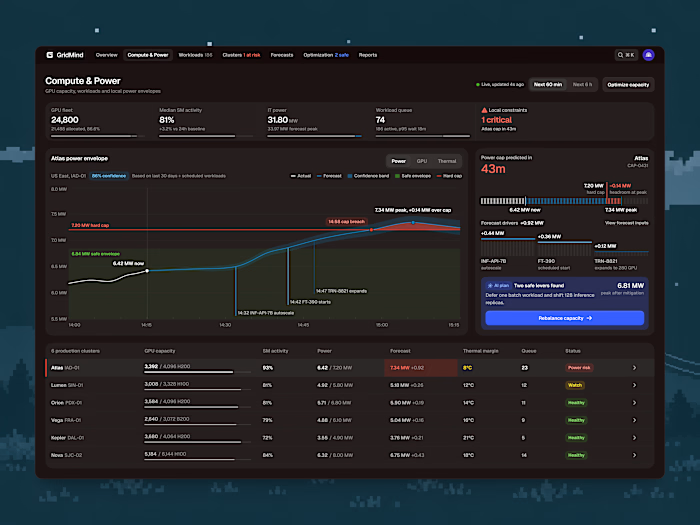
I kept weight, volume and pallet capacity separate because each can limit a load. Current shipments, previous trips and tractor and driver assignment histories remain in the trailer record, connecting physical capacity to its operational history.
Billing and shipment records
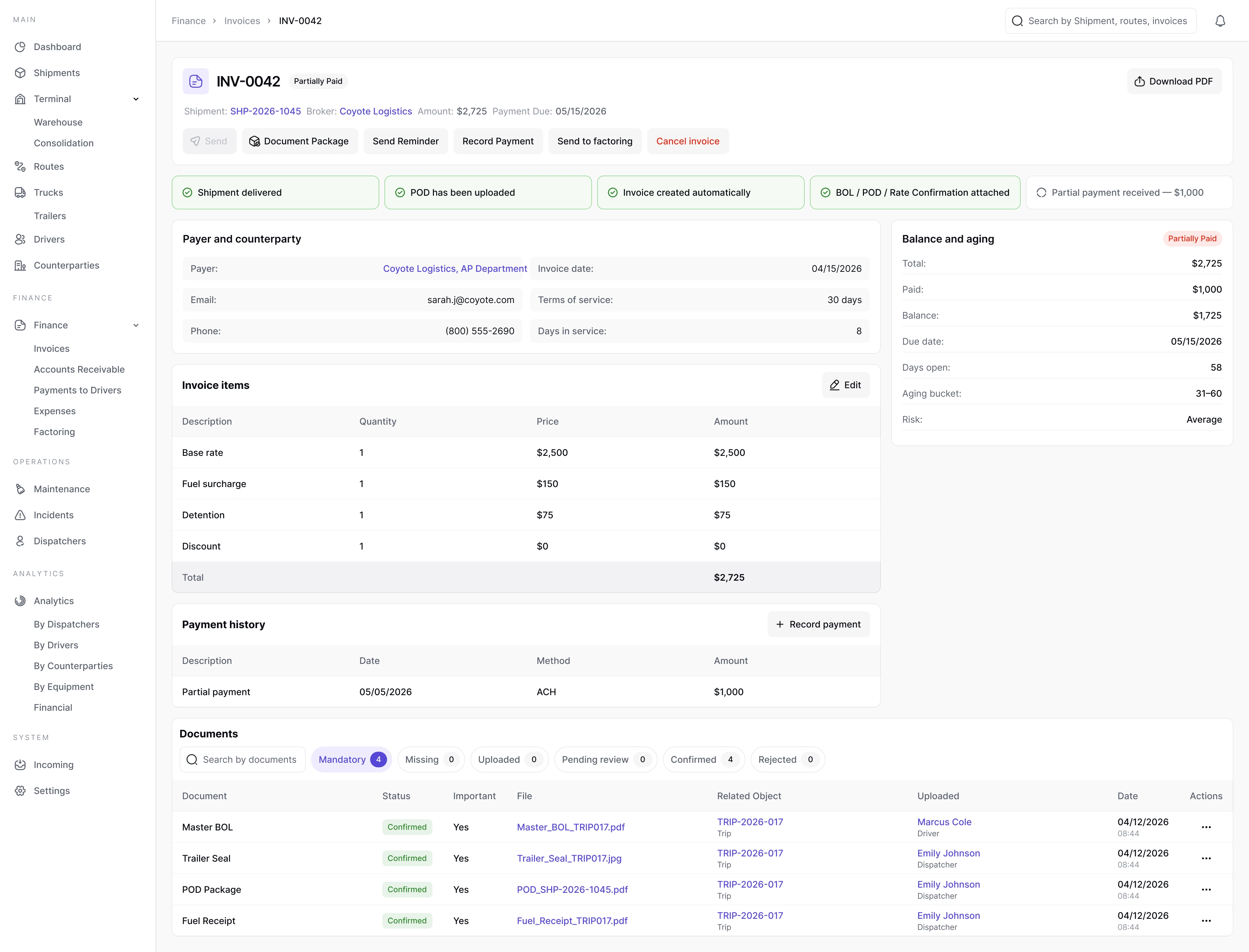
Invoicing and payment
I designed the invoice as a payment workspace: line items, delivery documents, payment history and the outstanding balance stay together. Accounting can record a partial payment, send a reminder or submit the invoice for factoring with the relevant evidence in view.
Driver settlement adjustments
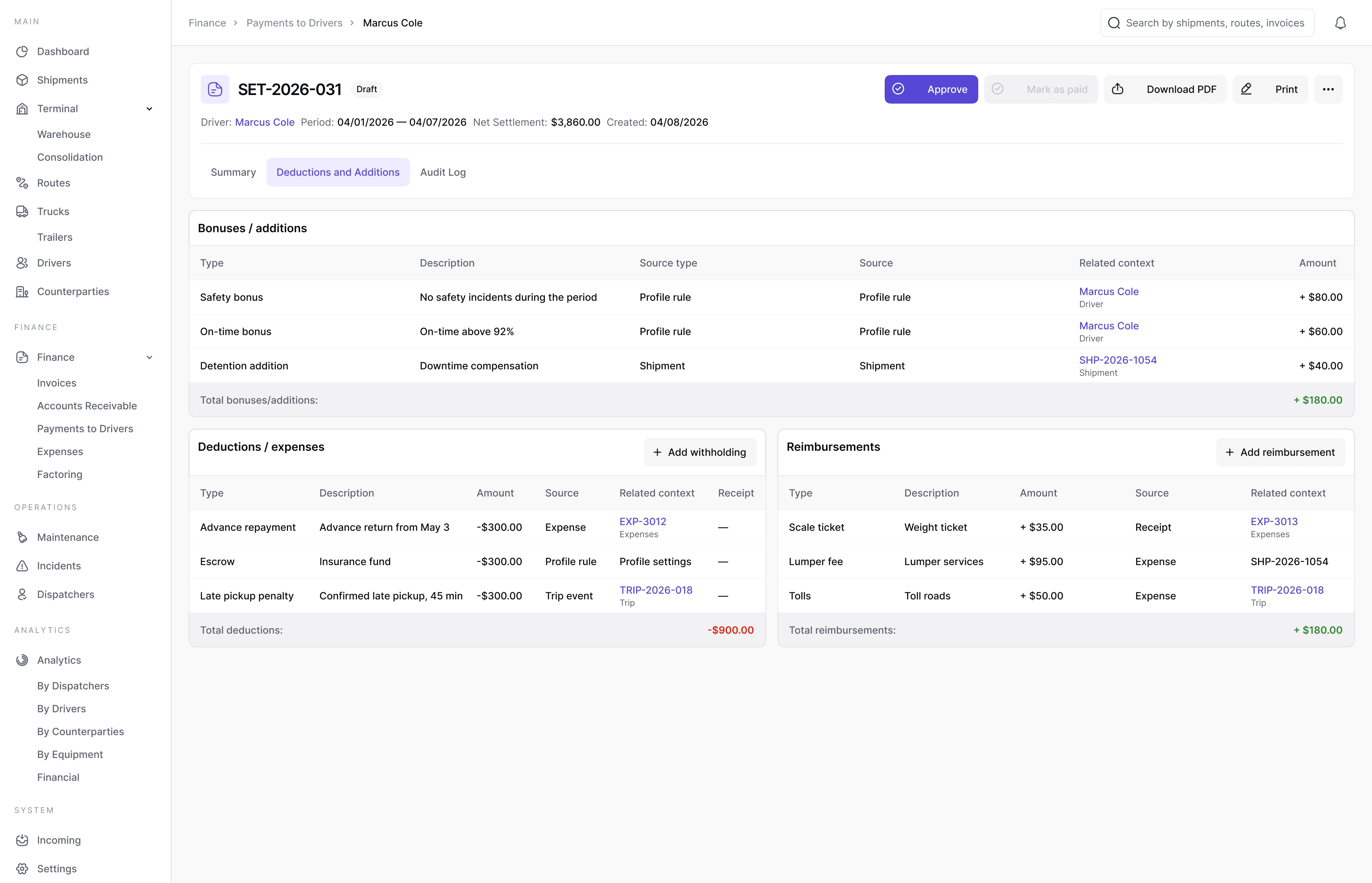
I separated bonuses, deductions and reimbursements and linked them to source records. The reviewer can inspect why an item is included and how it contributes to the settlement before approving the payment calculation.
Shipment overview
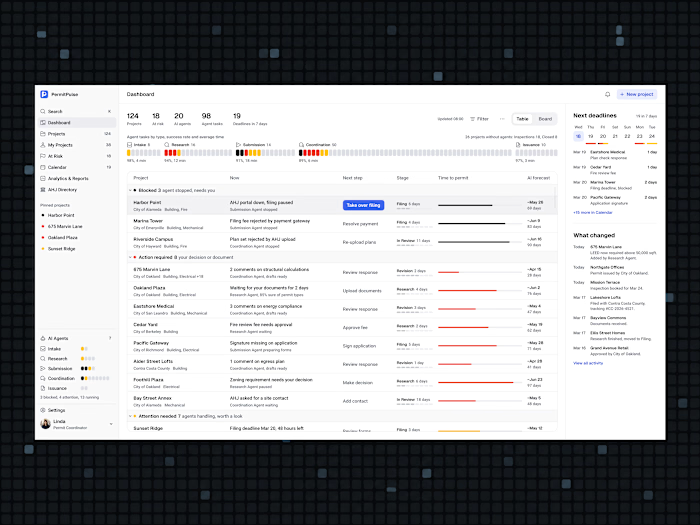
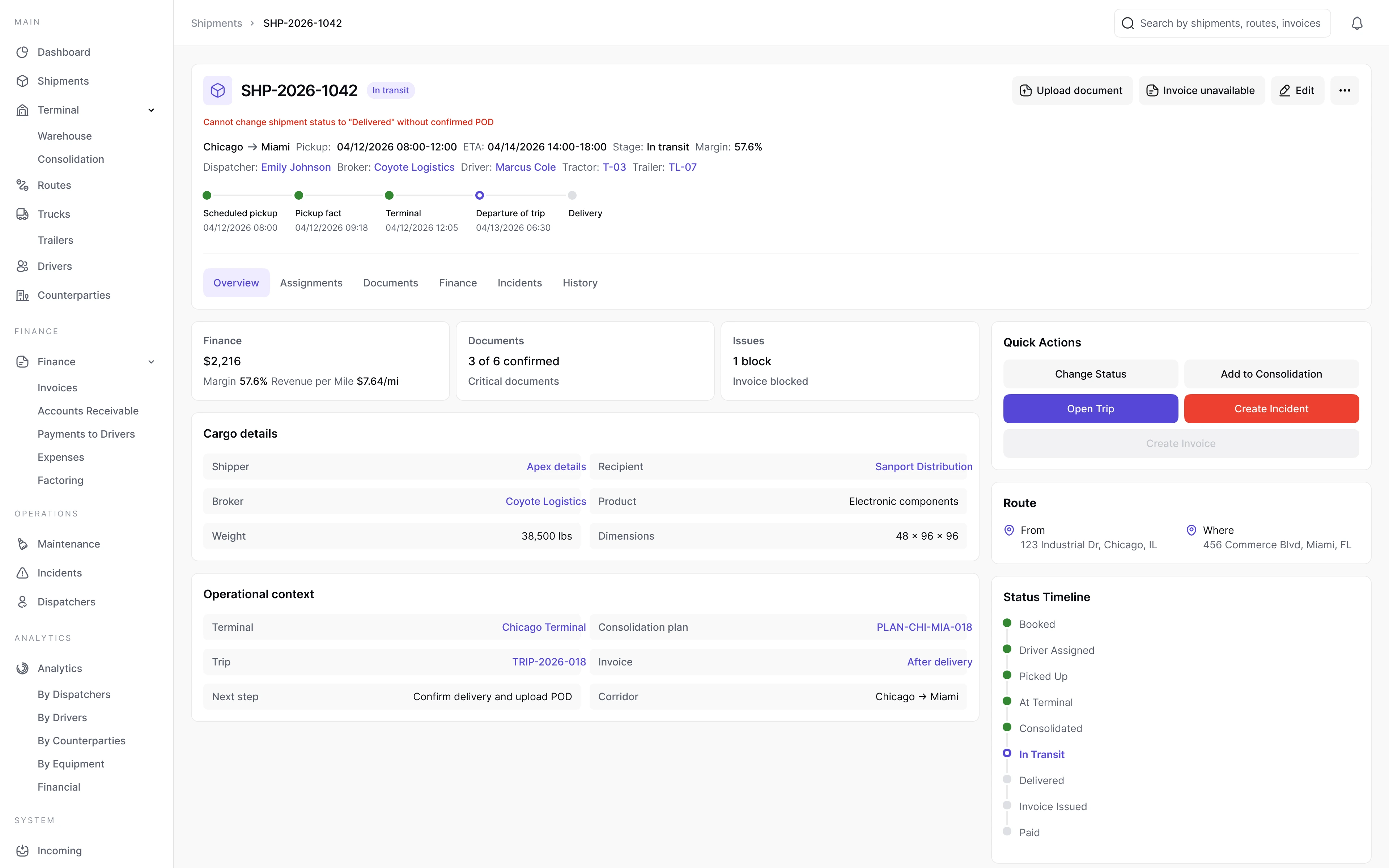
I made the shipment record the shared context for route, assignments, documents and billing readiness. When proof of delivery (POD) is unconfirmed, the screen explains why completing delivery and creating the invoice are unavailable and identifies the next step.
Delivery documents
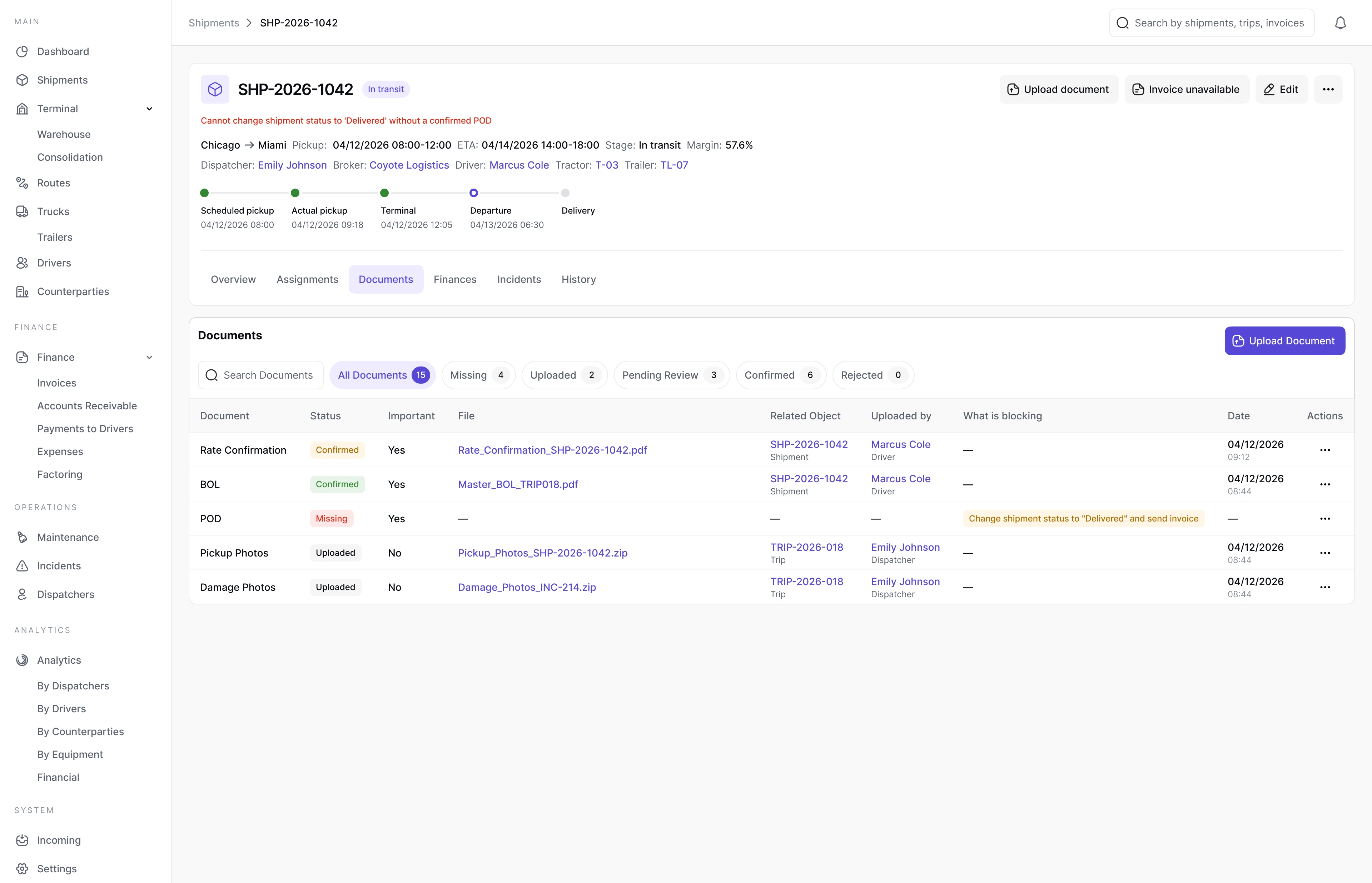
I showed each document's status together with the action it blocks. The missing POD is tied directly to delivery completion and invoicing, so the user can identify the requirement, upload the evidence and confirm it before the workflow continues.
Planning and creation
Trip planning
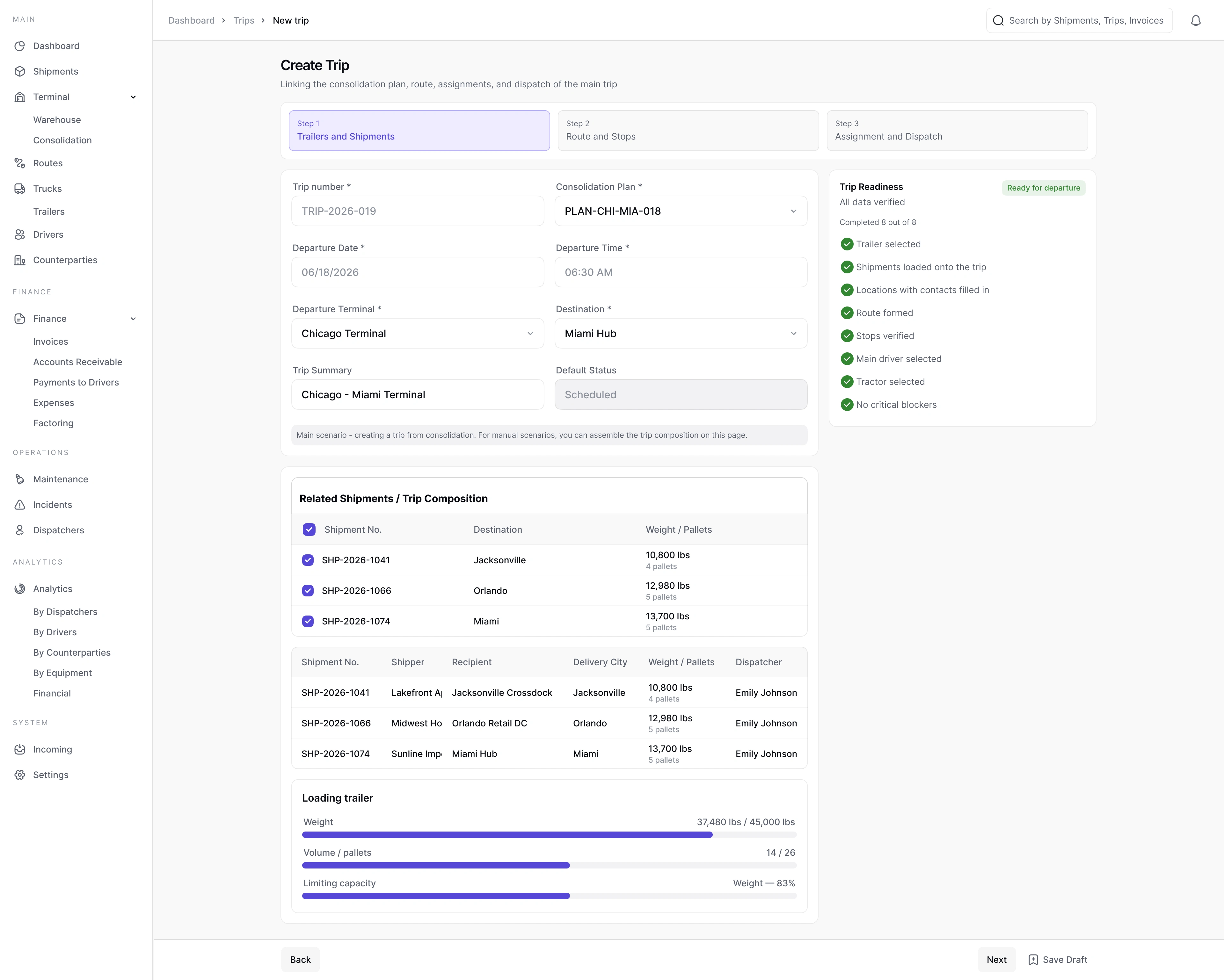
I based trip creation on the consolidation plan, with selected shipments, trailer capacity and departure requirements visible together. The readiness checklist makes dependencies such as route, stops, driver and tractor explicit before dispatch.
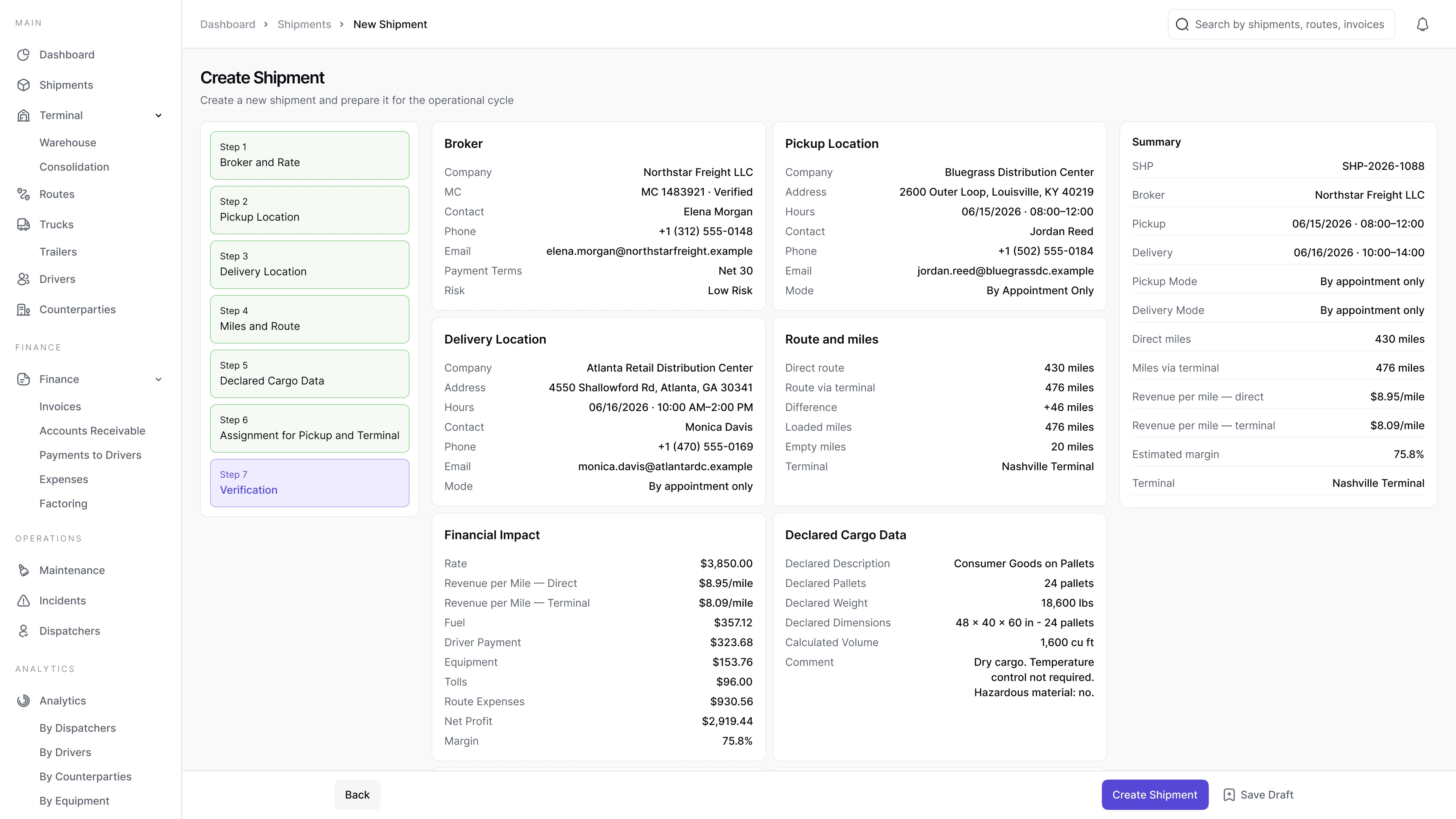
Shipment creation
I placed a verification step before shipment creation. Broker terms, appointment windows, cargo details, route alternatives and estimated costs are collected in a reviewable summary, giving the dispatcher a final check before the record enters the operational cycle.
Design outcome
I connected dispatch, terminal operations and accounting through shared shipment and trip records. The design makes readiness, document blockers and the sources of financial adjustments visible at the point of action, so each handoff carries the context the next role needs.
0 likes · 2 views · Oct 25, 2026
Designed a TMS for US LTL operations, linking trip readiness, delivery documents, shipment profitability and billing. Sole product designer.