5 Storefronts, One System: An E-Commerce Operations Hub

Russell Williamson


Project Snapshot
Industry | E-Commerce |
Duration | 8 Weeks |
Storefronts Unified | 5 |
Systems Built | 4 |
Manual Hours Eliminated | 15+/week |
Inventory Discrepancy Reduction | 90%+ |
Content Publishing Cycle | Days → Hours |
Five storefronts, five different versions of the truth. A growing e-commerce brand had scaled its sales channels faster than its operations, and the gap was costing the team 15+ hours a week in manual reconciliation that still couldn't keep the numbers straight.
The Operation
The brand was selling across multiple digital storefronts, each with its own fulfillment tracking, inventory counts, and reporting. None of them talked to each other. A sale on one platform didn't update inventory on the others until someone manually reconciled the numbers, which meant oversells, stockouts, and customer service problems that shouldn't have existed.
Reporting was worse. Every week, someone spent hours pulling data from each platform into a master spreadsheet, reformatting it, cross-checking for errors, and presenting numbers that leadership still questioned. The content pipeline had the same problem: editorial calendars lived in one place, publishing workflows lived in another, and the handoff between them was a chain of copy-paste steps that broke whenever someone was out sick.
The team was growing. The operations weren't keeping up. Every new storefront they added made the manual workload heavier instead of lighter.
What I Built
I architected a centralized operations hub that unified every storefront, content pipeline, and fulfillment workflow into a single source of truth. Four integrated systems replacing every manual handoff in the operation.
Automated Fulfillment Tracking. Real-time status sync across all storefronts. When an order ships on any platform, every other platform knows immediately. No more manual status updates, no more customers getting conflicting information.
Inventory Reconciliation Engine. A system that catches discrepancies between platforms before they become customer problems. Stock levels update across all channels in near real-time, and the system flags mismatches automatically instead of waiting for someone to notice.
Cross-Platform Reporting Dashboard. Live data from every channel flows into unified KPIs. Daily, weekly, and monthly views generate automatically. The spreadsheet wrangling that consumed 15+ hours a week became a dashboard the team checks in seconds.
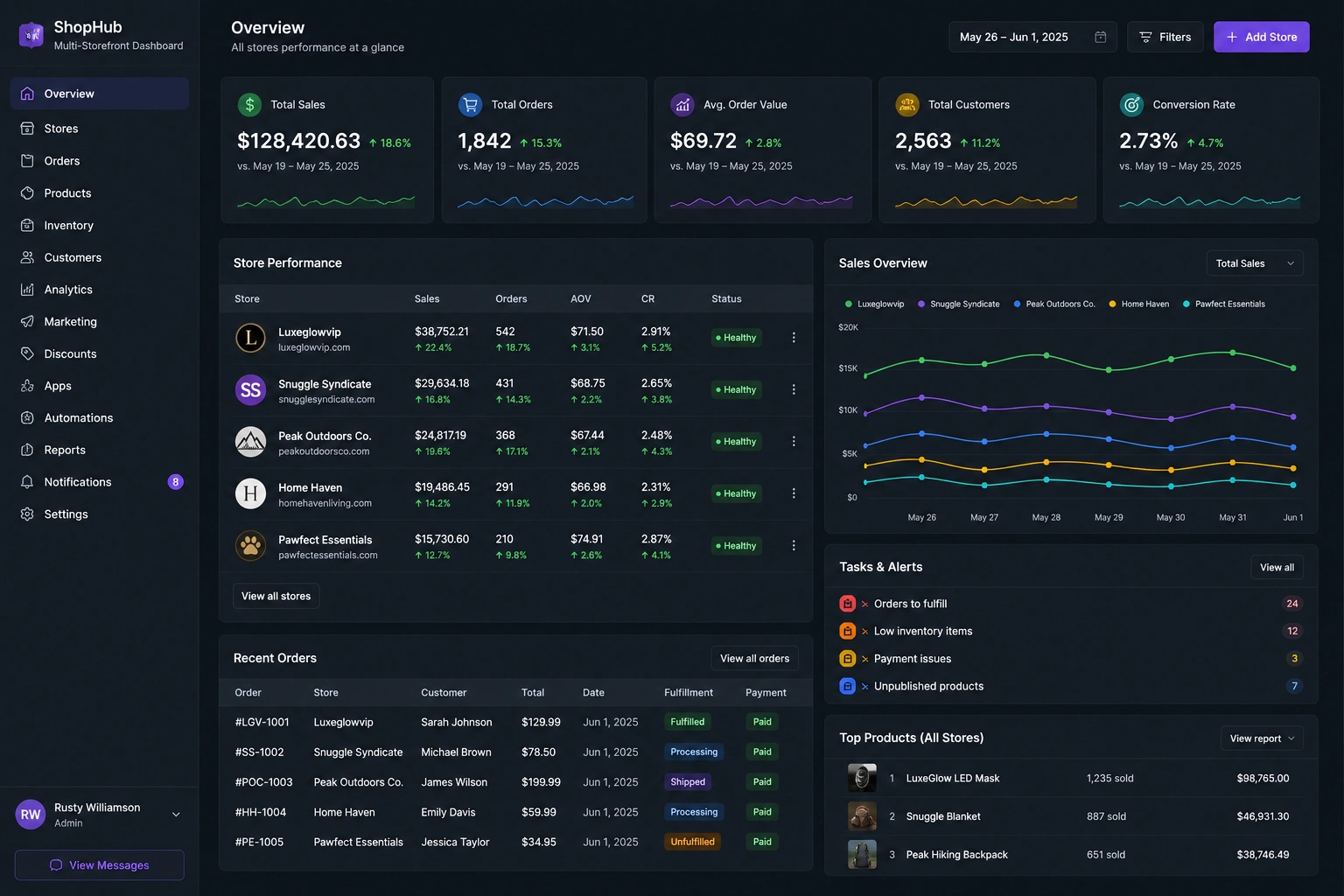
E-commerce operations dashboard
Content Pipeline Automation. Editorial calendars connect directly to publishing workflows with zero manual handoffs. Content moves from draft to scheduled to published across platforms without anyone copying, pasting, or reformatting.
The entire system runs on Airtable as the data backbone, with Make and Zapier handling orchestration between platforms. No custom code required for day-to-day maintenance, meaning the client's team operates it independently. The system was designed to get lighter as the business grows, not heavier.
The Results
15+ hours/week of manual work eliminated across reporting, fulfillment tracking, and content publishing
90%+ reduction in inventory discrepancies within the first month of operation
Real-time operational visibility for leadership for the first time in the company's history
Content publishing cycle shortened from days to hours by removing manual handoffs between editorial and publishing
Zero additional headcount required despite adding new storefronts after launch
The brand went from drowning in platform tabs and reconciliation spreadsheets to running the entire operation from one screen.
Business Impact
The real shift was what the team did with the time they got back. Instead of spending Monday mornings reconciling last week's numbers, leadership started spending that time on growth strategy. Instead of worrying about whether inventory was accurate across platforms, the operations team started focusing on supplier relationships and margin optimization. The system didn't just save hours. It changed what the team spent their hours on.
This is the pattern I see most often in growing e-commerce businesses. The sales channels scale, but the operations behind them stay manual. Every new platform adds another tab to check, another spreadsheet to reconcile, another place where information can fall out of sync. The team works harder, but the operation doesn't get smarter.
The solution isn't picking one platform and forcing everything through it. It's building a layer that sits above all of them, keeps them in sync, and gives the team one place to see everything that matters.
Like this project
Posted Jul 10, 2026
A growing e-commerce brand was running 5 storefronts with no centralized visibility. I unified fulfillment, inventory, reporting, and content publishing into one automated command center.
Likes
0
Views
11
Clients
LuxeGlow VIP
Snuggle Syndicate