UX Redesign for Olympus LMS

shiva ram


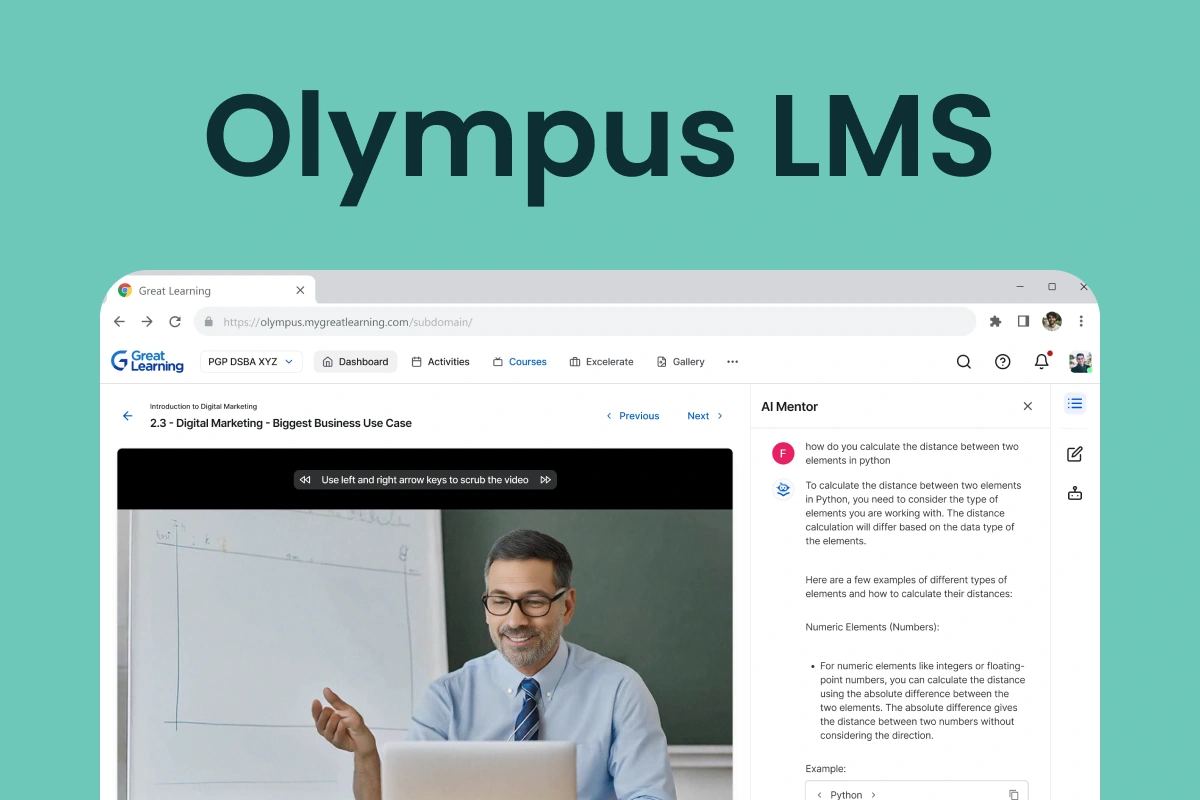
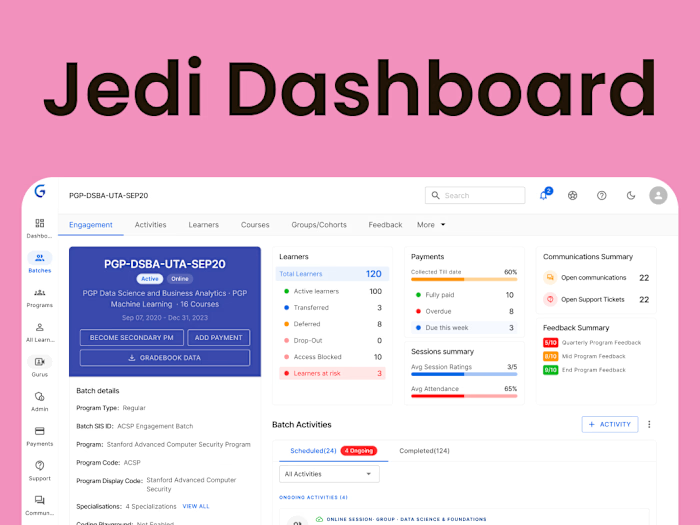
Led UX redesign of Olympus LMS to improve engagement for 45K+ learners from diverse backgrounds. Conducted stakeholder interviews, defined learner personas, and identified key UX pain points. Designed intuitive dashboards, clear course navigation, and interactive features like bookmarks and project tracking. Conducted usability testing with 50+ users. Post-launch, NPS rose from 4.1 to 4.8. Enabled a scalable, inclusive, and efficient learning journey.
Skills and deliverables
UX Research, UX & UI Design, Usability Testing, Persona Development, Prototyping
The Olympus LMS redesign was initiated to improve the experience for learners enrolled in Great Learning’s Post Graduate programs. These learners—ranging from fresh graduates to working professionals with up to 25 years of experience—had diverse needs, goals, and learning behaviors. The aim was to create a more intuitive, responsive, and structured platform that could scale with their expectations and support long-term career growth.
The Challenge
Despite its content depth, the original LMS faced usability issues across navigation, assignment management, feedback loops, and course visibility. Learners found the system unintuitive, with issues like:
Confusing navigation and poor course organisation
Inadequate visibility into course progress and quiz status
Complex submission workflows and unclear deadlines
Broken or confusing file handling and URL redirects
Poor interactive features (e.g., bookmarks, discussion threads)
Our mission was to redesign the platform around learners’ real workflows, improve their day-to-day engagement, and reduce friction in every learning interaction.
User Research
We interviewed stakeholders, including Vertical Heads, Academic Ops, Learning Consultants, and Program Managers to understand learning goals, content delivery gaps, and learner pain points. We also used application data and analytics to build representative learner personas across categories like non-programmers, programmers, early-career learners, and professionals.
Key Pain Points
Poor visibility, of course, and module status
Inefficient navigation across content, quizzes, and discussions
Assignment submission confusion and file upload issues
Lack of performance tracking on course cards
Insufficient interactivity (e.g., no feedback, bookmarks)
Broken URL redirects and missing error handling
Design and Implementation
As part of a core product team (2 developers, 1 PM), I led the UX design through wireframing, prototyping, and validation. We iteratively refined the user flow and interface based on learner feedback. We also introduced new features like:
Excelerate for personalised career growth paths
Hackathons to simulate real-world peer competition and skill validation
Enhanced downloads management to support offline learning
We built with responsiveness in mind and ensured cross-device accessibility.
Usability Testing
Over 50 learners participated in structured usability tests. We defined 19 key tasks to evaluate user flows, task completion time, errors, and emotional responses. The feedback was overwhelmingly positive, with only minor usability fixes needed.
Delivery and Impact
We released the platform in controlled batches and collected feedback from over 1,200 learners. The results showed major improvements:
4.8/5 average satisfaction score, up from 4.1
45,000+ learners adopted the new LMS
57,500+ video downloads post-release
4,000+ learners used the downloads manager within weeks
Conclusion
Olympus LMS evolved from a content system into a learner-centric platform built for success. By reshaping the experience around user goals, not forcing users to adapt, we created measurable engagement improvements and a scalable model for lifelong learning.
Like this project
Posted Jul 24, 2025
Led UX redesign of Olympus LMS to improve engagement for 45K+ learners.
Likes
0
Views
5