TripNest Travel Agency Landing Page by Olufemi TofunmiTripNest Travel Agency Landing Page by Olufemi Tofunmi

TripNest Travel Agency Landing Page

Olufemi Tofunmi

Olufemi Tofunmi

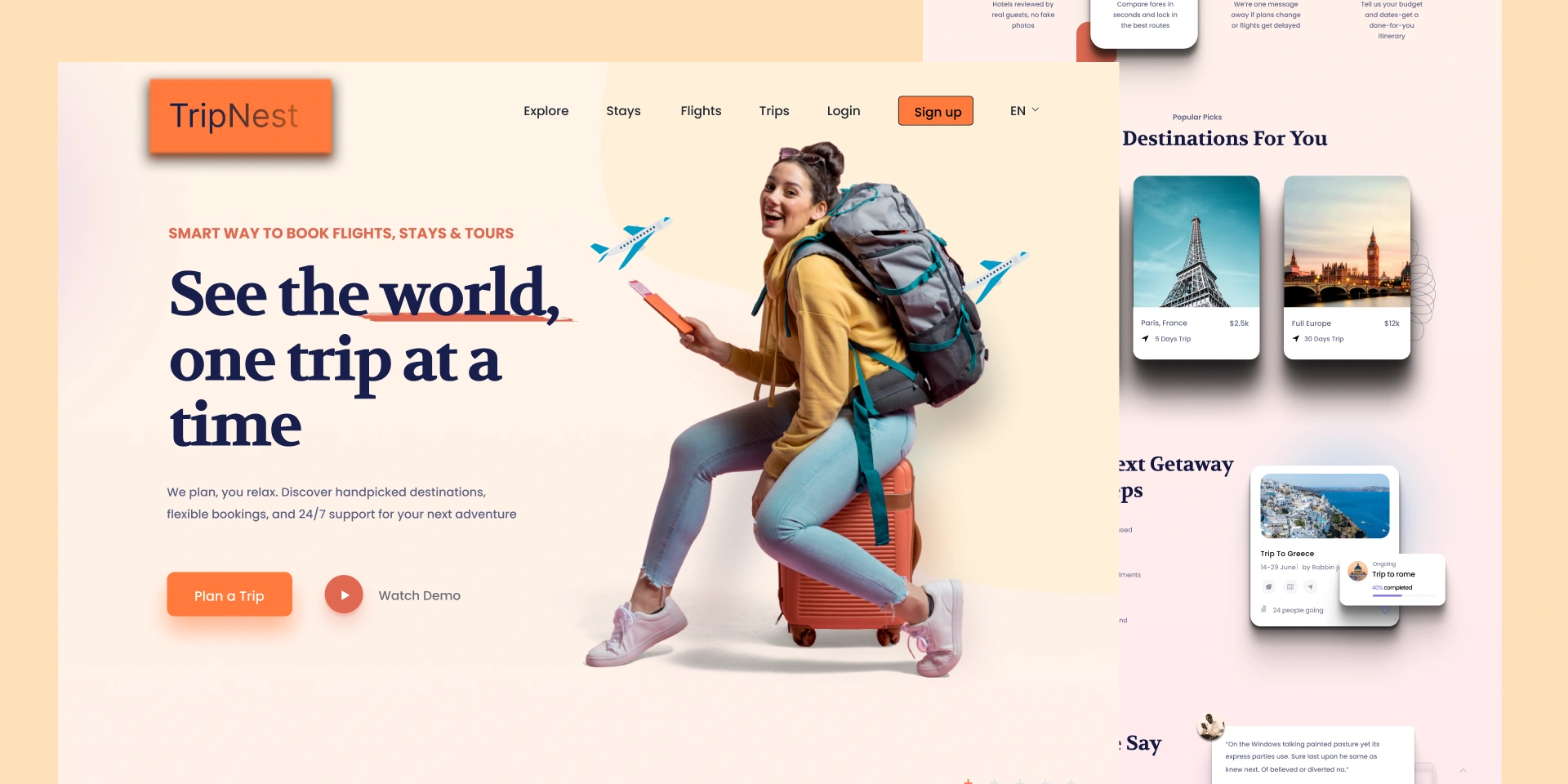
A modern travel agency landing page designed to make trip planning simple, visual, and trustworthy.
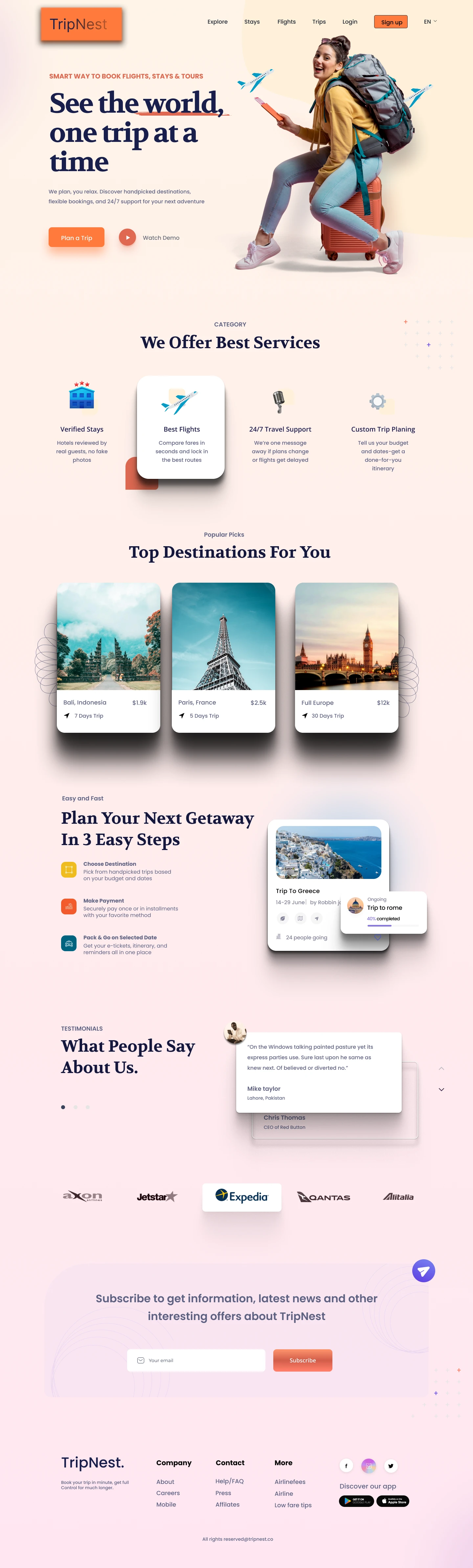
This concept focuses on clear hierarchy, emotional imagery, and a warm, inviting color palette that reflects the joy of travel while keeping the booking process straightforward.
🔹 Project Overview
Goal
1. Design a single-page landing experience for a travel agency that:
2. Showcases top destinations in a visually appealing way
3. Builds trust with users at first glance
4. Makes it easy to start booking a trip with clear calls to action
Role
1. UI/Visual Design
2. Layout & Composition
3. Basic UX Decisions (hierarchy, sections, CTAs)
Tools
1. Figma
🔹 Problem
 Planning a trip online can feel overwhelming.
Many travel websites look cluttered: too much text, too many options, and no clear starting point. New users land on the page and don’t know whether to search, scroll, or click “Book” first. This creates anxiety and often leads to drop-offs before a booking is even started.
Main issues I wanted to solve:
1. Lack of clear focus on the primary action (book/plan a trip)
2. Overuse of text and underuse of strong visuals
3. Confusing layout where destination cards, offers, and steps are all mixed together
4. No emotional connection or storytelling in the design
🔹 Solution
I designed a clean, warm, and structured landing page that:
1. Puts one clear hero message at the top
A bold headline and subtext explain exactly what the agency does and who it’s for.
2. Uses travel imagery and cards to guide the eye
Top destinations are shown as clean, modern cards with prices and durations.
3. Introduces a simple 3-step process
A “3 easy steps” section reduces booking anxiety by showing how simple the experience can be.
4. Supports the design with a soft, emotional background
A light peach-to-pink gradient gives warmth and personality without overpowering content.
5. Keeps the call-to-action visible and consistent
Buttons like “Plan a Trip” or “Get Started” are highlighted and repeated in key sections.
🔹 Target Audience
Young adults and working professionals (18–35) who:
- Want a stress-free way to book trips
- Care about visual inspiration (seeing destinations before reading blocks of text)
- Often use mobile or laptop to plan trips online
🔹 Design Process
1. Inspiration & Direction
I started by studying:
- Existing travel landing pages
- UI patterns for hero sections, destination cards, and pricing sections
- Soft, emotional color palettes that represent sunsets, beaches, and sky
Visual goals:
- Make it feel like a travel poster + app in one view
- Keep the layout minimal, but still rich with visuals
2. Layout & Structure
I structured the landing page into clear sections:
A. Navbar
Simple navigation: Home, Destinations, Services, Contact
A primary call-to-action button: “Plan a Trip”
B. Hero Section
Main headline (example): “See the world, one trip at a time.”
Supporting text explaining the offer in one or two lines
Primary button (e.g. “Plan a Trip”) and secondary button (e.g. “View Destinations”)
Hero image showing a traveller / vacation scene to immediately set the mood
C. Top Destinations
Card layout with:
Destination name (e.g. Bali, Paris, Cape Town)
Duration (e.g. “7 Days Trip”)
Price (e.g. “$1.9k”)
Visual hierarchy: image first, then text, then price
D. 3 Easy Steps Section
Step 1: Choose destination
Step 2: Make payment
Step 3: Pack & Go
Each step with a small icon and short description
E.. Call-to-Action Footer/Section
A final banner encouraging users to start planning
Repeated button: “Start Your Trip”
3. Color & Typography
Background
Used a soft gradient:
Top: #FFF4E8
Bottom: #FFE6F1
This gives a warm, dreamy feeling while keeping good contrast for the content.
Cards & Content Area
Destination cards and main content boxes use white (#FFFFFF) to keep them clean and readable.
Shadows are kept subtle to maintain a modern, minimal look.
Accent Color
Buttons and highlights use a warm accent (e.g. coral/orange) to create contrast against the soft background and draw attention to actions.
Typography
A modern sans-serif font for all text (e.g. Poppins, Inter, or similar).
Hierarchy:
Bold, large size for headings
Medium weight for subtitles
Regular weight for body text
4. Components & Reusability
Even though it’s a single-page concept, I treated elements as reusable components:
Destination cards
Buttons (primary / secondary)
Step items (icon + title + description)
This approach makes it easier to scale the design into more pages later (like full booking flow, trip details, etc.).
🔹 Key UI Decisions
1. Big hero, clear CTA:
Users shouldn’t wonder what to do when they land on the page. The hero section pushes them towards starting a trip.
2. Cards instead of long text:
Destinations are presented as small, digestible cards with an image, name, price, and duration — easy to scan.
3. Soft gradient vs. flat white:
The gradient helps the page feel more like a poster or travel ad, which matches the emotion of going on a trip.
4. Consistent spacing:
Generous padding and whitespace keep the layout airy and premium, rather than crowded.
🔹 Outcome
> The final design delivers a clean, visually driven landing page that invites users to explore destinations without feeling overwhelmed.
The combination of warm colors, simple structure, and clear CTAs makes it easier for first-time visitors to understand the value and start the booking process.
Time spent: ~8 hours
Type: Personal concept / UI Exploration
Like this project

Posted May 28, 2026

This is a travel agency landing page UI concept designed to make trip planning simple, visual, and trustworthy. The goal was to create a modern hero section, highlight top destinations, and explain the booking process in a clear, friendly way. Problem Many travel websites feel cluttered and confusing. New visitors land on the homepage and don’t know what to do first — search, scroll, or click “Book”. Important information like destinations, prices, and how the service works often gets buried under heavy text and complex layouts. Solution I designed a clean, warm landing page focused on three things: • A clear hero section with a strong headline and primary call-to-action • Visual destination cards showing place, duration, and price • A simple “3 steps” process that explains how booking works