Development of Marble Interactive Learning Platform

Omoniyi Daniel


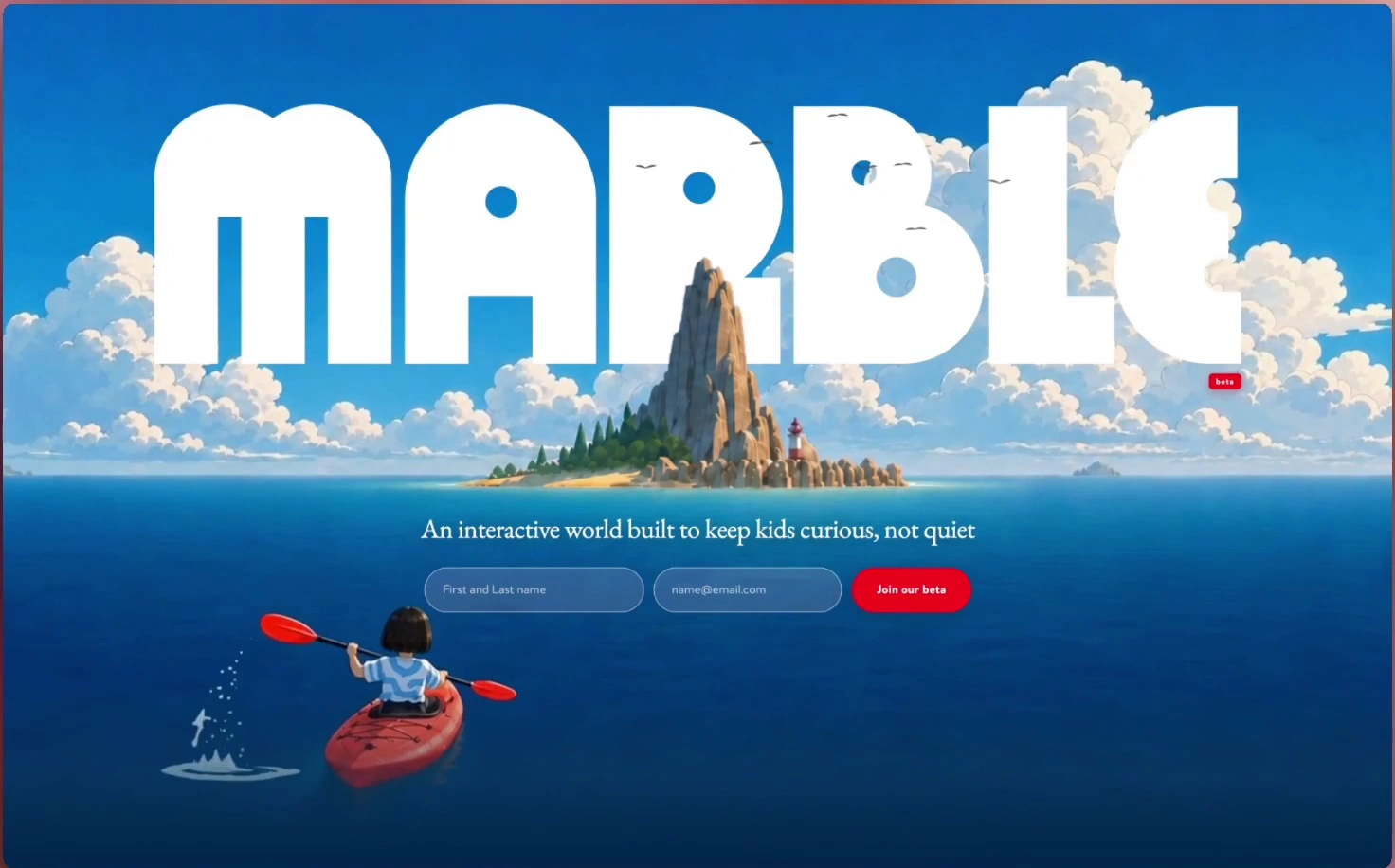
An interactive world built to keep kids curious, not quiet.
Marble is a beta-stage interactive learning world for children — part illustrated adventure, part game, built around active participation instead of passive watching, with advisors from Stanford, MIT, and DeepMind.
01 — Overview
Built to be played, not just watched.
Marble is an interactive world for children aged 6–12, positioning itself directly against the passive-video model that dominates kids' screen time. Instead of a feed to scroll, Marble is a game-like environment where a child draws, asks questions, gets things wrong, and tries again — with the site's own copy framing that friction as the point, not a flaw to design away.
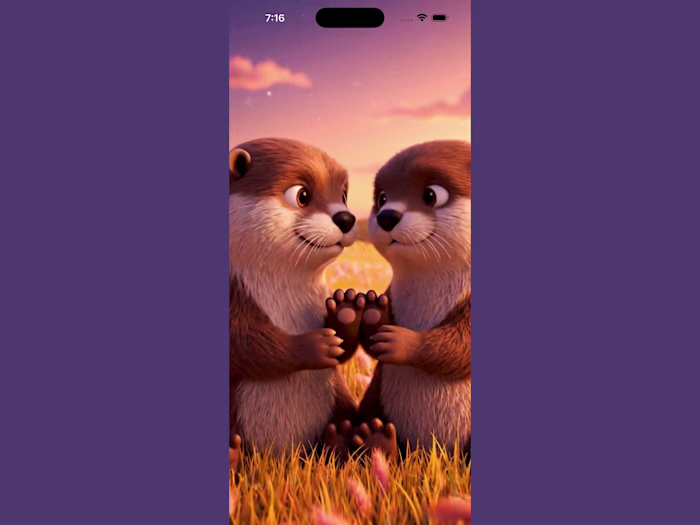
The landing page itself is unusually well-crafted for a pre-launch beta: original illustrated hero art, animated interactive mascots that react to the cursor, an embedded gameplay preview, and real named research advisors — signals more typical of a funded, thoughtfully-run early-stage studio than a quick landing page.
"Most kids' content is built to keep them watching. Marble is built to keep them curious."
The Challenge
Every kids' app claims to be "educational."
Children's screen time is one of the most scrutinized, trust-sensitive categories to design for — parents are actively skeptical of anything that looks like content designed to hold attention rather than build a skill. The core challenge was proving, visually and structurally, that Marble is built around active participation (making, guessing, trying again) rather than passive consumption, before a parent has downloaded anything.
A second challenge: making a genuinely game-like product feel safe and credible enough for parents to hand over their email — which is where real institutional backing does more work than any amount of marketing copy could.
03
Research & Insight
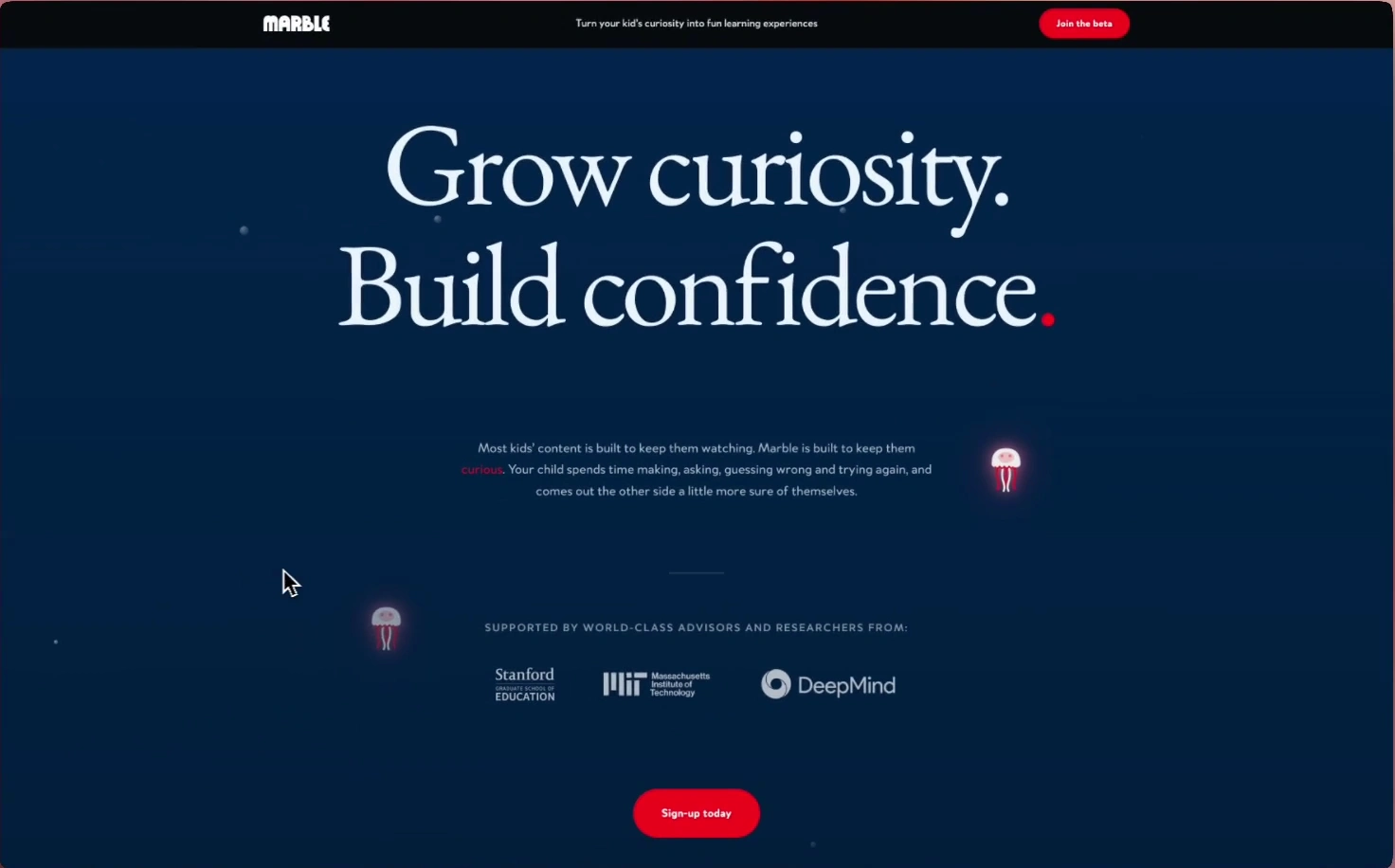
Credibility, named
out loud.
Rather than a vague "backed by education experts" line, the site names real institutions directly under the mission statement.
The Approach — Product Architecture
Seven ways in, one world.
The landing page doesn't just describe features in a bullet list — it lets a visitor click between them and see an actual embedded gameplay preview change live underneath.
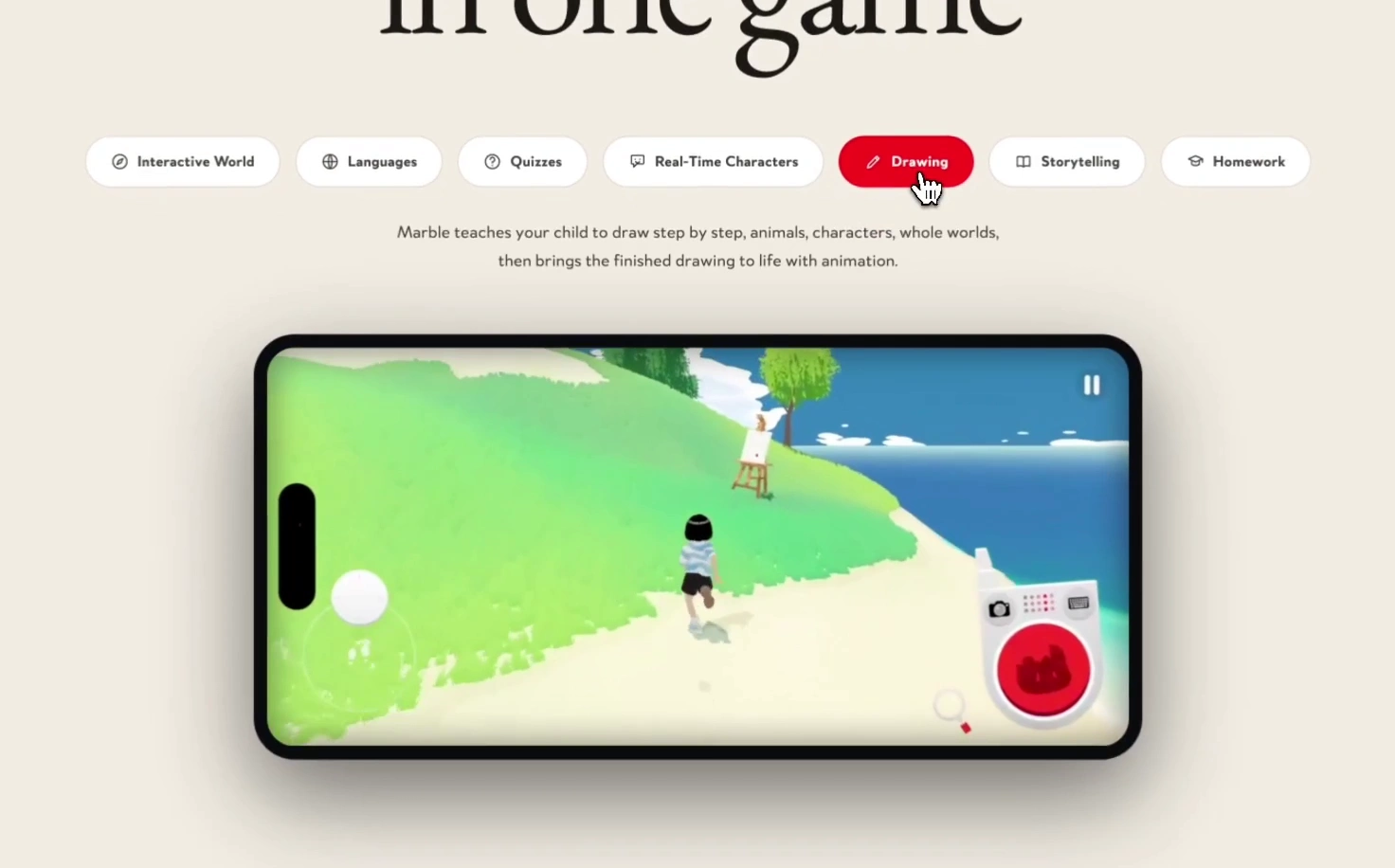
Showing, not just claiming. Letting a visitor toggle between seven real product pillars and watch an actual embedded 3D preview respond is a much stronger trust signal than a static feature grid — it's proof the "interactive world" claim is real before anyone signs up.
05
The Solution — Beta Strategy
Scarcity, framed as partnership.
Rather than a generic "join our waitlist," the beta pitch is framed as an invitation to help shape the product — with a small, explicitly limited number of spots.
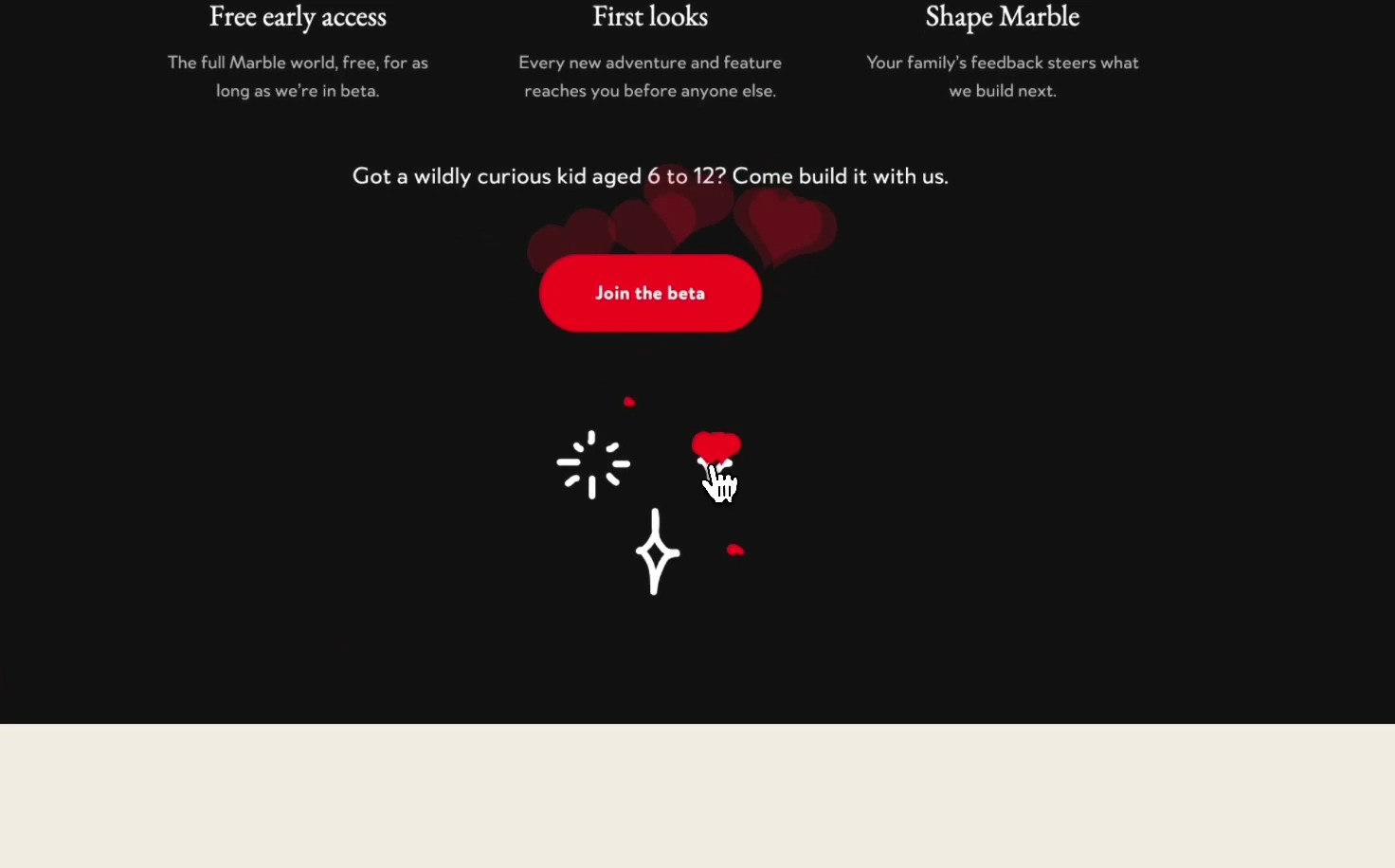
"Marble is still early, and we're opening just a few hundred spots" — a real, specific scarcity claim rather than a vague one, paired with a direct call for the exact audience it wants: "Got a wildly curious kid aged 6 to 12? Come build it with us."
06
Full Walkthrough
The site, in motion.
Screenshots undersell this one — the paddling kayak, the cursor-reactive jellyfish and hearts, and the live gameplay preview are all part of the pitch.
07
Impact & Results
Where it actually stands.
Marble is in beta signup, not a public launch — so what follows is what's honestly verifiable at this stage, not invented user or revenue numbers.
08
Key Takeaways
01
For a trust-sensitive category like kids' products, naming real institutions specifically beats any amount of general "expert-backed" marketing language.
02
Letting visitors interact with a live feature preview — not just read about it — proves the core product claim before anyone signs up.
03
Framing a limited beta as "help us build this" rather than "join the waitlist" turns scarcity into a sense of partnership instead of exclusion.
Like this project
Posted Aug 11, 2026
A full-stack interactive learning platform for children, combining real-time 3D web experiences with backend product systems.