Moola By Davenport MFB

Matthew Gbotemi Omowaye


Moola By Davenport MFB
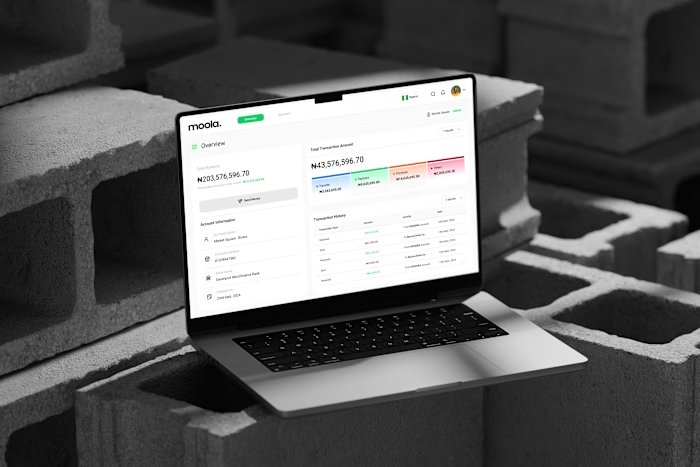
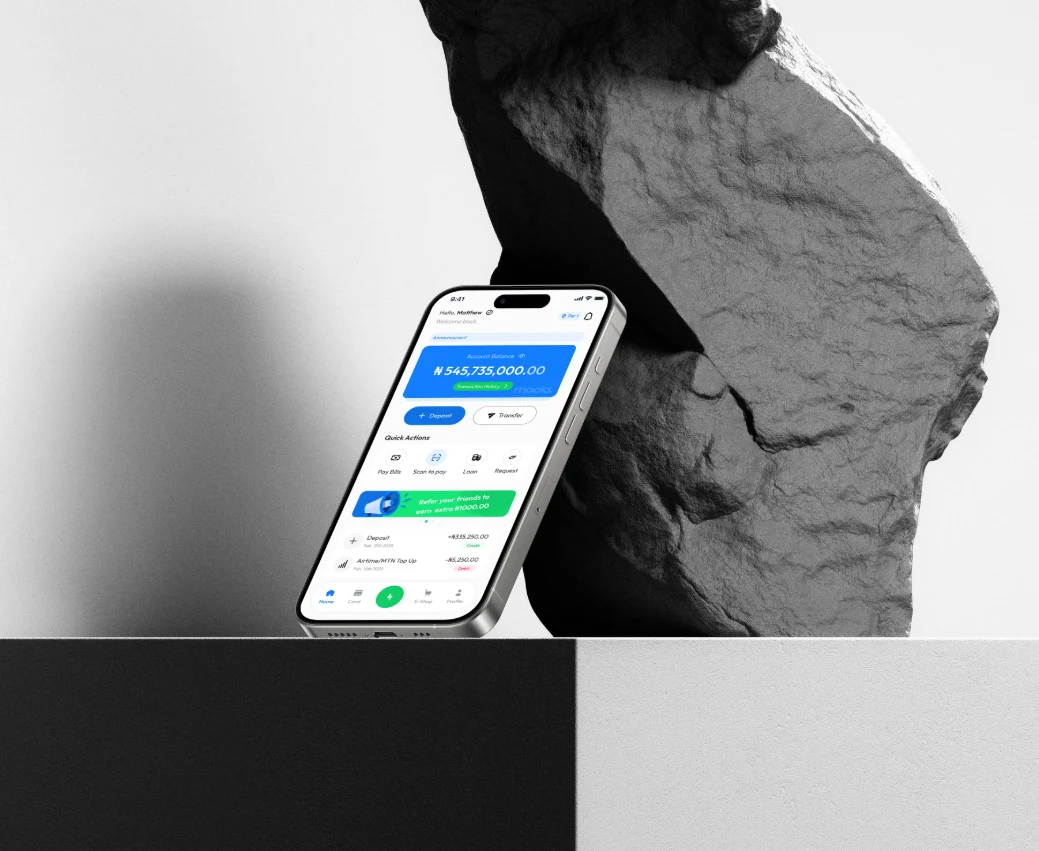
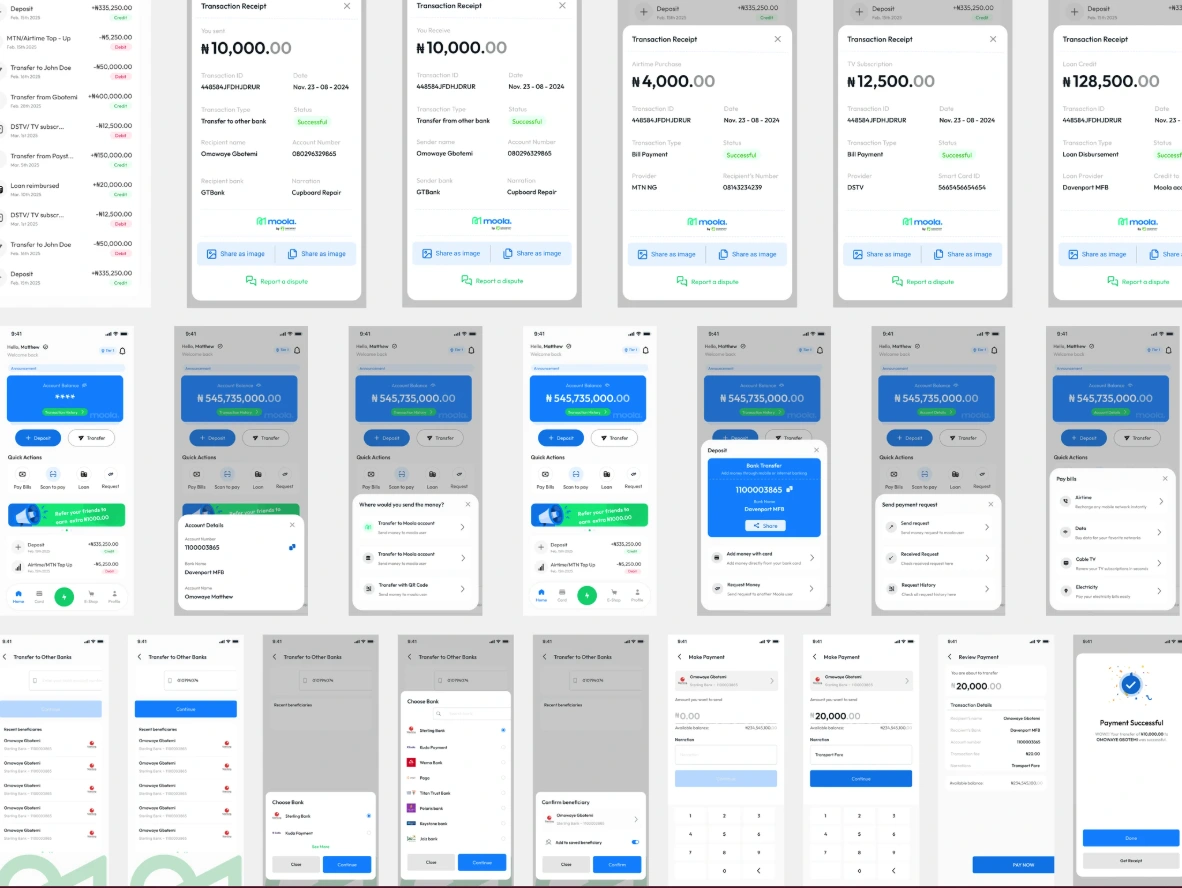
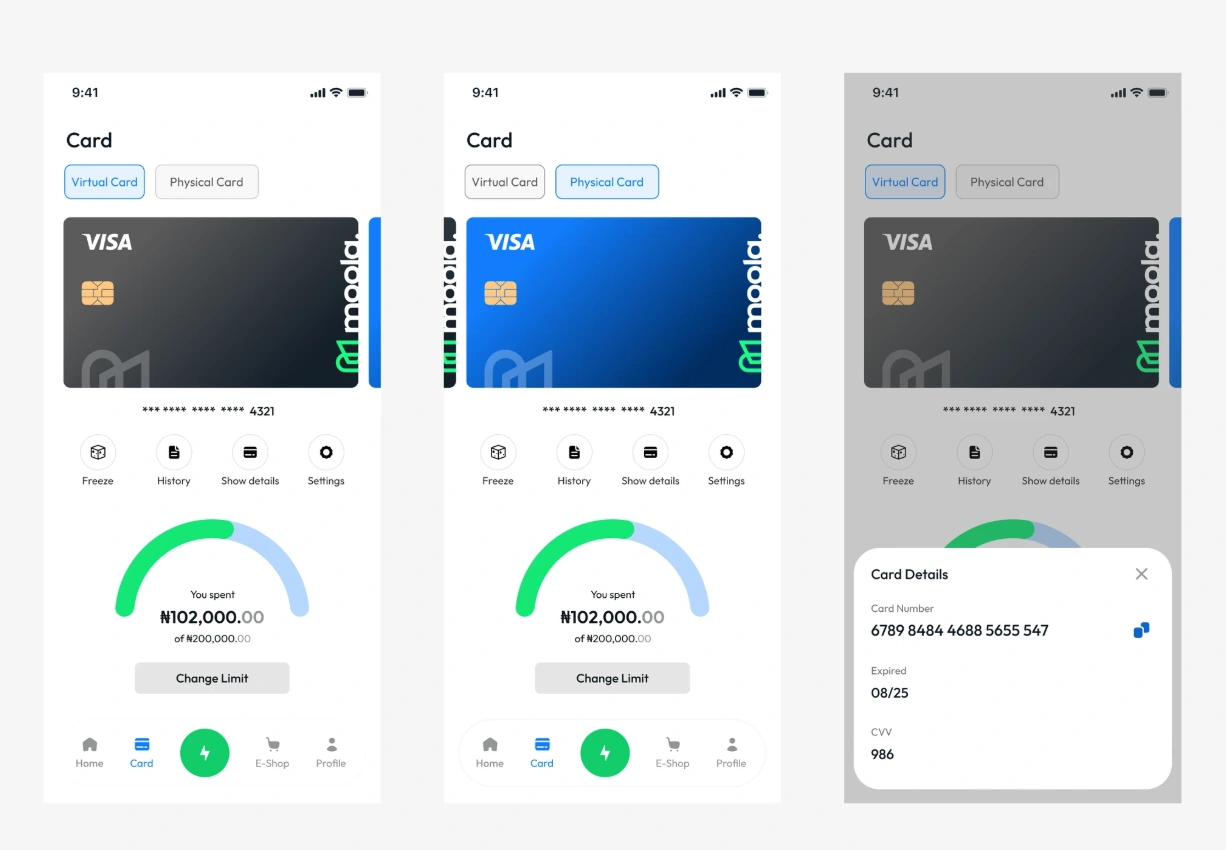
Moola Personal Banking is an innovative fintech solution designed to empower individuals with seamless, secure, and fast financial services. The app provides a comprehensive suite of digital banking features, making money management effortless and accessible to users from all walks of life.
My Role: Product Designer – responsible for research, UX/UI design, and prototyping.
Note: This product is in active development (First UI Design(MVP) is live for Beta Testing)
Problem Statement
Traditional banking, while offering established financial services, presents significant limitations in terms of accessibility, convenience, and cost-effectiveness. Customers are often required to physically visit bank branches during restricted business hours to perform transactions or manage accounts, leading to time-consuming and inconvenient experiences. Additionally, traditional banks frequently impose high fees and interest rates, creating financial strain for low-income individuals and those with limited credit history. In contrast, the rise of fully automated financial institutions, digital banking, and fintech solutions has demonstrated the potential to address these challenges by delivering more efficient service, reducing operational costs, and reallocating resources toward business growth and customer-centric innovation. However, the transition to fully automated, accessible, and affordable financial services remains an ongoing challenge that needs to be effectively addressed to enhance customer experience and competitiveness in the financial sector. Therefore, there is a clear need to design and implement modern, automated financial solutions that overcome the limitations of traditional banking, enhance accessibility and convenience, reduce costs, and deliver more inclusive financial services across all customer segments.
Design Process & Solution
The process of this project, as with most of my other works, wasn’t linear, and I go deeper into sharing visuals of the process in the full version of this case study.
The design process involved problem analysis encompassing discovery work, a current-state audit, and the creation of a guiding problem Statement. Moving on to Solution Definition, where the core design work began, including tests, syncs with the business goal, and a team review. Further, the process moved to Review and Cleanup and Handoff, which led me to collaborate with Engineering on the build and scaling design for other markets.
Research and Insight
In designing Moola by Davenport, I drew insights from a variety of leading fintech platforms. I analyzed:
Moniepoint
To understand how personal banking and POS terminal distribution can be scaled efficiently to reach underserved communities while maintaining system uptime and secure transaction processing.
OPay
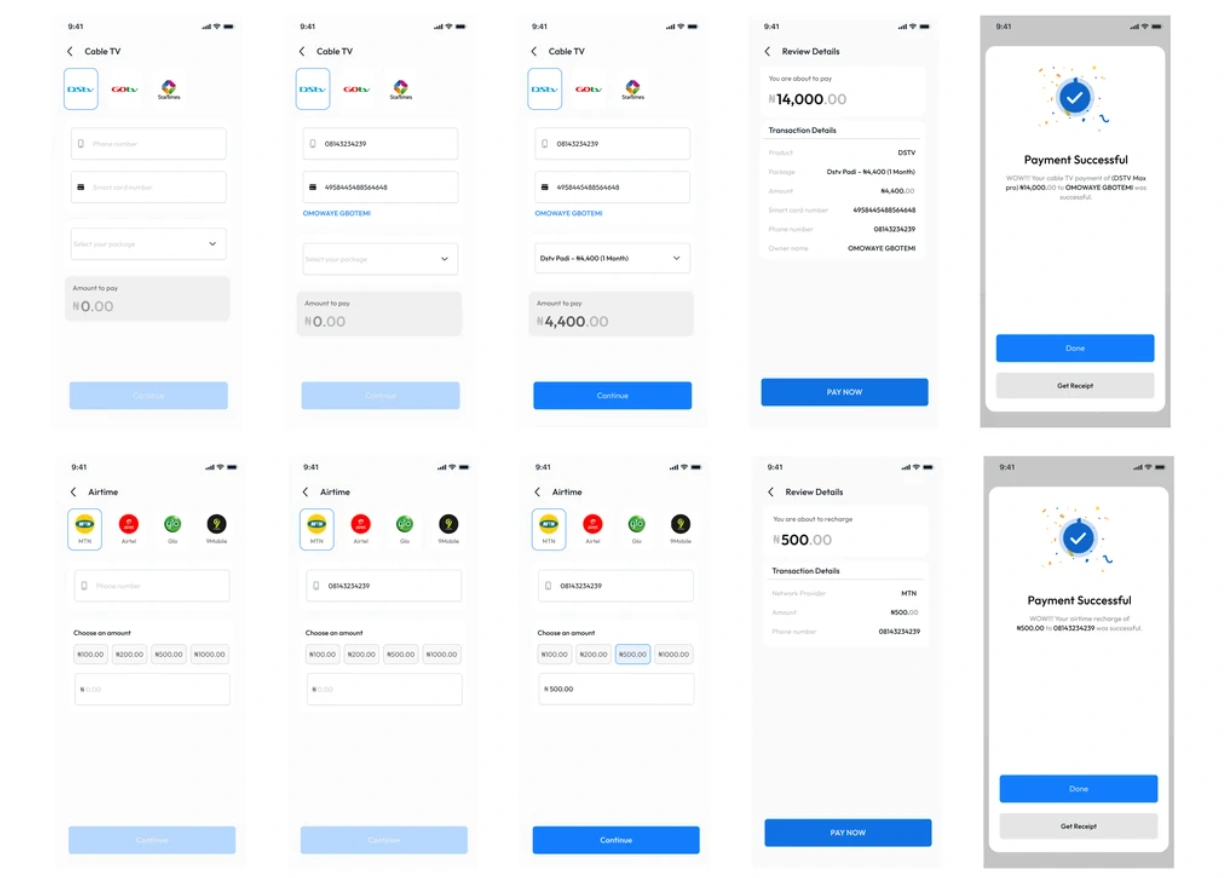
Studied how offering a super-app approach, combining payments, bill payments, transfers, and value-added services, can boost daily user engagement and encourage wallet usage for multiple needs, not just money transfers.
PiggyVest
Observed how simple, automated savings plans and goal-based savings tools help build user trust and encourage financial discipline, turning occasional users into loyal savers..
These insights shaped Moola by Davenport to ensure it offers secure, versatile, and user-centered digital financial services, bridging gaps in financial inclusion, enhancing user trust through transparency, and providing tools for savings, payments, and investments within one intuitive platform.
Result
User Adoption: 300+ users signed up during beta testing.
Customer Satisfaction: 85% of users rated the experience as highly satisfactory.
Like this project
Posted Dec 2, 2025
Automated solutions that overcome the limitations of traditional banking provide greater accessibility and convenience to inclusive financial services.