
Software engineer with expertise in DevOps and AI
- $•••••
- Earned
- 1x
- Hired
- 5.0
- Rating
- 11
- Followers
Software engineer with expertise in DevOps and AI





Designing PCBs, electronics, embedded and product design
New to Contra
Designing PCBs, electronics, embedded and product design
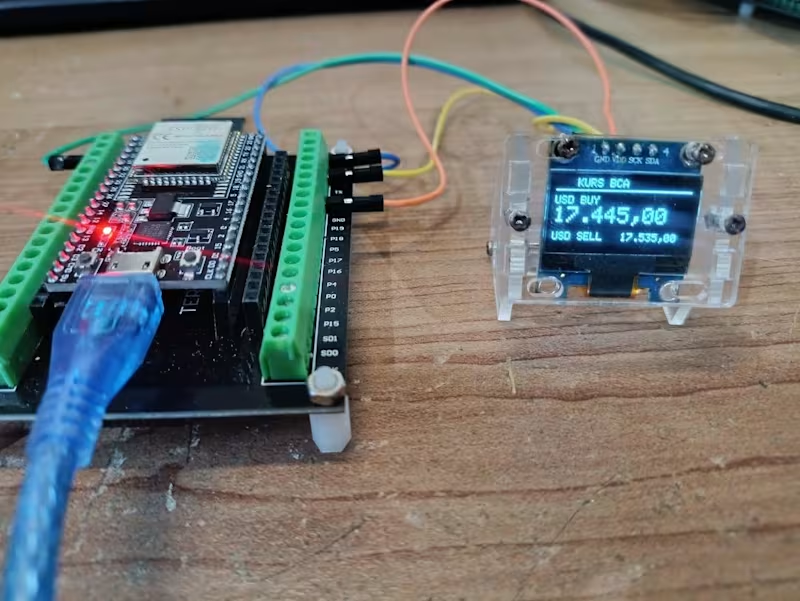
IoT-Based USD to IDR Exchange Rate Display Using Bank BCA Exchange Rates
Real-Time Bank BCA USD/IDR Exchange Rate Monitor using ESP32 and OLED Display with live internet updates.
Features:
• Real-time USD/IDR exchange rate display
• ESP32 WiFi connectivity
• OLED SSD1306 interface
• Automatic online data refresh
• Lightweight and low-power system
• Compact embedded monitoring device
#ESP32 📡 | #IoT 🚀 | #EmbeddedSystems 💻 | #Arduino ⚙️ | #Programming 📚
1
244

Raspberry Pi CM5 Carrier Board with Class-D Amp
In this design, Texas Instruments TPA3118 Class-D amplifier is integrated on the PCB carrying Raspberry Pi CM5. Power supply is coming from USB-PD input via Type-C port.
I/O ports
1 x HDMI
1 x DSI 22p FPC connector
2 x USB 3.0 Type-A
2 x USB 2.0 Type-A
1 x M.2 M-Key PCIe slot for SSD
1 x 3.5mm stereo Line-out jack
1 x USB Type-C Debug/Flash
1 x USB Type-C PD
1 x PWM Fan connector
1 x RGB LED 3-p connector connected to GPIO
1 x rotary encoder input connected to GPIO
ICs
Texas Instruments PCM5102A, 2.1 VRMS, 112/106/100 dB Audio Stereo DAC with PLL and 32-bit, 384 kHz PCM Interface
Texas Instruments TPA3118D2, 30-W stereo, 60-W mono, 4.5- to 26-V supply, analog input Class-D audio amplifier
Injoinic IP2721, TYPEC/PD2.0/PD3.0 Physical Layer IC for USB Type-C input Interfaces
Terminus Tech FE1.1s, USB 2.0 High Speed 4-port Hub Controller
0
95
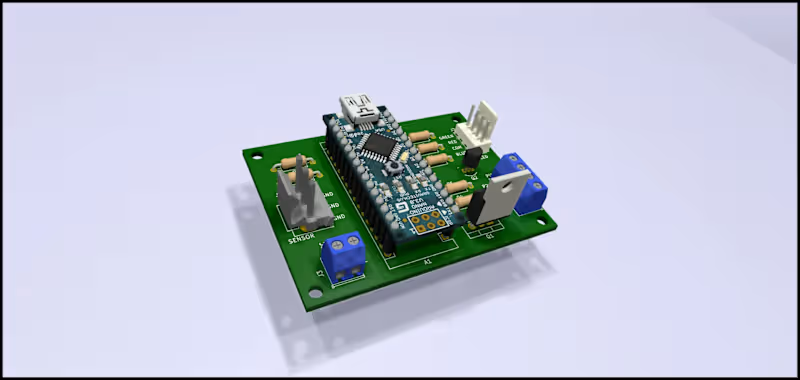
Arduino Nano-Based PCB Design
I designed a custom PCB built around the Arduino Nano, creating a compact hardware platform for integrating the microcontroller with supporting electronic components and external peripherals.
The design involved organizing the Arduino Nano interface, power connections, input/output lines, and supporting circuitry into a clean and practical PCB layout. I focused on efficient component placement, clear signal routing, reliable power distribution, and maintaining a layout that is easy to assemble and integrate into a larger embedded system.
This project strengthened my experience in Arduino-based hardware development, PCB layout, embedded electronics, component integration, and microcontroller interfacing.
0
100

PWM Module - Multi-Channel PCB Design
Designed a custom PCB integrating four independent PWM (Pulse Width Modulation) modules on a single board, creating a compact and practical solution for controlling multiple output channels.
The PWM modules can be used for applications such as DC motor speed control, LED brightness adjustment, and light dimming. My work involved translating the circuit requirements into a functional PCB layout, carefully arranging the four PWM sections while maintaining clear separation between functional blocks.
I focused on efficient component placement, clean signal routing, power distribution, grounding, and practical board organization. Combining four PWM channels onto a single PCB required careful planning to make effective use of the available board space while keeping the design organized and suitable for assembly.
This project strengthened my experience in multi-channel PCB design, power and signal routing, motor control applications, and practical electronics hardware development.
0
95

IoT & Embedded Systems Engineer ESP32, Raspberry Pi, Sensors
New to Contra
IoT & Embedded Systems Engineer ESP32, Raspberry Pi, Sensors
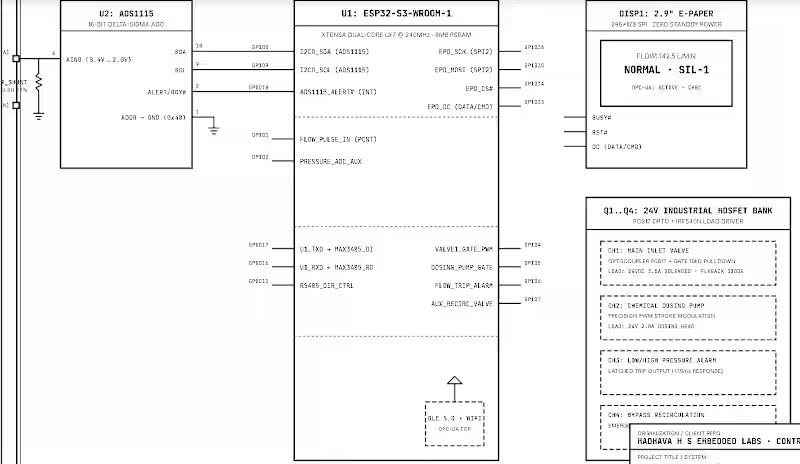
Title: FlowSense Pro - Industrial Flow & Chemical Dosing SCADA Gateway with OPC-UA & BLE
Problem:
Municipal wastewater treatment plants, breweries, and chemical processing facilities rely on analog 4–20 mA pressure/flow transmitters and mechanical pulse flow meters that lack native network connectivity. Modernizing these field instruments into SCADA platforms historically required dedicated automation racks and programmable logic controllers, inflating per-station deployment costs. Additionally, field technicians in wet, hazardous environments struggle with device commissioning and routine calibration because older systems require physical laptops, terminal blocks, and USB-to-serial cables. Traditional field gateways also lack secure, fail-safe remote firmware updates (OTA), risking operational downtime during software maintenance.
Solution:
Built a ruggedized, DIN-rail mounted smart gateway around the ESP32-S3 (Xtensa dual-core 240MHz) utilizing ESP-IDF v5.x:
High-Precision Dual Measurement: Combines a 16-bit ADS1115 ADC and a 0.1% precision 100 Ω shunt to read 4–20 mA current loops with ±0.5% calibrated accuracy, alongside a hardware pulse counter (PCNT) interrupt engine reading turbine flow meters up to 500 L/min.
Direct SCADA & OPC-UA Integration: Compiles the open-source open62541 OPC-UA stack directly into ESP-IDF, enabling the gateway to communicate natively with SCADA servers and industrial HMIs over TCP/IP without intermediate PLC hardware.
Cable-Free BLE Commissioning: Implements a custom BLE 5.0 GATT profile that allows field operators to calibrate sensor K-factors, set alarm thresholds, and configure local Wi-Fi credentials via an iOS/Android mobile companion app in seconds.
Zero-Power Display & Fail-Safe Actuation: Integrates an ultra-low-power 2.9" SPI E-Paper display that maintains critical process readouts even during brownouts, alongside four opto-isolated 24V/3.5A power MOSFET outputs driving dosing pumps and emergency shutoff valves in <10 ms.
Enterprise Security & Robust OTA: Employs mutual-TLS (mTLS) certificate-based authentication with AWS IoT Core and dual-partition HTTPS OTA with automated bootloader rollback upon boot failure.
0
46
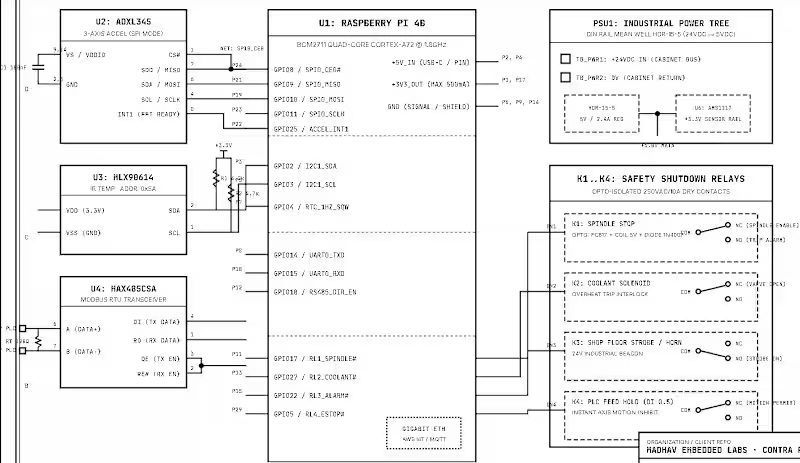
Title: SmartMill Guardian - CNC Machine Predictive Health & Vibration Diagnostics Edge System
Problem statement:
High-precision CNC milling centers and industrial machining tools frequently suffer from sudden spindle bearing degradation and thermal runaway. A single unplanned spindle seizure costs manufacturing facilities upwards of $40,000 per incident in damaged workpieces, emergency tooling, and shop-floor downtime. Traditional plant maintenance relies on manual spot checks every 4 to 8 hours or cloud-only IoT gateways that suffer from 2–5 second network latencies—far too slow to trigger an emergency feed-hold before catastrophic mechanical failure. Furthermore, retrofitting older factory machinery with proprietary PLC hardware (e.g., Siemens S7 racks) is prohibitively expensive and requires disruptive rewiring.
Solution:
Designed and deployed a deterministic edge monitoring unit powered by a Raspberry Pi 4B running bare-metal FreeRTOS and Embedded C (C99):
High-Rate Vibration FFT: Interfaces with an ADXL345 3-axis MEMS accelerometer via hardware SPI at 1 kHz ODR. An on-chip CMSIS-DSP Fast Fourier Transform (FFT) paired with a lightweight µTensor INT8 model identifies bearing defect frequencies (BPFO/BPFI harmonics) with 94% accuracy.
Thermal Profiling & PLC Bridging: Continuously monitors bearing temperatures using an MLX90614 infrared sensor over I²C while polling spindle speed, drive current, and status words from existing Siemens S7-1200 PLCs over RS-485 Modbus RTU.
Deterministic Emergency Interlock: Features a 4-channel opto-isolated relay interface capable of triggering a CNC machine feed-hold or spindle stop in <5 ms upon anomaly detection—eliminating cloud latency.
Cloud & SCADA Telemetry: Securely streams time-series vibration metrics and alerts via TLS 1.3 MQTT to AWS IoT Core, populating live shop-floor InfluxDB and Grafana dashboards for condition-based maintenance scheduling.
0
46
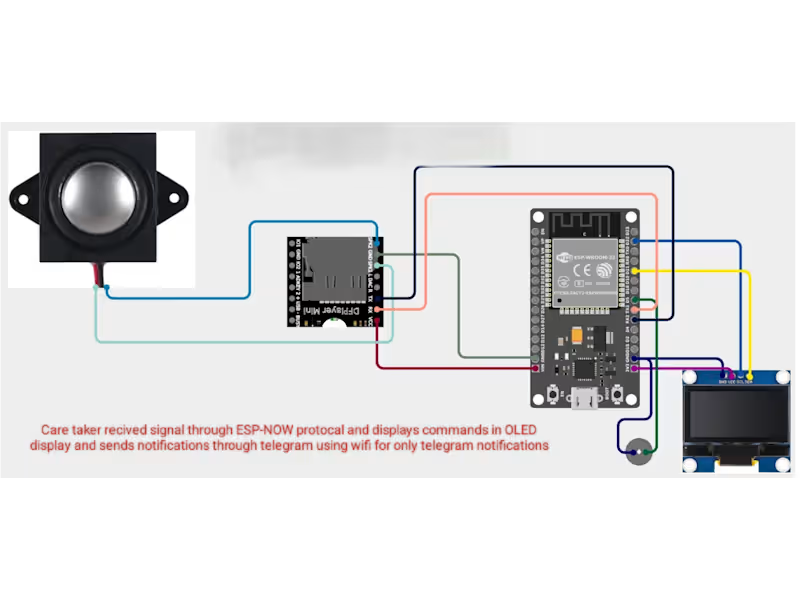
Title: Smart Assistive Gesture Glove and Caretaker Alert System
1. Problem statement:
Speech-impaired, partially paralyzed, or bedridden patients often struggle to communicate basic necessities (food, water, washroom, physical discomfort) or call for immediate emergency help without a caregiver continuously in the room. Standard push-button call systems lack expressive nuance, while cloud-reliant smart devices fail completely whenever local Wi-Fi or internet connectivity drops, posing a critical safety hazard during medical emergencies.
2. Solution and Technical Implementation:
Gesture-to-Intent Recognition: The patient wears a wearable glove equipped with four flex sensors. Using trimmed-mean signal sampling and Exponential Moving Average (EMA) filtering, the system filters out muscle tremors and maps individual finger flexes to primary needs (Food, Washroom, Water, Discomfort), with a chorded fist gesture reserved for an instant Emergency SOS.
Zero-Downtime Local Transmission: Communication between the glove and the caregiver base station uses peer-to-peer ESP-NOW radio protocol. This operates completely independent of routers or internet access, featuring an auto-channel hopping algorithm on the glove to maintain the radio link even if radio channels shift.
Multi-Modal Feedback & Cloud Alerts: The receiver base station converts incoming packets into immediate spoken voice alerts via a DFPlayer Mini MP3 module, visually displays the request on an SSD1306 OLED, and sounds an active buzzer during SOS events.
Non-Blocking Remote Gateway: An asynchronous FreeRTOS background task pinned to Core 0 relays every command and glove-disconnection warning directly to the caregiver’s smartphone via a Telegram Bot, ensuring family members stay informed even when away from the base station without delaying real-time local alarms.
0
54
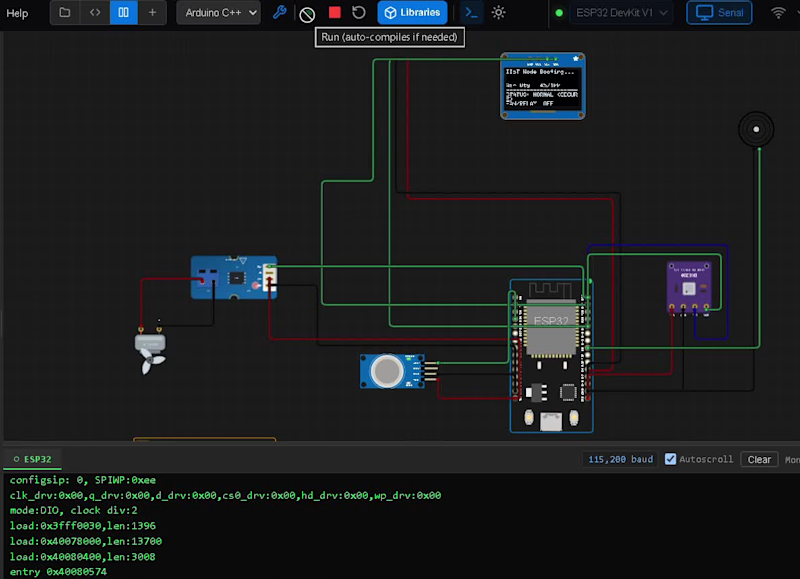
Title: Industrial IoT Environmental Monitor, OLED HUD & Actuator Node
Description:
An autonomous edge-computing IIoT monitoring and safety node built using an ESP32 microcontroller. The system tracks real-time environmental metrics and executes local automation logic with zero cloud latency.
Key features:
1. Multi-Sensor Telemetry: Integrates a BME280 sensor for ambient temperature, humidity, and barometric pressure alongside an MQ-135 sensor for real-time air quality and gas detection.
2. Local OLED HUD Dashboard: Features an SSD1306 OLED display to provide operators with crystal-clear, on-site visual diagnostics and live system status updates.
3. Autonomous Edge Actuation: Automatically triggers an opto-isolated relay (M281) and piezo buzzer to drive ventilation fans and warning alarms when safety thresholds are breached.
4. Optimized Firmware: Powered by clean C/Arduino code utilizing hardware I2C communication, analog data mapping, and robust Active-LOW relay control logic.
1
269

Stop losing leads. Keep your business running smoothly.
Stop losing leads. Keep your business running smoothly.





IoT Architect | 15+ Yrs | Prototype to Mass Production
IoT Architect | 15+ Yrs | Prototype to Mass Production
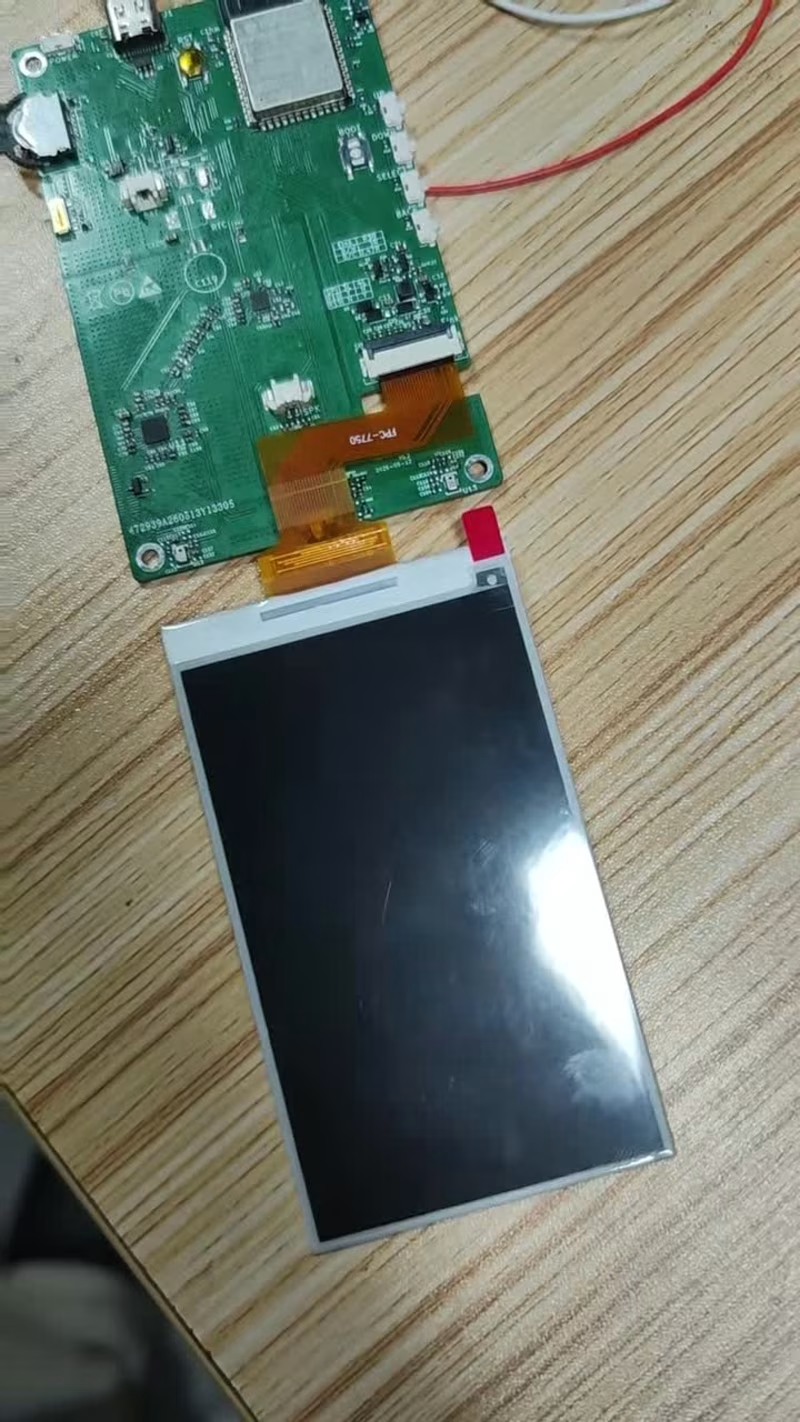
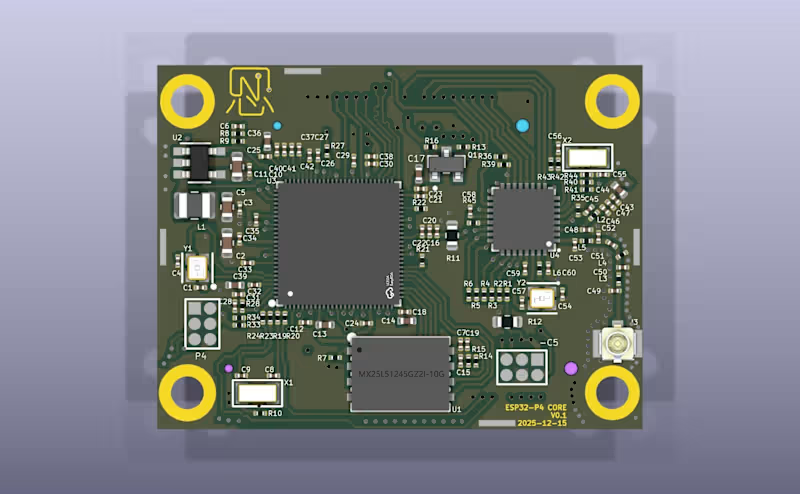
ESP32-P4 SOM: Dual-Core AIoT Hub with Advanced Multimedia
Overview:
The ESP32-P4 SOM is a flagship, low-power, cost-effective computing core launched in 2026. Featuring a unique ESP32-P4 + ESP32-C6 dual-chip architecture, it bridges high-performance application processing with advanced WiFi 6 and Bluetooth 5 (LE) connectivity. This "Minimum System" is engineered into a compact 40x30mm footprint, providing a ready-to-use engine for the next generation of smart multimedia devices.
► Skills Used:
● Dual-SoC System Architecture (P4 + C6)
● DFM & Yield Optimization
● EMI/EMC Engineering
● BOM Optimization
● Firmware Development(C/C++).
► "One Board, Triple Mounting Options":
Designed for maximum versatility across different development phases and deployment environments:
● Flexible Integration: A single PCBA design supports three mounting configurations: Dual BTB connectors, Single BTB, or LGA (Land Grid Array). This allows developers to switch between easy-to-swap modules for prototyping and low-profile, vibration-resistant mounting for mass production.
● Rapid Development Ecosystem: By routing up to 80 GPIOs to the module interface, clients only need to design a simple 1-4 layer carrier board. This drastically shortens the R&D cycle and reduces hardware validation costs.
● Highly Integrated Design: Despite its small size, the module houses the SoC, PSRAM, Flash, PMIC, and the ESP32-C6 communication co-processor, complete with reserved shielding for superior EMI performance.
► Key Engineering & Product Features:
● Network Versatility: In addition to WiFi 6, the module provides a dedicated Ethernet extension interface, ensuring high-speed and ultra-stable wired connectivity for industrial environments.
● High-Speed Multimedia: Native support for MIPI DSI (Display) and MIPI CSI (Camera), enabling high-definition visual interfaces and real-time image processing.
● Advanced Audio & Storage: Integrated voice input and audio output interfaces for interactive systems, plus high-speed TF card support for localized data storage.
● Connectivity-Rich: Powered by the ESP32-C6 co-processor to provide stable WiFi 6 and BLE connectivity, ensuring the P4 main processor remains dedicated to heavy computational tasks.
● Massive I/O Capability: With 80 GPIOs available, the module can control complex arrays of sensors, actuators, and peripheral devices simultaneously.
► Target Applications & Solutions:
● Smart Security: Advanced Access Control Systems utilizing MIPI camera input and local processing.
● Voice AI: Smart AI Speakers with high-fidelity audio I/O and localized voice recognition capabilities.
● Industrial HMI: Low-cost Human-Machine Interfaces that require fluid graphical displays and low power consumption.
This ESP32-P4 SOM represents the pinnacle of "Efficiency Meets Performance." By decoupling the high-speed processing core from the carrier board, I provide a pre-verified, mass-production-ready platform that allows you to deploy complex, multimedia-rich AIoT solutions with unmatched speed and technical confidence.
0
136
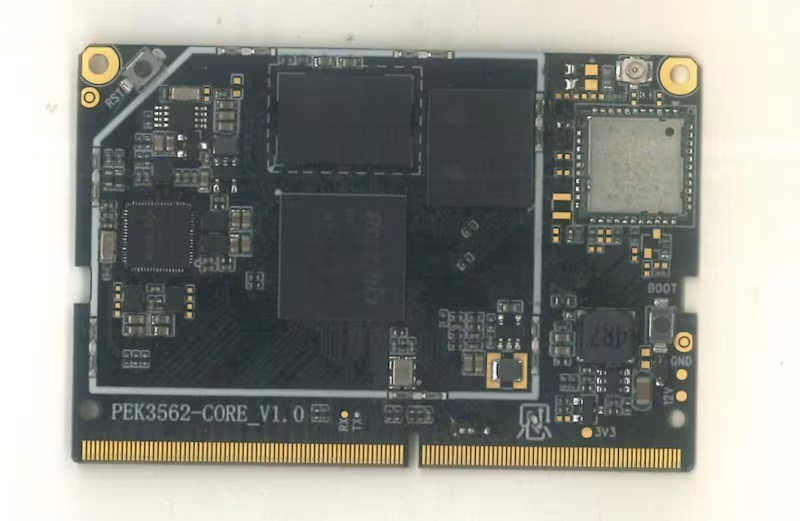
RK3326s SOM: Modular "Minimum System" for Rapid Deployment
Overview:
The RK3326s SOM is a highly integrated, 6-layer System-on-Module designed to function as a complete, "plug-and-play" computing core. By utilizing a 260-pin DDR4 SO-DIMM interface, this module eliminates the need for secondary reflow soldering—a common cause of defects in LGA-based modules—while enabling rapid assembly and field-swappability for industrial and consumer applications.
► Skills Used:
● High-Speed Systems Architecture.
● PCBA design (Altium/KiCad)
● Linux Kernel/APP development(C/C++)
● DFM & Production Optimization
● EMI/EMC Engineering
● BOM Optimization
► "One Core, Infinite Carrier Boards":
The modular design is engineered to slash development cycles and R&D costs for new product categories:
● Full GPIO Breakout: All essential I/Os are routed to the SO-DIMM interface, allowing clients to develop simple 1-4 layer carrier boards for specific projects.
● Elastic Material Compatibility: Pre-engineered to support 10+ WiFi modules, DDR3/LPDDR3 DRAM, and EMMC/NAND Flash variants, ensuring a resilient supply chain against component shortages.
● Streamlined Production: Avoids the "Double-Reflow" trap, significantly lowering the barrier for entry for smaller factories and reducing the scrap rate during mass production.
► Key Technical Features:
● Ultra-Fast Boot: Optimized Linux kernel achieving a 18-second cold boot time.
● Memory Efficiency: Stable and fluid operation on configurations as low as 512MB DRAM + 1GB EMMC.
● Ruggedized Layout: Built-in immunity to high-frequency interference, ideal for smart kitchen appliances and industrial environments.
● Dual-OS Support: Native compatibility with both Android and Linux, providing flexibility for diverse UI and logic requirements.
► Scalability & Proven Success (Mass Production):
● Industrial Automation (ESOP): Deployed as the central processing unit for factory-wide Electronic Standard Operating Procedure systems.
● High-End Consumer Tech (LG DUOBO): Trusted as the core compute engine for premium smart devices.
● Smart Kitchen Appliances: Successfully integrated into high-power microwave steam ovens, leveraging its radiation-resistant design.
This SOM represents my commitment to "Zero-Defect Manufacturing." I provide a hardware core that is not only powerful but also audited for production reliability, allowing you to focus on your product's unique features while I handle the complexities of the underlying architecture.
0
127
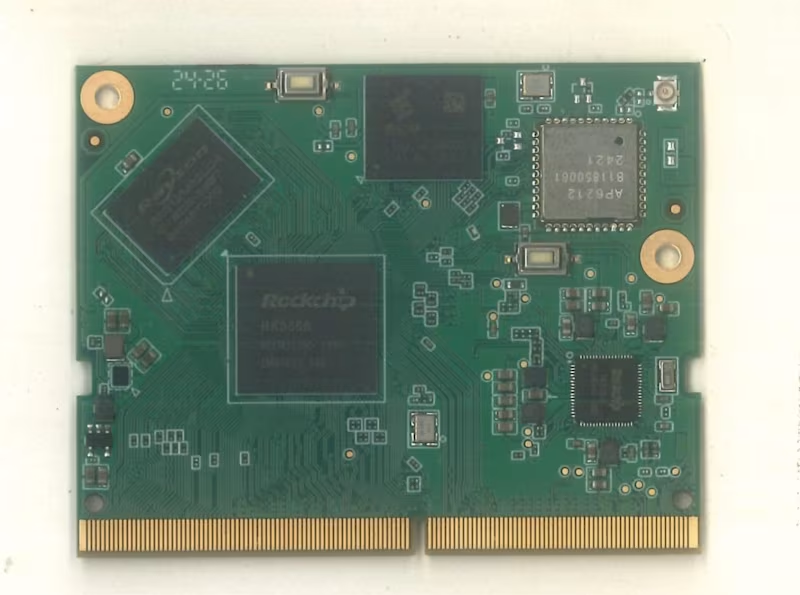
RK3566 SOM: Edge Computing & Multimedia Core
Overview:
The RK3566 SOM is a high-performance, 6-layer System-on-Module that integrates a Quad-core SoC, NPU, DRAM, Flash, and PMIC into a compact "Plug-and-Play" computing core. Designed with an Industrial SODIMM interface, it eliminates the risks of secondary reflow soldering inherent in LGA modules, significantly improving factory yield and enabling modular upgrades for AIoT and multimedia applications.
► Skills Used:
● Edge AI Architecture
● High-Speed PCB Design
● DFM & Yield Optimization
● Linux Kernel/APP development(C/C++)
► "High-Performance Core, Low-Cost Carrier":
The architecture is engineered to provide a professional-grade computing heart while simplifying the peripheral development:
● Efficiency Redefined: All GPIO pins are routed to the SODIMM interface, allowing clients to deploy complex AI products using simple 1-4 layer carrier boards, drastically reducing R&D costs and TTM (Time-to-Market).
● Resilient Supply Chain: Pre-configured compatibility for 10+ WiFi modules, DDR4/LPDDR4 DRAM, and EMMC/NAND Flash, ensuring production continuity regardless of component shortages.
● Optimized OS Ecosystem: Supports Linux/Android with kernel-level tuning, achieving a 15-second cold boot and stable performance even on 512MB RAM configurations.
► Key Engineering & Product Features:
● AI Intelligence: Built-in 1T NPU enables edge-side AI capabilities for facial recognition, voice processing, and predictive maintenance.
● Multimedia Excellence: Supports 4K hardware decoding and direct HDMI output, ideal for high-definition visual displays.
● Acoustic Precision: Integrated hardware VAD (Voice Activity Detection) significantly enhances the response speed and accuracy of smart speakers and voice interfaces.
● Production-Ready Integrity: A fully verified "Minimum System" that shifts the complexity away from the factory floor to a pre-tested, swappable module.
► Scalability & Proven Success (Mass Production):
● Industrial Automation (MES): Serving as the high-speed data processing core for Manufacturing Execution Systems.
● Consumer Electronics: Deployed in high-definition digital photo frames and portable retro gaming consoles.
● Developer Ecosystem (GRS Viper SBC): Powering professional-grade Single Board Computers for the global maker and engineering community.
This RK3566 SOM represents the pinnacle of "High-Yield Intelligence." By combining AI power with a modular, audit-friendly manufacturing structure, I help you deliver sophisticated high-end products with the technical certainty of a seasoned architect.
0
134

AI & IoT Engineer | Agents, Chatbots, Smart Systems
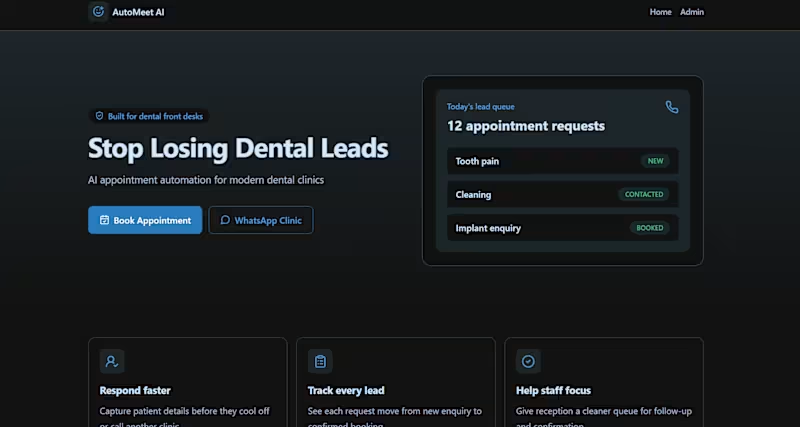
AutoMeet AI is a fully deployed conversational agent
that handles appointment scheduling end-to-end —
no human needed.
Users chat naturally with the bot, which understands
intent, checks availability, and books appointments
automatically.
Built with:
React frontend (Vite)
Node.js + Express backend
Gemini API for natural language understanding
Deployed live on Vercel
🔗 Live at: https://auto-meet-ai.vercel.app
This project demonstrates real-world AI agent
deployment — not a demo, a working product anyone
can use right now.
1
46
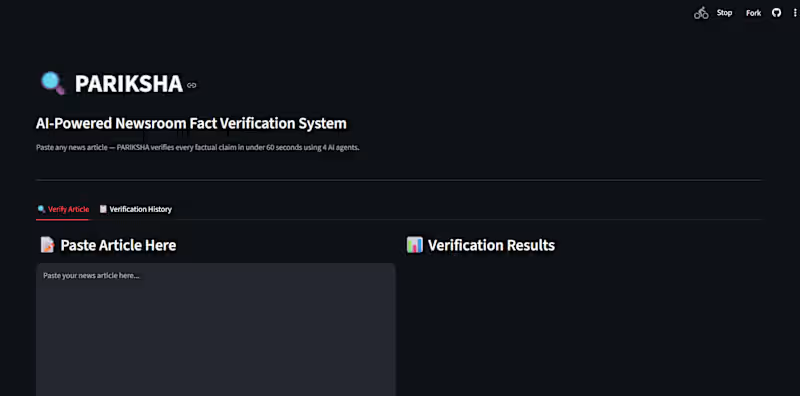
PARIKSHA AI is an intelligent newsroom assistant that automates the process of fact verification.
It:
Extracts key claims from articles
Verifies them using real-time web sources
Assigns a credibility score
Detects bias and weak sources
Maintains an audit log of all verifications
It has won many awards in tech-events.
Try Pariksha - https://jhizrpnvqubw9rmh5r7yod.streamlit.app/
1
50

Senior Embedded Systems & Edge AI Architect


Full Stack Developer with IoT and Hardware skills
Full Stack Developer with IoT and Hardware skills


View more →