Freelancers in St. LouisFreelancers in St. Louis
🚀 Product & Project Consultant | Tech, AI, and Healthcare
$10k+
Earned
2x
Hired
5.0
Rating
169
Followers
🚀 Product & Project Consultant | Tech, AI, and Healthcare
Top-tier Brand Design Specialist with 10+ Years Experience

Cover image for A client of mine came
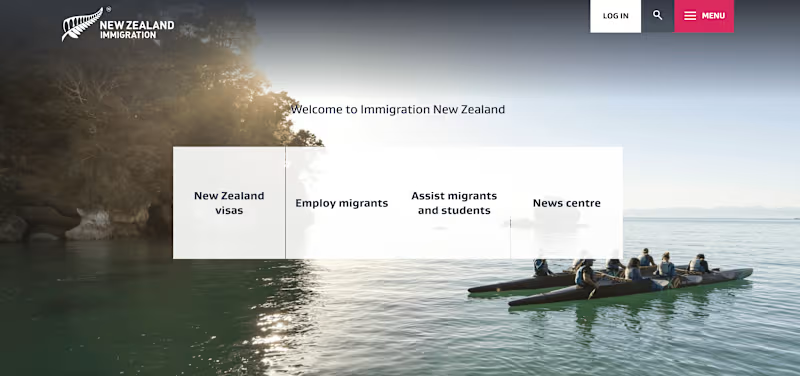
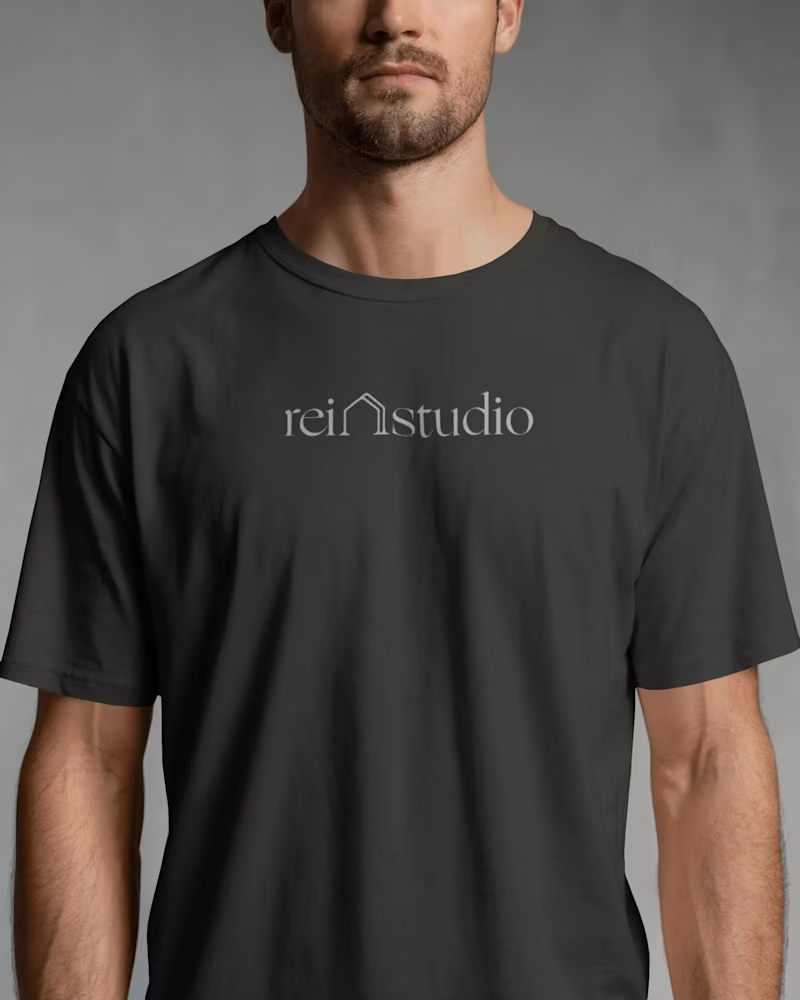
A client of mine came to me with a name problem.... He runs an interior design studio for real estate investors — flippers, new builds, STRs. Good work. Steady clients. One issue: the name. "Ivory Home." Problem #1: there's a national homebuilder called Ivory Homes. Every Google search sent people to a company he had nothing to do with. Problem #2: the name said nothing about who it was for. Nothing said "investor." Nothing said "return on your renovation." It just said... home decor. So we started over. Naming: We landed on REI Studio. Clear. Searchable. Says exactly who it's for — real estate investors — in three letters. Positioning: Not a traditional interior designer. Not a home builder. A design systems partner that helps investors move faster, make better decisions, and increase returns. That's the whole pitch. Voice: Short sentences. No luxury-boutique fluff. No jargon. Sound like an operator talking to another operator, because that's who's reading it. Visual identity: A minimal house mark with a "double line" — forward motion, transformation. Warm neutrals instead of cold luxury tones. A serif logotype that reads studio-grade without reading pretentious. Deployment: Full system, not just a logo: business cards, brochures, apparel, trade show booth, website, email templates — all speaking the same language. The result wasn't just a prettier brand. It was a brand that finally said the right thing to the right person, the first time someone saw it. That's the job. Not decoration. Clarity.
5
171
Data Analyst turning Data insights into business impact.
5.0
Rating
2
Followers
Data Analyst turning Data insights into business impact.

Brand + Interface Design
15
Followers
Brand + Interface Design
Graphic Designer with a passion for packaging experiences
1x
Hired
2
Followers
Graphic Designer with a passion for packaging experiences
Entertainment Operations & AI Product Builder
New to Contra
Entertainment Operations & AI Product Builder
Cover image for I built this after realizing
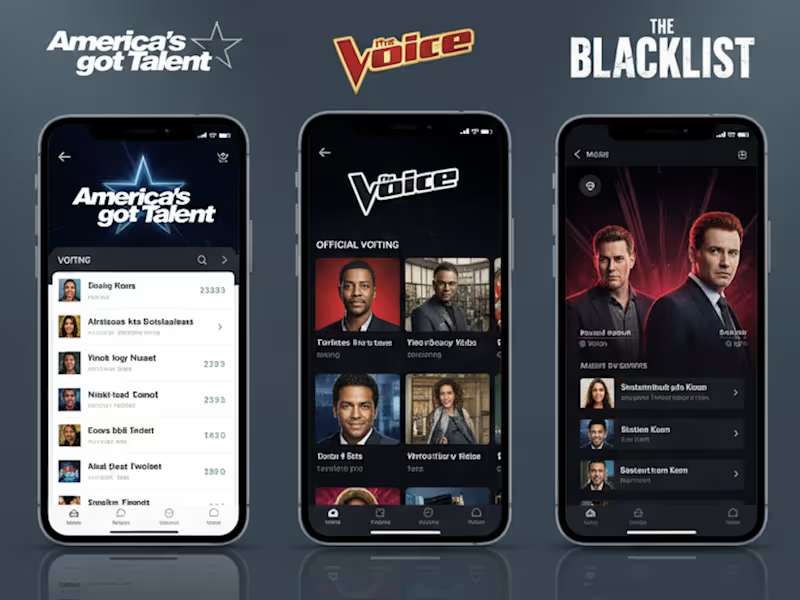
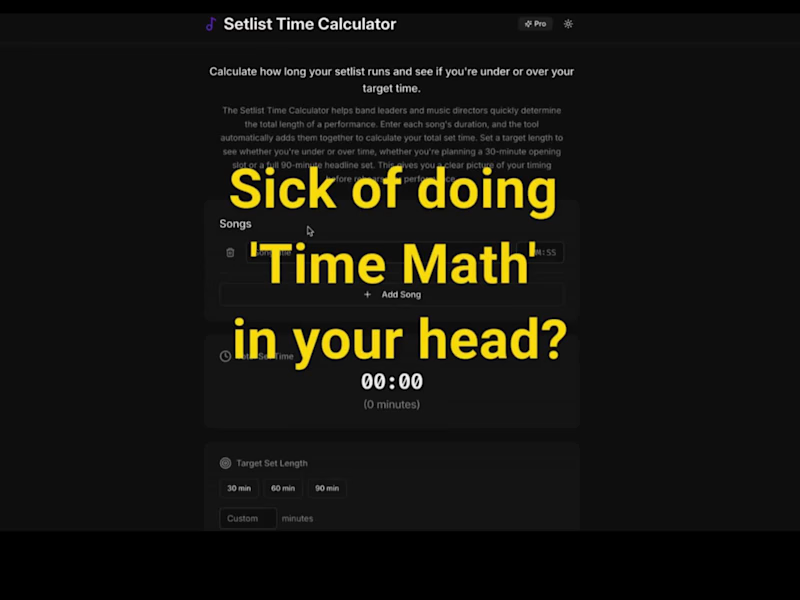
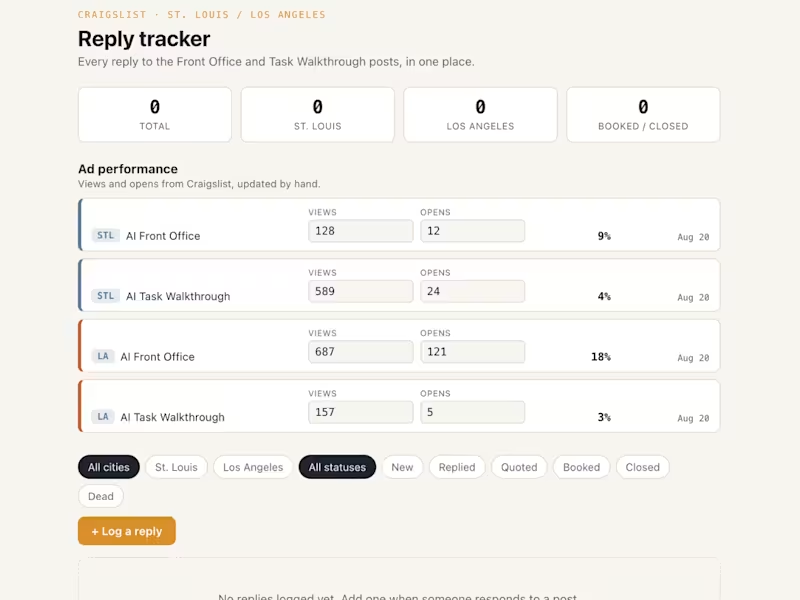
I built this after realizing I needed to track two ad types across two cities entirely in my head. Four live Craigslist posts, different pricing per city, no way to see reply status or quoted price without scrolling back through memory. And my memory is not all that reliable. The tool splits into two parts. Ad performance holds the numbers Craigslist already reports: views and opens per ad, entered by hand since Craigslist doesn't expose that data any other way. Reply tracking holds what only I know: what someone asked for, what I quoted and where that conversation stands. Keeping those separate was deliberate. One section is Craigslist's data, the other is mine, and mixing them would have buried the thing I actually needed: which conversations to follow up on. I still wanted the Craigslist numbers close at hand though, and since it's just views and opens, a simple visual section next to the replies does the job. It runs as a single file in the browser, no login or server. Status updates from a dropdown right on the card. Color coding by city and status means I can scan the whole list without reading every line. It's a small tool that answers three questions I keep asking myself: which city and ad combination is actually converting, whether a price point is landing and whether a weak ad is a reach problem or a conversion problem. Craigslist has been a low-key experiment for me, one I've tried once before without really tracking what happened. This is what makes the results actually visible this time.
1
192
Cover image for I have a friend who’s
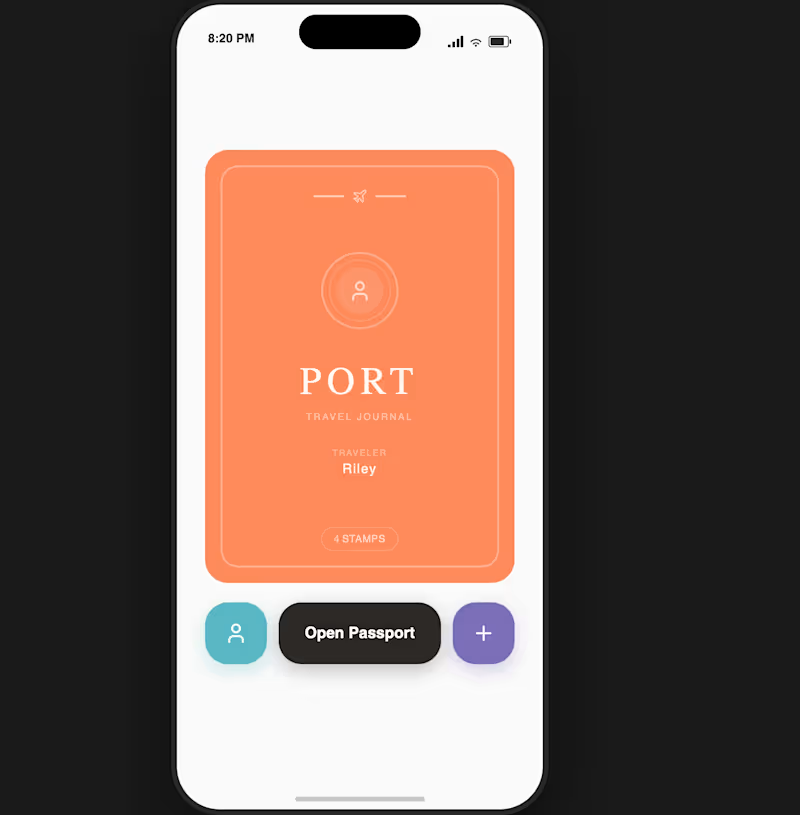
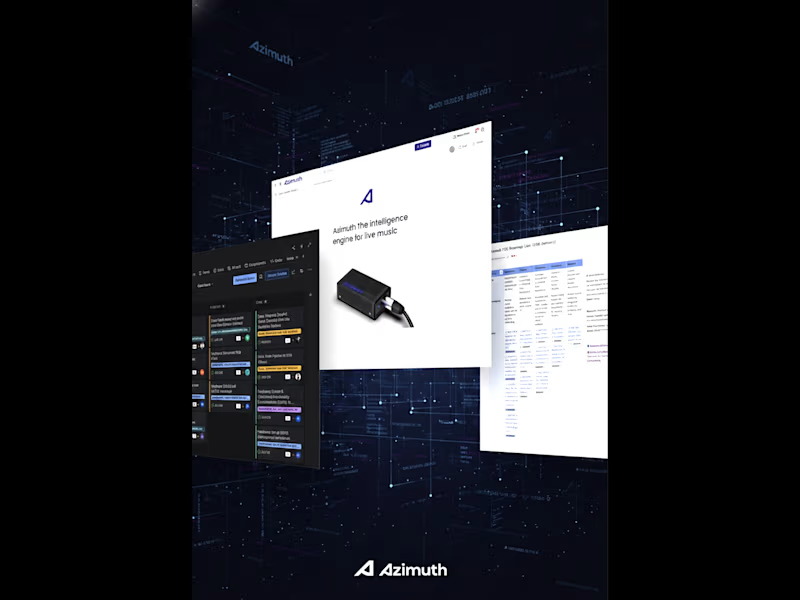
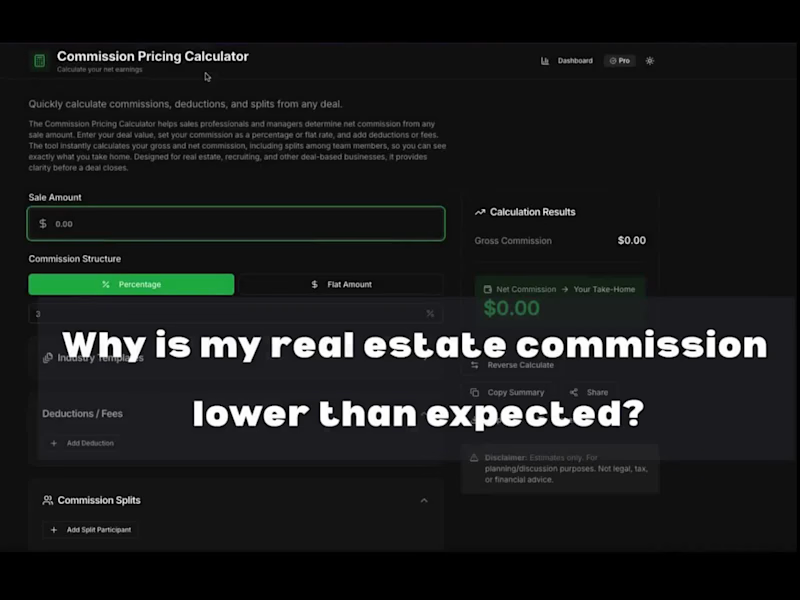
I have a friend who’s a business broker and has been in real estate for many years. Over the years, I’ve worked with him on an off with several of his projects. Additionally, a while back, I tipped my toe into the real estate investing area, so I have a good idea of some of the things the need to know. The Commission Pricing Calculator was designed to help someone answer a more useful question than simply, “What is my commission?” It helps them determine: What will I actually take home from this deal after splits, fees, and deductions — and what needs to change if that number is too low? The calculator supports both forward and reverse decision-making. In forward mode, the user can model a deal and immediately see how changes in sale price, commission percentage, brokerage or partner splits, and fees affect the final net amount. In reverse mode, the user can start with a target take-home amount and work backward to determine the deal size or pricing required to reach that goal. The goal was to turn commission math from a static calculation into a practical scenario-planning tool. Input/output structure The calculator was structured around the pieces of information that materially change the outcome of a commission-based deal. Inputs Users can enter: Sale or deal amount Commission as either a percentage or flat amount Multiple labeled fees or deductions Fees as either percentages or fixed amounts Multiple commission split participants Splits as either percentages or fixed amounts A target net commission when using reverse calculation The inputs were designed to accommodate real-world deal structures rather than assume a single simple percentage calculation. Outputs The calculator returns: Gross commission Itemized fees and deductions Itemized commission splits Net commission / estimated take-home amount Required sale or deal amount when reverse calculation is used Saved scenario data for later comparison A shareable or exportable calculation summary The net result was intentionally given the strongest visual emphasis because it is the number the user is ultimately making the decision around. The system also included validation so invalid percentages, negative values, or impossible split structures would not silently produce misleading results. Everything recalculates in real time as inputs change, so the agent sees net commission move as they adjust the split or add a fee, rather than running the numbers once and reading a static result.
1
91
Cover image for I build a lot of
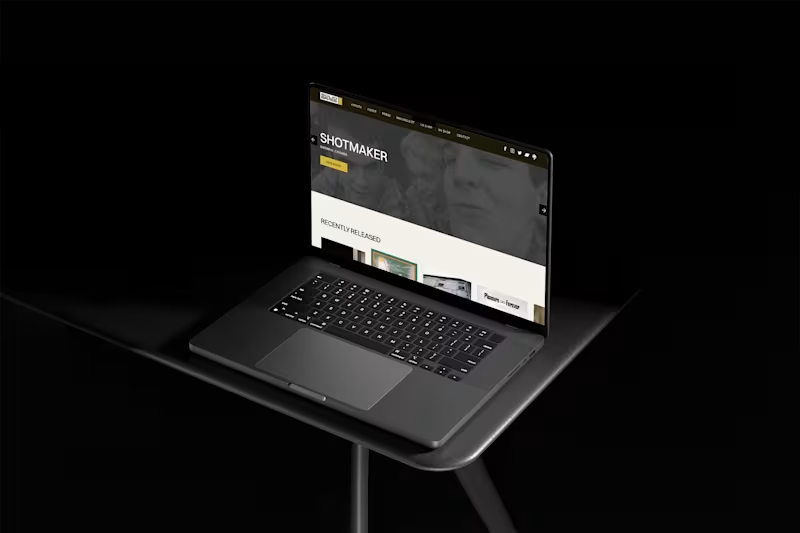
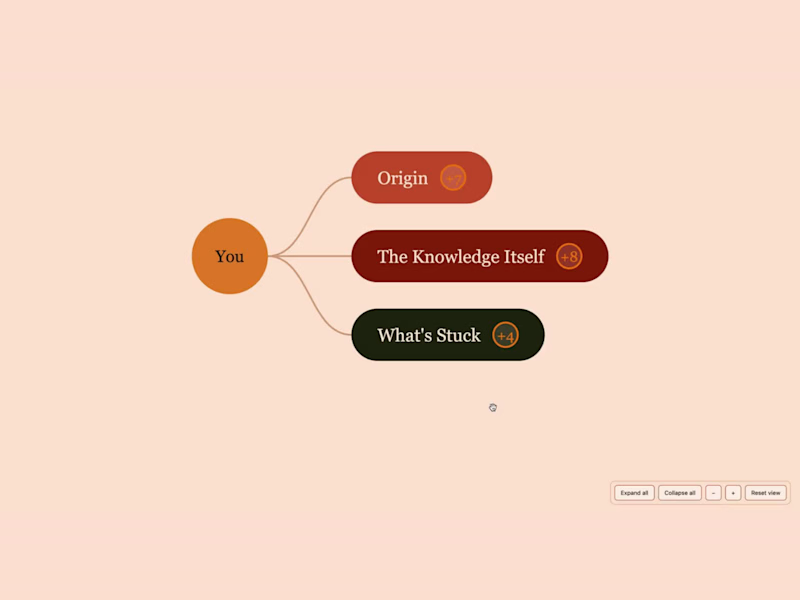
I build a lot of things to solve a problem I have first. The offer usually comes after, almost as a by-product — if I have this problem, maybe others do too. Body of Knowledge followed the same pattern. It evolved out of several other offers I'd already built, and it started because I wanted to be interviewed. I find casually talking about my work helpful because I reach for the things in the back of the cabinet of my mind. The interview itself isn't something I run — Claude conducted it, one question at a time, following whatever thread flows instead of working down a fixed script. I designed how that whole process works. I knew from the start I wanted the output to be a mindmap because I find this type of visual layout super helpful. A written version seemed worth including too, for anyone who might get more out of reading it, so that's part of the deliverable as well. From there it was mostly solving smaller problems one at a time. Audio intake needed guardrails: a time range so people aren't guessing how long to talk, permission for the first take to be the only take, and a concrete first line for each prompt so nobody has to sit there trying to figure out where to start. The interview needed to skip the kind of questions that assume someone's expertise has already been noticed by a room, because a lot of real expertise never gets that kind of audience. And the review step needed a clear line between "this needs one more question" and "this needs to be reopened entirely." Before I offered any of this to someone else, I ran myself through it. Twice so far, and I'll probably do it again. The first time, I dug into what musicians call "the pocket" — how a group locks into a shared feel together. The second time was about production, and that's the map you're looking at here. Running it twice, on two completely different pieces of my own experience, is the clearest way I know to show this actually works. I have the MVP up and available, but the interview version is still being built — coming soon!
0
66