Data Analysis Projects in SindhData Analysis Projects in SindhMost warehouse audits I've seen focus on the wrong things first. Neat labels, clean floors, a binder full of SOPs nobody's opened in months — all of it can look great and still sit on top of a warehouse that's quietly bleeding money.
And the SOP binder is usually worse than just outdated. Somewhere along the way, the actual process changed — someone found a faster way to do something, or worked around a problem — and that change lived in their head, not in the document. Everyone just adapts and moves on. Then that person leaves, and suddenly nobody can explain why the process works the way it does, because the only place it was ever really "written down" walked out the door.
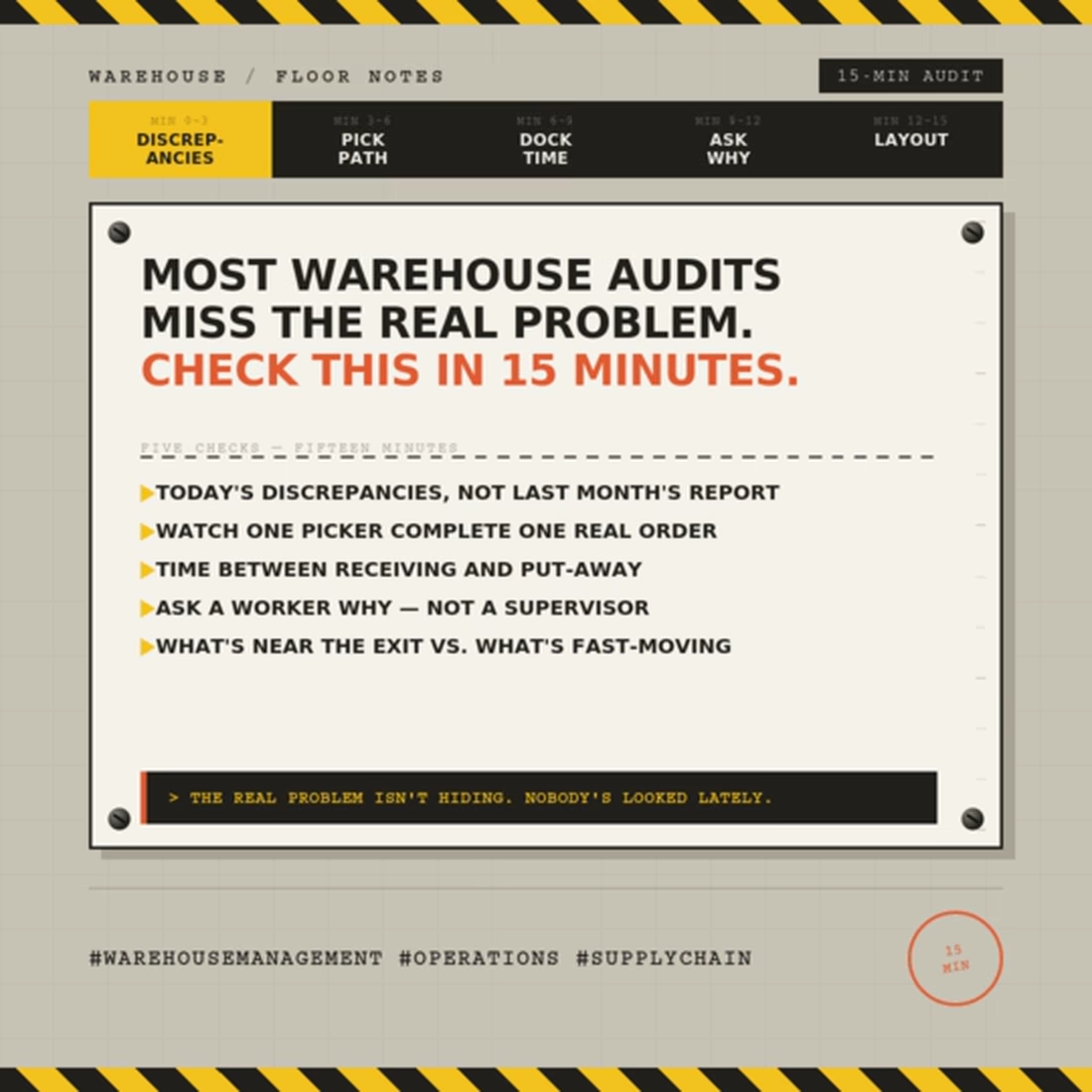
If I only had fifteen minutes to walk a warehouse, here's honestly what I'd check.
I'd skip the month-end accuracy report and ask what's mismatched right now, today. A clean number at month-end really just tells you how good someone is at patching things up before a deadline. Asking about today tells you whether the process actually holds up when nobody's paying special attention to it.
Then I'd go find one picker and just watch them complete one real order, start to finish — not a demo, an actual order in the middle of a shift. You learn more in five minutes of watching someone walk a pick path than you do in an hour of reading reports. How far they're walking, how often they double back, how many times they have to stop and ask someone where something actually is.
I'd also want to know how long stock sits between receiving and put-away. Not how fast it gets scanned in — how long it physically sits on the dock before it's properly stored. That gap, more than almost anything else, is where damage, shrinkage, and "we can't find it" problems quietly start.
And I'd ask a warehouse worker why something's done a certain way — not a supervisor. If the answer is "that's just how we've always done it," that's usually a process nobody's questioned in years, or worse, a workaround that only exists in that one person's head.
Last thing, I'd look at what's actually sitting near the exit versus what's actually fast-moving. Layouts get set once and almost never revisited. More often than you'd think, the stuff people grab constantly is buried in the back, and something nobody's touched in months is sitting right up front for reasons nobody remembers anymore.
None of this needs a clipboard or a formal audit template. It just needs fifteen minutes and being willing to ask "why" one more time than feels comfortable — because the answer might only exist in one person's head, and that's the real audit finding. Problem:
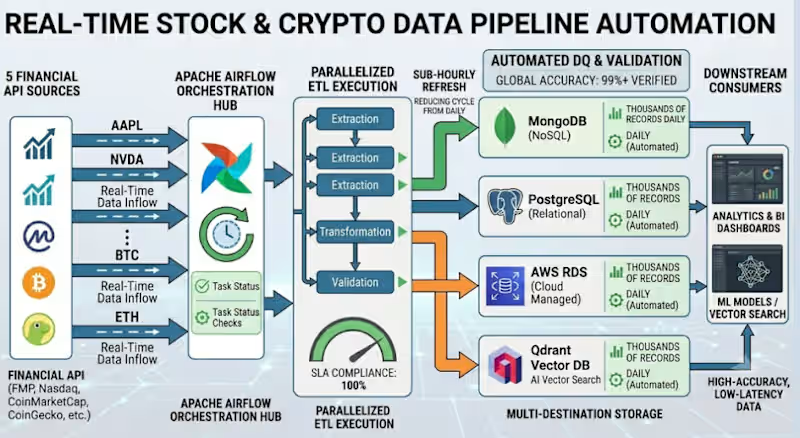
Financial data from stocks and crypto APIs was scattered, refreshed manually, and not ready for analytics or ML use.
Solution:
Built an Apache Airflow pipeline to collect, transform, validate, and load real-time financial data from multiple APIs into PostgreSQL, MongoDB, AWS RDS, and Qdrant.
Tools:
Apache Airflow, Python, PostgreSQL, MongoDB, AWS RDS, Qdrant, APIs
Result:
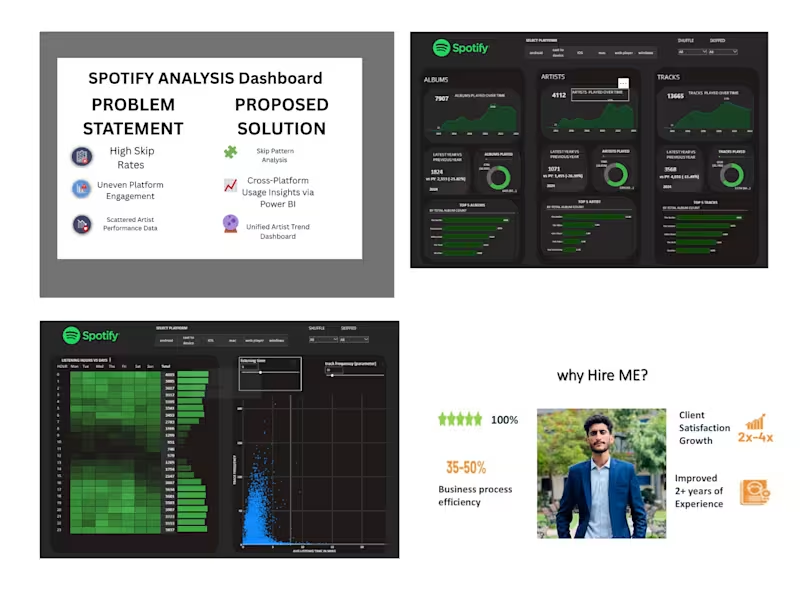
Automated sub-hourly data refresh, processed thousands of records daily, and delivered clean data for dashboards, analytics, and vector search. Spotify Analysis Dashboard
Turned raw Spotify streaming data into a clear, interactive dashboard that reveals how listeners actually engage with music.
Built in Power BI using SQL and DAX, this project explores user behavior across devices, identifies skip patterns, and highlights top-performing artists and tracks.
With dynamic visuals powered by key metrics like reason_start, reason_end, platform, and ms_played, the dashboard uncovers:
• Why users skip songs or stop playback
• Which platforms drive the most engagement
• Which artists and albums perform best by time and device
Perfect for music analysts, record labels, or streaming teams who want actionable insights into listener habits and engagement trends. Stop Managing Files. Start Managing Your Growth.
Do you own your data, or does your data own you?
Most businesses I work with share the same frustration: "I know I saved that file, but I have no idea where it is."
Recently, I audited a massive 180GB+ ecosystem spread across four different Google Drives—Personal, Business, Rentals, and Property Inspections. It was a digital labyrinth of duplicates, mismatched names, and fragmented folders.
The transformation?
In just 3 days, we moved from 180GB of digital noise to a streamlined, multi-tier architecture where every file is exactly two clicks away.
Why does this matter?
Organization isn't just about "cleaning up"; it’s about mental bandwidth. When your operations are structured:
You stop wasting 20% of your day searching for documents.
Your team syncs effortlessly across devices.
Your business is ready to scale without the clutter.
I specialize in turning digital chaos into high-efficiency systems—whether it’s Cloud Storage Architecture, B2B Lead Databases, or Operational Workflows.
If your Google Drive or Dropbox feels like a junk drawer, let's fix that.
Drop a "System" in the comments if you’re ready to reclaim your storage (and your time)!
#DigitalOrganization #Operations #Efficiency #CloudStorage #WorkflowOptimization #SystemsBuilding