Freelancers using Web3.js in PakistanFreelancers using Web3.js in Pakistan
30+ Apps Shipped | Flutter, Angular & ASP.NET
$100k+
Earned
7x
Hired
5.0
Rating
52
Followers
30+ Apps Shipped | Flutter, Angular & ASP.NET

Cover image for ๐Ÿ“Œ Case Study: PolySwap (PoliexSwap)
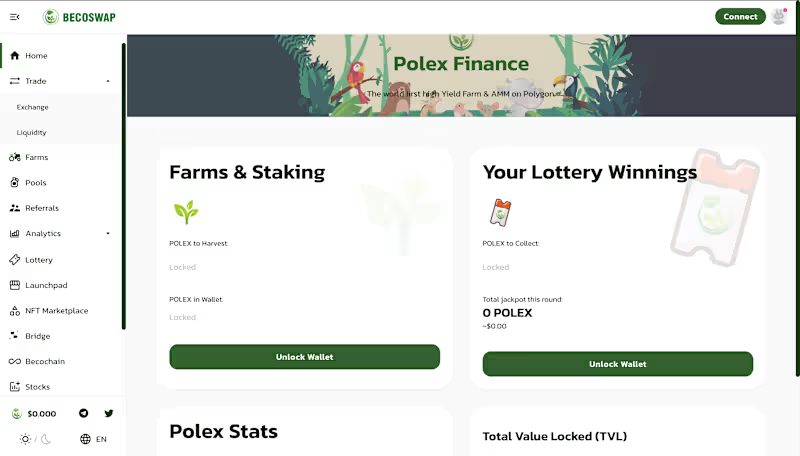
๐Ÿ“Œ Case Study: PolySwap (PoliexSwap) โ€” Decentralized AMM & Yield Farming on Polygon Category: DeFi ยท Decentralized Exchange ยท Web3 Platform: Web (Polygon Network) Project Type: Automated Market Maker (AMM) & Yield Farming Protocol Live: polyswap.netlify.app (http://polyswap.netlify.app) Project Overview PolySwap (https://polyswap.netlify.app) โ€” built as PoliexSwap โ€” is a decentralized exchange and high-yield farming protocol deployed on the Polygon network. It gives users the ability to swap tokens, provide liquidity, and earn yield on their assets directly from a non-custodial Web3 interface, without intermediaries and without leaving their wallets. Built by Cuboid, it sits in the same product category as PancakeSwap on BSC โ€” but positioned specifically for Polygon's faster, lower-cost infrastructure. The Problem Ethereum's gas fees made DeFi participation prohibitively expensive for smaller investors. Binance Smart Chain addressed the cost problem but introduced centralization trade-offs many users weren't comfortable with. Polygon emerged as a legitimate Layer 2 alternative โ€” fast, cheap, and EVM-compatible โ€” but lacked a native, fully-featured AMM and yield farming platform at the time. The opportunity was clear: a first-mover DEX on Polygon that combined token swapping, liquidity provision, and high-yield farming in a single, clean interface built for the Polygon-native user. Our Solution Cuboid designed and developed the full PolySwap platform โ€” smart contract integration, liquidity pool architecture, yield farming interface, and wallet connectivity โ€” on Polygon's EVM-compatible chain. The interface was modeled on the established DEX UX patterns users already knew from Uniswap and PancakeSwap, lowering the barrier to entry while delivering Polygon's speed and cost advantages underneath. The platform was built to be genuinely non-custodial throughout โ€” users connect their own wallets, execute swaps and deposits directly on-chain, and retain full control of their assets at every step. Key Features & Capabilities Token Swapping (AMM) โ€” An automated market maker enabling direct token-to-token swaps on Polygon without order books, central servers, or custodial risk. Pricing is determined algorithmically by liquidity pool ratios, ensuring continuous liquidity at all times. Liquidity Provision โ€” Users deposit token pairs into liquidity pools and earn a share of all swap fees generated by that pool โ€” passive yield tied directly to platform trading volume rather than speculative token price. High-Yield Farming โ€” Liquidity providers receive LP tokens representing their pool share, which can be staked in farming contracts to earn additional protocol rewards on top of swap fees. The dual-layer yield model โ€” fees plus farming rewards โ€” was positioned as the platform's primary value proposition for capital deployment on Polygon. Non-Custodial & Permissionless โ€” No sign-up, no KYC, no custody. Users connect a compatible Web3 wallet and interact with smart contracts directly. Any Polygon-compatible token pair can be added as a liquidity pool without platform approval. Polygon-Native Performance โ€” Transactions settle in seconds at a fraction of Ethereum mainnet gas costs, making frequent farming interactions and compounding strategies economically viable for users of any portfolio size. Why Polygon The decision to build on Polygon rather than Ethereum mainnet or BSC was deliberate. Polygon's EVM compatibility meant existing Ethereum tooling, wallets, and token standards worked without modification. Its transaction costs and speed made high-frequency DeFi interactions โ€” swaps, deposits, harvest cycles โ€” practical for retail users, not just whales. Positioning PolySwap as the first high-yield AMM on Polygon was a first-mover bet on a network that has since grown into one of the most active EVM chains in DeFi. Final Outcome PolySwap demonstrates Cuboid's capability across the full DeFi product stack โ€” AMM smart contract integration, liquidity pool architecture, yield farming mechanics, and a consumer-grade Web3 interface built for a specific chain's competitive advantage. It's a project that required both technical precision and an understanding of how DeFi users think about capital, risk, and yield.
0
291
Cover image for ๐Ÿ“Œ Case Study: NFT Gaming
๐Ÿ“Œ Case Study: NFT Gaming Stars โ€” Play-to-Earn Blockchain Gaming Platform Category: Web3 ยท GameFi ยท NFT & Metaverse Platform: Web (Binance Smart Chain) ยท iOS & Android (in development) Project Type: Decentralized Play-to-Earn Gaming Ecosystem Live: nftgamingstars.com (http://nftgamingstars.com) Project Overview NFT Gaming Stars (https://nftgamingstars.com) is a Binance Smart Chain-based Play-to-Earn gaming ecosystem that unites NFTs, decentralized gaming, staking, and a metaverse layer under a single platform. Its native token โ€” GS1 โ€” serves as the currency of the entire ecosystem, powering in-game earnings, NFT purchases, staking rewards, and wallet-to-wallet trading. Built by Cuboid, the platform was designed to sit at the intersection of GameFi and the broader Web3 movement at a time when that space was defining its own rules. The Problem The convergence of blockchain and gaming presented a genuine opportunity โ€” but most early Play-to-Earn platforms prioritized tokenomics over user experience, producing platforms that felt transactional and inaccessible to anyone who wasn't already deep in crypto. The result was an ecosystem that talked about fun but delivered a spreadsheet. NFT Gaming Stars needed a platform that could attract both crypto-native users and mainstream gamers โ€” one that delivered real earning mechanics without sacrificing the experience quality that keeps people playing. Our Solution Cuboid built the full web platform and DApp infrastructure for NFT Gaming Stars on Binance Smart Chain โ€” handling smart contract integration, the marketplace UI, staking interface, wallet connectivity, and the P2E game environment. The platform went live with a complete ecosystem from day one: token purchase, NFT minting, staking at up to 60% APY, and an operational Play-to-Earn game accessible directly from the browser. The architecture was built around a customizable API layer to support transaction handling at scale, with decentralization and cryptographic security embedded at the infrastructure level โ€” not bolted on as an afterthought. Key Features & Capabilities GS1 Token Ecosystem โ€” A fixed supply of 250 million GS1 tokens with liquidity locked until 2033. GS1 functions as the platform's medium of exchange across games, NFT purchases, staking, and wallet-to-wallet trading โ€” designed for multi-utility across the entire Stars Network rather than single-game use. Play-to-Earn Games โ€” Browser-based P2E games where players earn GS1 by playing, with NFT holders earning passive GS1 as the ecosystem expands into metaverse interactions. The first game, Battle Leet, launched as a proof-of-concept with a mobile app roadmap following behind. NFT Marketplace โ€” A limited edition of 1,000 NFTs available for purchase on-platform, covering in-game assets including skins, weapons, land, and aesthetic upgrades. Every asset is verifiable, traceable, and immutable on-chain. Staking โ€” Users stake GS1 directly on the platform for APY rewards, creating a holding incentive beyond active gameplay and supporting long-term token stability. Walk-to-Earn Integration โ€” A Walk2Earn application concept integrating AR and AI โ€” rewarding physical activity with GS1 earnings, extending the platform's utility beyond screen-based gaming entirely. Decentralized Exchange Layer โ€” Direct crypto wallet trading with support for GS1, BNB, and other BSC assets. No central authority, no custody risk โ€” users trade directly from their own wallets throughout. MetaStars โ€” Metaverse Expansion โ€” The platform roadmap includes MetaStars, a full metaverse environment where NFT holders interact with assets in an immersive virtual world, with multiplayer game development including a chess variant running in parallel. Community & Traction NFT Gaming Stars launched with a 34,000-follower Twitter community, airdrop campaigns distributing over $20,000 in GS1 and 32 NFTs, and listings across major crypto data platforms including CoinMarketCap and Bitget. The project's audit was handled by SolidProof, and KYC verification was processed through the same trust infrastructure used by established BSC projects. Final Outcome NFT Gaming Stars demonstrates Cuboid's capability in full-stack Web3 product development โ€” smart contract integration, decentralized exchange infrastructure, NFT marketplace architecture, and P2E game environments โ€” delivered for a live, token-listed, community-backed project operating on Binance Smart Chain.
0
289
Cover image for ๐Ÿ“Œ Case Study: Candlestick Academy
๐Ÿ“Œ Case Study: Candlestick Academy โ€” Trading Chart Pattern Mastery App Category: Education ยท Finance & Trading Platform: iOS & iPadOS (iPhone, iPad, Mac via Apple Silicon, Apple Vision Pro) Project Type: Gamified Financial Education App Live: candlestick-academy.web.app (http://candlestick-academy.web.app) ยท App Store (https://apps.apple.com/pk/app/candlestick-academy/id6763744872) Project Overview Candlestick Academy (https://candlestick-academy.web.app) is a trading education app that teaches all 28 essential candlestick patterns through cinematic storytelling, live market simulation, and competitive battle modes. The positioning says it best: Bloomberg Terminal meets Duolingo. Built and published by Cuboid, it's a fully offline, no-subscription, no-ads product built for traders who are serious about developing real pattern recognition โ€” not just memorizing definitions. The Problem Candlestick chart patterns are fundamental to technical trading, but the way they're typically taught โ€” textbooks, static images, dry definitions โ€” doesn't build the instinctive recognition that actually matters when markets are moving in real time. Traders end up knowing what a Hammer looks like on paper but freezing when they see one forming tick by tick on a live chart. Existing trading education apps either oversimplified the material for beginners or buried it in subscription paywalls and generic content libraries. There was no product that combined the depth of professional trading education with the engagement mechanics needed to make the learning actually stick. Our Solution Candlestick Academy was built around one premise: recognition is a skill, not a fact. The app develops that skill through three distinct learning modes โ€” each targeting a different stage of pattern mastery โ€” tied together with a gamified progression system that keeps traders coming back daily. The entire app runs offline, with no subscription and no ads. The product earns its place through quality, not lock-in. Key Features & Capabilities Live Market Simulator โ€” A dark, terminal-style interface with tick-by-tick candle formation that mimics a real trading screen. Users watch patterns develop in real time, identify them, tap "SIGNAL!", and earn or lose ELO rating based on accuracy. Progression runs from Rookie to Pro, with each rank requiring genuine improvement. Story-Driven Pattern Learning โ€” All 28 patterns are taught through market psychology narratives โ€” the human stories behind why bulls and bears create each formation. A Doji isn't just a cross-shaped candle; it's a moment of genuine indecision between two forces with equal conviction. That framing makes patterns memorable in a way that definitions never do. Spaced Repetition Engine โ€” Powered by the SM-2 algorithm, the same system used by serious language learners. The app schedules review of each pattern at the optimal moment for long-term retention, not just short-term recall. Adaptive Drills โ€” The system identifies weak spots in a user's pattern recognition and rebuilds every 10-question session around those specific gaps. No two sessions are identical. Anatomy Drills โ€” Users tap individual parts of a candlestick โ€” wicks, bodies, shadows โ€” and the app explains exactly what that price movement represents at that moment in market psychology. It teaches traders to read candles, not just recognise them. Pattern Matchup โ€” Long-press any two patterns to see a side-by-side comparison of their visual structure and psychological sentiment. Particularly useful for distinguishing similar-looking patterns that signal opposite market moves. Battle Mode โ€” Timed competitive sessions with a ร—4 combo multiplier for streak accuracy. Fast pattern recognition under pressure is the specific skill that separates traders who hesitate from traders who act. Mastery Constellation โ€” Progress is visualised as a growing galaxy of stars โ€” each pattern mastered adds a star to the user's constellation. It's a visual representation of accumulated knowledge, not just a progress bar. Daily Challenges โ€” A curated 5-question set each morning to maintain active recall and keep streaks alive without requiring long sessions. 63 Automated Tests โ€” Every pattern in the app is validated against 63 automated tests to ensure mathematical correctness. In a domain where accuracy is non-negotiable, this isn't a feature โ€” it's a baseline. Design Philosophy The visual language is deliberately terminal-dark โ€” professional, focused, and built to look credible on a trading desk rather than playful in a gaming context. The gamification layer (ELO, battle mode, constellation, streaks) is present and engaging but never trivializes the subject matter. The product respects the user's intelligence throughout. Final Outcome Candlestick Academy demonstrates Cuboid's ability to build sophisticated educational products at the intersection of fintech and consumer mobile โ€” combining rigorous content, adaptive learning algorithms, live simulation, and professional-grade design. It's a product that competes with established trading education platforms on every dimension that matters to a serious trader.
0
295
Blockchain & AI Engineer | Web3, DeFi, Full-Stack
5.0
Rating
7
Followers
Blockchain & AI Engineer | Web3, DeFi, Full-Stack
FullStack Dev & AI Automation | MERN, CMS, GHL, n8n Workflow
6
Followers
FullStack Dev & AI Automation | MERN, CMS, GHL, n8n Workflow
Cover image for AI Voice Agents for Healthcare
HIPAA-Compliant
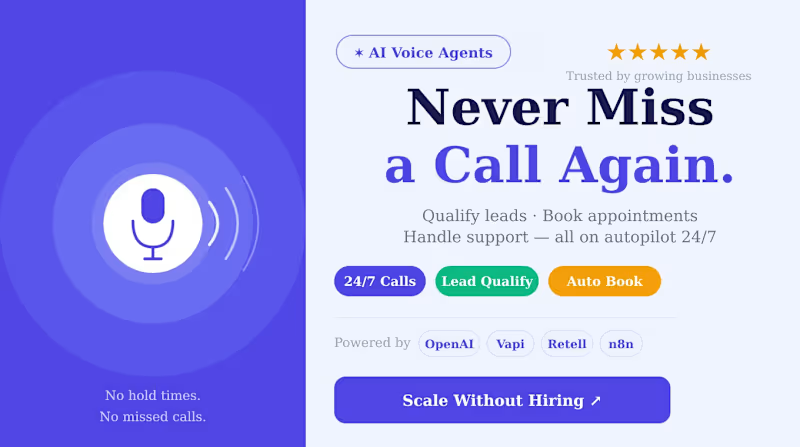
AI Voice Agents for Healthcare HIPAA-Compliant AI Receptionist & Patient Automation Healthcare teams spend countless hours answering repetitive phone calls, scheduling appointments, verifying insurance, and following up with patients. I built AI Voice Agents that automate these workflows while delivering natural, human-like conversations and integrating directly with healthcare systems. Project Overview This project showcases production-ready AI voice agents designed for clinics, medical practices, wellness centers, and healthcare providers. The system can answer inbound calls, qualify new patients, schedule appointments, retrieve patient information, send SMS confirmations, and escalate complex requests to staff when needed. Key Features โ€ข 24/7 AI Receptionist โ€ข Appointment Booking & Rescheduling โ€ข Insurance & Claims Support โ€ข Patient Qualification โ€ข Calendar Integration โ€ข SMS & Email Confirmations โ€ข EHR / CRM Integration โ€ข Human Handoff โ€ข Natural AI Conversations Example Workflows Insurance Support Patients can ask questions about coverage, eligibility, claim deadlines, and policy information. The AI provides accurate responses, sends helpful SMS links, and transfers complicated cases to a human representative when required. Patient Appointment Booking When a new lead submits a website form, the AI immediately calls them, answers questions, checks calendar availability, books an appointment, and sends confirmation automatically. Treatment Scheduling The AI verifies patient identity, retrieves treatment information, checks remaining sessions, and books follow-up appointments without manual staff involvement. Tech Stack โ€ข Retell AI โ€ข OpenAI GPT โ€ข n8n โ€ข Make.com (http://Make.com) โ€ข Zapier โ€ข GoHighLevel โ€ข Twilio โ€ข Google Calendar โ€ข Custom API Integrations Results โœ” Faster response times โœ” Reduced administrative workload โœ” Automated appointment scheduling โœ” Improved patient experience โœ” 24/7 availability โœ” Fewer missed opportunities If you're looking to automate patient communication with AI Voice Agents, I can build a secure, scalable solution tailored to your healthcare workflow.
0
17
Crypto Wallet Apps & Blockchain Developer for Web3 Companies
8
Followers
Crypto Wallet Apps & Blockchain Developer for Web3 Companies
Cover image for TOMI โ€“ Web3 Ecosystem Platform
TOMI
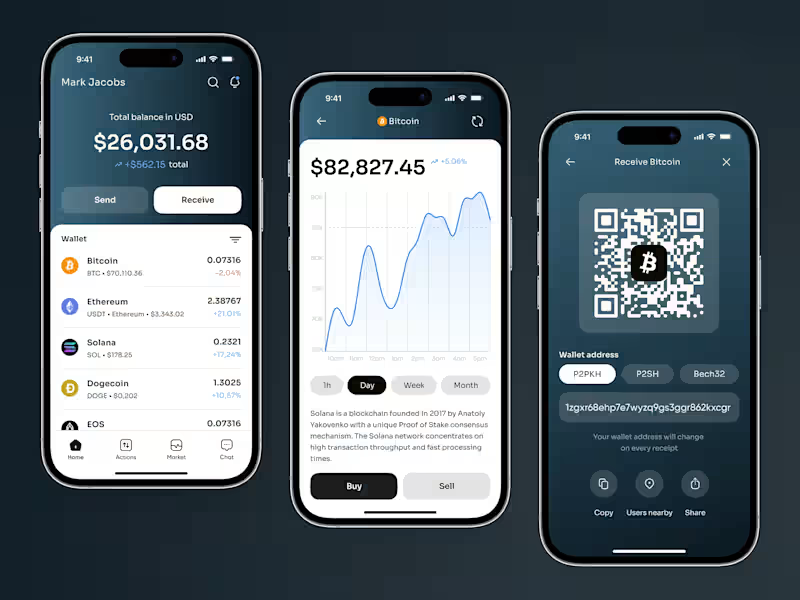
TOMI โ€“ Web3 Ecosystem Platform TOMI is a Web3 ecosystem platform built to support blockchain-powered products, decentralized services, and digital ownership experiences. The website acts as the main entry point for users to understand the TOMI ecosystem, explore its products, and interact with Web3-focused services through a modern, scalable, and performance-driven web experience. My role focused on developing and improving the frontend architecture of the platform using modern web technologies. I worked on creating reusable components, responsive layouts, and smooth user flows that could support a premium Web3 product experience across desktop and mobile devices. The goal was to make the platform visually polished while keeping it fast, reliable, and easy to use. From a technical perspective, I contributed to Web3-related integrations, dynamic data handling, API connectivity, and blockchain-focused user flows. The platform required careful handling of asynchronous data, wallet-related states, transaction-driven interactions, and real-time updates from external services. I focused on making these flows stable, user-friendly, and scalable for production use. Performance and scalability were also key priorities. I worked on optimizing page load speed, improving rendering behavior, managing reusable UI structures, and ensuring the website performed consistently across browsers and screen sizes. The implementation was designed to support future ecosystem expansion without making the codebase difficult to maintain. The project involved technologies such as Next.js, React.js, TypeScript, REST APIs, Web3 integrations, blockchain data services, Git, and modern deployment workflows. The final result was a scalable and production-ready Web3 platform experience that helped present the TOMI ecosystem in a clear, technical, and user-focused way.
1
50
AI Engineer | Full-Stack Engineer I Blockchain Developer
Cover image for Time-Tracker Pro โ€” Intelligent Time
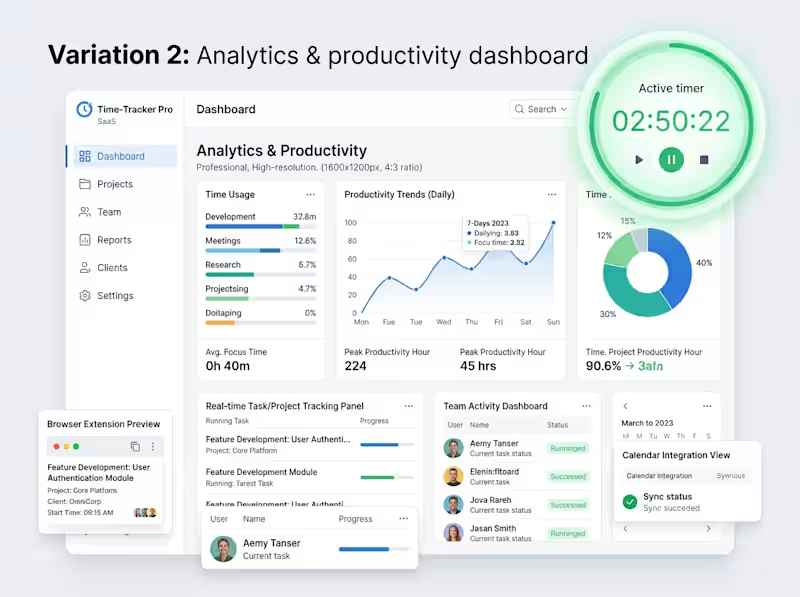
Time-Tracker Pro โ€” Intelligent Time Management & Productivity SaaS A comprehensive SaaS platform that helps teams and freelancers track time, manage projects, and optimize productivity with AI-powered insights. Core Features: Real-time time tracking with automatic detection Project & task management with hierarchical organization Detailed time analytics and productivity reports Team collaboration & billable hours tracking Invoice generation from tracked time Browser extension for seamless tracking Mobile app for on-the-go time logging Idle time detection & smart reminders Integration with popular tools (Slack, Jira, Asana, Google Calendar) AI-Powered Capabilities: Automatic activity categorization using machine learning Predictive project time estimates Productivity insights & trend analysis Smart recommendations for time optimization Natural language project/task creation Anomaly detection for unusual patterns Dashboard & Reporting: Real-time team activity dashboard Customizable productivity reports Time distribution charts & visualizations Client billing reports with detailed breakdowns Performance metrics & KPIs Export to PDF, CSV, or integrate with accounting software Technical Stack: Frontend: React, Next.js, TypeScript, Tailwind CSS Backend: Node.js, Express, NestJS Database: PostgreSQL for relational data, Redis for caching AI/ML: Python (scikit-learn, TensorFlow) for predictions Real-time: WebSockets for live updates Infrastructure: Docker, AWS EC2, S3, Lambda CI/CD: GitHub Actions Authentication: OAuth 2.0, JWT tokens Key Accomplishments: โœ“ 1000+ concurrent users support โœ“ Sub-100ms API response times โœ“ 99.9% uptime SLA โœ“ Encrypted data storage & transmission โœ“ GDPR compliant โœ“ Scalable microservices architecture โœ“ Automated testing (Jest, Cypress) This project demonstrates expertise in: SaaS architecture & scalability Real-time systems & WebSockets AI/ML integration for predictions Payment processing & invoicing User authentication & security Team collaboration features Production deployment & DevOps
0
26
Cover image for AI-Powered Application - LLM Integration
AI-Powered Application - LLM Integration & Intelligent Automation A production-grade application that leverages large language models (LLMs) to deliver intelligent automation, real-time assistance, and enhanced user experiences. Core Features: Multi-turn conversational AI with context awareness Retrieval-Augmented Generation (RAG) for knowledge-grounded responses Function calling for external API integrations Real-time streaming responses for better UX Prompt engineering for task-specific outputs Fine-tuned models for domain-specific use cases Vector database integration (Pinecone, Weaviate) Intelligent document processing & summarization Application Capabilities: Natural language understanding & processing Automated content generation Smart data extraction from unstructured text Intelligent customer support automation Code generation & debugging assistance Real-time translation & multilingual support Advanced search with semantic understanding Personalized recommendations Tech Stack: LLM APIs: OpenAI (GPT-4), Claude, Cohere Frontend: React, Next.js, TypeScript, Tailwind CSS Backend: Node.js, Express, FastAPI (Python) Vector Databases: Pinecone, Weaviate, Chroma Infrastructure: Docker, AWS, Vercel Monitoring: LangSmith, Helicone for LLM tracking Architecture Highlights: โœ“ Asynchronous processing for scalability โœ“ Caching strategies to optimize LLM costs โœ“ Error handling & fallback mechanisms โœ“ Rate limiting & usage monitoring โœ“ Security: API key management, data encryption โœ“ Performance: Sub-second response times โœ“ Cost-optimized with token management This project demonstrates expertise in: LLM integration and orchestration Prompt engineering and optimization RAG pipeline development Production-grade AI systems Full-stack application architecture
0
32
Full Stack Engineer building scalable, high-performance web.
New to Contra
Full Stack Engineer building scalable, high-performance web.