Freelancers using Microsoft Word in PakistanFreelancers using Microsoft Word in Pakistan
Novel/Memoir Editor, Writer, Betareader For 11+ Years
15
Followers
Novel/Memoir Editor, Writer, Betareader For 11+ Years
Policy Researcher & Geopolitical Analyst
New to Contra
Policy Researcher & Geopolitical Analyst
Market and Competitor Research, GTM Strategy and TAM SAM SOM
New to Contra
Market and Competitor Research, GTM Strategy and TAM SAM SOM
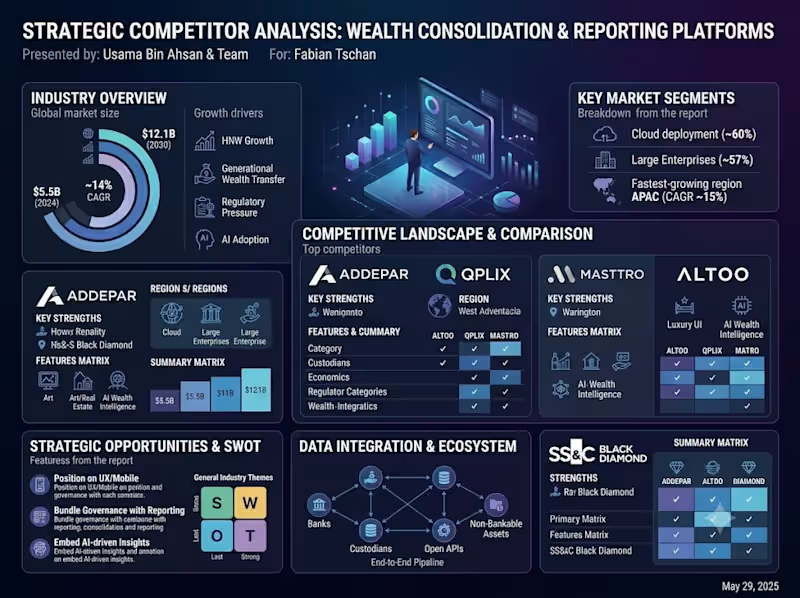
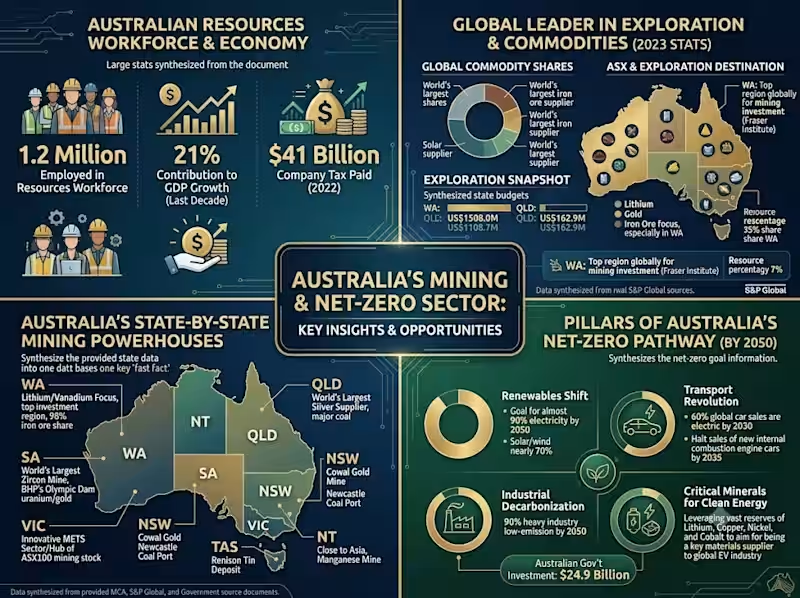
Cover image for Strategic Competitor Analysis: Wealth Consolidation
Strategic Competitor Analysis: Wealth Consolidation & Reporting Platforms Project Overview Executed a comprehensive market intelligence and competitor benchmarking study evaluating 11 leading global platforms in the wealth consolidation, reporting, and family office technology space (including Addepar, QPLIX, Masttro, Altoo, Landytech, and SS&C Black Diamond). The objective of this engagement was to synthesize macro market dynamics, map regional regulatory environments, evaluate platform architectures across bankable and non-bankable assets, and deliver an executive-level strategic roadmap for platform positioning, AI integration, and ecosystem design. Key Deliverables & Strategic Highlights Macro Market Intelligence & Sizing: Analyzed global software growth trajectories (projected expansion from $5.5B in 2024 to $12.1B+ by 2030 at a ~14% CAGR) along with regional breakdowns (North America, Europe, APAC) and key demand drivers like generational wealth transfer and regulatory compliance (GDPR, FinSA, SEC). Deep-Dive Competitor Benchmarking: Evaluated 11 platforms across functionality, data ingestion models (OCR/AI statement parsing vs. custodian API feeds), asset class support (public, private equity, real estate, collectibles), and pricing structures. SWOT & Feature Matrix: Built structured comparative visual models highlighting platform differentiators—ranging from US enterprise scale to European compliance automation and luxury-grade visual interfaces. Strategic Recommendations: Formulated actionable strategies across five key operational pillars: -Platform Positioning: Integration of governance and entity visualization (ORCA/Altoo style) into reporting workflows. -UX & AI Enablement: Implementation of predictive alerts, smart anomaly detection, and natural language query interfaces. -Geographic Target Growth: Expansion roadmaps focused on high-trust jurisdictions (Switzerland, DACH, UK) and rapid-growth APAC markets. -Ecosystem Design: Open API architecture bridging multi-custodian data feeds directly to automated general ledger accounting. -Monetization Architecture: Tiered, AUM-based, and modular pricing frameworks. -Executive Data Visualization: Synthesized the multi-page analysis into a high-impact, dark-mode visual infographic layout optimized for C-suite presentation and digital showcase. Scope & Core Skills Services Provided: Market Research, Competitive Strategy, Financial Technology Analysis, Strategic Planning, Data Visualization. Deliverables: Full Strategic Benchmark Report (PDF) + Executive Presentation Visual (4:3 Graphic).
0
21
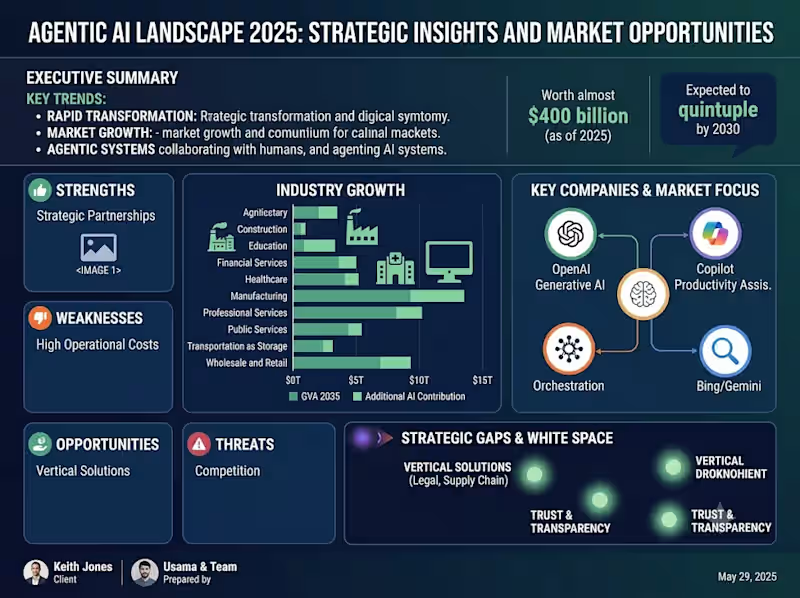
Cover image for Project Overview: Agentic AI Market
Project Overview: Agentic AI Market Landscape & Strategic Intelligence (2025–2030) Executive Summary This project involved synthesizing high-density secondary market intelligence, competitor ecosystems, and macroeconomic growth projections into an executive-ready landscape visual report on the fast-evolving Agentic AI market sector. Designed specifically for enterprise strategists, investors, and product leaders, this deliverable translates complex market data, industry value-add projections, and SWOT dynamics into a single, scannable landscape framework. Key Highlights & Core Insights Included Macro Market Trajectory: Highlighting key market growth metrics (projected market value reaching near $400B with significant CAGR expansion by 2030). Sector-Wise GVA Impact: Detailed visual breakdown of market growth and AI contribution across core verticals including Manufacturing, Healthcare, Financial Services, and Professional Services. Competitor Ecosystem Mapping: Categorization of prominent market players across key technological paradigms (Generative AI, Productivity Intelligence, Multi-Agent Orchestration, and Search/Retrieval engines). SWOT & Strategic Positioning: Core examination of strategic growth drivers (enterprise partnerships, vertical solutions) against key barriers (high operational/compute costs and dynamic market competition). White Space Analysis: Strategic mapping of untapped opportunities around industry-specific vertical agents (Legal, Supply Chain) and trust/transparency infrastructure. Deliverables Provided Executive Visual Infographic: High-resolution 16:9 landscape overview optimized for slide decks, investor briefings, and executive memos. Structured Data & Insight Briefing: Supporting market tables detailing macroeconomic forecasts, competitor taxonomy, and strategic white-space recommendations. Role: Lead Market Analyst & Competitive Strategist Tools Used: Statista, Crunchbase, GWI, Python/Excel (Data Structuring), Graphic Design / Visual Synthesis Tools.
0
26
Horror Book Formatter | Kobo & Kindle EPUB Expert
New to Contra
Horror Book Formatter | Kobo & Kindle EPUB Expert
Email &Ad Copywriter|Boosting Brands with Words that Convert

Finance & HR writer simplifying ideas into engaging blogs.

New to Contra
Finance & HR writer simplifying ideas into engaging blogs.
Cover image for WHY HUMILITY IS YOUR GREATEST
WHY HUMILITY IS YOUR GREATEST GROWTH ACCELERATOR In the early days of my career, I felt confident thinking that I knew all the answers related to my work. I was wrong. Afterwards, I realized that that the magic words really were ‘I don't know', which I started to use more frequently. Humility is not thinking less of oneself. It is a matter of thinking less about yourself and you will see that everything changes. So, this is what I have learned how humility supports and lead you to sustainable growth: Humility opens doors that ego keeps locked. When you admit what you do not know, you become teachable. Feedback really becomes a fuel for you as compared to criticism. You always see lessons in all your failures, and in all your talks. Humility will help you keep moving forward when perfectionism will cause paralysis. It allows you to be in a state of becoming teachable. You send in a flawed project, you do the hard talk, and you do the job that you're not ready for, because you're safe enough to learn in public. For compounding the effects of the relationships, we find that humility is the key. Those that listen more than they talk, cheer on others' successes, and fill the room rather than sucking up all the air, attract more people to them. These are the folks others want to champion, mentor and work with. The best people I know have this trait: They are curious and they're very open about the things they don't know. They have come to understand that admitting that you are still learning is not a weakness signal, it is a strength multiplier. Growth doesn't stop at a specific point and you don't "arrive" at growth. It's an ongoing course of action and humility is the guiding force that pushes you in the right direction!
0
86
Cover image for 10 Interesting Facts About Human
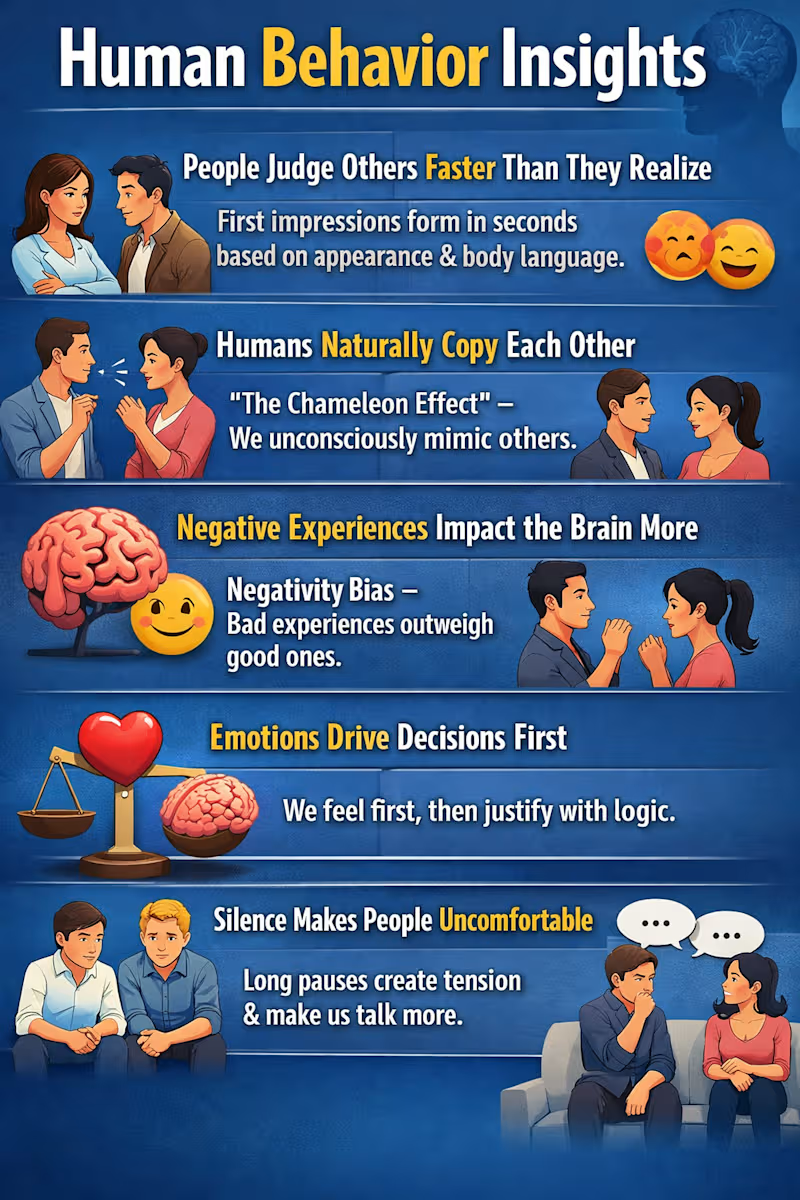
10 Interesting Facts About Human Behavior 1. People Judge Others Faster Than They Realize Research in psychology shows that humans form first impressions within seconds. These judgments are often based on facial expressions, tone of voice, posture, and appearance, even before a full conversation begins. 2. Humans Naturally Copy Each Other This is called the “chameleon effect.” People unconsciously imitate the body language, speaking style, and gestures of those around them. It helps create trust and social connection. 3. Negative Experiences Affect the Brain More Strongly Than Positive Ones Psychologists call this the “negativity bias.” One criticism can emotionally outweigh several compliments because the brain is wired to notice threats more intensely than rewards. 4. Most Decisions Are Emotional First, Logical Second People often believe they make decisions rationally, but neuroscience suggests emotions usually influence decisions first. Logic often comes afterward to justify the choice. 5. Silence Makes Many People Uncomfortable In conversations, long pauses create psychological tension. Because of this, people often reveal extra information simply to fill silence. Skilled negotiators and interviewers use this strategically. 6. Humans Crave Social Acceptance The brain reacts to social rejection in ways similar to physical pain. This is why exclusion, humiliation, or public embarrassment can feel deeply painful and emotionally exhausting. 7. Confidence Often Matters More Than Expertise Studies in behavioral psychology show that people frequently trust confident speakers more than knowledgeable but hesitant ones. Perception strongly shapes influence. 8. People Remember How You Made Them Feel More Than What You Said Emotional memory tends to last longer than factual memory. A person may forget your exact words but clearly remember whether they felt respected, inspired, ignored, or valued. 9. Habits Control Much of Human Life A large percentage of daily actions happen automatically through habit loops. Once behaviors become routines, the brain uses less energy to perform them. 10. Humans Are Highly Influenced by Group Behavior This is called “social proof.” People often follow what others are doing, especially during uncertainty. This explains trends, viral content, crowd behavior, and even financial market panic. Bonus Insight One of the most fascinating truths about human behavior is this: People rarely see themselves as the villain in their own story. Most individuals justify their actions internally, even when others see those actions negatively. Human beings are experts at self-rationalization.
0
65
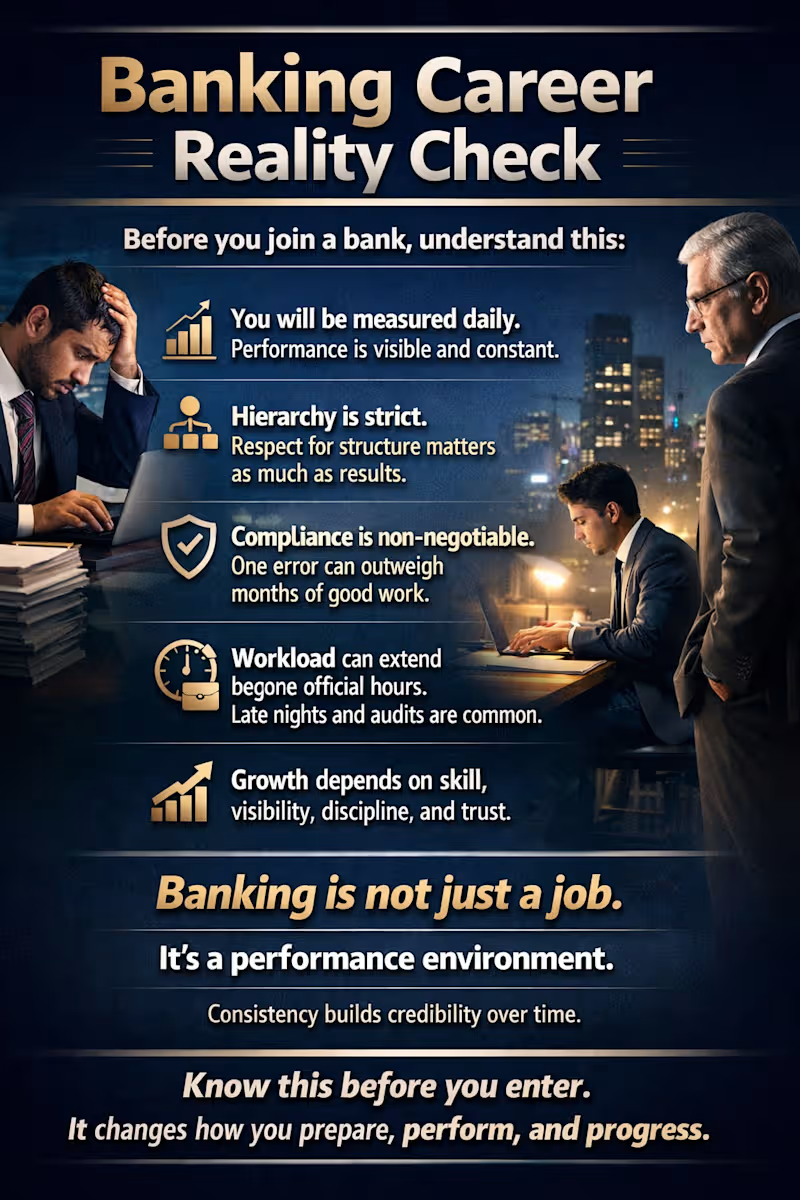
Cover image for BANKING CAREER IN PAKISTAN. THE
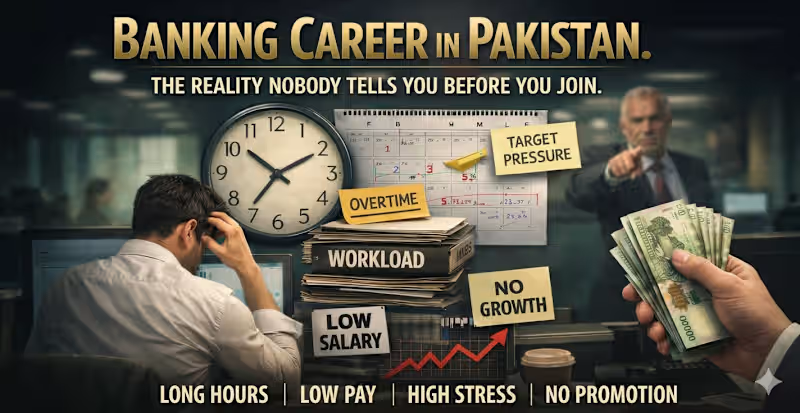
BANKING CAREER IN PAKISTAN. THE REALITY NOBODY TELLS YOU BEFORE YOU JOIN. You see the suit. You see the title. Office looks air conditioned. You do not see what happens inside. I have been in the banking industry for 25 years in Pakistan and Afghanistan. I have worked in the operations, compliance and in rooms where careers were won and lost. So here is the reality check, which most senior bankers won't share with you. THE SALARY IS NOT WHAT YOU ARE EXPECTING Average entry-level salaries for the commercial banks in Pakistan range from PKR 50,000 to PKR 80,000 monthly. Once you pay your rent, your mortgage, your bills and your transportation, there's barely anything left. The pay scale of the banking sector in Pakistan has not matched up with the rate of inflation. The State Bank of Pakistan's own figures show that growth of real wages in the financial sector is under strain for years. Do not join banking for the money at the start. You will be disappointed. THE HOURS ARE BRUTAL AND MOSTLY UNPAID Branch banking in Pakistan is not a 9-to-5 job. End-of-day reconciliation, audit preparation, regulatory reporting deadlines, and customer pressure mean that 10-to-12-hour days are standard, not exceptional. Saturday working is common. Time off-in-lieu is rare. Overtime pay for officers is almost non-existent. TARGETS WILL DEFINE YOUR EXISTENCE Deposits. Cross-selling. Account opening numbers. Insurance products. Loan disbursement. Numbers will be assessed on a monthly basis. In the event that you don't reach the goals, your increment is in danger. When you're not hitting goals, your career gets stuck. This is not motivation! This is continuous pressure. Banking is a depressing process for those who aren't equipped for target-oriented performance. 4. THE COMPLIANCE BURDEN IS GROWING AND THE PENALTIES ARE PERSONAL This is something that no one tells the new graduates. Banking employees can be held personally responsible under the Anti-Money Laundering Act 2010 and the regulations of the Financial Monitoring Unit (FMU) of Pakistan for failure of compliance. Anti-money laundering and counter-terrorism financing (AML/CFT) are a series of regulations aimed at stopping illegal money laundering or counter-terrorism financing through the financial system. The failure to properly complete a Suspicious Transaction Report (STR), the lack of Know Your Customer (KYC) documentation, or a transaction that is not adequately reviewed falls on the individual officer, and not solely on the institution. Young bankers don't really know this until it is too late. 5. PROMOTION IS SLOW AND POLITICAL In most Pakistani banks, relationships are more important than merit. Even if you're doing a great job for years, you can watch others around you rise to greater heights, when you do not have a sponsor or mentor from senior management. The culture of institutional favoritism is a reality in local context, and is well documented and has a negative impact on young talent who only rely on performance. 6. DIGITIZATION IS ELIMINATING ENTRY-LEVEL ROLES The fintech industry in Pakistan is growing. New technologies such as branchless banking, mobile wallets and digital account opening are replacing the need for traditional front-desk and teller jobs. According to the Pakistan Banks Association and several other reports, the footprints on branches are shrinking. The entry level jobs, which were jobs for training, are being phased out. If you're entering the banking world now as a transactional player, you are expected to get into compliance, risk, credit analysis or technology in three to five years. 7. THE MENTAL HEALTH COST IS REAL Customer abuse, regulatory pressure, target anxiety, and long hours create a toxic combination. Banking professionals in Pakistan rarely discuss this openly because the culture rewards stoicism. But the exhaustion rate is high. If you do not build your own boundaries early, the institution will not build them for you. SO WHY DO PEOPLE STILL JOIN? Despite all the obvious disadvantages of banking, it remains one of the most transferable skill sets in the Pakistani job market when done properly. The skills in credit analysis, AML/CFT compliance, risk management and operations leadership are truly worthwhile in financial institutions in the GCC, UK and around the world. There is a career path. The prizes are tangible. But they go to those who have come in with clear eyes, not with illusions. Enter banking knowing what it actually costs. Then decide if you want to pay that price.
0
45
Creative Content Writer, Graphic Designer, SEO Specialist