Content Writing Projects in IndiaContent Writing Projects in IndiaLeoBrain | AI Applicant Tracking System
Website Content + Blogs + Case Studies
HR tech is a crowded space. Everyone promises to make hiring faster and smarter. The challenge with LeoBrain was not the product itself, but communicating its value in a way that was clear, credible, and relevant to HR decision-makers.
NLP, automated parsing, predictive analytics are impressive capabilities but mean very little to an HR director who just needs to know whether this tool will make their life easier. That is why a significant part of the work involved translating such complex AI capabilities into language that focused on practical business outcomes.
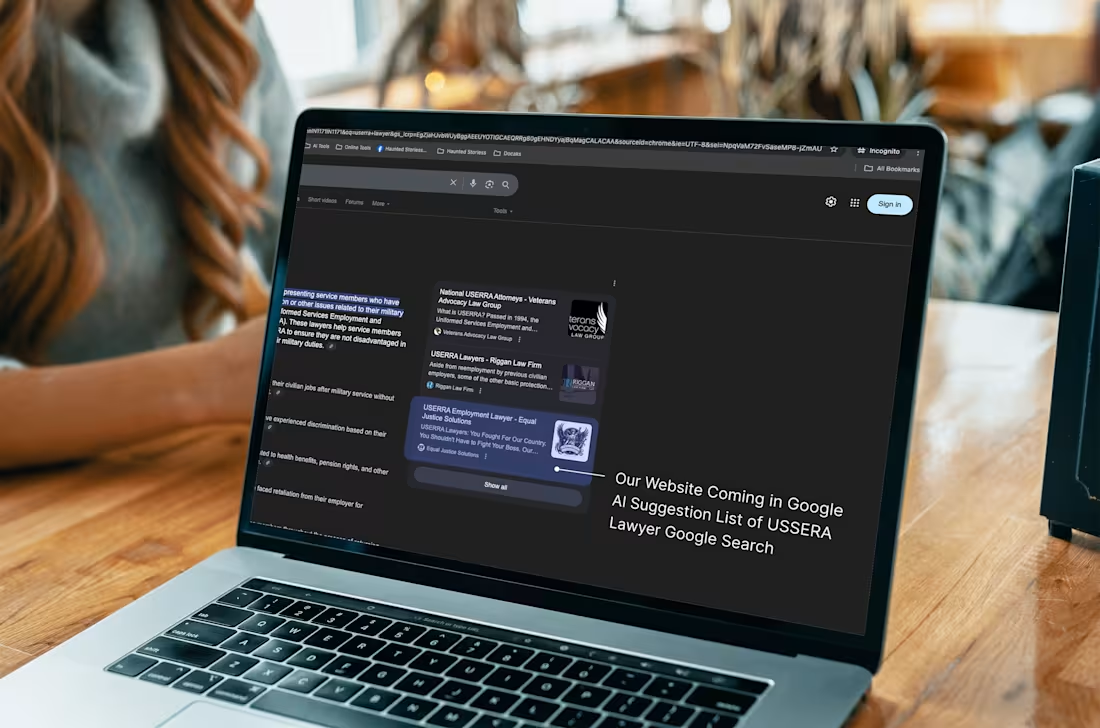
This approach shaped every asset I created, from website copy for the homepage, product, feature, and support pages to SEO-focused blogs and case studies designed to educate prospects and support the buying journey. Alongside the messaging, I incorporated on-page SEO best practices, including keyword optimisation, content architecture, metadata, and search-intent-driven copy.
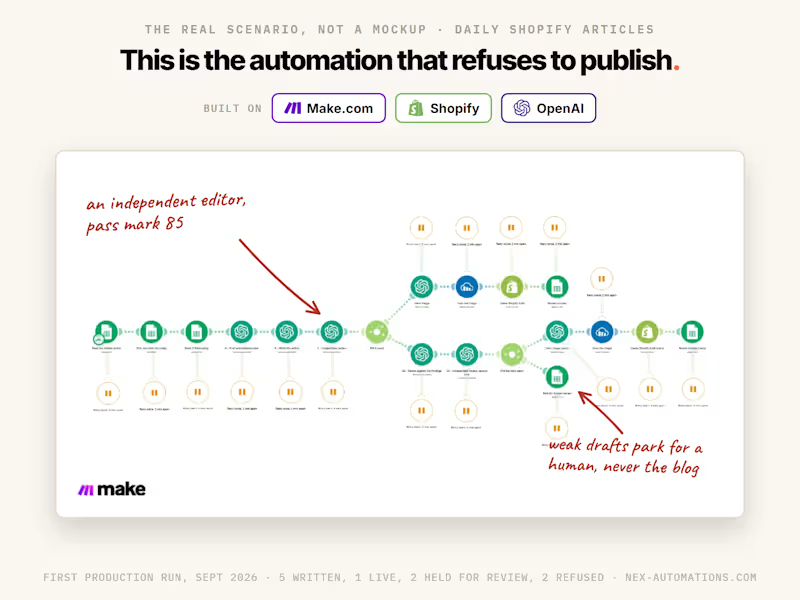
The result was a 35% increase in organic traffic within six months, supported by stronger search visibility and clearer product messaging. More importantly, the content gave LeoBrain a consistent voice that made a complex AI product easier to understand and easier to trust. What does it take for an AI-written article to read like an editor produced it? A process, not a prompt. Below is the one we run in production, the picture is the actual Make.com scenario behind it, and this is who it is for.
Who should read this: store owners and marketing leads who publish weekly and are tired of content that sounds like everyone else's AI, agencies delivering articles for clients who can tell the difference, and founders writing their own blog at midnight because they do not trust anyone else with their voice.
The process, step by step:
1. Voice before content. We build a voice profile from 3 to 5 pieces of your real writing: on-voice and off-voice examples, your terminology, your closing line. "Friendly and professional" is not a voice. Your actual sentences are.
2. Memory before topics. Everything you already published gets indexed by search intent, and every new topic is checked against it. Two differently titled articles that answer the same search are the same article, and search engines punish you for both.
3. A brief before a draft. Each topic becomes a plan first: the reader's real question, a direct answer for the top of the piece, question-shaped sections that mirror what people actually type, and a list of facts that are safe to assert versus claims to avoid. This structure is also what earns citations in AI answers, which is the GEO and AEO half of the job.
4. Realism enforced in both directions. Inventing facts fails. So does the cowardly opposite, an article that explains how to choose without ever choosing. A guide that names nothing has not answered its question, and our editorial pass blocks both failure modes.
5. An independent editor, then a human. Every draft is graded by a separate AI step with its own prompt across 8 quality dimensions, pass mark 85, before I review it myself. You only ever see drafts that cleared both. In its first production month the editor blocked drafts rather than lower the bar, which is exactly what you want it to do.
6. Links with a job. Internal links placed early, middle and end, pointing at pages that survive (collections and guides, not products that sell out), tagged so clicks can be traced to what they earn.
The length is yours to set, with an 800-word floor so nothing thin ever ships. Blogs, newsletters, LinkedIn articles and help-centre pages all run through the same desk.
This now exists as a service on my profile: Brand-Voice Articles, $50 an hour with the honest math printed in the listing (most articles take 2 to 3 hours end to end). The system build behind it is there too for anyone who wants it running unattended in their own accounts.
If you publish weekly: which of these six steps is missing from your current process? That answer is usually where the quality leaks.