AI Content Creation Projects in IndiaAI Content Creation Projects in IndiaThe era of the specialist is over, and honestly, good.
First Data Scientist, then UI/UX, and lately I've been making AI visuals- both pictures and videos.
Here's what I got wrong first.
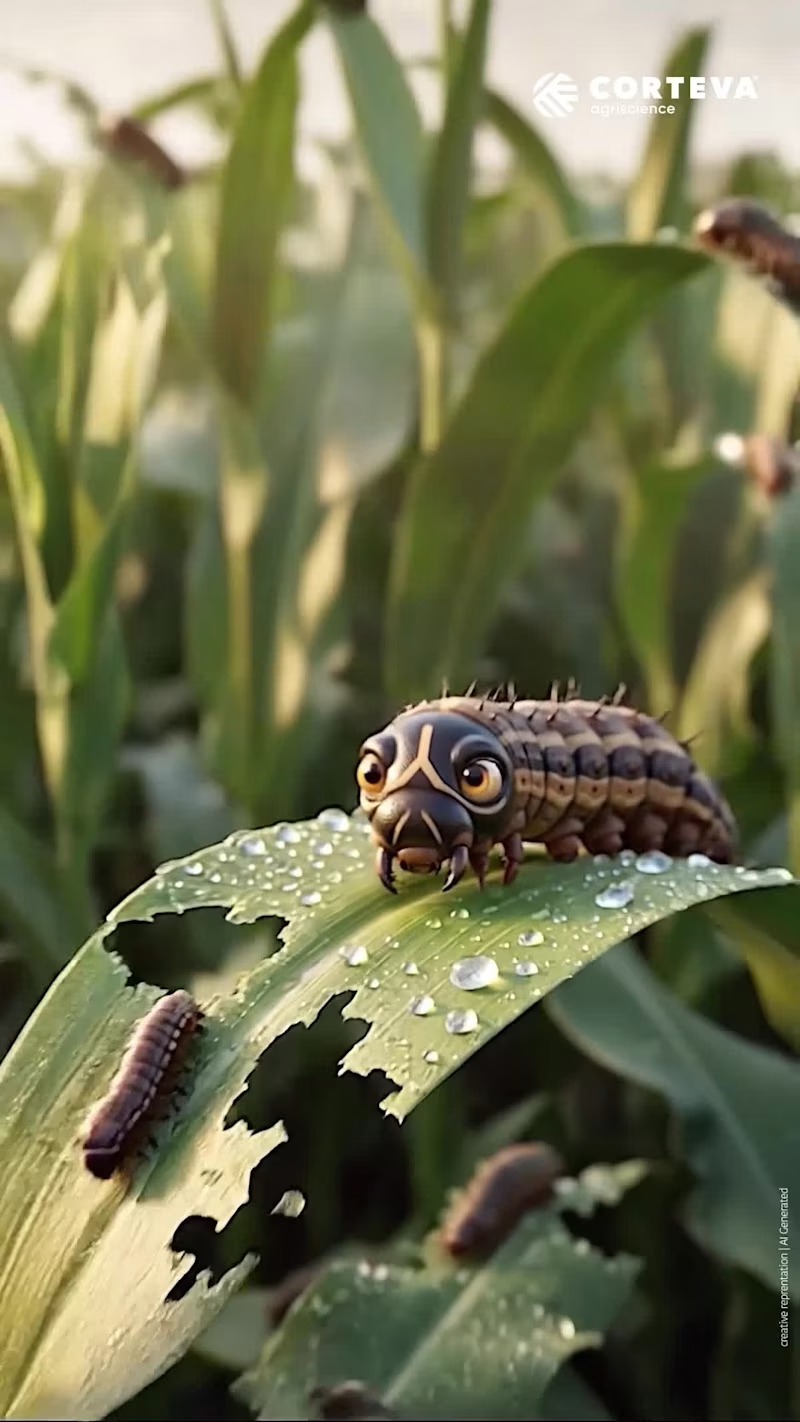
Most AI videos are bad because people ask it to make a whole scene. You write a paragraph, hope for the best, and do it again. It's like a slot machine with a monthly fee.
So I stopped writing prompts and started giving it pictures.
I made a still first. A still is easy to judge and easy to throw away. If the light and the crop are right, I have made every decision before anything moves.
Then I animated that still. Six seconds. One job. Nothing else moves.
Then the fun part. I took the last frame of that clip and used it as the first frame of the next one.
That frame had a hairline crack across a mirror. So the second generation didn't need a mirror described to it. It already had one. Cracked. Lit the way I lit it. All it had to do was break the thing.
And lo and behold, within three iterations, I achieved my anticipated result and merged the videos together.
So, personal lesson is to develop such videos upon last frames from the desired output produced- akin to the software development WATERFALL model- damn, once a techie, always a techie :P - what a complex and narrowly understandable analogy.
So: how was it? Be honest.
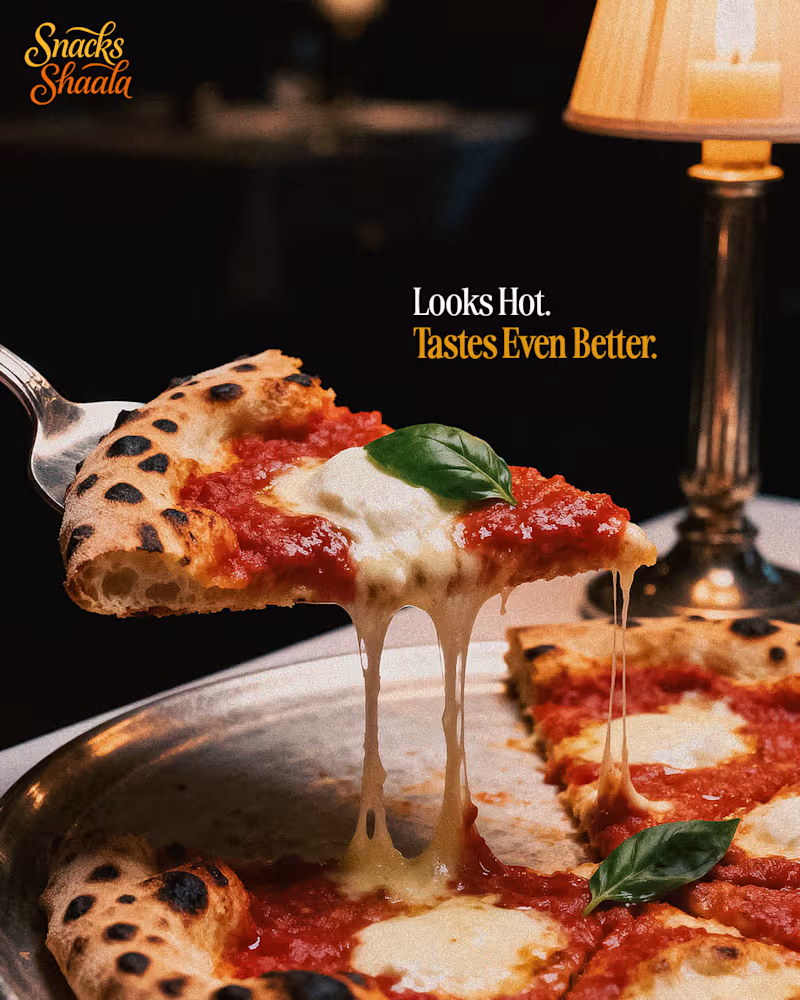
And what say you? Do you agree with my hook? Social media strategy for Snack Shaala focused on AI-powered food photography, cinematic food visuals, and lifestyle food content designed to increase organic reach, drive engagement, improve conversions, and build consistent brand assets for paid social campaigns and digital marketing.
Services include AI food photography, cinematic food reels, lifestyle food shoots, social media content creation, brand-aligned visuals, performance-driven creatives, and scalable assets for Instagram ads, Facebook ads, and online promotions.
Get started: 📩 Hola.monkix@gmail.com (mailto:Hola.monkix@gmail.com) | 🌐 monkix.in (http://monkix.in) Soul Foods | AI Content Engine That Cut Production Time by 60%
A healthy snack brand with real retail traction, given a social presence that runs like a system instead of a scramble.
Overview
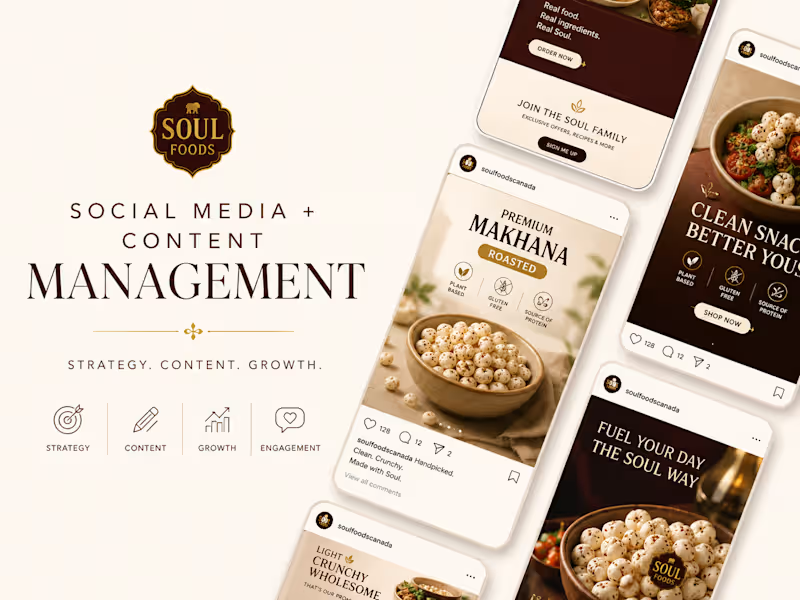
Soul Foods is a Canadian D2C brand making flavoured makhana (roasted fox nuts), a high-protein, vegan alternative to chips, sold online and in 20+ stores across British Columbia. The brand was growing fast but had no in-house content team, and social had become the bottleneck: inconsistent posting, no defined voice, and content creation eating founder time.
The challenge
Produce consistent, on-brand social content for a food brand, without hiring a team, and without the quality drop that usually comes with AI-generated content.
What I built
A brand voice and content pillar framework tailored to a healthy-snacking audience.
30-day content calendars delivered ready to publish: captions, hashtags, and posting schedule.
An AI video production workflow (script → AI generation → edit) for short-form content at scale.
A repeatable monthly system the brand can run with minimal input.