Framer expert

Igniting brands and experiences that fuel growth

Igniting brands and experiences that fuel growth

Video Editor | Podcasts, Courses & Entrepreneurial Content
- $1k+
- Earned
- 3x
- Hired
- 5.0
- Rating
- 10
- Followers
Video Editor | Podcasts, Courses & Entrepreneurial Content



Fullstack Developer | React, Next.js, Node.js Expert
- $10k+
- Earned
- 6
- Followers
Fullstack Developer | React, Next.js, Node.js Expert
Project Summary
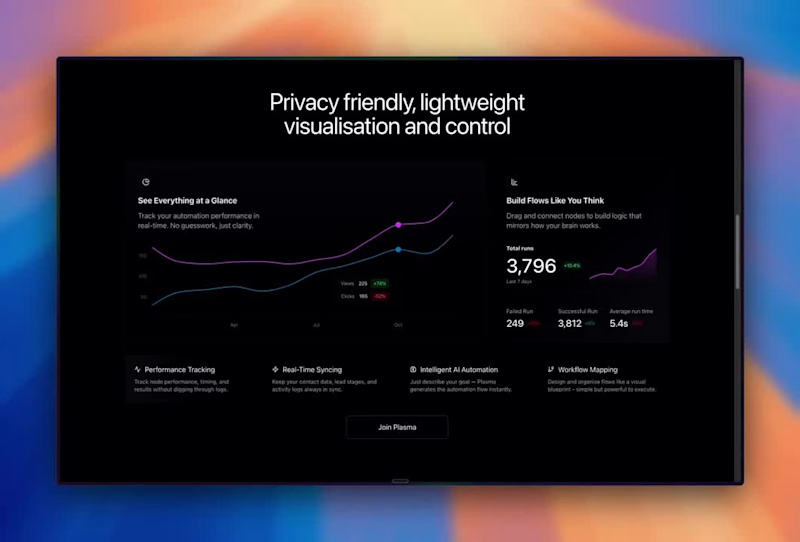
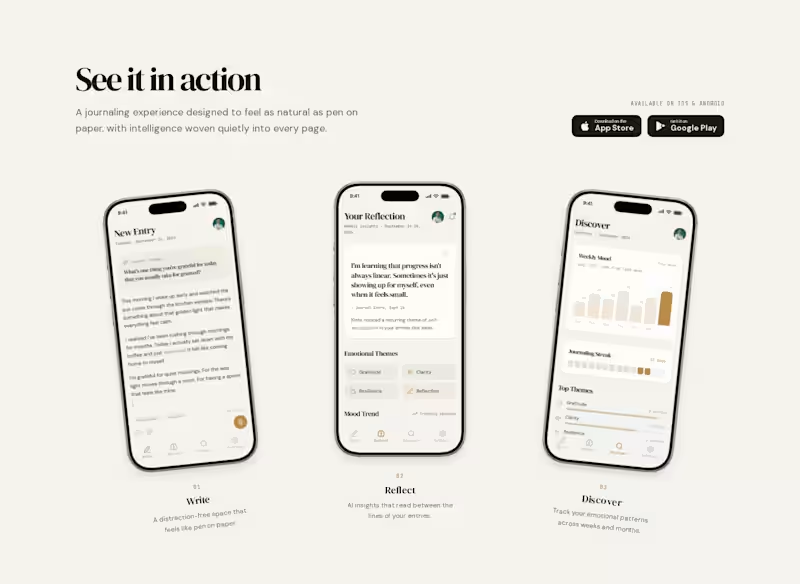
Plasma is a modern, conversion-focused Next.js 15 template, built to be a go-to starter for SaaS founders, indie hackers, and product teams who want to ship a polished marketing site (with full documentation included) without compromising on craft.
I was hired by Rob Austin from Shadcnblocks.com (http://Shadcnblocks.com) to develop the entire web presence for Plasma, which is sold as a premium coded template on the Shadcnblocks platform.
Built with Next.js 16 (App Router), Tailwind CSS 4, shadcn/ui, Framer Motion, and Fumadocs, with full static export support so it can be deployed anywhere from Vercel to Cloudflare Pages.
3
1
265
Project Summary
Kinto is a modern, conversion-focused Next.js template — designed and
built to be the go-to starter for SaaS founders, indie hackers, and
product teams who want to ship a polished marketing site without
compromising on craft.
I was hired by Rob Austin from Shadcnblocks.com (http://Shadcnblocks.com) to design and develop
the entire web presence for Kinto, which is sold as a premium coded
template on the Shadcnblocks platform.
1
265
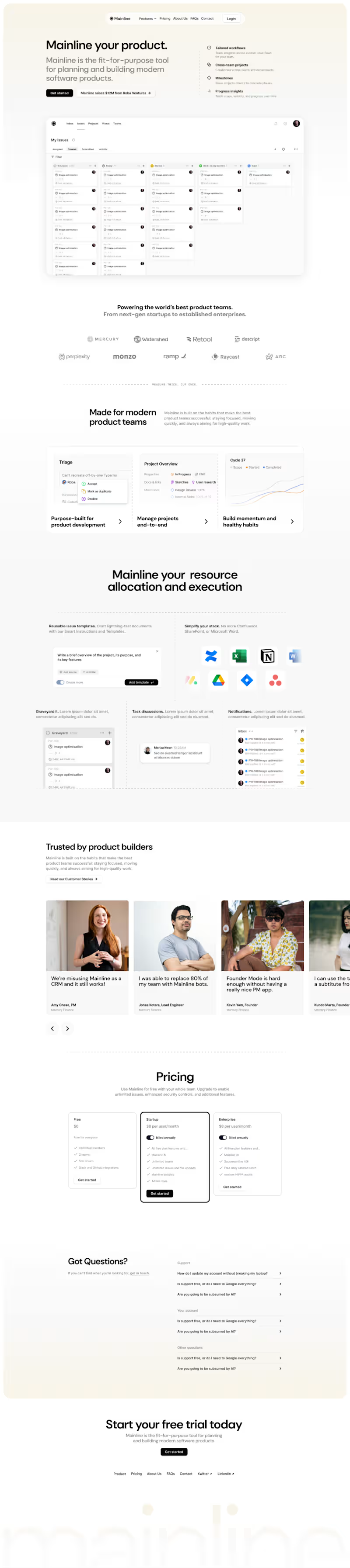
Mainline is a project management template built for software and product teams. It’s perfect for managing workflows, tracking milestones, and keeping projects on track.
I was hired by Rob Austin from Shadcnblocks.com (http://Shadcnblocks.com) to develop the entire web presence for Mainline, which will be released as one of the newest coded templates on their platform
1
304

Crafting Awesome Websites that Rank and Sell.
- $5k+
- Earned
- 8x
- Hired
- 5.0
- Rating
- 27
- Followers
Crafting Awesome Websites that Rank and Sell.



Founder @ Found. Building AI-powered software that scale.
- $10k+
- Earned
- 2x
- Hired
- 5.0
- Rating
- 4
- Followers
Founder @ Found. Building AI-powered software that scale.
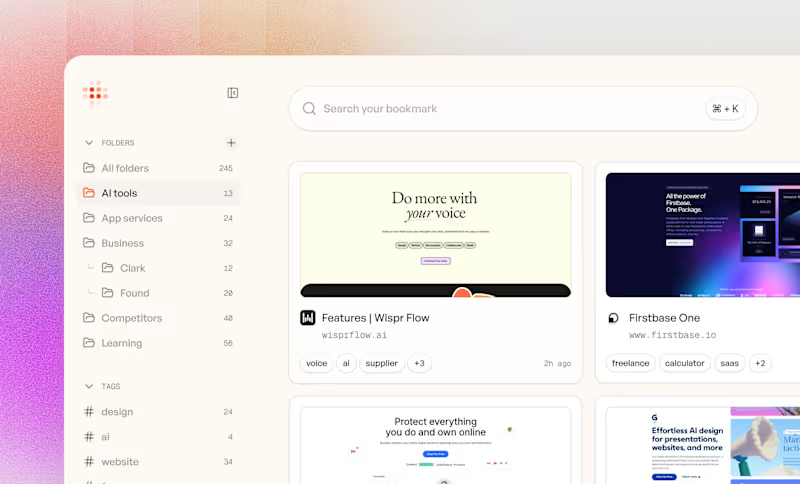
Most bookmark products fail at the exact moment people need them most: after a few hundred saved links, everything turns into a private landfill of vague titles, nested folders, and dead URLs. The link survives, but the reason for saving it disappears. Comparing sources means reopening every page and reading from scratch. I built Logged to change that outcome: a personal archive that stores the actual content and context behind each bookmark, then lets users query the whole thing through AI.
Logged is deliberately a single-user product, not a team workspace. That constraint mattered. The job was not collaboration, permissions, or shared knowledge bases. The job was making one person’s messy, long-running archive useful again without asking them to rebuild it from zero. So I kept the user’s existing folder structure exactly as it was and layered enrichment on top. That removed the biggest adoption barrier: nobody reorganizes 800 bookmarks just to test a new tool.
From there, every feature fixed a specific failure in traditional bookmarking. Each saved link can carry a memory note, so users stop asking “why did I save this?” AI-generated tags and user tags sit on top of folders, which means retrieval no longer depends on remembering a page title that never described the value of the page. Dead link detection automatically moves broken URLs into a separate list, which keeps the archive current instead of quietly decaying.
The most important product decision was also the most expensive one: Logged does not just save a pointer. It stores full metadata and up to 100,000 words of scraped content from each link. That changed the archive from a list of references into a searchable corpus. It costs more in storage and processing, and it is the reason the product works. Without that content layer, chat is decoration. With it, the archive becomes answerable.
That is where Atlas comes in. I designed Atlas as the interface to the archive, not a chatbot pasted onto a bookmark list. Users can ask questions across saved sources, compare multiple sites, or retrieve something they only half remember saving, all without opening the original links. That turns research from a repetitive tab-opening exercise into a single query. For researchers compiling sources on one topic, that means instant comparison across saved material. For self-directed learners with courses, docs, and tutorials spread across dozens of tabs, it means the material stays usable after the tab is closed.
We built Logged in 4 weeks with custom product design by a unicorn designer, development in Claude Code, OpenAI agents for the internal research agent, and Supabase for database and storage. The short timeline forced sharp product decisions early, and the product shipped live with a Chrome extension, full brand, and complete product design.
The outcome is simple and concrete: archives hold thousands of bookmarks and stay navigable, where traditional folder systems break down after a few dozen. Users do not browse a link cemetery anymore. They talk to a memory tool.
1
47
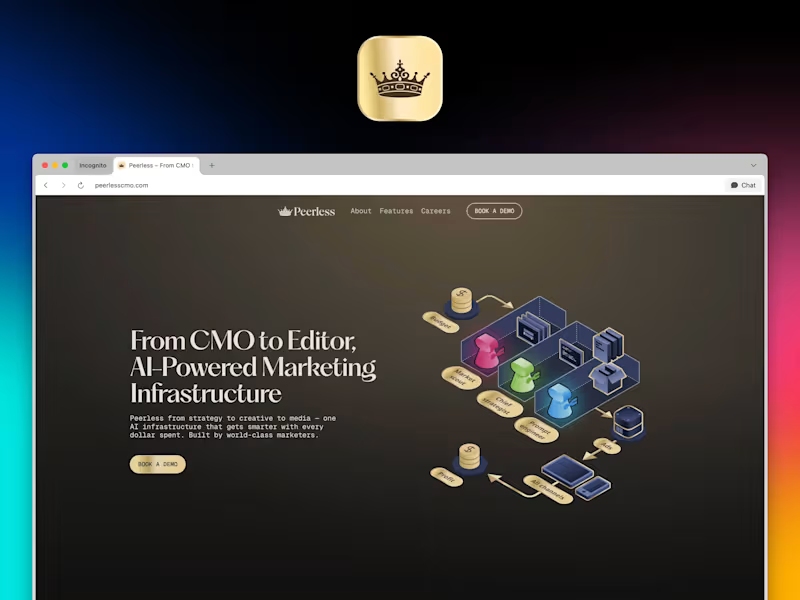
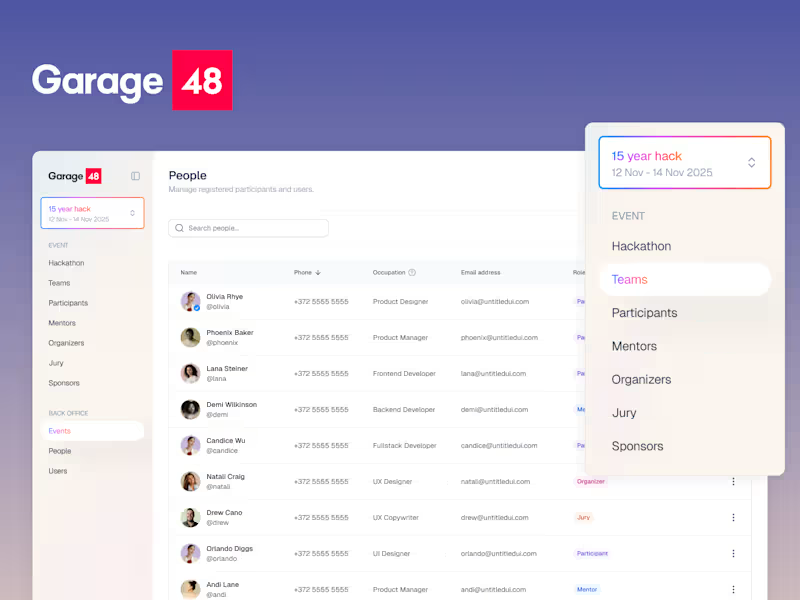
Garage48 is a hackathon event that happens in Europe, where founders and tech people get together to build MVPs and digital products in 48 hours.
As I mentor design at those events for the past 10 years, I realised that now with AI-powered development tools, we could create an internal tool to manage those events with class, automation and remove a lot of the current headaches.
After designing the first concept, we used a couple of weeks to develop the full product, and we are now running every hackathon within the tool.
YOU can be the next success story!
Visit found.fast (https://found.fast) and check it out.
1
172
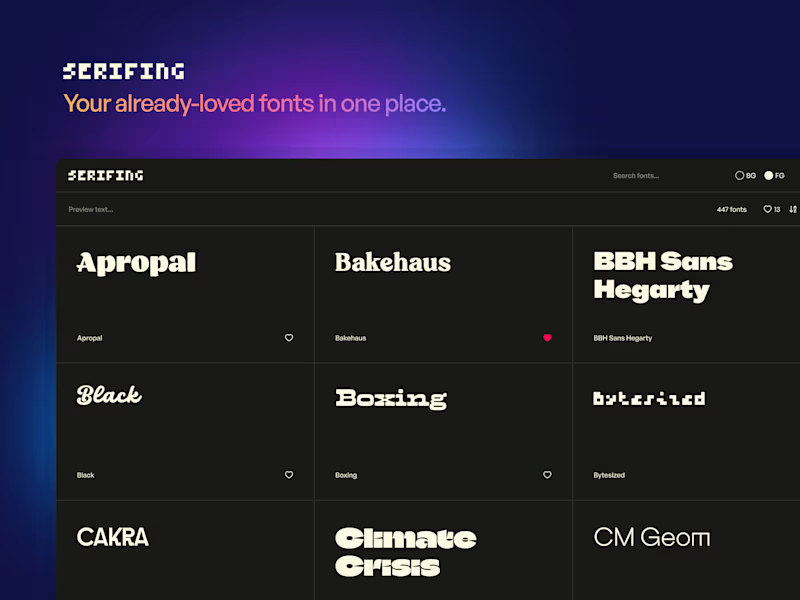
Serif.ing (https://Serif.ing) is the tool that brings your already-loved fonts to one place.
Many designers have the problem of choosing fonts for a new brand or product, because local fonts are notoriously hard to be visualized properly.
Serif.ing (https://Serif.ing) allows an instant connection to your local fonts, and empowers you to search, filter, combine, use your own brand colors and choose your own curated fonts. Think Google fonts, but for your local files.
The fun part? The first iteration of this product took me 45 minutes with AI-powered development. Can you imagine what we can deliver together with 4 weeks time?
So visit serif.ing (https://serif.ing) and test it out, it is FREE!
1
175

Certified Wix Velo Expert & App Developer 🌟

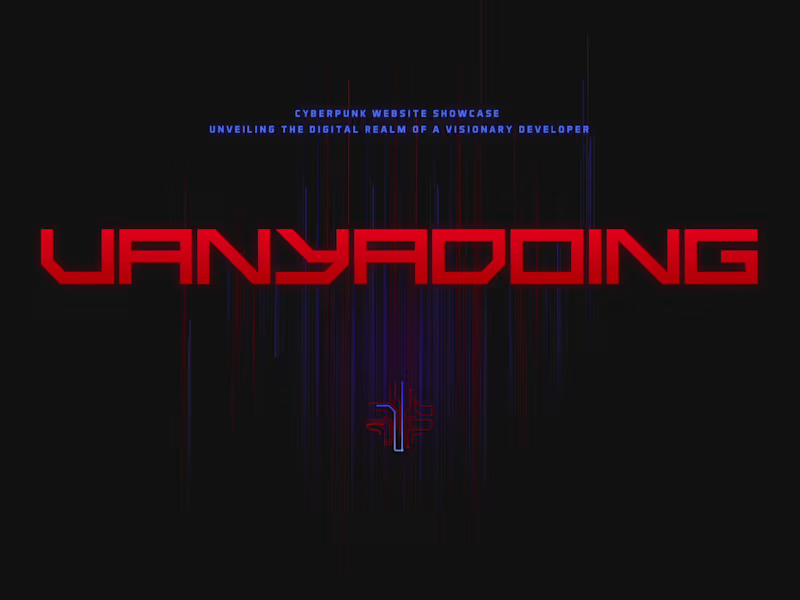
Just launched a different kind of WIX app: 3D Depth Effects Studio (https://www.wix.com/app-market/depth-image-effects) 🎉
My most ambitious WIX app (https://www.wix.com/app-market/developer/vanyadoing) yet.
In very short: it turns a your regular image into depth & edge maps, and apply cinematic scanning and fluid animations effects with 3D parallax effect.
No external rendering libraries like Three.js - just raw WebGL
Quick actions:
Install on WIX
(https://www.wix.com/app-market/depth-image-effects)Live Demo
(https://www.vanyadoing-dev.com/depth-effects)Quick Start
(https://www.vanyadoing-dev.com/depth-effects-quick-start)Watch YouTube (https://www.youtube.com/playlist?list=PLHhWJ_xvyEPv9OBe7UMC_HrgitZwXRhf0)
19
386



Video Production & Editing Expert | Tech/SaaS/B2B

There is a lot of hype about what Opus 5.5 (and the like) can do with motion graphics, and I can confirm it can be impressive. But social media hype doesn't always communicate the full picture. Producing effective, AI-supported product videos tailored to your brand, product and audience take real professional direction and well structured workflows.
I just launched PromptlessDemo.com (http://PromptlessDemo.com) by Cinergetik. The premise: Get a premium product video within 48 hours. No complexities, just an easy form. I built the platform and developed the launch video, both with the support of Claude Code, via a Linux server terminal.
For startups and tech teams: You skip the prompting, the experimenting and the fixing of generic results. A video expert and creative director will take care of the rest, with custom AI workflows, licensed creative resources and professional video production tools.
From launch videos, to feature highlights, video ads, pitch videos and more. You can request multiple concepts, lengths and A/B versions from the same inputs you provide in the form.
For creatives, how you feel about the changing landscape?
Note: This service doesn't replace our traditional services. It supports specific needs in the market where AI-assisted productions are expected.
2
2
425