Debarun Bhattacharya
SEO Content Writer & Editor




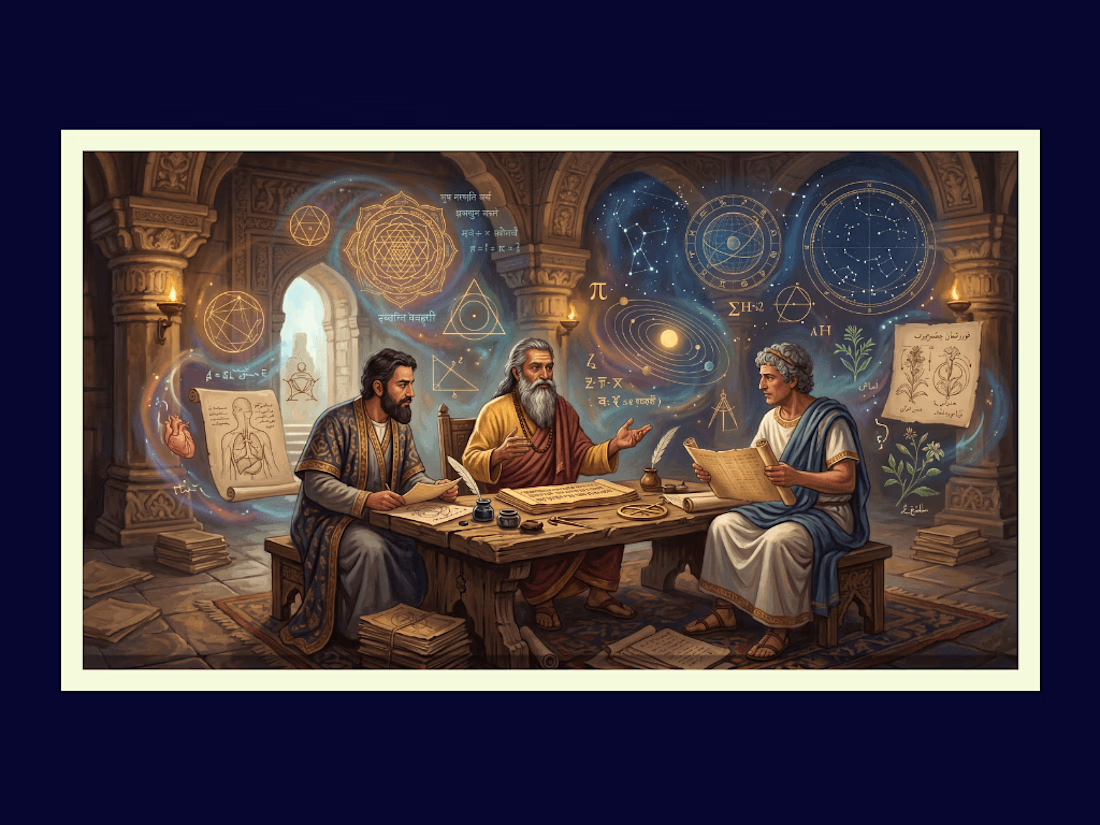
Most people think of ancient civilizations as separate worlds that occasionally bumped into each other. The reality was far more interesting.
Between the Vedic period and the Kushan Era, India was one of the most connected intellectual hubs on the planet. Indian astronomers were...


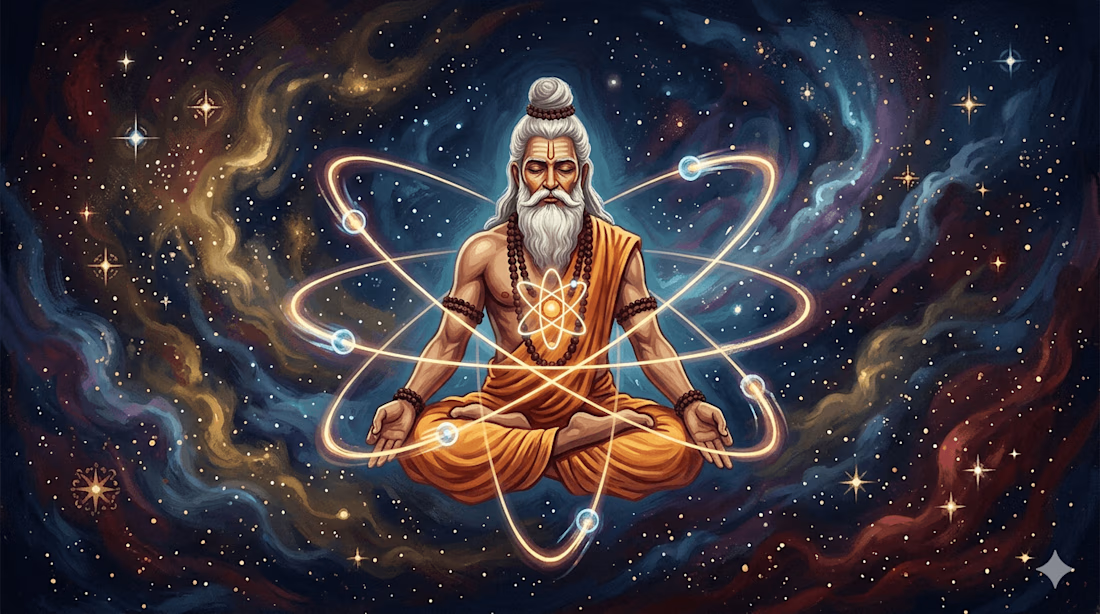
Most people know ancient India contributed the zero and Ayurveda. Fewer know that an Indian philosopher named Kaṇāda proposed an atomic theory of matter, centuries before Democritus did in Greece.
That's one of the things covered in my latest post on The History of Indian Science.
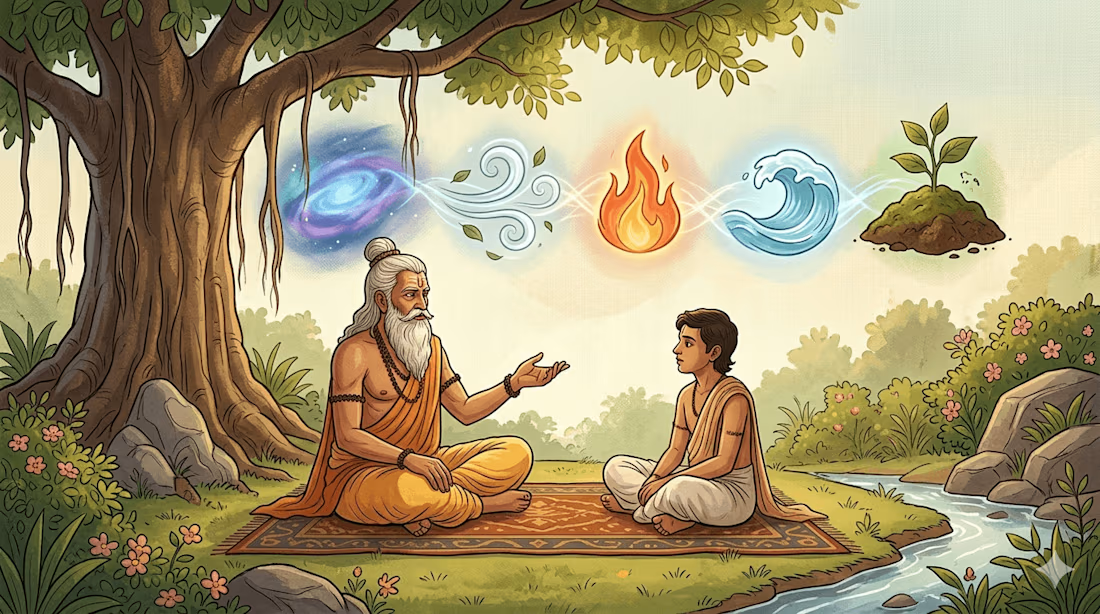
Most people associate ancient India with spirituality. But between roughly 1000 and 500 BCE, something else was happening: a quiet scientific revolution.
The later Vedic thinkers were building frameworks to understand matter. The Vaiśeṣika school proposed that the universe is...
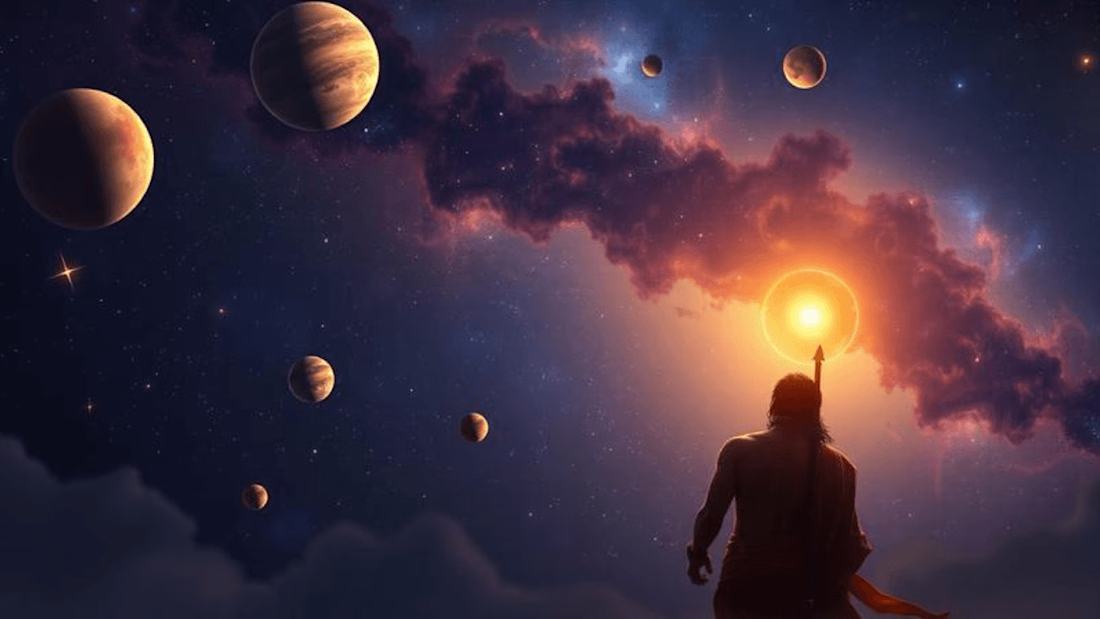
Did you know that ancient Indian astronomers had mapped the entire lunar path into 27 precise sky coordinates as far back as 1500 BCE?
In my latest blog, Ancient Indian Astronomy: Timekeeping in the Vedic Age, I explore how Vedic astronomers studied the skies not merely for...
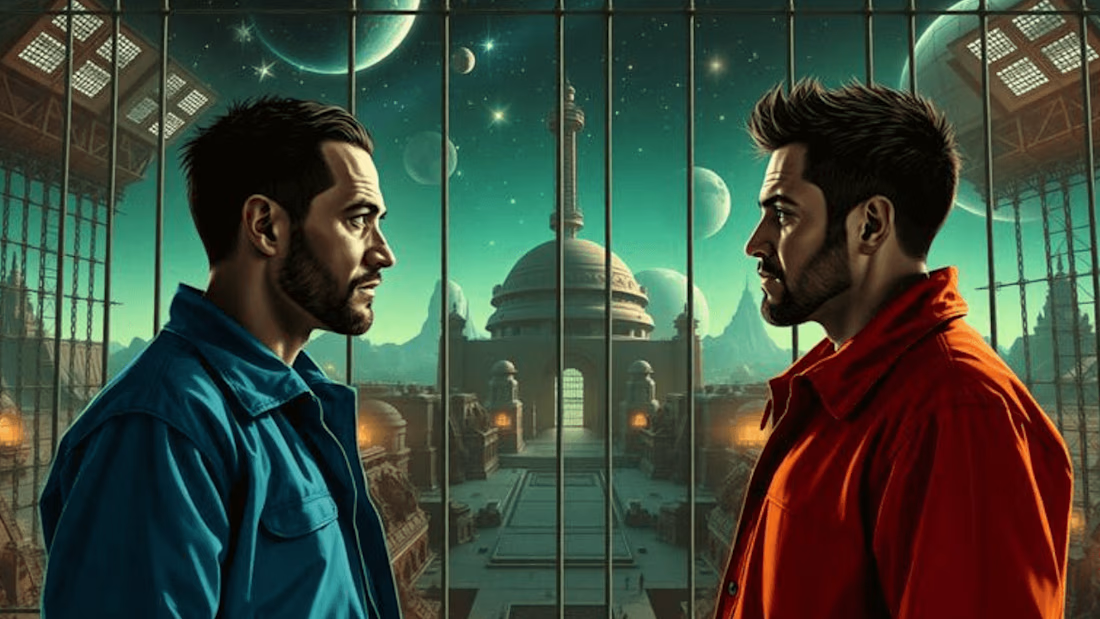
Why do rational people make decisions that seem irrational?
Game Theory helps explain it.
In the Prisoner’s Dilemma, two people acting in self-interest both end up worse off. In the Stag Hunt, trust determines success. In the Game of Chicken, risk becomes strategy.
These models...