The network for creativity
Join 1.25M professional creatives like you
Connect with clients, get discovered, and run your business 100% commission-free
Creatives on Contra have earned over $150M and we are just getting started
Back to feedPost

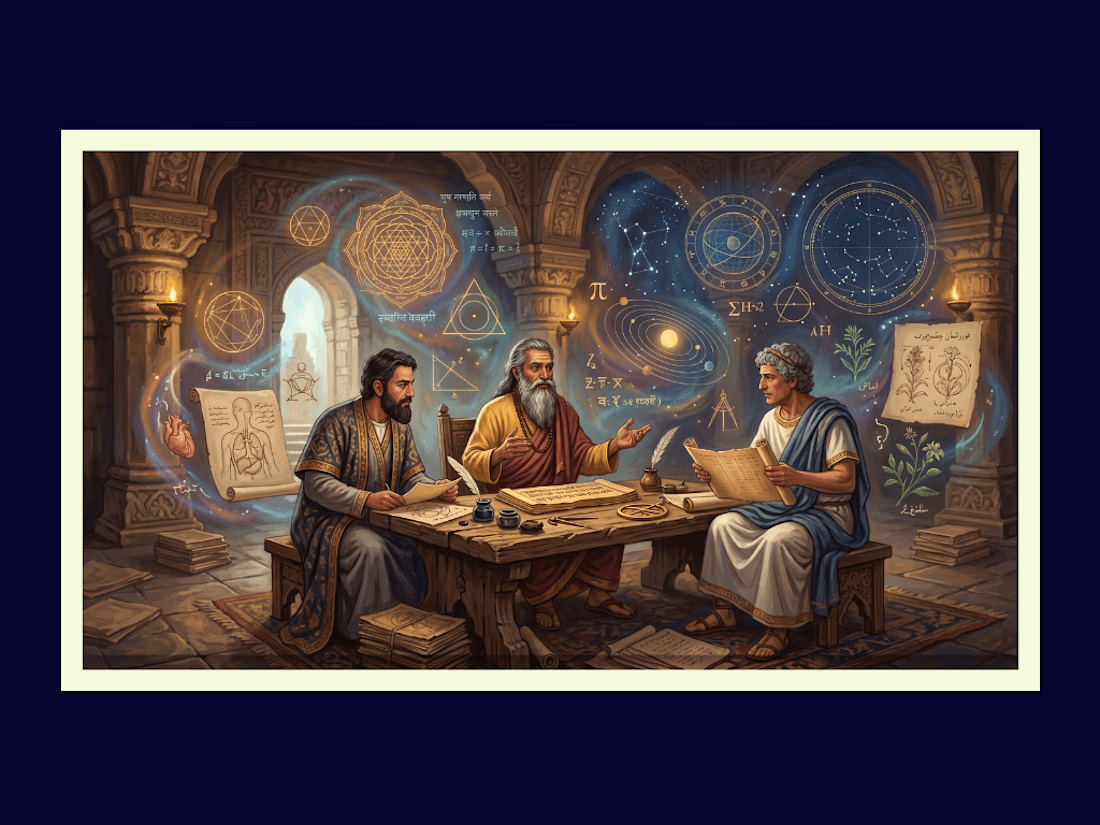
Most people think of ancient civilizations as separate worlds that occasionally bumped into each other. The reality was far more interesting.
Between the Vedic period and the Kushan Era, India was one of the most connected intellectual hubs on the planet. Indian astronomers were exchanging ideas with Babylonian stargazers. Indian physicians were comparing notes with Greek doctors trained in humoral medicine. The Kushans were carrying Buddhist texts, along with Indian medicine and astronomy, deep into China.
None of this happened in isolation. It happened because India sat at the intersection of the Indian Ocean trade network, the Central Asian corridors, and the overland routes into Persia and the Mediterranean, and the people moving through those routes carried ideas, not just goods.
My latest post on The Indic Scholar traces this exchange across six civilizations: Babylonians, Egyptians, Persians, Greeks, Śakas, Kushans, and Romans. It covers how these interactions shaped astronomy, medicine, philosophy, art, and administration on both sides.
It's part of an ongoing series on ancient Indian history of science.
You can read it here: [ https://theindicscholar.com/ancient-indian-trade-exchange-of-ideas-with-the-world/ ]


The network for creativity
Join 1.25M professional creatives like you
Connect with clients, get discovered, and run your business 100% commission-free
Creatives on Contra have earned over $150M and we are just getting started











Related posts

FLEXWEAR - From Pharaohs to LA
I created a 30s cinematic brand story for FLEXWEAR that bridges ancient Egyptian heritage with modern LA streetwear culture.
The concept: An Ankh (key of life) opens a portal from a Pharaonic tomb in Egypt to the Hollywood hills of Los Angeles. The protagonist wears a FLEXWEAR hoodie with a golden Ankh, symbolizing that heritage is not history - it's wearable identity.
Built entirely in CapCut AI (Studio + AI Video Generator) - from text-to-video, temple reconstruction, portal VFX, and final color grading.
Tags: #capcutworldlachallenge #WelcomeToLA #CCW #FLEXWEAR #FromPharaohsToLA
Clean export, no watermark, 1080p, original concept for CapCut World LA Challenge.


Which Kajabi direction would stop your scroll?
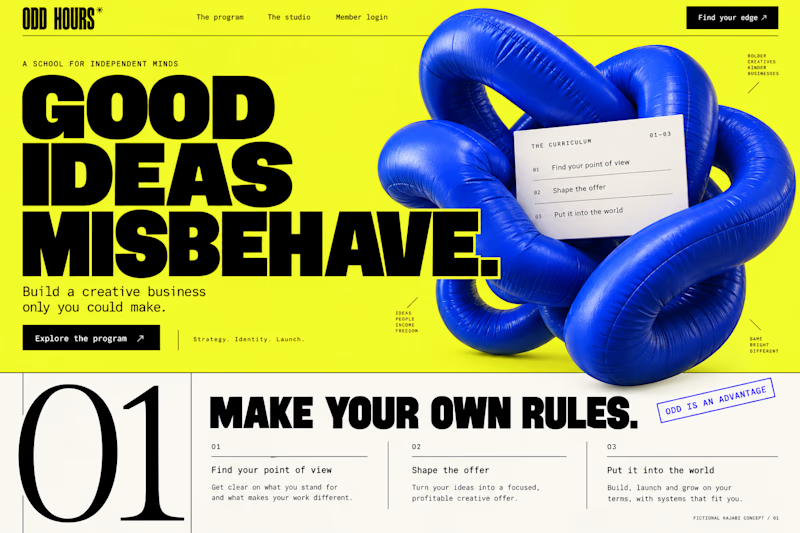
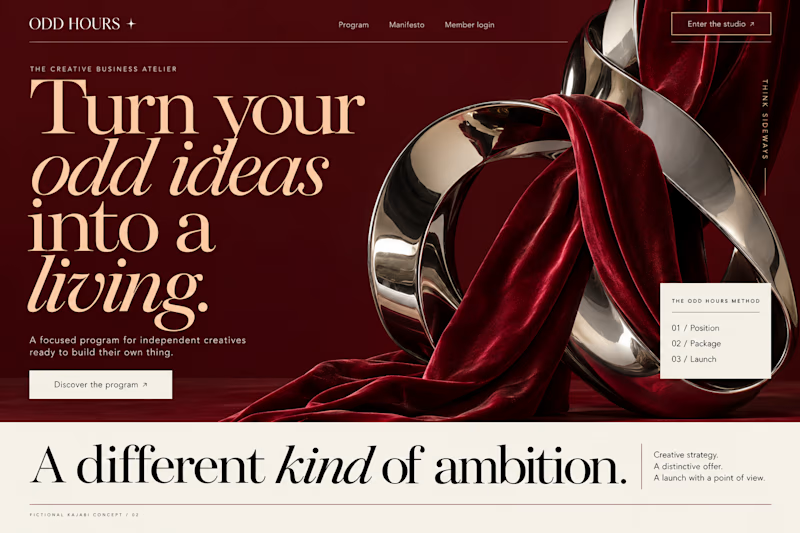
Meet ODD HOURS, a creative-business academy concept.
A / Acid Play: electric yellow, oversized type and a sculptural blue knot.
B / Velvet Rebellion: oxblood, chrome and velvet with fashion-editorial typography.
Two original AI-generated concepts. Same offer. Completely different energy.
Which one pulls you in, and why?

15 voted
65%
8 voted
35%
23 votes
Closed

It's only Acid Play it's unbelievable 🔥🔥🔥🔥
Great job Kraig🎉🎉
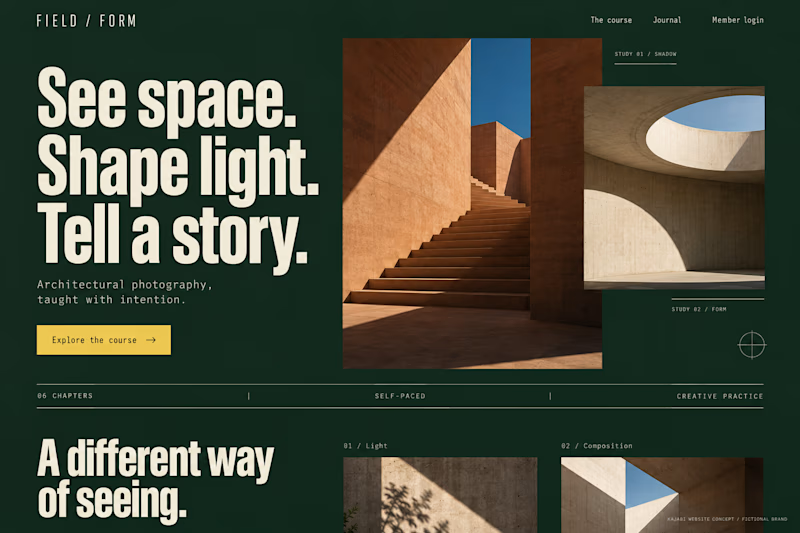
Which Kajabi photography-course design makes you want to explore?
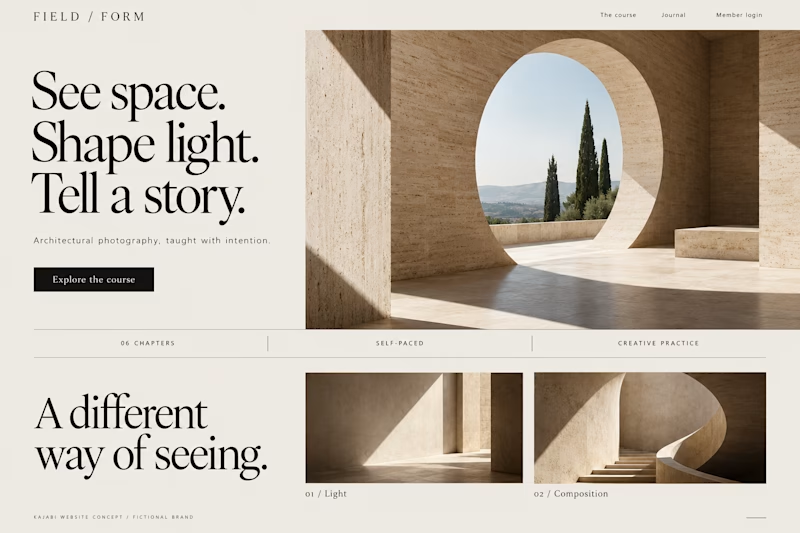
Two original AI-generated concepts for FIELD / FORM, a fictional architectural-photography school. Gallery Study pairs expressive serif type with warm stone and generous space. Field Journal uses forest green, bold condensed type and a layered photo study.
Same course, two directions. Which would you choose, and why?
15 voted
75%
5 voted
25%
20 votes
Closed
Galary study Hits better to me❤️❤️
great job Kraig🔥🔥