The network for creativity
Join 1.25M professional creatives like you
Connect with clients, get discovered, and run your business 100% commission-free
Creatives on Contra have earned over $150M and we are just getting started
Back to feedPost

Did you know that ancient Indian astronomers had mapped the entire lunar path into 27 precise sky coordinates as far back as 1500 BCE?
In my latest blog, Ancient Indian Astronomy: Timekeeping in the Vedic Age, I explore how Vedic astronomers studied the skies not merely for spiritual reasons, but with remarkable scientific rigour. From the Nakṣatra system that tracked the Moon's position against fixed stars, to sophisticated timekeeping units like yugas, tithis, and muhūrttas, the Vedic people had developed a surprisingly systematic understanding of celestial patterns.
What fascinates me most is how astronomy, mathematics, and ritual were deeply intertwined: brick altars geometrically aligned to celestial positions, time units precise to 3.2 minutes, and a five-year calendar cycle reconciling the solar and lunar years.
This is part of my ongoing series on the History of Indian Science. Would love to hear your thoughts in the comments!
You can read it here: [ https://theindicscholar.com/ancient-indian-astronomy-time-keeping-in-the-vedic-age/ ]



The network for creativity
Join 1.25M professional creatives like you
Connect with clients, get discovered, and run your business 100% commission-free
Creatives on Contra have earned over $150M and we are just getting started











Related posts

Developed a fully custom WordPress website for ScrumQueens, transforming the previous website into a modern, structured, and maintainable digital platform.
Key Contributions:
Custom-developed the WordPress website to support the project's specific content and business requirements.
Designed and implemented custom WordPress data structures for organized content management.
Migrated a large volume of content and data from the previous website into the new custom WordPress structure.
Worked with WordPress development capabilities, including PHP, custom post types, and content management functionality.
Focused on maintaining content integrity throughout the migration and making ongoing website management easier.
Tech Stack: WordPress, PHP, MySQL, HTML, CSS, JavaScript.
The project demonstrates hands-on expertise in custom WordPress development, complex content migrations, and building maintainable CMS solutions.


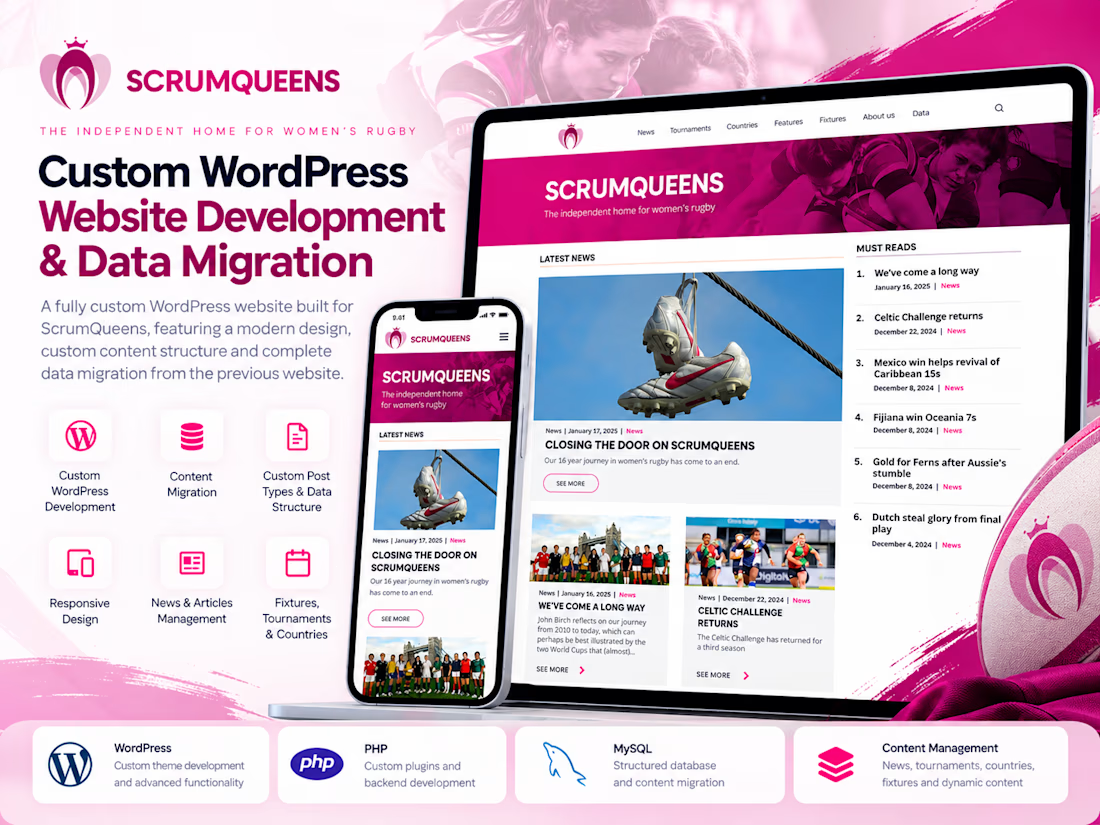

How did you check the older content after migration? Matching article counts is one step, but I'd be curious how you checked images and links inside the articles.

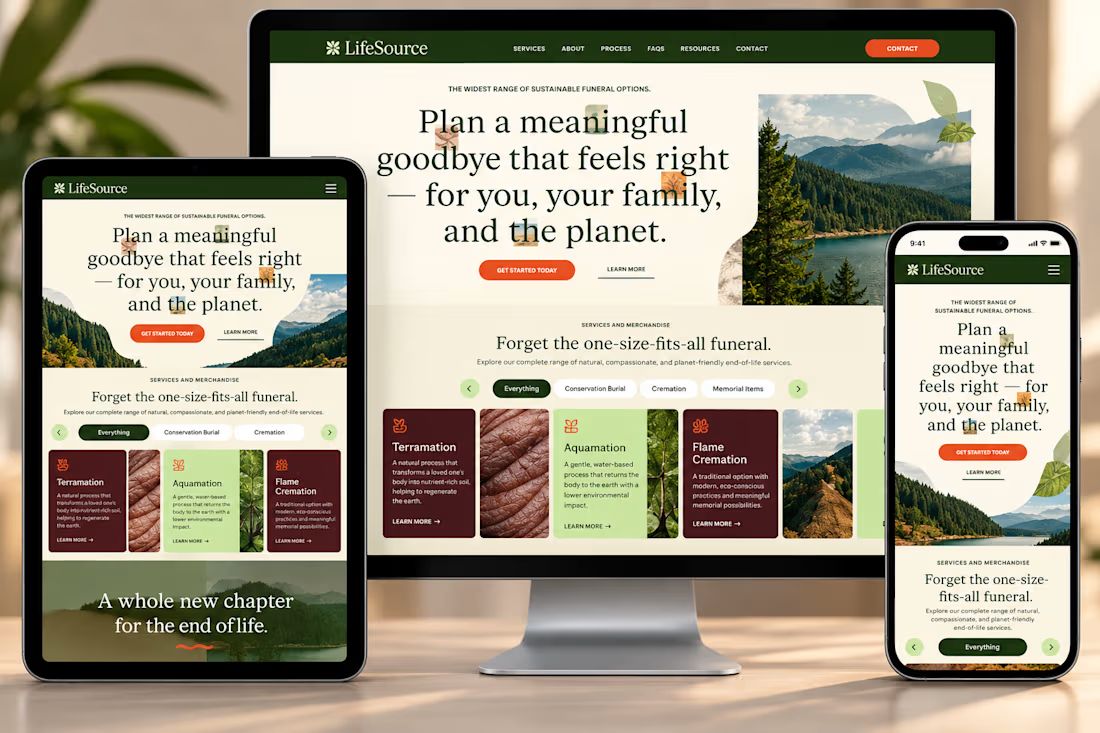
🌿 A website can look beautiful and still tell a powerful story.
This WordPress website design combines thoughtful typography, calming colors, and a clean layout to create a meaningful digital experience.
Which section catches your attention first: the hero, services, or FAQ? 👇
#WordPress #WebDesign #WebsiteDesign #Typography #UIUXDesign




🏠 ROOFING WEBSITES THAT CONVERT 🏠
I design high-converting websites for roofing companies that turn visitors into booked jobs.
What I offer:
✅ Modern & Mobile-First Design
✅ Lead Generation Focused
✅ Fast & SEO Ready
✅ Built for Roofing Contractors
Portfolio: contra.com/shery
DMs open for new projects! 👇
#roofingwebsite #roofingcontractor #webdesign #roofingmarketing