
abdullah masood
AI & Full-Stack Engineer | Building Production AI SaaS, APIs
New to Contra
abdullah is ready for their next project!



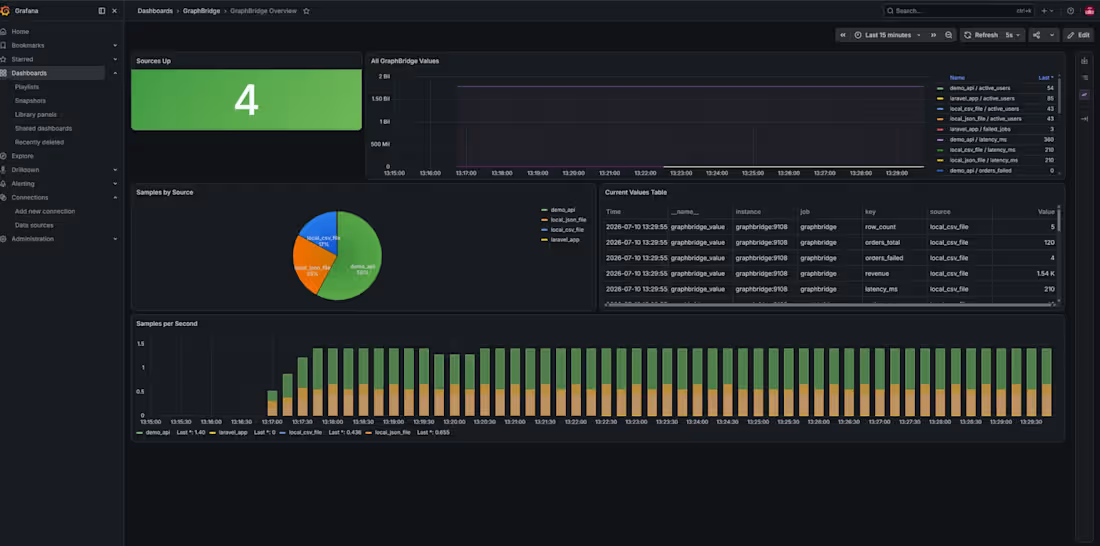
🚀 Introducing GraphBridge – Turn JSON into Grafana Dashboards
One thing I've noticed while working on different projects is that applications already have valuable metrics, but getting those metrics into Grafana often requires exporters, custom integrations, or additional setup.
I wanted something much simpler.
So I built GraphBridge.
The idea is straightforward:
Your Application
↓
Send JSON
↓
GraphBridge
↓
Prometheus
↓
Grafana
Instead of writing custom exporters, your application simply sends JSON metrics to GraphBridge.
For example:
{
"active_users": 85,
"orders_today": 42,
"revenue_today": 9840,
"failed_jobs": 3,
"latency_ms": 210
}
GraphBridge automatically converts the data into Prometheus metrics, making it immediately available for Grafana dashboards.
Current features
✅ JSON Webhook API
✅ REST API polling
✅ JSON & CSV data sources
✅ Prometheus /metrics endpoint
✅ Docker Compose deployment
✅ Auto-configured Grafana dashboard
✅ Example integrations for Laravel, FastAPI, Node.js, and custom applications
Possible use cases
• Application monitoring
• Queue & background job metrics
• Business dashboards
• API performance monitoring
• FFmpeg streaming statistics
• IoT sensor metrics
• Internal analytics
• Custom operational dashboards
The goal is simple:
Send JSON. Visualize everything.
This is the first public MVP, and I'm planning to continue improving it with additional integrations and monitoring templates.
I'd love your feedback and suggestions!
⭐ GitHub:
https://lnkd.in/dAYdNJxg
1
134
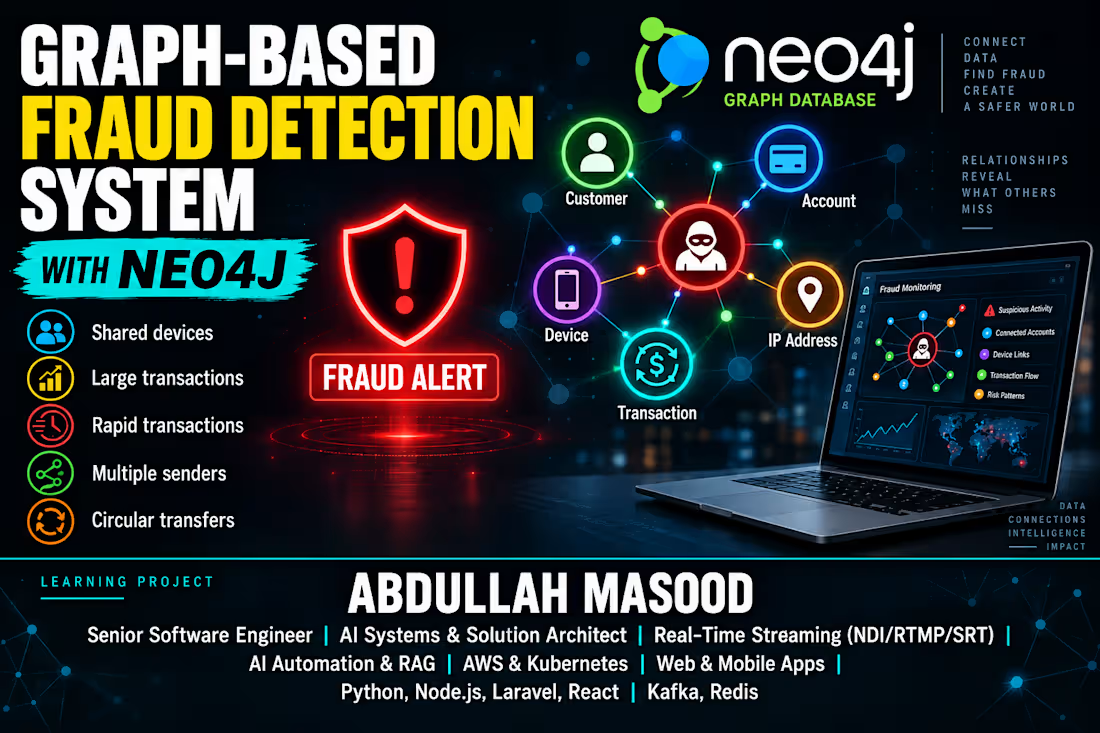
🚀 Building a Graph-Based Fraud Detection System with Neo4j
A single transaction may look normal. Its connections can tell a different story.
I’m building a learning project using Neo4j and Cypher to explore relationships between customers, accounts, transactions, and devices—and flag patterns worth investigating.
🔍 Patterns I’m exploring:
• Multiple customers sharing the same device
• Unusually large transactions
• Rapid transactions within a short period
• Multiple accounts sending money to one account
• Circular transfers between connected accounts
The focus is explainability: showing the relationships behind each flag so the suspicious activity is easier to understand.
Through this project, I’m strengthening my graph data modelling, Cypher queries, and rule-based detection skills.
Next: FastAPI integration, transaction risk scores, fraud alerts, and an interactive monitoring dashboard.
🛠️ Currently a learning prototype, with more updates coming as I build.
What would you investigate first: shared devices or circular transfers?
#Neo4j #GraphDatabase #FraudDetection #Cypher #BackendDevelopment #LearningInPublic
1
186
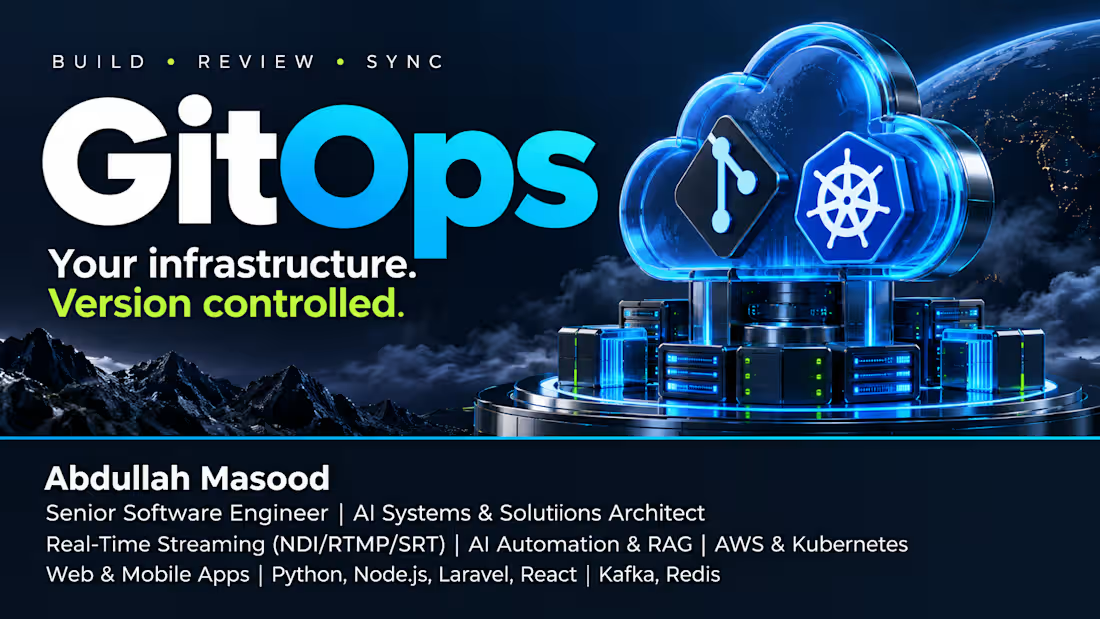
A Kubernetes deployment should be easy to trace: what changed, who changed it, and why.
That’s what interests me about GitOps.
With GitOps, the desired state of your infrastructure and applications lives in Git. Changes go through commits and pull requests, while a controller such as Argo CD or Flux continuously reconciles the running environment with that desired state.
A typical workflow looks like this:
• Build and test the application through CI.
• Push the Docker image to a registry.
• Update the image version in the Git configuration.
• Review and merge the change.
• Let the GitOps controller reconcile the cluster.
The benefits go beyond automated deployments:
✅ A versioned history of configuration changes
✅ Reviewable changes before deployment
✅ Visibility into configuration drift
✅ A repeatable way to manage environments
One important detail: reverting a Git commit can restore an earlier configuration, but database migrations and changes to application data still need their own recovery plan.
For me, GitOps connects development and operations through a workflow both teams already understand: Git.
Are you using Argo CD, Flux, or CI-driven deployments for your Kubernetes workloads?
1
223
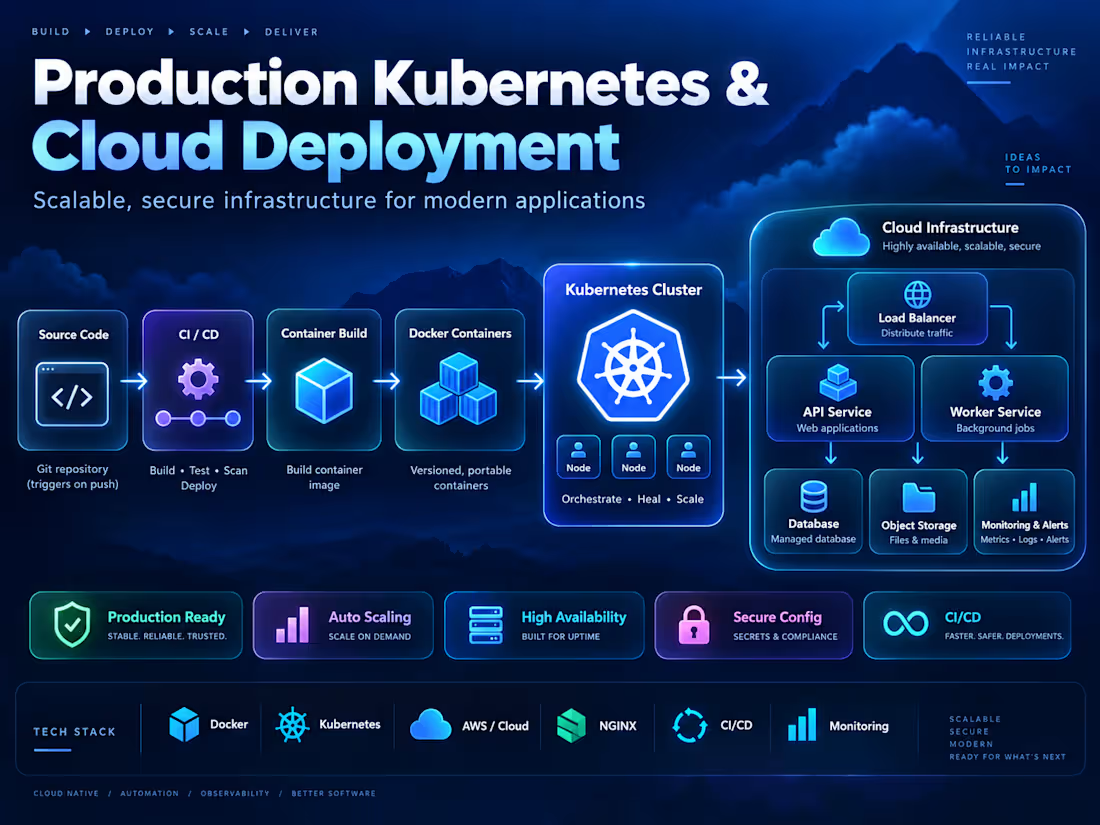
Production Kubernetes & Cloud Deployment
1
186