The network for creativity
Join 1.25M professional creatives like you
Connect with clients, get discovered, and run your business 100% commission-free
Creatives on Contra have earned over $150M and we are just getting started
Back to feedPost

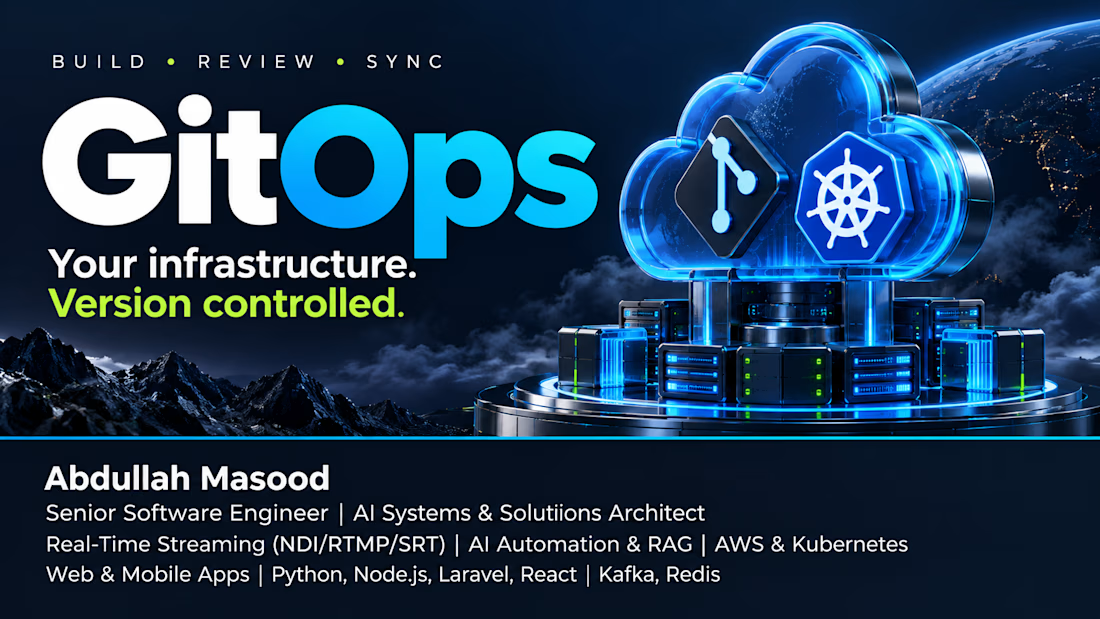
A Kubernetes deployment should be easy to trace: what changed, who changed it, and why.
That’s what interests me about GitOps.
With GitOps, the desired state of your infrastructure and applications lives in Git. Changes go through commits and pull requests, while a controller such as Argo CD or Flux continuously reconciles the running environment with that desired state.
A typical workflow looks like this:
• Build and test the application through CI.
• Push the Docker image to a registry.
• Update the image version in the Git configuration.
• Review and merge the change.
• Let the GitOps controller reconcile the cluster.
The benefits go beyond automated deployments:
✅ A versioned history of configuration changes
✅ Reviewable changes before deployment
✅ Visibility into configuration drift
✅ A repeatable way to manage environments
One important detail: reverting a Git commit can restore an earlier configuration, but database migrations and changes to application data still need their own recovery plan.
For me, GitOps connects development and operations through a workflow both teams already understand: Git.
Are you using Argo CD, Flux, or CI-driven deployments for your Kubernetes workloads?


The network for creativity
Join 1.25M professional creatives like you
Connect with clients, get discovered, and run your business 100% commission-free
Creatives on Contra have earned over $150M and we are just getting started





Related posts

Then: 1 month, 1 template.
Now: 1 week, 15 templates.
Same designer, different workflow.
I wrote up how I built no-code.supply: fifteen website templates, each with its own brand, in HTML and React, and some in Framer too. Claude Code did most of the typing. I did the directing.

no-code.supply
How I built 15 website templates with an AI coding agent in a week
How I built 15 AI-ready website templates with Claude Code in a week: the workflow, the quality bar, and why a template is only the starting point.

Going from one template a month to fifteen a week is wild. How much of the design direction did you still do by hand?

Local developer tool that executes atomic commit plans through a dual-agent AI pipeline (Generator & Reviewer) with real-time SSE streaming, quality gates, and automated rollbacks.




The dual agent pipeline creating atomic commit plans and the live SSE stream makes the review loop feel almost instant.

A fast, easy-to-manage portfolio website, built the way I build business websites for clients.
The site runs on Next.js with Server Components, so pages arrive with their content already in place for visitors and search engines. All content, including projects, services, experience and contact details, is managed in Sanity CMS. Updates happen in a dashboard, not in code, so no developer is needed for each change.
What went into it:
Next.js, React 19 and TypeScript for the foundation.
Tailwind CSS v4 and shadcn/ui for a consistent, responsive design system.
Framer Motion and GSAP for scroll animations that guide attention.
AVIF and WebP images at multiple sizes for lighter pages.
A server-side contact form with validation and email delivery through Resend.
Finally it was deployment on Vercel.😍
Test results: performance grade 83, 923.6 KB total page size, 2.16 s load time, 25 requests.
If you need a business website, e-commerce store or landing page with a CMS you can manage yourself, this is the kind of build you can expect.
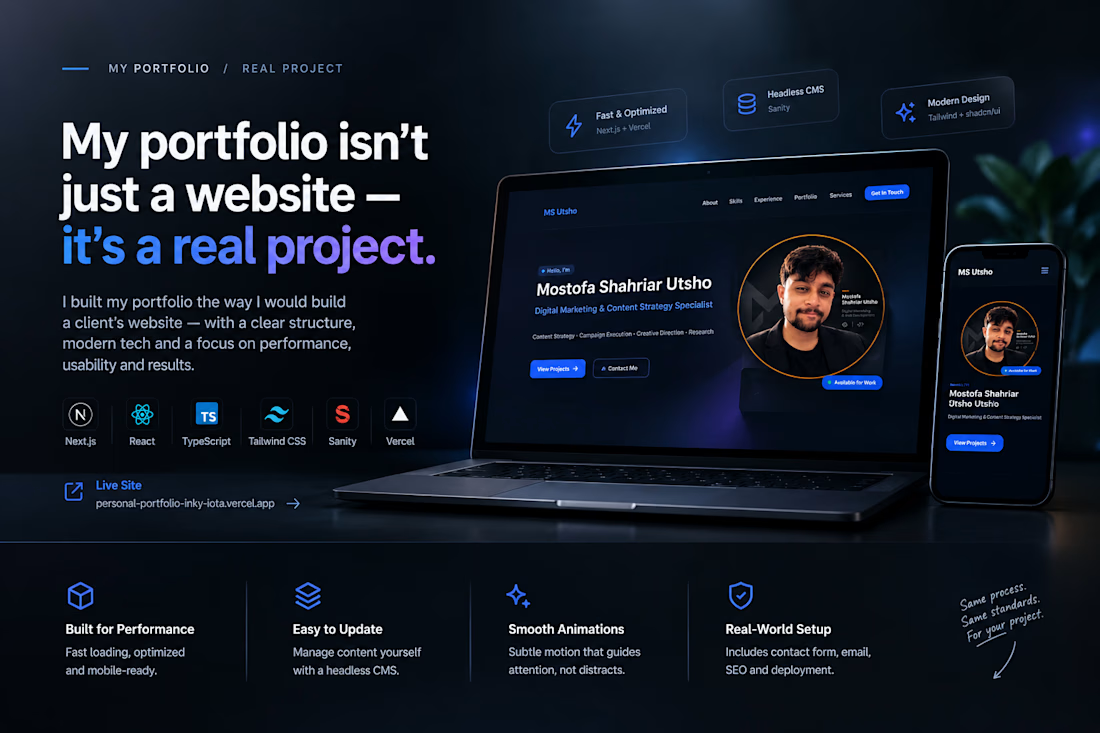
Showing the stack next to the live site makes this read like a real case study.