
Ha Le
Mechanical Product Development | DFM, Tooling & Manufacturin
New to Contra
Ha is ready for their next project!
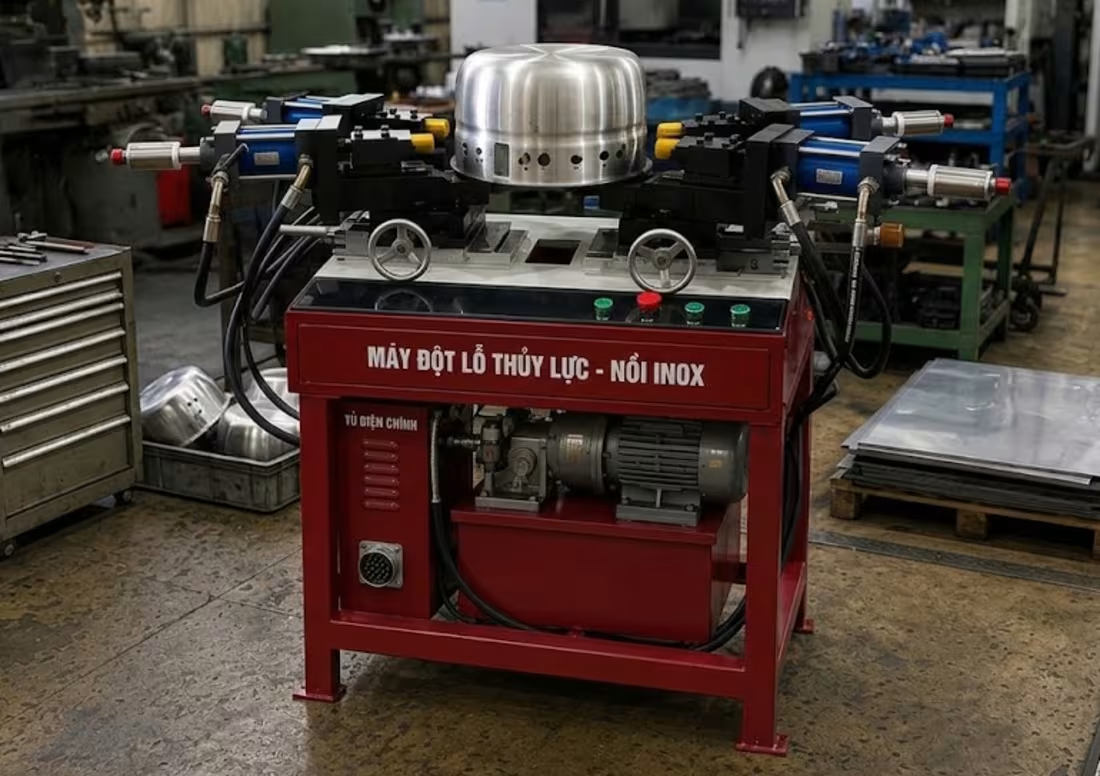
Hydraulic Punching Machine for Deep Drawn Stainless Steel Production
High-volume production of deep drawn stainless steel components often requires secondary operations that must maintain tight dimensional accuracy without deforming the formed part. This project involved developing a custom hydraulic punching machine capable of delivering precise, repeatable punching while supporting reliable mass production.
As the technical lead, I was responsible for the complete engineering process, including machine architecture, structural calculations, FEA validation, hydraulic system design, manufacturing process development, tooling and die design, detailed mechanical design, and production documentation.
The machine was engineered to achieve stable production, minimize part deformation, simplify maintenance, and ensure long-term manufacturing reliability. Beyond the mechanical design itself, the project focused on creating a production-ready solution that balanced performance, manufacturability, tooling complexity, and operating efficiency.
Responsibilities
Product & manufacturing equipment development
Machine architecture and mechanical design
Structural calculation and FEA validation
Hydraulic system development
Tooling & die design
Manufacturing process development
Production engineering documentation
0
58
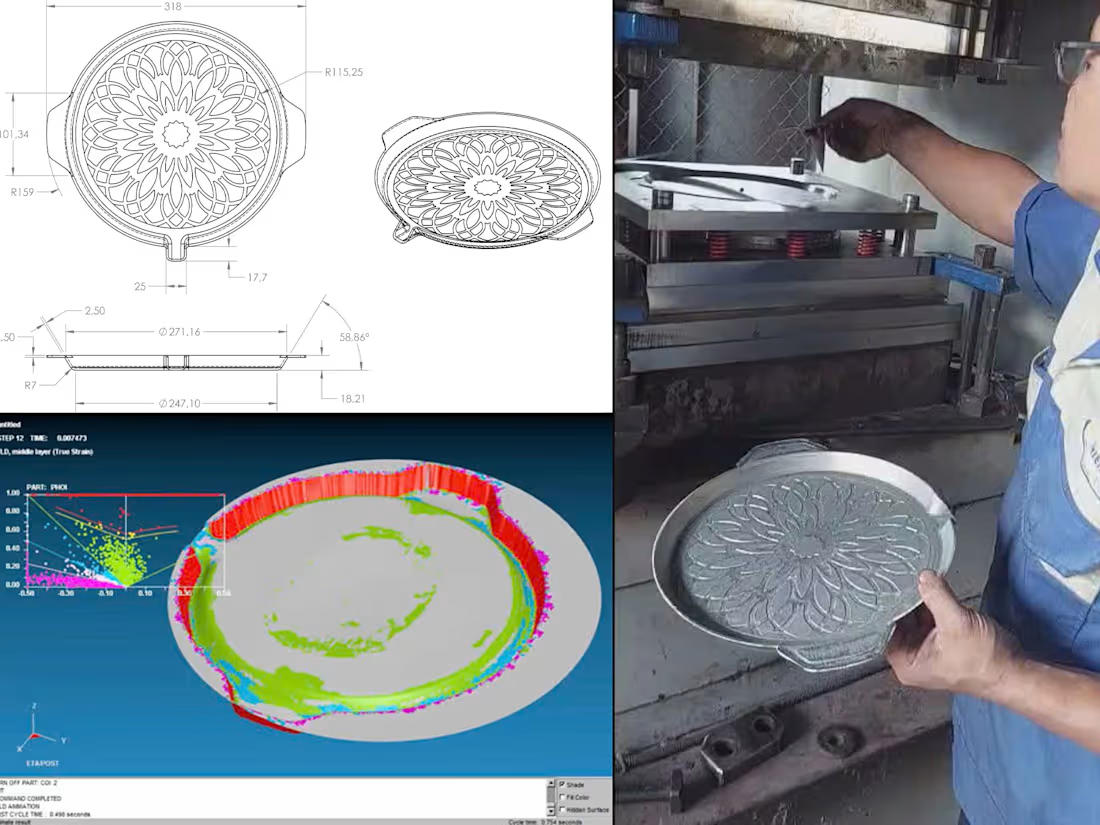
6061 Aluminum BBQ Grill Plate – Product Development for Mass Production
Led the mechanical development and tooling engineering for a deep-drawn 6061 aluminum grill plate. The project included CAD design, formability analysis, springback compensation, die face optimization, tooling design, and production trials. Every design decision was validated against real manufacturing constraints, resulting in a stable production process and production-ready tooling.
0
66
Many sheet metal components appear simple, but achieving stable production requires careful control of material flow, blank holding force, forming geometry, springback, and tooling design.
This project involved the complete development of a sheet metal forming system, from product development and forming strategy through tooling design, manufacturing, tryout, and production implementation.
As project lead, I was responsible for product engineering, process development, tooling design, manufacturing support, and production validation. The tooling combined blanking and forming operations within a single system to improve production efficiency while maintaining dimensional consistency and part quality.
The project required balancing manufacturability, tooling durability, production repeatability, and cost efficiency to ensure reliable mass production.
Projects like this are where product development, tooling engineering, and manufacturing execution come together.
0
113
Many wire forming projects fail not because of the final geometry, but because of incorrect forming sequences, uncontrolled springback, tooling interference, or poor production repeatability.
This project involved the complete development of a wire forming die system, from product definition and forming strategy through tooling design, manufacturing, tryout, and production implementation.
As project lead, I developed the forming sequence, springback compensation strategy, tooling architecture, and manufacturing validation process to ensure the product could be produced consistently at volume rather than simply formed in simulation.
The result was a production-ready wire forming solution capable of transforming straight steel wire into a complex multi-bend component through a controlled single-cycle forming process.
Projects like this are where product development, tooling engineering, and manufacturing execution come together.
0
117