
Ayoade Sodiq
I help businesses stop losing leads with AI automation


The idea
After my first build (the initial "Lead Follow-Up Automation," which was really just me learning the ropes), I wanted to prove I could build something that actually solved a real, painful problem for a real type of business not just a toy demo. Personal injury law firms are notorious for this: someone fills out a contact form after a car accident or injury, and if the firm doesn't get back to them within minutes, they just call the next firm on Google. Speed-to-lead is everything in that industry, and most small firms are still doing it manually, an intake person checking a shared inbox a few times a day. So I built Langford & Reyes as a mock client to show exactly how AI automation solves that gap.
The build
The pipeline was: a prospect fills out a Tally form → Make.com (http://Make.com) picks it up and routes it → Groq (running llama-3.3-70b-versatile) reads the intake details and qualifies the lead. Is this a real case, what's the injury, how urgent → Airtable logs everything as a structured record → Gmail fires off a response, formatted properly, to both the lead and the firm.
The whole point was compressing what used to take hours (or a full day) down to under 5 minutes from form submission to a qualified, routed lead sitting in the firm's inbox.
The challenges
This is where it got real.
Tally field mapping getting the form fields to actually map cleanly into Make.com (http://Make.com) without breaking when someone left a field blank or answered in an unexpected way.
Airtable 422 errors, classic "your data doesn't match what the API expects" pain, which meant going back and forth debugging exactly what Airtable's schema wanted versus what Make was sending.
Invalid JSON from multi-line prompts. Groq would sometimes return malformed JSON when the AI's response included line breaks or multi-paragraph reasoning, which broke the next step in the chain. That's a subtle one a lot of people don't anticipate until it happens to them.
Gmail formatting, getting emails to actually look like emails (not a wall of unformatted text) by manually inserting HTML <br> tags since Gmail doesn't auto-convert line breaks in API-sent messages.
The lesson
None of these are exotic problems they're the unglamorous plumbing issues that separate "I watched a YouTube tutorial and made a demo" from "I built something a real business could actually run on." That's really the value of Langford & Reyes as a case study: it's proof I've hit the annoying edge cases and know how to debug an AI pipeline end-to-end, not just wire together a happy path.
2
1
30
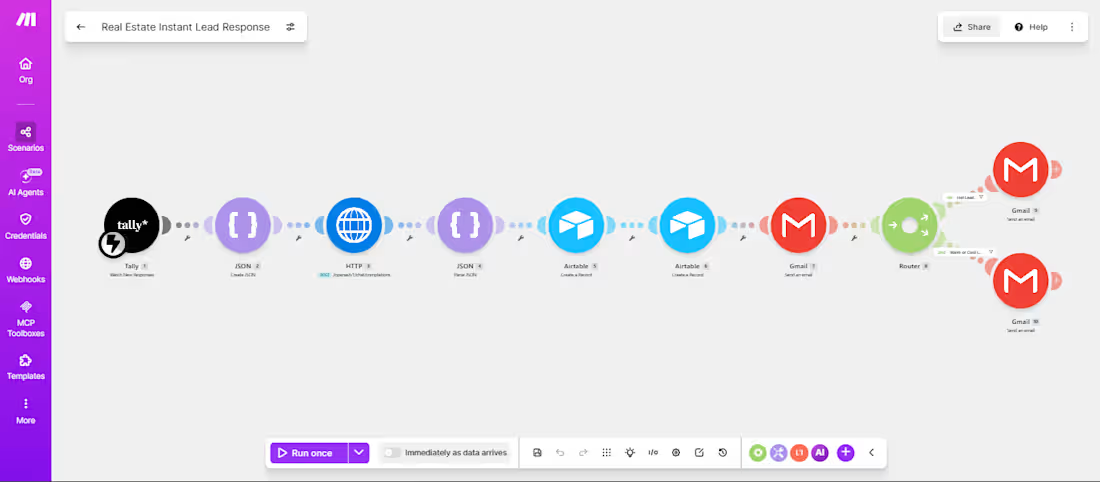
Quick snapshot of what's been on my desk this week, building the real estate version of my instant lead response system, in public, bugs included.
𝗠𝗮𝗽𝗽𝗲𝗱 𝘁𝗵𝗲 𝘄𝗵𝗼𝗹𝗲 𝘀𝘆𝘀𝘁𝗲𝗺 𝘃𝗶𝘀𝘂𝗮𝗹𝗹𝘆 before writing a single line of automation cheaper to catch a bad idea on a whiteboard than after it's built.
𝗪𝗶𝗿𝗲𝗱 𝘁𝗵𝗲 𝗳𝘂𝗹𝗹 𝗽𝗶𝗽𝗲𝗹𝗶𝗻𝗲 form intake, AI qualification, database logging, instant agent alerts. Live and running.
𝗛𝗶𝘁 𝗮 𝗻𝗮𝘀𝘁𝘆 𝗯𝘂𝗴 where any lead who typed more than one line broke the entire system. Root cause had nothing to do with the AI it was a formatting issue in how the request got built. Fixed by letting the platform handle the formatting instead of hand-typing it myself.
𝗥𝗲𝘄𝗿𝗼𝘁𝗲 𝘁𝗵𝗲 𝗔𝗜'𝘀 𝗿𝗲𝗽𝗹𝘆 𝗹𝗼𝗴𝗶𝗰 𝘁𝘄𝗶𝗰𝗲. First pass sounded like a form letter. Fixed that then discovered the fix overcorrected and started ignoring real details leads had actually given me. Had to teach it the difference between "don't make things up" and "don't use what you were actually told."
𝗖𝗮𝘂𝗴𝗵𝘁 𝗶𝘁 𝗵𝗮𝗹𝗹𝘂𝗰𝗶𝗻𝗮𝘁𝗶𝗻𝗴 during testing it told a test lead they were "pre-approved" for a property that was never confirmed. That's not a style bug, that's a trust and liability problem. Now it's hard-locked to only reference facts a lead actually stated.
𝗖𝗼𝗻𝗻𝗲𝗰𝘁𝗲𝗱 𝗿𝗲𝗮𝗹 𝗲𝗺𝗮𝗶𝗹 𝗱𝗲𝗹𝗶𝘃𝗲𝗿𝘆 so the AI's reply doesn't just get logged it actually reaches the lead, sounding like a person hit send, not a system.
Nothing about this week was glamorous. Most of it was staring at error messages and figuring out why a lead typing a normal sentence could break a whole pipeline. But that's the actual job and it's exactly why I'm documenting it instead of just posting the finished result.
More on each of these in the coming posts.
0
16