The network for creativity
Join 1.25M professional creatives like you
Connect with clients, get discovered, and run your business 100% commission-free
Creatives on Contra have earned over $150M and we are just getting started
Back to feedPost

The idea
After my first build (the initial "Lead Follow-Up Automation," which was really just me learning the ropes), I wanted to prove I could build something that actually solved a real, painful problem for a real type of business not just a toy demo. Personal injury law firms are notorious for this: someone fills out a contact form after a car accident or injury, and if the firm doesn't get back to them within minutes, they just call the next firm on Google. Speed-to-lead is everything in that industry, and most small firms are still doing it manually, an intake person checking a shared inbox a few times a day. So I built Langford & Reyes as a mock client to show exactly how AI automation solves that gap.
The build
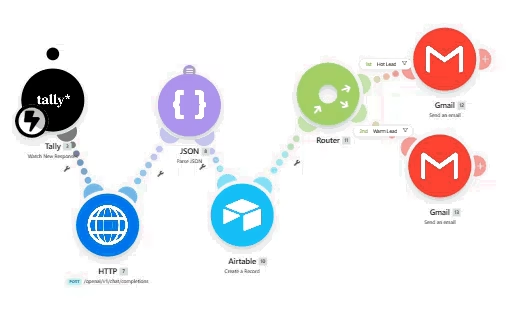
The pipeline was: a prospect fills out a Tally form → Make.com picks it up and routes it → Groq (running llama-3.3-70b-versatile) reads the intake details and qualifies the lead. Is this a real case, what's the injury, how urgent → Airtable logs everything as a structured record → Gmail fires off a response, formatted properly, to both the lead and the firm.
The whole point was compressing what used to take hours (or a full day) down to under 5 minutes from form submission to a qualified, routed lead sitting in the firm's inbox.
The challenges
This is where it got real.
Tally field mapping getting the form fields to actually map cleanly into Make.com without breaking when someone left a field blank or answered in an unexpected way.
Airtable 422 errors, classic "your data doesn't match what the API expects" pain, which meant going back and forth debugging exactly what Airtable's schema wanted versus what Make was sending.
Invalid JSON from multi-line prompts. Groq would sometimes return malformed JSON when the AI's response included line breaks or multi-paragraph reasoning, which broke the next step in the chain. That's a subtle one a lot of people don't anticipate until it happens to them.
Gmail formatting, getting emails to actually look like emails (not a wall of unformatted text) by manually inserting HTML <br> tags since Gmail doesn't auto-convert line breaks in API-sent messages.
The lesson
None of these are exotic problems they're the unglamorous plumbing issues that separate "I watched a YouTube tutorial and made a demo" from "I built something a real business could actually run on." That's really the value of Langford & Reyes as a case study: it's proof I've hit the annoying edge cases and know how to debug an AI pipeline end-to-end, not just wire together a happy path.


The network for creativity
Join 1.25M professional creatives like you
Connect with clients, get discovered, and run your business 100% commission-free
Creatives on Contra have earned over $150M and we are just getting started
Trending
retrofuturism
Share your favorite designs from the past exploring the distant future. Or your own take on the aesthetic 🚀
halftone
Dots. Texture. Grain. Let's see your designs using the halftone technique.

Midjourney
Creatives are showing off what they're making with Midjourney.
colorgrade
Video editors sound off: How do you enhance the mood of your video in color grading?





Related posts

Automating Resume Screening with AI
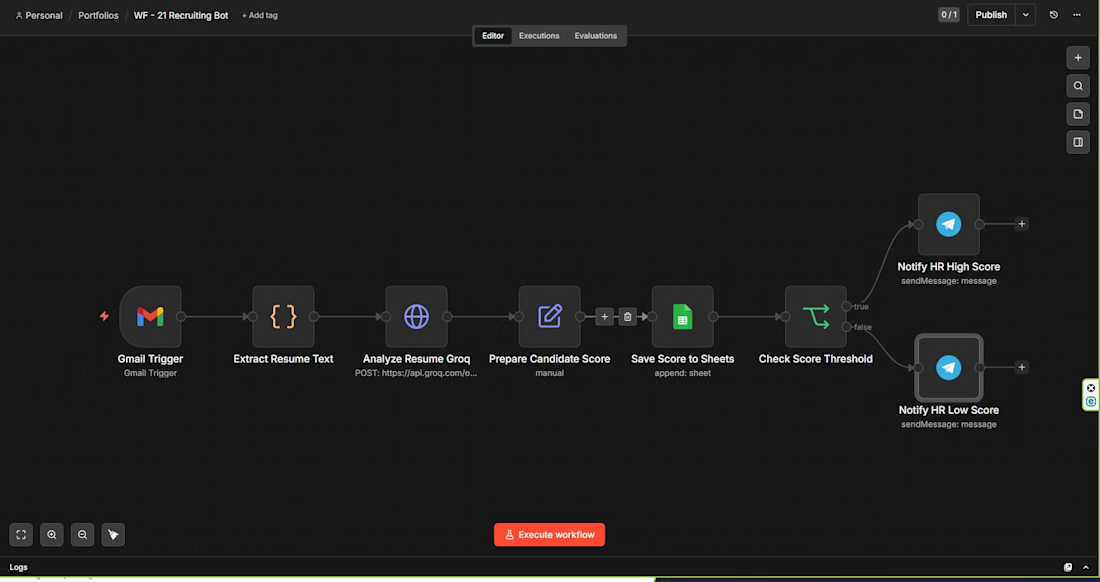
I recently worked on a recruiting bot that uses n8n to connect Gmail, Groq AI, and Google Sheets. The goal was to automate the resume screening process and save time for the HR team. I'm happy to say that it's working smoothly and has already saved a significant amount of time. The tech stack was a bit challenging to set up, but it was worth it in the end.
#n8n #automation #GmailTrigger #HTTPRequest
Follow for more: https://go.phonezait.de/


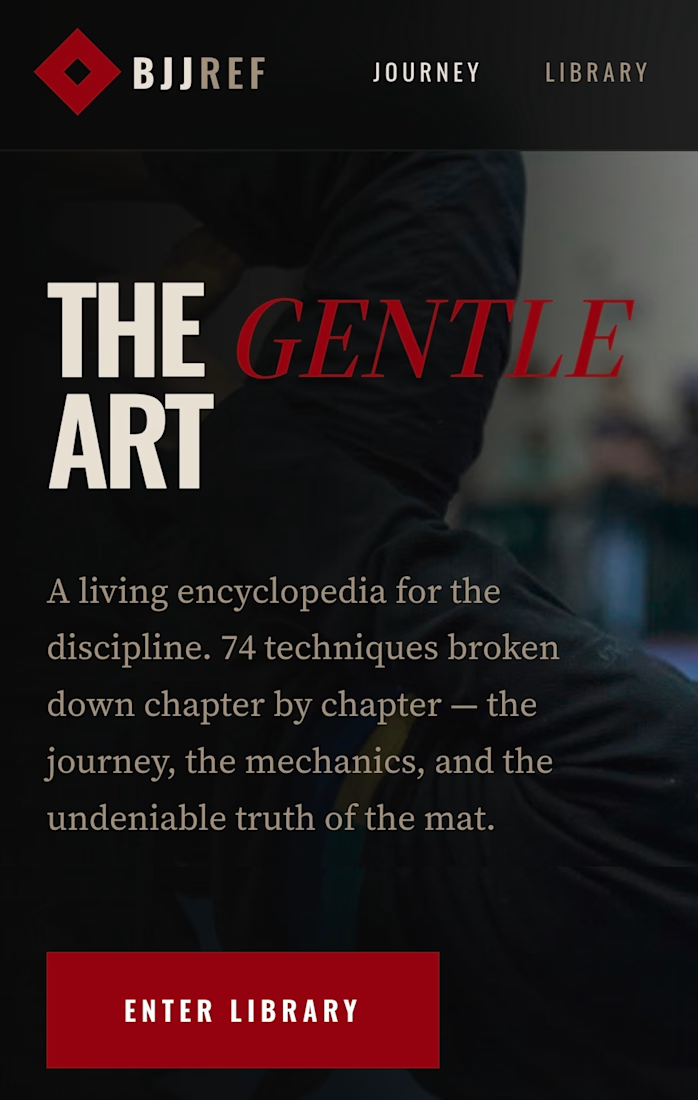
I recently developed a design system site for Replit Designathon. it is a Brazilian Jiu-Jitsu Reference library of techniques concepts and actual breakdowns of how to do them the site is called https://replit-GroundUp.replit.app. take a look and let me know what you think. I'm also open to working with any collaborators who could use help.


Built this interactive APK platform concept with ChatGPT + custom HTML, CSS & JavaScript.
The idea was to take the typical APK website and give it a more polished, Framer/Webflow-style product experience.
I created the layout, visual direction and interactions, then used ChatGPT to help develop the custom code and refine the experience.
✨ Custom-built interactions
📱 Interactive phone UI
🖱️ Mouse parallax effects
🎯 Hover animations
🌐 Responsive layout
⚡ Custom HTML, CSS & JavaScript
No off-the-shelf template. The experience was designed and coded specifically around the product concept.
#WebDesign #UIUX #ChatGPT #Framer #Webflow #HTML #CSS #JavaScript #InteractionDesign #Contra


Great visual execution!